WAREHOUSE & INVENTORY
MANAGEMENT
PRABHAT KUMAR CHATURVEDI
MBA 2nd year
INDIAN MARITIME UNIVERSITY
KOCHI CAMPUS
WAREHOUSE SAFETY CHECKLIST
GENERAL WAREHOUSE SAFETY:
Are exposed or open loading dock doors
chained off, roped off or otherwise blocked.
Are any other areas where employees could
fall four feet or more chained off, roped off, or
otherwise blocked.
Are floor and aisles clear of clutter , electrical
cords, hoses, spills and any other hazards that
could cause employees to slip, trip or fall.
SAFE MATERIAL HANDELING
Is there safe clearance for equipment through
aisles and doorways.
Are aisleways designated , permanently
marked, and kept clear to allow unhindered
passage.
Are hand trucks maintained in safe operating
conditions.
HAZARDOUS SUBSTANCE
COMMUNICATION
Is hazardous substance list used in your
workplace.
Is there written hazardous communication
program dealing with material safety Data
sheets, labelling and employees training.
Is there an employees training program for
hazardous substance.
SAFETY AUDIT
Objectives:
• Identify the risks associated with the key operations of the Warehouse.
• Identify all those hazards which may impede the safe working of
employees.
• Understand the current risk control measures.
• Identify gaps in current control measures with respect to national /
international standards.
• Suggest suitable risk control / mitigation measures for improvement.
Scope:
• Building Safety
• Storage & Material Handling Practices
• Fire Prevention & Protection
• Emergency Preparedness
• Electrical Installations
• Security System
ENVIROMENT CONSULTING
• Environment Impact Assessment Studies
• Air Quality Modeling and Management
• Environment due Diligence & Audits
• Regulatory Compliance Assessment
• Site Assessments and investigations
Sustainable Warehouse Management
• Sustainable warehouse is about integrating,
balancing and managing the economic,
environmental and social inputs and outputs
of the warehouse operations.
• Capital investment : to improve staff efficiency and reduce manual labour.
• Number of employees : to ensure employees are not overworked
• Employee Training: to ensure high employee productivity and
effectiveness and continuous up skilling
• Carbon minimisation: carbon credits, planting trees and air filtering
• Transportation decisions: various modes of transport have significant
differences in carbon emissions
WASTE MANAGEMENT
• Wastewater treatment plant design and
upgrading
• Specialized Training
• Waste & Wastewater Audit
• Wastewater treatability Services
• Marine Environment Services
• CSR Consulting
Safe Lifting Technique
• 1. Stand close to the load
• 2. Squat down next to the load
• 3. Pull the load close
• 4. Tighten your stomach muscles
• 5. Raise with back straight
Forklift Safety:
Pedestrian Traffic
– Look
– Listen
– Be visible
– Keep your distance
– No rides
– Use PPE
– No horseplay
Forklift Safety:
Operation
 Check weight and
stability
 Inspect
 Follow traffic rules
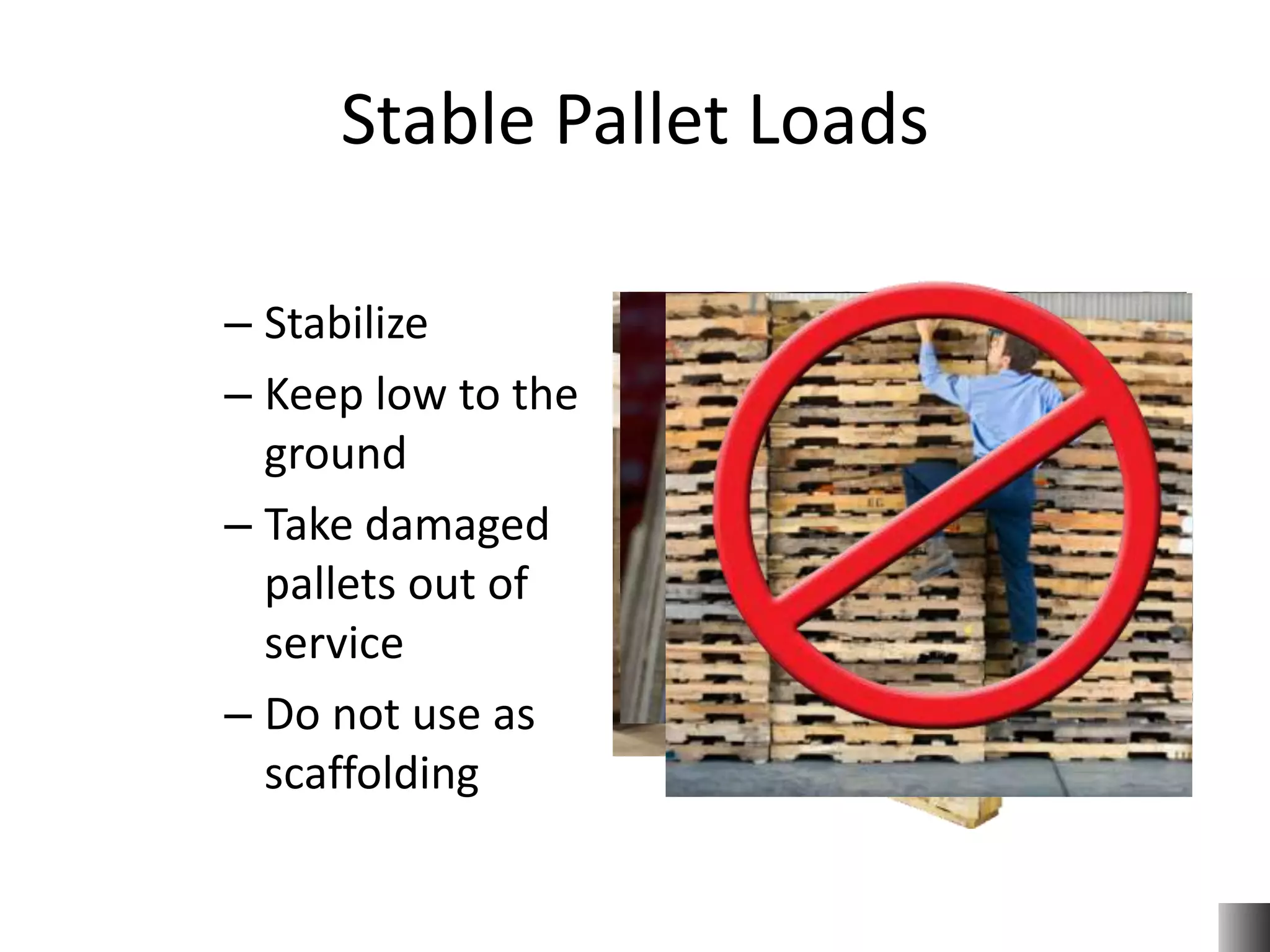
Stable Pallet Loads
– Stabilize
– Keep low to the
ground
– Take damaged
pallets out of
service
– Do not use as
scaffolding
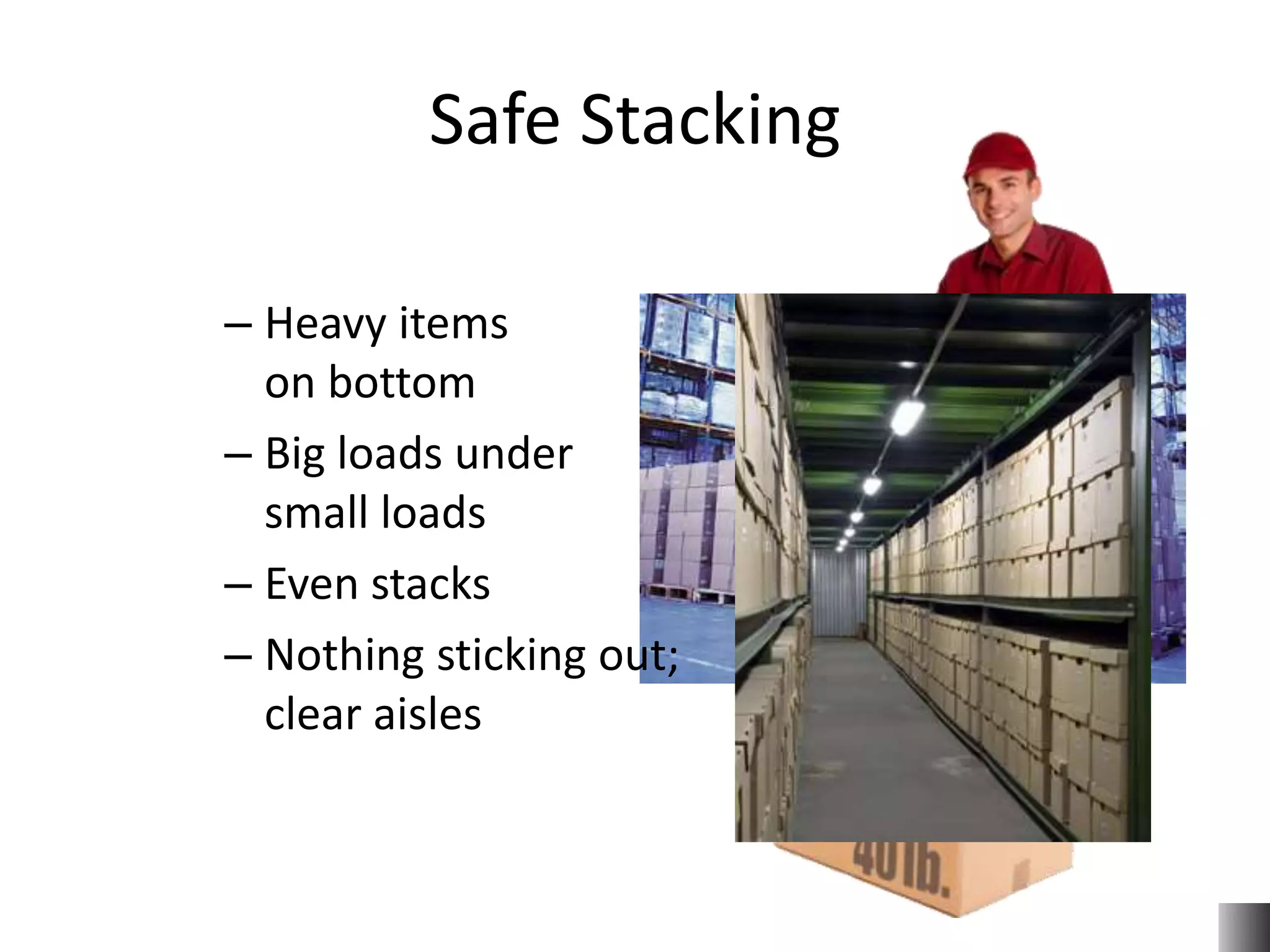
Safe Stacking
– Heavy items
on bottom
– Big loads under
small loads
– Even stacks
– Nothing sticking out;
clear aisles
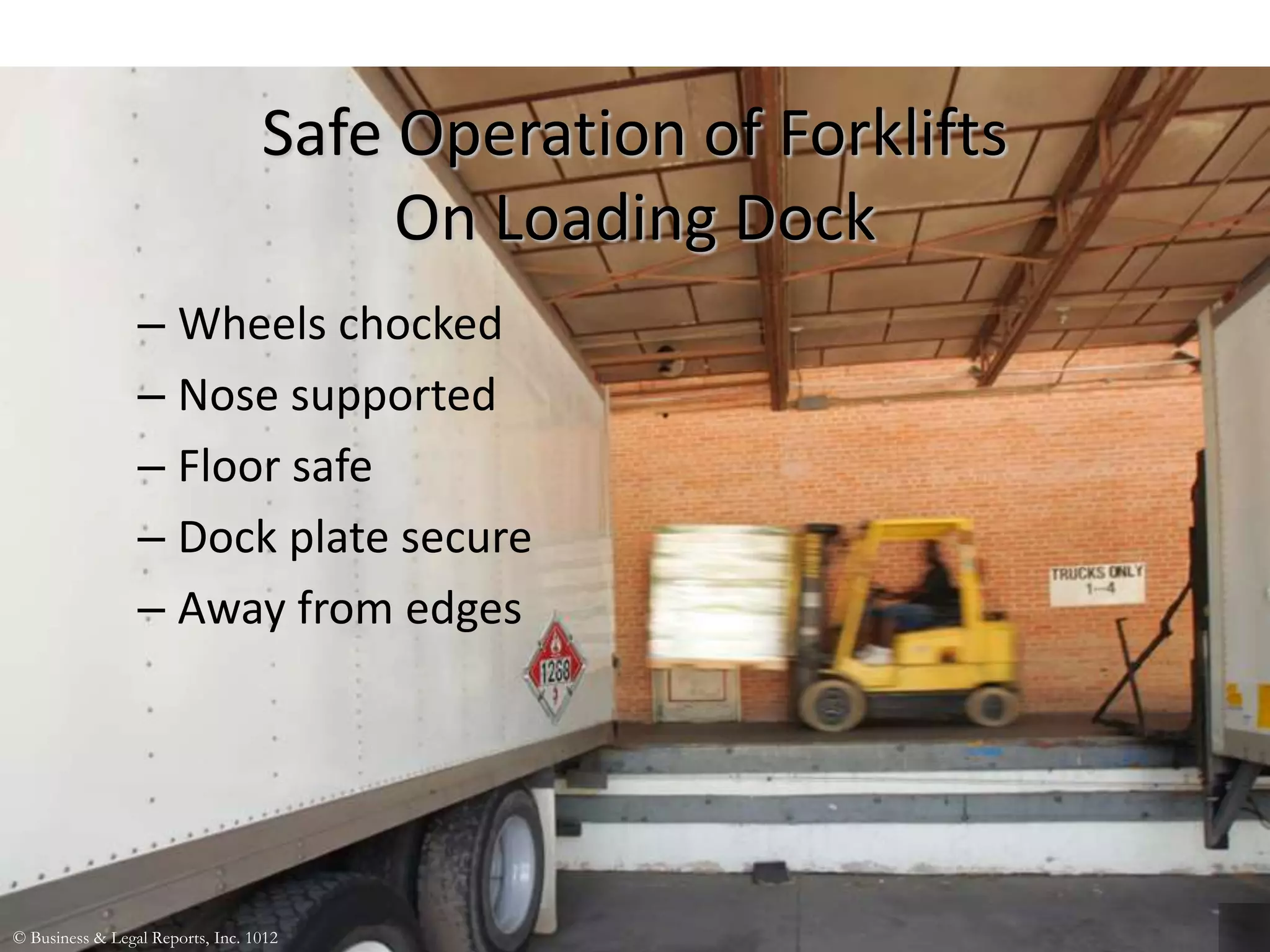
Safe Operation of Forklifts
On Loading Dock
– Wheels chocked
– Nose supported
– Floor safe
– Dock plate secure
– Away from edges
Š Business & Legal Reports, Inc. 1012
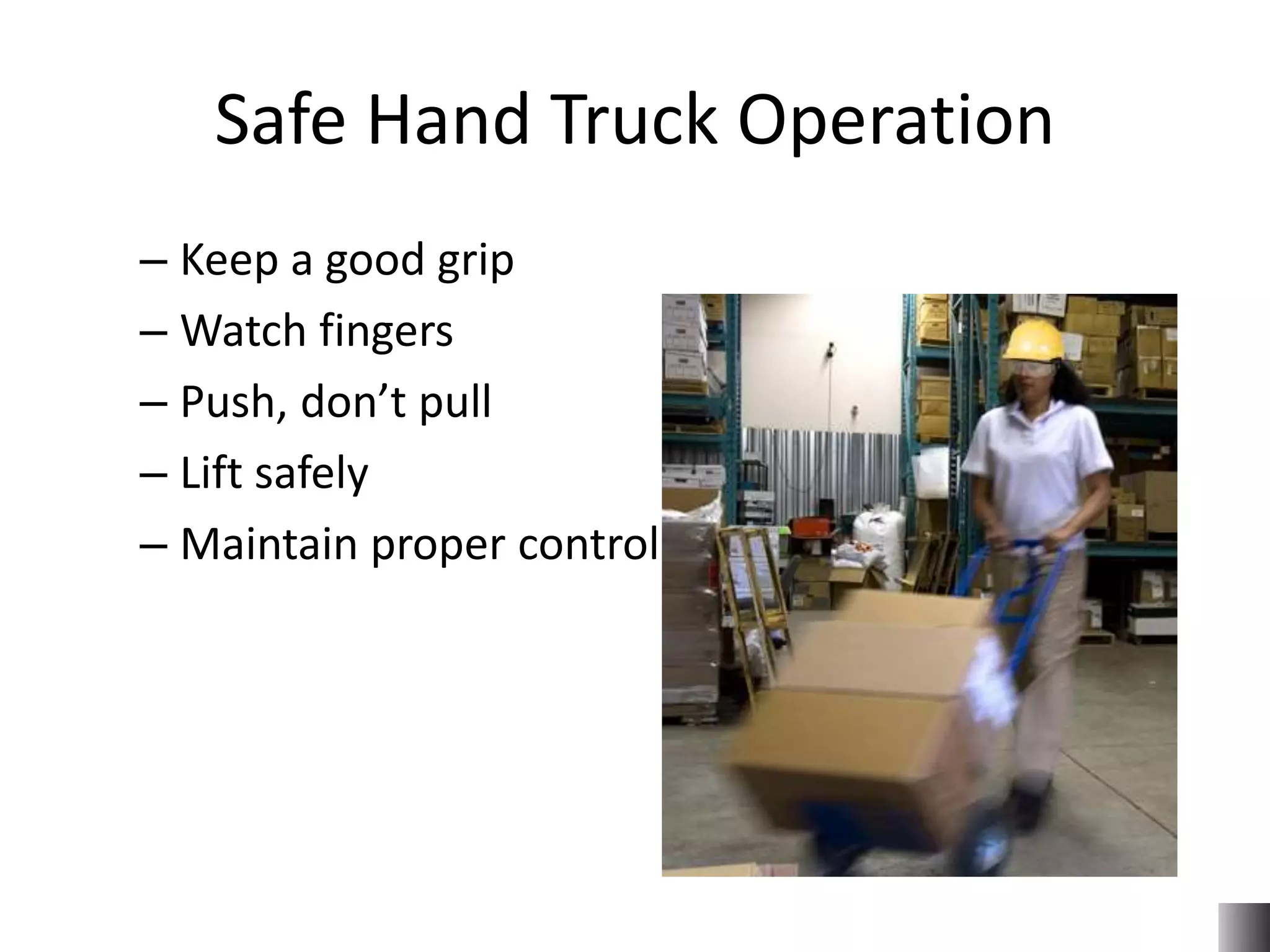
Safe Hand Truck Operation
– Keep a good grip
– Watch fingers
– Push, don’t pull
– Lift safely
– Maintain proper control
Manual Pallet Jacks
– Inspect pallets
– Stabilize load
– Watch your back
– Keep load
under control
– No horseplay!
Š Business & Legal Reports, Inc. 1012
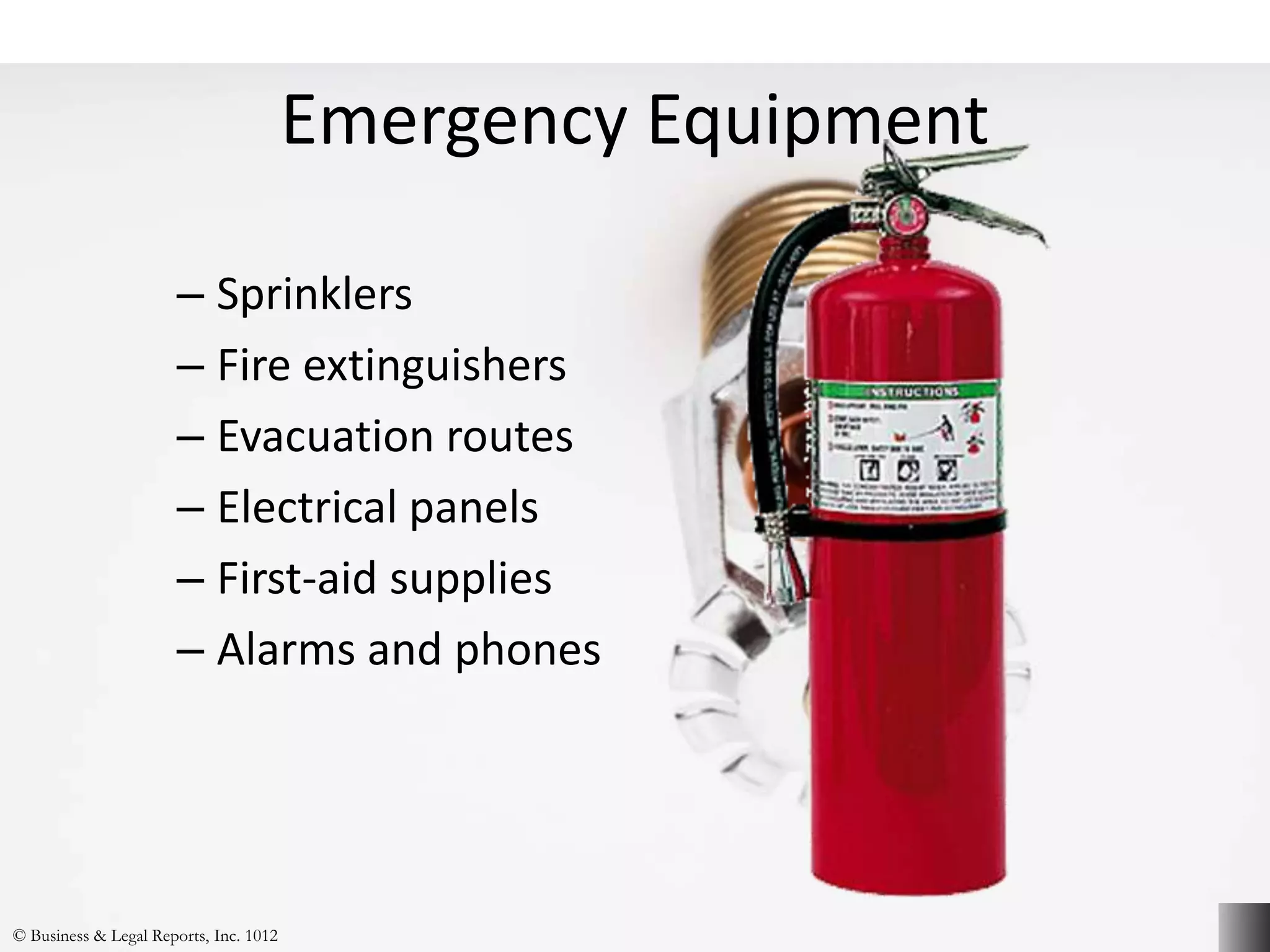
Emergency Equipment
– Sprinklers
– Fire extinguishers
– Evacuation routes
– Electrical panels
– First-aid supplies
– Alarms and phones
Š Business & Legal Reports, Inc. 1012
Key Points to Remember
•You need to be aware of the hazards in
warehouses.
•Always practice safe lifting.
•Use material-handling equipment safely,
and watch out for forklifts.
•Stack and store materials properly.
•Practice good housekeeping, and wear
required PPE.
Warehouse ppts

Warehouse ppts

  • 1.
    WAREHOUSE & INVENTORY MANAGEMENT PRABHATKUMAR CHATURVEDI MBA 2nd year INDIAN MARITIME UNIVERSITY KOCHI CAMPUS
  • 2.
    WAREHOUSE SAFETY CHECKLIST GENERALWAREHOUSE SAFETY: Are exposed or open loading dock doors chained off, roped off or otherwise blocked. Are any other areas where employees could fall four feet or more chained off, roped off, or otherwise blocked.
  • 3.
    Are floor andaisles clear of clutter , electrical cords, hoses, spills and any other hazards that could cause employees to slip, trip or fall.
  • 4.
    SAFE MATERIAL HANDELING Isthere safe clearance for equipment through aisles and doorways. Are aisleways designated , permanently marked, and kept clear to allow unhindered passage. Are hand trucks maintained in safe operating conditions.
  • 5.
    HAZARDOUS SUBSTANCE COMMUNICATION Is hazardoussubstance list used in your workplace. Is there written hazardous communication program dealing with material safety Data sheets, labelling and employees training. Is there an employees training program for hazardous substance.
  • 6.
    SAFETY AUDIT Objectives: • Identifythe risks associated with the key operations of the Warehouse. • Identify all those hazards which may impede the safe working of employees. • Understand the current risk control measures. • Identify gaps in current control measures with respect to national / international standards. • Suggest suitable risk control / mitigation measures for improvement.
  • 7.
    Scope: • Building Safety •Storage & Material Handling Practices • Fire Prevention & Protection • Emergency Preparedness • Electrical Installations • Security System
  • 8.
    ENVIROMENT CONSULTING • EnvironmentImpact Assessment Studies • Air Quality Modeling and Management • Environment due Diligence & Audits • Regulatory Compliance Assessment • Site Assessments and investigations
  • 9.
    Sustainable Warehouse Management •Sustainable warehouse is about integrating, balancing and managing the economic, environmental and social inputs and outputs of the warehouse operations.
  • 10.
    • Capital investment: to improve staff efficiency and reduce manual labour. • Number of employees : to ensure employees are not overworked • Employee Training: to ensure high employee productivity and effectiveness and continuous up skilling • Carbon minimisation: carbon credits, planting trees and air filtering • Transportation decisions: various modes of transport have significant differences in carbon emissions
  • 11.
    WASTE MANAGEMENT • Wastewatertreatment plant design and upgrading • Specialized Training • Waste & Wastewater Audit • Wastewater treatability Services • Marine Environment Services • CSR Consulting
  • 13.
    Safe Lifting Technique •1. Stand close to the load • 2. Squat down next to the load • 3. Pull the load close • 4. Tighten your stomach muscles • 5. Raise with back straight
  • 14.
    Forklift Safety: Pedestrian Traffic –Look – Listen – Be visible – Keep your distance – No rides – Use PPE – No horseplay
  • 15.
    Forklift Safety: Operation  Checkweight and stability  Inspect  Follow traffic rules
  • 16.
    Stable Pallet Loads –Stabilize – Keep low to the ground – Take damaged pallets out of service – Do not use as scaffolding
  • 17.
    Safe Stacking – Heavyitems on bottom – Big loads under small loads – Even stacks – Nothing sticking out; clear aisles
  • 18.
    Safe Operation ofForklifts On Loading Dock – Wheels chocked – Nose supported – Floor safe – Dock plate secure – Away from edges © Business & Legal Reports, Inc. 1012
  • 19.
    Safe Hand TruckOperation – Keep a good grip – Watch fingers – Push, don’t pull – Lift safely – Maintain proper control
  • 20.
    Manual Pallet Jacks –Inspect pallets – Stabilize load – Watch your back – Keep load under control – No horseplay! © Business & Legal Reports, Inc. 1012
  • 21.
    Emergency Equipment – Sprinklers –Fire extinguishers – Evacuation routes – Electrical panels – First-aid supplies – Alarms and phones © Business & Legal Reports, Inc. 1012
  • 22.
    Key Points toRemember •You need to be aware of the hazards in warehouses. •Always practice safe lifting. •Use material-handling equipment safely, and watch out for forklifts. •Stack and store materials properly. •Practice good housekeeping, and wear required PPE.