PRESENTATION
    TOPIC-MATERIAL
 HANDLING


 SUBMITTED BY:
                 MEHUL GUPTA(090106127)
                 JOGINDRA SINGH(090106103)
                 NIKHIL GUPTA(090106146)
                 RATAN TANWAR(090106182)
CONTENT
 Material handling.
 Material handling system.
 Material handling equipment.
 Type of material handling equipment.
 Material handling system in flexiable
  manufacturing.
 Advantage and disadvantage .
What is Material Handling?
 Material Handling can be defined as the
  function of moving the right material to the
  right place in the right time, in the right
  amount, in sequence, and in the right
  condition to minimize production cost.
 Also MH is the efficient short-distance
  movement of goods that usually takes
  place within the confines of a building such
  as a plant or a warehouse or between a
  building and a transportation agency.
MATERIAL HANDLING
SYSTEM
 Material Handling has four dimensions:
  Movement
  Time
  Quantity
  Space
 Material Handling is the movement,
  storage, control and protection of materials,
  goods and products throughout the
  process of manufacturing, distribution,
  consumption and disposal
Goals of Material Handling
   The primary goal is to reduce unit costs of
    production
   Maintain or improve product quality, reduce damage of
    materials
   Promote safety and improve working conditions
   Promote productivity
     material should flow in a straight line
     use gravity! It is free power
     move more material at one time
     mechanize material handling
     automate material handling
Material handling industry
 The material handling industry
  manufactures and distributes the
  equipment and services required to
  implement material handling systems.
 Material handling systems range from
  simple pallet rack and shelving projects,
  to complex conveyor belt and
  Automated Storage and Retrieval
  Systems (AS/RS).
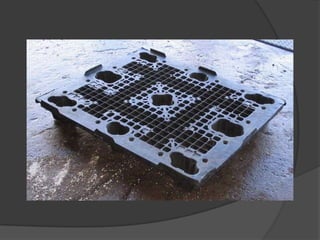
PALLET
   A pallet is a flat transport structure that
    supports goods in a stable fashion while being
    lifted by a forklift,front loader or other jacking
    device.
    A pallet is the structural foundation of a unit
    load which allows handling and storage
    efficiencies. Goods are often placed on a
    pallet secured with strapping, stretch wrap and
    shipped.
   While most pallets are wooden, pallets also
    are made of plastic, metal, and paper. Each
    material has advantages and disadvantages
    relative to the others.
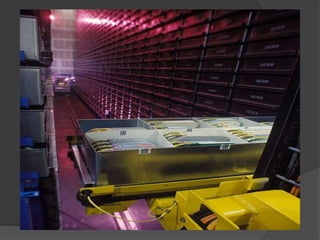
Automated storage and retrieval system
 An automated storage and retrieval
  system (ASRS or AS/RS) consists of a
  variety of computer-controlled methods for
  automatically placing and retrieving loads
  from specific storage locations.
 It is typically used in applications where:
  there is a very high volume of loads being
  moved into and out of storage; storage
  density is important because of space
  constraints; accuracy is critical because of
  potential expensive damages to the load.
  AS/RS can be used with standard loads as
  well as nonstandard loads.[
   AS/RS systems are devices designed for
    automated storage and retrieval of parts
    and items in manufacturing, distribution,
    retail, wholesale and institutions. They
    focus on bringing "goods to the man" rather
    than manual walking and searching. Space
    savings, increased productivity/reduced
    labor, increased accuracy and reduced
    inventory levels are some of the primary
    benefits.
Material handling
equipment
   Material handling equipment is all
    equipment that relates to the movement,
    storage, control and protection of materials,
    goods and products throughout the process
    of manufacturing, distribution, consumption
    and disposal.
Types of Material Handling
Equipment
 Storage and handling equipment
 Engineered systems
 Industrial trucks
 Bulk material handling
 On-Rails Transfer Cart
 Conveyors
Storage and handling
equipment
 Storage and handling equipment is a
  category within the material handling
  industry.
 The equipment that falls under this
  description is usually non-automated
  storage equipment.
 Products such as pallet racking,
  shelving, carts, etc. belong to storage
  and handling.
Engineered systems
 Engineered systems are typically custom
  engineered material handling systems.
 Conveyors, Handling Robots, AS/RS, and
  most other automated material handling
  systems fall into this category.
 Engineered systems are often a combination
  of products integrated to one system.
   Many distribution centers will optimize
    storage and picking by utilizing
    engineered systems such as pick
    modules and sortation systems.
Industrial turcks
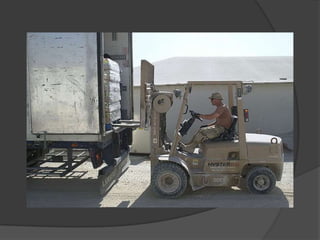
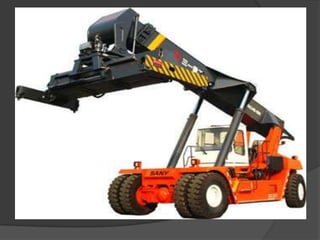
 Industrial trucks usually refer to operator
  driven motorized warehouse vehicles,
  powered manually, by gasoline, propane or
  electrically.
 Industrial trucks assist the material
  handling system with versatility; they can
  go where engineered systems cannot.
 Forklift trucks are the most common
  example of industrial trucks but certainly
  aren't the extent of the category. Tow
  tractors and stock chasers are additional
  examples of industrial trucks.
Bulk material handling

 Bulk material handling equipment is used
  to move and store bulk materials such as
  ore, liquids, and cereals.
 This equipment is often seen on farms,
  mines, shipyards and refineries.
 Bulk material handling systems are
  typically composed of stationary machinery
  such as conveyor belts, screw conveyors,
  stackers, reclaimers, bucket elevators,
  truck dumpers, railcar dumpers or wagon
  tipplers, shiploaders
Material Handling System in
Flexible Manufacturing
 The material handling system (MHS) is a
  fundamental part of a Flexible
  Manufacturing system since it
  interconnects the different processes
  supplying and taking out raw material,
  workpieces, subproducts, parts and final
  products.
 Due to the automated nature of the whole
  production process, the MHS must respond
  in concert with timeliness for all
  requirements of the processes and
  systems.
Ways in Which Material
Handling Equipment Can
Improve Efficiency
   Material handling equipment is used to
    increase output, control costs, and maximize
    productivity.
    There are several ways to determine if the
    material handling equipment is achieving peak
    efficiency.
   These include capturing all relevant data
    related to the warehouse’s operation,
    measuring how many times an item is
    “touched” from the time it is ordered until it
    leaves the building, making sure you are using
    the proper picking technology, and keeping
    system downtime to a minimum......
Advantages Of Material
Handling System:
 Improve efficiency of a production
  system by ensuring the right quantity of
  materials delivered at the right place at
  the right time most economically.
 Cut down indirect labor cost.
 Reduce damage of materials during
  storage and movement.
•Maximize space utilization by proper
storage of materials and thereby reduce
storage and handling cost.
•Minimize accident during materials
handling.
•Reduce overall cost by improving
materials handling.
•Improve customer services by supplying
materials in a manner convenient for
handlings.
•Increase efficiency and saleability of plant
and equipment with integral materials
handling features.
Disadvantages Of Material
Handling System:
   Additional capital cost involved in any
    materials handling system.
   Once a materials handling system get
    implemented, flexibility for further changes
    gets greatly reduced.
   With an integrated materials handling system
    installed, failure/stoppage in any portion of it
    leads to increased downtime of the production
    system.
   Materials handling system needs
    maintenance, hence any addition to materials
    handling means additional maintenance
    facilities and costs.
Essential Of Good Material
Handling System:
 Efficient and safe movement of
  materials to the desired place.
 Timely movement of the materials when
  needed.
 Supply of materials at the desired rate.
 Storing of materials utilizing minimum
  space.
 Lowest cost solution to the materials
  handling activities.
Material handling industry

Material handling industry

  • 1.
    PRESENTATION TOPIC-MATERIAL HANDLING SUBMITTED BY: MEHUL GUPTA(090106127) JOGINDRA SINGH(090106103) NIKHIL GUPTA(090106146) RATAN TANWAR(090106182)
  • 2.
    CONTENT  Material handling. Material handling system.  Material handling equipment.  Type of material handling equipment.  Material handling system in flexiable manufacturing.  Advantage and disadvantage .
  • 3.
    What is MaterialHandling?  Material Handling can be defined as the function of moving the right material to the right place in the right time, in the right amount, in sequence, and in the right condition to minimize production cost.  Also MH is the efficient short-distance movement of goods that usually takes place within the confines of a building such as a plant or a warehouse or between a building and a transportation agency.
  • 4.
    MATERIAL HANDLING SYSTEM  MaterialHandling has four dimensions: Movement Time Quantity Space  Material Handling is the movement, storage, control and protection of materials, goods and products throughout the process of manufacturing, distribution, consumption and disposal
  • 5.
    Goals of MaterialHandling  The primary goal is to reduce unit costs of production  Maintain or improve product quality, reduce damage of materials  Promote safety and improve working conditions  Promote productivity  material should flow in a straight line  use gravity! It is free power  move more material at one time  mechanize material handling  automate material handling
  • 7.
    Material handling industry The material handling industry manufactures and distributes the equipment and services required to implement material handling systems.  Material handling systems range from simple pallet rack and shelving projects, to complex conveyor belt and Automated Storage and Retrieval Systems (AS/RS).
  • 9.
    PALLET  A pallet is a flat transport structure that supports goods in a stable fashion while being lifted by a forklift,front loader or other jacking device.  A pallet is the structural foundation of a unit load which allows handling and storage efficiencies. Goods are often placed on a pallet secured with strapping, stretch wrap and shipped.  While most pallets are wooden, pallets also are made of plastic, metal, and paper. Each material has advantages and disadvantages relative to the others.
  • 11.
    Automated storage andretrieval system  An automated storage and retrieval system (ASRS or AS/RS) consists of a variety of computer-controlled methods for automatically placing and retrieving loads from specific storage locations.  It is typically used in applications where: there is a very high volume of loads being moved into and out of storage; storage density is important because of space constraints; accuracy is critical because of potential expensive damages to the load. AS/RS can be used with standard loads as well as nonstandard loads.[
  • 12.
    AS/RS systems are devices designed for automated storage and retrieval of parts and items in manufacturing, distribution, retail, wholesale and institutions. They focus on bringing "goods to the man" rather than manual walking and searching. Space savings, increased productivity/reduced labor, increased accuracy and reduced inventory levels are some of the primary benefits.
  • 14.
    Material handling equipment  Material handling equipment is all equipment that relates to the movement, storage, control and protection of materials, goods and products throughout the process of manufacturing, distribution, consumption and disposal.
  • 15.
    Types of MaterialHandling Equipment  Storage and handling equipment  Engineered systems  Industrial trucks  Bulk material handling  On-Rails Transfer Cart  Conveyors
  • 16.
    Storage and handling equipment Storage and handling equipment is a category within the material handling industry.  The equipment that falls under this description is usually non-automated storage equipment.  Products such as pallet racking, shelving, carts, etc. belong to storage and handling.
  • 17.
    Engineered systems  Engineeredsystems are typically custom engineered material handling systems.  Conveyors, Handling Robots, AS/RS, and most other automated material handling systems fall into this category.  Engineered systems are often a combination of products integrated to one system.
  • 18.
    Many distribution centers will optimize storage and picking by utilizing engineered systems such as pick modules and sortation systems.
  • 19.
    Industrial turcks  Industrialtrucks usually refer to operator driven motorized warehouse vehicles, powered manually, by gasoline, propane or electrically.  Industrial trucks assist the material handling system with versatility; they can go where engineered systems cannot.  Forklift trucks are the most common example of industrial trucks but certainly aren't the extent of the category. Tow tractors and stock chasers are additional examples of industrial trucks.
  • 21.
    Bulk material handling Bulk material handling equipment is used to move and store bulk materials such as ore, liquids, and cereals.  This equipment is often seen on farms, mines, shipyards and refineries.  Bulk material handling systems are typically composed of stationary machinery such as conveyor belts, screw conveyors, stackers, reclaimers, bucket elevators, truck dumpers, railcar dumpers or wagon tipplers, shiploaders
  • 23.
    Material Handling Systemin Flexible Manufacturing  The material handling system (MHS) is a fundamental part of a Flexible Manufacturing system since it interconnects the different processes supplying and taking out raw material, workpieces, subproducts, parts and final products.  Due to the automated nature of the whole production process, the MHS must respond in concert with timeliness for all requirements of the processes and systems.
  • 25.
    Ways in WhichMaterial Handling Equipment Can Improve Efficiency  Material handling equipment is used to increase output, control costs, and maximize productivity.  There are several ways to determine if the material handling equipment is achieving peak efficiency.  These include capturing all relevant data related to the warehouse’s operation, measuring how many times an item is “touched” from the time it is ordered until it leaves the building, making sure you are using the proper picking technology, and keeping system downtime to a minimum......
  • 26.
    Advantages Of Material HandlingSystem:  Improve efficiency of a production system by ensuring the right quantity of materials delivered at the right place at the right time most economically.  Cut down indirect labor cost.  Reduce damage of materials during storage and movement.
  • 27.
    •Maximize space utilizationby proper storage of materials and thereby reduce storage and handling cost. •Minimize accident during materials handling. •Reduce overall cost by improving materials handling. •Improve customer services by supplying materials in a manner convenient for handlings. •Increase efficiency and saleability of plant and equipment with integral materials handling features.
  • 28.
    Disadvantages Of Material HandlingSystem:  Additional capital cost involved in any materials handling system.  Once a materials handling system get implemented, flexibility for further changes gets greatly reduced.  With an integrated materials handling system installed, failure/stoppage in any portion of it leads to increased downtime of the production system.  Materials handling system needs maintenance, hence any addition to materials handling means additional maintenance facilities and costs.
  • 29.
    Essential Of GoodMaterial Handling System:  Efficient and safe movement of materials to the desired place.  Timely movement of the materials when needed.  Supply of materials at the desired rate.  Storing of materials utilizing minimum space.  Lowest cost solution to the materials handling activities.