FALLING
OBJECTS
HAZARDS
 Most most common injuries workers suffer from falling objects are bruises, fractures,
strains, and sprains.
 The objects that commonly fall range from large items such as roof trusses and steel
beams to small items such as fasteners and small hand tools.
 Objects as small as a bolt can cause serious injury or even death when dropped from a
higher level and striking an employee working on the ground.
 Outside of injuries and deaths, dropped objects are responsible for a large cost to
employers due to property damage incidents as well.
There are two types of controls you can use to prevent falling objects from hurting
workers:
 1. Physical controls
 2. Procedural controls
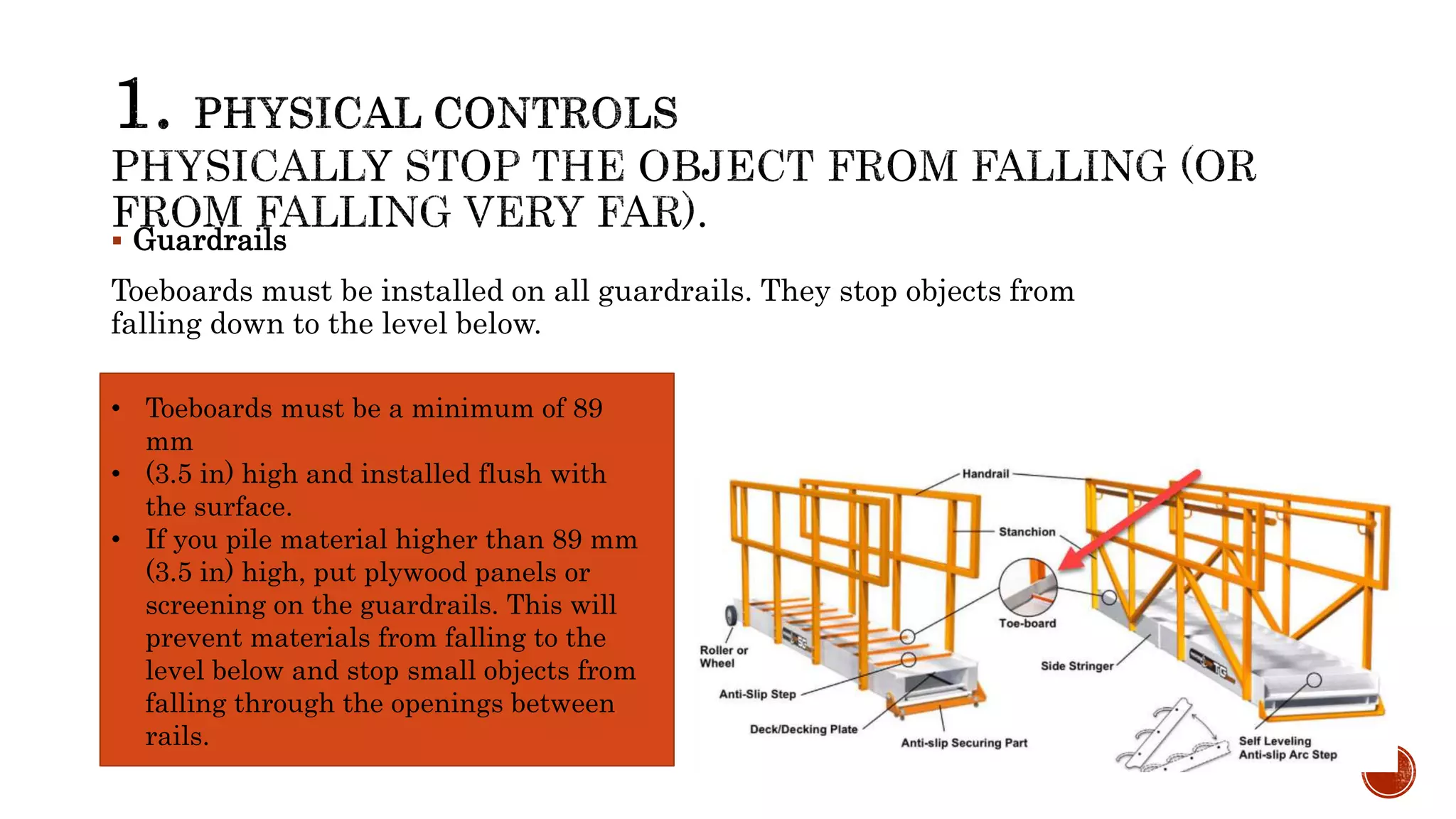
 Guardrails
Toeboards must be installed on all guardrails. They stop objects from
falling down to the level below.
• Toeboards must be a minimum of 89
mm
• (3.5 in) high and installed flush with
the surface.
• If you pile material higher than 89 mm
(3.5 in) high, put plywood panels or
screening on the guardrails. This will
prevent materials from falling to the
level below and stop small objects from
falling through the openings between
rails.
 If work is being performed on open grating,
non-slip plywood or a similar product is
placed on top of the grating to prevent small
objects from falling through it.
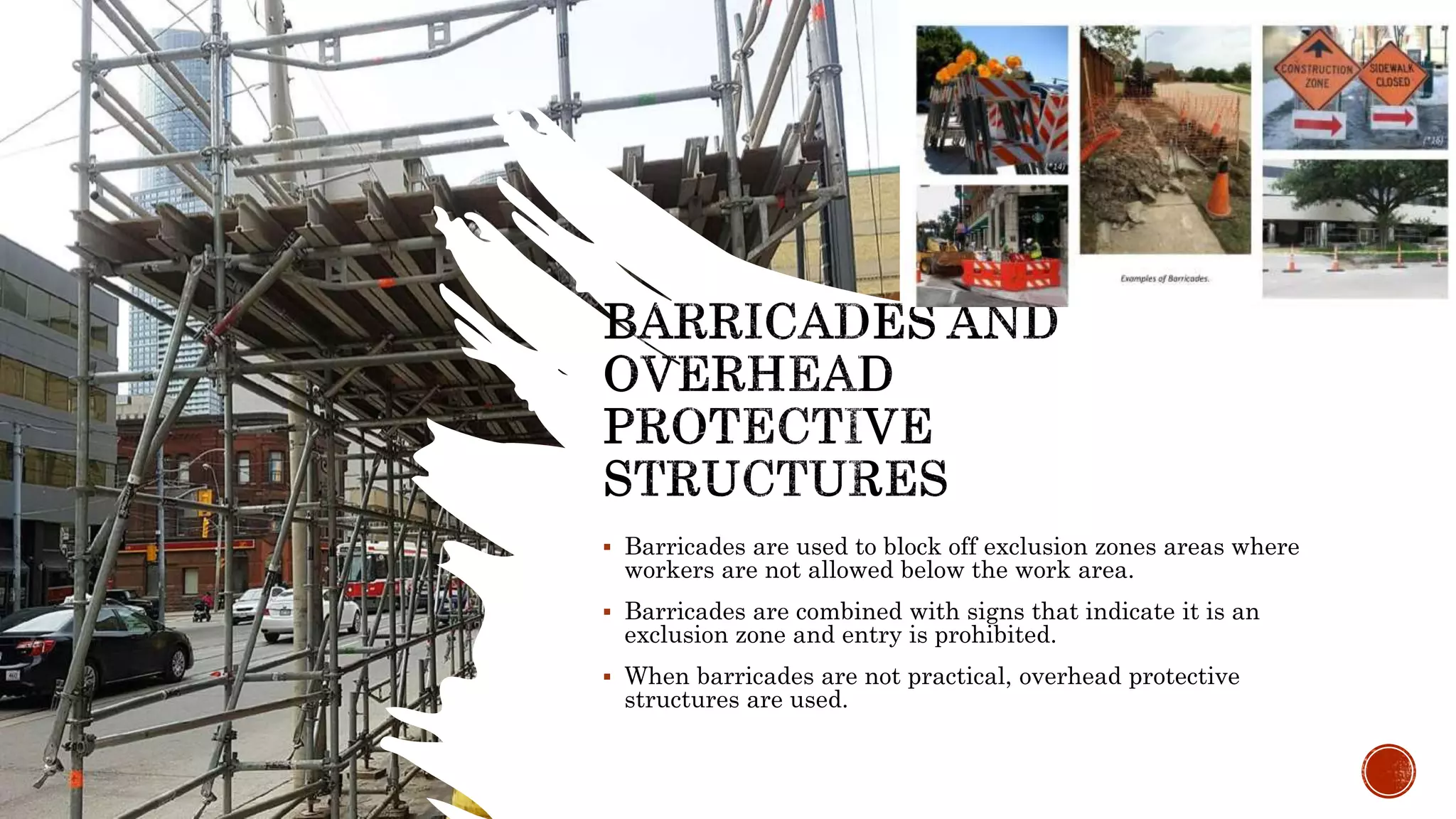
 Barricades are used to block off exclusion zones areas where
workers are not allowed below the work area.
 Barricades are combined with signs that indicate it is an
exclusion zone and entry is prohibited.
 When barricades are not practical, overhead protective
structures are used.
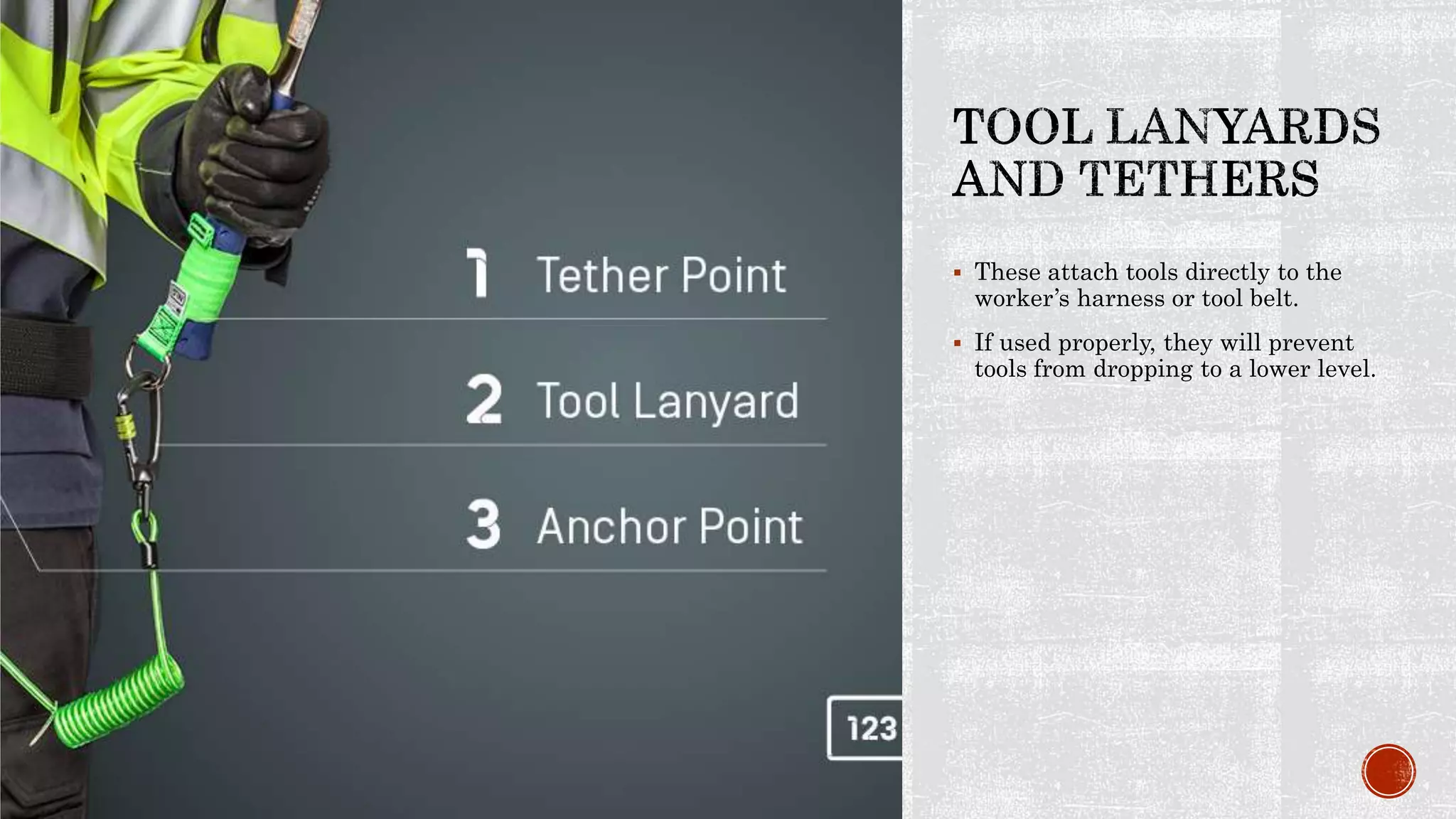
 These attach tools directly to the
worker’s harness or tool belt.
 If used properly, they will prevent
tools from dropping to a lower level.
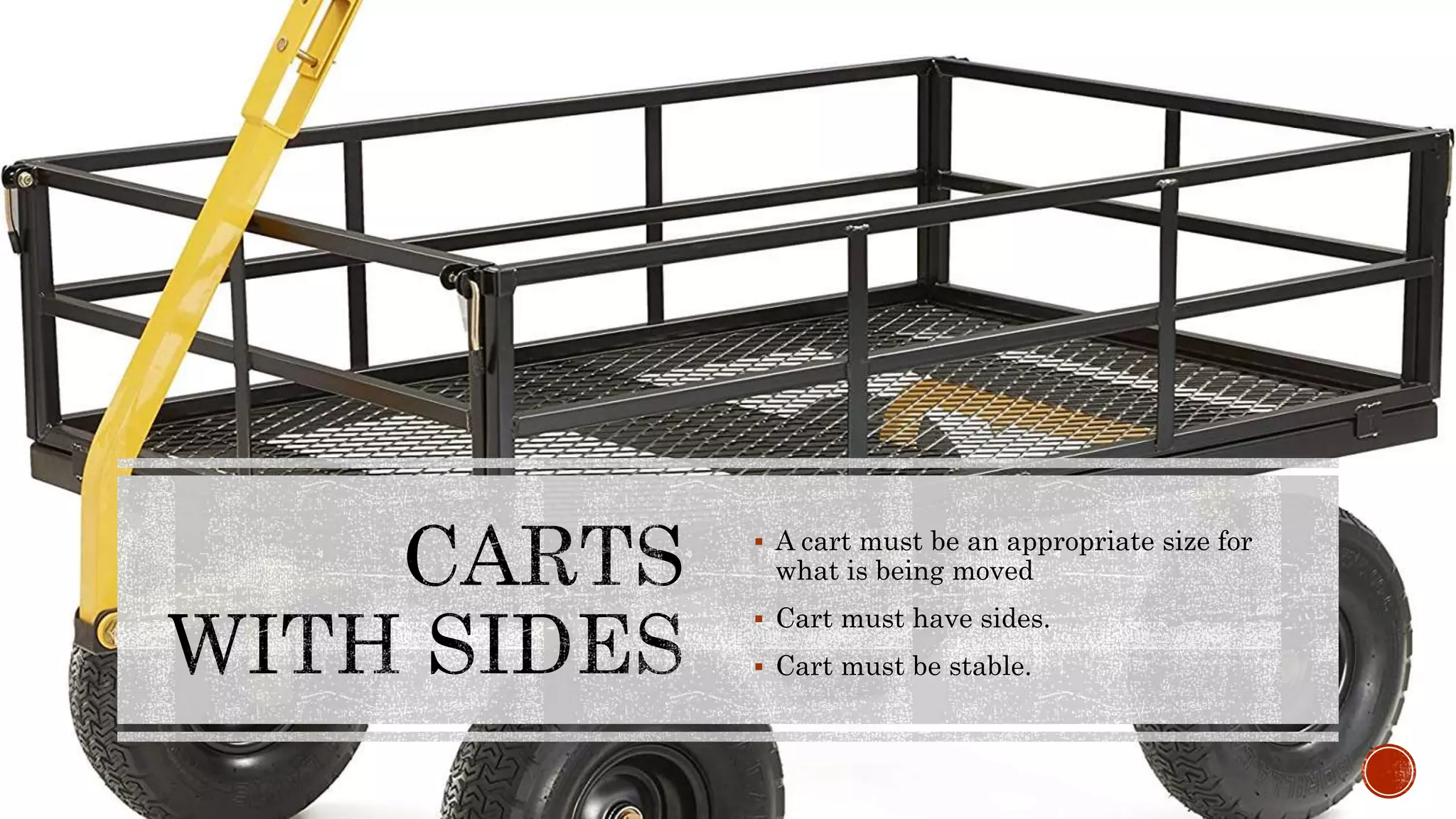
 A cart must be an appropriate size for
what is being moved
 Cart must have sides.
 Cart must be stable.
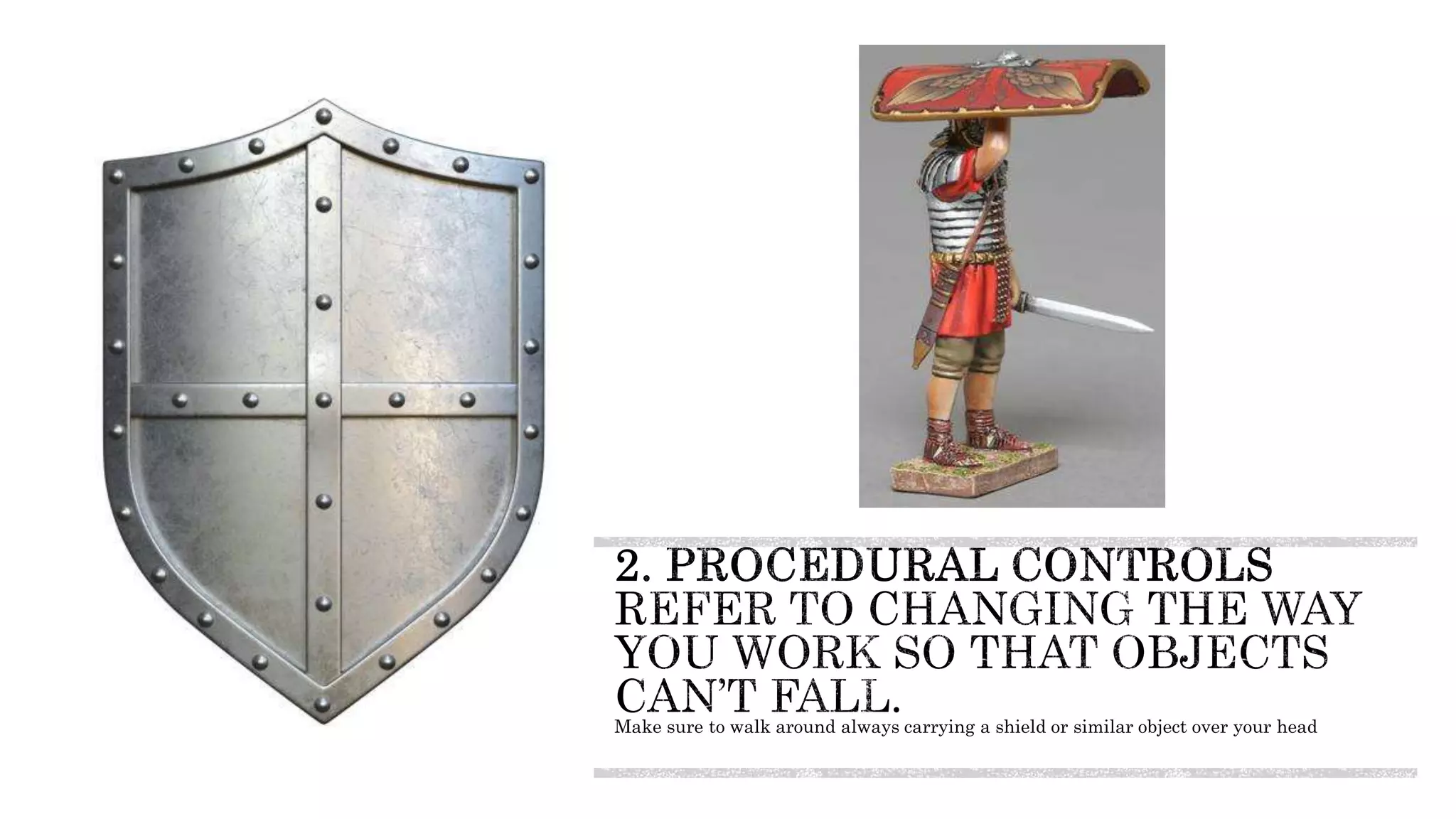
Make sure to walk around always carrying a shield or similar object over your head
 Securing loads
 When lifting, make sure the load is balanced and secured. Check for small or loose pieces before you lift.
 Good hoisting practices
 Never lift, lower, or swing a load over someone’s head.
 Barricades are used to block off areas where loads are being lifted or lowered.
 If the operator’s view is impeded in any way, a signaler assists the operator.
 Good housekeeping
 Tools and other materials are always kept away from edges, railings, and other elevated surfaces.
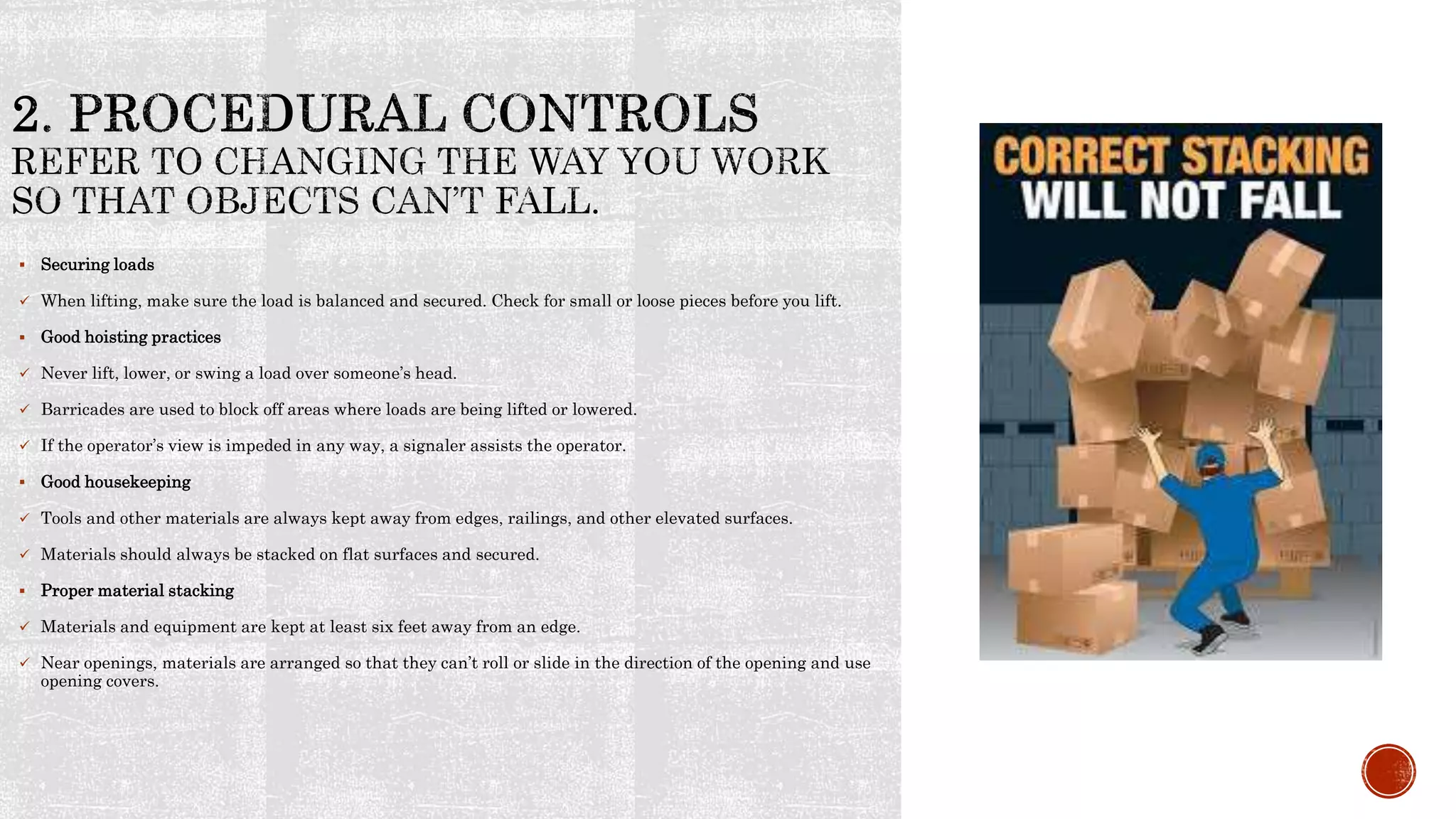
 Materials should always be stacked on flat surfaces and secured.
 Proper material stacking
 Materials and equipment are kept at least six feet away from an edge.
 Near openings, materials are arranged so that they can’t roll or slide in the direction of the opening and use
opening covers.
Falling Objects Hazards.pptx

Falling Objects Hazards.pptx

  • 1.
  • 2.
     Most mostcommon injuries workers suffer from falling objects are bruises, fractures, strains, and sprains.  The objects that commonly fall range from large items such as roof trusses and steel beams to small items such as fasteners and small hand tools.  Objects as small as a bolt can cause serious injury or even death when dropped from a higher level and striking an employee working on the ground.  Outside of injuries and deaths, dropped objects are responsible for a large cost to employers due to property damage incidents as well.
  • 3.
    There are twotypes of controls you can use to prevent falling objects from hurting workers:  1. Physical controls  2. Procedural controls
  • 4.
     Guardrails Toeboards mustbe installed on all guardrails. They stop objects from falling down to the level below. • Toeboards must be a minimum of 89 mm • (3.5 in) high and installed flush with the surface. • If you pile material higher than 89 mm (3.5 in) high, put plywood panels or screening on the guardrails. This will prevent materials from falling to the level below and stop small objects from falling through the openings between rails.
  • 5.
     If workis being performed on open grating, non-slip plywood or a similar product is placed on top of the grating to prevent small objects from falling through it.
  • 6.
     Barricades areused to block off exclusion zones areas where workers are not allowed below the work area.  Barricades are combined with signs that indicate it is an exclusion zone and entry is prohibited.  When barricades are not practical, overhead protective structures are used.
  • 7.
     These attachtools directly to the worker’s harness or tool belt.  If used properly, they will prevent tools from dropping to a lower level.
  • 8.
     A cartmust be an appropriate size for what is being moved  Cart must have sides.  Cart must be stable.
  • 9.
    Make sure towalk around always carrying a shield or similar object over your head
  • 10.
     Securing loads When lifting, make sure the load is balanced and secured. Check for small or loose pieces before you lift.  Good hoisting practices  Never lift, lower, or swing a load over someone’s head.  Barricades are used to block off areas where loads are being lifted or lowered.  If the operator’s view is impeded in any way, a signaler assists the operator.  Good housekeeping  Tools and other materials are always kept away from edges, railings, and other elevated surfaces.  Materials should always be stacked on flat surfaces and secured.  Proper material stacking  Materials and equipment are kept at least six feet away from an edge.  Near openings, materials are arranged so that they can’t roll or slide in the direction of the opening and use opening covers.