WARD
MANAGEMENT
BHANU DIXIT
POORNIMAUNIVERSITY
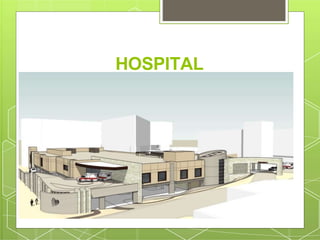
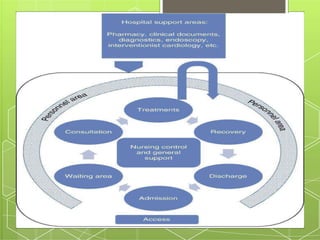
HOSPITAL
Admission
🞇 entering a health care institution for nursing care
and medical and/or surgical treatment.
🞇 Hospital admission involves staying at a hospital
for at least one night or more.
🞇 An individual may be admitted to the hospital for a
positive experience, such as having a baby, or
because they are undergoing an elective surgery or
procedure, or because they are being admitted
through the emergency department.
ADMISSION CHECK LIST-
WARD
🞇 Put on the patient an identification band
🞇 Apply allergy band (if necessary)
🞇 Initial patient assessment/nursing history
🞇 Allergy History and Allergy Record
🞇 Medication History/Medication Reconciliation
🞇 Braden scale
🞇 Sanitary-hygienic procedures (bathing,
changing Cloths
ADMITTING PROCEDURE
🞇 At the time of admission, the registered Nurse (RN) performs
complete assessment in 1Hr. of the patient.
🞇 Enter patient’s name, medical record number and age at the
upper left corner of the form.
🞇 Enter also: patient’s address, house and office phone
number, date of birth, place of employment, occupation.
🞇 Enter date and time of admission, medical diagnosis and
chief complaint in the appropriate spaces in the form.
🞇 Document the source of information (patient, family,
caregiver or health care person or significant person).
🞇 Check and document if patient has previous hospitalization
and write patient history including past major illnesses.
CONT…..
🞇 Indicate if patient was admitted from ER (emergency room),
home, clinic, or other and accompanied by whom. Take
patients vital signs (temperature, pulse, respiration), height,
weight .
🞇 Evaluate and document the location and the severity of the
pain using the pain scale.
🞇 Document if patient has history of allergy, if yes, check,
whether its due to medication, food or others.
🞇 Document patient brought medicine to the hospital. If yes,
check whether it was send to pharmacy.
🞇 Document if patient and family has valuables brought to the
hospital . If yes , check it was sent to admission office.
CONT……..
🞇 At the time of arrival to the room, patient and family
will be given orientation to the unit, an explanation
to the patient’s rights and responsibilities.
🞇 Check the activities of daily living and need of
mobility aid.
🞇 Document emergency contact information, or the
names and telephone numbers of those individuals
(family members or others) the hospital should
contact if the person being admitted needs
emergency care or their condition worsens
significantly Patient
REGISTRATION FORM
Nursing admission sheet
Observation by nurse
Abbreviations :-
🞇 Temperature – T
🞇 Pulse – P
🞇 Respirations – R
🞇 Blood Pressure-BP
🞇 Vital signs - TPR
and BP.
Purpose
Measured to detect
any changes in
normal body function
Used to determine
response to
treatment
Pain assessment
Pay your attention on-Allergy
🞇 Drug
🞇 Environmental
🞇 Food Patient
Functions of inpatients
🞇 Hospital inpatient services basically covers 1/3 rd
of the total hospital complex.
🞇 The functions of inpatient services are:
🞇 To render nursing care to all patients
🞇 To provide necessary equipment, essential drugs
and all other stores requirements for patients care
in an organized manner in the wards
🞇 It provides opportunity for training medical,
nursing and paramedical, nursing and medical
staffs besides conducting research work.
Hospital ward
🞇block forming a division of a hospital
(or a suite of rooms) shared by
patients who need a similar kind of
care
Types of wards
🞇 General wards
🞇 Specialized wards (maternity, paediatrics,
psychiatric, geriatrics, oncology, and
detoxification wards)
Constituents
🞇 Patient space
🞇 Nursing space
🞇 Corridors
Design factors
🞇 Movement space
🞇 Number of beds in a room
🞇 Bed spacing – 6 feet max
🞇 Position of nursing station
🞇 Category of the ward
🞇 Ancillary rooms
🞇 Ratio of toilet accommodation
Types of ward design
🞇 Open ward or Nightingale Ward
🞇 Modified Nightingale Ward
🞇 Rig’s Pattern Ward (Unilateral or Bilateral)
🞇 T-Shaped Ward
🞇 L-Shaped Ward
🞇 Cruciform type of ward
Nightingale Ward
🞇 This is an open-plan ward containing 25-30 beds.
🞇 Patients’ beds are located in two row in a long,
rectangular ward.
🞇 It may have side rooms for utilities and perhaps
one or two side rooms, that can be used for patient
occupancy when patient isolation or patient privacy
is important.
🞇 Nursing Station, Doctor’s room and others facility
at one end. Bathroom and WC at the other end.
Nightingale Ward
Nightingale Ward
Advantages
🞇 Good visibility;
🞇 Economical
benefits (easy to
construct);
🞇 Good possibilities
for ventilation.
Disadvantages
🞇 This is the noisiest
type of ward;
🞇 No privacy for the
patients;
🞇 High risk of cross-
infections.
Main features of the modified
Nightingale ward
🞇 This type of ward has a nursing station in
centre of ward;
🞇 Ancillary and Auxiliary service are located at
one end and utility service at other end of the
ward;
🞇 The nurse travel time has been reduced and
the supervision over patients condition also
improved in modified pattern of ward.
Rigg’s ward
🞇 Ward unit is divided into small compartments
separated from each other.
🞇 •Each compartment having 4-6 or more beds
arranged parallel to the longitudinal wall.
🞇 •Bed may be on one side or both sides of
nursing station.
🞇 •Isolation room (1 or 2) can be kept in ward.
Rigg’s ward
Rigg’s ward
Advantages:
🞇 •Patient beds not visible
to outside visitors
except for visiting hours
🞇 •Gives a more clean and
tidy look
🞇 •It provides as a barrier
against psychological
shock for other patients
during emergency
situations.
🞇 •More privacy
Disadvantages:
🞇 •Communication between
nurses and patient
becomes more difficult
🞇 •Patients deprived of direct
observation from nurses
🞇 •Wards become longer,
consequently nurses have
to run more
🞇 •More nurses are required
🞇 •Expensive to build and
maintain
Accommodation
Ancillary accommodation
🞇 Auxiliary accommodation
🞇 Sanitary accommodation
🞇 Primary accommodation
Accommodation
🞇 Primary Accommodation.
Consists of single bedroom or multiple bedroom for patients and a
nursing station.
🞇 Ancillary accommodation.
Service for direct support of treatment (portable x-ray, Pantry, Dietician
service in ward, mobile pharmacy).
🞇 Auxiliary accommodation.
Service for indirect support of treatment (Store, housekeeping, doctor’s
room, nurse’s room, seminar –teaching room).
🞇 Sanitary accommodation.
Consists of WC, Bathroom, sluice room.
What should be considered in
designing different types of wards:
🞇 General ward :Healthy Environment
🞇 •Paediatric/ psychiatric ward- Safety
🞇 •Geriatric ward- Safety/ comfort
🞇 •Obstetrics/Gynecology ward – Privacy
🞇 •ICU- Nursing Care
🞇 •OT-Infection control
Hygienic requirements in
wards are
🞇 Optimal temperature in the ward should be 18-
20C;
🞇 •Wiping(the floor, windows, furniture) at least 2
times a day – in the morning and evening.
🞇 •In some departments — more often, for
example, in the infectious departments — 4
times a day.
🞇 •Morning wiping should be finished till 9 a.m.
🞇 •Ventilation of wards not less than four times a
day.
Hygienic requirements in
wards are
•Tidy appearance;
•Short nails;
🞇 White coat;
🞇
🞇
🞇 •Special hospital footwear which can be easily disinfected
(for example, leather).
🞇 •Hands well washed up with soap.
🞇 •To medical sisters engaged in surgical manipulations,
watches, rings, varnish on nails are forbidden.
🞇 •According to indications (the maternity, infectious
department, epidemic of influenza, etc.) a mask is put on; it
is necessary to change a gauze mask every 4 hours; at an
opportunity, it is better to use disposable sterile masks.
Types of transfer
🞇 Intrahospital – Within the same facility
🞇 Interhospital – Within two different facilities
🞇 From hospital to home– Post Discharge/
After Referral to other type of Healthcare
delivery Setups
Intrahospital
🞇 From Admitting office to Wards
🞇 •From Emergency to Wards
🞇 •From Emergency to OT/ ICUs
🞇 •From Wards to OT/ ICUs
🞇 •From Wards to Radiology for Imaging
🞇 •From Wards to Wards
🞇 •From One ICU to other ICU
Interhospital
🞇 From one facility to other in same city
🞇 •From one facility to other in different city
🞇 •From Hospital to other healthcare delivery
centre, Government Hospitals, Geriatric
care, End of life care facilities, Nursing
homes etc
From hospital to home
Equipment
🞇 Wheelchair or gurney
🞇 •Covering for client
🞇 •Patient's records, chart patient care plan, and
valuables receipt
🞇 •Patient's MAR (medication administration
record)
🞇 •Patient's personal hygiene equipment
🞇 •Special equipment (e.g., walker)
🞇 •Personal belongings
Orders
•Contact admitting office to arrange for transfer.
🞇 Verify physician's order if needed.
🞇
🞇 •Communicate with transfer unit to determine the best time
for transferring client.
• Gather equipment, belongings, and records.
•Obtain necessary staff assistance for transfer.
🞇 •Identify patient and inform patient of impending transfer.
🞇
🞇
🞇 •Transfer patient to wheelchair or gurney unless patient is
remaining in bed for the transfer. Use protective belts and
rails as indicated.
🞇 •Cover patient to provide warmth and to avoid exposure
during transfer.
Cont………
🞇 Notify charge nurse when you arrive on the receiving unit.
🞇 •Introduce patient to new staff, who will be caring for the patient that
day.
🞇 •Give complete report to staff, using the patient care plan. Give
information concerning individualized care needs, patient problems,
progress, when next medications or treatments are due. If
necessary, give phone report to receiving nurse.
🞇 •Notify physician, admitting office, and dietary department when
transfer is completed. A transfer notification must be sent to the
appropriate departments.
🞇 •Notify x-ray and the laboratory if tests were scheduled or results
pending.
Level of Transfer
🞇 Independent transfers
🞇 ◦Thepatient consistently performs all aspects of the
transfer, including setup, in a safe manner and without
assistance.
🞇 Assisted transfers
🞇 ◦
The patient actively participates, but also requires
assistance by a clinician(s).
🞇 Dependent transfers
🞇 ◦Thepatient does not participate actively, or only very
minimally and the clinician(s) perform all aspects of the
transfer
ward design.pptx

ward design.pptx

  • 1.
  • 2.
  • 4.
    Admission 🞇 entering ahealth care institution for nursing care and medical and/or surgical treatment. 🞇 Hospital admission involves staying at a hospital for at least one night or more. 🞇 An individual may be admitted to the hospital for a positive experience, such as having a baby, or because they are undergoing an elective surgery or procedure, or because they are being admitted through the emergency department.
  • 5.
    ADMISSION CHECK LIST- WARD 🞇Put on the patient an identification band 🞇 Apply allergy band (if necessary) 🞇 Initial patient assessment/nursing history 🞇 Allergy History and Allergy Record 🞇 Medication History/Medication Reconciliation 🞇 Braden scale 🞇 Sanitary-hygienic procedures (bathing, changing Cloths
  • 6.
    ADMITTING PROCEDURE 🞇 Atthe time of admission, the registered Nurse (RN) performs complete assessment in 1Hr. of the patient. 🞇 Enter patient’s name, medical record number and age at the upper left corner of the form. 🞇 Enter also: patient’s address, house and office phone number, date of birth, place of employment, occupation. 🞇 Enter date and time of admission, medical diagnosis and chief complaint in the appropriate spaces in the form. 🞇 Document the source of information (patient, family, caregiver or health care person or significant person). 🞇 Check and document if patient has previous hospitalization and write patient history including past major illnesses.
  • 7.
    CONT….. 🞇 Indicate ifpatient was admitted from ER (emergency room), home, clinic, or other and accompanied by whom. Take patients vital signs (temperature, pulse, respiration), height, weight . 🞇 Evaluate and document the location and the severity of the pain using the pain scale. 🞇 Document if patient has history of allergy, if yes, check, whether its due to medication, food or others. 🞇 Document patient brought medicine to the hospital. If yes, check whether it was send to pharmacy. 🞇 Document if patient and family has valuables brought to the hospital . If yes , check it was sent to admission office.
  • 8.
    CONT…….. 🞇 At thetime of arrival to the room, patient and family will be given orientation to the unit, an explanation to the patient’s rights and responsibilities. 🞇 Check the activities of daily living and need of mobility aid. 🞇 Document emergency contact information, or the names and telephone numbers of those individuals (family members or others) the hospital should contact if the person being admitted needs emergency care or their condition worsens significantly Patient
  • 9.
  • 10.
  • 11.
    Observation by nurse Abbreviations:- 🞇 Temperature – T 🞇 Pulse – P 🞇 Respirations – R 🞇 Blood Pressure-BP 🞇 Vital signs - TPR and BP. Purpose Measured to detect any changes in normal body function Used to determine response to treatment
  • 12.
  • 13.
    Pay your attentionon-Allergy 🞇 Drug 🞇 Environmental 🞇 Food Patient
  • 14.
    Functions of inpatients 🞇Hospital inpatient services basically covers 1/3 rd of the total hospital complex. 🞇 The functions of inpatient services are: 🞇 To render nursing care to all patients 🞇 To provide necessary equipment, essential drugs and all other stores requirements for patients care in an organized manner in the wards 🞇 It provides opportunity for training medical, nursing and paramedical, nursing and medical staffs besides conducting research work.
  • 15.
    Hospital ward 🞇block forminga division of a hospital (or a suite of rooms) shared by patients who need a similar kind of care
  • 16.
    Types of wards 🞇General wards 🞇 Specialized wards (maternity, paediatrics, psychiatric, geriatrics, oncology, and detoxification wards)
  • 17.
    Constituents 🞇 Patient space 🞇Nursing space 🞇 Corridors
  • 18.
    Design factors 🞇 Movementspace 🞇 Number of beds in a room 🞇 Bed spacing – 6 feet max 🞇 Position of nursing station 🞇 Category of the ward 🞇 Ancillary rooms 🞇 Ratio of toilet accommodation
  • 19.
    Types of warddesign 🞇 Open ward or Nightingale Ward 🞇 Modified Nightingale Ward 🞇 Rig’s Pattern Ward (Unilateral or Bilateral) 🞇 T-Shaped Ward 🞇 L-Shaped Ward 🞇 Cruciform type of ward
  • 20.
    Nightingale Ward 🞇 Thisis an open-plan ward containing 25-30 beds. 🞇 Patients’ beds are located in two row in a long, rectangular ward. 🞇 It may have side rooms for utilities and perhaps one or two side rooms, that can be used for patient occupancy when patient isolation or patient privacy is important. 🞇 Nursing Station, Doctor’s room and others facility at one end. Bathroom and WC at the other end.
  • 21.
  • 22.
    Nightingale Ward Advantages 🞇 Goodvisibility; 🞇 Economical benefits (easy to construct); 🞇 Good possibilities for ventilation. Disadvantages 🞇 This is the noisiest type of ward; 🞇 No privacy for the patients; 🞇 High risk of cross- infections.
  • 23.
    Main features ofthe modified Nightingale ward 🞇 This type of ward has a nursing station in centre of ward; 🞇 Ancillary and Auxiliary service are located at one end and utility service at other end of the ward; 🞇 The nurse travel time has been reduced and the supervision over patients condition also improved in modified pattern of ward.
  • 24.
    Rigg’s ward 🞇 Wardunit is divided into small compartments separated from each other. 🞇 •Each compartment having 4-6 or more beds arranged parallel to the longitudinal wall. 🞇 •Bed may be on one side or both sides of nursing station. 🞇 •Isolation room (1 or 2) can be kept in ward.
  • 25.
  • 26.
    Rigg’s ward Advantages: 🞇 •Patientbeds not visible to outside visitors except for visiting hours 🞇 •Gives a more clean and tidy look 🞇 •It provides as a barrier against psychological shock for other patients during emergency situations. 🞇 •More privacy Disadvantages: 🞇 •Communication between nurses and patient becomes more difficult 🞇 •Patients deprived of direct observation from nurses 🞇 •Wards become longer, consequently nurses have to run more 🞇 •More nurses are required 🞇 •Expensive to build and maintain
  • 27.
    Accommodation Ancillary accommodation 🞇 Auxiliaryaccommodation 🞇 Sanitary accommodation 🞇 Primary accommodation
  • 28.
    Accommodation 🞇 Primary Accommodation. Consistsof single bedroom or multiple bedroom for patients and a nursing station. 🞇 Ancillary accommodation. Service for direct support of treatment (portable x-ray, Pantry, Dietician service in ward, mobile pharmacy). 🞇 Auxiliary accommodation. Service for indirect support of treatment (Store, housekeeping, doctor’s room, nurse’s room, seminar –teaching room). 🞇 Sanitary accommodation. Consists of WC, Bathroom, sluice room.
  • 29.
    What should beconsidered in designing different types of wards: 🞇 General ward :Healthy Environment 🞇 •Paediatric/ psychiatric ward- Safety 🞇 •Geriatric ward- Safety/ comfort 🞇 •Obstetrics/Gynecology ward – Privacy 🞇 •ICU- Nursing Care 🞇 •OT-Infection control
  • 30.
    Hygienic requirements in wardsare 🞇 Optimal temperature in the ward should be 18- 20C; 🞇 •Wiping(the floor, windows, furniture) at least 2 times a day – in the morning and evening. 🞇 •In some departments — more often, for example, in the infectious departments — 4 times a day. 🞇 •Morning wiping should be finished till 9 a.m. 🞇 •Ventilation of wards not less than four times a day.
  • 31.
    Hygienic requirements in wardsare •Tidy appearance; •Short nails; 🞇 White coat; 🞇 🞇 🞇 •Special hospital footwear which can be easily disinfected (for example, leather). 🞇 •Hands well washed up with soap. 🞇 •To medical sisters engaged in surgical manipulations, watches, rings, varnish on nails are forbidden. 🞇 •According to indications (the maternity, infectious department, epidemic of influenza, etc.) a mask is put on; it is necessary to change a gauze mask every 4 hours; at an opportunity, it is better to use disposable sterile masks.
  • 32.
    Types of transfer 🞇Intrahospital – Within the same facility 🞇 Interhospital – Within two different facilities 🞇 From hospital to home– Post Discharge/ After Referral to other type of Healthcare delivery Setups
  • 33.
    Intrahospital 🞇 From Admittingoffice to Wards 🞇 •From Emergency to Wards 🞇 •From Emergency to OT/ ICUs 🞇 •From Wards to OT/ ICUs 🞇 •From Wards to Radiology for Imaging 🞇 •From Wards to Wards 🞇 •From One ICU to other ICU
  • 34.
    Interhospital 🞇 From onefacility to other in same city 🞇 •From one facility to other in different city 🞇 •From Hospital to other healthcare delivery centre, Government Hospitals, Geriatric care, End of life care facilities, Nursing homes etc
  • 35.
  • 36.
    Equipment 🞇 Wheelchair orgurney 🞇 •Covering for client 🞇 •Patient's records, chart patient care plan, and valuables receipt 🞇 •Patient's MAR (medication administration record) 🞇 •Patient's personal hygiene equipment 🞇 •Special equipment (e.g., walker) 🞇 •Personal belongings
  • 37.
    Orders •Contact admitting officeto arrange for transfer. 🞇 Verify physician's order if needed. 🞇 🞇 •Communicate with transfer unit to determine the best time for transferring client. • Gather equipment, belongings, and records. •Obtain necessary staff assistance for transfer. 🞇 •Identify patient and inform patient of impending transfer. 🞇 🞇 🞇 •Transfer patient to wheelchair or gurney unless patient is remaining in bed for the transfer. Use protective belts and rails as indicated. 🞇 •Cover patient to provide warmth and to avoid exposure during transfer.
  • 38.
    Cont……… 🞇 Notify chargenurse when you arrive on the receiving unit. 🞇 •Introduce patient to new staff, who will be caring for the patient that day. 🞇 •Give complete report to staff, using the patient care plan. Give information concerning individualized care needs, patient problems, progress, when next medications or treatments are due. If necessary, give phone report to receiving nurse. 🞇 •Notify physician, admitting office, and dietary department when transfer is completed. A transfer notification must be sent to the appropriate departments. 🞇 •Notify x-ray and the laboratory if tests were scheduled or results pending.
  • 39.
    Level of Transfer 🞇Independent transfers 🞇 ◦Thepatient consistently performs all aspects of the transfer, including setup, in a safe manner and without assistance. 🞇 Assisted transfers 🞇 ◦ The patient actively participates, but also requires assistance by a clinician(s). 🞇 Dependent transfers 🞇 ◦Thepatient does not participate actively, or only very minimally and the clinician(s) perform all aspects of the transfer