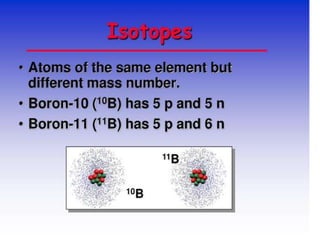
• Each atom has the same number of electrons
as protons, but in the case of isotopes they
are a little bit different; they have the same
number of electrons and protons but different
numbers of neutrons. But isotopes have the
same atomic number and also the same
position in the periodic table but they have
different atomic masses.
• Isotopes are members of a family of an
element that all have the same number of
protons but different numbers of neutrons.
The number of protons in a nucleus
determines the element's atomic number on
the Periodic Table. For example, carbon has six
protons and is atomic number 6.
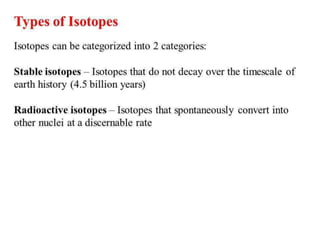
Stable Isotopes
• These types of isotopes will decay over time
and will turn into another isotope or another
element. Most elements which are found in
nature are made of stable isotopes.
Unstable Isotopes
• They emit radiation and are also called
radioisotopes. When radioisotopes undergo
radioactive decay, the initial isotope is called
the parent isotope and the atoms produced by
the reaction are called daughter isotopes.
• The technique used to measure the number
and proportion of isotopes in matter and trace
their origin history and source of origin is
called nuclear technology.
• With these measurements, the experts
understand what volume of certain vitamins
are absorbed by the body, and the number of
fertiliser plants take up and many more.
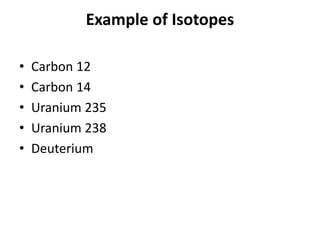
Example of Isotopes
• Carbon 12
• Carbon 14
• Uranium 235
• Uranium 238
• Deuterium
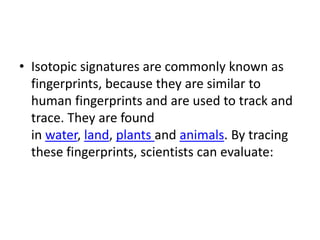
• Isotopic signatures are commonly known as
fingerprints, because they are similar to
human fingerprints and are used to track and
trace. They are found
in water, land, plants and animals. By tracing
these fingerprints, scientists can evaluate:
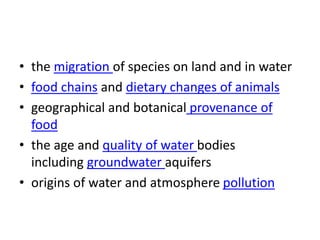
• the migration of species on land and in water
• food chains and dietary changes of animals
• geographical and botanical provenance of
food
• the age and quality of water bodies
including groundwater aquifers
• origins of water and atmosphere pollution
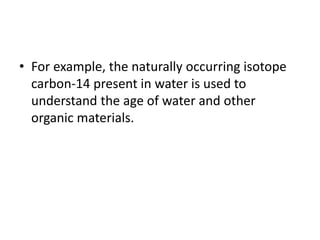
• For example, the naturally occurring isotope
carbon-14 present in water is used to
understand the age of water and other
organic materials.
Uses of Isotopes
• Carbon 14 is an isotope of carbon which is used
in carbon dating. The amount of carbon present
in the fossils helps in calculating the age of fossils.
• The isotopes of Uranium such as U-235 are used
as a fossil fuel in nuclear reactors.
• Radioactive isotopes are generally used for
medicinal purposes, for example, for detecting
cancerous cells.
• Iodine is an isotope of carbon which is used in the
treatment of goitre.
• Isotopes of iodine are used to treat goitre
disease and isotopes of iodine are also used to
locate tumours of the brain and liver.
• Cobalt 60 is the radioactive isotope used in
treatment of cancer.
•
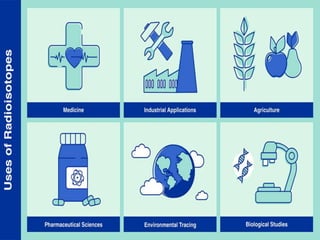
• There are more than 3000 known
radioisotopes. They are the unstable form of
an element. They emit different levels of
radiation, which makes them useful
in medicine, industry, agriculture, radiopharm
aceutical sciences, industrial
applications, environmental
tracing and biological studies.
• One use of radioisotopes is to manage cancer
and chronic diseases using radioisotope
therapy, which treats cancerous cells in a safe
and effective manner. Other uses include
creating better health care products by
removing or neutralising chemicals, bacteria
and toxins which pose a hazard.
• Only a small fraction of the isotopes are known to
be stable indefinitely. All the others disintegrate
spontaneously with the release of energy by
processes broadly designated as radioactive
decay. Each “parent” radioactive isotope
eventually decays into one or at most a few
stable isotope “daughters” specific to that parent.
The radioactive parent tritium (3H, or hydrogen-
3), for example, always turns into the daughter
helium-3 (3He) by emitting an electron.
Isotopes.pptx
Isotopes.pptx
Isotopes.pptx

Isotopes.pptx

  • 3.
    • Each atomhas the same number of electrons as protons, but in the case of isotopes they are a little bit different; they have the same number of electrons and protons but different numbers of neutrons. But isotopes have the same atomic number and also the same position in the periodic table but they have different atomic masses.
  • 4.
    • Isotopes aremembers of a family of an element that all have the same number of protons but different numbers of neutrons. The number of protons in a nucleus determines the element's atomic number on the Periodic Table. For example, carbon has six protons and is atomic number 6.
  • 6.
    Stable Isotopes • Thesetypes of isotopes will decay over time and will turn into another isotope or another element. Most elements which are found in nature are made of stable isotopes.
  • 7.
    Unstable Isotopes • Theyemit radiation and are also called radioisotopes. When radioisotopes undergo radioactive decay, the initial isotope is called the parent isotope and the atoms produced by the reaction are called daughter isotopes.
  • 8.
    • The techniqueused to measure the number and proportion of isotopes in matter and trace their origin history and source of origin is called nuclear technology.
  • 9.
    • With thesemeasurements, the experts understand what volume of certain vitamins are absorbed by the body, and the number of fertiliser plants take up and many more.
  • 10.
    Example of Isotopes •Carbon 12 • Carbon 14 • Uranium 235 • Uranium 238 • Deuterium
  • 11.
    • Isotopic signaturesare commonly known as fingerprints, because they are similar to human fingerprints and are used to track and trace. They are found in water, land, plants and animals. By tracing these fingerprints, scientists can evaluate:
  • 12.
    • the migrationof species on land and in water • food chains and dietary changes of animals • geographical and botanical provenance of food • the age and quality of water bodies including groundwater aquifers • origins of water and atmosphere pollution
  • 13.
    • For example,the naturally occurring isotope carbon-14 present in water is used to understand the age of water and other organic materials.
  • 15.
    Uses of Isotopes •Carbon 14 is an isotope of carbon which is used in carbon dating. The amount of carbon present in the fossils helps in calculating the age of fossils. • The isotopes of Uranium such as U-235 are used as a fossil fuel in nuclear reactors. • Radioactive isotopes are generally used for medicinal purposes, for example, for detecting cancerous cells. • Iodine is an isotope of carbon which is used in the treatment of goitre.
  • 16.
    • Isotopes ofiodine are used to treat goitre disease and isotopes of iodine are also used to locate tumours of the brain and liver. • Cobalt 60 is the radioactive isotope used in treatment of cancer. •
  • 17.
    • There aremore than 3000 known radioisotopes. They are the unstable form of an element. They emit different levels of radiation, which makes them useful in medicine, industry, agriculture, radiopharm aceutical sciences, industrial applications, environmental tracing and biological studies.
  • 18.
    • One useof radioisotopes is to manage cancer and chronic diseases using radioisotope therapy, which treats cancerous cells in a safe and effective manner. Other uses include creating better health care products by removing or neutralising chemicals, bacteria and toxins which pose a hazard.
  • 19.
    • Only asmall fraction of the isotopes are known to be stable indefinitely. All the others disintegrate spontaneously with the release of energy by processes broadly designated as radioactive decay. Each “parent” radioactive isotope eventually decays into one or at most a few stable isotope “daughters” specific to that parent. The radioactive parent tritium (3H, or hydrogen- 3), for example, always turns into the daughter helium-3 (3He) by emitting an electron.