Vowels
and
Diphthongs
VOWELS
• Vowel is a speech sound
produced without significant
constriction of the air flowing
through the mouth.
• Vowels are produced with a relatively
open vocal tract.
• Vowels do not have place and manner of
articulation.
• Vowels are almost always voiced.
• Vocal fold vibration is the source for
vowel sounds.
• The standard descriptors for consonants
(place, manner, and voicing) are not
helpful when we want to describe
vowels.
Vowel sounds can be divided into
sets in a number of different ways.
1.In terms of voicing. In English, all
vowels are voiced (except when
whispering), but some languages,
such as Japanese, have voiceless
vowels as well.
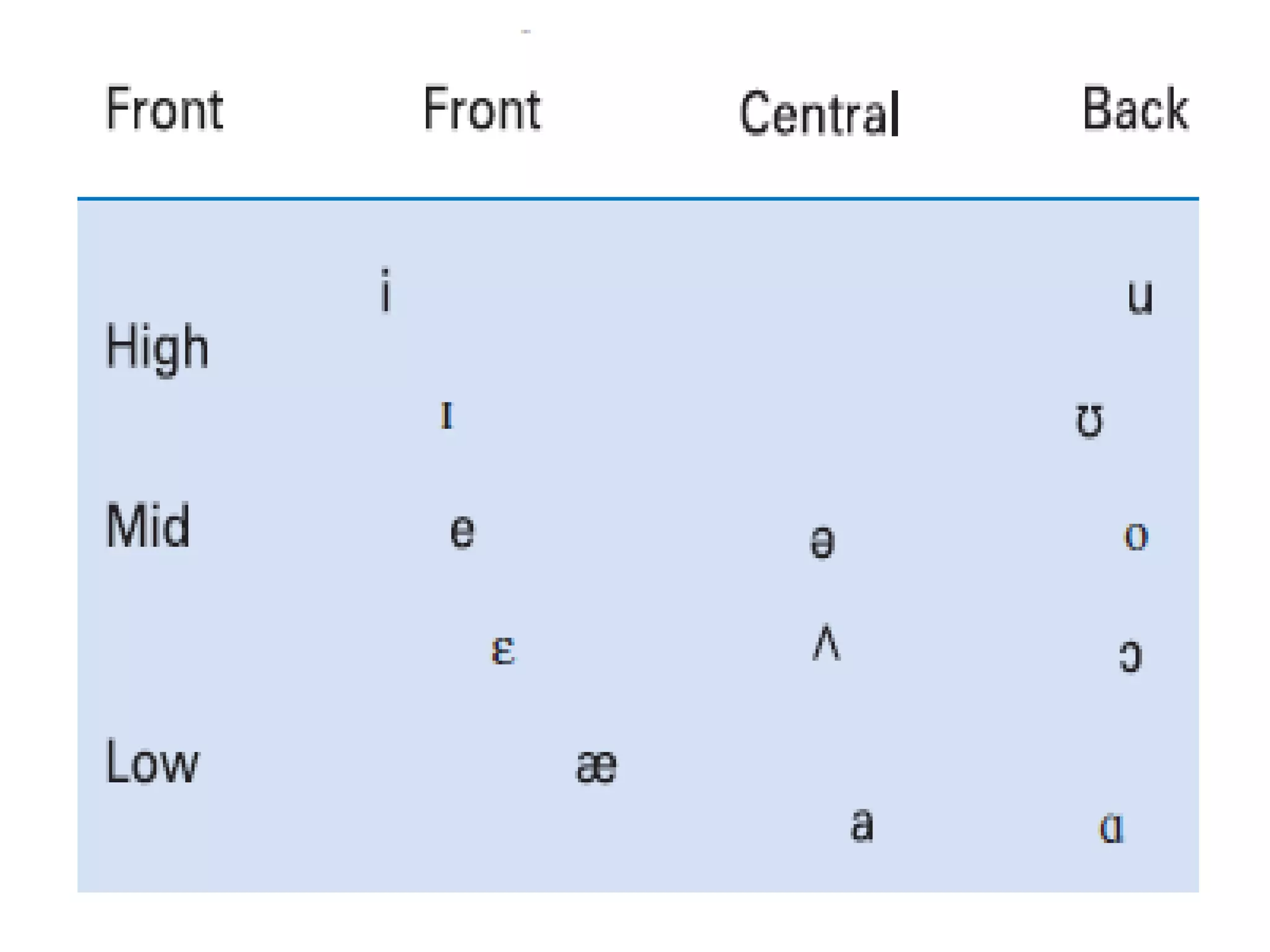
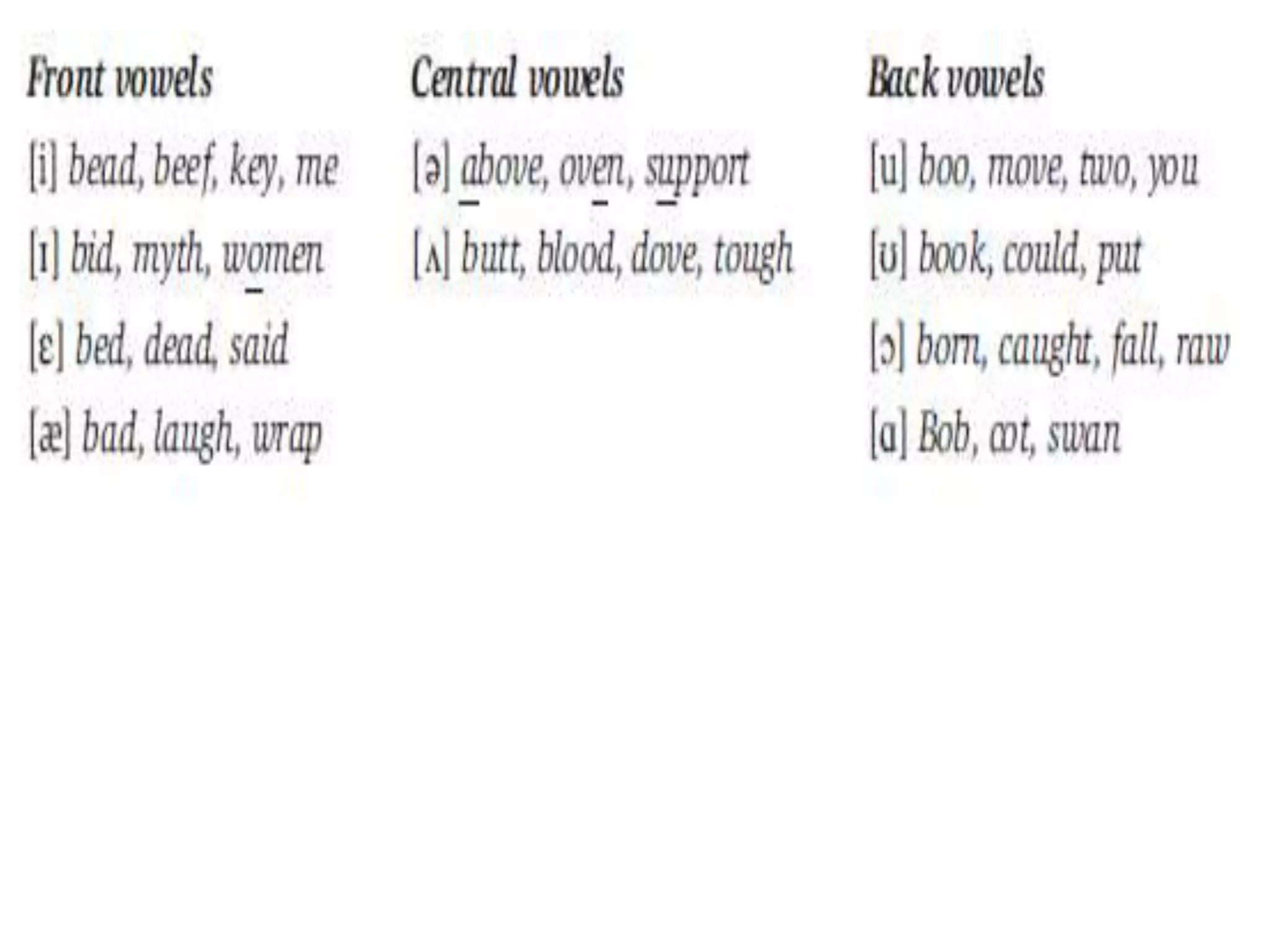
2.In terms of which part of the tongue
is raised, distinguishing between front
vowels (as in eat), in which the tongue is
positioned forward in the mouth, central
vowels (as in cup), and back vowels (as
in coop), in which the tongue is
positioned towards the back of the
mouth.
3.In terms of how high the tongue
is raised, distinguishing between
high vowels (or close vowels) as in
beat, mid vowels (or half-close
vowels) as in bait, and low vowels
(or open vowels) as in bat.
4.In terms of whether or not the
vowel is tense or lax
5.In terms of whether or not the lips are
rounded (as in shoe) or unrounded (as in
she). In English, rounding is allophonic
(back vowels are rounded; front vowels
are not), but some languages (such as
French) contain front rounded vowels
and some others (such as Turkish)
contain back unrounded vowels.
6.In terms of length, distinguishing
between long vowels such as in knee and
short vowels as in knit. In English, length
is allophonic (tense vowels are long; lax
vowels are short), but some languages
distinguish between vowels that are the
same in quality and only different in
length.
• Broadly speaking, there are two
types of vowels in English, namely,
monophthongs and diphthongs.
• Diphthongs are two-part vowels,
whereas monophthongs have only
one part.
DIPHTHONG
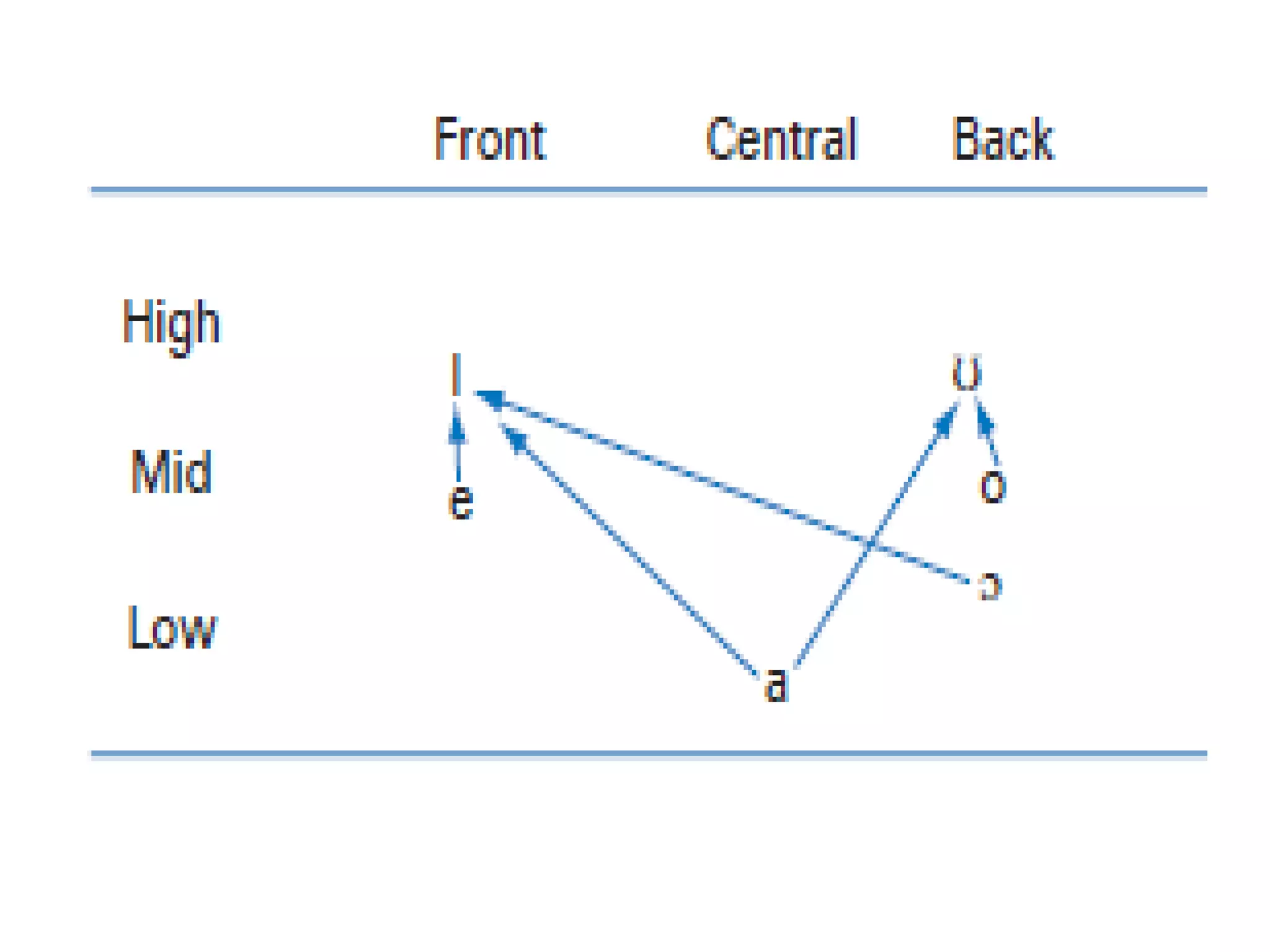
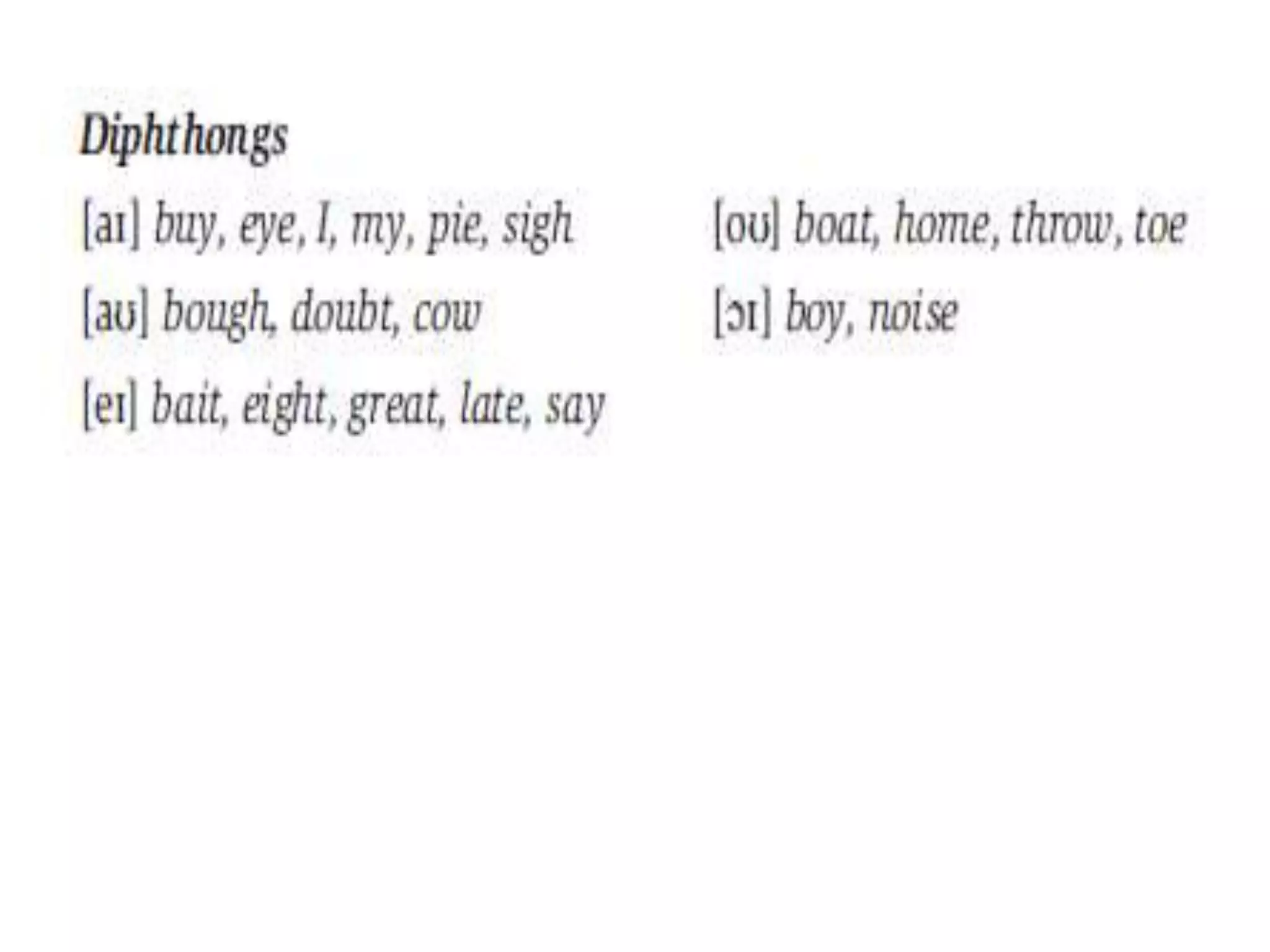
• Diphthong is a vowel in which there
is a change in quality during a single
syllable, as in the English words boy,
buy, bow.
• Diphthongs can be analyzed as a
sequence of two vowels or as vowel
glide
• Semi-Vowel is a speech sound (a
consonant) which is produced by allowing
the airstream from the lungs to move
through the mouth and/or nose with only
very slight friction.
• For example, in English the /j/ in /jes/ yes is
a semi-vowel.
• In terms of their articulation, semi-vowels
are very like vowels, but they function as
consonants in the sound system of a
language.
Vowels and diphtong
Vowels and diphtong

Vowels and diphtong

  • 1.
  • 2.
    VOWELS • Vowel isa speech sound produced without significant constriction of the air flowing through the mouth.
  • 3.
    • Vowels areproduced with a relatively open vocal tract. • Vowels do not have place and manner of articulation. • Vowels are almost always voiced. • Vocal fold vibration is the source for vowel sounds. • The standard descriptors for consonants (place, manner, and voicing) are not helpful when we want to describe vowels.
  • 4.
    Vowel sounds canbe divided into sets in a number of different ways. 1.In terms of voicing. In English, all vowels are voiced (except when whispering), but some languages, such as Japanese, have voiceless vowels as well.
  • 5.
    2.In terms ofwhich part of the tongue is raised, distinguishing between front vowels (as in eat), in which the tongue is positioned forward in the mouth, central vowels (as in cup), and back vowels (as in coop), in which the tongue is positioned towards the back of the mouth.
  • 6.
    3.In terms ofhow high the tongue is raised, distinguishing between high vowels (or close vowels) as in beat, mid vowels (or half-close vowels) as in bait, and low vowels (or open vowels) as in bat.
  • 7.
    4.In terms ofwhether or not the vowel is tense or lax
  • 8.
    5.In terms ofwhether or not the lips are rounded (as in shoe) or unrounded (as in she). In English, rounding is allophonic (back vowels are rounded; front vowels are not), but some languages (such as French) contain front rounded vowels and some others (such as Turkish) contain back unrounded vowels.
  • 9.
    6.In terms oflength, distinguishing between long vowels such as in knee and short vowels as in knit. In English, length is allophonic (tense vowels are long; lax vowels are short), but some languages distinguish between vowels that are the same in quality and only different in length.
  • 12.
    • Broadly speaking,there are two types of vowels in English, namely, monophthongs and diphthongs. • Diphthongs are two-part vowels, whereas monophthongs have only one part.
  • 13.
    DIPHTHONG • Diphthong isa vowel in which there is a change in quality during a single syllable, as in the English words boy, buy, bow. • Diphthongs can be analyzed as a sequence of two vowels or as vowel glide
  • 14.
    • Semi-Vowel isa speech sound (a consonant) which is produced by allowing the airstream from the lungs to move through the mouth and/or nose with only very slight friction. • For example, in English the /j/ in /jes/ yes is a semi-vowel. • In terms of their articulation, semi-vowels are very like vowels, but they function as consonants in the sound system of a language.