This lesson
1. Reviewof consonants
2. Overview of vowels
3. Classification of vowels
3.
Review of consonants
1.What are the five criteria for classifying consonants?
2. Name English consonants if classified according to place of
articulation.
3. Name English consonants if classified according to manner of
articulation.
4. What are the differences between fortis and lenis consonants?
4.
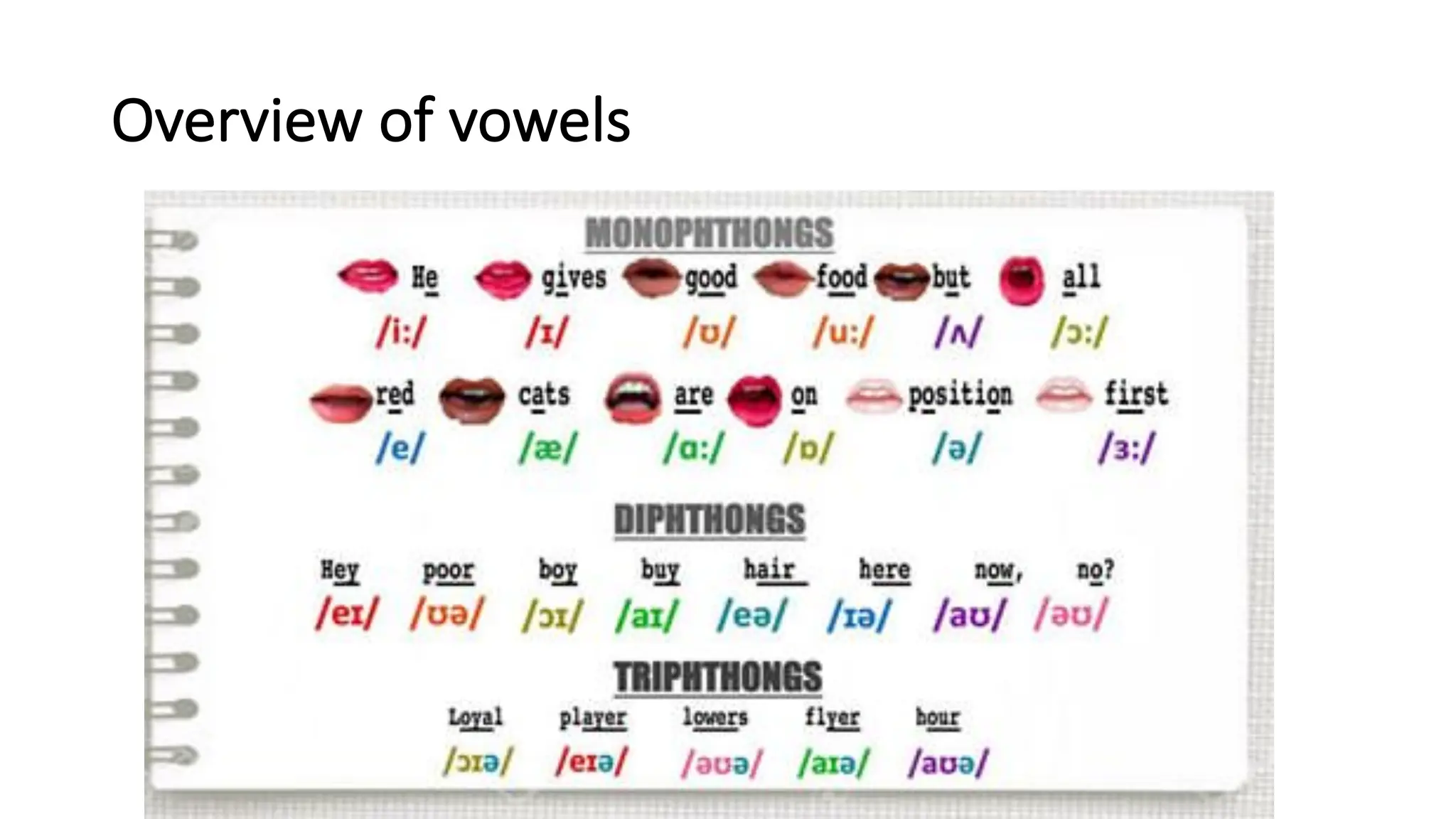
Overview of vowels
•None of the articulators come together so that the airstream is not
obstructed and can get out freely.
• E.g: /b/ vs. /i:/ in “bee”
• Types:
§ Monophthongs: 12
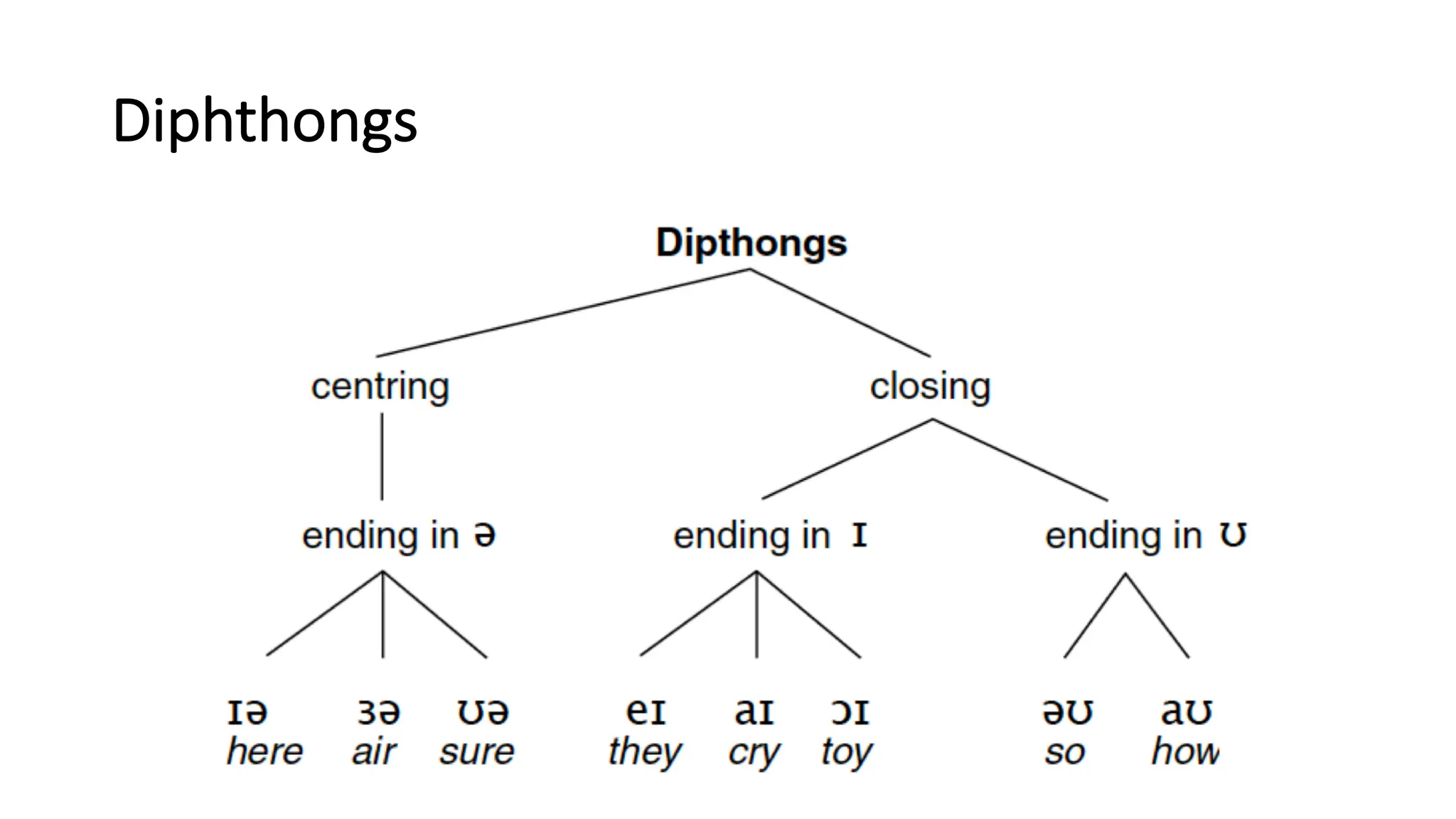
§ Diphthongs: 8
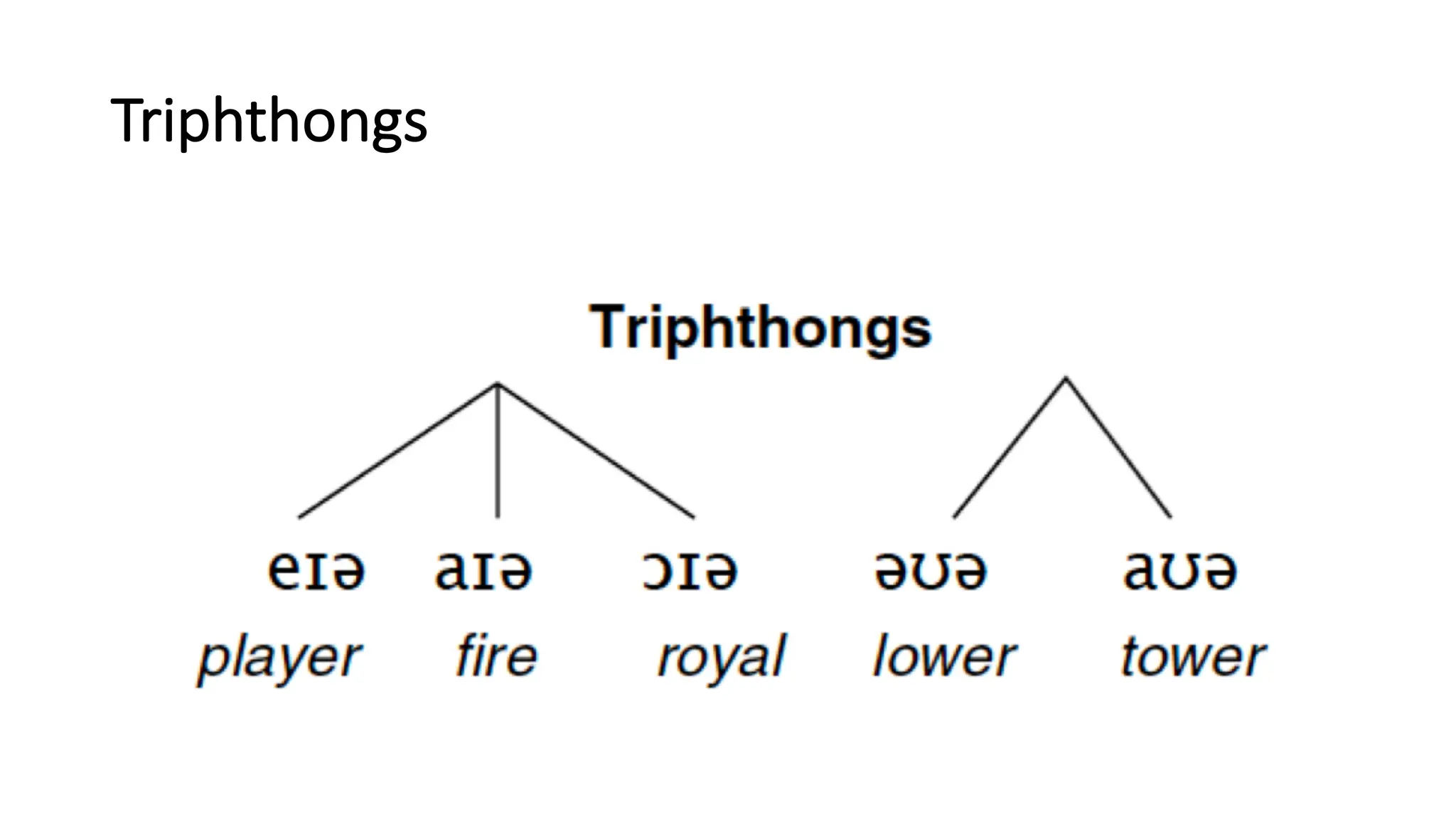
§ Triphthongs: 5
Monophthongs
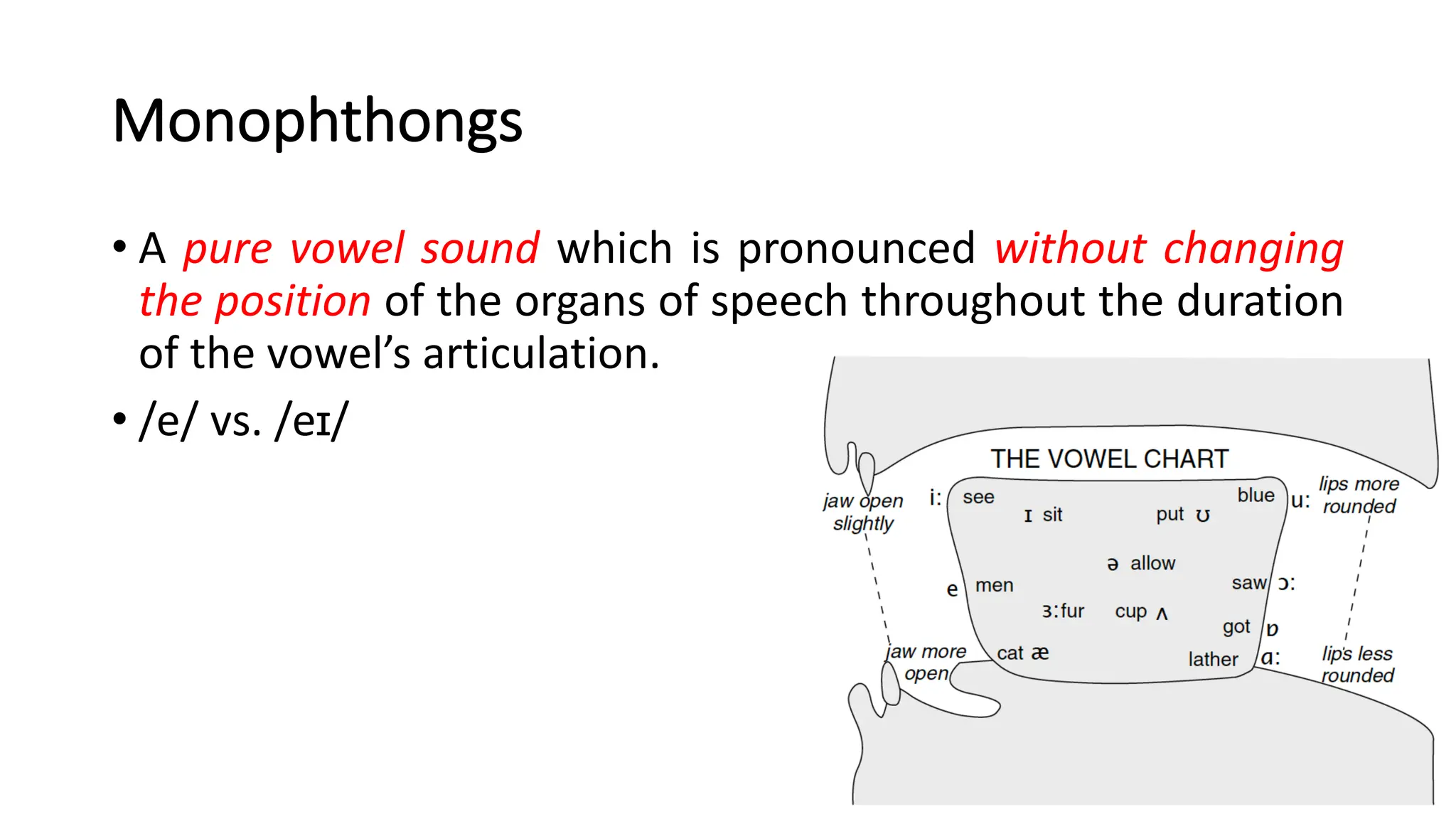
• A purevowel sound which is pronounced without changing
the position of the organs of speech throughout the duration
of the vowel’s articulation.
• /e/ vs. /eɪ/
7.
Monophthongs
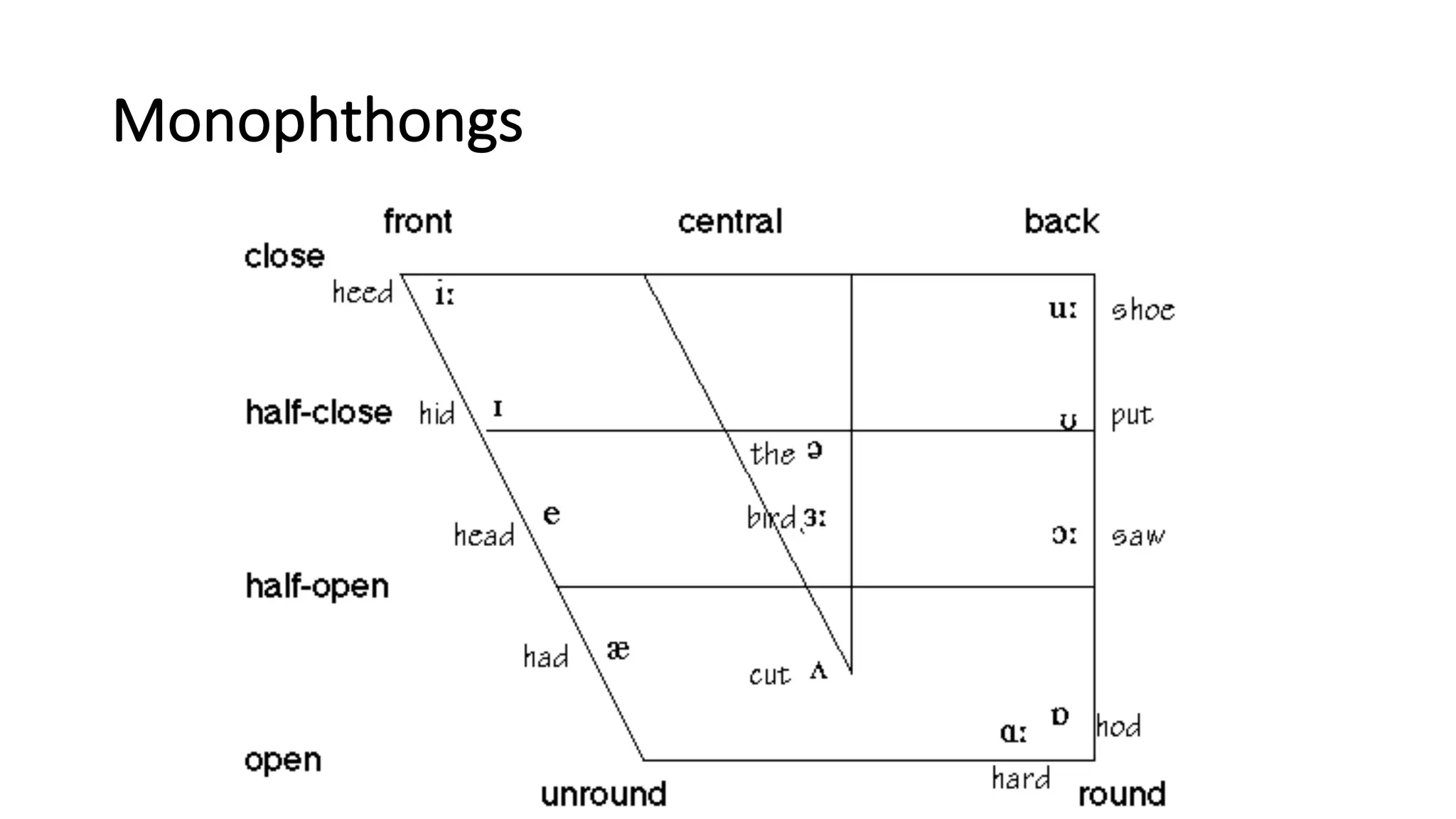
Classified according tofive criteria:
• The height of the tongue (height)
• The position of the tongue (backness)
• The shape of the lips (lip roundedness)
• The length of the sounds (vowel length)
• The degree of muscular tension
8.
Monophthongs
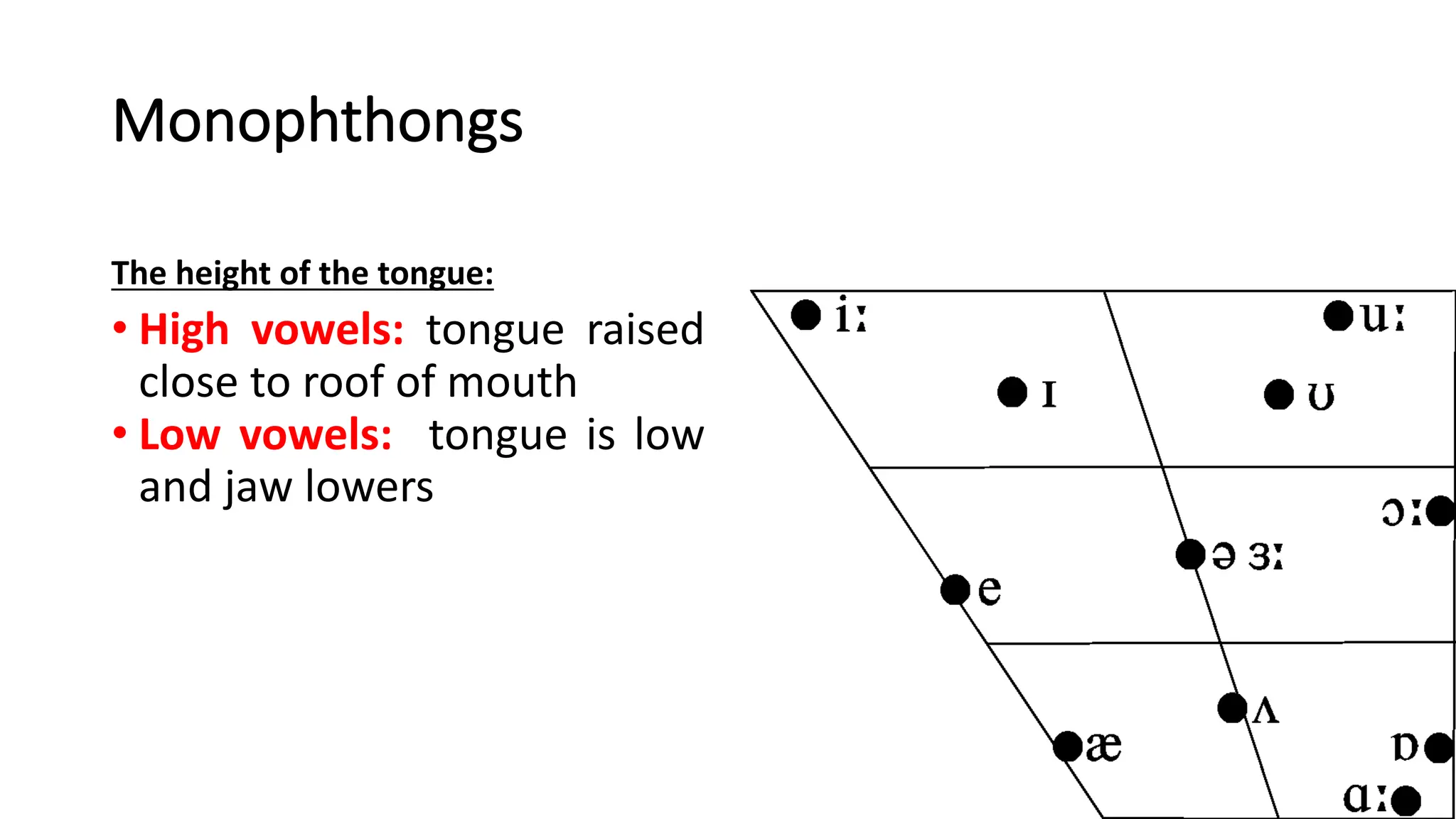
The height ofthe tongue:
• High vowels: tongue raised
close to roof of mouth
• Low vowels: tongue is low
and jaw lowers
9.
Monophthongs
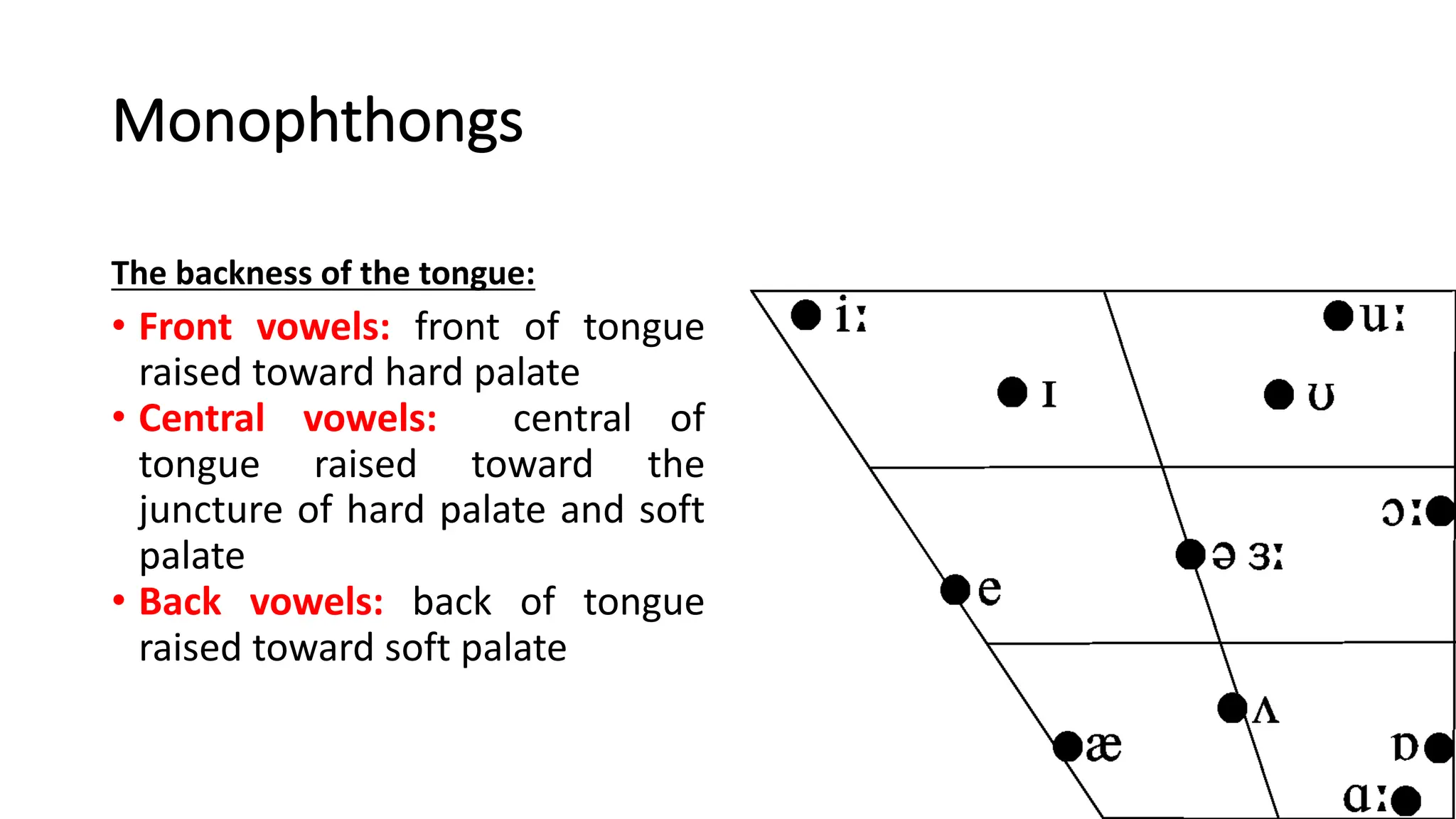
The backness ofthe tongue:
• Front vowels: front of tongue
raised toward hard palate
• Central vowels: central of
tongue raised toward the
juncture of hard palate and soft
palate
• Back vowels: back of tongue
raised toward soft palate
10.
Monophthongs
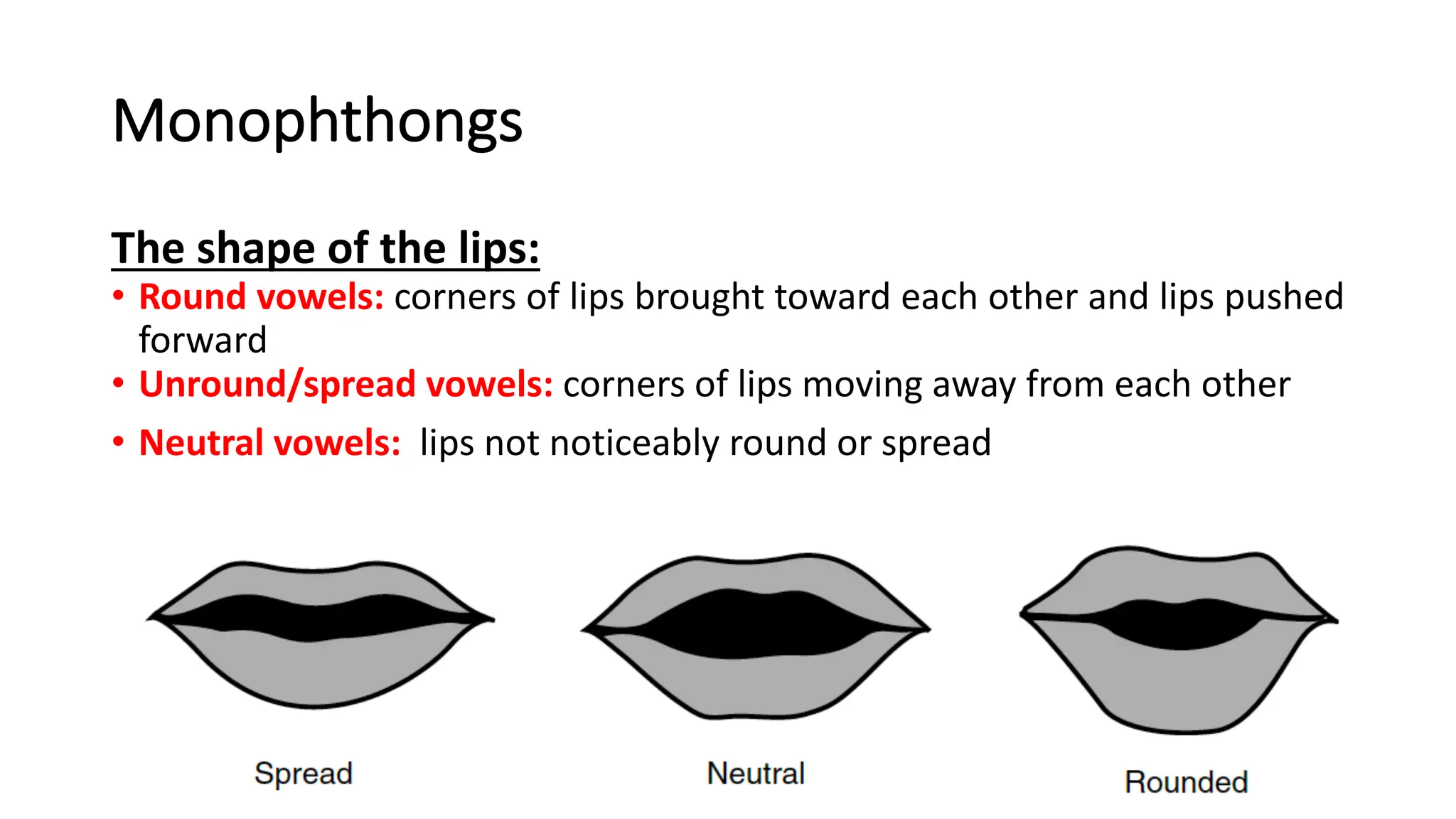
The shape ofthe lips:
• Round vowels: corners of lips brought toward each other and lips pushed
forward
• Unround/spread vowels: corners of lips moving away from each other
• Neutral vowels: lips not noticeably round or spread
11.
Monophthongs
Vowel length anddegree of muscular attention:
• Long vowels = tense vowels: longer and more muscular
tension
• Short vowels = lax vowels: shorter and more muscular
relaxation
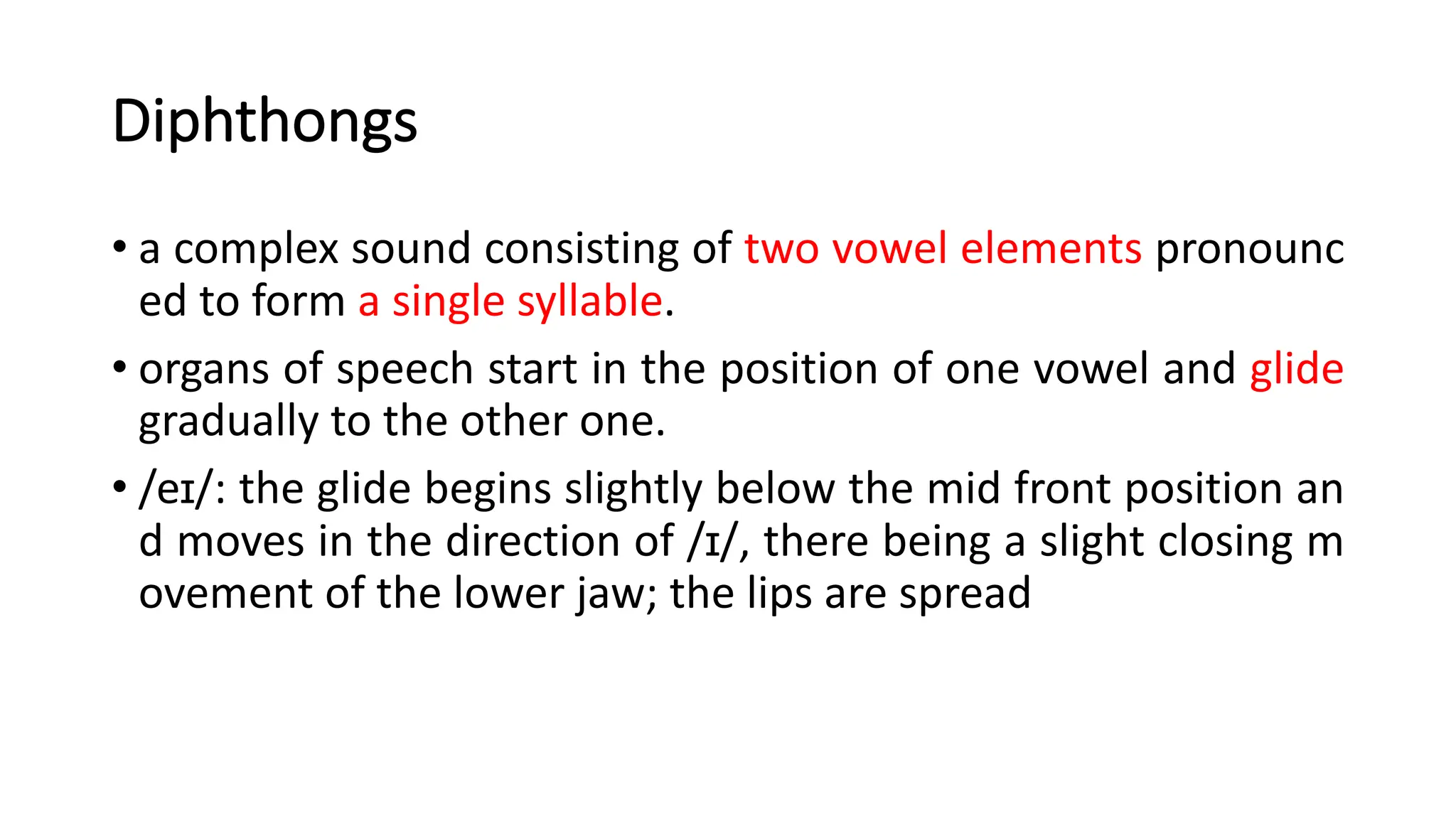
Diphthongs
• a complexsound consisting of two vowel elements pronounc
ed to form a single syllable.
• organs of speech start in the position of one vowel and glide
gradually to the other one.
• /eɪ/: the glide begins slightly below the mid front position an
d moves in the direction of /ɪ/, there being a slight closing m
ovement of the lower jaw; the lips are spread
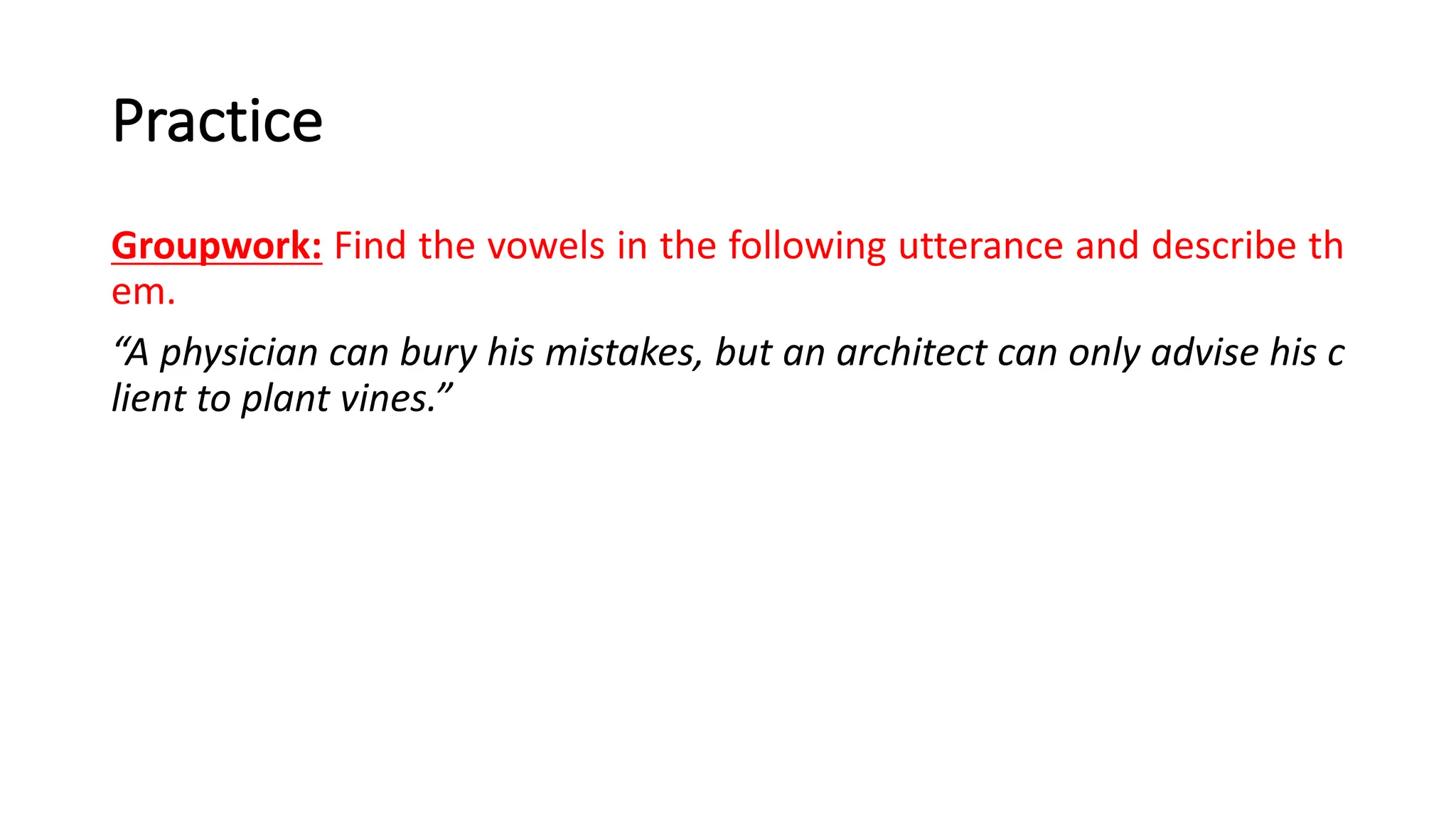
Practice
Groupwork: Find thevowels in the following utterance and describe th
em.
“A physician can bury his mistakes, but an architect can only advise his c
lient to plant vines.”
Homework
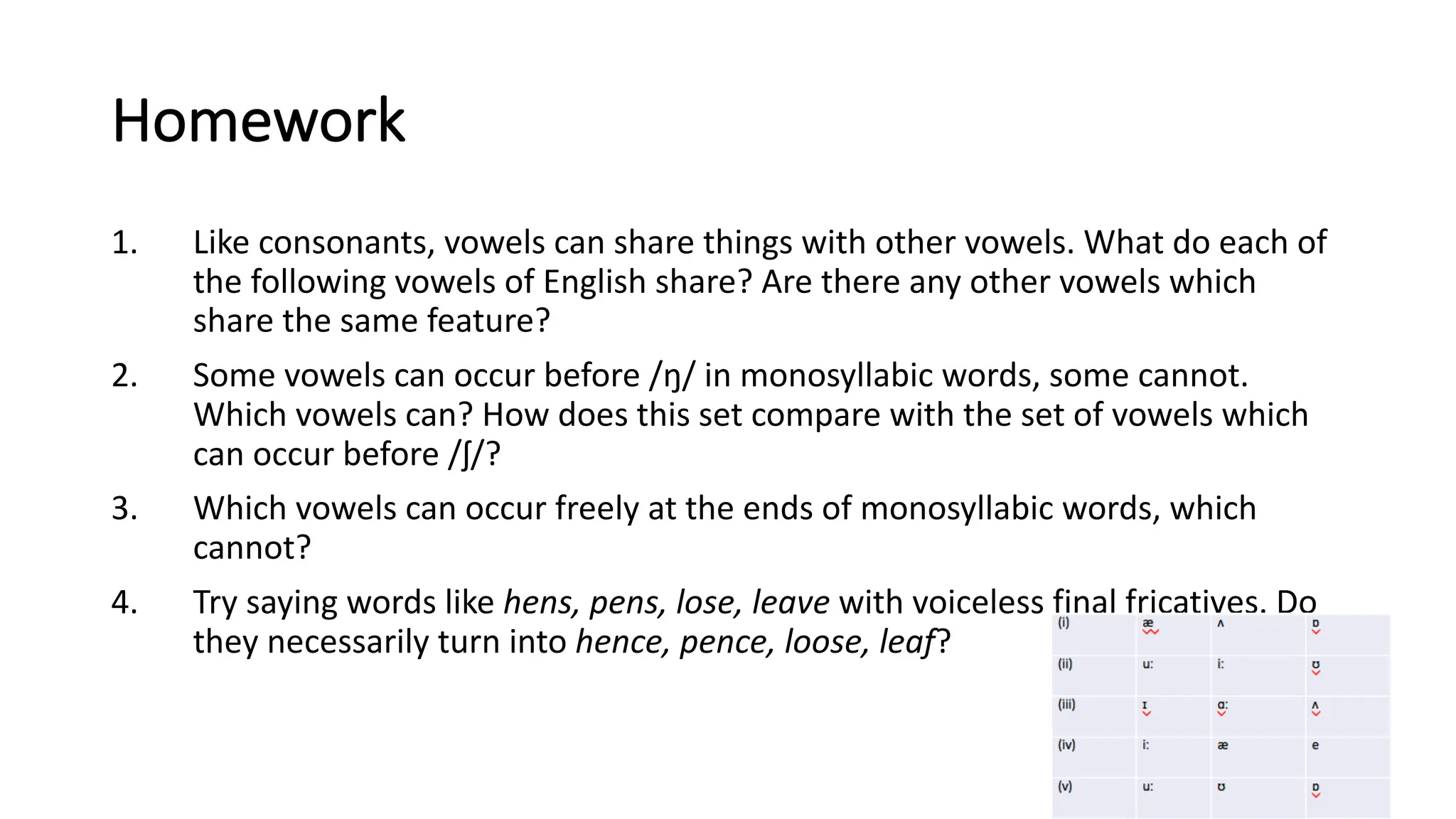
1. Like consonants,vowels can share things with other vowels. What do each of
the following vowels of English share? Are there any other vowels which
share the same feature?
2. Some vowels can occur before /ŋ/ in monosyllabic words, some cannot.
Which vowels can? How does this set compare with the set of vowels which
can occur before /ʃ/?
3. Which vowels can occur freely at the ends of monosyllabic words, which
cannot?
4. Try saying words like hens, pens, lose, leave with voiceless final fricatives. Do
they necessarily turn into hence, pence, loose, leaf?


![[Class 2] [For Midterm] [Fall 2024] Vowel Sounds.pptx](https://cdn.slidesharecdn.com/ss_thumbnails/class2formidtermfall2024vowelsounds-250130144510-97fd7de4-thumbnail.jpg?width=640&height=640&fit=bounds)


