VLAN &WAPBy Yasir
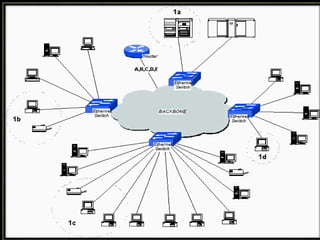
A virtual LAN, commonly known as a VLAN, is a group of hosts with a common set of requirements that communicate as if they were attached to the same broadcast domain, regardless of their physical location. A VLAN has the same attributes as a physical LAN, but it allows for end stations to be grouped together even if they are not located on the same network switch. Network reconfiguration can be done through software instead of physically relocating devices.VLAN
The protocol most commonly used today in configuring virtual LANs is IEEE 802.1QCisco also implemented VLANs over FDDI by carrying VLAN information in an IEEE 802.10 frame headerThe IEEE 802.1Q header contains a 4-byte tag header containing a 2-byte tag protocol identifier (TPID) and a 2-byte tag control information (TCI).Protocols and design
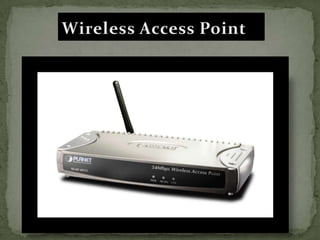
Wireless Access Point
WAPIn computer networking, a wireless access point (WAP) is a device that allows wired communication devices to connect to a wireless network using Wi-Fi, Bluetooth or related standards. The WAP usually connects to a router, and can relay data between the wireless devices (such as computers or printers) and wired devices on the network.
Properties of WAPThe wireless access points are managed by a WLAN Controller A Hot Spot is a common public application of WAPsOne IEEE 802.11 WAP can typically communicate with 30 client systems located within a radius of 100 m.300 Mbit/s (megabits per second) (IEEE 802.11n) or 54 Mbit/s (IEEE 802.11g),
The most common solution is wireless traffic encryption. Modern access points come with built-in encryption. The first generation encryption scheme WEP proved easy to crack; the second and third generation schemes, WPA and WPA2, are considered secure if a strong enough password or passphrase is used.Some WAPs support hotspot style authentication using RADIUS and other authentication servers.Security
Thanks 4 Watching  !!!!

VLAN & WAP

  • 1.
  • 2.
    A virtual LAN, commonlyknown as a VLAN, is a group of hosts with a common set of requirements that communicate as if they were attached to the same broadcast domain, regardless of their physical location. A VLAN has the same attributes as a physical LAN, but it allows for end stations to be grouped together even if they are not located on the same network switch. Network reconfiguration can be done through software instead of physically relocating devices.VLAN
  • 3.
    The protocol mostcommonly used today in configuring virtual LANs is IEEE 802.1QCisco also implemented VLANs over FDDI by carrying VLAN information in an IEEE 802.10 frame headerThe IEEE 802.1Q header contains a 4-byte tag header containing a 2-byte tag protocol identifier (TPID) and a 2-byte tag control information (TCI).Protocols and design
  • 5.
  • 6.
    WAPIn computer networking, a wirelessaccess point (WAP) is a device that allows wired communication devices to connect to a wireless network using Wi-Fi, Bluetooth or related standards. The WAP usually connects to a router, and can relay data between the wireless devices (such as computers or printers) and wired devices on the network.
  • 7.
    Properties of WAPThewireless access points are managed by a WLAN Controller A Hot Spot is a common public application of WAPsOne IEEE 802.11 WAP can typically communicate with 30 client systems located within a radius of 100 m.300 Mbit/s (megabits per second) (IEEE 802.11n) or 54 Mbit/s (IEEE 802.11g),
  • 8.
    The most commonsolution is wireless traffic encryption. Modern access points come with built-in encryption. The first generation encryption scheme WEP proved easy to crack; the second and third generation schemes, WPA and WPA2, are considered secure if a strong enough password or passphrase is used.Some WAPs support hotspot style authentication using RADIUS and other authentication servers.Security
  • 9.