VITAMIN
DEFICIENCY
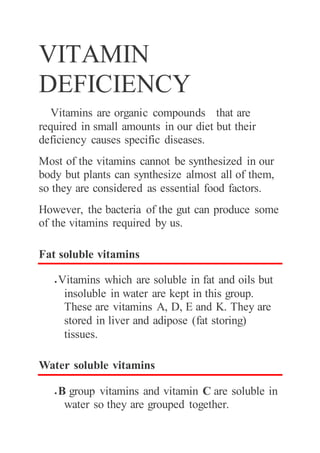
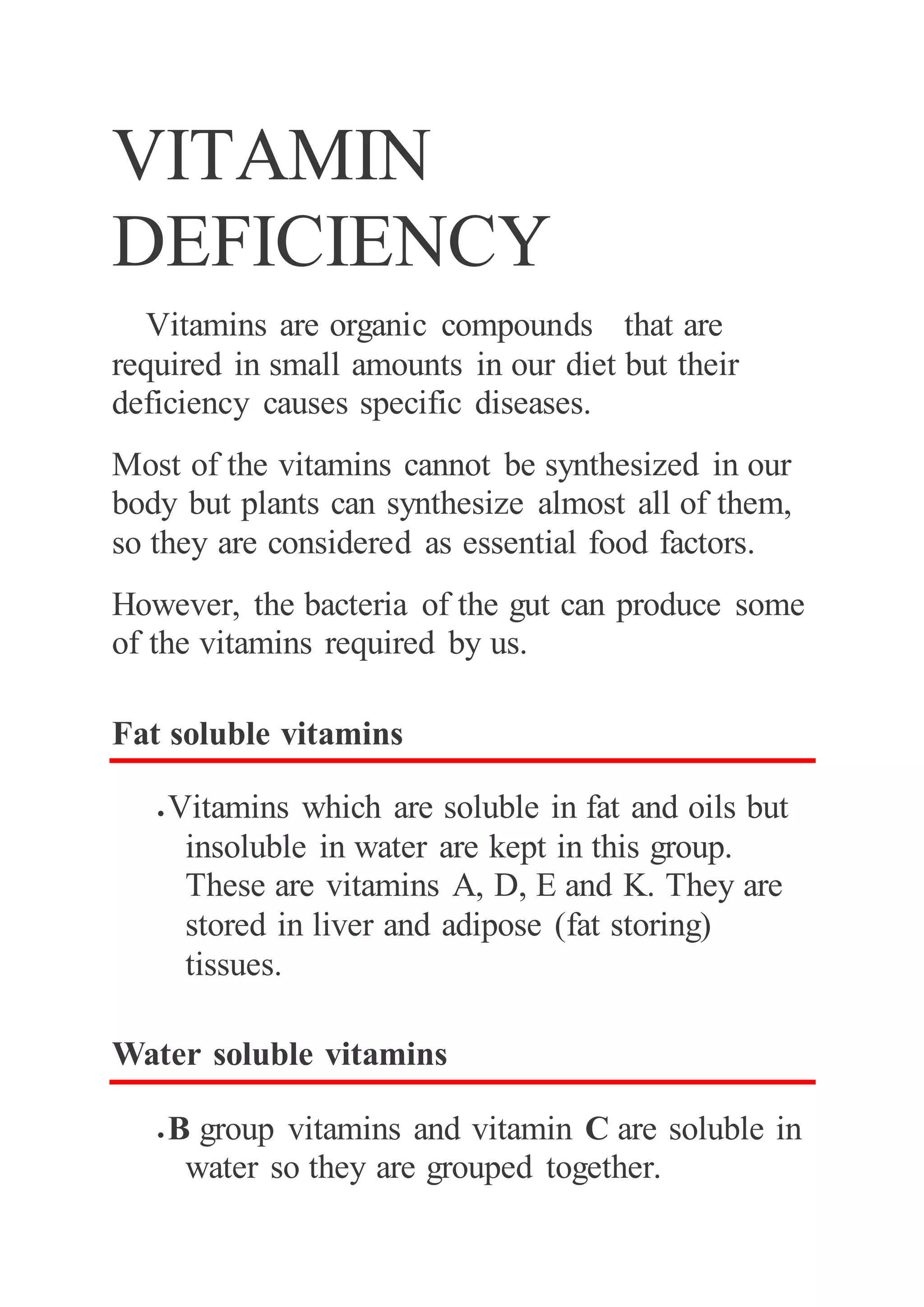
Vitamins are organic compounds that are
required in small amounts in our diet but their
deficiency causes specific diseases.
Most of the vitamins cannot be synthesized in our
body but plants can synthesize almost all of them,
so they are considered as essential food factors.
However, the bacteria of the gut can produce some
of the vitamins required by us.
Fat soluble vitamins
 Vitamins which are soluble in fat and oils but
insoluble in water are kept in this group.
These are vitamins A, D, E and K. They are
stored in liver and adipose (fat storing)
tissues.
Water soluble vitamins
 B group vitamins and vitamin C are soluble in
water so they are grouped together.
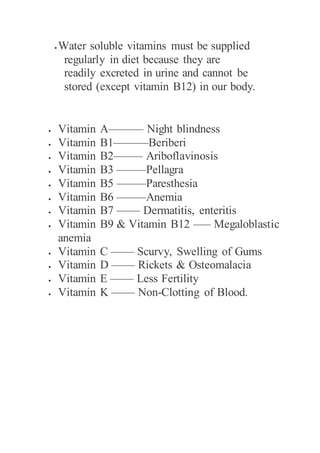
 Water soluble vitamins must be supplied
regularly in diet because they are
readily excreted in urine and cannot be
stored (except vitamin B12) in our body.
 Vitamin A——— Night blindness
 Vitamin B1———Beriberi
 Vitamin B2——– Ariboflavinosis
 Vitamin B3 ——–Pellagra
 Vitamin B5 ——–Paresthesia
 Vitamin B6 ——–Anemia
 Vitamin B7 —— Dermatitis, enteritis
 Vitamin B9 & Vitamin B12 —– Megaloblastic
anemia
 Vitamin C —— Scurvy, Swelling of Gums
 Vitamin D —— Rickets & Osteomalacia
 Vitamin E —— Less Fertility
 Vitamin K —— Non-Clotting of Blood.
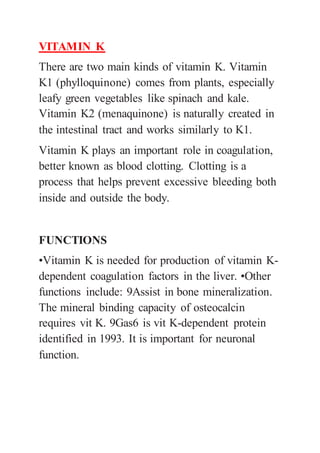
VITAMIN K
There are two main kinds of vitamin K. Vitamin
K1 (phylloquinone) comes from plants, especially
leafy green vegetables like spinach and kale.
Vitamin K2 (menaquinone) is naturally created in
the intestinal tract and works similarly to K1.
Vitamin K plays an important role in coagulation,
better known as blood clotting. Clotting is a
process that helps prevent excessive bleeding both
inside and outside the body.
FUNCTIONS
•Vitamin K is needed for production of vitamin K-
dependent coagulation factors in the liver. •Other
functions include: 9Assist in bone mineralization.
The mineral binding capacity of osteocalcin
requires vit K. 9Gas6 is vit K-dependent protein
identified in 1993. It is important for neuronal
function.
SOURCES OF VITAMIN K
Bacteria in large intestine produce vit K2 and
supply 40-50% of human requirement.
Vegetable oils Almonds & peanuts Avocado &
Broccoli Spinach, Lettuce, parsley (raw)
Vitamin K deficiency causes
Although vitamin K deficiency is uncommon in
adults, certain people are at increased risk if they:
 take coumarin anticoagulants such as warfarin,
which thins the blood
 are taking antibiotics
 have a condition that causes the body to not
absorb fat properly (fat malabsorption)
 have a diet that is extremely lacking in vitamin
K
Vitamin K deficiency symptomThe main
symptom of vitamin K deficiency is excessive
bleeding. Keep in mind that bleeding may
happen in areas other than at a cut or wound site.
The bleeding may also be apparent if someone:
 bruises easily
 gets small blood clots underneath their nails
 bleeds in mucous membranes that line areas
inside the body
 produces stool that looks dark black (almost
like tar) and contains some blood
TREATMENT
The treatment for vitamin K is the drug
phytonadione, which is vitamin K1. The dosage
for adults ranges from 1 to 25 milligrams (mg).
newborns get a single shot of 0.5 to 1 mg vitamin
K1 at birth. A higher dose may be necessary if the
mother has been taking anticoagulants or anti-
seizure drugs
PREVENTION
There is no set amount of vitamin K that you
should consume each day. But on an average day,
nutritionists consider 120 mcg adequate for men
and 90 mcg adequate for women. Some foods,
including leafy green vegetables, are extremely
high in vitamin K and will give you all you need in
one serving.
A single shot of vitamin K at birth can prevent a
problem in newborns.
VITAMIN E
The term vitamin E describes a family of
8 antioxidants,
4 tocopherols (α,β, γ, & δ) and 4 tocotrienols. ‰
α-tocopherol is the active form of vitamin E in the
human body.
Vitamin E is a fat-soluble vitamin with antioxidant
qualities that helps keep your immune system
strong.
High doses of vitamin E can increase a risk of
bleeding.
FUNCTIONS
•The main function of vitamin E is antioxidant. It
intercepts free radicals & prevents destruction of
cell membrane.
•It protects the fat in LDL from oxidation.
•It inhibits platelets aggregation.
•It enhances vasodilatation.
•It inhibits the activity of protein kinase
Vitamin E Dietary Sources
 Vegetable oils
 Almonds & peanuts
 Avocado ‰
 Spinach ‰
 Carrots (least)
Severe vitamin E deficiency causes:
 Neurological symptoms (impaired
coordination) & muscle weakness.
 Increased risk of cardiovascular diseases
 Hemolytic anemia in children
SYMPTOMS
 difficulty with walking or coordination
 muscle pain or weakness
 visual disturbances
 general unwellness
RISK FACTORS
 ‰Severe PEM
 ‰Genetics defects affecting the transfer
protein of α-tocopherol
 ‰Fat malabsorption syndrome
THERAPEUTIC USES
 ‰Prevention of cardiovascular diseases ‰
 Diabetes Mellitus
 ‰Cancer prevention
 ‰Boost immunity ‰
 Dementia
TOXICITY
Excess vitamin E may cause: Impaired blood
clotting leading to increased risk of bleeding in
some persons.
It is recommended that vitamin E supplements
to be stopped one month before elective
surgery.
VITAMIN C
Humans, unlike other mammals, are unable to
make ascorbic acid & they get it from food.
Vitamin C is needed to make a substance called
collagen which is required for the health and repair
of various tissues in the body, including:
 Skin
 Bone
 Cartilage
 Ligaments and tendons
 Blood vessel walls
 Teeth
Rich dietary sources are citrus juices (orange,
grapefruit & lime), strawberry, Guava, tomato,
sweet red pepper & broccoli.
Recommended daily intake is between 15-120
mg/day depending on age. Smokers & lactating
mother needs the higher range.
FUNCTIONS
 Collagen synthesis ‰
 Antioxidant ‰
 Synthesize of noradrenaline ‰
 Carnitine synthesize ‰
 Metabolism of cholesterol to bile salts
SYMPTOMS
Severe deficiency leads to Scurvy with the
following manifestations:
 Bleeding & bruising easily
 Hair & teeth loss
 Joint pain & swelling
 Fatigue & lack of concentration
DRUG INTERACTIONS
•Contraceptive pills & aspirin lower vitamin C
level in plasma & WBC.
•Vitamin C in large dose blocks the action of
warfarin & interferes with interpretation of certain
lab tests (bilirubin & creatinine in serum and
guaiac assay for occult blood).
•Previous claims of serious toxic effects of vit C
are not evidence-based.
VITAMIN B Complex
ƒ
 Group of 7 water soluble vitamins, thiamin,
riboflavin, niacin, pyridoxine, cobalamin,
biotin & pantothenic acid.
 Biotin & pantothenic acid deficiencies are
extremely rare coz it is found in numerous
foods and also is synthesized by intestinal
bacteria.
 Biotin deficiency may occur with prolonged
antibiotic therapy & ingestion of raw eggs.
THIAMIN (VIT B1)
 Thiamin is rapidly converted to its active
form, thiamin pyrophosphate in the brain and
liver by a specific enzymes, thiamin
diphosphotransferase.
 TPP is necessary as a cofactor for the reactions
of the pentose phosphate pathway
 The dietary requirement for thiamin is
proportional to the caloric intake of the diet
and ranges from 1.0 -1.5 mg/day for normal
adults.
RISK OF THIAMIN DEFICIENCY
 Low intake & alcoholism
 ‰Increased consumption: Malaria & AIDS
 Excessive loss: hemodialysis and diuretics
 Anti-thiamin factors: tea & coffee.
 Thiaminases found in raw fish, raw shellfish &
in silkworms.
DEFICIENCY & USES
Severe thiamin deficiency can lead to:
 Beri-Beri
 Wernicke-Korsakoff syndrome
 Thiamin is used for treatment of congestive
heart failure & Alzheimer's disease as well as
in cancer prevention.
RIBOFLAVIN (VIT B2)
 Adequate amounts of B2 is present in eggs,
milk, meat & cereals. Deficiency is often seen
in chronic alcoholics due to their poor dietetic
habits. ‰
 Symptoms associated with riboflavin
deficiency include, glossitis, seborrhea,
angular stomatitis, cheilosis and photophobia.
 Riboflavin decomposes when exposed to
visible light. This characteristic can lead to
riboflavin deficiencies in newborns treated by
phototherapy.
What they do: Vitamin B-1 is also called
thiamin, and Vitamin B-2 is also called
riboflavin. These vitamins help convert food
into energy. Vitamin B-1 has neurological
benefits, and vitamin B-2 helps maintain
proper eyesight.
Where you get them: Most people get
thiamine from breakfast cereals and whole
grains. Riboflavin can be found in:
 whole grains
 milk
 eggs
 dark green vegetables
NIACIN (VIT B3) ‰
 Niacin is available in both animal & plant food
and is made in the body from tryptophane.
 Severe deficiency causes pellagra with
glossitis, dermatitis, diarrhea, depression and
dementia. ‰
 Hartnup disease, malignant carcinoid
syndrome & Isoniazid can lead to niacin
deficiency . ‰
 In large doses niacin lowers plasma
cholesterol but it elevates blood glucose & uric
acid levels, so it is not recommended with
diabetes & gout.
What it does: Vitamin B-3 (niacin) also helps
convert food into energy. It aids in proper
digestion and healthy appetite as well.
Where you get it: Niacin is found in:
 Chicken
 Fish
 Liver
 red meat
 whole grains, such as wheat and barley
 peanuts
Why you need it:
A lack of niacin can cause digestive issues, such
as nausea and abdominal cramps. Severe
deficiency may also cause mental confusion.
PYRIDOXINE (VIT B6)
 Pyridoxine functions as a cofactor in enzymes
reactions required for the synthesis &
catabolism of the amino acids as well as in
glycogenolysis.
 Widely available in diet & deficiency may
follow INH & pencillamine therapy.
 Deficiency can cause neonatal seizures,
cheilosis, glossitis & neuroitis.
What it does: Vitamin B-6 (pyridoxine) helps
the body turn food into energy. It can also help
the body fight infections. Pregnant and
breastfeeding women need it to help their
babies’ brains develop normally.
Where you get it: B-6 can be found in:
 Chickpeas
 Tuna
 Salmon
 whole grains and cereals (a portion is the
size of your fist)
 beef liver
 ground beef
 chicken breast
 watermelon (a serving of fruit is also no
larger than a fist)
 potatoes
 spinach (a serving size is equivalent to a
rounded handful)
Why you need it: Insufficient amounts of B-6 can
result in anemia as well as skin disorders, such as a
rash or cracks around the mouth. A lack of B-6
also can cause:
 depression
 confusion
 nausea
 Anemia
 susceptibility to infections
 skin rashes (dermatitis)
FOLIC ACID (VIT B9)‰
 Folic acid is obtained from yeasts and leafy
vegetables as well as animal liver. Animals
can’t synthesize folate, thus, it must come
from diet.
 ‰Folate is needed for synthesis of nucleic
acids ‰
 Deficiency causes megaloblastic anemia &
neural tube defects in utero. ‰
 Used for treatment of chronic hemolytic
anemia.
What it does: Vitamin B-9 is also called folate
or folic acid. Folate is found naturally in foods.
Folic acid is the synthetic form, often found in
fortified, processed foods. Like most B vitamins,
B-9 fosters the growth of red blood cells. It also
reduces the risk of birth defects when consumed
by pregnant women.
Where you get it: Vitamin B-9 can be found in:
 Meats
 whole grains
 beets
 citrus fruits
 fish
 fortified cereals
 legumes
 green leafy vegetables
 liver and kidney
Why you need it: Without enough folate, a person
can develop diarrhea or anemia. Pregnant women
with a folate deficiency could give birth to babies
with defects. Excessive supplemental folic acid
during pregnancy, however, may also lead to
neurological problems in baby.
COBALOMIN (VIT B12)
 B12 functions as a cofactor for enzymes
required for the catabolism of fatty acids & the
conversion ofhomocysteine to methionine.
 B12 is not available in plant & deficiency may
occur in strict vegetarians & in pts with GIT
problems & those on prolonged antibiotic
treatment.
 Deficiency causes megaloblastic anemia,
SACDC, & high homocysteine in blood which
is a risk of IHD & stroke.
What it does: Vitamin B-12 (cobalamin) helps
regulate the nervous system. It also plays a role
in growth and red blood cell formation.
Which foods contain it: Vitamin B-12 is found
primarily in meat and dairy products, so anyone
on a strict vegan diet is at risk for deficiency.
The only other dietary sources of B-12 are
fortified foods.
Some of the best sources of vitamin B-12
include:
 Eggs
 cheese (one serving is the size of a domino)
 a glass of milk (1 cup)
 fish (a serving of any meat is the same size
as a deck of cards)
 shellfish
 liver
 kidney
 red meat
What happens if you don’t get
enough: Vitamin B-12 deficiencies can lead
to anemia and confusion in older adults
Psychological conditions such
as dementia, paranoia, depression, and
behavioral changes can result from a vitamin
B-12 deficiency. Neurological damage
sometimes cannot be reversed.
A vitamin B-12 deficiency may cause the
following symptoms:
 tingling in the feet and hands
 extreme fatigue
 weakness
 irritability or depression

Vitamin deficiencies

  • 1.
    VITAMIN DEFICIENCY Vitamins are organiccompounds that are required in small amounts in our diet but their deficiency causes specific diseases. Most of the vitamins cannot be synthesized in our body but plants can synthesize almost all of them, so they are considered as essential food factors. However, the bacteria of the gut can produce some of the vitamins required by us. Fat soluble vitamins  Vitamins which are soluble in fat and oils but insoluble in water are kept in this group. These are vitamins A, D, E and K. They are stored in liver and adipose (fat storing) tissues. Water soluble vitamins  B group vitamins and vitamin C are soluble in water so they are grouped together.
  • 2.
     Water solublevitamins must be supplied regularly in diet because they are readily excreted in urine and cannot be stored (except vitamin B12) in our body.  Vitamin A——— Night blindness  Vitamin B1———Beriberi  Vitamin B2——– Ariboflavinosis  Vitamin B3 ——–Pellagra  Vitamin B5 ——–Paresthesia  Vitamin B6 ——–Anemia  Vitamin B7 —— Dermatitis, enteritis  Vitamin B9 & Vitamin B12 —– Megaloblastic anemia  Vitamin C —— Scurvy, Swelling of Gums  Vitamin D —— Rickets & Osteomalacia  Vitamin E —— Less Fertility  Vitamin K —— Non-Clotting of Blood.
  • 3.
    VITAMIN K There aretwo main kinds of vitamin K. Vitamin K1 (phylloquinone) comes from plants, especially leafy green vegetables like spinach and kale. Vitamin K2 (menaquinone) is naturally created in the intestinal tract and works similarly to K1. Vitamin K plays an important role in coagulation, better known as blood clotting. Clotting is a process that helps prevent excessive bleeding both inside and outside the body. FUNCTIONS •Vitamin K is needed for production of vitamin K- dependent coagulation factors in the liver. •Other functions include: 9Assist in bone mineralization. The mineral binding capacity of osteocalcin requires vit K. 9Gas6 is vit K-dependent protein identified in 1993. It is important for neuronal function.
  • 4.
    SOURCES OF VITAMINK Bacteria in large intestine produce vit K2 and supply 40-50% of human requirement. Vegetable oils Almonds & peanuts Avocado & Broccoli Spinach, Lettuce, parsley (raw) Vitamin K deficiency causes Although vitamin K deficiency is uncommon in adults, certain people are at increased risk if they:  take coumarin anticoagulants such as warfarin, which thins the blood  are taking antibiotics  have a condition that causes the body to not absorb fat properly (fat malabsorption)  have a diet that is extremely lacking in vitamin K Vitamin K deficiency symptomThe main symptom of vitamin K deficiency is excessive bleeding. Keep in mind that bleeding may happen in areas other than at a cut or wound site. The bleeding may also be apparent if someone:
  • 5.
     bruises easily gets small blood clots underneath their nails  bleeds in mucous membranes that line areas inside the body  produces stool that looks dark black (almost like tar) and contains some blood TREATMENT The treatment for vitamin K is the drug phytonadione, which is vitamin K1. The dosage for adults ranges from 1 to 25 milligrams (mg). newborns get a single shot of 0.5 to 1 mg vitamin K1 at birth. A higher dose may be necessary if the mother has been taking anticoagulants or anti- seizure drugs PREVENTION There is no set amount of vitamin K that you should consume each day. But on an average day, nutritionists consider 120 mcg adequate for men and 90 mcg adequate for women. Some foods,
  • 6.
    including leafy greenvegetables, are extremely high in vitamin K and will give you all you need in one serving. A single shot of vitamin K at birth can prevent a problem in newborns. VITAMIN E The term vitamin E describes a family of 8 antioxidants, 4 tocopherols (α,β, γ, & δ) and 4 tocotrienols. ‰ α-tocopherol is the active form of vitamin E in the human body. Vitamin E is a fat-soluble vitamin with antioxidant qualities that helps keep your immune system strong. High doses of vitamin E can increase a risk of bleeding.
  • 7.
    FUNCTIONS •The main functionof vitamin E is antioxidant. It intercepts free radicals & prevents destruction of cell membrane. •It protects the fat in LDL from oxidation. •It inhibits platelets aggregation. •It enhances vasodilatation. •It inhibits the activity of protein kinase Vitamin E Dietary Sources  Vegetable oils  Almonds & peanuts  Avocado ‰  Spinach ‰  Carrots (least) Severe vitamin E deficiency causes:  Neurological symptoms (impaired coordination) & muscle weakness.
  • 8.
     Increased riskof cardiovascular diseases  Hemolytic anemia in children SYMPTOMS  difficulty with walking or coordination  muscle pain or weakness  visual disturbances  general unwellness RISK FACTORS  ‰Severe PEM  ‰Genetics defects affecting the transfer protein of α-tocopherol  ‰Fat malabsorption syndrome THERAPEUTIC USES  ‰Prevention of cardiovascular diseases ‰  Diabetes Mellitus  ‰Cancer prevention  ‰Boost immunity ‰
  • 9.
     Dementia TOXICITY Excess vitaminE may cause: Impaired blood clotting leading to increased risk of bleeding in some persons. It is recommended that vitamin E supplements to be stopped one month before elective surgery. VITAMIN C Humans, unlike other mammals, are unable to make ascorbic acid & they get it from food. Vitamin C is needed to make a substance called collagen which is required for the health and repair of various tissues in the body, including:  Skin  Bone  Cartilage  Ligaments and tendons  Blood vessel walls  Teeth
  • 10.
    Rich dietary sourcesare citrus juices (orange, grapefruit & lime), strawberry, Guava, tomato, sweet red pepper & broccoli. Recommended daily intake is between 15-120 mg/day depending on age. Smokers & lactating mother needs the higher range. FUNCTIONS  Collagen synthesis ‰  Antioxidant ‰  Synthesize of noradrenaline ‰  Carnitine synthesize ‰  Metabolism of cholesterol to bile salts SYMPTOMS Severe deficiency leads to Scurvy with the following manifestations:  Bleeding & bruising easily  Hair & teeth loss  Joint pain & swelling
  • 11.
     Fatigue &lack of concentration DRUG INTERACTIONS •Contraceptive pills & aspirin lower vitamin C level in plasma & WBC. •Vitamin C in large dose blocks the action of warfarin & interferes with interpretation of certain lab tests (bilirubin & creatinine in serum and guaiac assay for occult blood). •Previous claims of serious toxic effects of vit C are not evidence-based. VITAMIN B Complex ƒ  Group of 7 water soluble vitamins, thiamin, riboflavin, niacin, pyridoxine, cobalamin, biotin & pantothenic acid.  Biotin & pantothenic acid deficiencies are extremely rare coz it is found in numerous foods and also is synthesized by intestinal bacteria.
  • 12.
     Biotin deficiencymay occur with prolonged antibiotic therapy & ingestion of raw eggs. THIAMIN (VIT B1)  Thiamin is rapidly converted to its active form, thiamin pyrophosphate in the brain and liver by a specific enzymes, thiamin diphosphotransferase.  TPP is necessary as a cofactor for the reactions of the pentose phosphate pathway  The dietary requirement for thiamin is proportional to the caloric intake of the diet and ranges from 1.0 -1.5 mg/day for normal adults. RISK OF THIAMIN DEFICIENCY  Low intake & alcoholism  ‰Increased consumption: Malaria & AIDS  Excessive loss: hemodialysis and diuretics
  • 13.
     Anti-thiamin factors:tea & coffee.  Thiaminases found in raw fish, raw shellfish & in silkworms. DEFICIENCY & USES Severe thiamin deficiency can lead to:  Beri-Beri  Wernicke-Korsakoff syndrome  Thiamin is used for treatment of congestive heart failure & Alzheimer's disease as well as in cancer prevention. RIBOFLAVIN (VIT B2)  Adequate amounts of B2 is present in eggs, milk, meat & cereals. Deficiency is often seen in chronic alcoholics due to their poor dietetic habits. ‰  Symptoms associated with riboflavin deficiency include, glossitis, seborrhea, angular stomatitis, cheilosis and photophobia.  Riboflavin decomposes when exposed to visible light. This characteristic can lead to
  • 14.
    riboflavin deficiencies innewborns treated by phototherapy. What they do: Vitamin B-1 is also called thiamin, and Vitamin B-2 is also called riboflavin. These vitamins help convert food into energy. Vitamin B-1 has neurological benefits, and vitamin B-2 helps maintain proper eyesight. Where you get them: Most people get thiamine from breakfast cereals and whole grains. Riboflavin can be found in:  whole grains  milk  eggs  dark green vegetables NIACIN (VIT B3) ‰  Niacin is available in both animal & plant food and is made in the body from tryptophane.
  • 15.
     Severe deficiencycauses pellagra with glossitis, dermatitis, diarrhea, depression and dementia. ‰  Hartnup disease, malignant carcinoid syndrome & Isoniazid can lead to niacin deficiency . ‰  In large doses niacin lowers plasma cholesterol but it elevates blood glucose & uric acid levels, so it is not recommended with diabetes & gout. What it does: Vitamin B-3 (niacin) also helps convert food into energy. It aids in proper digestion and healthy appetite as well. Where you get it: Niacin is found in:  Chicken  Fish  Liver  red meat  whole grains, such as wheat and barley  peanuts Why you need it:
  • 16.
    A lack ofniacin can cause digestive issues, such as nausea and abdominal cramps. Severe deficiency may also cause mental confusion. PYRIDOXINE (VIT B6)  Pyridoxine functions as a cofactor in enzymes reactions required for the synthesis & catabolism of the amino acids as well as in glycogenolysis.  Widely available in diet & deficiency may follow INH & pencillamine therapy.  Deficiency can cause neonatal seizures, cheilosis, glossitis & neuroitis. What it does: Vitamin B-6 (pyridoxine) helps the body turn food into energy. It can also help the body fight infections. Pregnant and breastfeeding women need it to help their babies’ brains develop normally. Where you get it: B-6 can be found in:  Chickpeas  Tuna
  • 17.
     Salmon  wholegrains and cereals (a portion is the size of your fist)  beef liver  ground beef  chicken breast  watermelon (a serving of fruit is also no larger than a fist)  potatoes  spinach (a serving size is equivalent to a rounded handful) Why you need it: Insufficient amounts of B-6 can result in anemia as well as skin disorders, such as a rash or cracks around the mouth. A lack of B-6 also can cause:  depression  confusion  nausea  Anemia  susceptibility to infections  skin rashes (dermatitis)
  • 18.
    FOLIC ACID (VITB9)‰  Folic acid is obtained from yeasts and leafy vegetables as well as animal liver. Animals can’t synthesize folate, thus, it must come from diet.  ‰Folate is needed for synthesis of nucleic acids ‰  Deficiency causes megaloblastic anemia & neural tube defects in utero. ‰  Used for treatment of chronic hemolytic anemia. What it does: Vitamin B-9 is also called folate or folic acid. Folate is found naturally in foods. Folic acid is the synthetic form, often found in fortified, processed foods. Like most B vitamins, B-9 fosters the growth of red blood cells. It also reduces the risk of birth defects when consumed by pregnant women. Where you get it: Vitamin B-9 can be found in:  Meats  whole grains  beets
  • 19.
     citrus fruits fish  fortified cereals  legumes  green leafy vegetables  liver and kidney Why you need it: Without enough folate, a person can develop diarrhea or anemia. Pregnant women with a folate deficiency could give birth to babies with defects. Excessive supplemental folic acid during pregnancy, however, may also lead to neurological problems in baby. COBALOMIN (VIT B12)  B12 functions as a cofactor for enzymes required for the catabolism of fatty acids & the conversion ofhomocysteine to methionine.  B12 is not available in plant & deficiency may occur in strict vegetarians & in pts with GIT problems & those on prolonged antibiotic treatment.
  • 20.
     Deficiency causesmegaloblastic anemia, SACDC, & high homocysteine in blood which is a risk of IHD & stroke. What it does: Vitamin B-12 (cobalamin) helps regulate the nervous system. It also plays a role in growth and red blood cell formation. Which foods contain it: Vitamin B-12 is found primarily in meat and dairy products, so anyone on a strict vegan diet is at risk for deficiency. The only other dietary sources of B-12 are fortified foods. Some of the best sources of vitamin B-12 include:  Eggs  cheese (one serving is the size of a domino)  a glass of milk (1 cup)  fish (a serving of any meat is the same size as a deck of cards)  shellfish  liver
  • 21.
     kidney  redmeat What happens if you don’t get enough: Vitamin B-12 deficiencies can lead to anemia and confusion in older adults Psychological conditions such as dementia, paranoia, depression, and behavioral changes can result from a vitamin B-12 deficiency. Neurological damage sometimes cannot be reversed. A vitamin B-12 deficiency may cause the following symptoms:  tingling in the feet and hands  extreme fatigue  weakness  irritability or depression