Prof. Ravisankar
Vignan Pharmacy college
Valdlamudi
Guntur Dist.
Andhra Pradesh
India.
banuman35@gmail.com
00919059994000
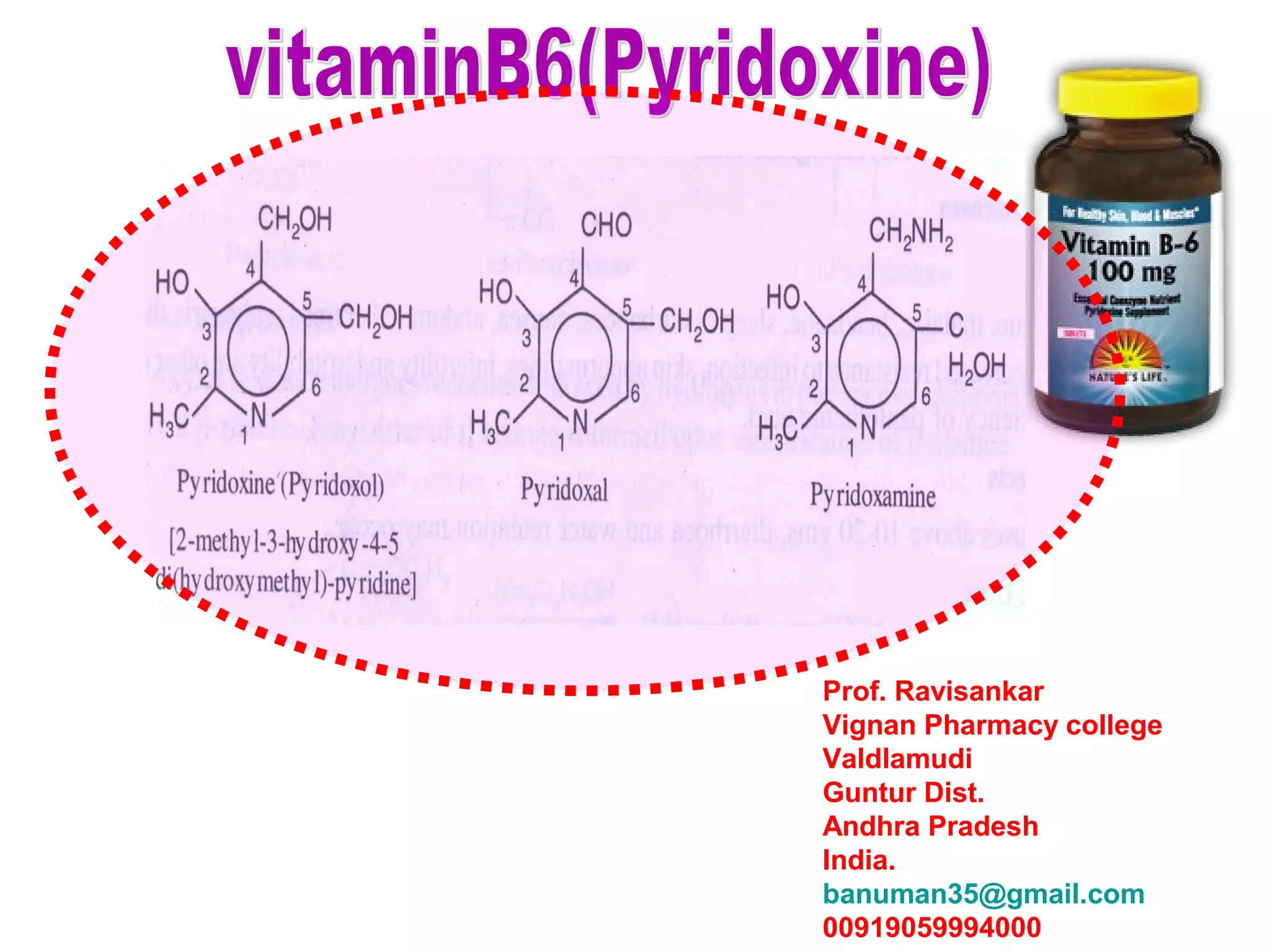
Vitamin B 6 is a water-soluble vitamin present in three major chemical
forms:
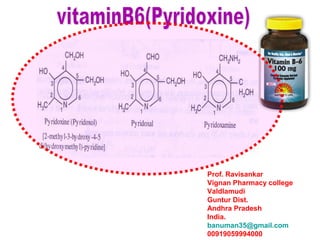
pyridoxine, pyridoxal,pyridoxamine
These three are interconvertible in their phosphorylated form.
It is also called Adermin,because it is used as an antidermatitic factor
(acrodynia factor )for rats.
The plant sources mainly contain pyridoxal,pyridoxamine and animal
sources contain Pyridoxine.
Active form is pyridoxal phosphate
It is essential coenzyme for trans amination and decarboxylation of
amino acids.
N
CH2OH
CH2OHHO
H3C
PYRIDOXINE
N
CHO
CH2OHHO
H3C N
CH2NH2
CH2OHHO
H3C
PYRIDOXAMINEPYRIXOXAL
Collectively, pyridoxine, pyridoxal and pyridoxamine are known as vitamin B6.
(Pyridoxol)
[2-methyl-3-hydroxy-4-5
di(hydroxymethyl)-Pyridine]
1
2
3 4 5
6
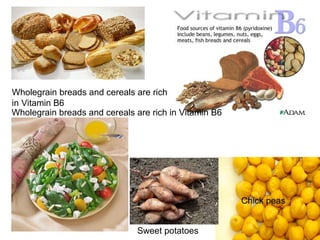
Chick peas
Wholegrain breads and cereals are rich in Vitamin B6
Wholegrain breads and cereals are rich
in Vitamin B6
Sweet potatoes
The best source of vitamin B6 is through the foods you eat. Foods rich in vitamin B6 include:
Avocado (raw),Baked potato (flesh and skin)
Fortified cereals, beans, Lima beans,Peanut butter ,Poultry ,Spinach, Soybeans, Sunflower
seeds Tomato juice, Walnuts
bananas
beef
Brewer's Yeast
brown rice husks
cabbage
dried fruits
eggs
fish, fatty, whitefish
green leafy vegetables
maize
meats
milk
nuts, oats
organ meats, especially pig liver
potatoes
pulses, such as lentils
root vegetables
soy products, peppers
wheat bran
wheat germ
whole grain
•
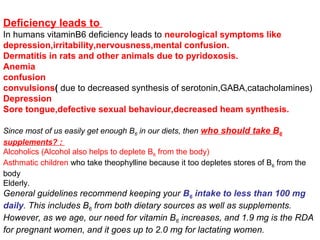
Deficiency leads to
In humans vitaminB6 deficiency leads to neurological symptoms like
depression,irritability,nervousness,mental confusion.
Dermatitis in rats and other animals due to pyridoxosis.
Anemia
confusion
convulsions( due to decreased synthesis of serotonin,GABA,catacholamines)
Depression
Sore tongue,defective sexual behaviour,decreased heam synthesis.
Since most of us easily get enough B6 in our diets, then who should take B6
supplements? :
Alcoholics (Alcohol also helps to deplete B6 from the body)
Asthmatic children who take theophylline because it too depletes stores of B6 from the
body
Elderly.
General guidelines recommend keeping your B6 intake to less than 100 mg
daily. This includes B6 from both dietary sources as well as supplements.
However, as we age, our need for vitamin B6 increases, and 1.9 mg is the RDA
for pregnant women, and it goes up to 2.0 mg for lactating women.
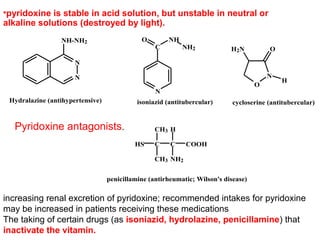
•pyridoxine is stable in acid solution, but unstable in neutral or
alkaline solutions (destroyed by light).
N
N
NH-NH2
Hydralazine (antihypertensive)
N
C
O NH
NH2
isoniazid (antitubercular)
O
N
OH2N
H
cycloserine (antitubercular)
CC
CH3 H
COOHHS
CH3 NH2
penicillamine (antirheumatic; Wilson's disease)
Pyridoxine antagonists.
increasing renal excretion of pyridoxine; recommended intakes for pyridoxine
may be increased in patients receiving these medications
The taking of certain drugs (as isoniazid, hydrolazine, penicillamine) that
inactivate the vitamin.
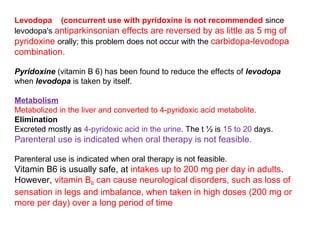
Levodopa (concurrent use with pyridoxine is not recommended since
levodopa's antiparkinsonian effects are reversed by as little as 5 mg of
pyridoxine orally; this problem does not occur with the carbidopa-levodopa
combination.
Pyridoxine (vitamin B 6) has been found to reduce the effects of levodopa
when levodopa is taken by itself.
Metabolism
Metabolized in the liver and converted to 4-pyridoxic acid metabolite.
Elimination
Excreted mostly as 4-pyridoxic acid in the urine. The t ½ is 15 to 20 days.
Parenteral use is indicated when oral therapy is not feasible.
Vitamin B6 is usually safe, at intakes up to 200 mg per day in adults.
However, vitamin B6 can cause neurological disorders, such as loss of
sensation in legs and imbalance, when taken in high doses (200 mg or
more per day) over a long period of time
Physiological importance:
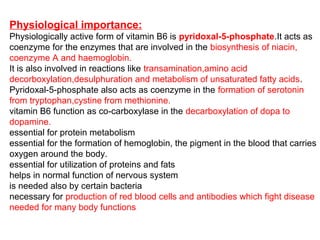
Physiologically active form of vitamin B6 is pyridoxal-5-phosphate.It acts as
coenzyme for the enzymes that are involved in the biosynthesis of niacin,
coenzyme A and haemoglobin.
It is also involved in reactions like transamination,amino acid
decorboxylation,desulphuration and metabolism of unsaturated fatty acids.
Pyridoxal-5-phosphate also acts as coenzyme in the formation of serotonin
from tryptophan,cystine from methionine.
vitamin B6 function as co-carboxylase in the decarboxylation of dopa to
dopamine.
essential for protein metabolism
essential for the formation of hemoglobin, the pigment in the blood that carries
oxygen around the body.
essential for utilization of proteins and fats
helps in normal function of nervous system
is needed also by certain bacteria
necessary for production of red blood cells and antibodies which fight disease
needed for many body functions
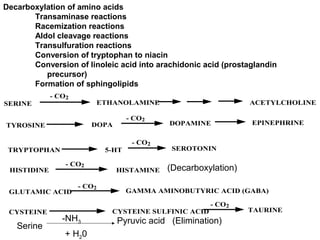
Decarboxylation of amino acids
Transaminase reactions
Racemization reactions
Aldol cleavage reactions
Transulfuration reactions
Conversion of tryptophan to niacin
Conversion of linoleic acid into arachidonic acid (prostaglandin
precursor)
Formation of sphingolipids
SERINE ETHANOLAMINE ACETYLCHOLINE
TYROSINE DOPA DOPAMINE EPINEPHRINE
TRYPTOPHAN 5-HT SEROTONIN
HISTIDINE HISTAMINE
GLUTAMIC ACID GAMMA AMINOBUTYRIC ACID (GABA)
CYSTEINE CYSTEINE SULFINIC ACID TAURINE
- CO2
- CO2
- CO2
- CO2
- CO2
- CO2
(Decarboxylation)
Serine
-NH3
+ H20
Pyruvic acid (Elimination)
L-Glutamin acid
Glutamin acid racemase
D-Glutamic acid.
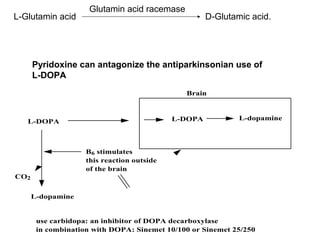
L-DOPA L-DOPA L-dopamine
L-dopamine
CO2
Brain
B6 stimulates
this reaction outside
of the brain
use carbidopa: an inhibitor of DOPA decarboxylase
in combination with DOPA: Sinemet 10/100 or Sinemet 25/250
Pyridoxine can antagonize the antiparkinsonian use of
L-DOPA
N
HO
H3C
CH2OH
CH2OH
pyridoxine
N
HO
H3C
CH2OH
CHO
N
HO
H3C
CH2OH
CH2-NH2
pyridoxal pyridoxamine
N
HO
H3C
CHO
CH2 O P
O
OH
OH
N
HO
H3C
CH2-NH2
CH2 O P
O
OH
OH
pyridoxal phosphate pyridoxamine phosphate
N
HO
H3C
CH2OH
COOH
pyridoxic acid
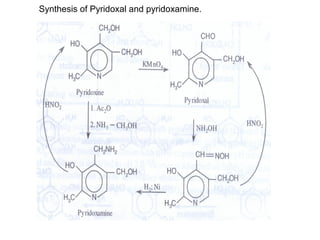
Acetic anhydride
NH3- CH3OHKmno4
Phosphorylation
and oxidation
to the aldehyde.
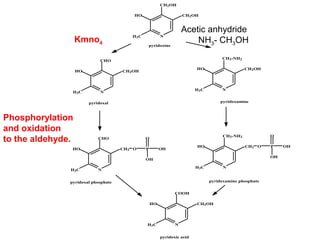
Synthesis of Pyridoxal and pyridoxamine.
vitamin B6 will help maintain the natural colour in your hair -- and ward off
graying.
VITAMIN B6 IS USED FOR
nerve disorder
red blood formation
body immunity
hand numbness
metabolism of protein and fat
kidney stones
anemia
asthma
convulsions
depression
mental retardation
premenstrual syndrome(headache,depression,irritability,weight gain)
urticaria
It is used to treat or prevent the deficiency of vitaminB6 deficiency.
It is also given in combination with isoniazid and cylcoserine to reduce
their toxicity.
It is also used in the treatment of sideroblastic anaemia.
Treatment of Hydrazine and isoniazid poisoning.
Vitamin B6 is indicated for the treatment of sideroblast anemia, neurologic
disturbances, seborrhoeic dermatitis, and cheilosis. In combination with
folic acid and vitamin B12, vitamin B6 lowers homocysteine levels which is
an amino acid linked to heart disease and stroke, and possibly other
diseases as well, such as osteoporosis, and Alzheimer's disease.
Pyridoxine is required for the balancing of hormonal changes in women as
well as assisting the immune system and the growth of new cells. Vitamin
B6 may be helpful in some women with premenstrual dysphoric disorder,
also known as premenstrual syndrome (PMS), and may be useful in some
cases of gestational diabetes and for protection against metabolic
imbalances associated with the use of some oral contraceptives. Vitamin
B6 promotes iron excretion and this has been used as a rationale for
treatment in iron storage diseases

VITAMIN B6 [MEDICINAL CHEMISTRY] BY P.RAVISANKAR. SOURCES,STRUCTURES OF PYRIDOXINE,PYRIDOXAL,PYRIDOXAMINE,DEFICIENCY OF VITAMIN B6,PYRIDOXINE ANTAGONISTS, METABOLISM,PHYSIOGICAL IMPORTANCE,SYNTHESIS OF PYRIDOXALAND PYRIDOXAMINE,VITAMIN B6 USES.

  • 1.
    Prof. Ravisankar Vignan Pharmacycollege Valdlamudi Guntur Dist. Andhra Pradesh India. banuman35@gmail.com 00919059994000
  • 2.
    Vitamin B 6is a water-soluble vitamin present in three major chemical forms: pyridoxine, pyridoxal,pyridoxamine These three are interconvertible in their phosphorylated form. It is also called Adermin,because it is used as an antidermatitic factor (acrodynia factor )for rats. The plant sources mainly contain pyridoxal,pyridoxamine and animal sources contain Pyridoxine. Active form is pyridoxal phosphate It is essential coenzyme for trans amination and decarboxylation of amino acids. N CH2OH CH2OHHO H3C PYRIDOXINE N CHO CH2OHHO H3C N CH2NH2 CH2OHHO H3C PYRIDOXAMINEPYRIXOXAL Collectively, pyridoxine, pyridoxal and pyridoxamine are known as vitamin B6. (Pyridoxol) [2-methyl-3-hydroxy-4-5 di(hydroxymethyl)-Pyridine] 1 2 3 4 5 6
  • 3.
    Chick peas Wholegrain breadsand cereals are rich in Vitamin B6 Wholegrain breads and cereals are rich in Vitamin B6 Sweet potatoes
  • 4.
    The best sourceof vitamin B6 is through the foods you eat. Foods rich in vitamin B6 include: Avocado (raw),Baked potato (flesh and skin) Fortified cereals, beans, Lima beans,Peanut butter ,Poultry ,Spinach, Soybeans, Sunflower seeds Tomato juice, Walnuts bananas beef Brewer's Yeast brown rice husks cabbage dried fruits eggs fish, fatty, whitefish green leafy vegetables maize meats milk nuts, oats organ meats, especially pig liver potatoes pulses, such as lentils root vegetables soy products, peppers wheat bran wheat germ whole grain •
  • 5.
    Deficiency leads to Inhumans vitaminB6 deficiency leads to neurological symptoms like depression,irritability,nervousness,mental confusion. Dermatitis in rats and other animals due to pyridoxosis. Anemia confusion convulsions( due to decreased synthesis of serotonin,GABA,catacholamines) Depression Sore tongue,defective sexual behaviour,decreased heam synthesis. Since most of us easily get enough B6 in our diets, then who should take B6 supplements? : Alcoholics (Alcohol also helps to deplete B6 from the body) Asthmatic children who take theophylline because it too depletes stores of B6 from the body Elderly. General guidelines recommend keeping your B6 intake to less than 100 mg daily. This includes B6 from both dietary sources as well as supplements. However, as we age, our need for vitamin B6 increases, and 1.9 mg is the RDA for pregnant women, and it goes up to 2.0 mg for lactating women.
  • 6.
    •pyridoxine is stablein acid solution, but unstable in neutral or alkaline solutions (destroyed by light). N N NH-NH2 Hydralazine (antihypertensive) N C O NH NH2 isoniazid (antitubercular) O N OH2N H cycloserine (antitubercular) CC CH3 H COOHHS CH3 NH2 penicillamine (antirheumatic; Wilson's disease) Pyridoxine antagonists. increasing renal excretion of pyridoxine; recommended intakes for pyridoxine may be increased in patients receiving these medications The taking of certain drugs (as isoniazid, hydrolazine, penicillamine) that inactivate the vitamin.
  • 7.
    Levodopa (concurrent usewith pyridoxine is not recommended since levodopa's antiparkinsonian effects are reversed by as little as 5 mg of pyridoxine orally; this problem does not occur with the carbidopa-levodopa combination. Pyridoxine (vitamin B 6) has been found to reduce the effects of levodopa when levodopa is taken by itself. Metabolism Metabolized in the liver and converted to 4-pyridoxic acid metabolite. Elimination Excreted mostly as 4-pyridoxic acid in the urine. The t ½ is 15 to 20 days. Parenteral use is indicated when oral therapy is not feasible. Parenteral use is indicated when oral therapy is not feasible. Vitamin B6 is usually safe, at intakes up to 200 mg per day in adults. However, vitamin B6 can cause neurological disorders, such as loss of sensation in legs and imbalance, when taken in high doses (200 mg or more per day) over a long period of time
  • 8.
    Physiological importance: Physiologically activeform of vitamin B6 is pyridoxal-5-phosphate.It acts as coenzyme for the enzymes that are involved in the biosynthesis of niacin, coenzyme A and haemoglobin. It is also involved in reactions like transamination,amino acid decorboxylation,desulphuration and metabolism of unsaturated fatty acids. Pyridoxal-5-phosphate also acts as coenzyme in the formation of serotonin from tryptophan,cystine from methionine. vitamin B6 function as co-carboxylase in the decarboxylation of dopa to dopamine. essential for protein metabolism essential for the formation of hemoglobin, the pigment in the blood that carries oxygen around the body. essential for utilization of proteins and fats helps in normal function of nervous system is needed also by certain bacteria necessary for production of red blood cells and antibodies which fight disease needed for many body functions
  • 9.
    Decarboxylation of aminoacids Transaminase reactions Racemization reactions Aldol cleavage reactions Transulfuration reactions Conversion of tryptophan to niacin Conversion of linoleic acid into arachidonic acid (prostaglandin precursor) Formation of sphingolipids SERINE ETHANOLAMINE ACETYLCHOLINE TYROSINE DOPA DOPAMINE EPINEPHRINE TRYPTOPHAN 5-HT SEROTONIN HISTIDINE HISTAMINE GLUTAMIC ACID GAMMA AMINOBUTYRIC ACID (GABA) CYSTEINE CYSTEINE SULFINIC ACID TAURINE - CO2 - CO2 - CO2 - CO2 - CO2 - CO2 (Decarboxylation) Serine -NH3 + H20 Pyruvic acid (Elimination)
  • 10.
    L-Glutamin acid Glutamin acidracemase D-Glutamic acid. L-DOPA L-DOPA L-dopamine L-dopamine CO2 Brain B6 stimulates this reaction outside of the brain use carbidopa: an inhibitor of DOPA decarboxylase in combination with DOPA: Sinemet 10/100 or Sinemet 25/250 Pyridoxine can antagonize the antiparkinsonian use of L-DOPA
  • 11.
    N HO H3C CH2OH CH2OH pyridoxine N HO H3C CH2OH CHO N HO H3C CH2OH CH2-NH2 pyridoxal pyridoxamine N HO H3C CHO CH2 OP O OH OH N HO H3C CH2-NH2 CH2 O P O OH OH pyridoxal phosphate pyridoxamine phosphate N HO H3C CH2OH COOH pyridoxic acid Acetic anhydride NH3- CH3OHKmno4 Phosphorylation and oxidation to the aldehyde.
  • 12.
    Synthesis of Pyridoxaland pyridoxamine.
  • 13.
    vitamin B6 willhelp maintain the natural colour in your hair -- and ward off graying. VITAMIN B6 IS USED FOR nerve disorder red blood formation body immunity hand numbness metabolism of protein and fat kidney stones anemia asthma convulsions depression mental retardation premenstrual syndrome(headache,depression,irritability,weight gain) urticaria It is used to treat or prevent the deficiency of vitaminB6 deficiency. It is also given in combination with isoniazid and cylcoserine to reduce their toxicity. It is also used in the treatment of sideroblastic anaemia. Treatment of Hydrazine and isoniazid poisoning.
  • 14.
    Vitamin B6 isindicated for the treatment of sideroblast anemia, neurologic disturbances, seborrhoeic dermatitis, and cheilosis. In combination with folic acid and vitamin B12, vitamin B6 lowers homocysteine levels which is an amino acid linked to heart disease and stroke, and possibly other diseases as well, such as osteoporosis, and Alzheimer's disease. Pyridoxine is required for the balancing of hormonal changes in women as well as assisting the immune system and the growth of new cells. Vitamin B6 may be helpful in some women with premenstrual dysphoric disorder, also known as premenstrual syndrome (PMS), and may be useful in some cases of gestational diabetes and for protection against metabolic imbalances associated with the use of some oral contraceptives. Vitamin B6 promotes iron excretion and this has been used as a rationale for treatment in iron storage diseases