Vital Dyes and Stains
Dr Gauri Sr Shrestha,
IOM, TU
Introduction
Background
• Staining agents are
used for diagnostic
purpose without
producing a
pharmacological effect
Be water soluble
Not stain skin, clothes or contact
lenses or any instrument
Selectively stain certain cells or
structures in the eye
Be reversible
Do not interfere vision
Be no pharmacological effect
Be non-irritant
Be non-toxic
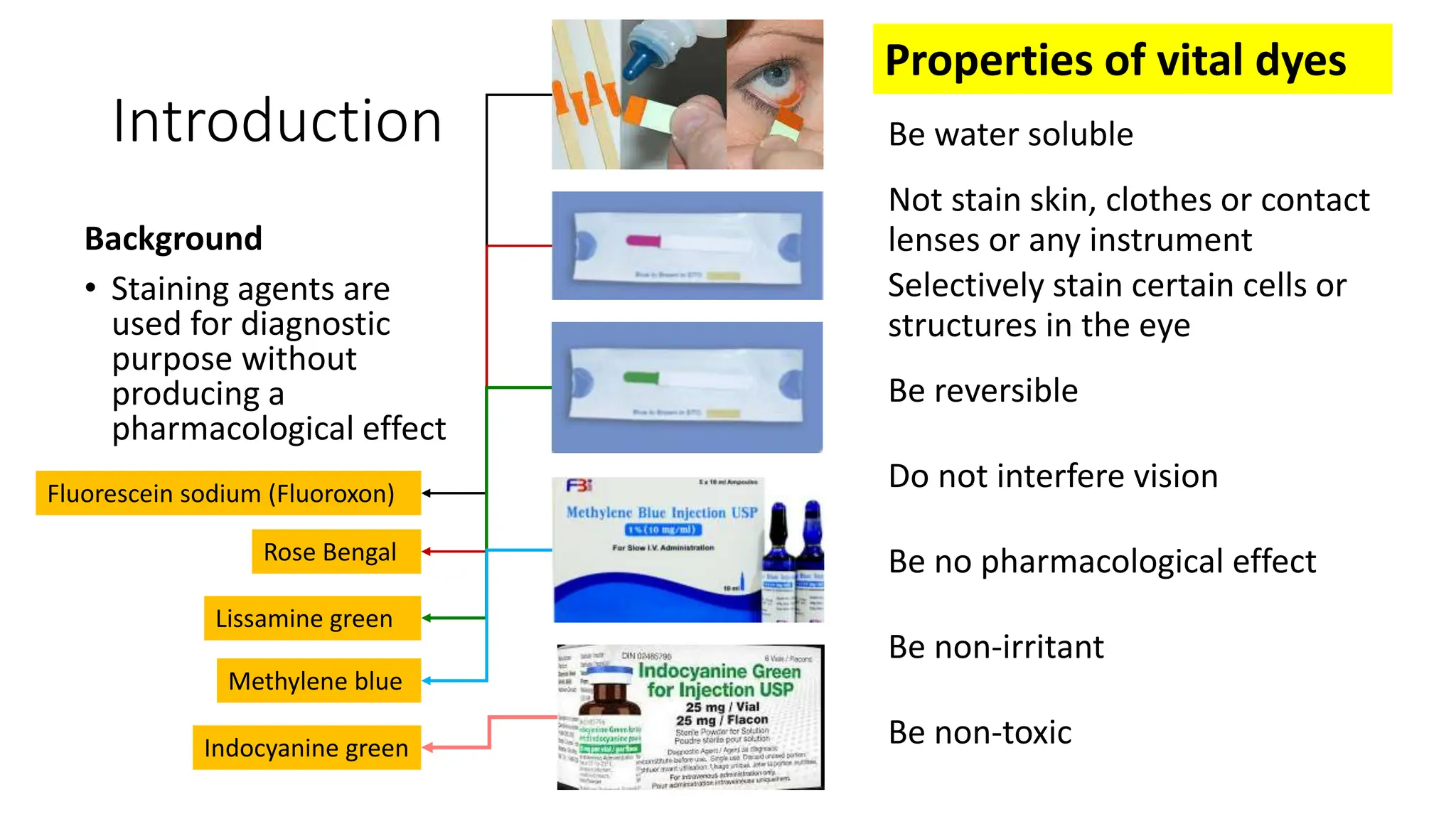
Properties of vital dyes
Fluorescein sodium (Fluoroxon)
Rose Bengal
Lissamine green
Methylene blue
Indocyanine green
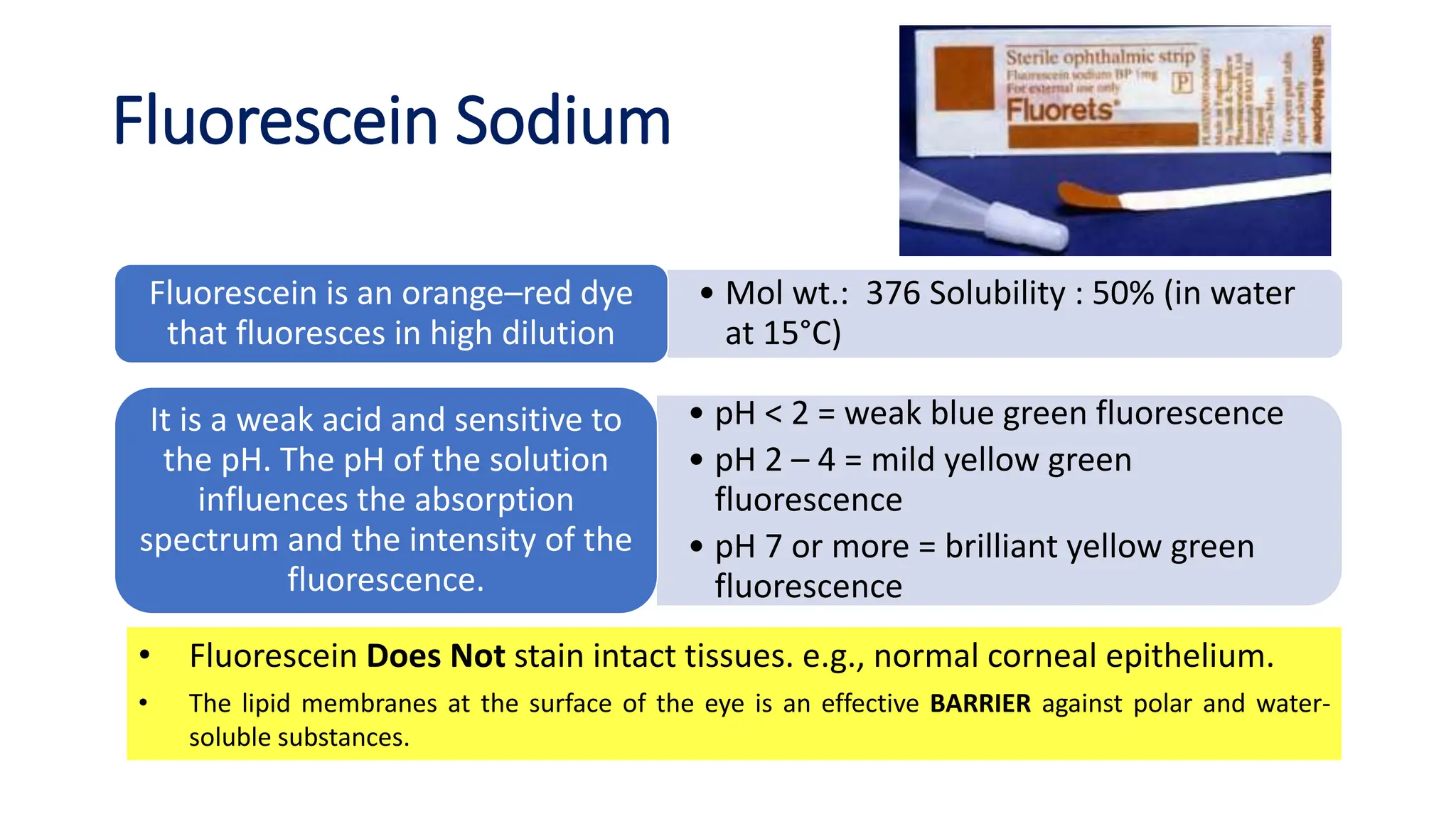
• Mol wt.: 376 Solubility : 50% (in water
at 15°C)
Fluorescein is an orange–red dye
that fluoresces in high dilution
• pH < 2 = weak blue green fluorescence
• pH 2 – 4 = mild yellow green
fluorescence
• pH 7 or more = brilliant yellow green
fluorescence
It is a weak acid and sensitive to
the pH. The pH of the solution
influences the absorption
spectrum and the intensity of the
fluorescence.
Fluorescein Sodium
• Fluorescein Does Not stain intact tissues. e.g., normal corneal epithelium.
• The lipid membranes at the surface of the eye is an effective BARRIER against polar and water-
soluble substances.
Fluorescein Sodium
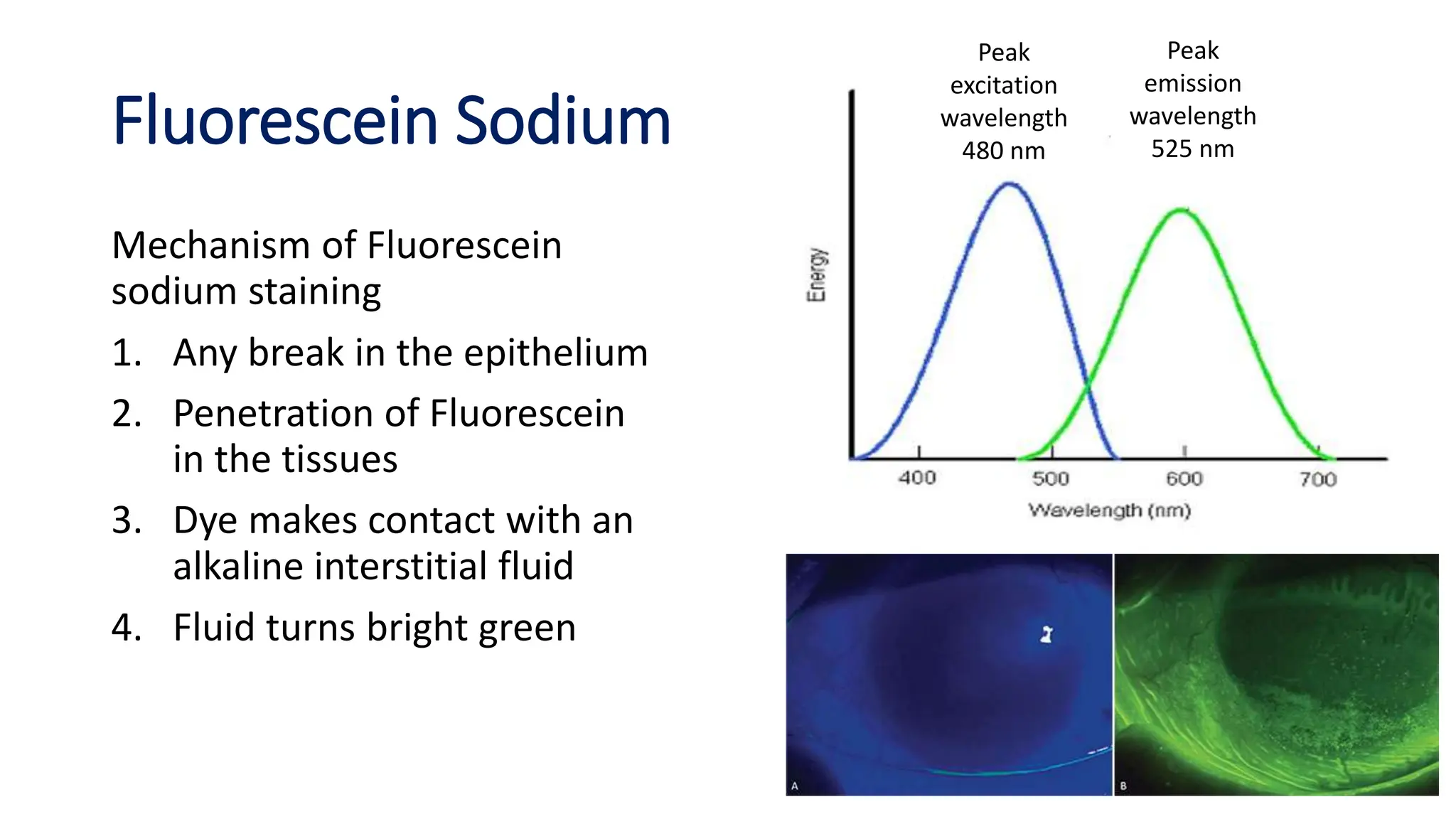
Mechanism of Fluorescein
sodium staining
1. Any break in the epithelium
2. Penetration of Fluorescein
in the tissues
3. Dye makes contact with an
alkaline interstitial fluid
4. Fluid turns bright green
Peak
emission
wavelength
525 nm
Peak
excitation
wavelength
480 nm
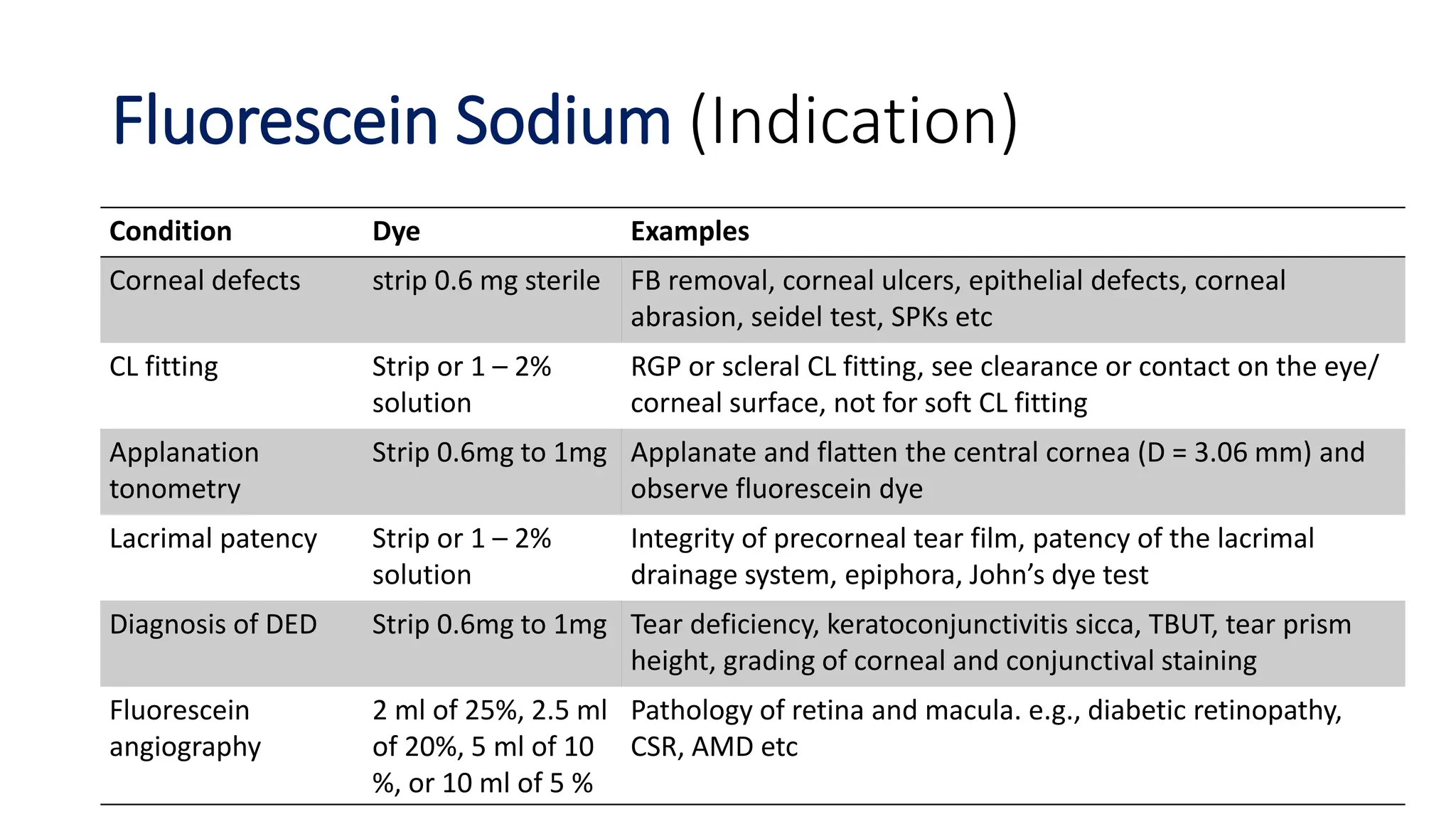
Condition Dye Examples
Corneal defects strip 0.6 mg sterile FB removal, corneal ulcers, epithelial defects, corneal
abrasion, seidel test, SPKs etc
CL fitting Strip or 1 – 2%
solution
RGP or scleral CL fitting, see clearance or contact on the eye/
corneal surface, not for soft CL fitting
Applanation
tonometry
Strip 0.6mg to 1mg Applanate and flatten the central cornea (D = 3.06 mm) and
observe fluorescein dye
Lacrimal patency Strip or 1 – 2%
solution
Integrity of precorneal tear film, patency of the lacrimal
drainage system, epiphora, John’s dye test
Diagnosis of DED Strip 0.6mg to 1mg Tear deficiency, keratoconjunctivitis sicca, TBUT, tear prism
height, grading of corneal and conjunctival staining
Fluorescein
angiography
2 ml of 25%, 2.5 ml
of 20%, 5 ml of 10
%, or 10 ml of 5 %
Pathology of retina and macula. e.g., diabetic retinopathy,
CSR, AMD etc
Fluorescein Sodium (Indication)
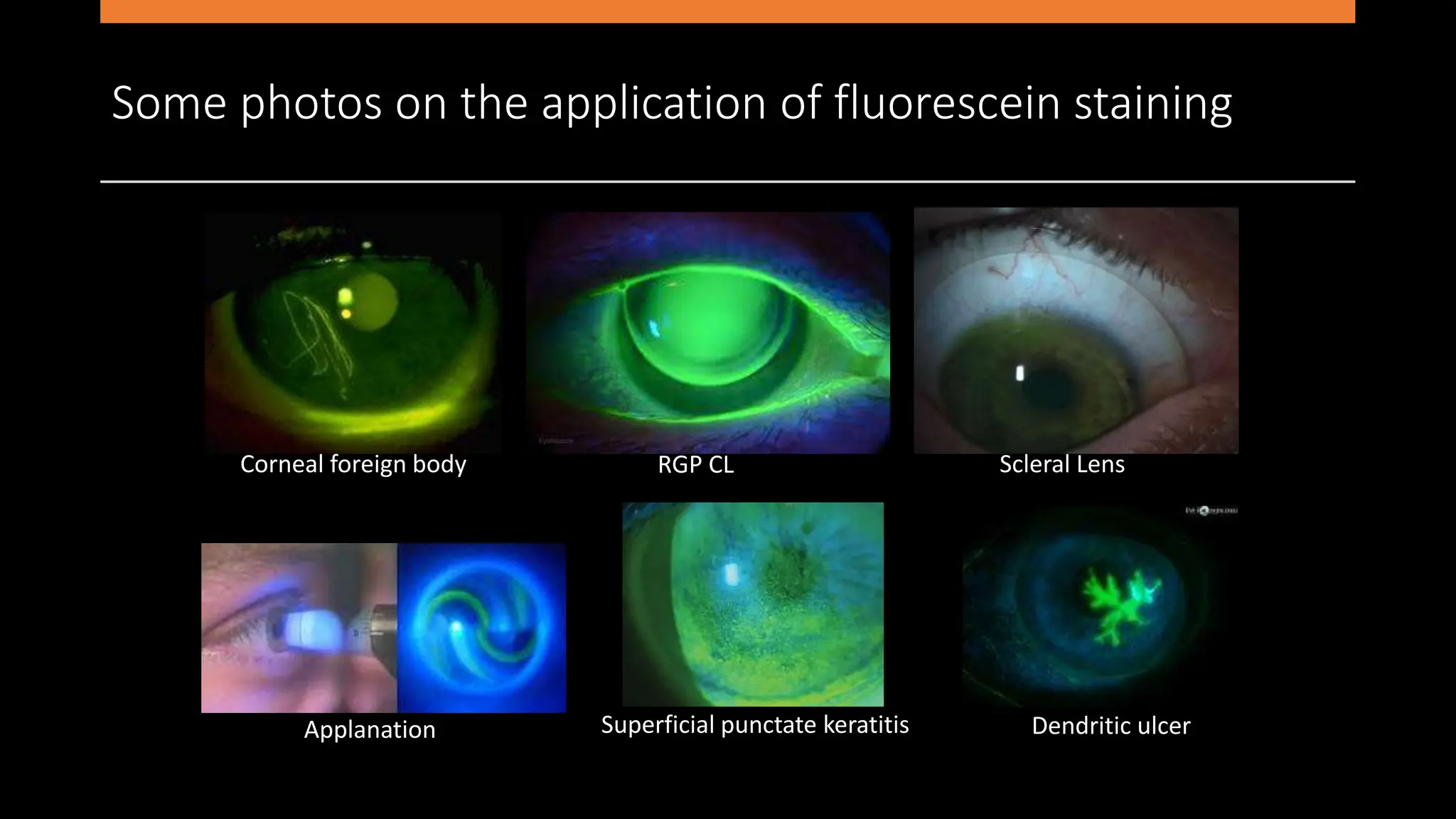
Some photos on the application of fluorescein staining
Corneal foreign body RGP CL Scleral Lens
Applanation Superficial punctate keratitis Dendritic ulcer
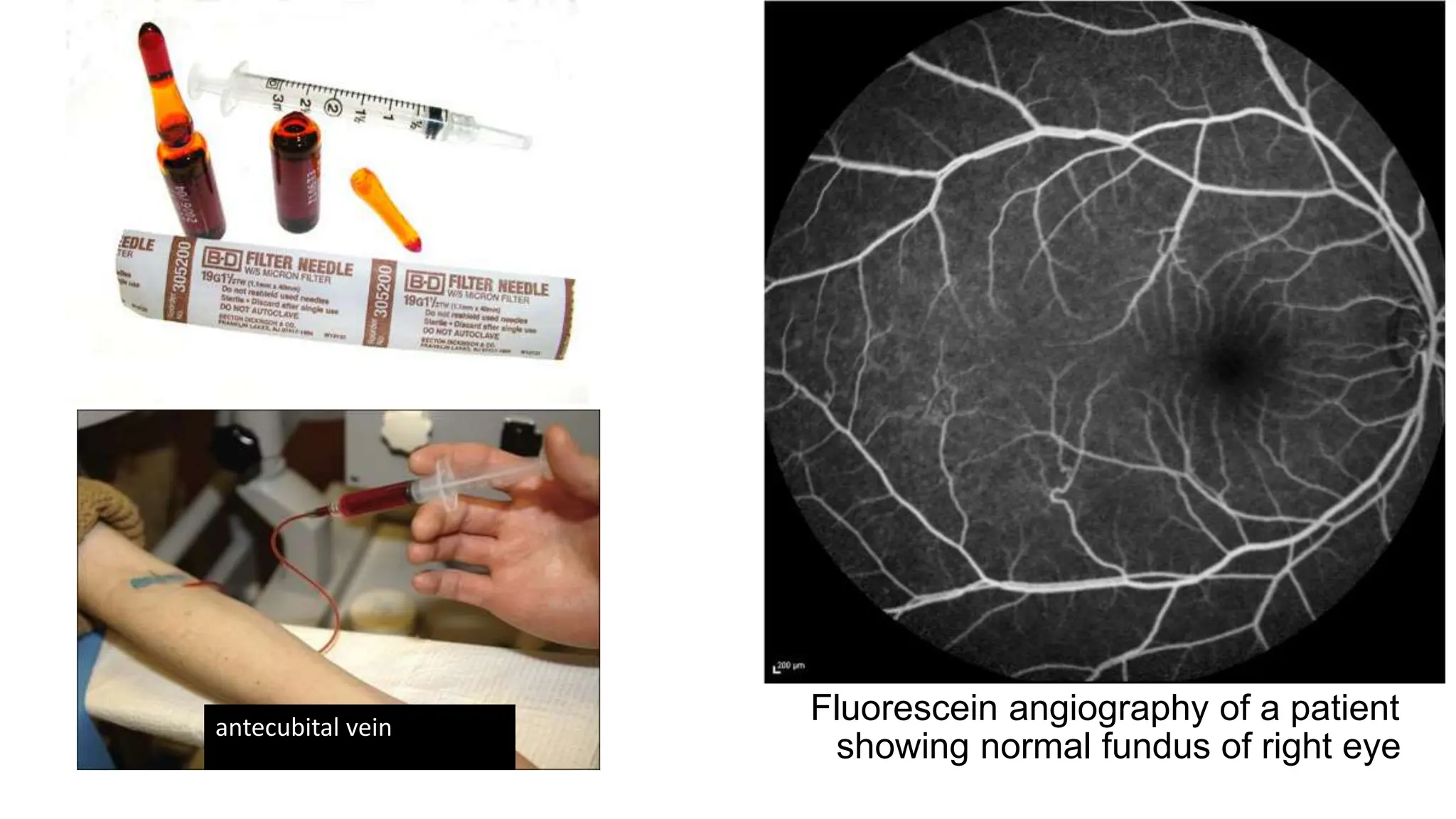
Fluorescein angiography of a patient
showing normal fundus of right eye
antecubital vein
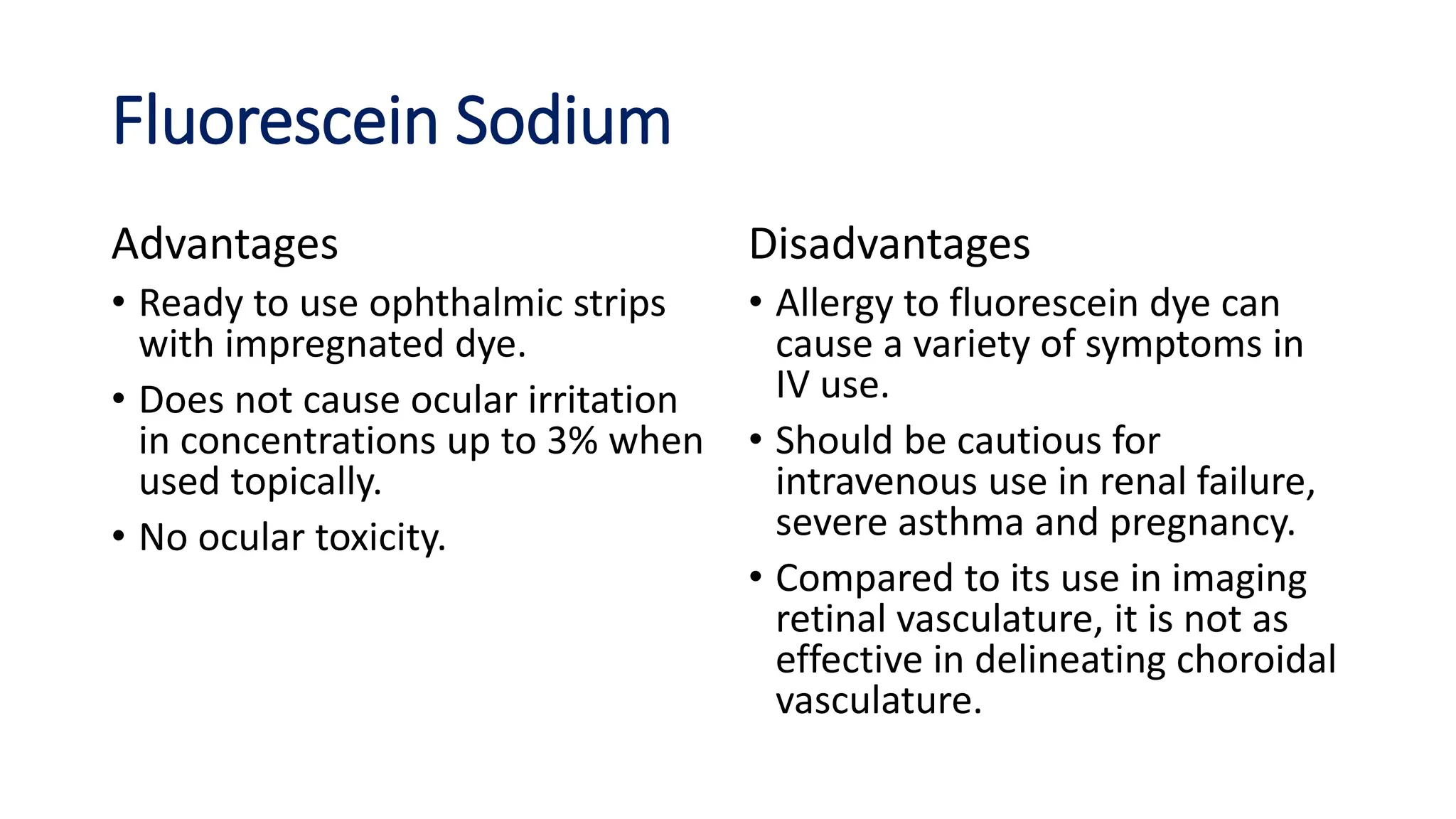
Fluorescein Sodium
Advantages
• Ready to use ophthalmic strips
with impregnated dye.
• Does not cause ocular irritation
in concentrations up to 3% when
used topically.
• No ocular toxicity.
Disadvantages
• Allergy to fluorescein dye can
cause a variety of symptoms in
IV use.
• Should be cautious for
intravenous use in renal failure,
severe asthma and pregnancy.
• Compared to its use in imaging
retinal vasculature, it is not as
effective in delineating choroidal
vasculature.
Fluorescein Sodium (Side Effects)
UNCONSCIOUSNESS
AND HYPERTENSIVE
REACTION WITH IV
DOSES IN ABOUT
10% PATIENTS
LARYNGEAL OR
PULMONARY
EDEMA (RARE)
CARDIOVASCULAR
TOXICITY
INCLUDING
SEVERE
HYPOTENSION
AND SHOCK
DIZZINESS,
FAINTING, AND
PARESTHESIA OF
TONGUE AND
LIPS
DISCOLOURING
OF SKIN AND
URINE
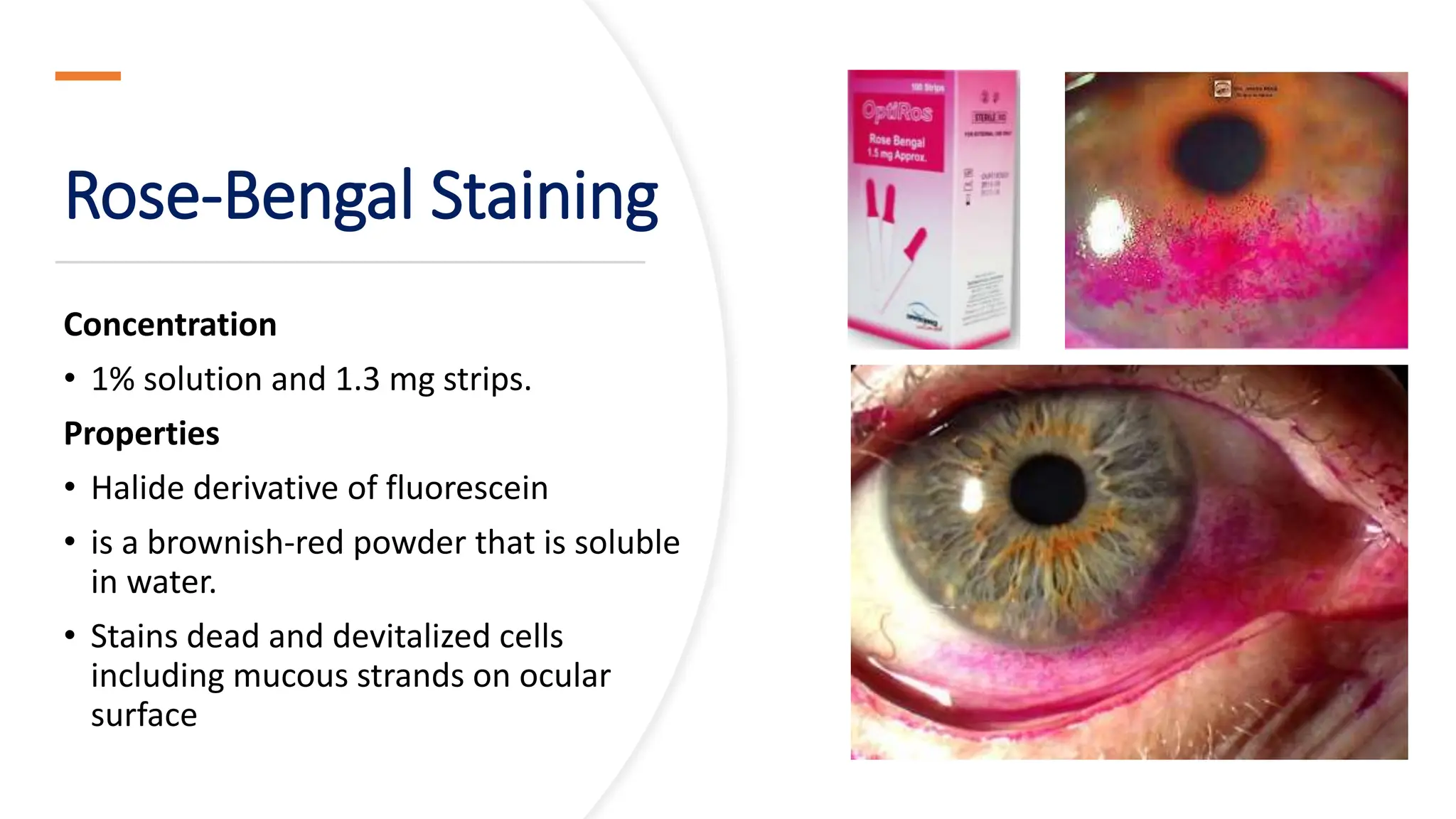
Rose-Bengal Staining
Concentration
• 1% solution and 1.3 mg strips.
Properties
• Halide derivative of fluorescein
• is a brownish-red powder that is soluble
in water.
• Stains dead and devitalized cells
including mucous strands on ocular
surface
Rose-
Bengal
Staining
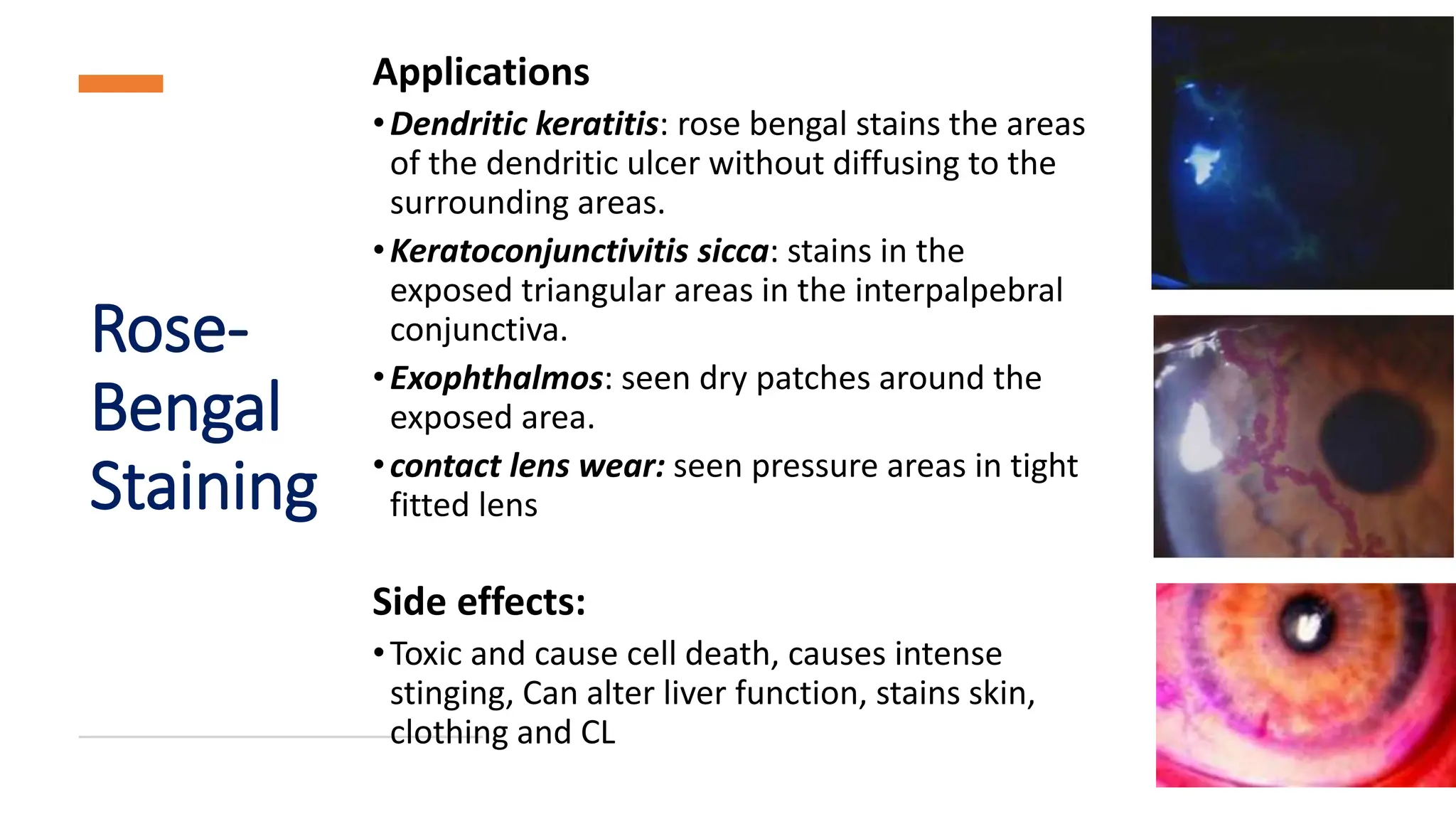
Applications
•Dendritic keratitis: rose bengal stains the areas
of the dendritic ulcer without diffusing to the
surrounding areas.
•Keratoconjunctivitis sicca: stains in the
exposed triangular areas in the interpalpebral
conjunctiva.
•Exophthalmos: seen dry patches around the
exposed area.
•contact lens wear: seen pressure areas in tight
fitted lens
Side effects:
•Toxic and cause cell death, causes intense
stinging, Can alter liver function, stains skin,
clothing and CL
Rose Bengal
Advantages
• Superior to other stains for
early detection of ocular
surface disorders.
• Has some amount of anti-
viral activity against HSV-
1,though this is not of any
ophthalmic use.
Disadvantages
• Studies have shown higher degrees of
ocular toxicity than other vital dyes, which
is further worsened on light exposure.
• High degree of patient discomfort, even a
1% solution of the dye causes stinging and
burning sensation soon after instillation.
• The presence of even lubricating eye drops
on the ocular surface interferes with
uptake of the stain
Lissamine green
Concentration
• 1%, 2%, 3% liquid dyes
• 1.5mg dye impregnated strips
Properties of the dye
• acidic, synthetically derived food dye
• has a peak absorption at the red end of
the visible spectrum (630nm).
• High affinity for staining dead and
degenerated cells, including mucous
strands, edges of viral proliferation of a
dendritic ulcer
Uses
• Dry eye disease: to rule out
Keratoconjunctivitis sicca.
• To ascertain proper fitting of
contact lens, and to look for any
contact-lens induced conjunctival
staining.
• In patients with symptoms of DED
without clinical signs
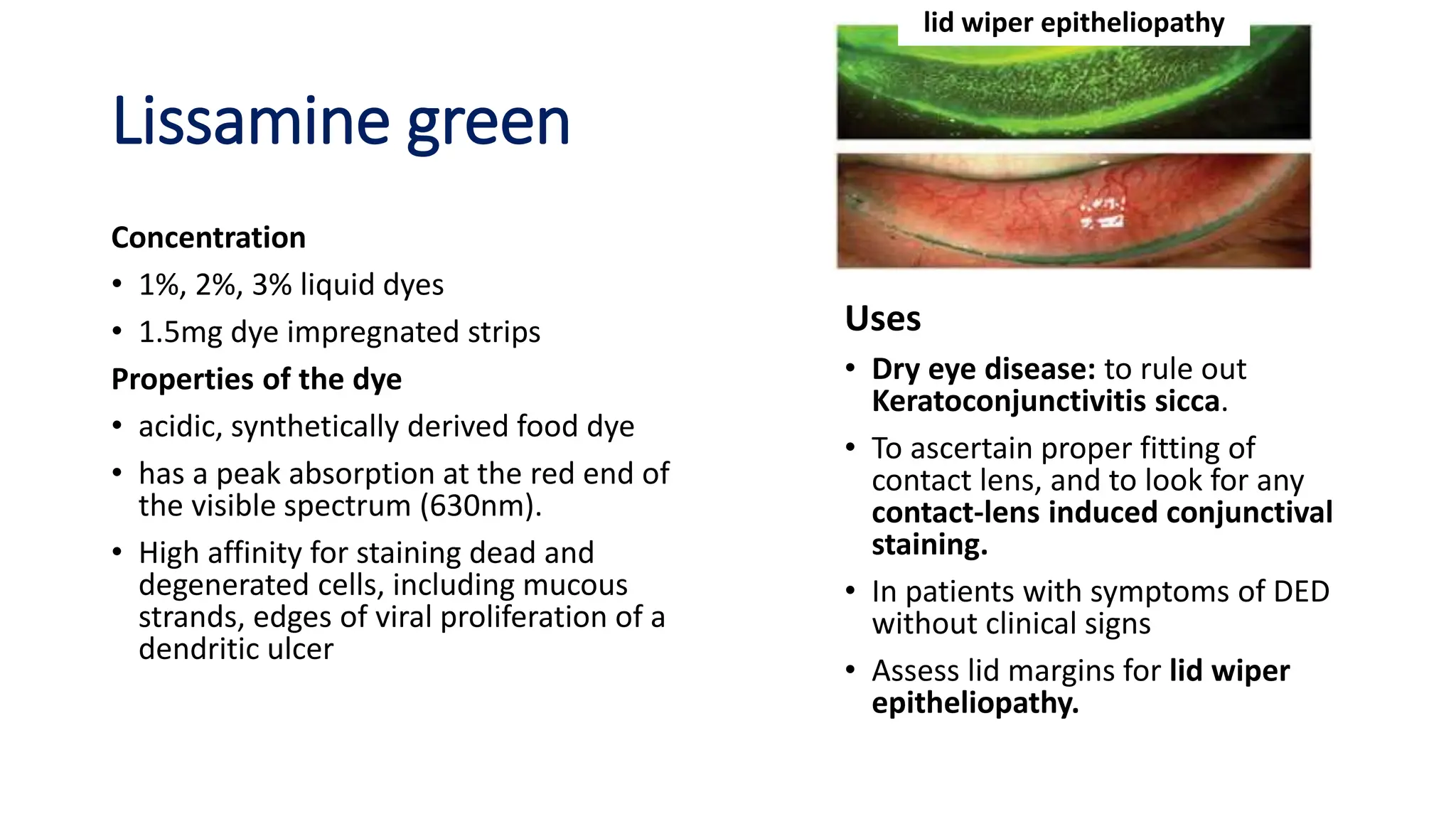
• Assess lid margins for lid wiper
epitheliopathy.
lid wiper epitheliopathy
Images of Lissamine green staining of the cornea
and the conjunctiva
Lissamine green
Advantages
• The dye impregnated strips cause no ocular
discomfort
• In liquid formulations, Lissamine green is preferred
over Rose Bengal.
• Important in staining conjunctiva in superior limbic
keratoconjunctivitis
Disadvantages
• Discomfort at concentrations of 2% and above
• A larger amount and repeated stain is required as
compared to fluorescein.
• Lissamine green is not contact lens compatible
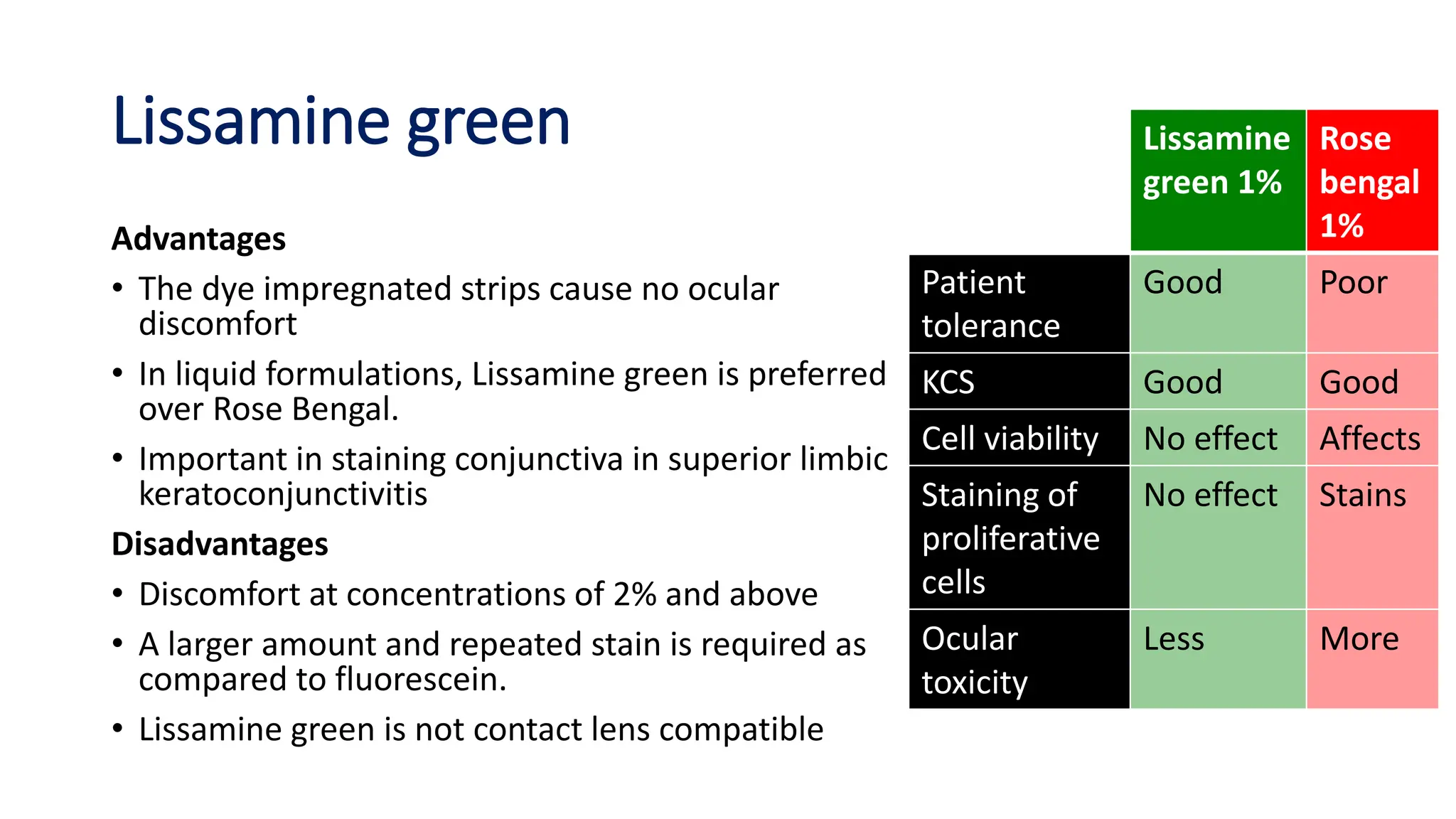
Lissamine
green 1%
Rose
bengal
1%
Patient
tolerance
Good Poor
KCS Good Good
Cell viability No effect Affects
Staining of
proliferative
cells
No effect Stains
Ocular
toxicity
Less More
Indocyanine Green (ICG)
Concentration
• 40mg in 2ml for IV injections
• 0.05% to 0.5% for posterior segment
surgeries, e.g., ILM [internal limiting
membrane] staining, the anterior capsule
stain in cataract surgeries
Properties
• It is a cyanine dye used for ophthalmic
angiography
• It has a peak spectral absorption at infrared
frequencies of 805 nm.
• Excretion: liver and bile
Indocyanine Green (ICG)
Uses
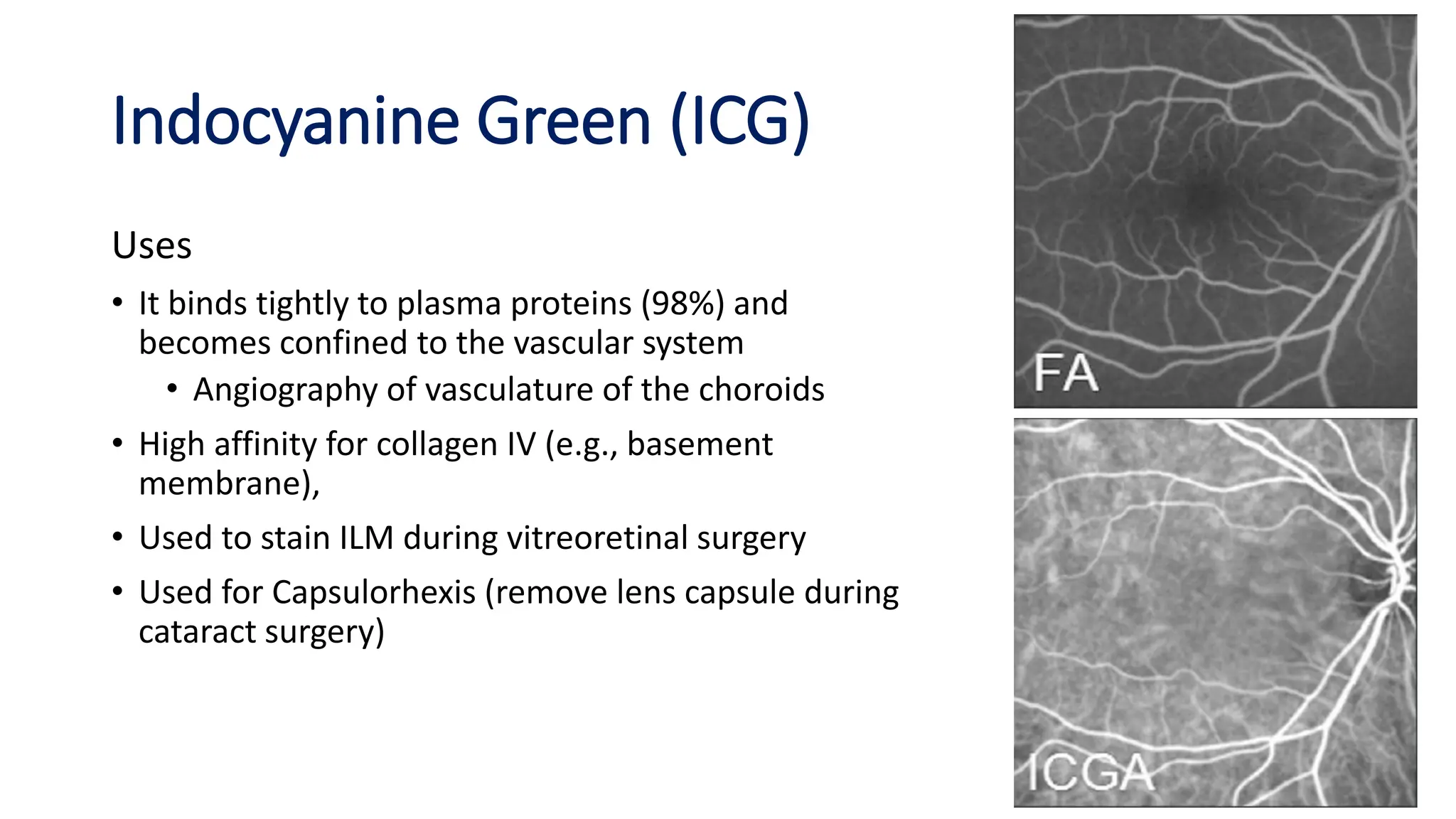
• It binds tightly to plasma proteins (98%) and
becomes confined to the vascular system
• Angiography of vasculature of the choroids
• High affinity for collagen IV (e.g., basement
membrane),
• Used to stain ILM during vitreoretinal surgery
• Used for Capsulorhexis (remove lens capsule during
cataract surgery)
Indocyanine Green (ICG)
Advantages
• ICG gets washed out very quickly
during cataract surgery.
• ICGA is generally better
tolerated than FFA and is also
the preferred method in eyes
with media opacities.
• Disadvantages
• For use in anterior capsule staining in cataract
surgery, the dye has to be reconstituted, diluted.
And filtered to prevent undissolved particles from
entering the eye before use.
• It can cause retinal toxicity which is worsened on
exposure to light.
• Can remain in the vitreous after surgery.
• Can seep through macular hole during surgery, and
cause RPE damage post-op.
• Can deposit permanently on the optic disc after
surgery.
• Use in intraocular surgery is not approved by the
FDA.
Trypan blue
Concentration
• Anterior capsular staining and enucleation surgery for Tenon's capsule - 0.06 %
• Posterior segment surgeries - 0.15%
Properties
• This stains mucus and dead cells which have undergone structural changes
• The dye does not penetrate the capsule, permitting visualization of the anterior
capsule in contrast to the non-stained lens cortex and inner lens material.
• Selectively stains the Tenon's capsule, and hence is used after enucleation surgeries
during layered closure, without entrapment of conjunctiva in the Tenon's capsule.
• In the posterior segment of the eye, it stains ERM [epiretinal membrane] blue on
instillation after fluid/air exchange
Trypan blue
Uses
• To stain the anterior capsule of lens during cataract surgeries.
• To stain and strip the Descemet's membrane in Descemet's stripping endothelial
keratoplasty (DSEK).
• Aid in stripping the corneal endothelium from the donor button in Deep
anterior lamellar keratoplasty (DALK).
• To stain the Tenon's capsule after enucleation surgeries.
• For posterior segment surgeries, to stain the ERM.
Trypan blue
Disadvantages
• Can stain other ocular tissues (anterior hyaloid, posterior capsule). This stain
usually disappears in one week to ten days.
• Cautious use in pregnant and lactating women is required, since large IV doses
have been found to be teratogenic in animal models.
• Use of the dye along with hydrophilic acrylic IOL is not recommended by FDA,
since there is a chance of permanent staining of the IOL.
Other Stains
• Alcain blue 1%
• A complex copper-containing compound.
• counterstains rose bengal, and also stain dead cells and mucus
• In epithelial break, the exposed deeper layers stain a pale blue–green colour,
which persists for several months.
• Methylene blue 0.2%
• Stains bacteria and nerve tissues
• Like rose bengal, it will outline an area of ulceration in herpetic keratitis
Additional reading
• CCLRU Grading
• https://jnjvisionpro.co.uk/education-centre/resource-library/how-
work-grading-scales
• Dyes in ophthalmology
• https://eyewiki.aao.org/Dyes_in_Ophthalmology
• Stain and dyes in ophthalmology
• https://gjcsro.com/stains-and-dyes-in-ophthalmology/
Thank you

Vital dyes and stains Used in Ophthalmic Practice.pptx

  • 1.
    Vital Dyes andStains Dr Gauri Sr Shrestha, IOM, TU
  • 2.
    Introduction Background • Staining agentsare used for diagnostic purpose without producing a pharmacological effect Be water soluble Not stain skin, clothes or contact lenses or any instrument Selectively stain certain cells or structures in the eye Be reversible Do not interfere vision Be no pharmacological effect Be non-irritant Be non-toxic Properties of vital dyes Fluorescein sodium (Fluoroxon) Rose Bengal Lissamine green Methylene blue Indocyanine green
  • 3.
    • Mol wt.:376 Solubility : 50% (in water at 15°C) Fluorescein is an orange–red dye that fluoresces in high dilution • pH < 2 = weak blue green fluorescence • pH 2 – 4 = mild yellow green fluorescence • pH 7 or more = brilliant yellow green fluorescence It is a weak acid and sensitive to the pH. The pH of the solution influences the absorption spectrum and the intensity of the fluorescence. Fluorescein Sodium • Fluorescein Does Not stain intact tissues. e.g., normal corneal epithelium. • The lipid membranes at the surface of the eye is an effective BARRIER against polar and water- soluble substances.
  • 4.
    Fluorescein Sodium Mechanism ofFluorescein sodium staining 1. Any break in the epithelium 2. Penetration of Fluorescein in the tissues 3. Dye makes contact with an alkaline interstitial fluid 4. Fluid turns bright green Peak emission wavelength 525 nm Peak excitation wavelength 480 nm
  • 5.
    Condition Dye Examples Cornealdefects strip 0.6 mg sterile FB removal, corneal ulcers, epithelial defects, corneal abrasion, seidel test, SPKs etc CL fitting Strip or 1 – 2% solution RGP or scleral CL fitting, see clearance or contact on the eye/ corneal surface, not for soft CL fitting Applanation tonometry Strip 0.6mg to 1mg Applanate and flatten the central cornea (D = 3.06 mm) and observe fluorescein dye Lacrimal patency Strip or 1 – 2% solution Integrity of precorneal tear film, patency of the lacrimal drainage system, epiphora, John’s dye test Diagnosis of DED Strip 0.6mg to 1mg Tear deficiency, keratoconjunctivitis sicca, TBUT, tear prism height, grading of corneal and conjunctival staining Fluorescein angiography 2 ml of 25%, 2.5 ml of 20%, 5 ml of 10 %, or 10 ml of 5 % Pathology of retina and macula. e.g., diabetic retinopathy, CSR, AMD etc Fluorescein Sodium (Indication)
  • 6.
    Some photos onthe application of fluorescein staining Corneal foreign body RGP CL Scleral Lens Applanation Superficial punctate keratitis Dendritic ulcer
  • 7.
    Fluorescein angiography ofa patient showing normal fundus of right eye antecubital vein
  • 8.
    Fluorescein Sodium Advantages • Readyto use ophthalmic strips with impregnated dye. • Does not cause ocular irritation in concentrations up to 3% when used topically. • No ocular toxicity. Disadvantages • Allergy to fluorescein dye can cause a variety of symptoms in IV use. • Should be cautious for intravenous use in renal failure, severe asthma and pregnancy. • Compared to its use in imaging retinal vasculature, it is not as effective in delineating choroidal vasculature.
  • 9.
    Fluorescein Sodium (SideEffects) UNCONSCIOUSNESS AND HYPERTENSIVE REACTION WITH IV DOSES IN ABOUT 10% PATIENTS LARYNGEAL OR PULMONARY EDEMA (RARE) CARDIOVASCULAR TOXICITY INCLUDING SEVERE HYPOTENSION AND SHOCK DIZZINESS, FAINTING, AND PARESTHESIA OF TONGUE AND LIPS DISCOLOURING OF SKIN AND URINE
  • 10.
    Rose-Bengal Staining Concentration • 1%solution and 1.3 mg strips. Properties • Halide derivative of fluorescein • is a brownish-red powder that is soluble in water. • Stains dead and devitalized cells including mucous strands on ocular surface
  • 11.
    Rose- Bengal Staining Applications •Dendritic keratitis: rosebengal stains the areas of the dendritic ulcer without diffusing to the surrounding areas. •Keratoconjunctivitis sicca: stains in the exposed triangular areas in the interpalpebral conjunctiva. •Exophthalmos: seen dry patches around the exposed area. •contact lens wear: seen pressure areas in tight fitted lens Side effects: •Toxic and cause cell death, causes intense stinging, Can alter liver function, stains skin, clothing and CL
  • 12.
    Rose Bengal Advantages • Superiorto other stains for early detection of ocular surface disorders. • Has some amount of anti- viral activity against HSV- 1,though this is not of any ophthalmic use. Disadvantages • Studies have shown higher degrees of ocular toxicity than other vital dyes, which is further worsened on light exposure. • High degree of patient discomfort, even a 1% solution of the dye causes stinging and burning sensation soon after instillation. • The presence of even lubricating eye drops on the ocular surface interferes with uptake of the stain
  • 13.
    Lissamine green Concentration • 1%,2%, 3% liquid dyes • 1.5mg dye impregnated strips Properties of the dye • acidic, synthetically derived food dye • has a peak absorption at the red end of the visible spectrum (630nm). • High affinity for staining dead and degenerated cells, including mucous strands, edges of viral proliferation of a dendritic ulcer Uses • Dry eye disease: to rule out Keratoconjunctivitis sicca. • To ascertain proper fitting of contact lens, and to look for any contact-lens induced conjunctival staining. • In patients with symptoms of DED without clinical signs • Assess lid margins for lid wiper epitheliopathy. lid wiper epitheliopathy
  • 14.
    Images of Lissaminegreen staining of the cornea and the conjunctiva
  • 15.
    Lissamine green Advantages • Thedye impregnated strips cause no ocular discomfort • In liquid formulations, Lissamine green is preferred over Rose Bengal. • Important in staining conjunctiva in superior limbic keratoconjunctivitis Disadvantages • Discomfort at concentrations of 2% and above • A larger amount and repeated stain is required as compared to fluorescein. • Lissamine green is not contact lens compatible Lissamine green 1% Rose bengal 1% Patient tolerance Good Poor KCS Good Good Cell viability No effect Affects Staining of proliferative cells No effect Stains Ocular toxicity Less More
  • 16.
    Indocyanine Green (ICG) Concentration •40mg in 2ml for IV injections • 0.05% to 0.5% for posterior segment surgeries, e.g., ILM [internal limiting membrane] staining, the anterior capsule stain in cataract surgeries Properties • It is a cyanine dye used for ophthalmic angiography • It has a peak spectral absorption at infrared frequencies of 805 nm. • Excretion: liver and bile
  • 17.
    Indocyanine Green (ICG) Uses •It binds tightly to plasma proteins (98%) and becomes confined to the vascular system • Angiography of vasculature of the choroids • High affinity for collagen IV (e.g., basement membrane), • Used to stain ILM during vitreoretinal surgery • Used for Capsulorhexis (remove lens capsule during cataract surgery)
  • 18.
    Indocyanine Green (ICG) Advantages •ICG gets washed out very quickly during cataract surgery. • ICGA is generally better tolerated than FFA and is also the preferred method in eyes with media opacities. • Disadvantages • For use in anterior capsule staining in cataract surgery, the dye has to be reconstituted, diluted. And filtered to prevent undissolved particles from entering the eye before use. • It can cause retinal toxicity which is worsened on exposure to light. • Can remain in the vitreous after surgery. • Can seep through macular hole during surgery, and cause RPE damage post-op. • Can deposit permanently on the optic disc after surgery. • Use in intraocular surgery is not approved by the FDA.
  • 19.
    Trypan blue Concentration • Anteriorcapsular staining and enucleation surgery for Tenon's capsule - 0.06 % • Posterior segment surgeries - 0.15% Properties • This stains mucus and dead cells which have undergone structural changes • The dye does not penetrate the capsule, permitting visualization of the anterior capsule in contrast to the non-stained lens cortex and inner lens material. • Selectively stains the Tenon's capsule, and hence is used after enucleation surgeries during layered closure, without entrapment of conjunctiva in the Tenon's capsule. • In the posterior segment of the eye, it stains ERM [epiretinal membrane] blue on instillation after fluid/air exchange
  • 20.
    Trypan blue Uses • Tostain the anterior capsule of lens during cataract surgeries. • To stain and strip the Descemet's membrane in Descemet's stripping endothelial keratoplasty (DSEK). • Aid in stripping the corneal endothelium from the donor button in Deep anterior lamellar keratoplasty (DALK). • To stain the Tenon's capsule after enucleation surgeries. • For posterior segment surgeries, to stain the ERM.
  • 21.
    Trypan blue Disadvantages • Canstain other ocular tissues (anterior hyaloid, posterior capsule). This stain usually disappears in one week to ten days. • Cautious use in pregnant and lactating women is required, since large IV doses have been found to be teratogenic in animal models. • Use of the dye along with hydrophilic acrylic IOL is not recommended by FDA, since there is a chance of permanent staining of the IOL.
  • 22.
    Other Stains • Alcainblue 1% • A complex copper-containing compound. • counterstains rose bengal, and also stain dead cells and mucus • In epithelial break, the exposed deeper layers stain a pale blue–green colour, which persists for several months. • Methylene blue 0.2% • Stains bacteria and nerve tissues • Like rose bengal, it will outline an area of ulceration in herpetic keratitis
  • 23.
    Additional reading • CCLRUGrading • https://jnjvisionpro.co.uk/education-centre/resource-library/how- work-grading-scales • Dyes in ophthalmology • https://eyewiki.aao.org/Dyes_in_Ophthalmology • Stain and dyes in ophthalmology • https://gjcsro.com/stains-and-dyes-in-ophthalmology/
  • 24.

Editor's Notes

  • #8 antecubital vein
  • #14 Lissamine green is as similar as rose Bengal for staining degenerated or dead cells and mucous strands, edges of viral proliferation of a dendritic ulcer (fluorescein stains its central bed) It does not possess antiviral activity thus does not limit its utility in the diagnosis of epithelial keratitis Has some amount of anti-viral activity against HSV-1,though this is not of any ophthalmic use.
  • #16 Lissamine green is as similar as rose Bengal for staining degenerated or dead cells and mucous strands, edges of viral proliferation of a dendritic ulcer (fluorescein stains its central bed) It does not possess antiviral activity thus does not limit its utility in the diagnosis of epithelial keratitis Has some amount of anti-viral activity against HSV-1,though this is not of any ophthalmic use.
  • #19  During cataract surgeries, as compared to other capsular dyes, ICG gets washed out very quickly. ICGA is generally better tolerated than FFA, and is also the preferred method in eyes with media opacities. (As infrared light is less scattered than whitelight, a clearer picture can be obtained). In addition to this, the infrared rays that are used in ICGA can penetrate the ocular pigments, and give a clearerfundus picture in as compared to FFA.
  • #20  Capsule takes up the stain immediately after it comes into contact with the dye, no waiting time needed. Is not toxic to corneal endothelium. Has been proven to be safe in pediatric cataract surgeries
  • #21 To stain the anterior capsule of lens during cataract surgeries. This is especially useful in eyes with a decreased red reflex, or weak zonules, as the dye canimmediately allow the surgeon to detect a radial shift of the capsular bag.
  • #22 To stain the anterior capsule of lens during cataract surgeries. This is especially useful in eyes with a decreased red reflex, or weak zonules, as the dye canimmediately allow the surgeon to detect a radial shift of the capsular bag.