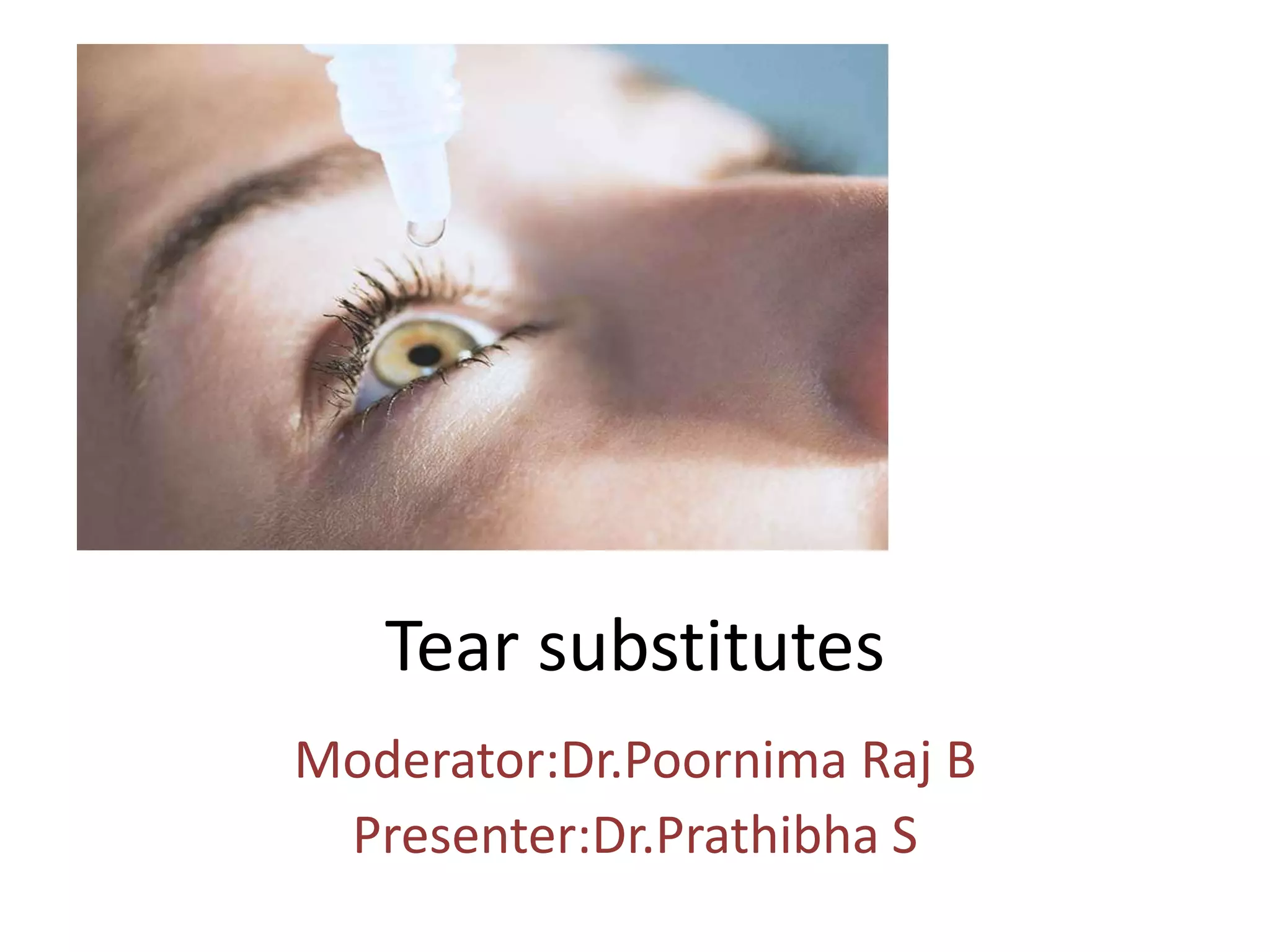
Tear substitutes
Moderator:Dr.Poornima Raj B
Presenter:Dr.Prathibha S
History:
• Eye baths(they called Collyrium) were used in
England in the 16th century.
• To use the eye cups (cobalt blue glass bottle),
the patient applied it to the eye with the head
bowed forward, threw the head back with the
eye open, ensured lavage of the eye by
blinking several times and then removed the
cup with the head once more bowed forward.
• these artificial tears spread poorly across the
ocular surface and their short retention time
led to transient relief and very high frequency
of instillations.
Autologous serum:
• Our natural tears are made up of key
components not found in artificial tear products,
such as epidermal growth factor (EGF),
fibronectin and vitamin A, which support the
proliferation, maturation, migration and
differentiation of corneal and conjunctival
epithelia.
• We also know that serum contains IgG,
lysozymes and complement, which have
bacteriostatic properties.
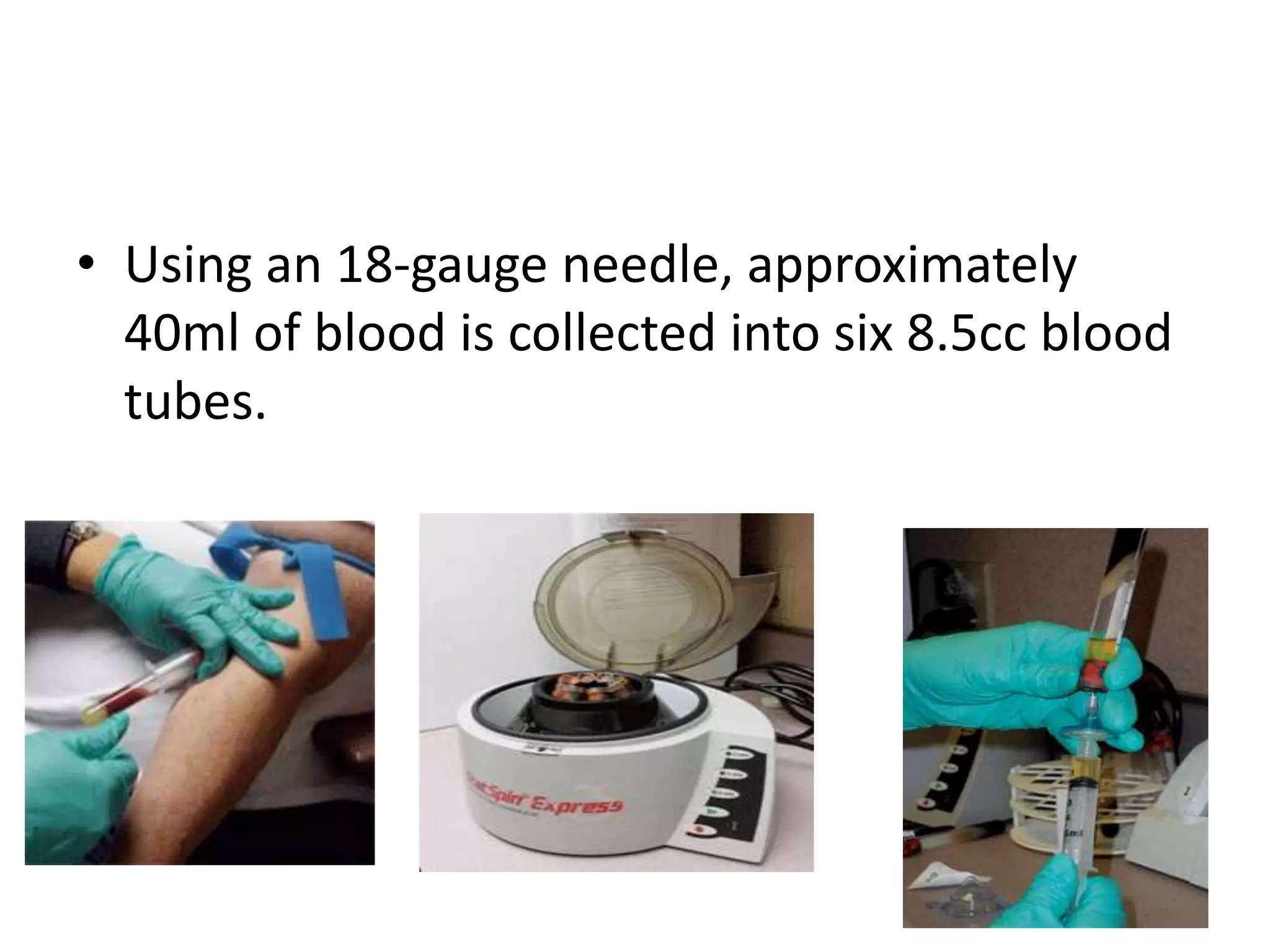
• Using an 18-gauge needle, approximately
40ml of blood is collected into six 8.5cc blood
tubes.
• The collected blood is set aside to clot for two
hours at room temperature.
• Then the blood is centrifuged at 5,600 rpm for 10
minutes.
• The serum is filtered through a 25mm
polyethersulfone disc filter before mixing with
saline.
• Filtration is performed to remove fibrin strands,
which are believed to lessen the effect of ASEDs.
• Each 8.5cc tube of blood yields approximately
4cc of serum (24cc total)
Peripheral corneal infiltrate and ulcer
• Eyelid eczema
• Microbial keratitis in patients with an epi-
defect
• Increased discomfort or epitheliopathy
• Temporary bacterial conjunctivitis
• Scleral vasculitis and melting in RA patients
• Immune complex deposition with 100%
serum
Transplantation of salivary glands
• One of these involves restoration of lacrimal
function by transplanting ( in the case of the
parotid gland, rerouting) minor salivary glands
to inferior fornix, but these procedures
yielded a hypo-osmotic tear composition and
subsequent epithelial edema.
• The three procedures reported include
• (1) transposition of the excretory duct (Stensen’s
duct) of the parotid gland to the inferior fornix.
• (2) free transplantation of the sublingual gland
to the upper conjunctival fornix without
microvascular anastomosis.
• (3) free transplantation of the SMG with
microvascular anastomosis and implantation of
its excretory duct into the upper temporal fornix.
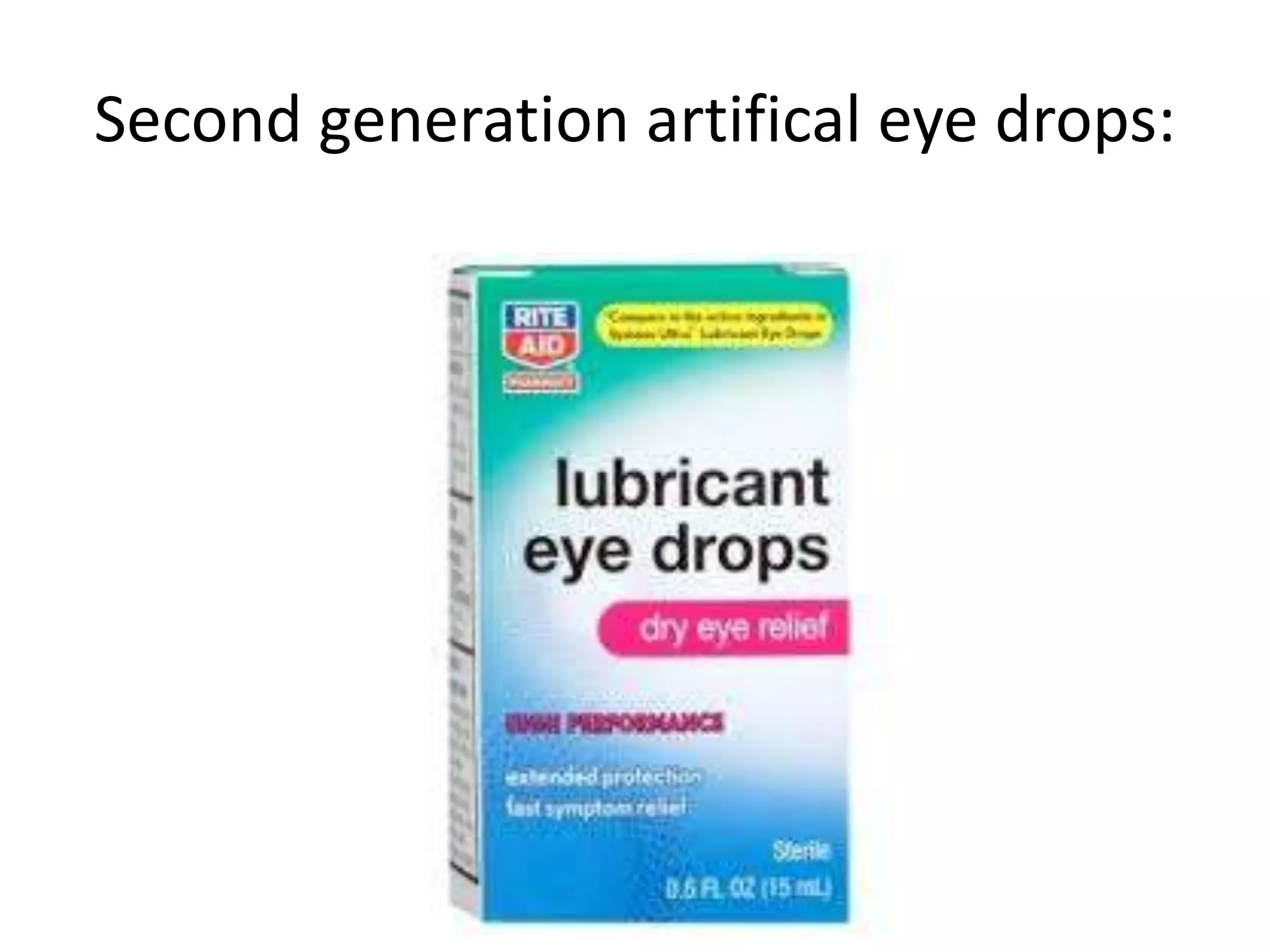
Second generation artifical eye drops:
Eye drops:
• Lubricants preparations formulated as
artificial tear solutions usually contain
inorganic electrolytes
preservatives
water soluble polymeric system.
• Sodium chloride,potassium
chloride,magnesium chloride and other
variuos ions help to maintain tonicity and PH
of the formulation.
• benzalkonium
chloride,chlorobutanol,thimerosal,EDTA,meth
ylparaben and ethylparaben are used to
prevent bacterial contamination
lubricants:Replacement of tear
Indications of use :
A) symptomatic relief of dry eye.
B) symptomatic relief of irritants.
C) symptomatic relief of exposure .
D) refreshment of contact lenses & prosthesis.
E) as basis for preparing topical medications . (
e.g. ; fort antibiotic drop)
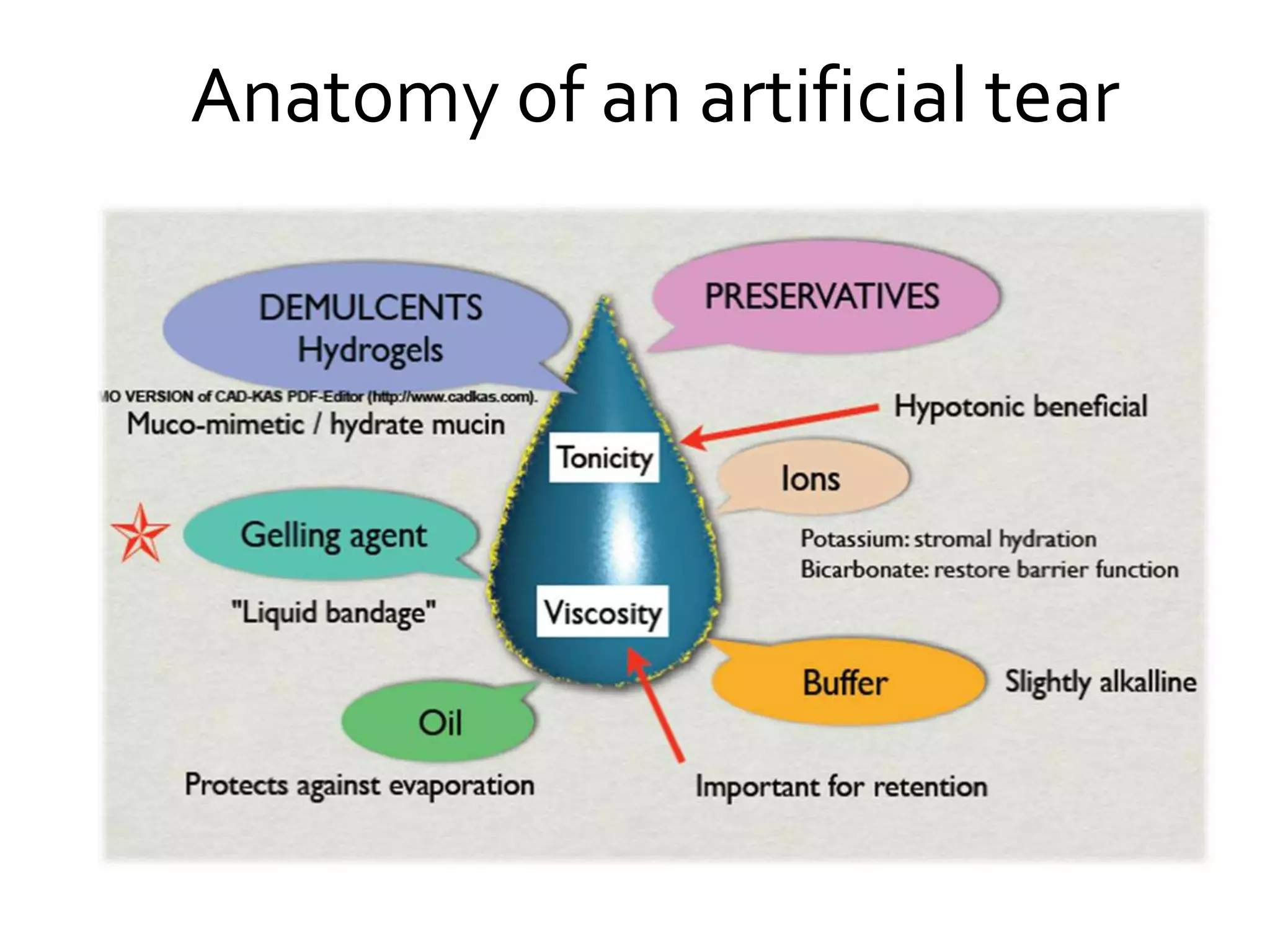
Anatomy of an artificial tear
Artificial Tear Eye drops
 Solvent water
 Active ingredient water soluble polymers
 Viscosity polymers concentration
 Preservatives prevention of contamination
 balanced tonicity Inorganic electrolytes
NaCl&KCL equivalent to 0.9% NaCl
 P.H buffers
 Anti-oxidants Sometimes Vit. A
 Lipids phospholipids
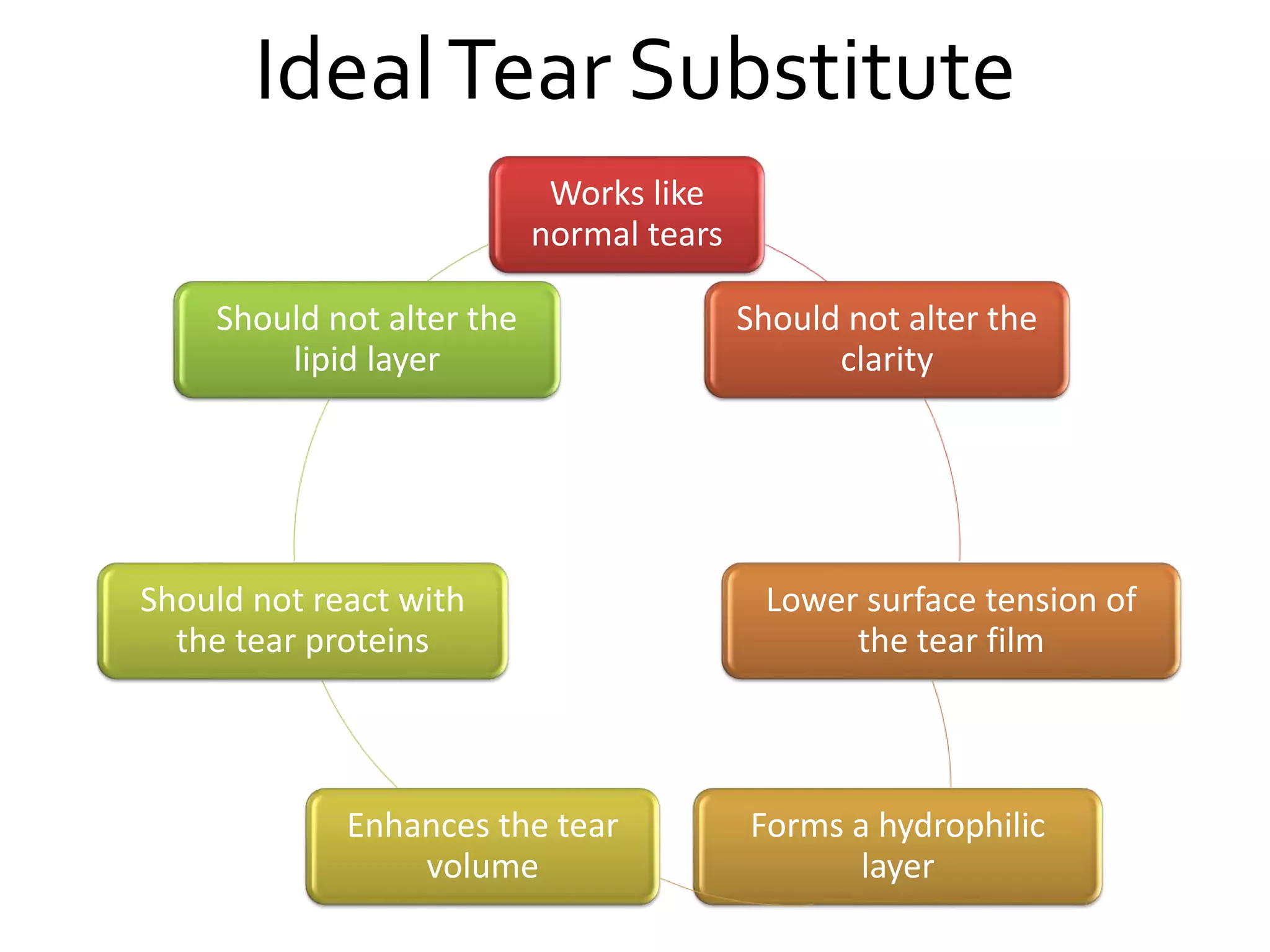
IdealTear Substitute
Works like
normal tears
Should not alter the
clarity
Lower surface tension of
the tear film
Forms a hydrophilic
layer
Enhances the tear
volume
Should not react with
the tear proteins
Should not alter the
lipid layer
Ideal tear substitute
pH: 6.5 to 7.5
Refractive Index: 1.336
Surface Tension: 40.1
+/- 1.5 dyne/cm
Osmolarity: 302
+/- 6.3 mosm / L
Viscosity: 6-12 cps
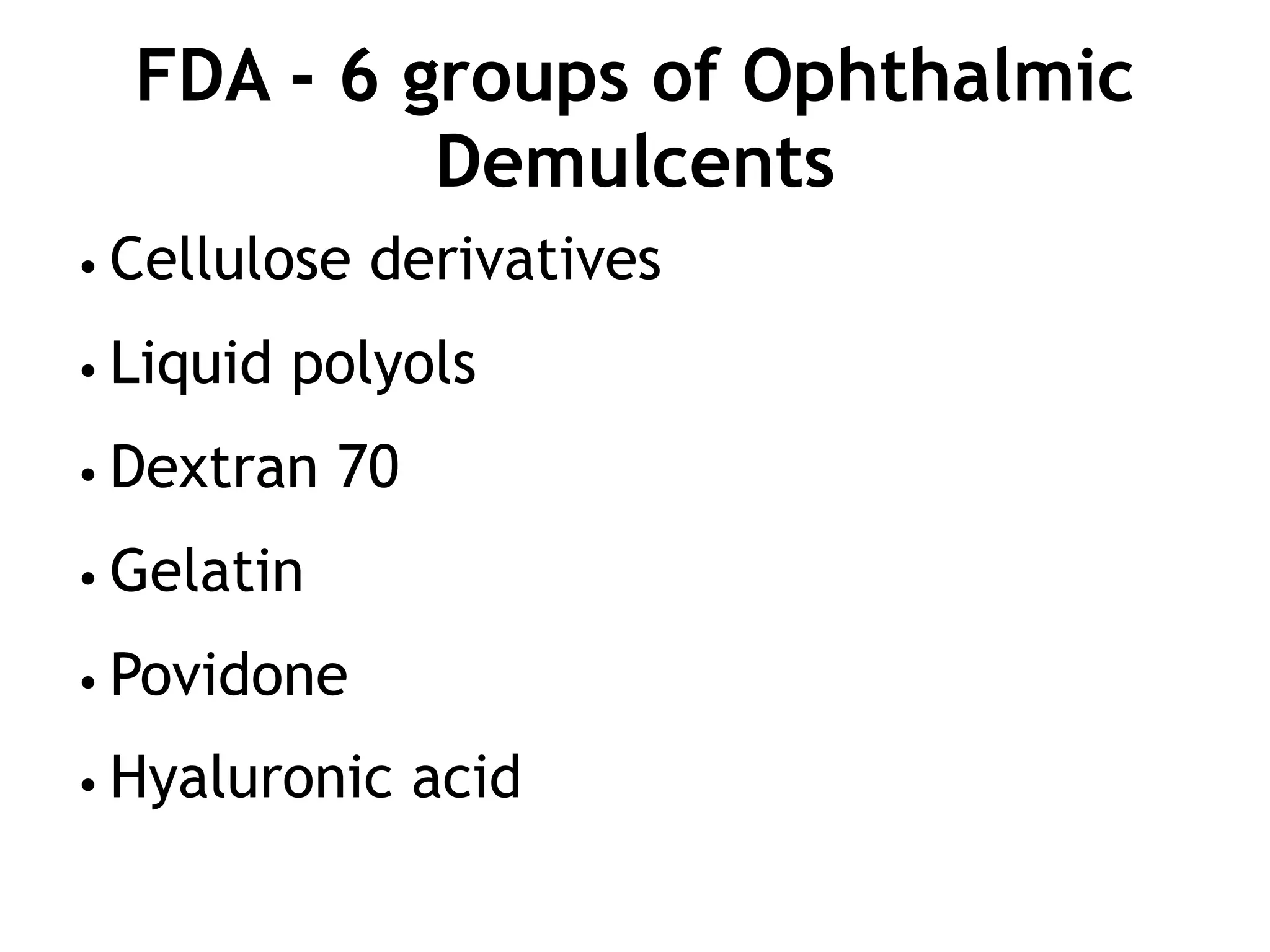
FDA - 6 groups of Ophthalmic
Demulcents
• Cellulose derivatives
• Liquid polyols
• Dextran 70
• Gelatin
• Povidone
• Hyaluronic acid
Cellulose Derivatives
• CMC: 0.25 - 2%
• HPMC: 0.2% -0.3%
• Oil in water emulsion
• Also helps Mucin and lipid deficiency
• Can be blended with Glycerine, Carnitine,
Erythritol
• Blurring of vision present.
Cellulose derivatives
Viscosity
Retention time
on eye surface
Celluvisc 350
+ + + + + +
Liquigel 70 +
+ +
Systane 10 +
+ +
Refresh Tears
1 +
• Reliable viscosity agent
• Seldom used
Gelatin
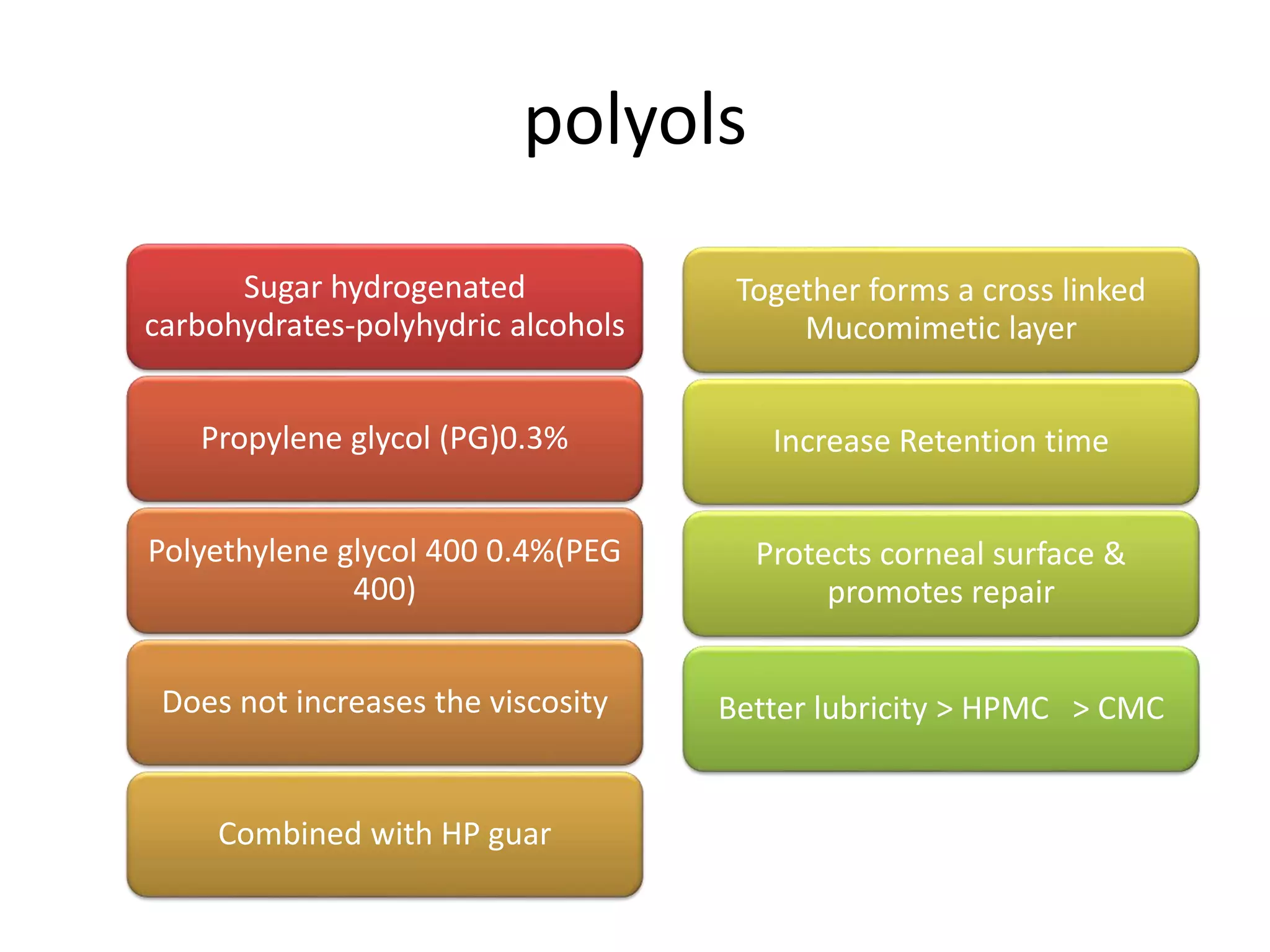
polyols
Sugar hydrogenated
carbohydrates-polyhydric alcohols
Propylene glycol (PG)0.3%
Polyethylene glycol 400 0.4%(PEG
400)
Does not increases the viscosity
Combined with HP guar
Together forms a cross linked
Mucomimetic layer
Increase Retention time
Protects corneal surface &
promotes repair
Better lubricity > HPMC > CMC
Dextran 70
High mole.wt.polysacharide
Enhances the demulcent nature of HMC
Tears Naturale: 0.3% HPMC +0.1% dextran 70
More viscous & Soothing drop
Increases the retention time
Evaporative dry eyes
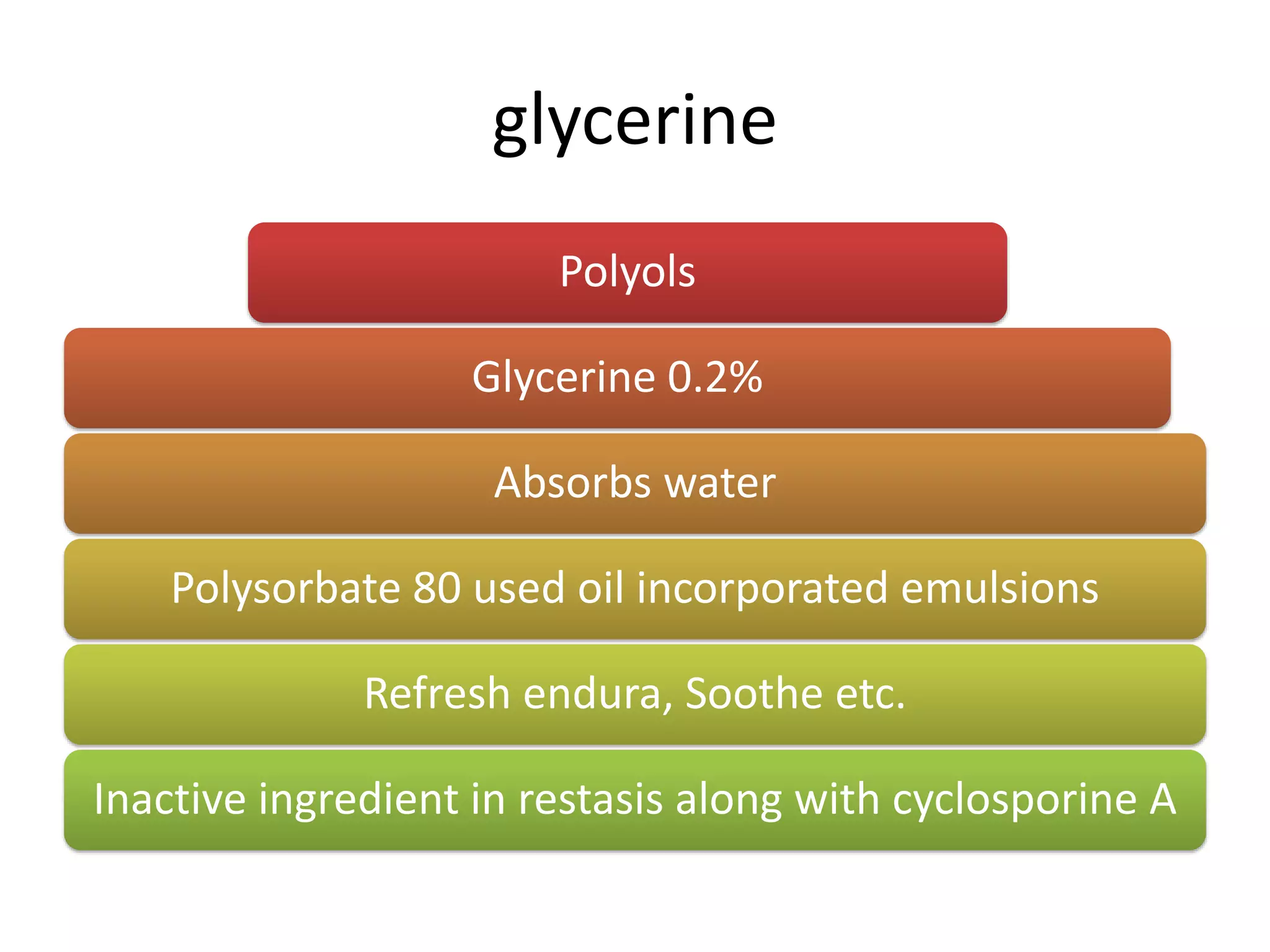
glycerine
Polyols
Glycerine 0.2%
Absorbs water
Polysorbate 80 used oil incorporated emulsions
Refresh endura, Soothe etc.
Inactive ingredient in restasis along with cyclosporine A
Polyvinyl alcohol
One of early
lubricants .
Hydrophilic
polymer
All purpose
lubricant
Almost doubles
TUBT
0.1% to 4%
Tears plus
Can be combined
with PEG 400 or
povidone (0.6%)
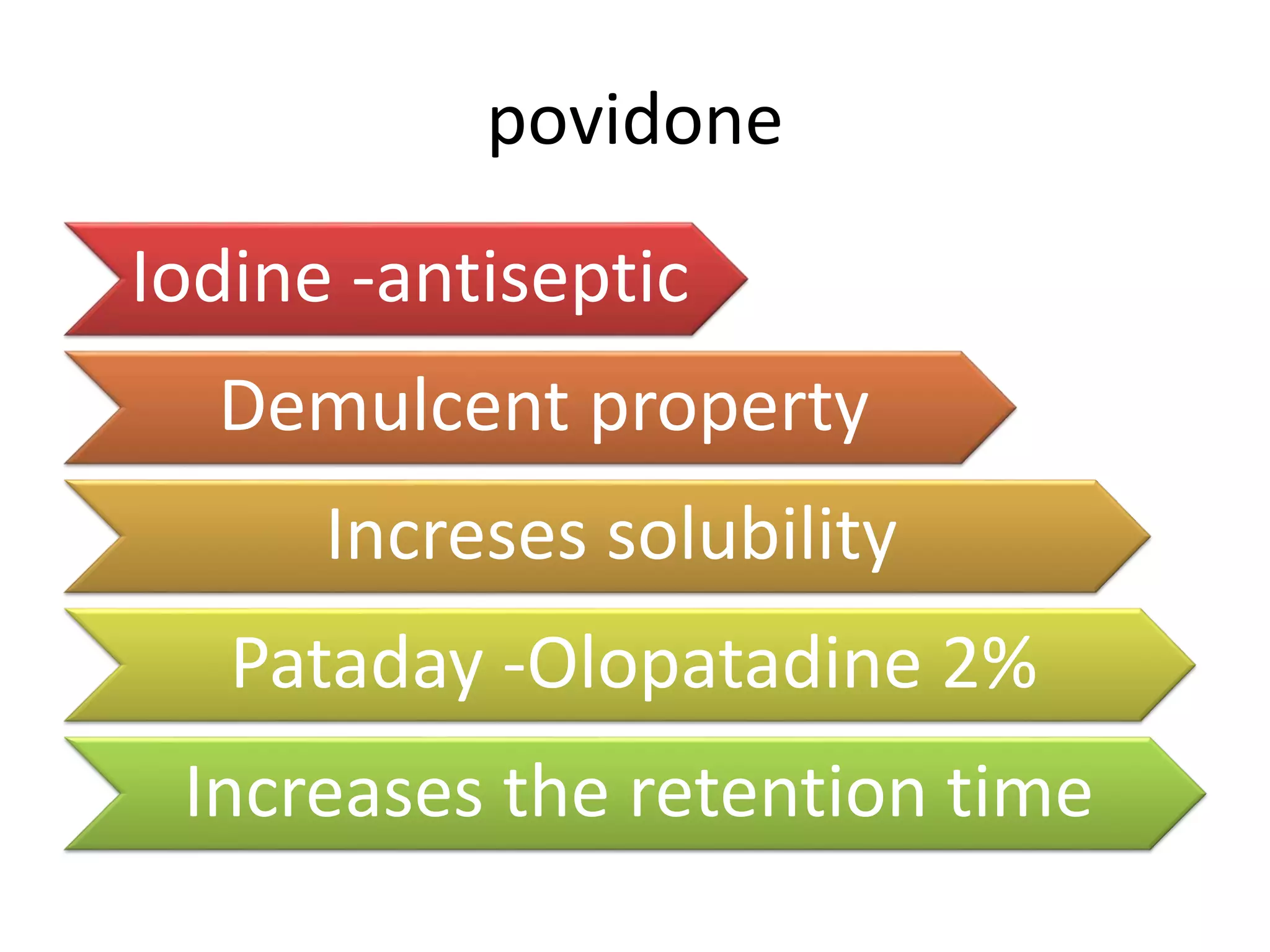
povidone
Iodine -antiseptic
Demulcent property
Increses solubility
Pataday -Olopatadine 2%
Increases the retention time
Hyaluronic
Normally found in joints,
vitreous gel & tears
High water retaining
property
Increases bio adhesion
Example: Blink tears,
Hyla, Hyvisc, etc.
More useful in Aqueous
deficiency
Carbomer 980
Cross
linked Poly
Acrylate
Polymer
High
clarity &
viscosity
Short flow
properties
High
retention
time on
eye
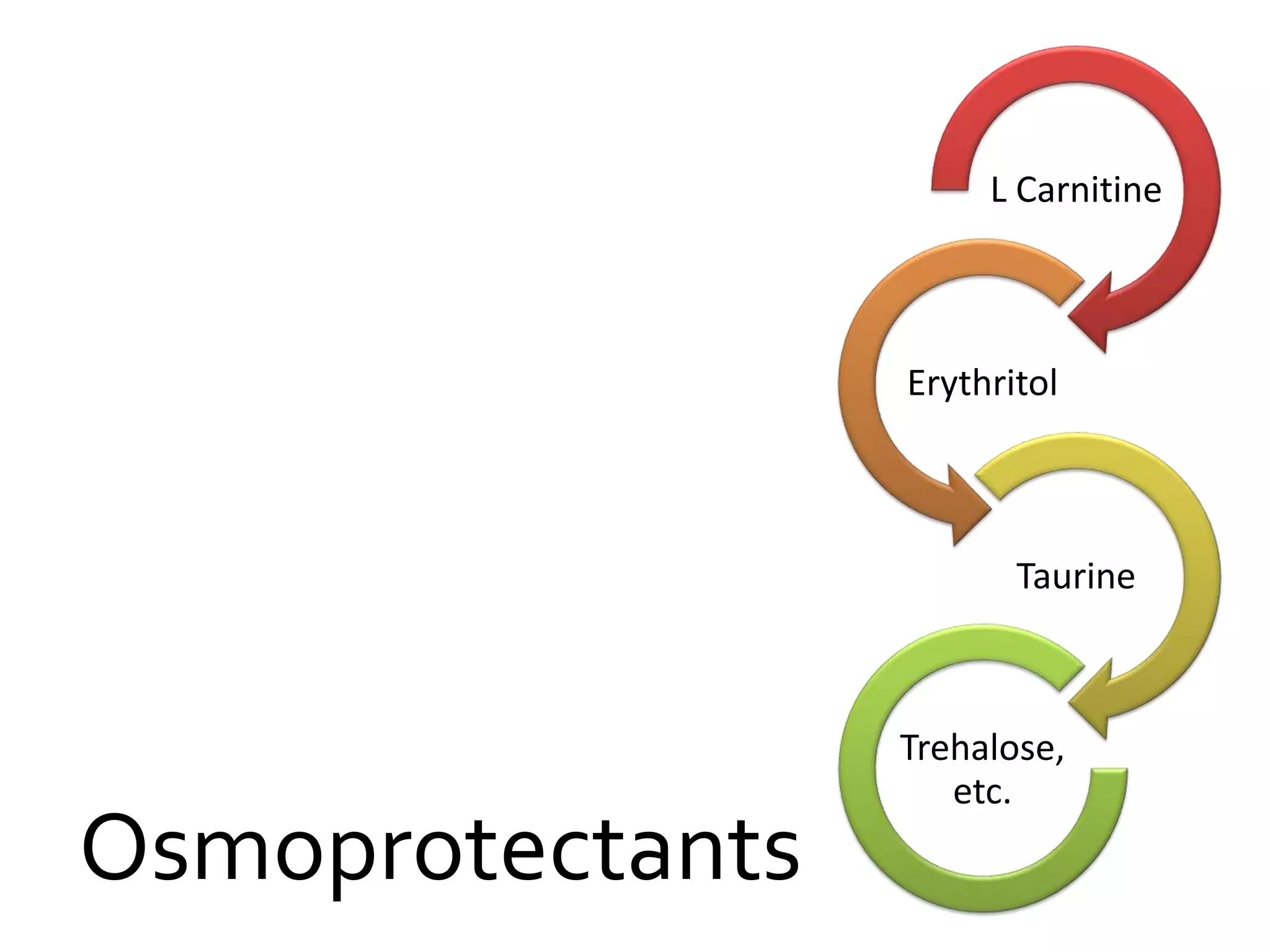
Osmoprotectants
L Carnitine
Erythritol
Taurine
Trehalose,
etc.
Bi-carbonate
Normal component of natural tears
It helps in maintaining Mucin layer
everywhere
It helps in repairing and maintaining
epithelial layer
Potassium
It helps in maintaining Corneal Thickness
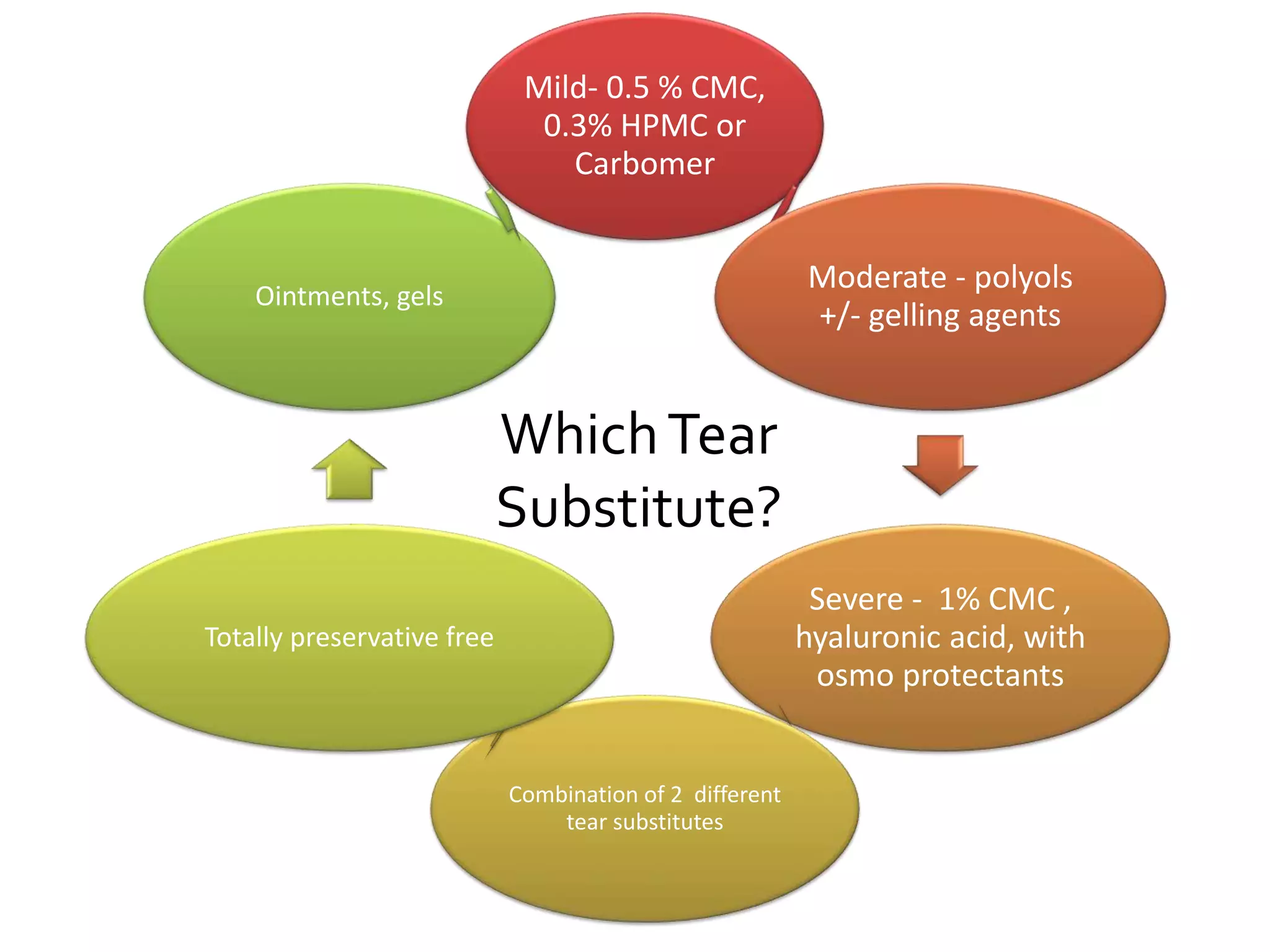
Mild- 0.5 % CMC,
0.3% HPMC or
Carbomer
Moderate - polyols
+/- gelling agents
Severe - 1% CMC ,
hyaluronic acid, with
osmo protectants
Combination of 2 different
tear substitutes
Totally preservative free
Ointments, gels
WhichTear
Substitute?
2.OINTMENTS.
• Second most common method .
• Petroleum,lanolin and other oil topical
ointments.
• When instilled in eye,they dissolve at the
temperature of ocular surface and disperse
with tear fluids.
• Ointment is retained in the cul-de-sac longer
than artifical tear substitutes.
• Applied directly on inferior conjunctival sac a
0.25 to 0.50 inch ribbon.
• Dosage: bed time, severe(day time)
ointments block the access of
solutions should be instilled prior to
ointments.
Indications:
• Exposure keratitis
• Decreased corneal sensitivity
• Recurrent corneal erosions
• Keratitis sicca(usually bedtime)
• After removal of foreign body
• During and following surgery.
Contraindications:
• Hypersensitivity to any component use of
contact lens
Newer lubricant eye gel:
• Carbopal 980(polyacrylic acid) a gelling agent
with high water binding power that
transforms from gel to liquid upon contact
with the ocular tissue.
• Available in 10ml tube.
• Minimises blurring and streaking common
with thick tears and ointments.
3.Ocular inserts:
• Use of preservative free water soluble polymeric
insert(lacriset ie;preservative free).
• Cylindrical rod which contains 5mg hydroxy
propylmethylcellulose is placed in lower cul-de-
sac.
• later it imbibes fluid and swells.
• Strats dissolving within 6-8hrs releasing polymers
to the ocular surface for 12-24hours.
• Disadvantage:
cost, manual dexeterity, blurred vision as rod dissolves
causing the tear film to thicken( this can be minimised with
isotonic saline)
Adverse reaction:
1.transient blurring of vision.
2. ocular irritation and discomfort
3. matting/stickness of eyelashes
4.photophobhia, hypersensitivity,edema of eyelids
and hyperemia.
4.Soft contact lens therapy
• Hydrophilic bandage lenses.
• provide a tear reservoir but it should be used
in conjunction with replacement tears
• Caution should be taken because such
patients are prone to contact lens intolerance
and super infections .
• Forniceal scarring may dislodge the lenses.
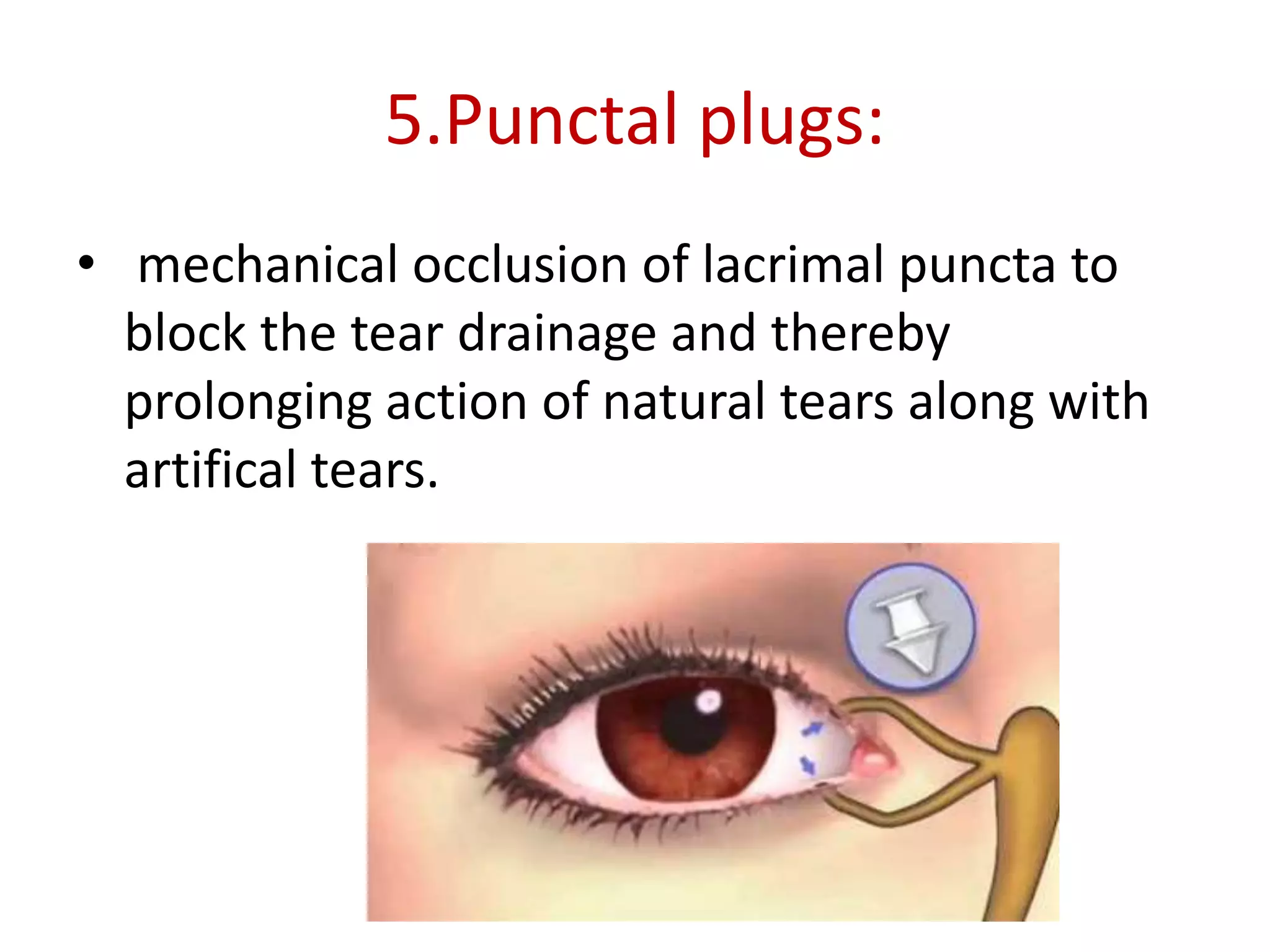
5.Punctal plugs:
• mechanical occlusion of lacrimal puncta to
block the tear drainage and thereby
prolonging action of natural tears along with
artifical tears.
• Type: 1) silicone based plug
2) temporary absorable collagen implant
following placement the implant swells
impeding tear flow upto 2weeks before the
total implant is absorbed.
6.Collagen implant:
• Absorable intracanalicular collagen implant in
2,3, and 4mm size.
• Patient should be informed that relief may
not occur immediately after insertion and no
removal is necessary if implant dissolves
within 5-7days.
• Permanent treatment(non dissolvable silicone
plugs).
Electrical stimulators:
Date of download: 6/17/2017 The Association for Research in Vision and Ophthalmology Copyright © 2017. All rights reserved.
From: Enhanced Tearing by Electrical Stimulation of the Anterior Ethmoid Nerve
Invest. Ophthalmol. Vis. Sci.. 2017;58(4):2341-2348. doi:10.1167/iovs.16-21362
Figure Legend:
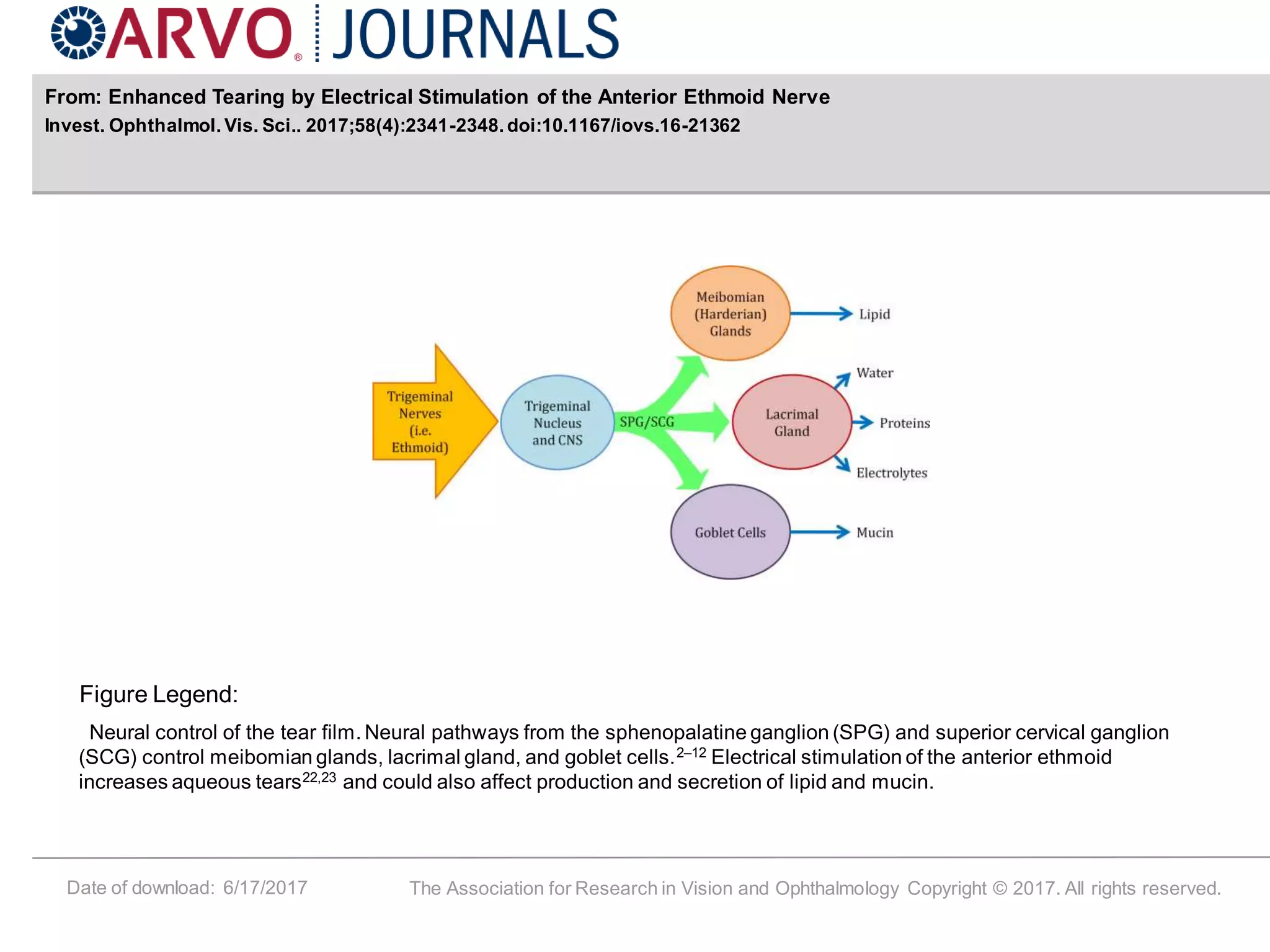
Neural control of the tear film. Neural pathways from the sphenopalatine ganglion (SPG) and superior cervical ganglion
(SCG) control meibomian glands, lacrimal gland, and goblet cells.2–12 Electrical stimulation of the anterior ethmoid
increases aqueous tears22,23 and could also affect production and secretion of lipid and mucin.
7.Electrical stimulation:
• Electrical stimulation of the lacrimal nerve,lacrimal
gland, anterior ethmoid nerve,and cornea increase tear
volume.
• A recent clinical trial demonstrated reduction in dry eye
symptoms using intranasal electrical stimulation of the
anterior ethmoid nerve at least four times a day.
• Direct stimulation of the lacrimal gland efferent nerves
increases tear volume and secretion of the gland proteins
and electrolytes, which drain through the nasolacrimal
ducts within minutes.
• However, stimulation of the afferent pathways (i.e.,
anterior ethmoid) could recruit other ocular glands
and cells to provide lipid and mucin, thereby
enabling a longer lasting relief
Neural control of the tear film.
• Neural pathways from the sphenopalatine
ganglion (SPG) and superior cervical ganglion
(SCG) control meibomian glands, lacrimal
gland, and goblet cells.
• Electrical stimulation of the anterior ethmoid
increases aqueous tearsand could also affect
production and secretion of lipid and mucin.
• (a) was powered wirelessly
using an external controller
(b) The device delivered
cathodic-first, biphasic,
charge-balanced pulses of
2.3 to 2.8 mA
• (c). Pulse duration and
frequency, as well as the on-
off duty cycle
• (d), were adjusted using the
external controller.
• . Dorsal-ventral (a) and
lateral (b) radiographs
showing the
neurostimulator (white
arrows) implanted between
the nasal septum and
mucosa, with the active
electrode approximately 3-
cm deep, facing the mucosa.
PRESERVATIVES IN ARTIFICIAL
TEAR SUBSTITUTES:
• Quaternary ammonium compounds
(benzalkonium chloride,polyquad),
• alcohols (chlorobutanol)
• other compounds (chlorhexidine, sorbic acid,
potassium sorbate, boric acid).
• Mercurial agent thimerosal, much used in the
past, has been abandoned because of its high
potential to provoke not only toxic but also
allergic reactions.
Benzalkonium Chloride
• BAK is the most prevalent and its cytotoxicity is
well-documented.
• Reports have shown that BAK can accumulate in
ocular tissue and can cause different types of cell
death with frequent dosing.
• It’s thought that patients at greatest risk for BAK-
induced adverse effects are those suffering from dry
eyes.
• Because of the lack of natural tears in these
patients, the BAK in each eye drop is not as
diluted as it would be in a patient with normal
tear formation.
• This may damage the corneal epithelium (top
layer of the eye) contributing to ocular surface
disease.
• Using more than 4 – 6 drops per day increases the
likelihood of BAK-induced adverse effects.
DISAPPEARING PRESERVATIVES
• These are the preservatives which on contact
with eye the preservative is converted to
dilute hydrogen peroxide which then changes
into water and oxygen within minute of
contacting the eye.
• Purite
• SOC (stabilised oxycholor complex)
• sodium perborate.
• Stabilized oxychloro complex (SOC) has been
found to have no in vivo or in vitro evidence
of cytotoxicity.
• It is effective at unusually low concentrations
(0.005%)
• which can be degraded into components
normally found in tears, such as sodium ions,
chloride ions, oxygen, and water.
Reference:
• Ashok Garg “Textbook of ocular
therapeutics”.
• A.K Khurana “Anatomy and Physiology of eye”.
• Zimmerrman “Textbook of ocular
pharmacology”.
• ARVO journal.
Thank you

TEAR SUBSTITUTES

  • 1.
  • 4.
    History: • Eye baths(theycalled Collyrium) were used in England in the 16th century. • To use the eye cups (cobalt blue glass bottle), the patient applied it to the eye with the head bowed forward, threw the head back with the eye open, ensured lavage of the eye by blinking several times and then removed the cup with the head once more bowed forward.
  • 6.
    • these artificialtears spread poorly across the ocular surface and their short retention time led to transient relief and very high frequency of instillations.
  • 7.
    Autologous serum: • Ournatural tears are made up of key components not found in artificial tear products, such as epidermal growth factor (EGF), fibronectin and vitamin A, which support the proliferation, maturation, migration and differentiation of corneal and conjunctival epithelia. • We also know that serum contains IgG, lysozymes and complement, which have bacteriostatic properties.
  • 8.
    • Using an18-gauge needle, approximately 40ml of blood is collected into six 8.5cc blood tubes.
  • 9.
    • The collectedblood is set aside to clot for two hours at room temperature. • Then the blood is centrifuged at 5,600 rpm for 10 minutes. • The serum is filtered through a 25mm polyethersulfone disc filter before mixing with saline. • Filtration is performed to remove fibrin strands, which are believed to lessen the effect of ASEDs. • Each 8.5cc tube of blood yields approximately 4cc of serum (24cc total)
  • 10.
    Peripheral corneal infiltrateand ulcer • Eyelid eczema • Microbial keratitis in patients with an epi- defect • Increased discomfort or epitheliopathy • Temporary bacterial conjunctivitis • Scleral vasculitis and melting in RA patients • Immune complex deposition with 100% serum
  • 11.
    Transplantation of salivaryglands • One of these involves restoration of lacrimal function by transplanting ( in the case of the parotid gland, rerouting) minor salivary glands to inferior fornix, but these procedures yielded a hypo-osmotic tear composition and subsequent epithelial edema.
  • 12.
    • The threeprocedures reported include • (1) transposition of the excretory duct (Stensen’s duct) of the parotid gland to the inferior fornix. • (2) free transplantation of the sublingual gland to the upper conjunctival fornix without microvascular anastomosis. • (3) free transplantation of the SMG with microvascular anastomosis and implantation of its excretory duct into the upper temporal fornix.
  • 14.
  • 15.
    Eye drops: • Lubricantspreparations formulated as artificial tear solutions usually contain inorganic electrolytes preservatives water soluble polymeric system.
  • 17.
    • Sodium chloride,potassium chloride,magnesiumchloride and other variuos ions help to maintain tonicity and PH of the formulation. • benzalkonium chloride,chlorobutanol,thimerosal,EDTA,meth ylparaben and ethylparaben are used to prevent bacterial contamination
  • 18.
    lubricants:Replacement of tear Indicationsof use : A) symptomatic relief of dry eye. B) symptomatic relief of irritants. C) symptomatic relief of exposure . D) refreshment of contact lenses & prosthesis. E) as basis for preparing topical medications . ( e.g. ; fort antibiotic drop)
  • 20.
    Anatomy of anartificial tear
  • 21.
    Artificial Tear Eyedrops  Solvent water  Active ingredient water soluble polymers  Viscosity polymers concentration  Preservatives prevention of contamination  balanced tonicity Inorganic electrolytes NaCl&KCL equivalent to 0.9% NaCl  P.H buffers  Anti-oxidants Sometimes Vit. A  Lipids phospholipids
  • 22.
    IdealTear Substitute Works like normaltears Should not alter the clarity Lower surface tension of the tear film Forms a hydrophilic layer Enhances the tear volume Should not react with the tear proteins Should not alter the lipid layer
  • 23.
    Ideal tear substitute pH:6.5 to 7.5 Refractive Index: 1.336 Surface Tension: 40.1 +/- 1.5 dyne/cm Osmolarity: 302 +/- 6.3 mosm / L Viscosity: 6-12 cps
  • 24.
    FDA - 6groups of Ophthalmic Demulcents • Cellulose derivatives • Liquid polyols • Dextran 70 • Gelatin • Povidone • Hyaluronic acid
  • 25.
    Cellulose Derivatives • CMC:0.25 - 2% • HPMC: 0.2% -0.3% • Oil in water emulsion • Also helps Mucin and lipid deficiency • Can be blended with Glycerine, Carnitine, Erythritol • Blurring of vision present.
  • 26.
    Cellulose derivatives Viscosity Retention time oneye surface Celluvisc 350 + + + + + + Liquigel 70 + + + Systane 10 + + + Refresh Tears 1 +
  • 27.
    • Reliable viscosityagent • Seldom used Gelatin
  • 28.
    polyols Sugar hydrogenated carbohydrates-polyhydric alcohols Propyleneglycol (PG)0.3% Polyethylene glycol 400 0.4%(PEG 400) Does not increases the viscosity Combined with HP guar Together forms a cross linked Mucomimetic layer Increase Retention time Protects corneal surface & promotes repair Better lubricity > HPMC > CMC
  • 29.
    Dextran 70 High mole.wt.polysacharide Enhancesthe demulcent nature of HMC Tears Naturale: 0.3% HPMC +0.1% dextran 70 More viscous & Soothing drop Increases the retention time Evaporative dry eyes
  • 30.
    glycerine Polyols Glycerine 0.2% Absorbs water Polysorbate80 used oil incorporated emulsions Refresh endura, Soothe etc. Inactive ingredient in restasis along with cyclosporine A
  • 31.
    Polyvinyl alcohol One ofearly lubricants . Hydrophilic polymer All purpose lubricant Almost doubles TUBT 0.1% to 4% Tears plus Can be combined with PEG 400 or povidone (0.6%)
  • 32.
    povidone Iodine -antiseptic Demulcent property Incresessolubility Pataday -Olopatadine 2% Increases the retention time
  • 33.
    Hyaluronic Normally found injoints, vitreous gel & tears High water retaining property Increases bio adhesion Example: Blink tears, Hyla, Hyvisc, etc. More useful in Aqueous deficiency
  • 34.
    Carbomer 980 Cross linked Poly Acrylate Polymer High clarity& viscosity Short flow properties High retention time on eye
  • 35.
  • 36.
    Bi-carbonate Normal component ofnatural tears It helps in maintaining Mucin layer everywhere It helps in repairing and maintaining epithelial layer
  • 37.
    Potassium It helps inmaintaining Corneal Thickness
  • 38.
    Mild- 0.5 %CMC, 0.3% HPMC or Carbomer Moderate - polyols +/- gelling agents Severe - 1% CMC , hyaluronic acid, with osmo protectants Combination of 2 different tear substitutes Totally preservative free Ointments, gels WhichTear Substitute?
  • 39.
    2.OINTMENTS. • Second mostcommon method . • Petroleum,lanolin and other oil topical ointments. • When instilled in eye,they dissolve at the temperature of ocular surface and disperse with tear fluids. • Ointment is retained in the cul-de-sac longer than artifical tear substitutes.
  • 41.
    • Applied directlyon inferior conjunctival sac a 0.25 to 0.50 inch ribbon. • Dosage: bed time, severe(day time) ointments block the access of solutions should be instilled prior to ointments.
  • 42.
    Indications: • Exposure keratitis •Decreased corneal sensitivity • Recurrent corneal erosions • Keratitis sicca(usually bedtime) • After removal of foreign body • During and following surgery.
  • 43.
    Contraindications: • Hypersensitivity toany component use of contact lens
  • 44.
    Newer lubricant eyegel: • Carbopal 980(polyacrylic acid) a gelling agent with high water binding power that transforms from gel to liquid upon contact with the ocular tissue. • Available in 10ml tube. • Minimises blurring and streaking common with thick tears and ointments.
  • 45.
    3.Ocular inserts: • Useof preservative free water soluble polymeric insert(lacriset ie;preservative free). • Cylindrical rod which contains 5mg hydroxy propylmethylcellulose is placed in lower cul-de- sac. • later it imbibes fluid and swells. • Strats dissolving within 6-8hrs releasing polymers to the ocular surface for 12-24hours.
  • 48.
    • Disadvantage: cost, manualdexeterity, blurred vision as rod dissolves causing the tear film to thicken( this can be minimised with isotonic saline) Adverse reaction: 1.transient blurring of vision. 2. ocular irritation and discomfort 3. matting/stickness of eyelashes 4.photophobhia, hypersensitivity,edema of eyelids and hyperemia.
  • 49.
  • 50.
    • Hydrophilic bandagelenses. • provide a tear reservoir but it should be used in conjunction with replacement tears • Caution should be taken because such patients are prone to contact lens intolerance and super infections . • Forniceal scarring may dislodge the lenses.
  • 51.
    5.Punctal plugs: • mechanicalocclusion of lacrimal puncta to block the tear drainage and thereby prolonging action of natural tears along with artifical tears.
  • 53.
    • Type: 1)silicone based plug 2) temporary absorable collagen implant following placement the implant swells impeding tear flow upto 2weeks before the total implant is absorbed.
  • 54.
    6.Collagen implant: • Absorableintracanalicular collagen implant in 2,3, and 4mm size. • Patient should be informed that relief may not occur immediately after insertion and no removal is necessary if implant dissolves within 5-7days. • Permanent treatment(non dissolvable silicone plugs).
  • 57.
    Electrical stimulators: Date ofdownload: 6/17/2017 The Association for Research in Vision and Ophthalmology Copyright © 2017. All rights reserved. From: Enhanced Tearing by Electrical Stimulation of the Anterior Ethmoid Nerve Invest. Ophthalmol. Vis. Sci.. 2017;58(4):2341-2348. doi:10.1167/iovs.16-21362 Figure Legend: Neural control of the tear film. Neural pathways from the sphenopalatine ganglion (SPG) and superior cervical ganglion (SCG) control meibomian glands, lacrimal gland, and goblet cells.2–12 Electrical stimulation of the anterior ethmoid increases aqueous tears22,23 and could also affect production and secretion of lipid and mucin.
  • 58.
    7.Electrical stimulation: • Electricalstimulation of the lacrimal nerve,lacrimal gland, anterior ethmoid nerve,and cornea increase tear volume. • A recent clinical trial demonstrated reduction in dry eye symptoms using intranasal electrical stimulation of the anterior ethmoid nerve at least four times a day. • Direct stimulation of the lacrimal gland efferent nerves increases tear volume and secretion of the gland proteins and electrolytes, which drain through the nasolacrimal ducts within minutes.
  • 59.
    • However, stimulationof the afferent pathways (i.e., anterior ethmoid) could recruit other ocular glands and cells to provide lipid and mucin, thereby enabling a longer lasting relief
  • 61.
    Neural control ofthe tear film. • Neural pathways from the sphenopalatine ganglion (SPG) and superior cervical ganglion (SCG) control meibomian glands, lacrimal gland, and goblet cells. • Electrical stimulation of the anterior ethmoid increases aqueous tearsand could also affect production and secretion of lipid and mucin.
  • 63.
    • (a) waspowered wirelessly using an external controller (b) The device delivered cathodic-first, biphasic, charge-balanced pulses of 2.3 to 2.8 mA • (c). Pulse duration and frequency, as well as the on- off duty cycle • (d), were adjusted using the external controller.
  • 64.
    • . Dorsal-ventral(a) and lateral (b) radiographs showing the neurostimulator (white arrows) implanted between the nasal septum and mucosa, with the active electrode approximately 3- cm deep, facing the mucosa.
  • 65.
  • 67.
    • Quaternary ammoniumcompounds (benzalkonium chloride,polyquad), • alcohols (chlorobutanol) • other compounds (chlorhexidine, sorbic acid, potassium sorbate, boric acid). • Mercurial agent thimerosal, much used in the past, has been abandoned because of its high potential to provoke not only toxic but also allergic reactions.
  • 68.
    Benzalkonium Chloride • BAKis the most prevalent and its cytotoxicity is well-documented. • Reports have shown that BAK can accumulate in ocular tissue and can cause different types of cell death with frequent dosing. • It’s thought that patients at greatest risk for BAK- induced adverse effects are those suffering from dry eyes.
  • 69.
    • Because ofthe lack of natural tears in these patients, the BAK in each eye drop is not as diluted as it would be in a patient with normal tear formation. • This may damage the corneal epithelium (top layer of the eye) contributing to ocular surface disease. • Using more than 4 – 6 drops per day increases the likelihood of BAK-induced adverse effects.
  • 71.
    DISAPPEARING PRESERVATIVES • Theseare the preservatives which on contact with eye the preservative is converted to dilute hydrogen peroxide which then changes into water and oxygen within minute of contacting the eye.
  • 72.
    • Purite • SOC(stabilised oxycholor complex) • sodium perborate.
  • 73.
    • Stabilized oxychlorocomplex (SOC) has been found to have no in vivo or in vitro evidence of cytotoxicity. • It is effective at unusually low concentrations (0.005%) • which can be degraded into components normally found in tears, such as sodium ions, chloride ions, oxygen, and water.
  • 74.
    Reference: • Ashok Garg“Textbook of ocular therapeutics”. • A.K Khurana “Anatomy and Physiology of eye”. • Zimmerrman “Textbook of ocular pharmacology”. • ARVO journal.
  • 75.