Production of vitamin B-12
Pavel Rout (DT-18/14) & Dipamoy Das (DT-12/14)
What is vitamin B-12…?
 Vitamin B12, also called cobalamin, is a water-soluble vitamin that has a key role
in the normal functioning of the brain and nervous system, and the formation of
red blood cells.
 It is involved in the metabolism of every cell of the human body, especially
affecting DNA synthesis, fatty acid and amino acid metabolism.
Sources…
Foods
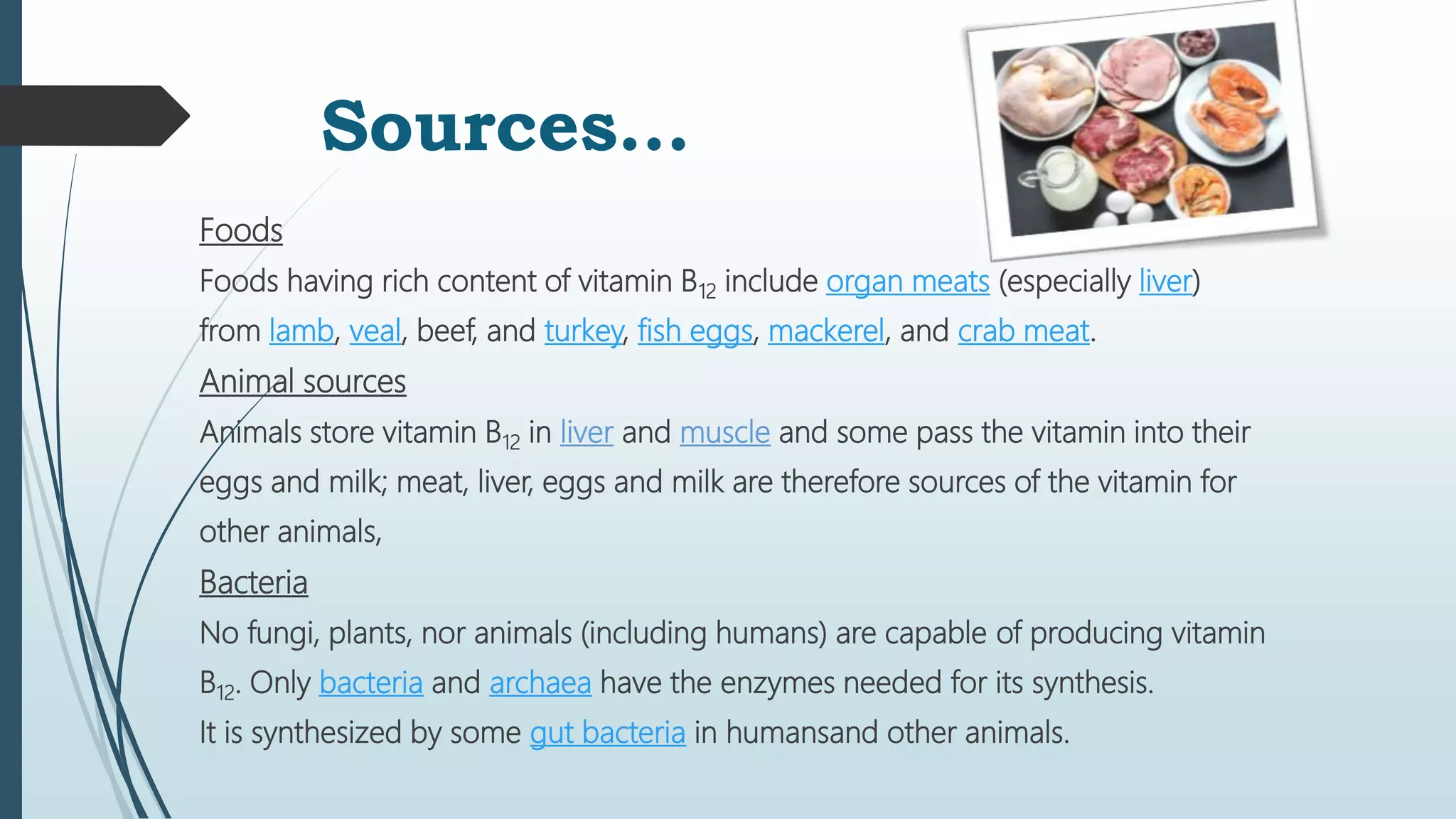
Foods having rich content of vitamin B12 include organ meats (especially liver)
from lamb, veal, beef, and turkey, fish eggs, mackerel, and crab meat.
Animal sources
Animals store vitamin B12 in liver and muscle and some pass the vitamin into their
eggs and milk; meat, liver, eggs and milk are therefore sources of the vitamin for
other animals,
Bacteria
No fungi, plants, nor animals (including humans) are capable of producing vitamin
B12. Only bacteria and archaea have the enzymes needed for its synthesis.
It is synthesized by some gut bacteria in humansand other animals.
Veg Source
 Milk, yogurt and cheese, are the only vegetarian food items that naturally
contain significant levels of vitamin B12.
 Plant foods may be fortified with B12. These include rice
and soy beverages, ready-to-eat breakfast cereals,
and nutritional yeast.
History of vitamin B-12 production…
 Vit B12 was first obtained commercially as a by-product of streptomycin
fermentation with yield of 1mg/liter of broth.
 As demand of Vit B12 increased, fermentation processes were developed with
high-yielding strains.
 The current annual production (World) is over 15000kg.
 Vitamin B12 production is based on media containing carbohydrate.
 Most Vit B12 fermentation processes use glucose as carbon source.
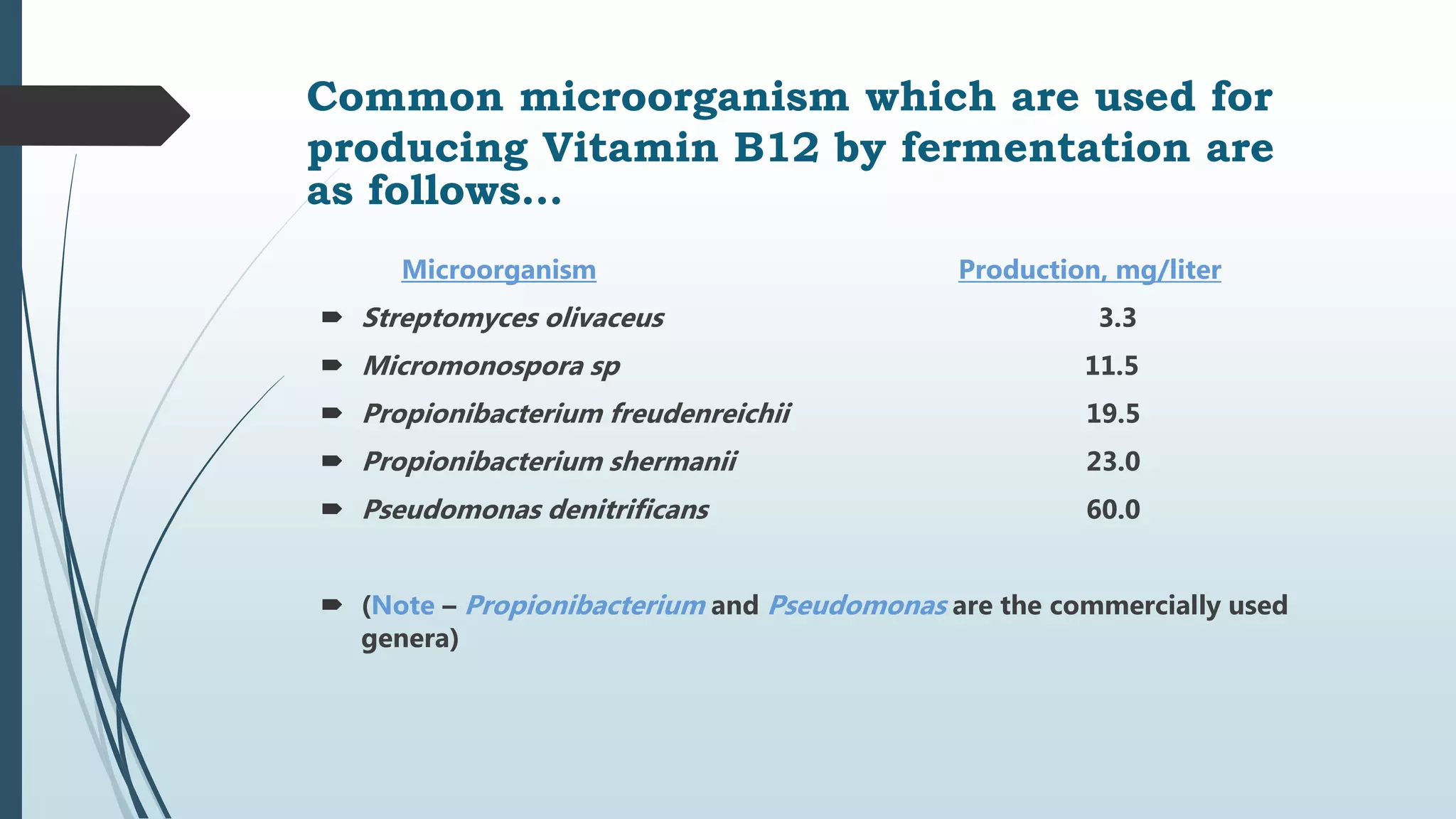
Common microorganism which are used for
producing Vitamin B12 by fermentation are
as follows…
Microorganism Production, mg/liter
 Streptomyces olivaceus 3.3
 Micromonospora sp 11.5
 Propionibacterium freudenreichii 19.5
 Propionibacterium shermanii 23.0
 Pseudomonas denitrificans 60.0
 (Note – Propionibacterium and Pseudomonas are the commercially used
genera)
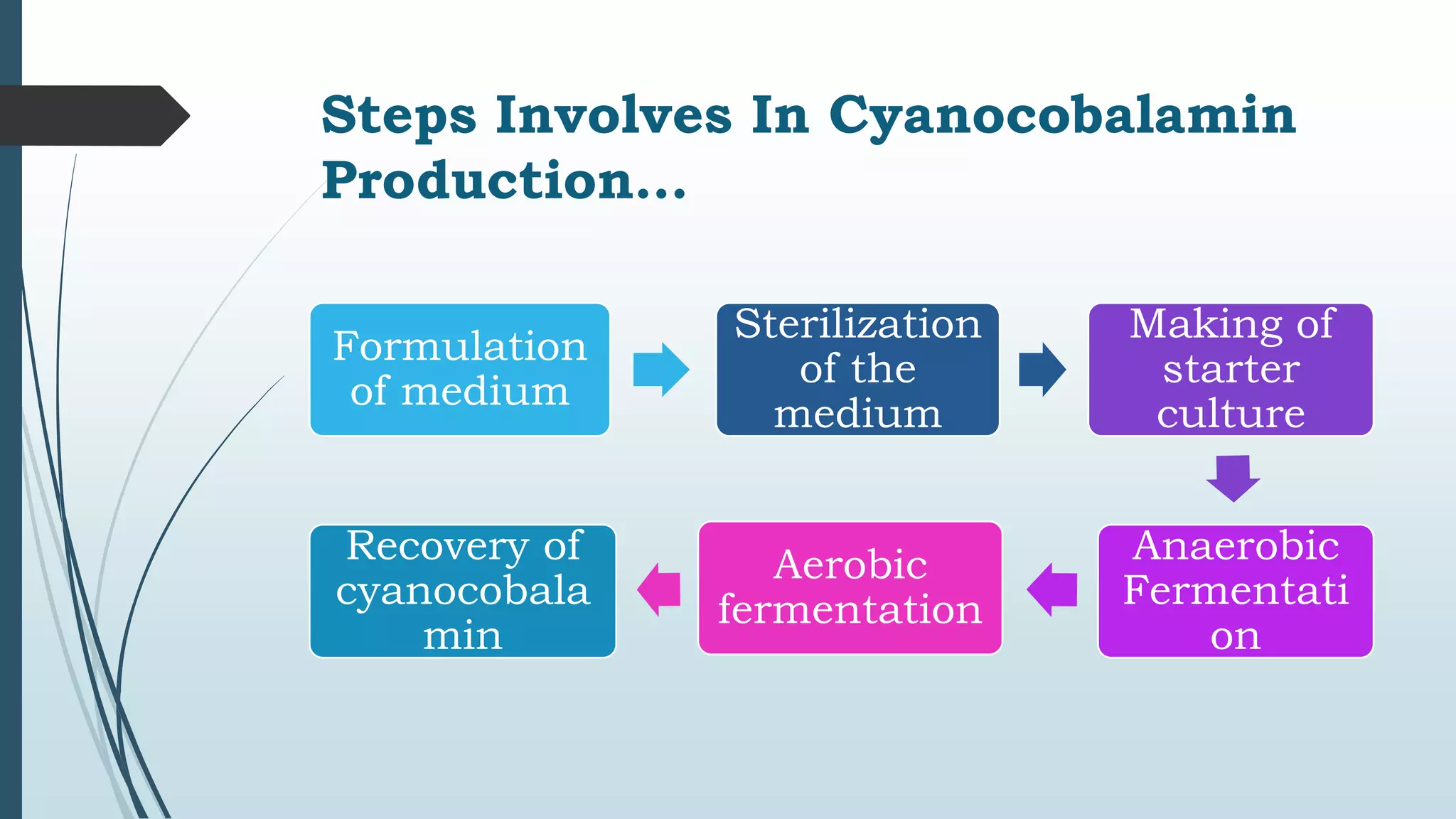
Steps Involves In Cyanocobalamin
Production…
Formulation
of medium
Sterilization
of the
medium
Making of
starter
culture
Anaerobic
Fermentati
on
Aerobic
fermentation
Recovery of
cyanocobala
min

Vit b 12

  • 1.
    Production of vitaminB-12 Pavel Rout (DT-18/14) & Dipamoy Das (DT-12/14)
  • 2.
    What is vitaminB-12…?  Vitamin B12, also called cobalamin, is a water-soluble vitamin that has a key role in the normal functioning of the brain and nervous system, and the formation of red blood cells.  It is involved in the metabolism of every cell of the human body, especially affecting DNA synthesis, fatty acid and amino acid metabolism.
  • 3.
    Sources… Foods Foods having richcontent of vitamin B12 include organ meats (especially liver) from lamb, veal, beef, and turkey, fish eggs, mackerel, and crab meat. Animal sources Animals store vitamin B12 in liver and muscle and some pass the vitamin into their eggs and milk; meat, liver, eggs and milk are therefore sources of the vitamin for other animals, Bacteria No fungi, plants, nor animals (including humans) are capable of producing vitamin B12. Only bacteria and archaea have the enzymes needed for its synthesis. It is synthesized by some gut bacteria in humansand other animals.
  • 4.
    Veg Source  Milk,yogurt and cheese, are the only vegetarian food items that naturally contain significant levels of vitamin B12.  Plant foods may be fortified with B12. These include rice and soy beverages, ready-to-eat breakfast cereals, and nutritional yeast.
  • 5.
    History of vitaminB-12 production…  Vit B12 was first obtained commercially as a by-product of streptomycin fermentation with yield of 1mg/liter of broth.  As demand of Vit B12 increased, fermentation processes were developed with high-yielding strains.  The current annual production (World) is over 15000kg.  Vitamin B12 production is based on media containing carbohydrate.  Most Vit B12 fermentation processes use glucose as carbon source.
  • 6.
    Common microorganism whichare used for producing Vitamin B12 by fermentation are as follows… Microorganism Production, mg/liter  Streptomyces olivaceus 3.3  Micromonospora sp 11.5  Propionibacterium freudenreichii 19.5  Propionibacterium shermanii 23.0  Pseudomonas denitrificans 60.0  (Note – Propionibacterium and Pseudomonas are the commercially used genera)
  • 7.
    Steps Involves InCyanocobalamin Production… Formulation of medium Sterilization of the medium Making of starter culture Anaerobic Fermentati on Aerobic fermentation Recovery of cyanocobala min