Downloaded 109 times


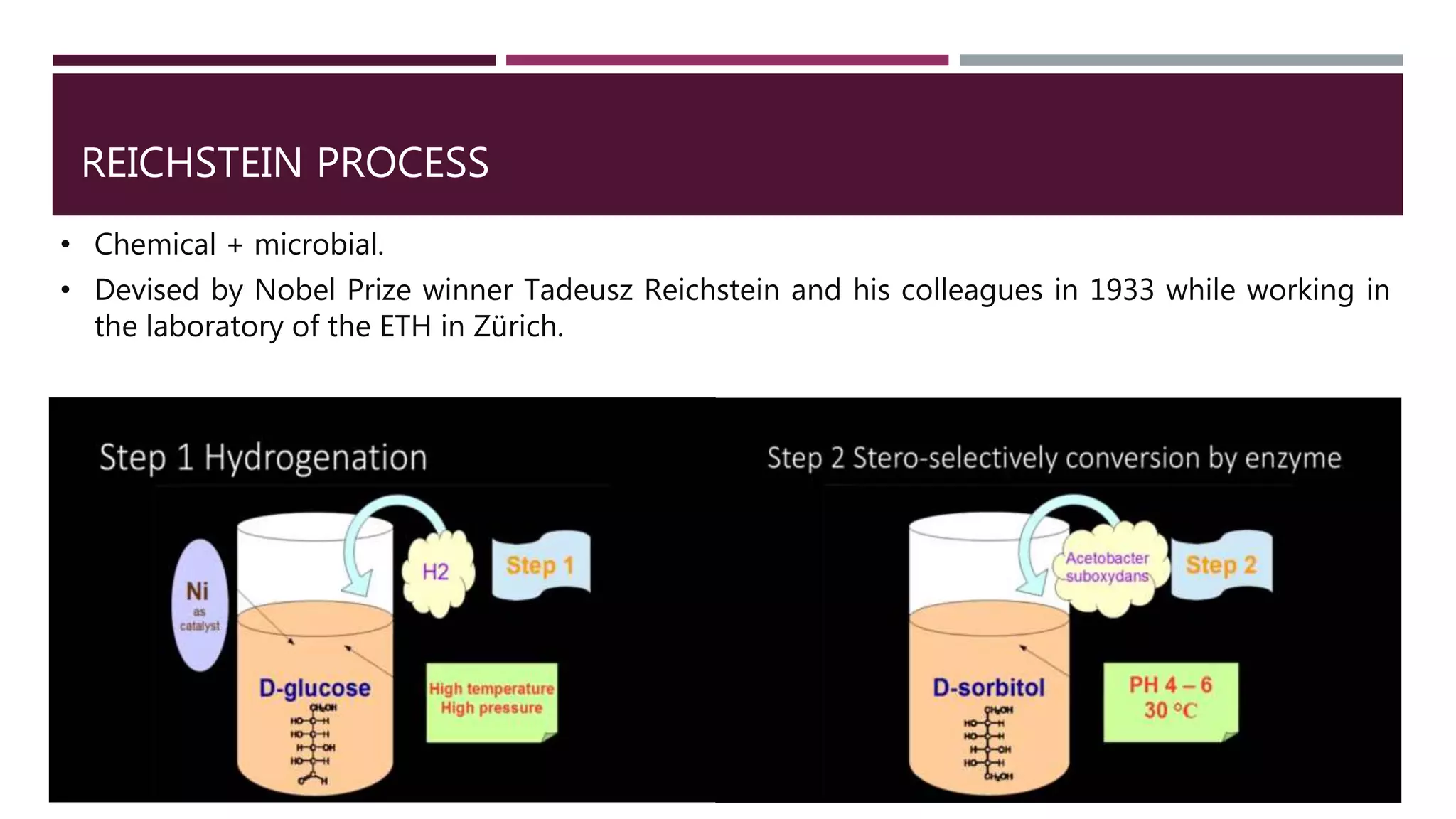


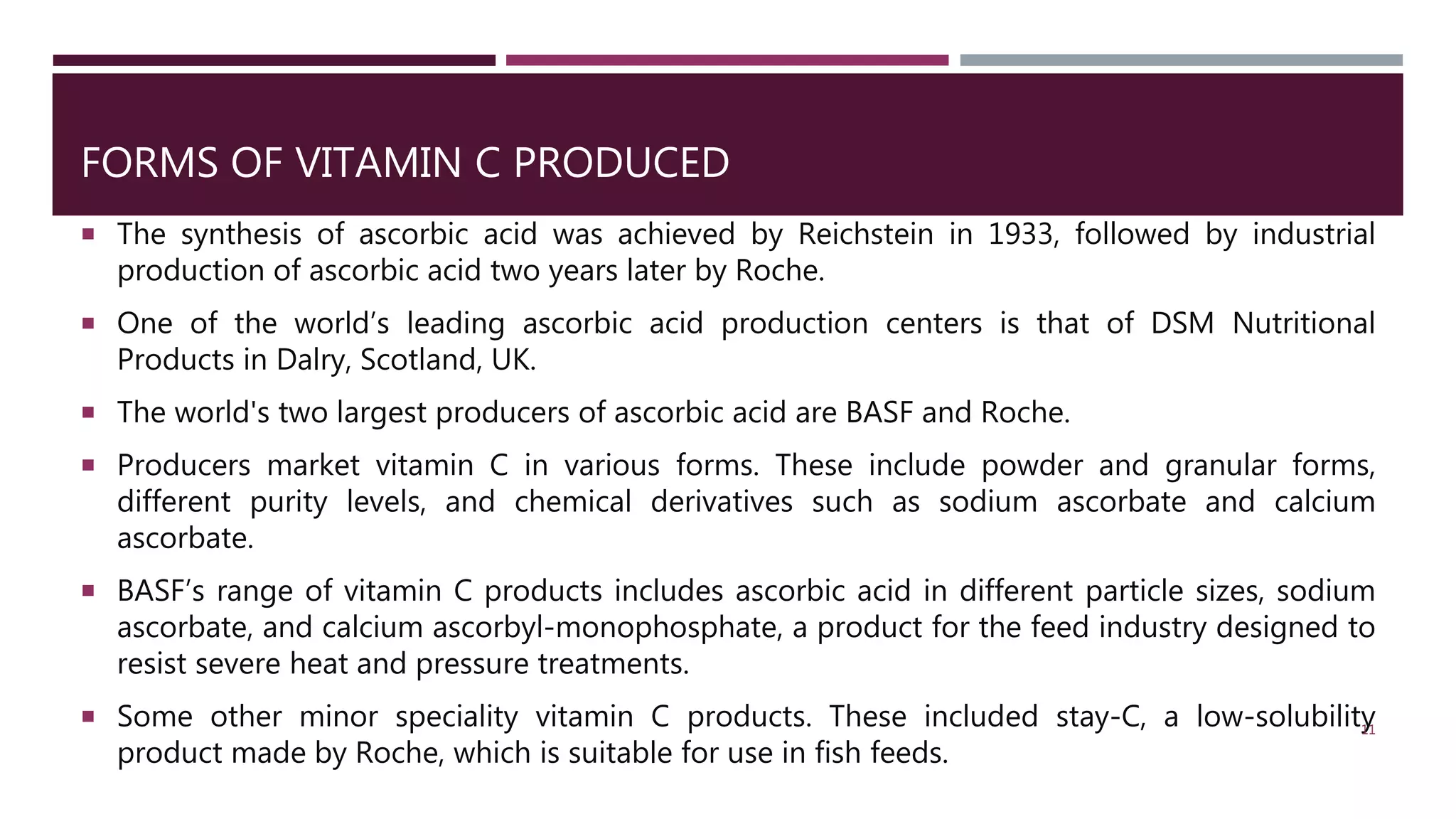


Vitamin C, also known as ascorbic acid, can be produced through two main methods - the traditional Reichstein process involving chemical and microbial steps, or a newer two-stage fermentation process. The two-stage fermentation process replaces chemical reactions with a second fermentation step using Ketogulonicigenium vulgare and Bacillus spp. to convert L-sorbose to the intermediate 2-keto-L-gulonic acid. Vitamin C finds many uses as a food additive and dietary supplement for its antioxidant properties and role in immune function and collagen production. Biosynthesis of vitamin C is now favored over extraction from natural sources due to lower production costs and more sustainable production methods.


![Riboflavin fermentation[1]](https://cdn.slidesharecdn.com/ss_thumbnails/riboflavinfermentation1-200301054401-thumbnail.jpg?width=640&height=640&fit=bounds)


![VITAMINS [NATURAL PRODUCTS], M.PHARM SYLLABUS](https://cdn.slidesharecdn.com/ss_thumbnails/44-191219075507-thumbnail.jpg?width=640&height=640&fit=bounds)


