TODAY
1) Icebreaker
2) Overview of some material from the readings
Icebreaker
For today I want you to tell us all your name and your
favorite logo.
Checking in
Things to check:
1)Are you on the blogroll?
2)Have you thought about the logo
assignment?
3)Are you keeping up with the readings?
Some quick Visual fun
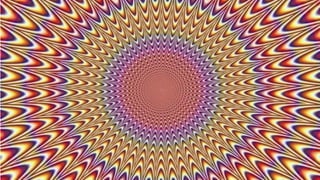
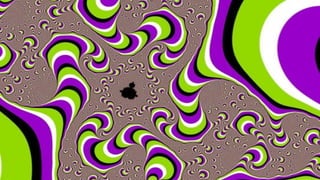
Take a look at the next few slides and tell me what’s
going on here. Look carefully. Sometimes you might
need to squint.
These illusions depend on
intricate line work, very
specific color and contrast
choices, the mind’s desire
to complete shapes and
patterns and the fact that
our eyes jitter a bit
normally.
If you squint hard and look
at each of these images,
they WILL become still. But
not for long.
… I want us to engage the readings and really sort of grapple
with them, but as you might guess, if we tried to grapple with
every part of all five of those readings we’d end up sitting
here a long, long time grappling with a big ol’ bunch of ideas.
So I’m going to suggest a strategy– pull key ideas and illustrate
how they work/see if we can convert them to a sort of tool, or
a roadmap, if you will, to understanding visual rhetoric.
Something like this:
Roland Barthes
Barthes challenges us thusly:
“Now even– and above all if– the image is in a certain manner the
limit of meaning, it permits the consideration of a veritable ontology
of the process of signification. How does meaning get into the image?
Where does it end? And if it ends, what is there beyond?”
What?
So….
.. Images carry meaning. But how’d the meaning GET
there, Barthes asks us to consider.
Gunther Kress
Kress tells us:
“The approach from Social Semiotics not only draws attention
to the many kinds of meanings which are at issue in design,
but the “social” in “Social Semiotics” draws attention to the
fact that meanings always relate to specific societies and their
cultures, and to the meanings of the members of those
cultures.”
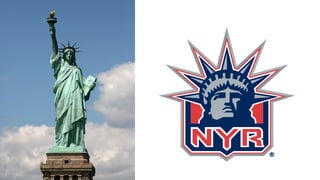
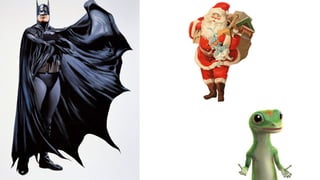
Like…
These images have meaning…
…because we know them.
They emerge from our culture and are reinforced by our culture.
Recognize this?
That isn’t this, is it? = SOr is it?
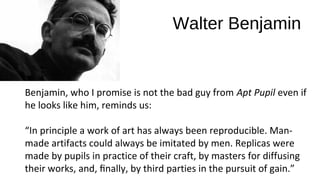
Walter Benjamin
Benjamin, who I promise is not the bad guy from Apt Pupil even if
he looks like him, reminds us:
“In principle a work of art has always been reproducible. Man-
made artifacts could always be imitated by men. Replicas were
made by pupils in practice of their craft, by masters for diffusing
their works, and, finally, by third parties in the pursuit of gain.”
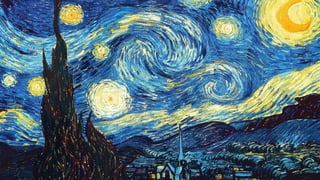
What is the Aura of This?
Anne Wysocki
Wysocki reminds us:
“Because we have all grown up in densely visually constructed
environments, usually with little overt instruction or awareness of
how the construction takes place, it is easy to think of the visual
elements of texts as simply happening or appearing…as though…
television sitcoms were the result of a camera crew following a
typical family through their day.”
Single, nerdy college professor on
TV
IRL
This remind you of your friends
sitting around?
And these are just normal people
enjoying normal products
What Wysocki would ask us to do
is…
..ask why. Think about why those images are chosen.
And maybe more importantly… why don’t people
think about it/why isn’t it sort of a big deal to most
Americans?
Now it’s your turn
Break into five groups. That should mean 5 per group.
Once you’re grouped, from my podium going clockwise around the
room:
Group 1: Kress
Group 2: Barthes
Group 3: Wysocki, Eyes
Group 4: Benjamin
Group 5: Wysocki, Meaning of Texts
Pick between no less than 1 and no more than 3 main ideas, support
them with source quotes, and find examples for discussion. As you
finish, email me your materials: alexanp3@miamioh.edu
Now…
Armed with your new understandings from these readings,
go to my tumblr. There, you will find your group definitions
of visual rhetoric from our first class. What I want your group
to do is further synthesis. Make the definition as long as you
feel it needs to be, talk it out, but when you’re done, email to
me your group’s “where we are now” definition of visual
rhetoric.
alexanp3@miamioh.edu if you’ve forgotten. 
And…
Work on the
In-Design tutorial!
Moving to next week…
DO NOT FORGET THE IN-DESIGN TUTORIAL!
DON’T FORGET IT!
I’m serious!
Homework
For next Monday, read:
Read for class: Williams Chapters 4 & 5: repetition & contrast;
Kimball & Hawkins Chapter 1
Make sure you come in ready to work in In-Design, because we’re
going to! 
Also make sure you do design task 2, which is to take two sports
logos of your choice and change their colors to earth tones (see
example on my Tumblr).
See you Monday!

Visual Rhetoric, September 4th, 2013

  • 2.
    TODAY 1) Icebreaker 2) Overviewof some material from the readings
  • 3.
    Icebreaker For today Iwant you to tell us all your name and your favorite logo.
  • 4.
    Checking in Things tocheck: 1)Are you on the blogroll? 2)Have you thought about the logo assignment? 3)Are you keeping up with the readings?
  • 5.
    Some quick Visualfun Take a look at the next few slides and tell me what’s going on here. Look carefully. Sometimes you might need to squint.
  • 8.
    These illusions dependon intricate line work, very specific color and contrast choices, the mind’s desire to complete shapes and patterns and the fact that our eyes jitter a bit normally. If you squint hard and look at each of these images, they WILL become still. But not for long.
  • 9.
    … I wantus to engage the readings and really sort of grapple with them, but as you might guess, if we tried to grapple with every part of all five of those readings we’d end up sitting here a long, long time grappling with a big ol’ bunch of ideas. So I’m going to suggest a strategy– pull key ideas and illustrate how they work/see if we can convert them to a sort of tool, or a roadmap, if you will, to understanding visual rhetoric. Something like this:
  • 10.
    Roland Barthes Barthes challengesus thusly: “Now even– and above all if– the image is in a certain manner the limit of meaning, it permits the consideration of a veritable ontology of the process of signification. How does meaning get into the image? Where does it end? And if it ends, what is there beyond?”
  • 11.
  • 15.
    So…. .. Images carrymeaning. But how’d the meaning GET there, Barthes asks us to consider.
  • 16.
    Gunther Kress Kress tellsus: “The approach from Social Semiotics not only draws attention to the many kinds of meanings which are at issue in design, but the “social” in “Social Semiotics” draws attention to the fact that meanings always relate to specific societies and their cultures, and to the meanings of the members of those cultures.”
  • 17.
  • 20.
    These images havemeaning… …because we know them. They emerge from our culture and are reinforced by our culture. Recognize this? That isn’t this, is it? = SOr is it?
  • 21.
    Walter Benjamin Benjamin, whoI promise is not the bad guy from Apt Pupil even if he looks like him, reminds us: “In principle a work of art has always been reproducible. Man- made artifacts could always be imitated by men. Replicas were made by pupils in practice of their craft, by masters for diffusing their works, and, finally, by third parties in the pursuit of gain.”
  • 23.
    What is theAura of This?
  • 25.
    What is theAura of This?
  • 27.
    Anne Wysocki Wysocki remindsus: “Because we have all grown up in densely visually constructed environments, usually with little overt instruction or awareness of how the construction takes place, it is easy to think of the visual elements of texts as simply happening or appearing…as though… television sitcoms were the result of a camera crew following a typical family through their day.”
  • 28.
    Single, nerdy collegeprofessor on TV
  • 29.
  • 30.
    This remind youof your friends sitting around?
  • 32.
    And these arejust normal people enjoying normal products
  • 33.
    What Wysocki wouldask us to do is… ..ask why. Think about why those images are chosen. And maybe more importantly… why don’t people think about it/why isn’t it sort of a big deal to most Americans?
  • 34.
    Now it’s yourturn Break into five groups. That should mean 5 per group. Once you’re grouped, from my podium going clockwise around the room: Group 1: Kress Group 2: Barthes Group 3: Wysocki, Eyes Group 4: Benjamin Group 5: Wysocki, Meaning of Texts Pick between no less than 1 and no more than 3 main ideas, support them with source quotes, and find examples for discussion. As you finish, email me your materials: alexanp3@miamioh.edu
  • 35.
    Now… Armed with yournew understandings from these readings, go to my tumblr. There, you will find your group definitions of visual rhetoric from our first class. What I want your group to do is further synthesis. Make the definition as long as you feel it needs to be, talk it out, but when you’re done, email to me your group’s “where we are now” definition of visual rhetoric. alexanp3@miamioh.edu if you’ve forgotten. 
  • 36.
  • 37.
    Moving to nextweek… DO NOT FORGET THE IN-DESIGN TUTORIAL! DON’T FORGET IT! I’m serious!
  • 38.
    Homework For next Monday,read: Read for class: Williams Chapters 4 & 5: repetition & contrast; Kimball & Hawkins Chapter 1 Make sure you come in ready to work in In-Design, because we’re going to!  Also make sure you do design task 2, which is to take two sports logos of your choice and change their colors to earth tones (see example on my Tumblr). See you Monday!