Visual merchandising
Visual Merchandising
•   Defined:
     – The physical presentation of products

•   Visual Merchandising is the art of displaying merchandise in a manner that
    is appealing to the eyes of the customer.

•   Passion for design and creativity are essential to be a good visual
    merchandiser. Awareness of happenings in the fashion world is needed in
    order to keep up-to-date with the dynamics of the market constantly.

•   Creating an attractive product display can draw the customer in, promote a
    slow-moving item, announce a sale, or welcome a season. If your store front
    is fortunate enough to feature one or more windows, then you have one of
    the most proven (and least expensive) forms of advertising at your disposal.


•   Its not just about window displays
     – Store design, planning, store and department identification, traffic control, store
       layout, space/ sales analysis, fixturing, window displays, interior concept/ design, and
       display research, signs, POS, sales promotions etc.
“Visual presentation has
   an advantage over
  broadcast and print
 advertisements… over
 60% of all women get
their clothing ideas from
     store displays.”
Martin Pegler (Author of Visual Merchandising and display. 2006)
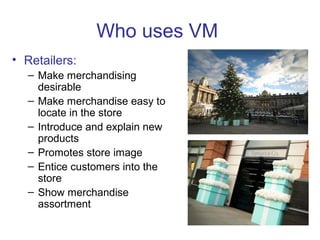
Who uses VM
• Retailers:
  – Make merchandising
    desirable
  – Make merchandise easy to
    locate in the store
  – Introduce and explain new
    products
  – Promotes store image
  – Entice customers into the
    store
  – Show merchandise
    assortment
…‘the eyes of the store’
•   Window:
    –   The window is also know as the eyes to the interior of the store
    –   Reinforce brand image
    –   Introduce brand/ product line to new or existing customers
    –   Strengthen traffic and sales

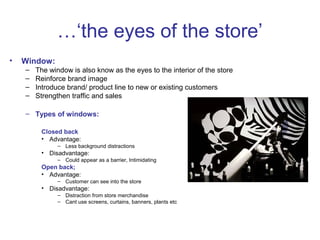
    – Types of windows:

         Closed back
         • Advantage:
               – Less background distractions
         • Disadvantage:
               – Could appear as a barrier, Intimidating
         Open back;
         • Advantage:
               – Customer can see into the store
         • Disadvantage:
               – Distraction from store merchandise
               – Cant use screens, curtains, banners, plants etc
VM design elements
•   Colour
     –   Can immediately create a mood
     –   Lighting: Should accent focal point, if possible

     –   Customers entering a store are greatly influenced by the visual information they gather in
         the first split second. One simple visual element, such as colour, can catch a shopper's
         attention and also greatly affect their mood. In today's ultra competitive market place it is of
         paramount importance that retailers understand the basics of visual merchandising.

     –   A right choice of colours in the display can turn walkers into stoppers and significantly
         convert them into customers. It is therefore mandatory to choose the right colour for the right
         theme of display.


•   Texture
     –   Surface treatment or feel
     –   Smooth surfaces appear lighter
     –   Textured surfaces appear darker
     –   Can be suggestive:
           •   Feminine versus masculine
•   Line
    – Vertical:
      Strength, height, pride, dignity
    – Horizontal: Easy going, restful
    – Curved: Grace, charm, feminine
    – Diagonal: Action, force, strong

•   Balance
    – Symmetrical: Formal
    – Asymmetrical: Informal/ often more
      interesting

•   Dominance:
    – By colour, size or position
    – Attracts the eye first
    – Usually the merchandise

•   Contrast:
    – Show a sharp difference between
      objects
    – Can use colour or texture
• Proportion:
   – Relationship of size, scale, or weight
   – Baby shoes next to a huge teddy
     bear???
   – Attracts attention
   – Promote and idea or look
       • Fragile versus weak

• Rhythm:
   – Movement from element to element
   – From dominant object to subordinate
     object
   – Use of line, colour, lighting
   – Circular
   – Triangle

• Repetition
   – Colour, line, shape
   – Creates importance and dominance
Window examples…
Case study....
Adidas
Adidas
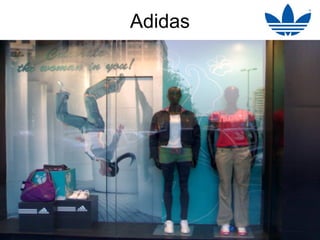
• Clarity of thought : The window display focuses
  on the women wear and accessories specially
  for the sports.

• Creativity : The tagline being used is quite
  motivating for women of this era and would
  assure her that anything is possible. The straight
  mannequins also suggest forcefulness and
  rigidness of the women’s attitude. The colour
  used in the background is blue signifying the
  cool and sporty look.
Adidas
• Effectiveness : The display of upside down
  women signifies the freedom and
  independency of women which will
  motivate them to walk in the store.

• Why did it work : It forces female
  customers to ponder what the store holds
  for them.
Marks & Spencer
Marks & Spencer
• Clarity of thought : The window display
  clearly shows that the sale season is
  going on for the apparels and accessories
  offered by the store.

• Creativity : The red color is used to
  indicate sale period which can be
  discovered from a far distance. Red colour
  is psychologically attached to the
  customers; it portrays excitement/ impulse
  purchase decisions.
Marks & Spencer
• Effectiveness : A customer interested would
  surely walk-in to avail the discounts as the
  display is shouting out for the sale season.

• Why did it work : The entire display used the red
  color tints and shades indicating sales period &
  also providing an opportunity to avail extra
  reduction. The big banners as well as
  mannequins wearing similar t-shirts talking
  about sale are also very helpful.
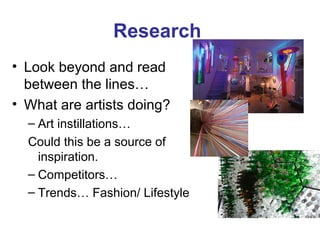
Research
• Look beyond and read
  between the lines…
• What are artists doing?
  – Art instillations…
  Could this be a source of
    inspiration.
  – Competitors…
  – Trends… Fashion/ Lifestyle
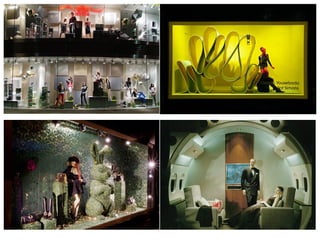
Fendi      Oasis


Burberry   Zara
Visual merchandising

Visual merchandising

  • 1.
  • 2.
    Visual Merchandising • Defined: – The physical presentation of products • Visual Merchandising is the art of displaying merchandise in a manner that is appealing to the eyes of the customer. • Passion for design and creativity are essential to be a good visual merchandiser. Awareness of happenings in the fashion world is needed in order to keep up-to-date with the dynamics of the market constantly. • Creating an attractive product display can draw the customer in, promote a slow-moving item, announce a sale, or welcome a season. If your store front is fortunate enough to feature one or more windows, then you have one of the most proven (and least expensive) forms of advertising at your disposal. • Its not just about window displays – Store design, planning, store and department identification, traffic control, store layout, space/ sales analysis, fixturing, window displays, interior concept/ design, and display research, signs, POS, sales promotions etc.
  • 3.
    “Visual presentation has an advantage over broadcast and print advertisements… over 60% of all women get their clothing ideas from store displays.” Martin Pegler (Author of Visual Merchandising and display. 2006)
  • 4.
    Who uses VM •Retailers: – Make merchandising desirable – Make merchandise easy to locate in the store – Introduce and explain new products – Promotes store image – Entice customers into the store – Show merchandise assortment
  • 5.
    …‘the eyes ofthe store’ • Window: – The window is also know as the eyes to the interior of the store – Reinforce brand image – Introduce brand/ product line to new or existing customers – Strengthen traffic and sales – Types of windows: Closed back • Advantage: – Less background distractions • Disadvantage: – Could appear as a barrier, Intimidating Open back; • Advantage: – Customer can see into the store • Disadvantage: – Distraction from store merchandise – Cant use screens, curtains, banners, plants etc
  • 6.
    VM design elements • Colour – Can immediately create a mood – Lighting: Should accent focal point, if possible – Customers entering a store are greatly influenced by the visual information they gather in the first split second. One simple visual element, such as colour, can catch a shopper's attention and also greatly affect their mood. In today's ultra competitive market place it is of paramount importance that retailers understand the basics of visual merchandising. – A right choice of colours in the display can turn walkers into stoppers and significantly convert them into customers. It is therefore mandatory to choose the right colour for the right theme of display. • Texture – Surface treatment or feel – Smooth surfaces appear lighter – Textured surfaces appear darker – Can be suggestive: • Feminine versus masculine
  • 7.
    Line – Vertical: Strength, height, pride, dignity – Horizontal: Easy going, restful – Curved: Grace, charm, feminine – Diagonal: Action, force, strong • Balance – Symmetrical: Formal – Asymmetrical: Informal/ often more interesting • Dominance: – By colour, size or position – Attracts the eye first – Usually the merchandise • Contrast: – Show a sharp difference between objects – Can use colour or texture
  • 8.
    • Proportion: – Relationship of size, scale, or weight – Baby shoes next to a huge teddy bear??? – Attracts attention – Promote and idea or look • Fragile versus weak • Rhythm: – Movement from element to element – From dominant object to subordinate object – Use of line, colour, lighting – Circular – Triangle • Repetition – Colour, line, shape – Creates importance and dominance
  • 9.
  • 10.
  • 11.
  • 12.
    Adidas • Clarity ofthought : The window display focuses on the women wear and accessories specially for the sports. • Creativity : The tagline being used is quite motivating for women of this era and would assure her that anything is possible. The straight mannequins also suggest forcefulness and rigidness of the women’s attitude. The colour used in the background is blue signifying the cool and sporty look.
  • 13.
    Adidas • Effectiveness :The display of upside down women signifies the freedom and independency of women which will motivate them to walk in the store. • Why did it work : It forces female customers to ponder what the store holds for them.
  • 14.
  • 15.
    Marks & Spencer •Clarity of thought : The window display clearly shows that the sale season is going on for the apparels and accessories offered by the store. • Creativity : The red color is used to indicate sale period which can be discovered from a far distance. Red colour is psychologically attached to the customers; it portrays excitement/ impulse purchase decisions.
  • 16.
    Marks & Spencer •Effectiveness : A customer interested would surely walk-in to avail the discounts as the display is shouting out for the sale season. • Why did it work : The entire display used the red color tints and shades indicating sales period & also providing an opportunity to avail extra reduction. The big banners as well as mannequins wearing similar t-shirts talking about sale are also very helpful.
  • 17.
    Research • Look beyondand read between the lines… • What are artists doing? – Art instillations… Could this be a source of inspiration. – Competitors… – Trends… Fashion/ Lifestyle
  • 18.
    Fendi Oasis Burberry Zara