VISCOSITY TEST FOR BITUMEN
PRESENTED BY:AMRIT PANDIT
ACEM/069/A/005
KATHMANDU, NEPAL
Objective
• To become familiar with the term viscosity, its
influence and effects, its techniques and
application in the field of engineering
especially for design of the road pavements.
Introduction
• In general, viscosity defines the consistency.
• Viscosity=Shear stress/shear rate
• It is the measure of the resistance against the
flow and here, particularly we are dealing with
the road binders like bitumen.
• Like that of penetration, bitumen has the
upper hand in determining the stability of the
road pavements.
• It greatly influences the strength of pavement
at the application temperature.
• At low degree, the binders simply lubricates
the aggregates( road metals along with
aggregates if any) rather than providing a film
for the binding actions.
• Similarly, at high temperature resists the
compaction effort and results in heterogenous
mix.
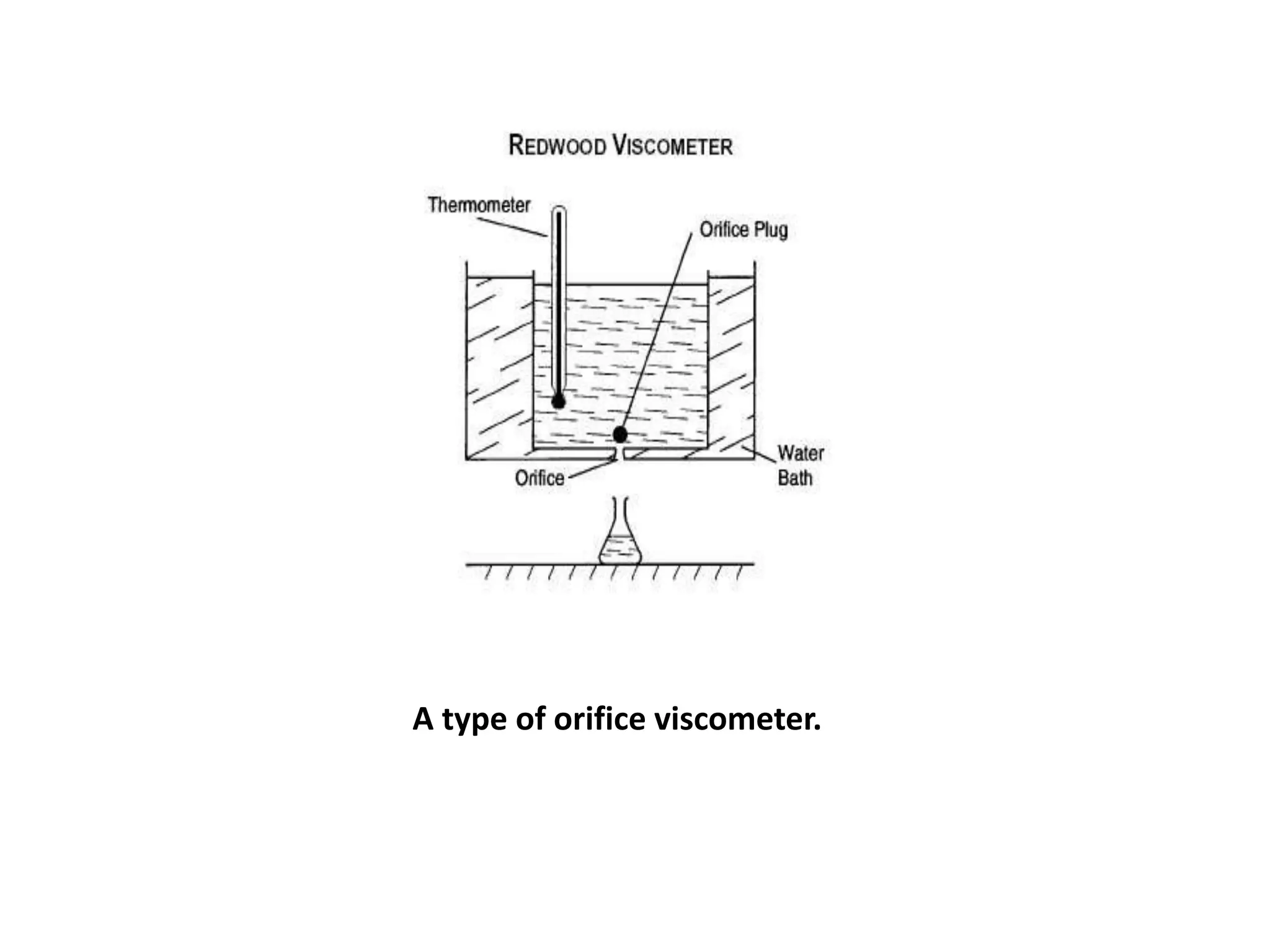
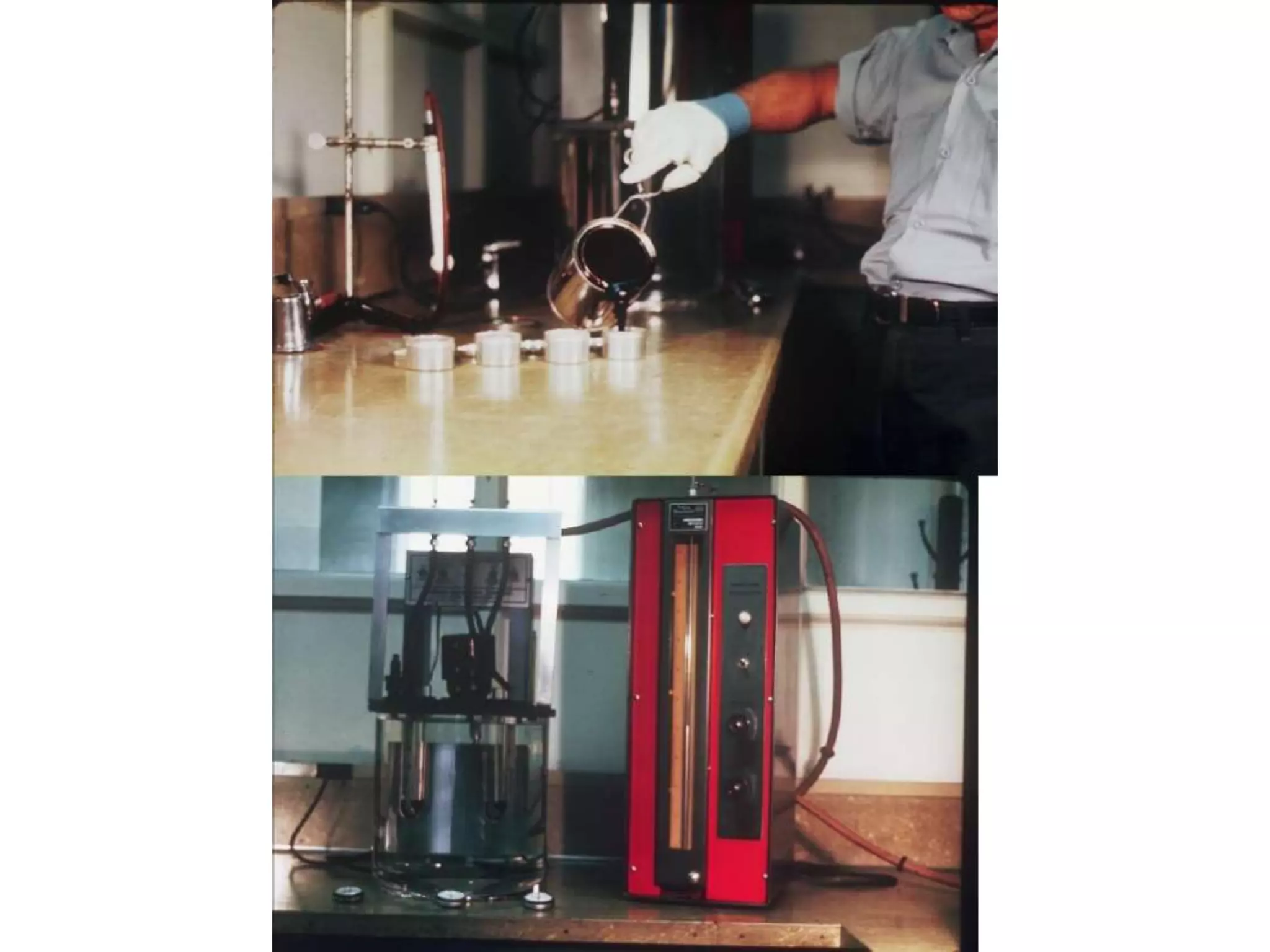
A type of orifice viscometer.
Types of Viscometer
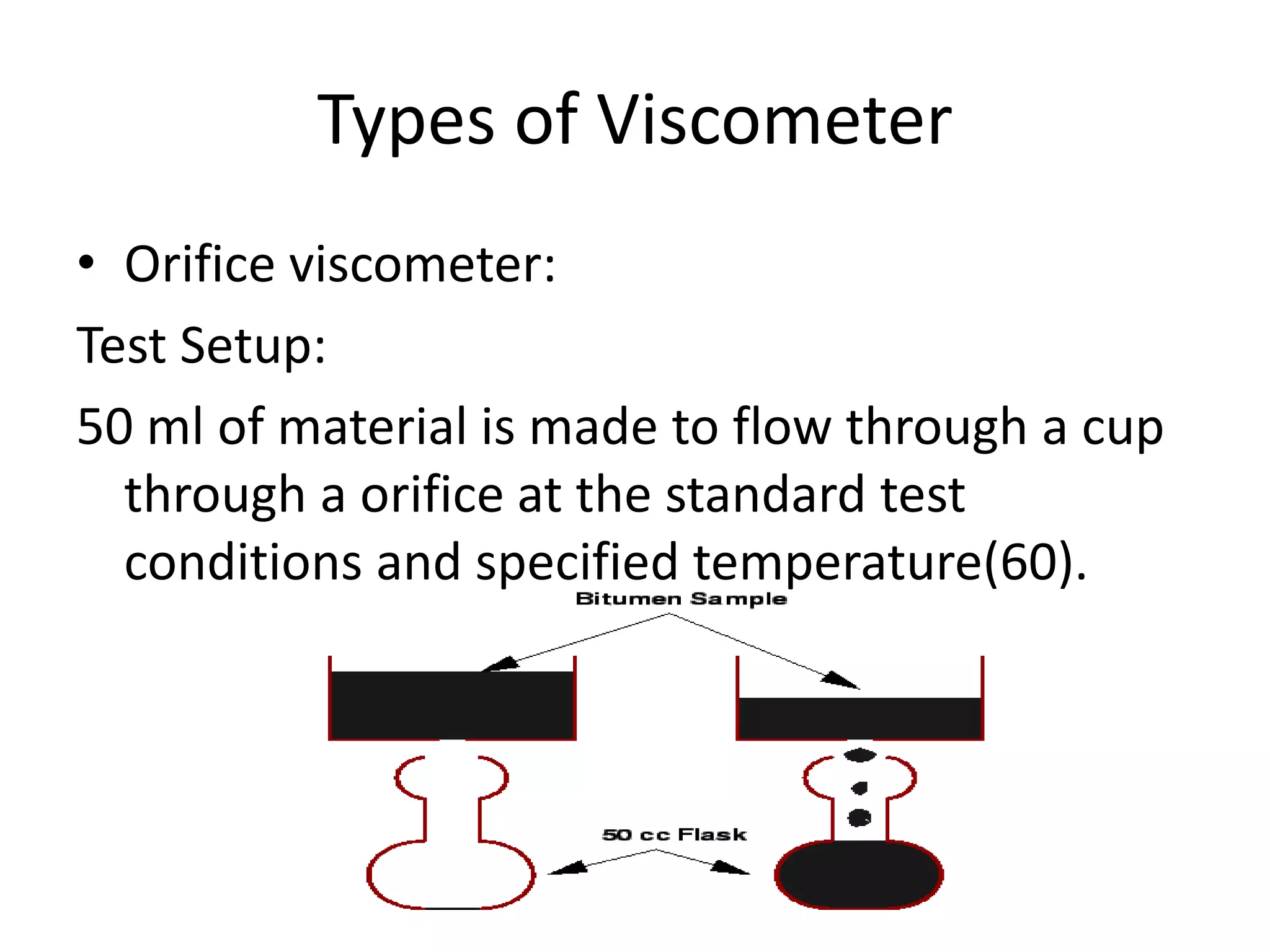
• Orifice viscometer:
Test Setup:
50 ml of material is made to flow through a cup
through a orifice at the standard test
conditions and specified temperature(60).
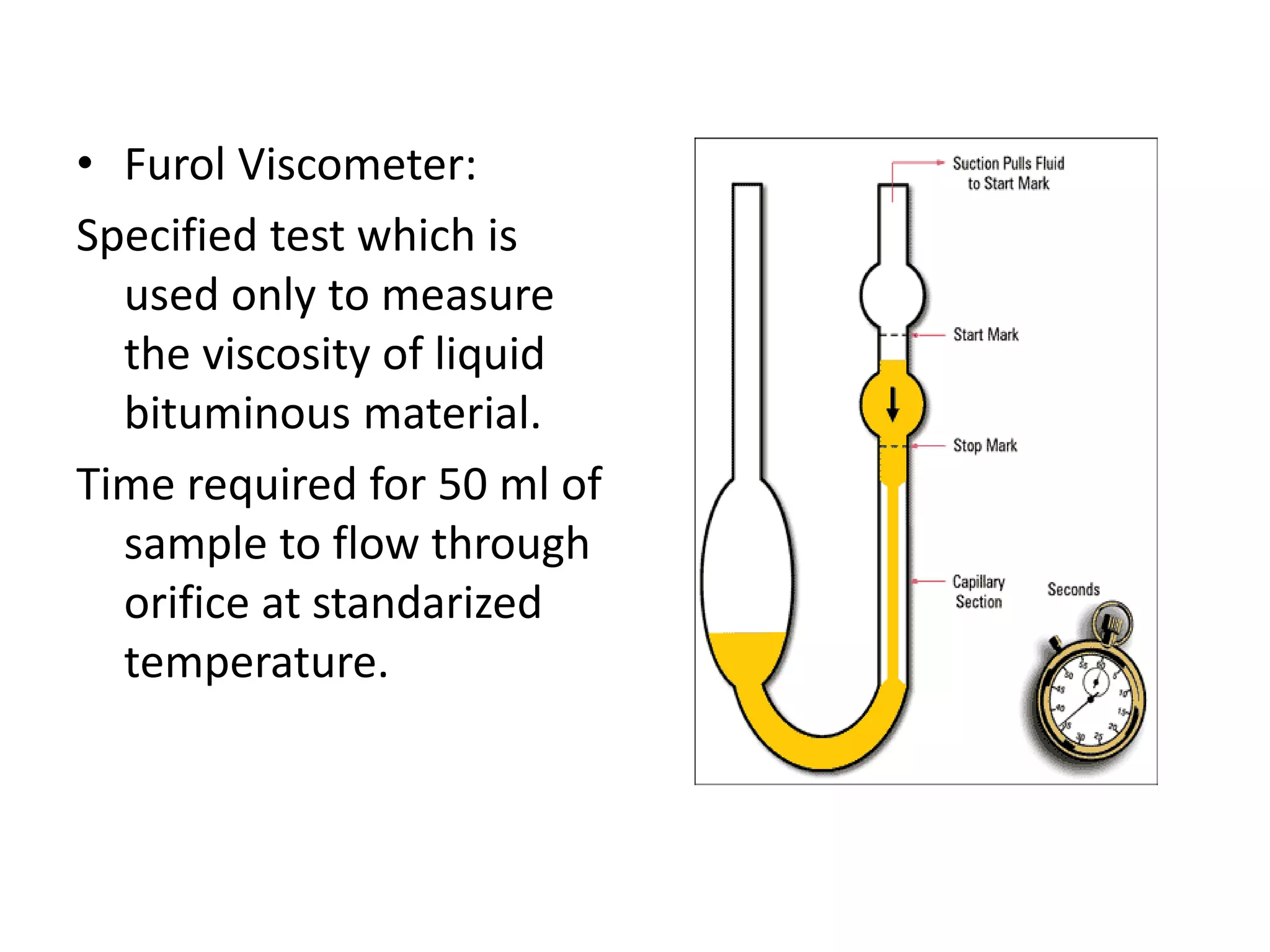
• Furol Viscometer:
Specified test which is
used only to measure
the viscosity of liquid
bituminous material.
Time required for 50 ml of
sample to flow through
orifice at standarized
temperature.
• Besides sliding plates and Brookfield
viscometer are used for all grades of bitumen
but are irrespective of the temperature.
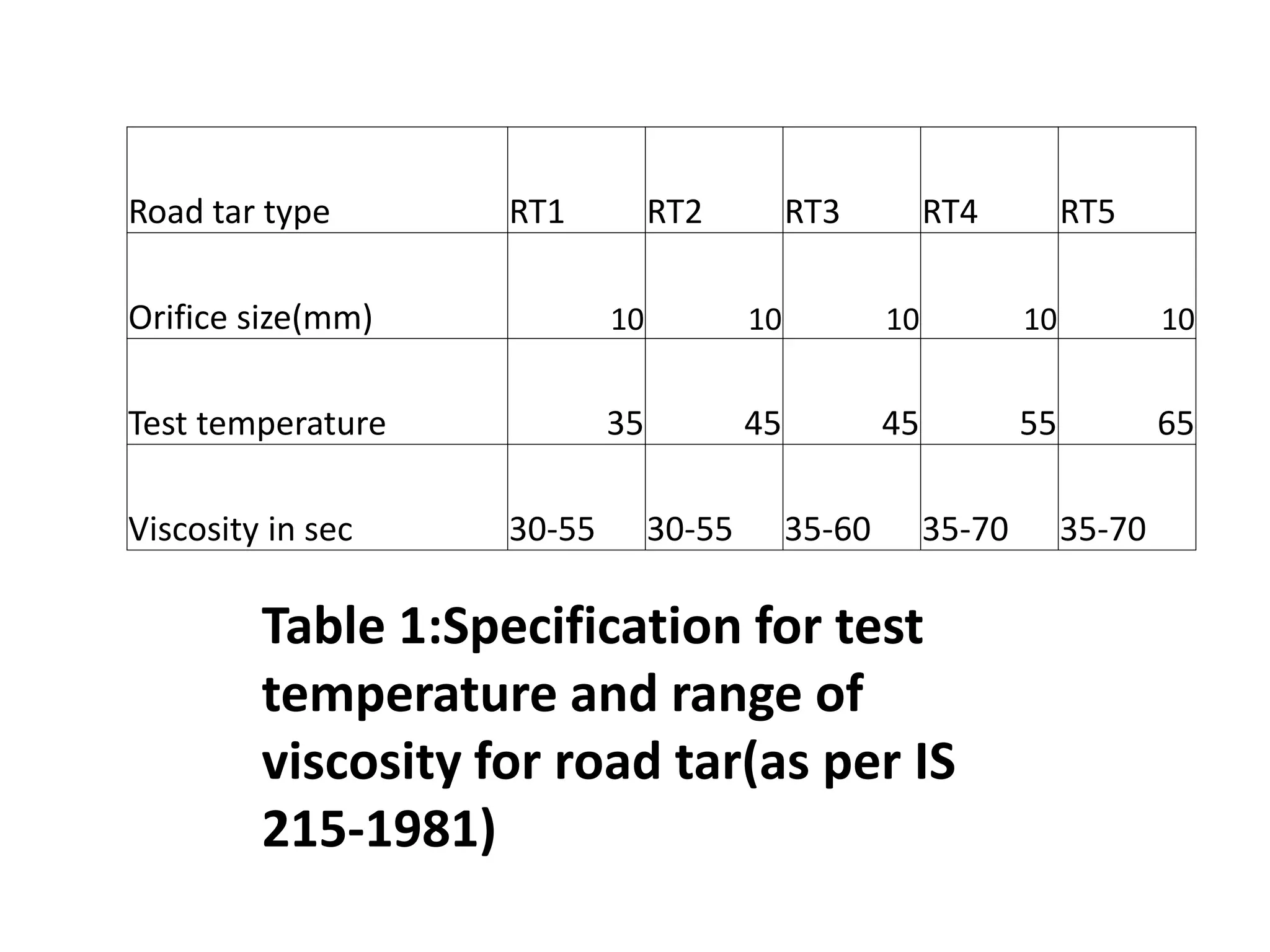
Table 1:Specification for test
temperature and range of
viscosity for road tar(as per IS
215-1981)
Road tar type RT1 RT2 RT3 RT4 RT5
Orifice size(mm) 10 10 10 10 10
Test temperature 35 45 45 55 65
Viscosity in sec 30-55 30-55 35-60 35-70 35-70
Interpretation
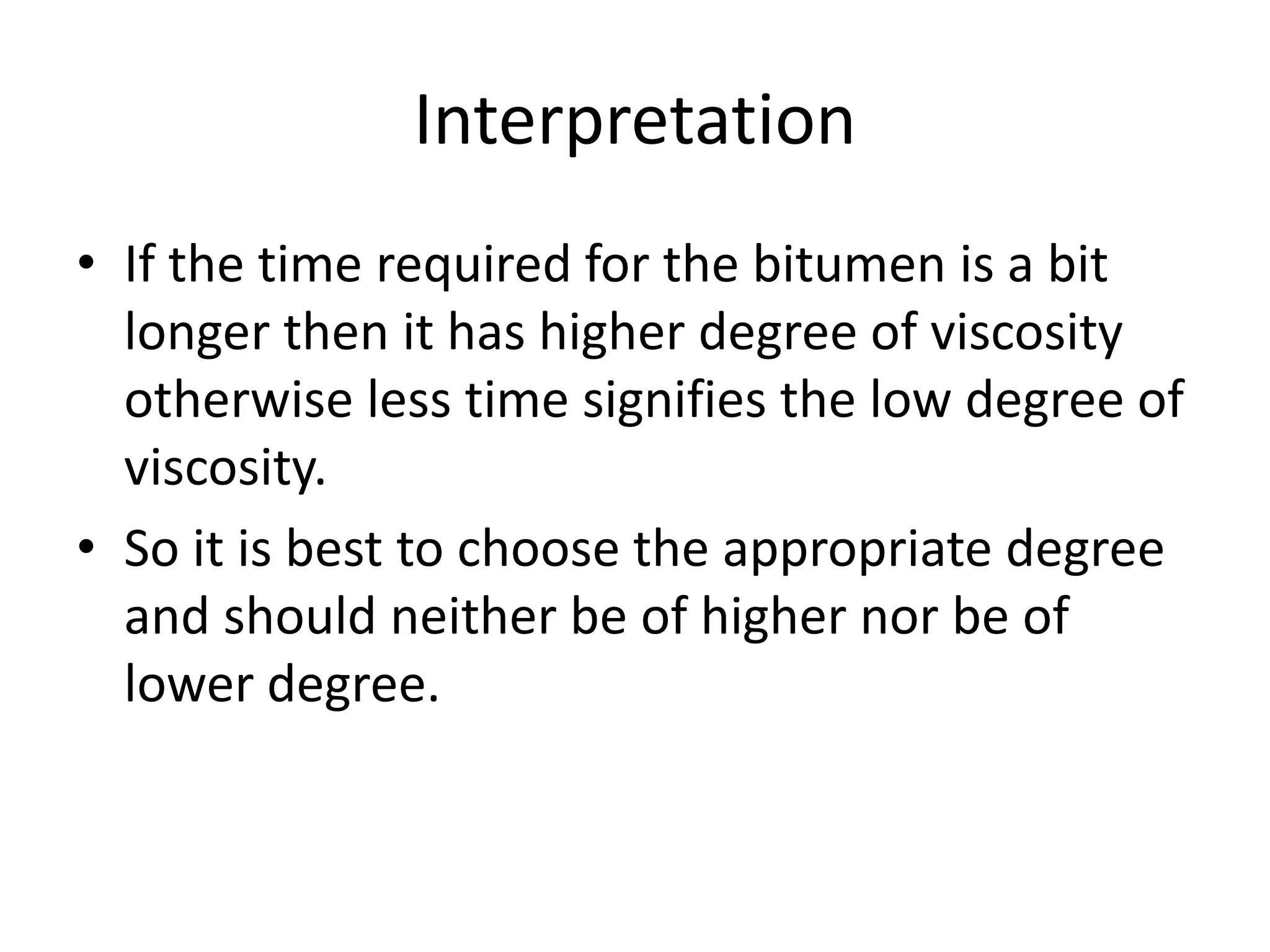
• If the time required for the bitumen is a bit
longer then it has higher degree of viscosity
otherwise less time signifies the low degree of
viscosity.
• So it is best to choose the appropriate degree
and should neither be of higher nor be of
lower degree.
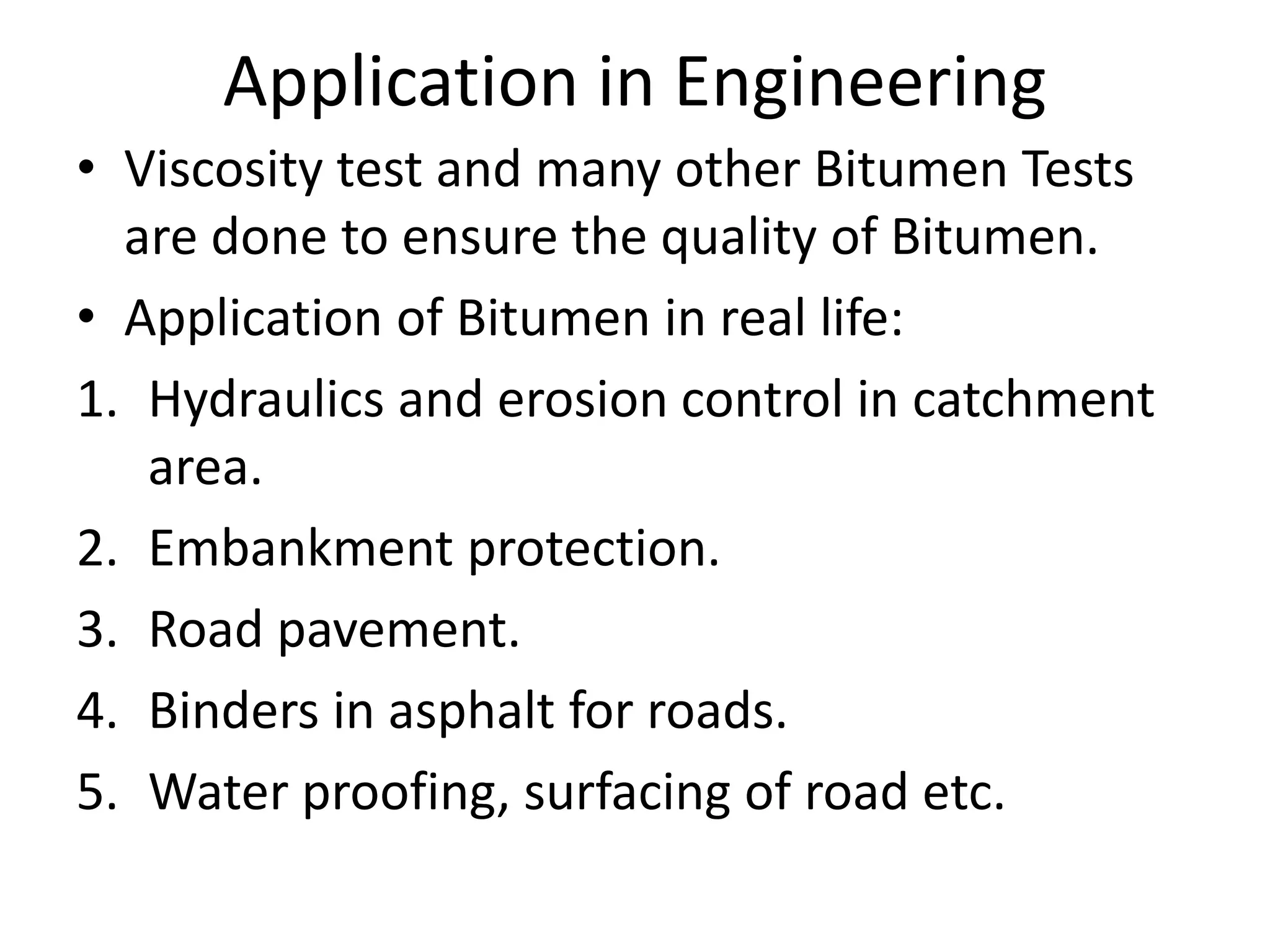
Application in Engineering
• Viscosity test and many other Bitumen Tests
are done to ensure the quality of Bitumen.
• Application of Bitumen in real life:
1. Hydraulics and erosion control in catchment
area.
2. Embankment protection.
3. Road pavement.
4. Binders in asphalt for roads.
5. Water proofing, surfacing of road etc.
Viscosity test of bitumen

Viscosity test of bitumen

  • 1.
    VISCOSITY TEST FORBITUMEN PRESENTED BY:AMRIT PANDIT ACEM/069/A/005 KATHMANDU, NEPAL
  • 2.
    Objective • To becomefamiliar with the term viscosity, its influence and effects, its techniques and application in the field of engineering especially for design of the road pavements.
  • 3.
    Introduction • In general,viscosity defines the consistency. • Viscosity=Shear stress/shear rate • It is the measure of the resistance against the flow and here, particularly we are dealing with the road binders like bitumen.
  • 4.
    • Like thatof penetration, bitumen has the upper hand in determining the stability of the road pavements. • It greatly influences the strength of pavement at the application temperature.
  • 5.
    • At lowdegree, the binders simply lubricates the aggregates( road metals along with aggregates if any) rather than providing a film for the binding actions. • Similarly, at high temperature resists the compaction effort and results in heterogenous mix.
  • 6.
    A type oforifice viscometer.
  • 7.
    Types of Viscometer •Orifice viscometer: Test Setup: 50 ml of material is made to flow through a cup through a orifice at the standard test conditions and specified temperature(60).
  • 8.
    • Furol Viscometer: Specifiedtest which is used only to measure the viscosity of liquid bituminous material. Time required for 50 ml of sample to flow through orifice at standarized temperature.
  • 9.
    • Besides slidingplates and Brookfield viscometer are used for all grades of bitumen but are irrespective of the temperature.
  • 10.
    Table 1:Specification fortest temperature and range of viscosity for road tar(as per IS 215-1981) Road tar type RT1 RT2 RT3 RT4 RT5 Orifice size(mm) 10 10 10 10 10 Test temperature 35 45 45 55 65 Viscosity in sec 30-55 30-55 35-60 35-70 35-70
  • 11.
    Interpretation • If thetime required for the bitumen is a bit longer then it has higher degree of viscosity otherwise less time signifies the low degree of viscosity. • So it is best to choose the appropriate degree and should neither be of higher nor be of lower degree.
  • 13.
    Application in Engineering •Viscosity test and many other Bitumen Tests are done to ensure the quality of Bitumen. • Application of Bitumen in real life: 1. Hydraulics and erosion control in catchment area. 2. Embankment protection. 3. Road pavement. 4. Binders in asphalt for roads. 5. Water proofing, surfacing of road etc.