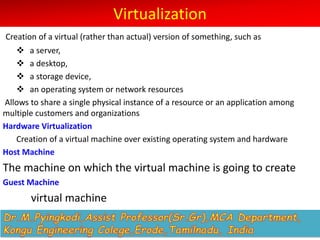
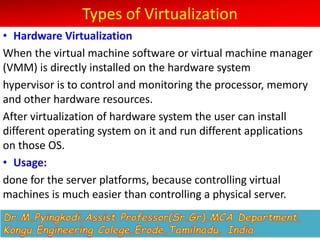
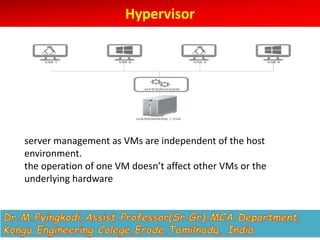
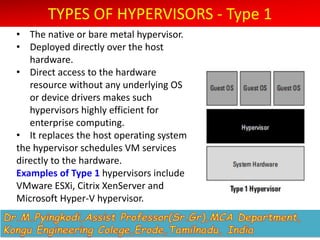
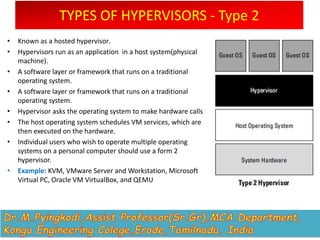
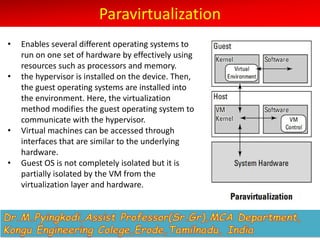
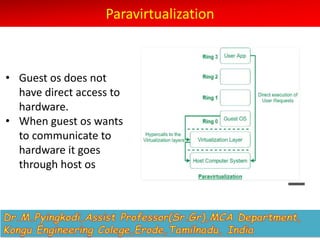
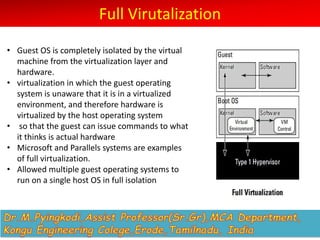
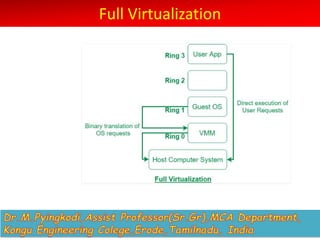
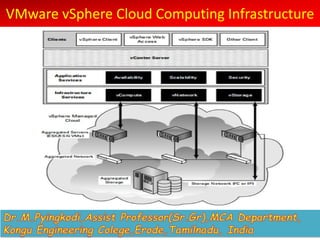
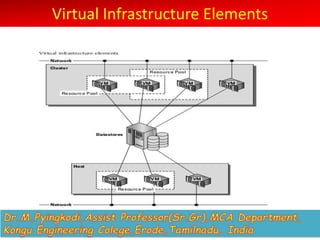
Virtualization allows the creation of virtual versions of servers, desktops, storage, and operating systems that can run simultaneously on a single physical machine. It provides benefits like consolidation of resources and isolation of systems. There are different types of virtualization including hardware, operating system, server, and storage virtualization. A hypervisor manages shared access to physical hardware resources and allows for the operation of multiple guest virtual machines on a single host machine. Machine imaging captures the state of a system to enable portability and deployment of virtual machines. Tools like VMware vSphere provide platforms for implementing virtualization and managing virtual infrastructures at large scale across servers, storage, and networks.