The Vietnam War
US History
Page 790
Background to War
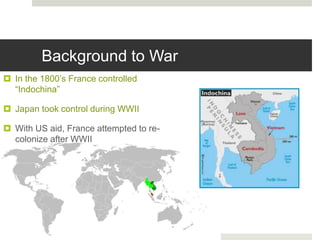
 In the 1800’s France controlled
“Indochina”
 Japan took control during WWII
 With US aid, France attempted to re-
colonize after WWII
Ho Chi Minh
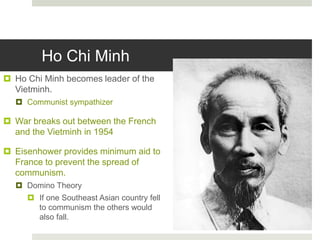
 Ho Chi Minh becomes leader of the
Vietminh.
 Communist sympathizer
 War breaks out between the French
and the Vietminh in 1954
 Eisenhower provides minimum aid to
France to prevent the spread of
communism.
 Domino Theory
 If one Southeast Asian country fell
to communism the others would
also fall.
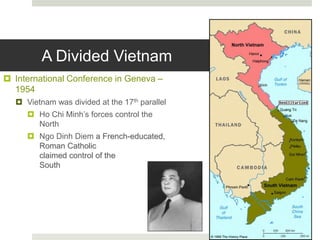
A Divided Vietnam
 International Conference in Geneva –
1954
 Vietnam was divided at the 17th parallel
 Ho Chi Minh’s forces control the
North
 Ngo Dinh Diem a French-educated,
Roman Catholic
claimed control of the
South
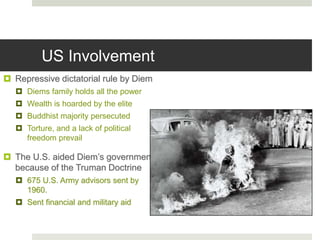
US Involvement
 Repressive dictatorial rule by Diem
 Diems family holds all the power
 Wealth is hoarded by the elite
 Buddhist majority persecuted
 Torture, and a lack of political
freedom prevail
 The U.S. aided Diem’s government
because of the Truman Doctrine
 675 U.S. Army advisors sent by
1960.
 Sent financial and military aid
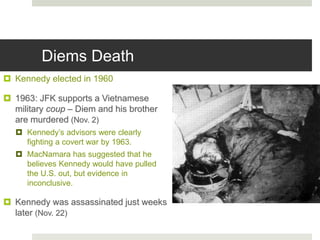
Diems Death
 Kennedy elected in 1960
 1963: JFK supports a Vietnamese
military coup – Diem and his brother
are murdered (Nov. 2)
 Kennedy’s advisors were clearly
fighting a covert war by 1963.
 MacNamara has suggested that he
believes Kennedy would have pulled
the U.S. out, but evidence in
inconclusive.
 Kennedy was assassinated just weeks
later (Nov. 22)
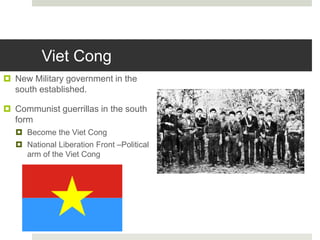
Viet Cong
 New Military government in the
south established.
 Communist guerrillas in the south
form
 Become the Viet Cong
 National Liberation Front –Political
arm of the Viet Cong
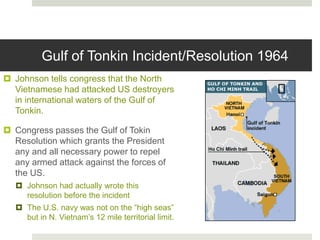
Gulf of Tonkin Incident/Resolution 1964
 Johnson tells congress that the North
Vietnamese had attacked US destroyers
in international waters of the Gulf of
Tonkin.
 Congress passes the Gulf of Tokin
Resolution which grants the President
any and all necessary power to repel
any armed attack against the forces of
the US.
 Johnson had actually wrote this
resolution before the incident
 The U.S. navy was not on the “high seas”
but in N. Vietnam’s 12 mile territorial limit.
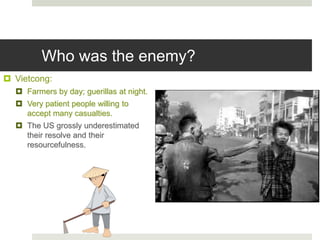
Who was the enemy?
 Vietcong:
 Farmers by day; guerillas at night.
 Very patient people willing to
accept many casualties.
 The US grossly underestimated
their resolve and their
resourcefulness.
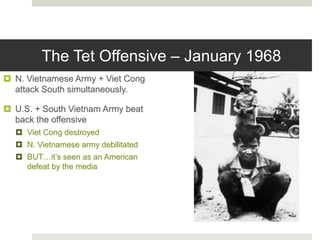
The Tet Offensive – January 1968
 N. Vietnamese Army + Viet Cong
attack South simultaneously.
 U.S. + South Vietnam Army beat
back the offensive
 Viet Cong destroyed
 N. Vietnamese army debilitated
 BUT…it’s seen as an American
defeat by the media
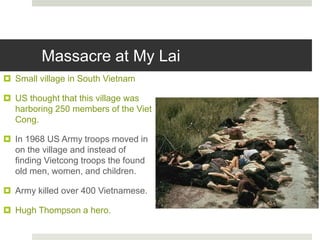
Massacre at My Lai
 Small village in South Vietnam
 US thought that this village was
harboring 250 members of the Viet
Cong.
 In 1968 US Army troops moved in
on the village and instead of
finding Vietcong troops the found
old men, women, and children.
 Army killed over 400 Vietnamese.
 Hugh Thompson a hero.
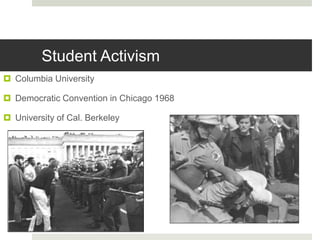
Student Activism
 Columbia University
 Democratic Convention in Chicago 1968
 University of Cal. Berkeley
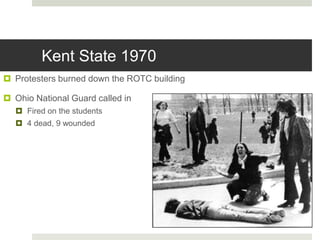
Kent State 1970
 Protesters burned down the ROTC building
 Ohio National Guard called in
 Fired on the students
 4 dead, 9 wounded
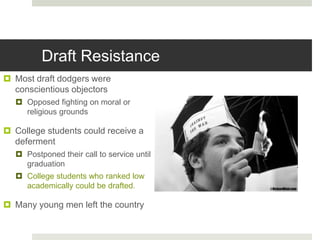
Draft Resistance
 Most draft dodgers were
conscientious objectors
 Opposed fighting on moral or
religious grounds
 College students could receive a
deferment
 Postponed their call to service until
graduation
 College students who ranked low
academically could be drafted.
 Many young men left the country
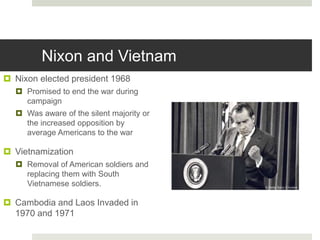
Nixon and Vietnam
 Nixon elected president 1968
 Promised to end the war during
campaign
 Was aware of the silent majority or
the increased opposition by
average Americans to the war
 Vietnamization
 Removal of American soldiers and
replacing them with South
Vietnamese soldiers.
 Cambodia and Laos Invaded in
1970 and 1971
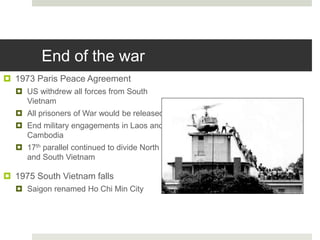
End of the war
 1973 Paris Peace Agreement
 US withdrew all forces from South
Vietnam
 All prisoners of War would be released
 End military engagements in Laos and
Cambodia
 17th parallel continued to divide North
and South Vietnam
 1975 South Vietnam falls
 Saigon renamed Ho Chi Min City

Vietnam War

  • 1.
    The Vietnam War USHistory Page 790
  • 2.
    Background to War In the 1800’s France controlled “Indochina”  Japan took control during WWII  With US aid, France attempted to re- colonize after WWII
  • 3.
    Ho Chi Minh Ho Chi Minh becomes leader of the Vietminh.  Communist sympathizer  War breaks out between the French and the Vietminh in 1954  Eisenhower provides minimum aid to France to prevent the spread of communism.  Domino Theory  If one Southeast Asian country fell to communism the others would also fall.
  • 4.
    A Divided Vietnam International Conference in Geneva – 1954  Vietnam was divided at the 17th parallel  Ho Chi Minh’s forces control the North  Ngo Dinh Diem a French-educated, Roman Catholic claimed control of the South
  • 5.
    US Involvement  Repressivedictatorial rule by Diem  Diems family holds all the power  Wealth is hoarded by the elite  Buddhist majority persecuted  Torture, and a lack of political freedom prevail  The U.S. aided Diem’s government because of the Truman Doctrine  675 U.S. Army advisors sent by 1960.  Sent financial and military aid
  • 6.
    Diems Death  Kennedyelected in 1960  1963: JFK supports a Vietnamese military coup – Diem and his brother are murdered (Nov. 2)  Kennedy’s advisors were clearly fighting a covert war by 1963.  MacNamara has suggested that he believes Kennedy would have pulled the U.S. out, but evidence in inconclusive.  Kennedy was assassinated just weeks later (Nov. 22)
  • 7.
    Viet Cong  NewMilitary government in the south established.  Communist guerrillas in the south form  Become the Viet Cong  National Liberation Front –Political arm of the Viet Cong
  • 8.
    Gulf of TonkinIncident/Resolution 1964  Johnson tells congress that the North Vietnamese had attacked US destroyers in international waters of the Gulf of Tonkin.  Congress passes the Gulf of Tokin Resolution which grants the President any and all necessary power to repel any armed attack against the forces of the US.  Johnson had actually wrote this resolution before the incident  The U.S. navy was not on the “high seas” but in N. Vietnam’s 12 mile territorial limit.
  • 9.
    Who was theenemy?  Vietcong:  Farmers by day; guerillas at night.  Very patient people willing to accept many casualties.  The US grossly underestimated their resolve and their resourcefulness.
  • 10.
    The Tet Offensive– January 1968  N. Vietnamese Army + Viet Cong attack South simultaneously.  U.S. + South Vietnam Army beat back the offensive  Viet Cong destroyed  N. Vietnamese army debilitated  BUT…it’s seen as an American defeat by the media
  • 11.
    Massacre at MyLai  Small village in South Vietnam  US thought that this village was harboring 250 members of the Viet Cong.  In 1968 US Army troops moved in on the village and instead of finding Vietcong troops the found old men, women, and children.  Army killed over 400 Vietnamese.  Hugh Thompson a hero.
  • 12.
    Student Activism  ColumbiaUniversity  Democratic Convention in Chicago 1968  University of Cal. Berkeley
  • 13.
    Kent State 1970 Protesters burned down the ROTC building  Ohio National Guard called in  Fired on the students  4 dead, 9 wounded
  • 14.
    Draft Resistance  Mostdraft dodgers were conscientious objectors  Opposed fighting on moral or religious grounds  College students could receive a deferment  Postponed their call to service until graduation  College students who ranked low academically could be drafted.  Many young men left the country
  • 15.
    Nixon and Vietnam Nixon elected president 1968  Promised to end the war during campaign  Was aware of the silent majority or the increased opposition by average Americans to the war  Vietnamization  Removal of American soldiers and replacing them with South Vietnamese soldiers.  Cambodia and Laos Invaded in 1970 and 1971
  • 16.
    End of thewar  1973 Paris Peace Agreement  US withdrew all forces from South Vietnam  All prisoners of War would be released  End military engagements in Laos and Cambodia  17th parallel continued to divide North and South Vietnam  1975 South Vietnam falls  Saigon renamed Ho Chi Min City