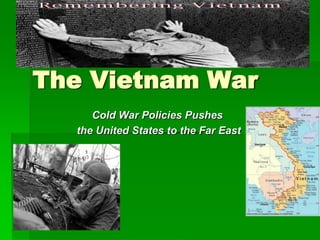
The Vietnam WarCold War Policies Pushes the United States to the Far East
Origins of the Conflict Ho Chi Mihn & The VietminhWorld War II forces Japan to Leave Vietnam -1940Mihn Declares Vietnam an Independent CountrySeptember 2nd, 1945 Vietnam used to be a French Colony
Opportunity: FranceFrance Makes a Move1945 - French troops move back to Vietnam Regain Control of S. VietnamHo Chi Mihn Vows to fight from the North and regain control in South VietnamGoal to knock France out of South Vietnam
U.S. InvolvementWarning Signs1940s / 1950s – U.S. Military Advisors Warn Government to stay away from conflictPresident Truman sends $15 Million to France to aid their attempt to regain controlTotal financial aid = $1BillionIronic????U.S. supported Ho Chi Minh during WWII to keep Japan out of VietnamOnce WWII over, views him as a Communist aggressor
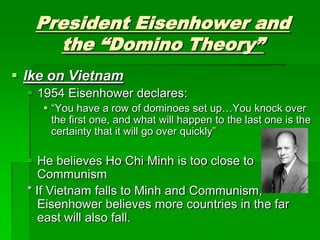
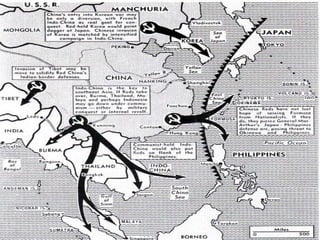
President Eisenhower and the “Domino Theory”Ike on Vietnam1954 Eisenhower declares:“You have a row of dominoes set up…You knock over the first one, and what will happen to the last one is the certainty that it will go over quickly”He believes Ho Chi Minh is too close to Communism* If Vietnam falls to Minh and Communism, Eisenhower believes more countries in the far east will also fall.
Chance at DiplomacyGeneva AccordsFrance, Great Britain, Soviet Union, U.S., China, Laos, Cambodia meet the Vietnihmn and South Vietnamese in Geneva, Switzerland Discuss diplomatic solution to problemsGeneva AccordsDivides Vietnam at 17th ParallelNorth Capitol – Hanoi / South Capitol – SaigonUnify with Democratic Style Election  in 1956
Early U.S. InvolvementEconomic Support  to South VietnamNgo Dinh Diem Promises clean, stable, democratic governmentIn exchange he gets funding from the U.S.Diem drops the ballDoes not redistribute land to peasantsPersecutes BuddhistsCatholic Beliefs / No room for Buddhist thought
Viet Cong and Ho Chi MinhVietcongSouthern Liberation group with Communist rootsHo Chi Minh Supports with aid / weaponsHo Chi Minh Trail / Guerilla Warfare – Supply lineJKF and Vietnam1963: 16,000 U.S. Army Personnel in VietnamDiem’s popularity plummetsDiem is Assassinated by U.S. ForcesU.S. feels South Vietnam could not remain stable
President Johnson’s VietnamBefore JFK’s Death: “In the final analysis, it’s their war.”Johnson’s EscalationDoes not want to be “soft” on communismBelieves a South Vietnam takeover = appeasementJohnson’s policies now lean towards long conflict
Gulf of TonkinSituation1964- North Vietnamese patrol boat fires a torpedo at a United States’ destroyer – USS MaddoxMaddox returns fire and inflicts heavy damageDays later Maddox returns – Bad Visibility and WeatherCrew Reports that Vietnamese ships fired another torpedoLater report that they neither saw nor heard any fireJohnson Orders Air Strikes on North VietnamCongress approves “Gulf of Tonkin Resolution” Not a declaration of War but gives Johnson a lot of military power in Vietnam
Results of Tonkin ResolutionHidden from American PublicJohnson did not tell the American Public he was secretly launching raids on the N. Vietnam The Maddox was in Tonkin to obtain informationJohnson had prepared for the Gulf of Tonkin Resolution months beforehandWaiting for an opportunity to push through CongressFebruary 1965 – Johnson Uses Powers“Operation Rolling Thunder” – First sustained bombing missionJune, 1965 – 50,000 U.S. Soldiers  in Vietnam – Now America’s War
Johnson Fully Commits the United States1964 Presidential Campaign Johnson wins election claiming he was: “not about to send American boys 9 or 10 thousand miles away from home to do what Asian boys ought to be doing for themselves”Early in term beings sending thousands of U.S. troops to fight along side S. Vietnamese troopsMany Americans support Johnson because they believe that he is attempting to stop the spread of communism worldwide
War TacticsVietcong Tactics: Guerilla WarfareTunnel Systems / Easy “hit and run” opportunitiesMines / Punji Sticks / Traps Hidden EnemyUnited States Tactics: IntimidationDestroy Moral – OutnumberBody CountsWin Hearts and mindsNapalm / Agent Orange
Troop MoraleTroop Morale DecreasesFrustrationsBrutal Conditions Jungle / HeatRice Patties Invisible Enemies Search and DestroyDrugsLack of Support from Government / American Public
Problems At HomeGreat SocietyWar grows costly as more troops are committedJohnson asks for tax increaseResult is a cut in funding for social programsJohnson's early views of domestic reform now fading away
War Looses PopularityWar Looses RatingsCombat footage shown on nightly newsBody bags and battle scenes shown on T.V.16,000 Americans Killed from 1961- 1967Pictures begin to contradict administrations optimistic war views.Johnson looses credibility – Message not matching news reportsAmerican Public Opinion Beginning to Shift
Nation DividedVietnam War Draft:All men age 18 must registerPre-Draft Screening / Medical Conditions18-26 eligible for military serviceEasily Manipulated DraftMedical exemptions / Enroll – Enlist Low Class War
Minorities in VietnamAfrican AmericansServe in disproportionate numbers of combat troops20% of Deaths / 10% of U.S. PopulationMartin Luther King Jr.Racism within platoons
Females In VietnamWomen in War1960s  Women not allowed in Vietnam – combat10,000 Women served as military nurses
The War Intensifies1968  Tet OffensiveSimultaneous attacks throughout S. VietnamAmerican Troops had dominated war to this pointFunerals for victims served as supply lines100 Cities AttackedCostly Push32,000 Vietcong Soldiers Killed 3,000 American Troops
Effects of the Tet OffensivePsychological / Social ProblemsWilliam WestmorelandCalls Tet “well-laid” plans afoul”. Greatly Shook the American Public Close to DefeatSupport for War Pre – Tet  56 % Support for War Post Tet  40%Walter Cronkite:“more certain than ever that the bloody experience of Vietnam is to end in a stalemate.”Johnsons Support for War is Plummeting
1968Events of 1968Tet OffensiveLyndon Johnson does not seek nominationAssassination of Martin Luther King Jr.Robert Kennedy Assassinated		- L.A. Victory Speech 			- Sirhan Sirhan 5) Protests Begin6) Richard Nixon Elected
Assassination of Robert Kennedy
Assassination of Martin Luther King Jr.
Vietnam War Protest
Election of Richard Nixon
Nixon’s Vietnam PolicyHow to end Vietnam?Pull Troops Out of Vietnam1) 1969 Henry Kissinger Vietnamization 1969  25,000 Troops Return Home1972  500,000 to 25,0002) Peace with HonorGovernment – Bombing Campaign -
The vietnam war new

The vietnam war new

  • 1.
    The Vietnam WarColdWar Policies Pushes the United States to the Far East
  • 2.
    Origins of theConflict Ho Chi Mihn & The VietminhWorld War II forces Japan to Leave Vietnam -1940Mihn Declares Vietnam an Independent CountrySeptember 2nd, 1945 Vietnam used to be a French Colony
  • 3.
    Opportunity: FranceFrance Makesa Move1945 - French troops move back to Vietnam Regain Control of S. VietnamHo Chi Mihn Vows to fight from the North and regain control in South VietnamGoal to knock France out of South Vietnam
  • 4.
    U.S. InvolvementWarning Signs1940s/ 1950s – U.S. Military Advisors Warn Government to stay away from conflictPresident Truman sends $15 Million to France to aid their attempt to regain controlTotal financial aid = $1BillionIronic????U.S. supported Ho Chi Minh during WWII to keep Japan out of VietnamOnce WWII over, views him as a Communist aggressor
  • 5.
    President Eisenhower andthe “Domino Theory”Ike on Vietnam1954 Eisenhower declares:“You have a row of dominoes set up…You knock over the first one, and what will happen to the last one is the certainty that it will go over quickly”He believes Ho Chi Minh is too close to Communism* If Vietnam falls to Minh and Communism, Eisenhower believes more countries in the far east will also fall.
  • 8.
    Chance at DiplomacyGenevaAccordsFrance, Great Britain, Soviet Union, U.S., China, Laos, Cambodia meet the Vietnihmn and South Vietnamese in Geneva, Switzerland Discuss diplomatic solution to problemsGeneva AccordsDivides Vietnam at 17th ParallelNorth Capitol – Hanoi / South Capitol – SaigonUnify with Democratic Style Election in 1956
  • 10.
    Early U.S. InvolvementEconomicSupport to South VietnamNgo Dinh Diem Promises clean, stable, democratic governmentIn exchange he gets funding from the U.S.Diem drops the ballDoes not redistribute land to peasantsPersecutes BuddhistsCatholic Beliefs / No room for Buddhist thought
  • 12.
    Viet Cong andHo Chi MinhVietcongSouthern Liberation group with Communist rootsHo Chi Minh Supports with aid / weaponsHo Chi Minh Trail / Guerilla Warfare – Supply lineJKF and Vietnam1963: 16,000 U.S. Army Personnel in VietnamDiem’s popularity plummetsDiem is Assassinated by U.S. ForcesU.S. feels South Vietnam could not remain stable
  • 14.
    President Johnson’s VietnamBeforeJFK’s Death: “In the final analysis, it’s their war.”Johnson’s EscalationDoes not want to be “soft” on communismBelieves a South Vietnam takeover = appeasementJohnson’s policies now lean towards long conflict
  • 15.
    Gulf of TonkinSituation1964-North Vietnamese patrol boat fires a torpedo at a United States’ destroyer – USS MaddoxMaddox returns fire and inflicts heavy damageDays later Maddox returns – Bad Visibility and WeatherCrew Reports that Vietnamese ships fired another torpedoLater report that they neither saw nor heard any fireJohnson Orders Air Strikes on North VietnamCongress approves “Gulf of Tonkin Resolution” Not a declaration of War but gives Johnson a lot of military power in Vietnam
  • 16.
    Results of TonkinResolutionHidden from American PublicJohnson did not tell the American Public he was secretly launching raids on the N. Vietnam The Maddox was in Tonkin to obtain informationJohnson had prepared for the Gulf of Tonkin Resolution months beforehandWaiting for an opportunity to push through CongressFebruary 1965 – Johnson Uses Powers“Operation Rolling Thunder” – First sustained bombing missionJune, 1965 – 50,000 U.S. Soldiers in Vietnam – Now America’s War
  • 18.
    Johnson Fully Commitsthe United States1964 Presidential Campaign Johnson wins election claiming he was: “not about to send American boys 9 or 10 thousand miles away from home to do what Asian boys ought to be doing for themselves”Early in term beings sending thousands of U.S. troops to fight along side S. Vietnamese troopsMany Americans support Johnson because they believe that he is attempting to stop the spread of communism worldwide
  • 19.
    War TacticsVietcong Tactics:Guerilla WarfareTunnel Systems / Easy “hit and run” opportunitiesMines / Punji Sticks / Traps Hidden EnemyUnited States Tactics: IntimidationDestroy Moral – OutnumberBody CountsWin Hearts and mindsNapalm / Agent Orange
  • 21.
    Troop MoraleTroop MoraleDecreasesFrustrationsBrutal Conditions Jungle / HeatRice Patties Invisible Enemies Search and DestroyDrugsLack of Support from Government / American Public
  • 22.
    Problems At HomeGreatSocietyWar grows costly as more troops are committedJohnson asks for tax increaseResult is a cut in funding for social programsJohnson's early views of domestic reform now fading away
  • 23.
    War Looses PopularityWarLooses RatingsCombat footage shown on nightly newsBody bags and battle scenes shown on T.V.16,000 Americans Killed from 1961- 1967Pictures begin to contradict administrations optimistic war views.Johnson looses credibility – Message not matching news reportsAmerican Public Opinion Beginning to Shift
  • 26.
    Nation DividedVietnam WarDraft:All men age 18 must registerPre-Draft Screening / Medical Conditions18-26 eligible for military serviceEasily Manipulated DraftMedical exemptions / Enroll – Enlist Low Class War
  • 27.
    Minorities in VietnamAfricanAmericansServe in disproportionate numbers of combat troops20% of Deaths / 10% of U.S. PopulationMartin Luther King Jr.Racism within platoons
  • 28.
    Females In VietnamWomenin War1960s  Women not allowed in Vietnam – combat10,000 Women served as military nurses
  • 29.
    The War Intensifies1968 Tet OffensiveSimultaneous attacks throughout S. VietnamAmerican Troops had dominated war to this pointFunerals for victims served as supply lines100 Cities AttackedCostly Push32,000 Vietcong Soldiers Killed 3,000 American Troops
  • 31.
    Effects of theTet OffensivePsychological / Social ProblemsWilliam WestmorelandCalls Tet “well-laid” plans afoul”. Greatly Shook the American Public Close to DefeatSupport for War Pre – Tet  56 % Support for War Post Tet  40%Walter Cronkite:“more certain than ever that the bloody experience of Vietnam is to end in a stalemate.”Johnsons Support for War is Plummeting
  • 32.
    1968Events of 1968TetOffensiveLyndon Johnson does not seek nominationAssassination of Martin Luther King Jr.Robert Kennedy Assassinated - L.A. Victory Speech - Sirhan Sirhan 5) Protests Begin6) Richard Nixon Elected
  • 33.
  • 34.
  • 35.
  • 36.
  • 37.
    Nixon’s Vietnam PolicyHowto end Vietnam?Pull Troops Out of Vietnam1) 1969 Henry Kissinger Vietnamization 1969  25,000 Troops Return Home1972  500,000 to 25,0002) Peace with HonorGovernment – Bombing Campaign -