SESSI ON 5
AU GU ST 12
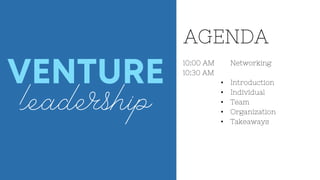
AGENDA
10:00 AM Networking
10:30 AM
• Introduction
• Individual
• Team
• Organization
• Takeaways
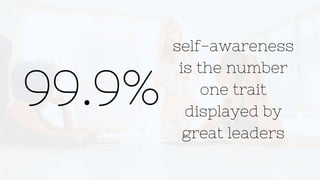
self-awareness
is the number
one trait
displayed by
great leaders
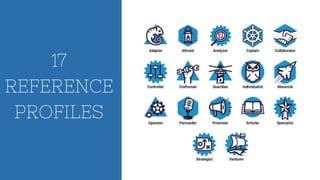
17
REFERENCE
PROFILES
Go to
enter code
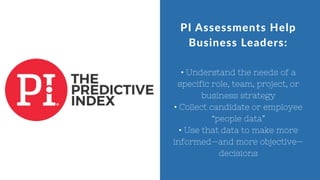
• Understand the needs of a
specific role, team, project, or
business strategy
• Collect candidate or employee
“people data”
• Use that data to make more
informed—and more objective—
decisions
PI Assessments Help
Business Leaders:
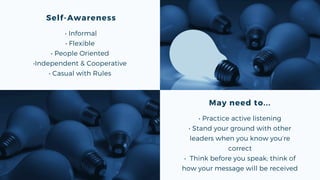
Self-Awareness
• Informal
• Flexible
• People Oriented
•Independent & Cooperative
• Casual with Rules
May need to...
• Practice active listening
• Stand your ground with other
leaders when you know you’re
correct
• Think before you speak; think of
how your message will be received
CRYSTAL BUCKNER
Program Coordinator
KATELYN LORNE
Outreach Worker
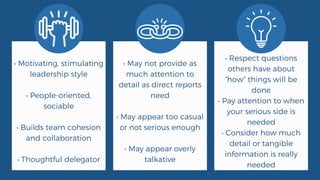
• Motivating, stimulating
leadership style
• People-oriented,
sociable
• Builds team cohesion
and collaboration
• Thoughtful delegator
• May not provide as
much attention to
detail as direct reports
need
• May appear too casual
or not serious enough
• May appear overly
talkative
• Respect questions
others have about
“how” things will be
done
• Pay attention to when
your serious side is
needed
• Consider how much
detail or tangible
information is really
needed
Great leaders
are made, not
born
MANAGING
PEOPLE TO
PERFORM
Go to
enter code
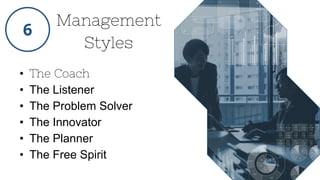
Management
Styles
• The Coach
• The Listener
• The Problem Solver
• The Innovator
• The Planner
• The Free Spirit
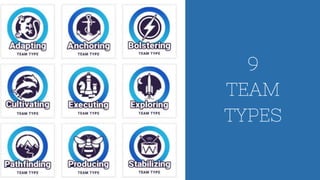
9
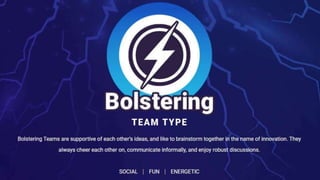
TEAM
TYPES
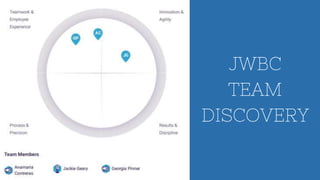
JWBC
TEAM
DISCOVERY
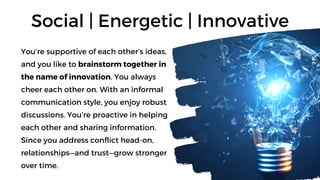
You’re supportive of each other’s ideas,
and you like to brainstorm together in
the name of innovation. You always
cheer each other on. With an informal
communication style, you enjoy robust
discussions. You’re proactive in helping
each other and sharing information.
Since you address conflict head-on,
relationships—and trust—grow stronger
over time.
Social | Energetic | Innovative
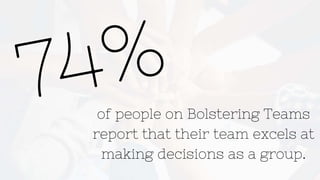
of people on Bolstering Teams
report that their team excels at
making decisions as a group.
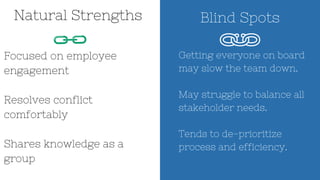
Focused on employee
engagement
Resolves conflict
comfortably
Shares knowledge as a
group
Getting everyone on board
may slow the team down.
May struggle to balance all
stakeholder needs.
Tends to de-prioritize
process and efficiency.
Natural Strengths Blind Spots
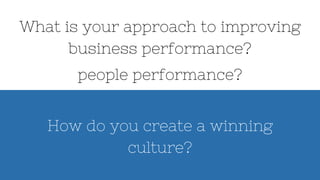
How do you create a winning
culture?
people performance?
What is your approach to improving
business performance?
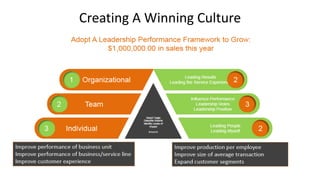
Creating A Winning Culture
Go to
enter code
Venture leadership - Session 5 Presentation

Venture leadership - Session 5 Presentation

  • 1.
    SESSI ON 5 AUGU ST 12
  • 2.
    AGENDA 10:00 AM Networking 10:30AM • Introduction • Individual • Team • Organization • Takeaways
  • 3.
    self-awareness is the number onetrait displayed by great leaders
  • 4.
  • 5.
  • 6.
    • Understand theneeds of a specific role, team, project, or business strategy • Collect candidate or employee “people data” • Use that data to make more informed—and more objective— decisions PI Assessments Help Business Leaders:
  • 7.
    Self-Awareness • Informal • Flexible •People Oriented •Independent & Cooperative • Casual with Rules May need to... • Practice active listening • Stand your ground with other leaders when you know you’re correct • Think before you speak; think of how your message will be received
  • 8.
    CRYSTAL BUCKNER Program Coordinator KATELYNLORNE Outreach Worker • Motivating, stimulating leadership style • People-oriented, sociable • Builds team cohesion and collaboration • Thoughtful delegator • May not provide as much attention to detail as direct reports need • May appear too casual or not serious enough • May appear overly talkative • Respect questions others have about “how” things will be done • Pay attention to when your serious side is needed • Consider how much detail or tangible information is really needed
  • 9.
  • 10.
  • 11.
  • 12.
    Management Styles • The Coach •The Listener • The Problem Solver • The Innovator • The Planner • The Free Spirit
  • 13.
  • 14.
  • 16.
    You’re supportive ofeach other’s ideas, and you like to brainstorm together in the name of innovation. You always cheer each other on. With an informal communication style, you enjoy robust discussions. You’re proactive in helping each other and sharing information. Since you address conflict head-on, relationships—and trust—grow stronger over time. Social | Energetic | Innovative
  • 17.
    of people onBolstering Teams report that their team excels at making decisions as a group.
  • 18.
    Focused on employee engagement Resolvesconflict comfortably Shares knowledge as a group Getting everyone on board may slow the team down. May struggle to balance all stakeholder needs. Tends to de-prioritize process and efficiency. Natural Strengths Blind Spots
  • 19.
    How do youcreate a winning culture? people performance? What is your approach to improving business performance?
  • 20.
  • 21.