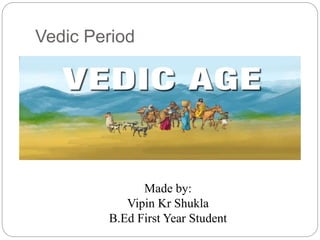
Vedic Period
Made by:
Vipin Kr Shukla
B.Ed First Year Student
Introduction:
 In Vedic period the education was both narrow and
extensive modes.
 So, that time these are the synonymous of knowledge,
Prosperity and Humanity along with discipline.
 During that time education was given to the student at
their home and then they went to Gurukuls and where
their upanayan Sanskar was going to be done and then
their admission was done in Gurukuls.
Contd…..
 So, they taught both senses- Narrow were, arts and its
related topics are taught, But in extensive sense all the
subjects are taught.
 After their Samapwartan programs are conducted were they
got their degrees or Certificate and it was also told by Gurus
that they have to undergo self study for their whole life.
 So our Vedic education system was very ancient and old, So
here Vedas are taught and therefore it was said to be as the
Vedic Period.
Main Feature's of Vedic education
system:
 Administration and Finance of education:
 a) Free from state control
b)Free Education
c) Source of income.
Structure and Organization of education:
a) Primary education
b) Higher education
Aims of education in Vedic period:
 Spiritual control
 Spirituality
 Religious values
 Students would attain concentration in Vedas and
finally attain salvation(Moksha)
 Preservation and enhancement of health
 Acc to them in a Healthy Body healthy minds
survives.
Contd….
 Development of knowledge
 Social and national duties
 Preservation and development of culture
 Moral and character development
Curriculum of Vedic education:
 Curriculum divided into two types of education:
 Primary education
 Higher education
 Para ( Spiritual)
 Apara( Materialistic)
Medium of education:
 Sanskrit
 Monotorial system
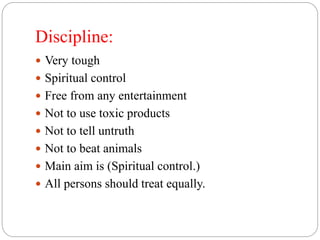
Discipline:
 Very tough
 Spiritual control
 Free from any entertainment
 Not to use toxic products
 Not to tell untruth
 Not to beat animals
 Main aim is (Spiritual control.)
 All persons should treat equally.
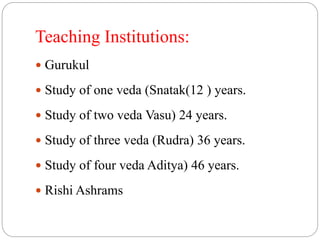
Teaching Institutions:
 Gurukul
 Study of one veda (Snatak(12 ) years.
 Study of two veda Vasu) 24 years.
 Study of three veda (Rudra) 36 years.
 Study of four veda Aditya) 46 years.
 Rishi Ashrams
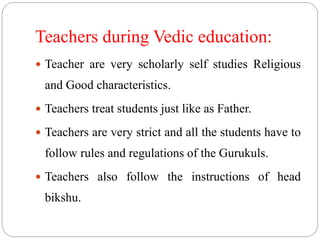
Teachers during Vedic education:
 Teacher are very scholarly self studies Religious
and Good characteristics.
 Teachers treat students just like as Father.
 Teachers are very strict and all the students have to
follow rules and regulations of the Gurukuls.
 Teachers also follow the instructions of head
bikshu.
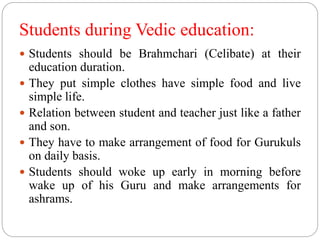
Students during Vedic education:
 Students should be Brahmchari (Celibate) at their
education duration.
 They put simple clothes have simple food and live
simple life.
 Relation between student and teacher just like a father
and son.
 They have to make arrangement of food for Gurukuls
on daily basis.
 Students should woke up early in morning before
wake up of his Guru and make arrangements for
ashrams.
Some important terms:
 Upanayan rituals
 Samapwartan ceremony
 Paribacharya (Mobile teacher)
 Sammelon
 Etc.
Vedic period

Vedic period

  • 1.
    Vedic Period Made by: VipinKr Shukla B.Ed First Year Student
  • 2.
    Introduction:  In Vedicperiod the education was both narrow and extensive modes.  So, that time these are the synonymous of knowledge, Prosperity and Humanity along with discipline.  During that time education was given to the student at their home and then they went to Gurukuls and where their upanayan Sanskar was going to be done and then their admission was done in Gurukuls.
  • 3.
    Contd…..  So, theytaught both senses- Narrow were, arts and its related topics are taught, But in extensive sense all the subjects are taught.  After their Samapwartan programs are conducted were they got their degrees or Certificate and it was also told by Gurus that they have to undergo self study for their whole life.  So our Vedic education system was very ancient and old, So here Vedas are taught and therefore it was said to be as the Vedic Period.
  • 4.
    Main Feature's ofVedic education system:  Administration and Finance of education:  a) Free from state control b)Free Education c) Source of income. Structure and Organization of education: a) Primary education b) Higher education
  • 5.
    Aims of educationin Vedic period:  Spiritual control  Spirituality  Religious values  Students would attain concentration in Vedas and finally attain salvation(Moksha)  Preservation and enhancement of health  Acc to them in a Healthy Body healthy minds survives.
  • 6.
    Contd….  Development ofknowledge  Social and national duties  Preservation and development of culture  Moral and character development
  • 7.
    Curriculum of Vediceducation:  Curriculum divided into two types of education:  Primary education  Higher education  Para ( Spiritual)  Apara( Materialistic)
  • 8.
    Medium of education: Sanskrit  Monotorial system
  • 9.
    Discipline:  Very tough Spiritual control  Free from any entertainment  Not to use toxic products  Not to tell untruth  Not to beat animals  Main aim is (Spiritual control.)  All persons should treat equally.
  • 10.
    Teaching Institutions:  Gurukul Study of one veda (Snatak(12 ) years.  Study of two veda Vasu) 24 years.  Study of three veda (Rudra) 36 years.  Study of four veda Aditya) 46 years.  Rishi Ashrams
  • 11.
    Teachers during Vediceducation:  Teacher are very scholarly self studies Religious and Good characteristics.  Teachers treat students just like as Father.  Teachers are very strict and all the students have to follow rules and regulations of the Gurukuls.  Teachers also follow the instructions of head bikshu.
  • 12.
    Students during Vediceducation:  Students should be Brahmchari (Celibate) at their education duration.  They put simple clothes have simple food and live simple life.  Relation between student and teacher just like a father and son.  They have to make arrangement of food for Gurukuls on daily basis.  Students should woke up early in morning before wake up of his Guru and make arrangements for ashrams.
  • 13.
    Some important terms: Upanayan rituals  Samapwartan ceremony  Paribacharya (Mobile teacher)  Sammelon  Etc.