EDUCATION SYSTEM IN
THE VEDIC PERIOD
Presented by
SANDEEP KUMAR SONKAR
VEDIC EDUCATION
Vedic education is the mirror of all the education.
System of cultural of India lies in the Vedic education.
Reflection of spiritual knowledge
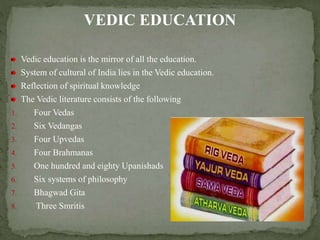
The Vedic literature consists of the following
1. Four Vedas
2. Six Vedangas
3. Four Upvedas
4. Four Brahmanas
5. One hundred and eighty Upanishads
6. Six systems of philosophy
7. Bhagwad Gita
8. Three Smritis
ORGIN OF VEDAS
The word Veda has been derived from the verb vid , with a prefix dhayan –
means spiritual emotion , action(karma) and result.
Orgin of Vedas from:
• Smrithi
• Sruthi
Features of Vedic Education
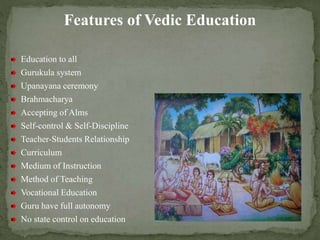
Education to all
Gurukula system
Upanayana ceremony
Brahmacharya
Accepting of Alms
Self-control & Self-Discipline
Teacher-Students Relationship
Curriculum
Medium of Instruction
Method of Teaching
Vocational Education
Guru have full autonomy
No state control on education
Wide spread education of woman
Evaluation System
1. Maha Prazanan grade:- Students of very high ability.
2. Madhyama Prazanan grade:- Students of high ability.
3. Alpa Prazanan grade:- Students of low ability.
Education provided according to their position in the caste.
In the early Vedic schools, only to Brahmans later 500 BC, education of the
Ksatriyas and Vaisyas came under Brahman control.
In the early Vedic period (1000-2000BC) education was the family
responsibility, being given by father to the son.
In the later Vedic age (1000-500BC), the age of UPANISHADS education was
institutionalized and it look a definite shapes and formal structure.
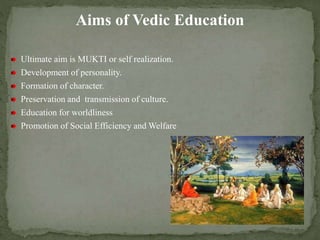
Aims of Vedic Education
Ultimate aim is MUKTI or self realization.
Development of personality.
Formation of character.
Preservation and transmission of culture.
Education for worldliness
Promotion of Social Efficiency and Welfare
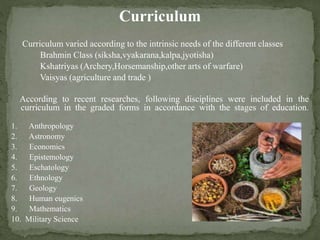
Curriculum
Curriculum varied according to the intrinsic needs of the different classes
Brahmin Class (siksha,vyakarana,kalpa,jyotisha)
Kshatriyas (Archery,Horsemanship,other arts of warfare)
Vaisyas (agriculture and trade )
According to recent researches, following disciplines were included in the
curriculum in the graded forms in accordance with the stages of education.
1. Anthropology
2. Astronomy
3. Economics
4. Epistemology
5. Eschatology
6. Ethnology
7. Geology
8. Human eugenics
9. Mathematics
10. Military Science
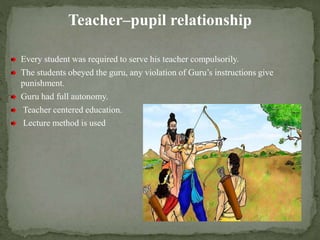
Teacher–pupil relationship
Every student was required to serve his teacher compulsorily.
The students obeyed the guru, any violation of Guru’s instructions give
punishment.
Guru had full autonomy.
Teacher centered education.
Lecture method is used
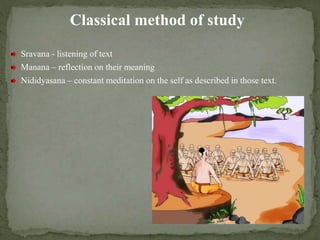
Classical method of study
Sravana - listening of text
Manana – reflection on their meaning
Nididyasana – constant meditation on the self as described in those text.
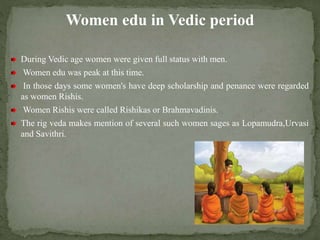
Women edu in Vedic period
During Vedic age women were given full status with men.
Women edu was peak at this time.
In those days some women's have deep scholarship and penance were regarded
as women Rishis.
Women Rishis were called Rishikas or Brahmavadinis.
The rig veda makes mention of several such women sages as Lopamudra,Urvasi
and Savithri.
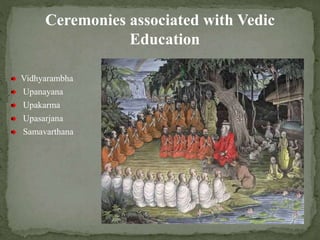
Ceremonies associated with Vedic
Education
Vidhyarambha
Upanayana
Upakarma
Upasarjana
Samavarthana
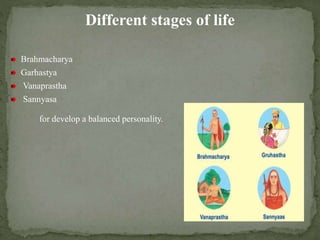
Different stages of life
Brahmacharya
Garhastya
Vanaprastha
Sannyasa
for develop a balanced personality.
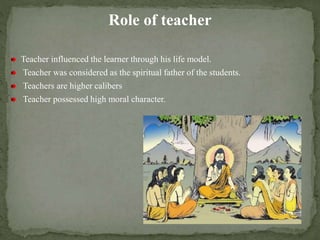
Role of teacher
Teacher influenced the learner through his life model.
Teacher was considered as the spiritual father of the students.
Teachers are higher calibers
Teacher possessed high moral character.
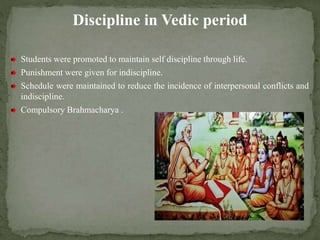
Discipline in Vedic period
Students were promoted to maintain self discipline through life.
Punishment were given for indiscipline.
Schedule were maintained to reduce the incidence of interpersonal conflicts and
indiscipline.
Compulsory Brahmacharya .
Merits
Vedic period paid attention to the formation of character and development of
personality of child.
Social skills evolved through training in the fulfillment of duties.
Efforts were made for preservation of culture.
Education was free.
Its expenses borne by society and the king.
Begging for alms developed humility and tolerance in students.
Treated their students as their own children.
Education on women also received proper attention during Vedic period.
Music and dancing were also taught to girls.
Arts and handicrafts were highly respected.
The teacher enjoyed the highest social status.
Demerits
The Vedic education laid undue stress on spiritual matters.
The secular and material aspects of life were not given adequate importance.
This was because the goal of life was self –realization and education was not
considered as the birth right of a person.
Rigidity in Instruction.
Strict Discipline.
Immense importance Religion.
Lack of freedom of thought.
Neglect of Education of Masses.
Hatred for New Religion.
CONCLUSION
Finally we can say that Vedic era education had the prominent place in society. It
was considered as pious and important for society. The Vedic education was
mostly spiritual, liberal and thoughtful in nature. The Vedic period favored
women education. Education was free of cost and the students led an exemplary
life in Vedic system of education. The teacher-pupil relationship was very
cordial and just like the father-son relationship during Vedic period.
Vedik period education ppt

Vedik period education ppt

  • 1.
    EDUCATION SYSTEM IN THEVEDIC PERIOD Presented by SANDEEP KUMAR SONKAR
  • 2.
    VEDIC EDUCATION Vedic educationis the mirror of all the education. System of cultural of India lies in the Vedic education. Reflection of spiritual knowledge The Vedic literature consists of the following 1. Four Vedas 2. Six Vedangas 3. Four Upvedas 4. Four Brahmanas 5. One hundred and eighty Upanishads 6. Six systems of philosophy 7. Bhagwad Gita 8. Three Smritis
  • 3.
    ORGIN OF VEDAS Theword Veda has been derived from the verb vid , with a prefix dhayan – means spiritual emotion , action(karma) and result. Orgin of Vedas from: • Smrithi • Sruthi
  • 4.
    Features of VedicEducation Education to all Gurukula system Upanayana ceremony Brahmacharya Accepting of Alms Self-control & Self-Discipline Teacher-Students Relationship Curriculum Medium of Instruction Method of Teaching Vocational Education Guru have full autonomy No state control on education
  • 5.
    Wide spread educationof woman Evaluation System 1. Maha Prazanan grade:- Students of very high ability. 2. Madhyama Prazanan grade:- Students of high ability. 3. Alpa Prazanan grade:- Students of low ability. Education provided according to their position in the caste. In the early Vedic schools, only to Brahmans later 500 BC, education of the Ksatriyas and Vaisyas came under Brahman control. In the early Vedic period (1000-2000BC) education was the family responsibility, being given by father to the son. In the later Vedic age (1000-500BC), the age of UPANISHADS education was institutionalized and it look a definite shapes and formal structure.
  • 6.
    Aims of VedicEducation Ultimate aim is MUKTI or self realization. Development of personality. Formation of character. Preservation and transmission of culture. Education for worldliness Promotion of Social Efficiency and Welfare
  • 7.
    Curriculum Curriculum varied accordingto the intrinsic needs of the different classes Brahmin Class (siksha,vyakarana,kalpa,jyotisha) Kshatriyas (Archery,Horsemanship,other arts of warfare) Vaisyas (agriculture and trade ) According to recent researches, following disciplines were included in the curriculum in the graded forms in accordance with the stages of education. 1. Anthropology 2. Astronomy 3. Economics 4. Epistemology 5. Eschatology 6. Ethnology 7. Geology 8. Human eugenics 9. Mathematics 10. Military Science
  • 8.
    Teacher–pupil relationship Every studentwas required to serve his teacher compulsorily. The students obeyed the guru, any violation of Guru’s instructions give punishment. Guru had full autonomy. Teacher centered education. Lecture method is used
  • 9.
    Classical method ofstudy Sravana - listening of text Manana – reflection on their meaning Nididyasana – constant meditation on the self as described in those text.
  • 10.
    Women edu inVedic period During Vedic age women were given full status with men. Women edu was peak at this time. In those days some women's have deep scholarship and penance were regarded as women Rishis. Women Rishis were called Rishikas or Brahmavadinis. The rig veda makes mention of several such women sages as Lopamudra,Urvasi and Savithri.
  • 11.
    Ceremonies associated withVedic Education Vidhyarambha Upanayana Upakarma Upasarjana Samavarthana
  • 12.
    Different stages oflife Brahmacharya Garhastya Vanaprastha Sannyasa for develop a balanced personality.
  • 13.
    Role of teacher Teacherinfluenced the learner through his life model. Teacher was considered as the spiritual father of the students. Teachers are higher calibers Teacher possessed high moral character.
  • 14.
    Discipline in Vedicperiod Students were promoted to maintain self discipline through life. Punishment were given for indiscipline. Schedule were maintained to reduce the incidence of interpersonal conflicts and indiscipline. Compulsory Brahmacharya .
  • 15.
    Merits Vedic period paidattention to the formation of character and development of personality of child. Social skills evolved through training in the fulfillment of duties. Efforts were made for preservation of culture. Education was free. Its expenses borne by society and the king. Begging for alms developed humility and tolerance in students. Treated their students as their own children. Education on women also received proper attention during Vedic period. Music and dancing were also taught to girls. Arts and handicrafts were highly respected. The teacher enjoyed the highest social status.
  • 16.
    Demerits The Vedic educationlaid undue stress on spiritual matters. The secular and material aspects of life were not given adequate importance. This was because the goal of life was self –realization and education was not considered as the birth right of a person. Rigidity in Instruction. Strict Discipline. Immense importance Religion. Lack of freedom of thought. Neglect of Education of Masses. Hatred for New Religion.
  • 17.
    CONCLUSION Finally we cansay that Vedic era education had the prominent place in society. It was considered as pious and important for society. The Vedic education was mostly spiritual, liberal and thoughtful in nature. The Vedic period favored women education. Education was free of cost and the students led an exemplary life in Vedic system of education. The teacher-pupil relationship was very cordial and just like the father-son relationship during Vedic period.