VACUUM ASSISTED CLOSURE
(VAC) THERAPY
UG BATCH- 2017
Date-10/9/21
Dr. Ankita Singh
Assistant Professor
Department of Surgery
Introduction
• Also known as NPWT
– Negative pressure- assisted wound therapy
• Principle:
– Creation of sub-atmospheric / negative pressure
over a wound surface promotes healing
• Pressure: -70 to -200 mmHg (-125)
• Intermittent/ continuous
Mechanisms
• Reduces fluid in the interstitial space
– reduces oedema
• Removal of wound exudate
• Keeps wound moist
• Increases local blood flow
• Increases the cell proliferation
• Increases protein matrix synthesis
Mechanisms..
• Stimulates granulation tissue
• Increases capillary caliber
• Stimulates endothelial proliferation
– Angiogenesis
• Microstrains & macrostrains:
– 3 D stresswithin cells & across whole area of
wound respectively
– Increase cellular proliferation & higher
microvessel density
Mechanisms..
• Alters wound fluid composition
– Removes deleterious proteinases & inflammatory
cytokines
• e.g., MMP-1,2,9, IL-1β & TNF-α
– Up-regulation of
• VEGF, TGF-β1, TIMP-1
– Significantly increases growth factors, decrease
inflammatory cytokines & normalize MMP activity
Advantages
• Significant improvement in wound depth/size
• Accelerated wound healing
• Accelerated wound bed preparation &
granulation tissue formation
• Improved rated of graft take
• Decreased drainage time for acute wounds
• Reduced complications
• Increased patient survival
• Decreased cost (cost effective)
Issues
• Shown to increase bacterial counts, despite
increased wound healing
• Availability
Indications
• Closure of wounds, wherein primary closure is
not possible
• Diabetic wounds, ischemic ulcers, complex
surgical or trauma wounds with/ without
contamination & burns
– Acute, subacute, chronic wounds
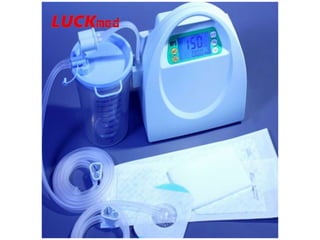
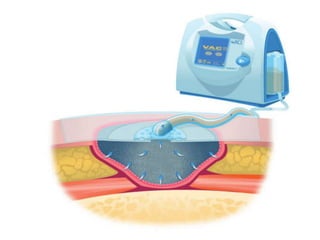
Make & Model- conventional
• Composition
– Sterile filler- foam/ gauze dressing
– Sterile adhesive film
– Drainage tubing- perforated end
– Collecting canister
– Suction system (vacuum pump) with display
– Battery/charging system/ electricity
Modifications
• NPWT/VAC device with instillation
– Irrigation by sterile fluids
– Removal of thick exudate & infectious products
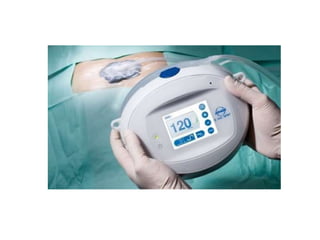
• Portable VAC device
– Suitable for outpatient treatment
How to apply VAC
Thank you

Vacuum assisted closure therapy

  • 1.
    VACUUM ASSISTED CLOSURE (VAC)THERAPY UG BATCH- 2017 Date-10/9/21 Dr. Ankita Singh Assistant Professor Department of Surgery
  • 2.
    Introduction • Also knownas NPWT – Negative pressure- assisted wound therapy • Principle: – Creation of sub-atmospheric / negative pressure over a wound surface promotes healing • Pressure: -70 to -200 mmHg (-125) • Intermittent/ continuous
  • 3.
    Mechanisms • Reduces fluidin the interstitial space – reduces oedema • Removal of wound exudate • Keeps wound moist • Increases local blood flow • Increases the cell proliferation • Increases protein matrix synthesis
  • 4.
    Mechanisms.. • Stimulates granulationtissue • Increases capillary caliber • Stimulates endothelial proliferation – Angiogenesis • Microstrains & macrostrains: – 3 D stresswithin cells & across whole area of wound respectively – Increase cellular proliferation & higher microvessel density
  • 5.
    Mechanisms.. • Alters woundfluid composition – Removes deleterious proteinases & inflammatory cytokines • e.g., MMP-1,2,9, IL-1β & TNF-α – Up-regulation of • VEGF, TGF-β1, TIMP-1 – Significantly increases growth factors, decrease inflammatory cytokines & normalize MMP activity
  • 6.
    Advantages • Significant improvementin wound depth/size • Accelerated wound healing • Accelerated wound bed preparation & granulation tissue formation • Improved rated of graft take • Decreased drainage time for acute wounds • Reduced complications • Increased patient survival • Decreased cost (cost effective)
  • 7.
    Issues • Shown toincrease bacterial counts, despite increased wound healing • Availability
  • 8.
    Indications • Closure ofwounds, wherein primary closure is not possible • Diabetic wounds, ischemic ulcers, complex surgical or trauma wounds with/ without contamination & burns – Acute, subacute, chronic wounds
  • 9.
    Make & Model-conventional • Composition – Sterile filler- foam/ gauze dressing – Sterile adhesive film – Drainage tubing- perforated end – Collecting canister – Suction system (vacuum pump) with display – Battery/charging system/ electricity
  • 14.
    Modifications • NPWT/VAC devicewith instillation – Irrigation by sterile fluids – Removal of thick exudate & infectious products • Portable VAC device – Suitable for outpatient treatment
  • 18.
  • 19.