reduces tissue oedema, diminishes the
circumference of the extremity and
decreases the surface area of the wound
with profuse granulation tissue forming
and rapidly covering bone (DeFranzo et
al, 2001).
VAC therapy uses controlled suction to
provide evacuation of wound fluid,
decrease bacterial colonisation, stimulate
granulation tissue and reduce the need
for dressing changes (Domkowski et al,
2003). VAC therapy is widely accepted
for the treatment of non-infected non-
ischaemic diabetic foot wounds
(Espensen et al, 2002). Basic studies have
shown beneficial effects on wound blood
flow and proliferation of healing
granulation tissue when VAC therapy is
used. However, the concept of VAC
therapy is easily explained.
VAC therapy explained
Vacuum assisted wound closure (VAC) is
a wound management technique that
exposes the wound bed to negative
pressure by way of a closed system.
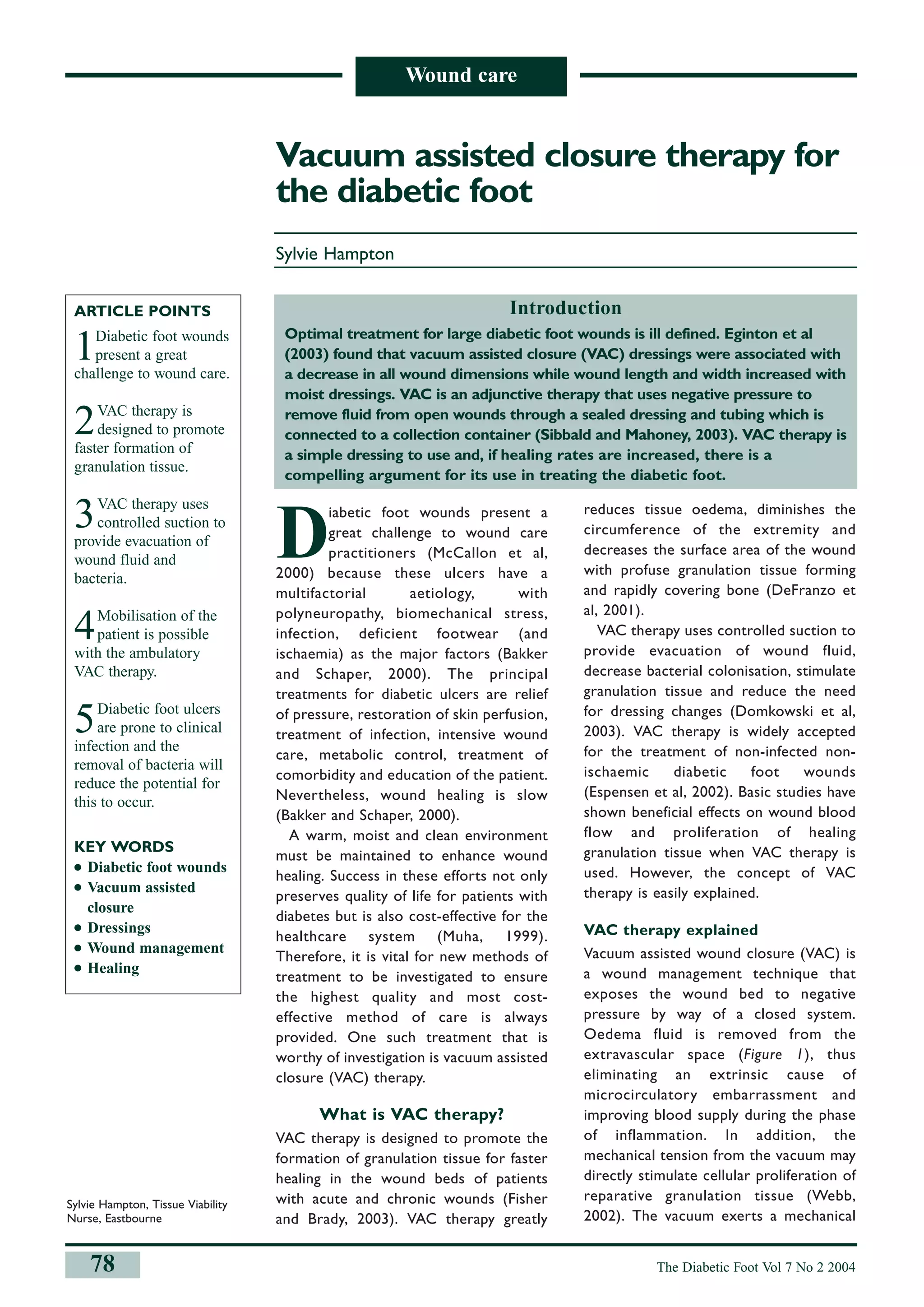
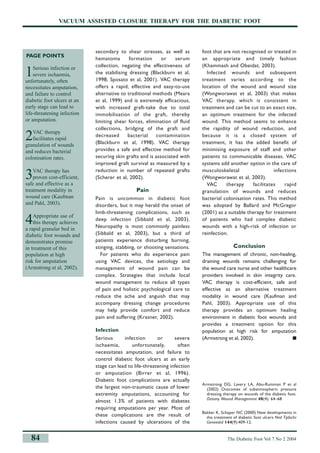
Oedema fluid is removed from the
extravascular space (Figure 1), thus
eliminating an extrinsic cause of
microcirculatory embarrassment and
improving blood supply during the phase
of inflammation. In addition, the
mechanical tension from the vacuum may
directly stimulate cellular proliferation of
reparative granulation tissue (Webb,
2002). The vacuum exerts a mechanical
D
iabetic foot wounds present a
great challenge to wound care
practitioners (McCallon et al,
2000) because these ulcers have a
multifactorial aetiology, with
polyneuropathy, biomechanical stress,
infection, deficient footwear (and
ischaemia) as the major factors (Bakker
and Schaper, 2000). The principal
treatments for diabetic ulcers are relief
of pressure, restoration of skin perfusion,
treatment of infection, intensive wound
care, metabolic control, treatment of
comorbidity and education of the patient.
Nevertheless, wound healing is slow
(Bakker and Schaper, 2000).
A warm, moist and clean environment
must be maintained to enhance wound
healing. Success in these efforts not only
preserves quality of life for patients with
diabetes but is also cost-effective for the
healthcare system (Muha, 1999).
Therefore, it is vital for new methods of
treatment to be investigated to ensure
the highest quality and most cost-
effective method of care is always
provided. One such treatment that is
worthy of investigation is vacuum assisted
closure (VAC) therapy.
What is VAC therapy?
VAC therapy is designed to promote the
formation of granulation tissue for faster
healing in the wound beds of patients
with acute and chronic wounds (Fisher
and Brady, 2003). VAC therapy greatly
Vacuum assisted closure therapy for
the diabetic foot
Sylvie Hampton
Introduction
Optimal treatment for large diabetic foot wounds is ill defined. Eginton et al
(2003) found that vacuum assisted closure (VAC) dressings were associated with
a decrease in all wound dimensions while wound length and width increased with
moist dressings. VAC is an adjunctive therapy that uses negative pressure to
remove fluid from open wounds through a sealed dressing and tubing which is
connected to a collection container (Sibbald and Mahoney, 2003). VAC therapy is
a simple dressing to use and, if healing rates are increased, there is a
compelling argument for its use in treating the diabetic foot.
Sylvie Hampton, Tissue Viability
Nurse, Eastbourne
Wound care
ARTICLE POINTS
1Diabetic foot wounds
present a great
challenge to wound care.
2VAC therapy is
designed to promote
faster formation of
granulation tissue.
3VAC therapy uses
controlled suction to
provide evacuation of
wound fluid and
bacteria.
4Mobilisation of the
patient is possible
with the ambulatory
VAC therapy.
5Diabetic foot ulcers
are prone to clinical
infection and the
removal of bacteria will
reduce the potential for
this to occur.
KEY WORDS
● Diabetic foot wounds
● Vacuum assisted
closure
● Dressings
● Wound management
● Healing
The Diabetic Foot Vol 7 No 2 2004
78
8.p78-85_hampton sbd.aq.MC 17/6/04 3:43 pm Page 1
VACUUM ASSISTED CLOSURE THERAPY FOR THE DIABETIC FOOT
force on the tissues and attracts the
wound edges centripetally (Voinchet and
Magalon, 1996), and is a closed system,
which applies negative pressure to the
wound tissues (Webb and Schmidt,
2001).
Theoretically, VAC therapy acts by
removal of excess tissue fluid from the
extravascular space, which lowers
capillary after-load and thereby promotes
the microcirculation. Additionally, the
mechanical effect of the vacuum on the
tissue at the wound surface appears to
result in an exuberant proliferation of
healing granulation tissue (Webb and
Schmidt, 2001).
The VAC system
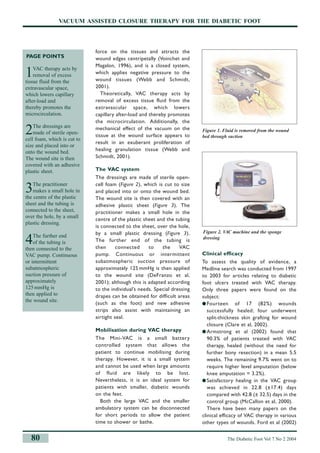
The dressings are made of sterile open-
cell foam (Figure 2), which is cut to size
and placed into or onto the wound bed.
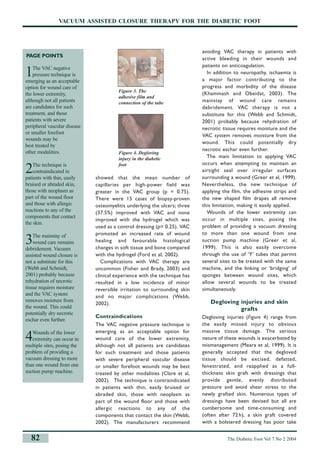
The wound site is then covered with an
adhesive plastic sheet (Figure 3). The
practitioner makes a small hole in the
centre of the plastic sheet and the tubing
is connected to the sheet, over the hole,
by a small plastic dressing (Figure 3).
The further end of the tubing is
then connected to the VAC
pump. Continuous or intermittent
subatmospheric suction pressure of
approximately 125 mmHg is then applied
to the wound site (DeFranzo et al,
2001); although this is adapted according
to the individual’s needs. Special dressing
drapes can be obtained for difficult areas
(such as the foot) and new adhesive
strips also assist with maintaining an
airtight seal.
Mobilisation during VAC therapy
The Mini-VAC is a small battery
controlled system that allows the
patient to continue mobilising during
therapy. However, it is a small system
and cannot be used when large amounts
of fluid are likely to be lost.
Nevertheless, it is an ideal system for
patients with smaller, diabetic wounds
on the feet.
Both the large VAC and the smaller
ambulatory system can be disconnected
for short periods to allow the patient
time to shower or bathe.
Clinical efficacy
To assess the quality of evidence, a
Medline search was conducted from 1997
to 2003 for articles relating to diabetic
foot ulcers treated with VAC therapy.
Only three papers were found on the
subject:
● Fourteen of 17 (82%) wounds
successfully healed; four underwent
split-thickness skin grafting for wound
closure (Clare et al, 2002).
● Armstrong et al (2002) found that
90.3% of patients treated with VAC
therapy, healed (without the need for
further bony resection) in a mean 5.5
weeks. The remaining 9.7% went on to
require higher level amputation (below
knee amputation = 3.2%).
● Satisfactory healing in the VAC group
was achieved in 22.8 (±17.4) days
compared with 42.8 (± 32.5) days in the
control group (McCallon et al, 2000).
There have been many papers on the
clinical efficacy of VAC therapy in various
other types of wounds. Ford et al (2002)
PAGE POINTS
1VAC therapy acts by
removal of excess
tissue fluid from the
extravascular space,
which lowers capillary
after-load and
thereby promotes the
microcirculation.
2The dressings are
made of sterile open-
cell foam, which is cut to
size and placed into or
onto the wound bed.
The wound site is then
covered with an adhesive
plastic sheet.
3The practitioner
makes a small hole in
the centre of the plastic
sheet and the tubing is
connected to the sheet,
over the hole, by a small
plastic dressing.
4The further end
of the tubing is
then connected to the
VAC pump. Continuous
or intermittent
subatmospheric
suction pressure of
approximately
125mmHg is
then applied to
the wound site.
The Diabetic Foot Vol 7 No 2 2004
80
Figure 1. Fluid is removed from the wound
bed through suction
Figure 2. VAC machine and the sponge
dressing
8.p78-85_hampton sbd.aq.MC 17/6/04 3:44 pm Page 2
VACUUM ASSISTED CLOSURE THERAPY FOR THE DIABETIC FOOT
avoiding VAC therapy in patients with
active bleeding in their wounds and
patients on anticoagulation.
In addition to neuropathy, ischaemia is
a major factor contributing to the
progress and morbidity of the disease
(Khammash and Obeidat, 2003). The
mainstay of wound care remains
debridement. VAC therapy is not a
substitute for this (Webb and Schmidt,
2001) probably because rehydration of
necrotic tissue requires moisture and the
VAC system removes moisture from the
wound. This could potentially dry
necrotic eschar even further.
The main limitation to applying VAC
occurs when attempting to maintain an
airtight seal over irregular surfaces
surrounding a wound (Greer et al, 1999).
Nevertheless, the new technique of
applying the film, the adhesive strips and
the new shaped film drapes all remove
this limitation, making it easily applied.
Wounds of the lower extremity can
occur in multiple sites, posing the
problem of providing a vacuum dressing
to more than one wound from one
suction pump machine (Greer et al,
1999). This is also easily overcome
through the use of ‘Y’ tubes that permit
several sites to be treated with the same
machine, and the linking or ‘bridging’ of
sponges between wound sites, which
allow several wounds to be treated
simultaneously.
Degloving injuries and skin
grafts
Degloving injuries (Figure 4) range from
the easily missed injury to obvious
massive tissue damage. The serious
nature of these wounds is exacerbated by
mismanagement (Meara et al, 1999). It is
generally accepted that the degloved
tissue should be excised, defatted,
fenestrated, and reapplied as a full-
thickness skin graft with dressings that
provide gentle, evenly distributed
pressure and avoid shear stress to the
newly grafted skin. Numerous types of
dressings have been devised but all are
cumbersome and time-consuming and
(often after 72 h), a skin graft covered
with a bolstered dressing has poor take
showed that the mean number of
capillaries per high-power field was
greater in the VAC group (p = 0.75).
There were 15 cases of biopsy-proven
osteomyelitis underlying the ulcers; three
(37.5%) improved with VAC and none
improved with the hydrogel which was
used as a control dressing (p= 0.25). VAC
promoted an increased rate of wound
healing and favourable histological
changes in soft tissue and bone compared
with the hydrogel (Ford et al, 2002).
Complications with VAC therapy are
uncommon (Fisher and Brady, 2003) and
clinical experience with the technique has
resulted in a low incidence of minor
reversible irritation to surrounding skin
and no major complications (Webb,
2002).
Contraindications
The VAC negative pressure technique is
emerging as an acceptable option for
wound care of the lower extremity,
although not all patients are candidates
for such treatment and those patients
with severe peripheral vascular disease
or smaller forefoot wounds may be best
treated by other modalities (Clare et al,
2002). The technique is contraindicated
in patients with thin, easily bruised or
abraded skin, those with neoplasm as
part of the wound floor and those with
allergic reactions to any of the
components that contact the skin (Webb,
2002). The manufacturers recommend
PAGE POINTS
1The VAC negative
pressure technique is
emerging as an acceptable
option for wound care of
the lower extremity,
although not all patients
are candidates for such
treatment, and those
patients with severe
peripheral vascular disease
or smaller forefoot
wounds may be
best treated by
other modalities.
2The technique is
contraindicated in
patients with thin, easily
bruised or abraded skin,
those with neoplasm as
part of the wound floor
and those with allergic
reactions to any of the
components that contact
the skin.
3The mainstay of
wound care remains
debridement. Vacuum
assisted wound closure is
not a substitute for this
(Webb and Schmidt,
2001) probably because
rehydration of necrotic
tissue requires moisture
and the VAC system
removes moisture from
the wound. This could
potentially dry necrotic
eschar even further.
4Wounds of the lower
extremity can occur in
multiple sites, posing the
problem of providing a
vacuum dressing to more
than one wound from one
suction pump machine.
The Diabetic Foot Vol 7 No 2 2004
82
Figure 3. The
adhesive film and
connection of the tube
Figure 4. Degloving
injury in the diabetic
foot
8.p78-85_hampton sbd.aq.MC 17/6/04 3:44 pm Page 3
VACUUM ASSISTED CLOSURE THERAPY FOR THE DIABETIC FOOT
secondary to shear stresses, as well as
hematoma formation or serum
collection, negating the effectiveness of
the stabilising dressing (Blackburn et al,
1998; Sposato et al, 2001). VAC therapy
offers a rapid, effective and easy-to-use
alternative to traditional methods (Meara
et al, 1999) and is extremely efficacious,
with increased graft-take due to total
immobilisation of the graft, thereby
limiting shear forces, elimination of fluid
collections, bridging of the graft and
decreased bacterial contamination
(Blackburn et al, 1998). VAC therapy
provides a safe and effective method for
securing skin grafts and is associated with
improved graft survival as measured by a
reduction in number of repeated grafts
(Scherer et al, 2002).
Pain
Pain is uncommon in diabetic foot
disorders, but it may herald the onset of
limb-threatening complications, such as
deep infection (Sibbald et al, 2003).
Neuropathy is most commonly painless
(Sibbald et al, 2003), but a third of
patients experience disturbing burning,
stinging, stabbing, or shooting sensations.
For patients who do experience pain
using VAC devices, the aetiology and
management of wound pain can be
complex. Strategies that include local
wound management to reduce all types
of pain and holistic psychological care to
reduce the ache and anguish that may
accompany dressing change procedures
may help provide comfort and reduce
pain and suffering (Krasner, 2002).
Infection
Serious infection or severe
ischaemia, unfortunately, often
necessitates amputation, and failure to
control diabetic foot ulcers at an early
stage can lead to life-threatening infection
or amputation (Birrer et al, 1996).
Diabetic foot complications are actually
the largest non-traumatic cause of lower
extremity amputations, accounting for
almost 1.3% of patients with diabetes
requiring amputations per year. Most of
these complications are the result of
infections caused by ulcerations of the
foot that are not recognised or treated in
an appropriate and timely fashion
(Khammash and Obeidat, 2003).
Infected wounds and subsequent
treatment varies according to the
location of the wound and wound size
(Wongworawat et al, 2003) that makes
VAC therapy, which is consistent in
treatment and can be cut to an exact size,
an optimum treatment for the infected
wound. This method seems to enhance
the rapidity of wound reduction, and
because it is a closed system of
treatment, it has the added benefit of
minimising exposure of staff and other
patients to communicable diseases. VAC
systems add another option in the care of
musculoskeletal infections
(Wongworawat et al, 2003).
VAC therapy facilitates rapid
granulation of wounds and reduces
bacterial colonisation rates. This method
was adopted by Ballard and McGregor
(2001) as a suitable therapy for treatment
of patients who had complex diabetic
wounds with a high-risk of infection or
reinfection.
Conclusion
The management of chronic, non-healing,
draining wounds remains challenging for
the wound care nurse and other healthcare
providers involved in skin integrity care.
VAC therapy is cost-efficient, safe and
effective as an alternative treatment
modality in wound care (Kaufman and
Pahl, 2003). Appropriate use of this
therapy provides an optimum healing
environment in diabetic foot wounds and
provides a treatment option for this
population at high risk for amputation
(Armstrong et al, 2002). ■
Armstrong DG, Lavery LA, Abu-Rumman P et al
(2002) Outcomes of subatmospheric pressure
dressing therapy on wounds of the diabetic foot.
Ostomy Wound Management 48(4): 64–68
Bakker K, Schaper NC (2000) New developments in
the treatment of diabetic foot ulcers Ned Tijdschr
Geneeskd 144(9):409-12.
PAGE POINTS
1Serious infection or
severe ischaemia,
unfortunately, often
necessitates amputation,
and failure to control
diabetic foot ulcers at an
early stage can lead to
life-threatening infection
or amputation.
2VAC therapy
facilitates rapid
granulation of wounds
and reduces bacterial
colonisation rates.
3VAC therapy has
proven cost-efficient,
safe and effective as a
treatment modality in
wound care (Kaufman
and Pahl, 2003).
4Appropriate use of
this therapy achieves
a rapid granular bed in
diabetic foot wounds and
demonstrates promise
in treatment of this
population at high
risk for amputation
(Armstrong et al, 2002).
The Diabetic Foot Vol 7 No 2 2004
84
8.p78-85_hampton sbd.aq.MC 17/6/04 3:44 pm Page 4
The Diabetic Foot Vol 7 No 2 2004 85
VACUUM ASSISTED CLOSURE THERAPY FOR THE DIABETIC FOOT
Ballard K, McGregor F (2001) Use of vacuum-
assisted closure therapy following foot
amputation. British Journal of Nursing 10(15
Suppl): S6–12
Birrer RB, Dellacorte MP, Grisafi PJ (1996)
Prevention and care of diabetic foot ulcers.
American Family Physician 53(2): 601–16
Blackburn JH 2nd, Boemi L, Hall WW et al (1998)
Negative-pressure dressings as a bolster for skin
grafts. Annals of Plastic Surgergy 40(5): 453–57
Candel Gonzalez FJ, Alramadan M, Matesanz M et al
(2003) Infections in diabetic foot ulcers. European
Journal Intern Medicine 14(5): 341–43
Clare MP, Fitzgibbons TC, McMullen ST, Stice RC,
Hayes DF, Henkel L (2002) Experience with the
vacuum assisted closure negative pressure
technique in the treatment of non-healing
diabetic and dysvascular wounds. Foot Ankle
International 23(10): 896–901
DeFranzo AJ, Argenta LC, Marks MW et al (2001)
The use of vacuum-assisted closure therapy for
the treatment of lower-extremity wounds with
exposed bone. Plastic Reconstructive Surgery
108(5): 1184–91
Domkowski PW, Smith ML, Gonyon DL Jr et al
(2003) Evaluation of vacuum-assisted closure in
the treatment of poststernotomy mediastinitis.
Journal of Thoracic Cardiovascular Surgery 126(2):
386–90
Eginton MT, Brown KR, Seabrook GR, Towne JB,
Cambria RA (2003) A prospective randomized
evaluation of negative-pressure wound dressings
for diabetic foot wounds. Annals of Vascular
Surgery 17(6):645-49
Espensen EH, Nixon BP, Lavery LA, Armstrong DG
(2002) Use of subatmospheric (VAC) therapy to
improve bioengineered tissue grafting in diabetic
foot wounds. Journal America Podiatry Medical
Assocation 92(7): 395–97
Fisher A, Brady B (2003) Vacuum assisted wound
closure therapy. Issues Emergency Health
Technology. 44: 1–6
Ford CN, Reinhard ER, Yeh D et al (2002) Interim
analysis of a prospective, randomized trial of
vacuum-assisted closure versus the healthpoint
system in the management of pressure ulcers.
Annals Plastic Surgery 49(1): 55–61
Greer SE, Duthie E, Cartolano B, Koehler KM,
Maydick-Youngberg D, Longaker MT (1999)
Techniques for applying subatmospheric pressure
dressing to wounds in difficult regions of
anatomy. Journal of Wound Ostomy Continence
Nursing 26(5): 250–53
Joseph WS, Tan JS (2003) Infections in diabetic foot
ulcerations. Current Infectious Disease Reports
5(5): 391–97
Kaufman MW, Pahl DW (2003) Vacuum-assisted
closure therapy: wound care and nursing
implications. Dermatology Nursing 15(4): 317–20
Khammash MR, Obeidat KA (2003) Prevalence of
ischemia in diabetic foot infection. World Journal
of Surgery 27(7): 797–99
Krasner DL (2002) Managing wound pain in patients
with vacuum-assisted closure devices. Ostomy
Wound Management 48(5): 38–43
McCallon SK, Knight CA, Valiulus JP, Cunningham
MW, McCulloch JM, Farinas LP (2000) Vacuum-
assisted closure versus saline-moistened gauze in
the healing of postoperative diabetic foot
wounds. Ostomy Wound Management 46(8): 28–34
Meara JG, Guo L, Smith JD, Pribaz JJ, Breuing KH,
Orgill DP (1999) Vacuum-assisted closure in the
treatment of degloving injuries. Annals Plastic
Surgery 42(6): 589–94
Muha J (1999) Local wound care in diabetic foot
complications. Aggressive risk management and
ulcer treatment to avoid amputation. Postgraduate
Medicine 106(1): 97–102
Scherer LA, Shiver S, Chang M, Meredith JW,
Owings JT (2002) The vacuum assisted closure
device: a method of securing skin grafts and
improving graft survival. Archives Surgery 137(8):
930–33
Sibbald RG, Armstrong DG, Orsted HL (2003) Pain
in diabetic foot ulcers. Ostomy Wound
Management 49(4 Suppl): 24–29
Sibbald RG, Mahoney J (2003) VAC Therapy
Canadian Consensus Group. A consensus report
on the use of vacuum-assisted closure in chronic,
difficult-to-heal wounds. Ostomy Wound
Management. 49(11): 52–66
Sposato G, Molea G, Di Caprio G, Scioli M, La
Rusca I, Ziccardi P (2001) Ambulant vacuum-
assisted closure of skin-graft dressing in the
lower limbs using a portable mini-VAC device.
British Journal of Plastic Surgery 54(3): 235–37
Voinchet V, Magalon G (1996) Vacuum assisted
closure. Wound healing by negative pressure.
Annals Chir Plastic Esthet 41(5): 583–89
Webb LX, Schmidt U (2001) Wound management
with vacuum therapy Unfallchirurg 104(10): 918-
26
Webb LX. (2002) New techniques in wound
management: vacuum-assisted wound closure.
Journal of American Acadamy Orthopaedic Surgery
10(5): 303–11
Wongworawat MD, Schnall SB, Holtom PD, Moon
C, Schiller F (2003) Negative pressure dressings
as an alternative technique for the treatment of
infected wounds. Clinical Orthopaedics 414: 45–48
‘The management of
chronic, non-healing,
draining wounds
remains challenging
for the wound care
nurse and other
healthcare providers
involved in skin
integrity care.
VAC therapy is cost-
efficient, safe and
effective as an
alternative treatment
modality in
wound care.
’
8.p78-85_hampton sbd.aq.MC 17/6/04 3:44 pm Page 5

VAC therapy.pdf

  • 1.
    reduces tissue oedema,diminishes the circumference of the extremity and decreases the surface area of the wound with profuse granulation tissue forming and rapidly covering bone (DeFranzo et al, 2001). VAC therapy uses controlled suction to provide evacuation of wound fluid, decrease bacterial colonisation, stimulate granulation tissue and reduce the need for dressing changes (Domkowski et al, 2003). VAC therapy is widely accepted for the treatment of non-infected non- ischaemic diabetic foot wounds (Espensen et al, 2002). Basic studies have shown beneficial effects on wound blood flow and proliferation of healing granulation tissue when VAC therapy is used. However, the concept of VAC therapy is easily explained. VAC therapy explained Vacuum assisted wound closure (VAC) is a wound management technique that exposes the wound bed to negative pressure by way of a closed system. Oedema fluid is removed from the extravascular space (Figure 1), thus eliminating an extrinsic cause of microcirculatory embarrassment and improving blood supply during the phase of inflammation. In addition, the mechanical tension from the vacuum may directly stimulate cellular proliferation of reparative granulation tissue (Webb, 2002). The vacuum exerts a mechanical D iabetic foot wounds present a great challenge to wound care practitioners (McCallon et al, 2000) because these ulcers have a multifactorial aetiology, with polyneuropathy, biomechanical stress, infection, deficient footwear (and ischaemia) as the major factors (Bakker and Schaper, 2000). The principal treatments for diabetic ulcers are relief of pressure, restoration of skin perfusion, treatment of infection, intensive wound care, metabolic control, treatment of comorbidity and education of the patient. Nevertheless, wound healing is slow (Bakker and Schaper, 2000). A warm, moist and clean environment must be maintained to enhance wound healing. Success in these efforts not only preserves quality of life for patients with diabetes but is also cost-effective for the healthcare system (Muha, 1999). Therefore, it is vital for new methods of treatment to be investigated to ensure the highest quality and most cost- effective method of care is always provided. One such treatment that is worthy of investigation is vacuum assisted closure (VAC) therapy. What is VAC therapy? VAC therapy is designed to promote the formation of granulation tissue for faster healing in the wound beds of patients with acute and chronic wounds (Fisher and Brady, 2003). VAC therapy greatly Vacuum assisted closure therapy for the diabetic foot Sylvie Hampton Introduction Optimal treatment for large diabetic foot wounds is ill defined. Eginton et al (2003) found that vacuum assisted closure (VAC) dressings were associated with a decrease in all wound dimensions while wound length and width increased with moist dressings. VAC is an adjunctive therapy that uses negative pressure to remove fluid from open wounds through a sealed dressing and tubing which is connected to a collection container (Sibbald and Mahoney, 2003). VAC therapy is a simple dressing to use and, if healing rates are increased, there is a compelling argument for its use in treating the diabetic foot. Sylvie Hampton, Tissue Viability Nurse, Eastbourne Wound care ARTICLE POINTS 1Diabetic foot wounds present a great challenge to wound care. 2VAC therapy is designed to promote faster formation of granulation tissue. 3VAC therapy uses controlled suction to provide evacuation of wound fluid and bacteria. 4Mobilisation of the patient is possible with the ambulatory VAC therapy. 5Diabetic foot ulcers are prone to clinical infection and the removal of bacteria will reduce the potential for this to occur. KEY WORDS ● Diabetic foot wounds ● Vacuum assisted closure ● Dressings ● Wound management ● Healing The Diabetic Foot Vol 7 No 2 2004 78 8.p78-85_hampton sbd.aq.MC 17/6/04 3:43 pm Page 1
  • 2.
    VACUUM ASSISTED CLOSURETHERAPY FOR THE DIABETIC FOOT force on the tissues and attracts the wound edges centripetally (Voinchet and Magalon, 1996), and is a closed system, which applies negative pressure to the wound tissues (Webb and Schmidt, 2001). Theoretically, VAC therapy acts by removal of excess tissue fluid from the extravascular space, which lowers capillary after-load and thereby promotes the microcirculation. Additionally, the mechanical effect of the vacuum on the tissue at the wound surface appears to result in an exuberant proliferation of healing granulation tissue (Webb and Schmidt, 2001). The VAC system The dressings are made of sterile open- cell foam (Figure 2), which is cut to size and placed into or onto the wound bed. The wound site is then covered with an adhesive plastic sheet (Figure 3). The practitioner makes a small hole in the centre of the plastic sheet and the tubing is connected to the sheet, over the hole, by a small plastic dressing (Figure 3). The further end of the tubing is then connected to the VAC pump. Continuous or intermittent subatmospheric suction pressure of approximately 125 mmHg is then applied to the wound site (DeFranzo et al, 2001); although this is adapted according to the individual’s needs. Special dressing drapes can be obtained for difficult areas (such as the foot) and new adhesive strips also assist with maintaining an airtight seal. Mobilisation during VAC therapy The Mini-VAC is a small battery controlled system that allows the patient to continue mobilising during therapy. However, it is a small system and cannot be used when large amounts of fluid are likely to be lost. Nevertheless, it is an ideal system for patients with smaller, diabetic wounds on the feet. Both the large VAC and the smaller ambulatory system can be disconnected for short periods to allow the patient time to shower or bathe. Clinical efficacy To assess the quality of evidence, a Medline search was conducted from 1997 to 2003 for articles relating to diabetic foot ulcers treated with VAC therapy. Only three papers were found on the subject: ● Fourteen of 17 (82%) wounds successfully healed; four underwent split-thickness skin grafting for wound closure (Clare et al, 2002). ● Armstrong et al (2002) found that 90.3% of patients treated with VAC therapy, healed (without the need for further bony resection) in a mean 5.5 weeks. The remaining 9.7% went on to require higher level amputation (below knee amputation = 3.2%). ● Satisfactory healing in the VAC group was achieved in 22.8 (±17.4) days compared with 42.8 (± 32.5) days in the control group (McCallon et al, 2000). There have been many papers on the clinical efficacy of VAC therapy in various other types of wounds. Ford et al (2002) PAGE POINTS 1VAC therapy acts by removal of excess tissue fluid from the extravascular space, which lowers capillary after-load and thereby promotes the microcirculation. 2The dressings are made of sterile open- cell foam, which is cut to size and placed into or onto the wound bed. The wound site is then covered with an adhesive plastic sheet. 3The practitioner makes a small hole in the centre of the plastic sheet and the tubing is connected to the sheet, over the hole, by a small plastic dressing. 4The further end of the tubing is then connected to the VAC pump. Continuous or intermittent subatmospheric suction pressure of approximately 125mmHg is then applied to the wound site. The Diabetic Foot Vol 7 No 2 2004 80 Figure 1. Fluid is removed from the wound bed through suction Figure 2. VAC machine and the sponge dressing 8.p78-85_hampton sbd.aq.MC 17/6/04 3:44 pm Page 2
  • 3.
    VACUUM ASSISTED CLOSURETHERAPY FOR THE DIABETIC FOOT avoiding VAC therapy in patients with active bleeding in their wounds and patients on anticoagulation. In addition to neuropathy, ischaemia is a major factor contributing to the progress and morbidity of the disease (Khammash and Obeidat, 2003). The mainstay of wound care remains debridement. VAC therapy is not a substitute for this (Webb and Schmidt, 2001) probably because rehydration of necrotic tissue requires moisture and the VAC system removes moisture from the wound. This could potentially dry necrotic eschar even further. The main limitation to applying VAC occurs when attempting to maintain an airtight seal over irregular surfaces surrounding a wound (Greer et al, 1999). Nevertheless, the new technique of applying the film, the adhesive strips and the new shaped film drapes all remove this limitation, making it easily applied. Wounds of the lower extremity can occur in multiple sites, posing the problem of providing a vacuum dressing to more than one wound from one suction pump machine (Greer et al, 1999). This is also easily overcome through the use of ‘Y’ tubes that permit several sites to be treated with the same machine, and the linking or ‘bridging’ of sponges between wound sites, which allow several wounds to be treated simultaneously. Degloving injuries and skin grafts Degloving injuries (Figure 4) range from the easily missed injury to obvious massive tissue damage. The serious nature of these wounds is exacerbated by mismanagement (Meara et al, 1999). It is generally accepted that the degloved tissue should be excised, defatted, fenestrated, and reapplied as a full- thickness skin graft with dressings that provide gentle, evenly distributed pressure and avoid shear stress to the newly grafted skin. Numerous types of dressings have been devised but all are cumbersome and time-consuming and (often after 72 h), a skin graft covered with a bolstered dressing has poor take showed that the mean number of capillaries per high-power field was greater in the VAC group (p = 0.75). There were 15 cases of biopsy-proven osteomyelitis underlying the ulcers; three (37.5%) improved with VAC and none improved with the hydrogel which was used as a control dressing (p= 0.25). VAC promoted an increased rate of wound healing and favourable histological changes in soft tissue and bone compared with the hydrogel (Ford et al, 2002). Complications with VAC therapy are uncommon (Fisher and Brady, 2003) and clinical experience with the technique has resulted in a low incidence of minor reversible irritation to surrounding skin and no major complications (Webb, 2002). Contraindications The VAC negative pressure technique is emerging as an acceptable option for wound care of the lower extremity, although not all patients are candidates for such treatment and those patients with severe peripheral vascular disease or smaller forefoot wounds may be best treated by other modalities (Clare et al, 2002). The technique is contraindicated in patients with thin, easily bruised or abraded skin, those with neoplasm as part of the wound floor and those with allergic reactions to any of the components that contact the skin (Webb, 2002). The manufacturers recommend PAGE POINTS 1The VAC negative pressure technique is emerging as an acceptable option for wound care of the lower extremity, although not all patients are candidates for such treatment, and those patients with severe peripheral vascular disease or smaller forefoot wounds may be best treated by other modalities. 2The technique is contraindicated in patients with thin, easily bruised or abraded skin, those with neoplasm as part of the wound floor and those with allergic reactions to any of the components that contact the skin. 3The mainstay of wound care remains debridement. Vacuum assisted wound closure is not a substitute for this (Webb and Schmidt, 2001) probably because rehydration of necrotic tissue requires moisture and the VAC system removes moisture from the wound. This could potentially dry necrotic eschar even further. 4Wounds of the lower extremity can occur in multiple sites, posing the problem of providing a vacuum dressing to more than one wound from one suction pump machine. The Diabetic Foot Vol 7 No 2 2004 82 Figure 3. The adhesive film and connection of the tube Figure 4. Degloving injury in the diabetic foot 8.p78-85_hampton sbd.aq.MC 17/6/04 3:44 pm Page 3
  • 4.
    VACUUM ASSISTED CLOSURETHERAPY FOR THE DIABETIC FOOT secondary to shear stresses, as well as hematoma formation or serum collection, negating the effectiveness of the stabilising dressing (Blackburn et al, 1998; Sposato et al, 2001). VAC therapy offers a rapid, effective and easy-to-use alternative to traditional methods (Meara et al, 1999) and is extremely efficacious, with increased graft-take due to total immobilisation of the graft, thereby limiting shear forces, elimination of fluid collections, bridging of the graft and decreased bacterial contamination (Blackburn et al, 1998). VAC therapy provides a safe and effective method for securing skin grafts and is associated with improved graft survival as measured by a reduction in number of repeated grafts (Scherer et al, 2002). Pain Pain is uncommon in diabetic foot disorders, but it may herald the onset of limb-threatening complications, such as deep infection (Sibbald et al, 2003). Neuropathy is most commonly painless (Sibbald et al, 2003), but a third of patients experience disturbing burning, stinging, stabbing, or shooting sensations. For patients who do experience pain using VAC devices, the aetiology and management of wound pain can be complex. Strategies that include local wound management to reduce all types of pain and holistic psychological care to reduce the ache and anguish that may accompany dressing change procedures may help provide comfort and reduce pain and suffering (Krasner, 2002). Infection Serious infection or severe ischaemia, unfortunately, often necessitates amputation, and failure to control diabetic foot ulcers at an early stage can lead to life-threatening infection or amputation (Birrer et al, 1996). Diabetic foot complications are actually the largest non-traumatic cause of lower extremity amputations, accounting for almost 1.3% of patients with diabetes requiring amputations per year. Most of these complications are the result of infections caused by ulcerations of the foot that are not recognised or treated in an appropriate and timely fashion (Khammash and Obeidat, 2003). Infected wounds and subsequent treatment varies according to the location of the wound and wound size (Wongworawat et al, 2003) that makes VAC therapy, which is consistent in treatment and can be cut to an exact size, an optimum treatment for the infected wound. This method seems to enhance the rapidity of wound reduction, and because it is a closed system of treatment, it has the added benefit of minimising exposure of staff and other patients to communicable diseases. VAC systems add another option in the care of musculoskeletal infections (Wongworawat et al, 2003). VAC therapy facilitates rapid granulation of wounds and reduces bacterial colonisation rates. This method was adopted by Ballard and McGregor (2001) as a suitable therapy for treatment of patients who had complex diabetic wounds with a high-risk of infection or reinfection. Conclusion The management of chronic, non-healing, draining wounds remains challenging for the wound care nurse and other healthcare providers involved in skin integrity care. VAC therapy is cost-efficient, safe and effective as an alternative treatment modality in wound care (Kaufman and Pahl, 2003). Appropriate use of this therapy provides an optimum healing environment in diabetic foot wounds and provides a treatment option for this population at high risk for amputation (Armstrong et al, 2002). ■ Armstrong DG, Lavery LA, Abu-Rumman P et al (2002) Outcomes of subatmospheric pressure dressing therapy on wounds of the diabetic foot. Ostomy Wound Management 48(4): 64–68 Bakker K, Schaper NC (2000) New developments in the treatment of diabetic foot ulcers Ned Tijdschr Geneeskd 144(9):409-12. PAGE POINTS 1Serious infection or severe ischaemia, unfortunately, often necessitates amputation, and failure to control diabetic foot ulcers at an early stage can lead to life-threatening infection or amputation. 2VAC therapy facilitates rapid granulation of wounds and reduces bacterial colonisation rates. 3VAC therapy has proven cost-efficient, safe and effective as a treatment modality in wound care (Kaufman and Pahl, 2003). 4Appropriate use of this therapy achieves a rapid granular bed in diabetic foot wounds and demonstrates promise in treatment of this population at high risk for amputation (Armstrong et al, 2002). The Diabetic Foot Vol 7 No 2 2004 84 8.p78-85_hampton sbd.aq.MC 17/6/04 3:44 pm Page 4
  • 5.
    The Diabetic FootVol 7 No 2 2004 85 VACUUM ASSISTED CLOSURE THERAPY FOR THE DIABETIC FOOT Ballard K, McGregor F (2001) Use of vacuum- assisted closure therapy following foot amputation. British Journal of Nursing 10(15 Suppl): S6–12 Birrer RB, Dellacorte MP, Grisafi PJ (1996) Prevention and care of diabetic foot ulcers. American Family Physician 53(2): 601–16 Blackburn JH 2nd, Boemi L, Hall WW et al (1998) Negative-pressure dressings as a bolster for skin grafts. Annals of Plastic Surgergy 40(5): 453–57 Candel Gonzalez FJ, Alramadan M, Matesanz M et al (2003) Infections in diabetic foot ulcers. European Journal Intern Medicine 14(5): 341–43 Clare MP, Fitzgibbons TC, McMullen ST, Stice RC, Hayes DF, Henkel L (2002) Experience with the vacuum assisted closure negative pressure technique in the treatment of non-healing diabetic and dysvascular wounds. Foot Ankle International 23(10): 896–901 DeFranzo AJ, Argenta LC, Marks MW et al (2001) The use of vacuum-assisted closure therapy for the treatment of lower-extremity wounds with exposed bone. Plastic Reconstructive Surgery 108(5): 1184–91 Domkowski PW, Smith ML, Gonyon DL Jr et al (2003) Evaluation of vacuum-assisted closure in the treatment of poststernotomy mediastinitis. Journal of Thoracic Cardiovascular Surgery 126(2): 386–90 Eginton MT, Brown KR, Seabrook GR, Towne JB, Cambria RA (2003) A prospective randomized evaluation of negative-pressure wound dressings for diabetic foot wounds. Annals of Vascular Surgery 17(6):645-49 Espensen EH, Nixon BP, Lavery LA, Armstrong DG (2002) Use of subatmospheric (VAC) therapy to improve bioengineered tissue grafting in diabetic foot wounds. Journal America Podiatry Medical Assocation 92(7): 395–97 Fisher A, Brady B (2003) Vacuum assisted wound closure therapy. Issues Emergency Health Technology. 44: 1–6 Ford CN, Reinhard ER, Yeh D et al (2002) Interim analysis of a prospective, randomized trial of vacuum-assisted closure versus the healthpoint system in the management of pressure ulcers. Annals Plastic Surgery 49(1): 55–61 Greer SE, Duthie E, Cartolano B, Koehler KM, Maydick-Youngberg D, Longaker MT (1999) Techniques for applying subatmospheric pressure dressing to wounds in difficult regions of anatomy. Journal of Wound Ostomy Continence Nursing 26(5): 250–53 Joseph WS, Tan JS (2003) Infections in diabetic foot ulcerations. Current Infectious Disease Reports 5(5): 391–97 Kaufman MW, Pahl DW (2003) Vacuum-assisted closure therapy: wound care and nursing implications. Dermatology Nursing 15(4): 317–20 Khammash MR, Obeidat KA (2003) Prevalence of ischemia in diabetic foot infection. World Journal of Surgery 27(7): 797–99 Krasner DL (2002) Managing wound pain in patients with vacuum-assisted closure devices. Ostomy Wound Management 48(5): 38–43 McCallon SK, Knight CA, Valiulus JP, Cunningham MW, McCulloch JM, Farinas LP (2000) Vacuum- assisted closure versus saline-moistened gauze in the healing of postoperative diabetic foot wounds. Ostomy Wound Management 46(8): 28–34 Meara JG, Guo L, Smith JD, Pribaz JJ, Breuing KH, Orgill DP (1999) Vacuum-assisted closure in the treatment of degloving injuries. Annals Plastic Surgery 42(6): 589–94 Muha J (1999) Local wound care in diabetic foot complications. Aggressive risk management and ulcer treatment to avoid amputation. Postgraduate Medicine 106(1): 97–102 Scherer LA, Shiver S, Chang M, Meredith JW, Owings JT (2002) The vacuum assisted closure device: a method of securing skin grafts and improving graft survival. Archives Surgery 137(8): 930–33 Sibbald RG, Armstrong DG, Orsted HL (2003) Pain in diabetic foot ulcers. Ostomy Wound Management 49(4 Suppl): 24–29 Sibbald RG, Mahoney J (2003) VAC Therapy Canadian Consensus Group. A consensus report on the use of vacuum-assisted closure in chronic, difficult-to-heal wounds. Ostomy Wound Management. 49(11): 52–66 Sposato G, Molea G, Di Caprio G, Scioli M, La Rusca I, Ziccardi P (2001) Ambulant vacuum- assisted closure of skin-graft dressing in the lower limbs using a portable mini-VAC device. British Journal of Plastic Surgery 54(3): 235–37 Voinchet V, Magalon G (1996) Vacuum assisted closure. Wound healing by negative pressure. Annals Chir Plastic Esthet 41(5): 583–89 Webb LX, Schmidt U (2001) Wound management with vacuum therapy Unfallchirurg 104(10): 918- 26 Webb LX. (2002) New techniques in wound management: vacuum-assisted wound closure. Journal of American Acadamy Orthopaedic Surgery 10(5): 303–11 Wongworawat MD, Schnall SB, Holtom PD, Moon C, Schiller F (2003) Negative pressure dressings as an alternative technique for the treatment of infected wounds. Clinical Orthopaedics 414: 45–48 ‘The management of chronic, non-healing, draining wounds remains challenging for the wound care nurse and other healthcare providers involved in skin integrity care. VAC therapy is cost- efficient, safe and effective as an alternative treatment modality in wound care. ’ 8.p78-85_hampton sbd.aq.MC 17/6/04 3:44 pm Page 5