
Users of Accounting
Information
 Accountancy is the process of communicating financial information about a
business entity to users such as shareholders and managers (Elliot, Barry & Elliot,
Jamie: Financial accounting and reporting)
 Accounting has been defined as:-the art of recording, classifying, and
summarizing in a significant manner and in terms of money transactions and
events which are, in part at least, of financial character, and interpreting the
results there of.(AICPA)
 Users of Accounting Information - Internal & External:-Accounting information
helps users to make better financial decisions. Users of financial information may
be both internal and external to the organization
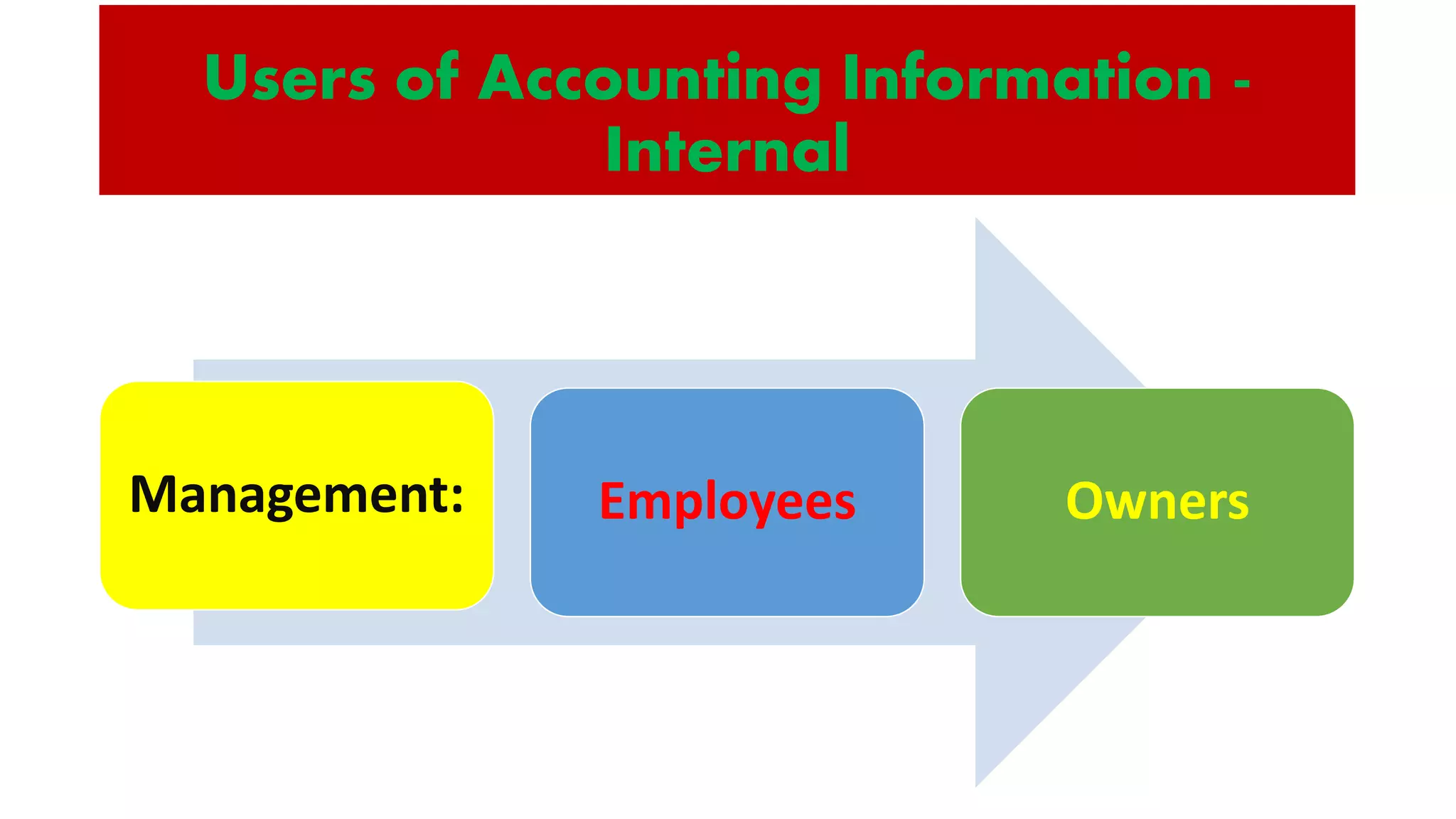
Users of Accounting Information -
Internal
Management: Employees Owners
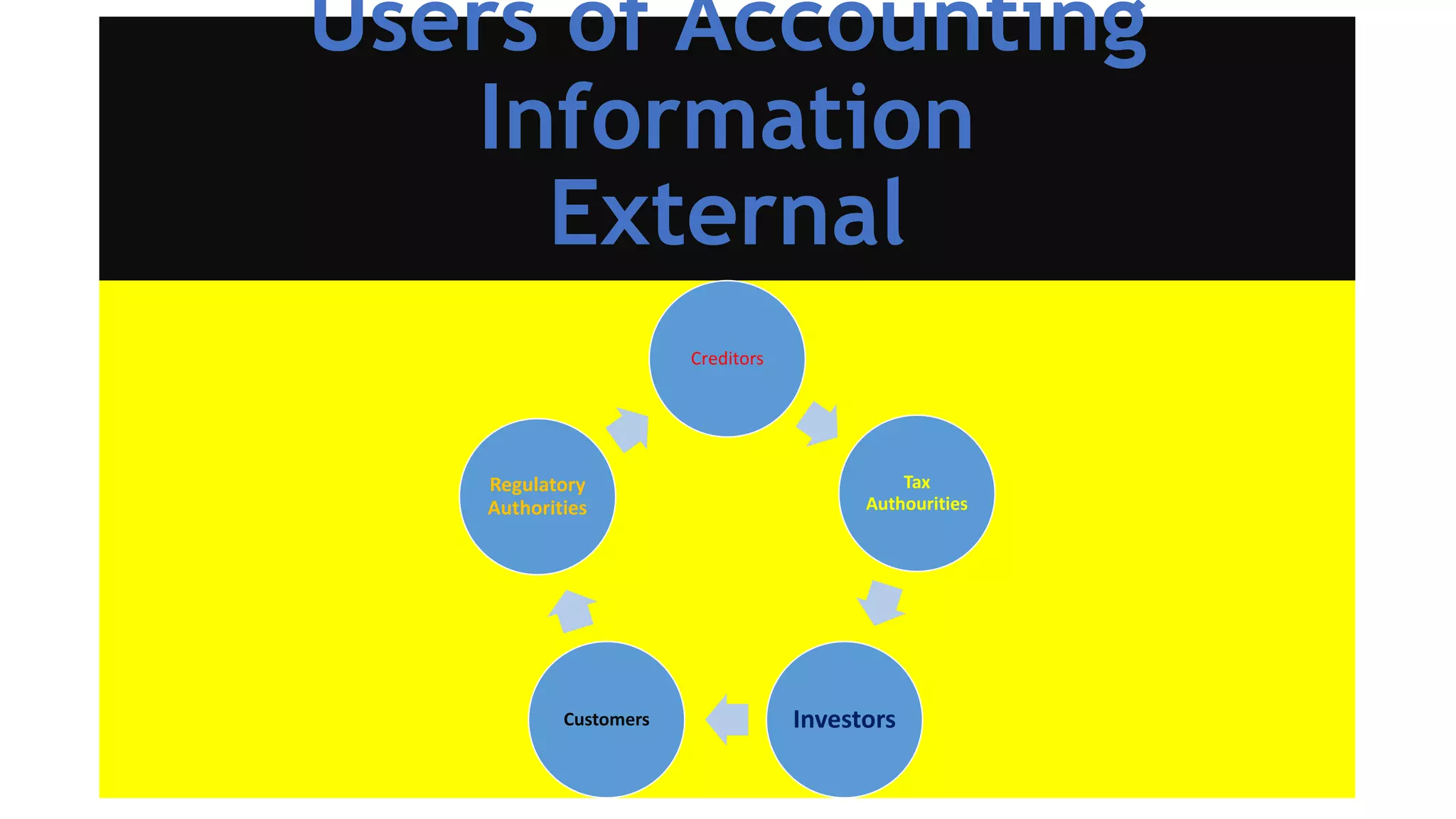
Users of Accounting
Information
External
Creditors
Tax
Authourities
InvestorsCustomers
Regulatory
Authorities
Internal users (Primary Users)
I. Management: for analyzing the organization's
performance and position and taking appropriate
measures to improve the company results. -
II. Employees: for assessing company's profitability and its consequence
on their future remuneration and job security
III. Owners: for analyzing the viability and profitability of
their investment and determining any future course of
action
External users (Secondary
Users)
I. Creditors: for determining the credit worthiness of the organization.
Terms of credit are set by creditors according to the assessment of
their customers' financial health. Creditors include suppliers as well
as lenders of finance such as banks
II. Tax Authourities: for determining the credibility of the tax returns
filed on behalf of the company
III. Investors: for analyzing the feasibility of investing in the company.
Investors want to make sure they can earn a reasonable return on
their investment before they commit any financial resources to the
company
External users (Secondary Users)
I. Customers: for assessing the financial position of its suppliers which is
necessary for them to maintain a stable source of supply in the long term.
II. Regulatory Authorities: for ensuring that the company's disclosure of
accounting information is in accordance with the rules and regulations set in
order to protect the interests of the stakeholders who rely on such information
in forming their decision
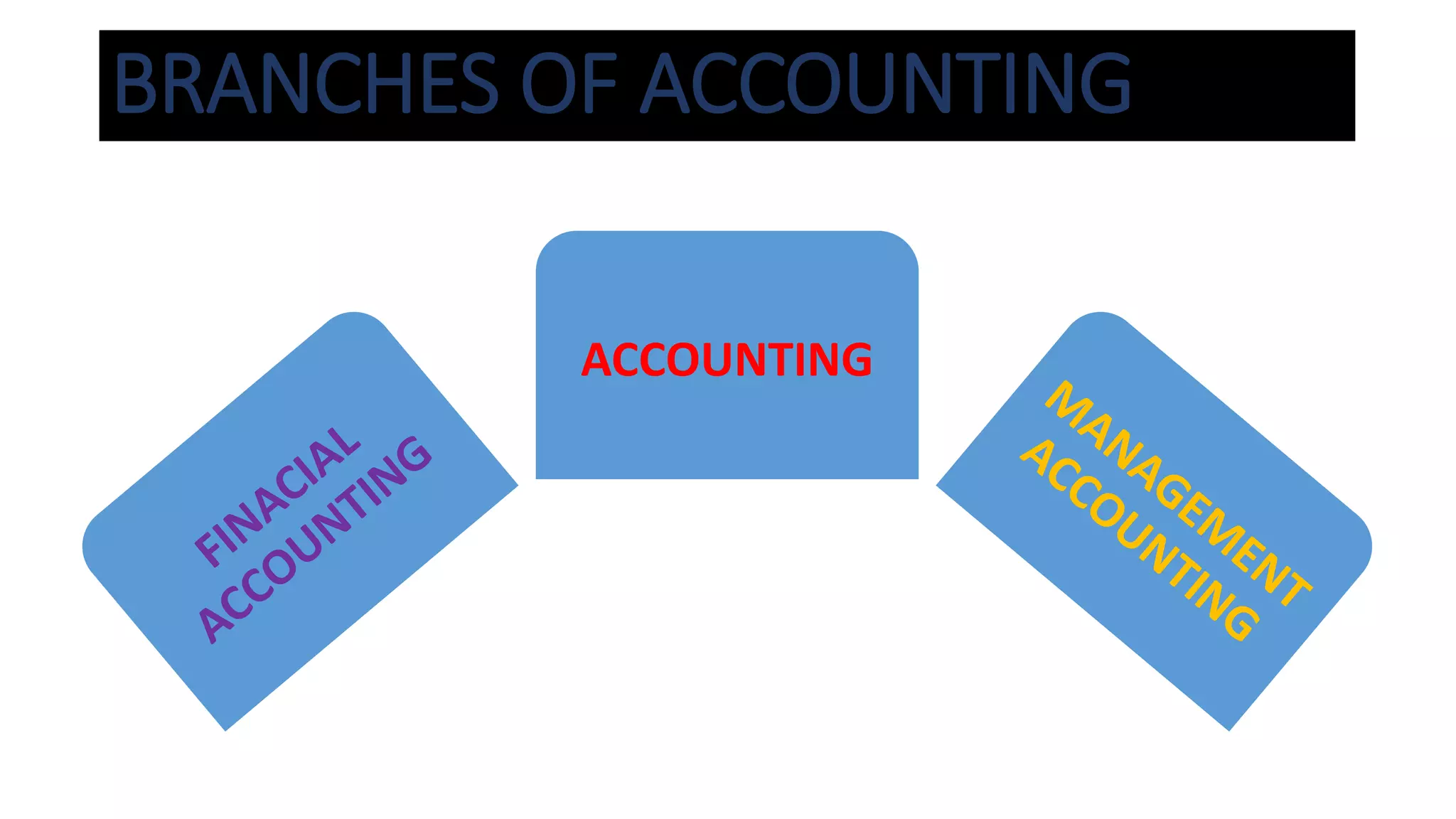
BRANCHES OF ACCOUNTING
ACCOUNTING
EMPLOYEES
 EMPLOYEES:- employees are entitled to bonus at the end of the year which is
linked to the profit earned by an enter price there for the employees are
interested in finance statement these the finance statement also reflect whether
the enter price
employees will there fore look for information
 Revenue and profit growth
 Levels of investment in the business
 Status and valuation of company pension levels of
company pension contributions
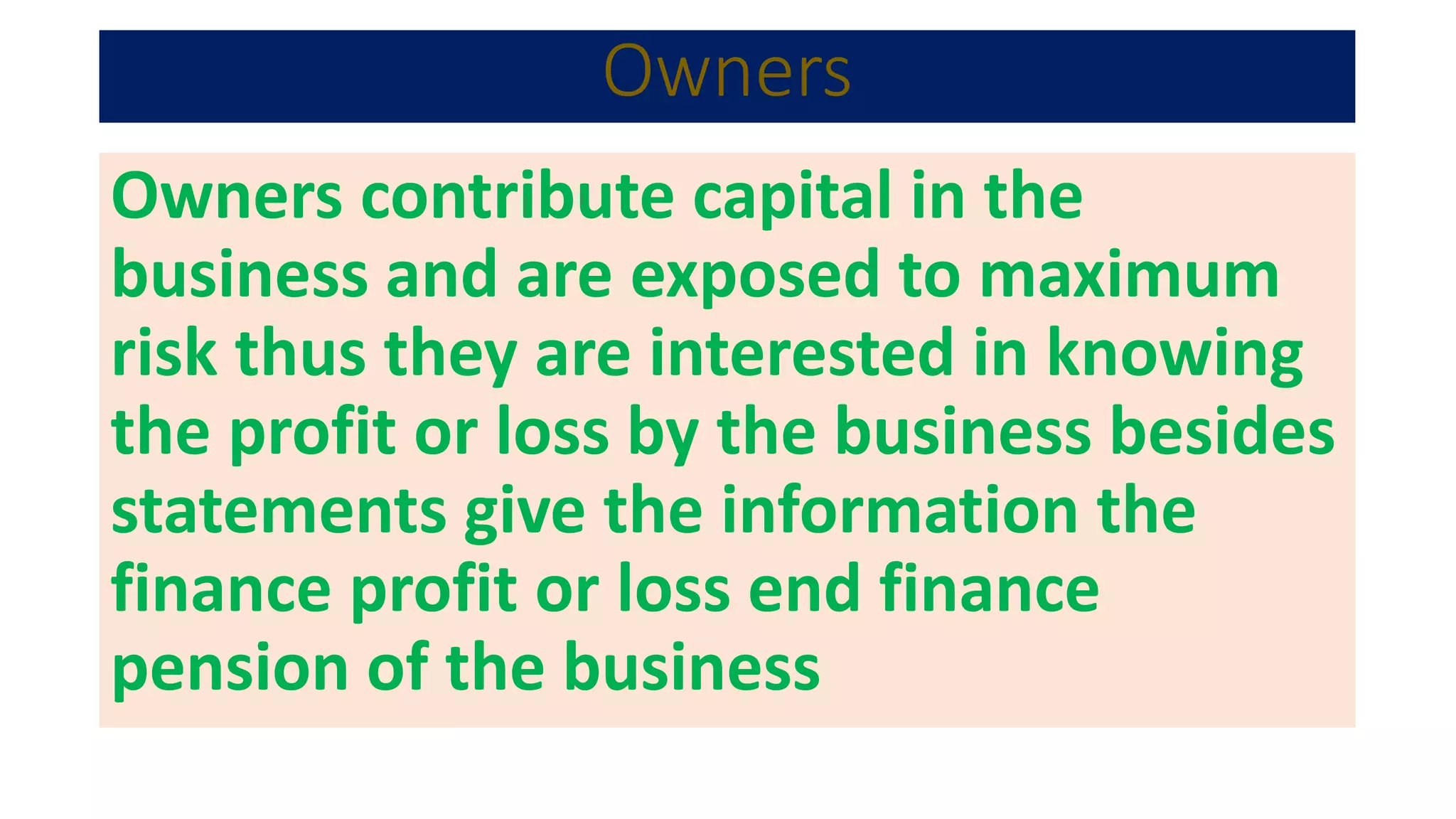
Owners
Owners contribute capital in the
business and are exposed to maximum
risk thus they are interested in knowing
the profit or loss by the business besides
statements give the information the
finance profit or loss end finance
pension of the business
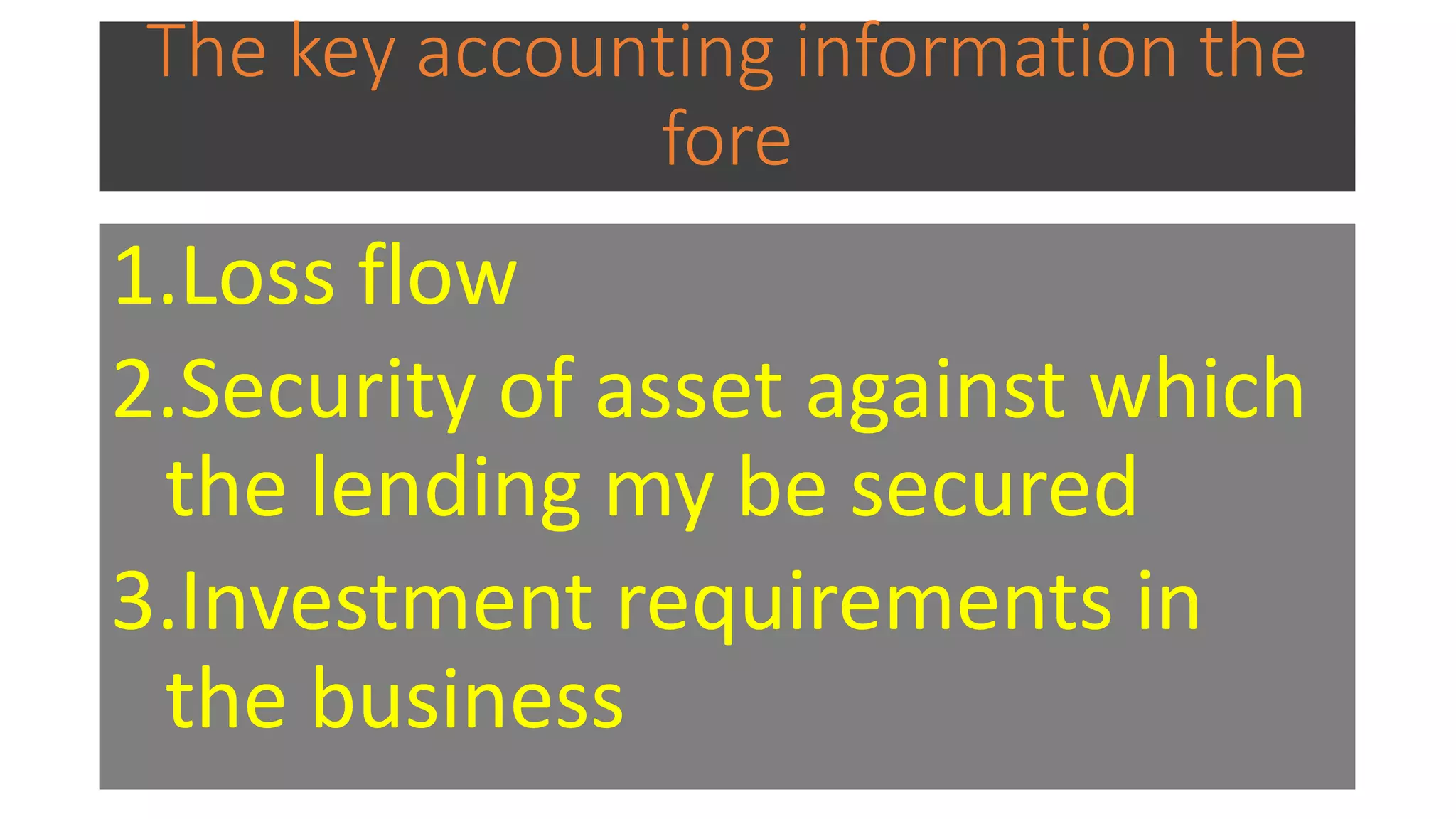
The key accounting information the
fore
1.Loss flow
2.Security of asset against which
the lending my be secured
3.Investment requirements in
the business
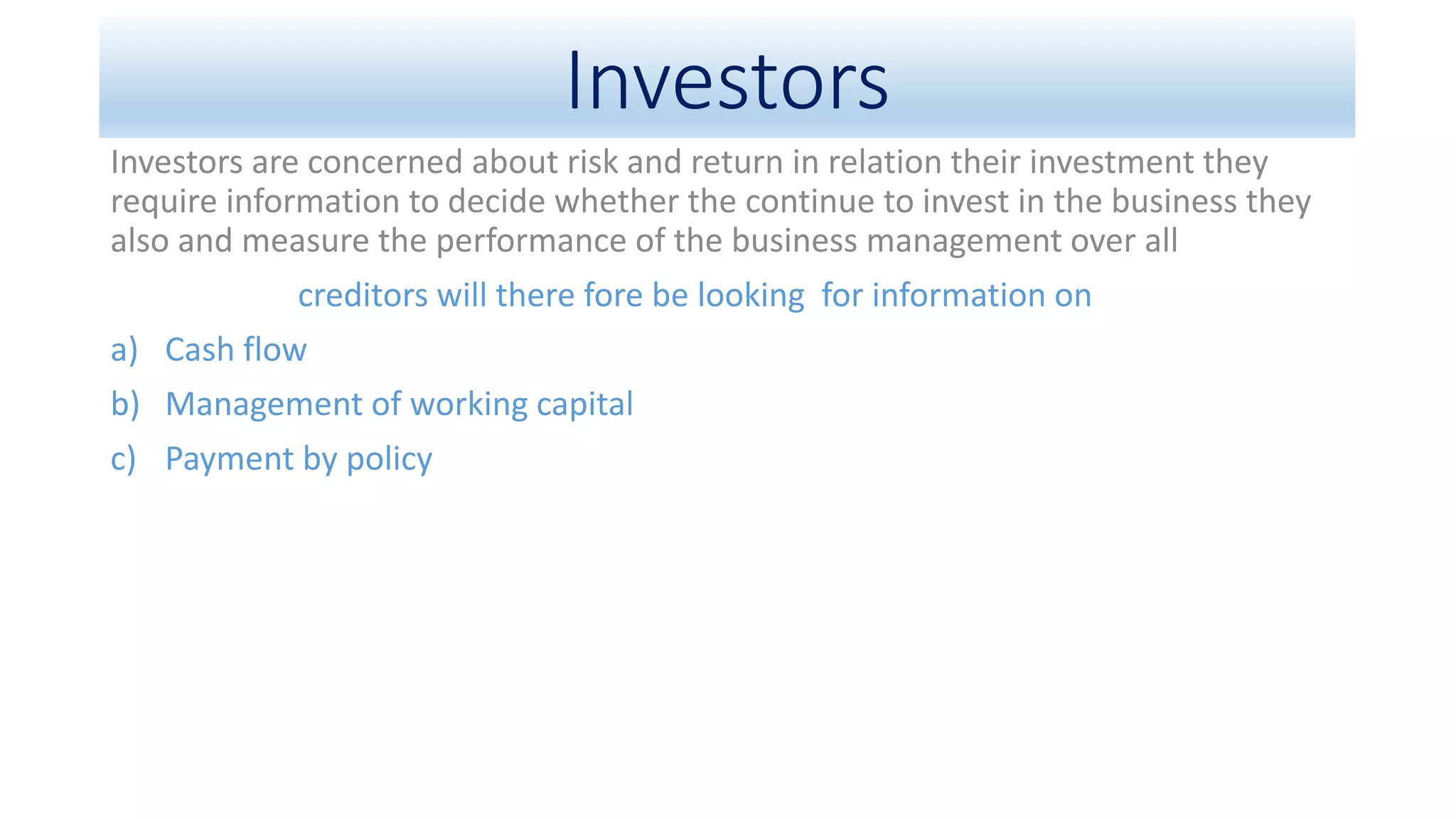
Investors
Investors are concerned about risk and return in relation their investment they
require information to decide whether the continue to invest in the business they
also and measure the performance of the business management over all
creditors will there fore be looking for information on
a) Cash flow
b) Management of working capital
c) Payment by policy
Power point presentation
By:-
(PPT)
DHARMENDRAKUMAR

Users of accounting information (Dharmendra singh)

  • 1.
    Users of Accounting Information Accountancy is the process of communicating financial information about a business entity to users such as shareholders and managers (Elliot, Barry & Elliot, Jamie: Financial accounting and reporting)  Accounting has been defined as:-the art of recording, classifying, and summarizing in a significant manner and in terms of money transactions and events which are, in part at least, of financial character, and interpreting the results there of.(AICPA)  Users of Accounting Information - Internal & External:-Accounting information helps users to make better financial decisions. Users of financial information may be both internal and external to the organization
  • 2.
    Users of AccountingInformation - Internal Management: Employees Owners
  • 3.
  • 4.
    Internal users (PrimaryUsers) I. Management: for analyzing the organization's performance and position and taking appropriate measures to improve the company results. - II. Employees: for assessing company's profitability and its consequence on their future remuneration and job security III. Owners: for analyzing the viability and profitability of their investment and determining any future course of action
  • 5.
    External users (Secondary Users) I.Creditors: for determining the credit worthiness of the organization. Terms of credit are set by creditors according to the assessment of their customers' financial health. Creditors include suppliers as well as lenders of finance such as banks II. Tax Authourities: for determining the credibility of the tax returns filed on behalf of the company III. Investors: for analyzing the feasibility of investing in the company. Investors want to make sure they can earn a reasonable return on their investment before they commit any financial resources to the company
  • 6.
    External users (SecondaryUsers) I. Customers: for assessing the financial position of its suppliers which is necessary for them to maintain a stable source of supply in the long term. II. Regulatory Authorities: for ensuring that the company's disclosure of accounting information is in accordance with the rules and regulations set in order to protect the interests of the stakeholders who rely on such information in forming their decision
  • 7.
  • 8.
    EMPLOYEES  EMPLOYEES:- employeesare entitled to bonus at the end of the year which is linked to the profit earned by an enter price there for the employees are interested in finance statement these the finance statement also reflect whether the enter price employees will there fore look for information  Revenue and profit growth  Levels of investment in the business  Status and valuation of company pension levels of company pension contributions
  • 9.
    Owners Owners contribute capitalin the business and are exposed to maximum risk thus they are interested in knowing the profit or loss by the business besides statements give the information the finance profit or loss end finance pension of the business
  • 10.
    The key accountinginformation the fore 1.Loss flow 2.Security of asset against which the lending my be secured 3.Investment requirements in the business
  • 11.
    Investors Investors are concernedabout risk and return in relation their investment they require information to decide whether the continue to invest in the business they also and measure the performance of the business management over all creditors will there fore be looking for information on a) Cash flow b) Management of working capital c) Payment by policy
  • 12.