USABILITY
TESTING
ARCHANA KRUSHNAN
WHAT IS USABILITY TESTING
 Usability testing is a technique used in user-centered interaction design to evaluate a product by testing it on
users. This can be seen as an irreplaceable usability practice, since it gives direct input on how real users use
the system
 Usability testing, a non-functional testing technique that is a measure of how easily the system can be used
by end users. It is difficult to evaluate and measure but can be evaluated based on the below parameters:
Level of Skill required to learn/use the software.
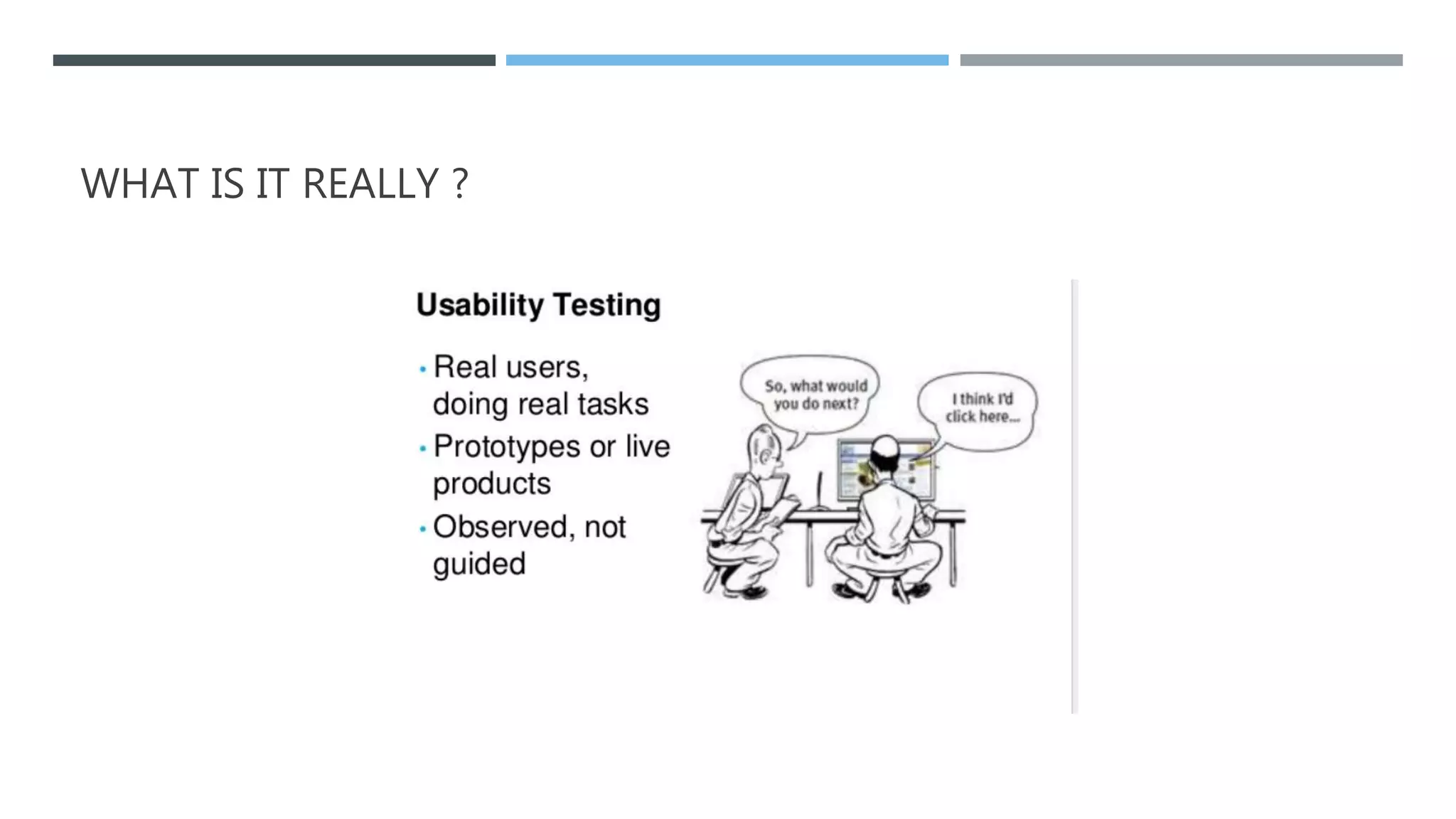
WHAT IS IT REALLY ?
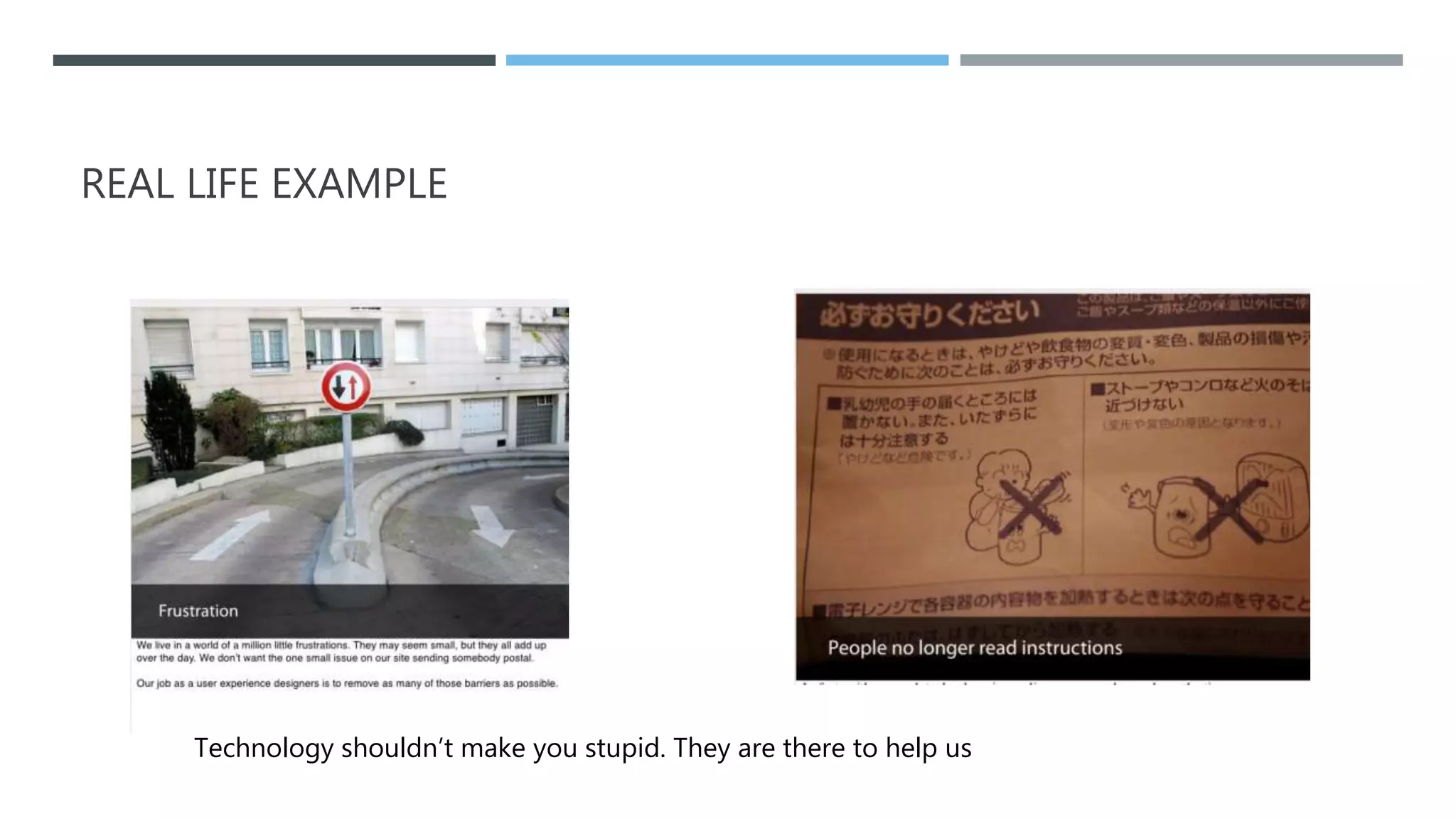
REAL LIFE EXAMPLE
Technology shouldn’t make you stupid. They are there to help us
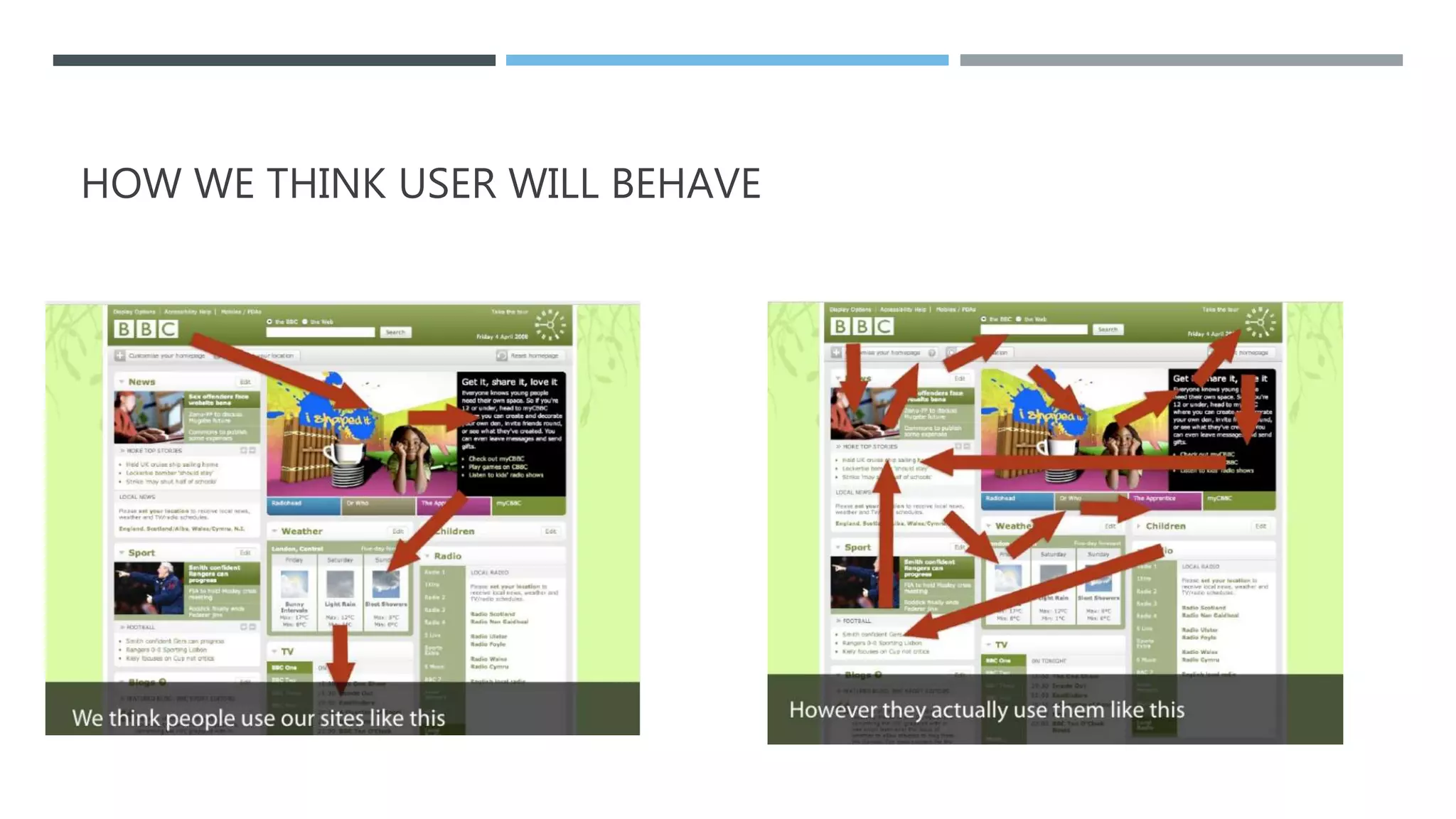
HOW WE THINK USER WILL BEHAVE
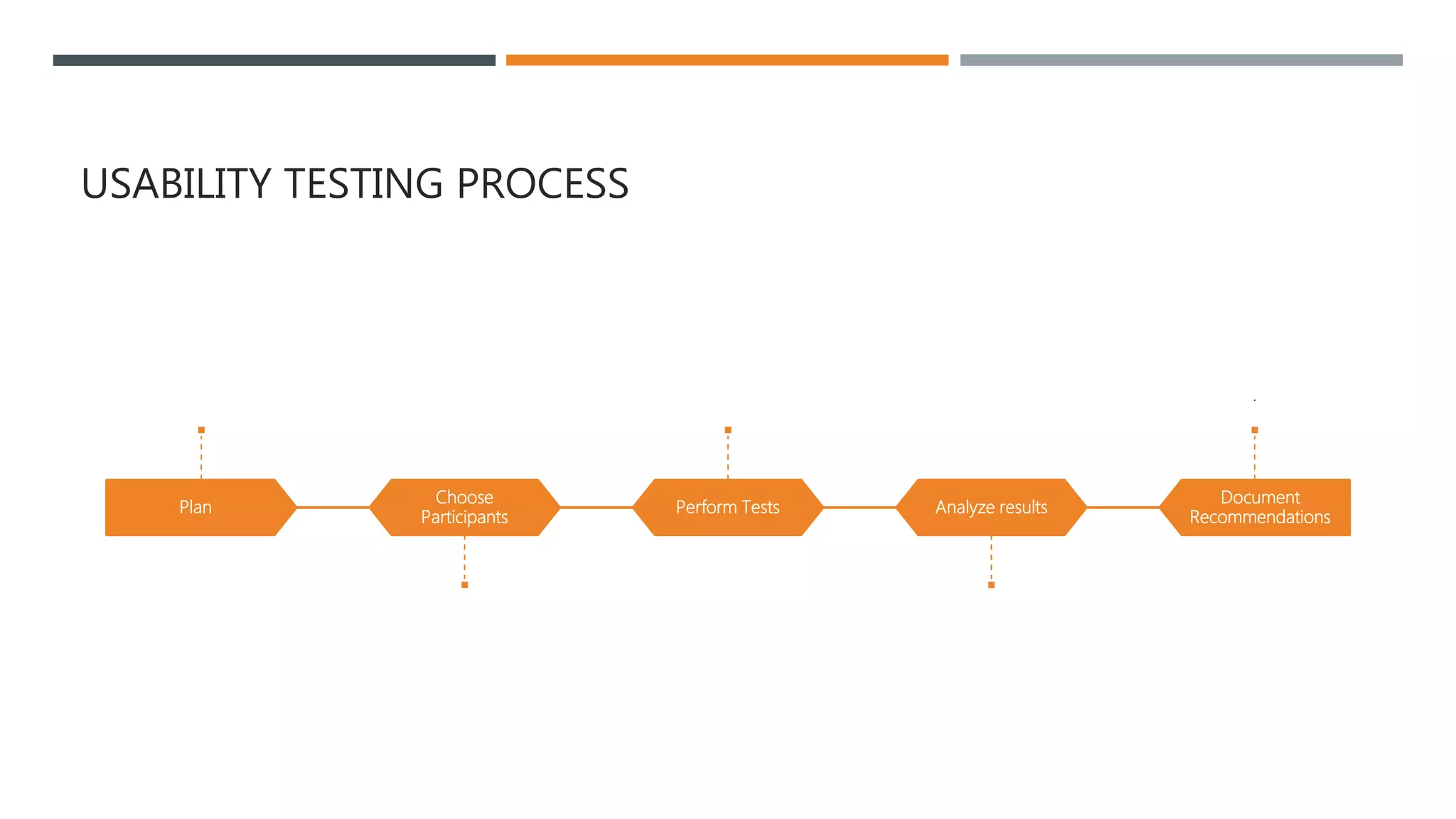
USABILITY TESTING PROCESS
Plan
Choose
Participants
Perform Tests Analyze results
Document
Recommendations
.
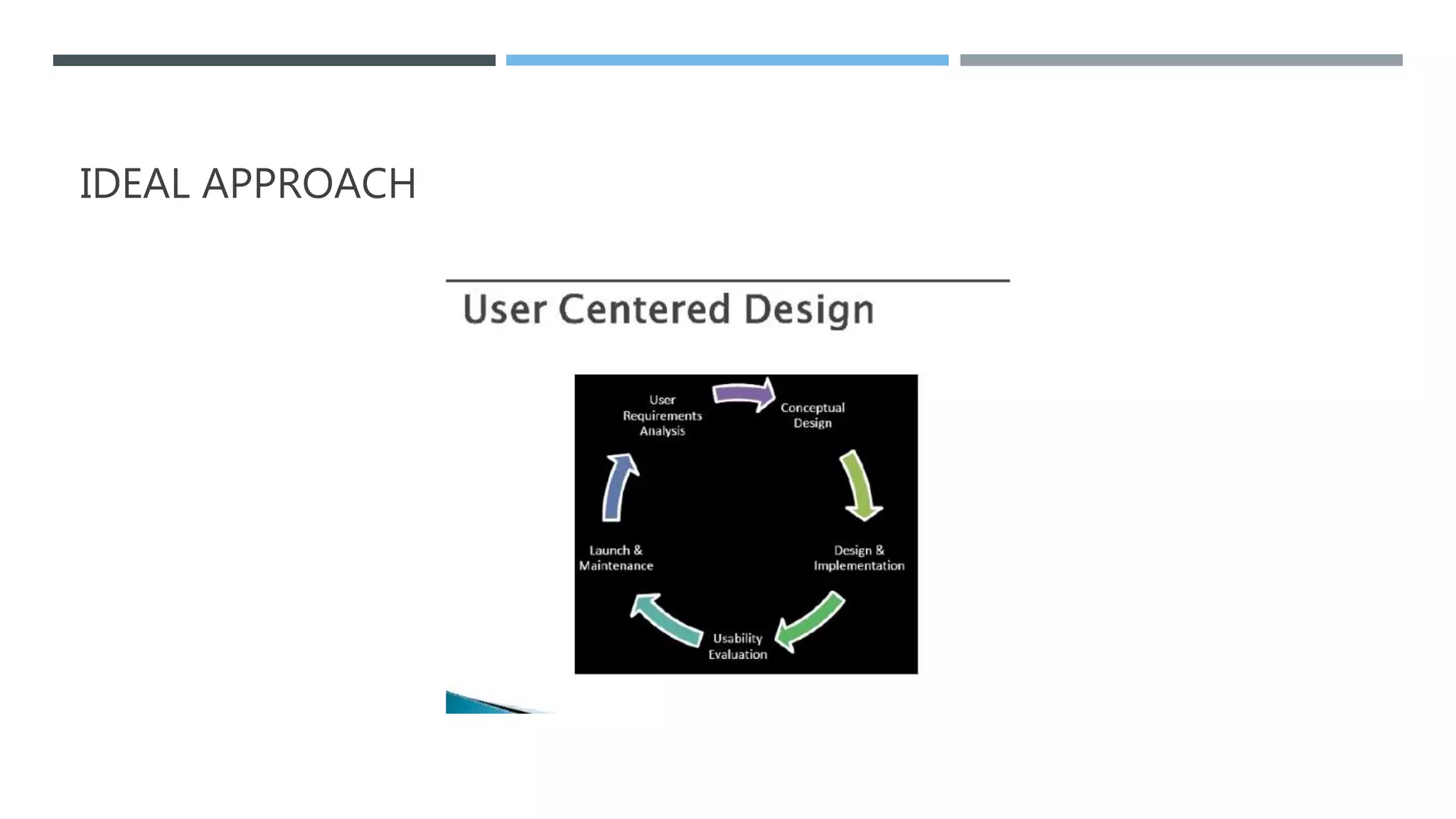
IDEAL APPROACH
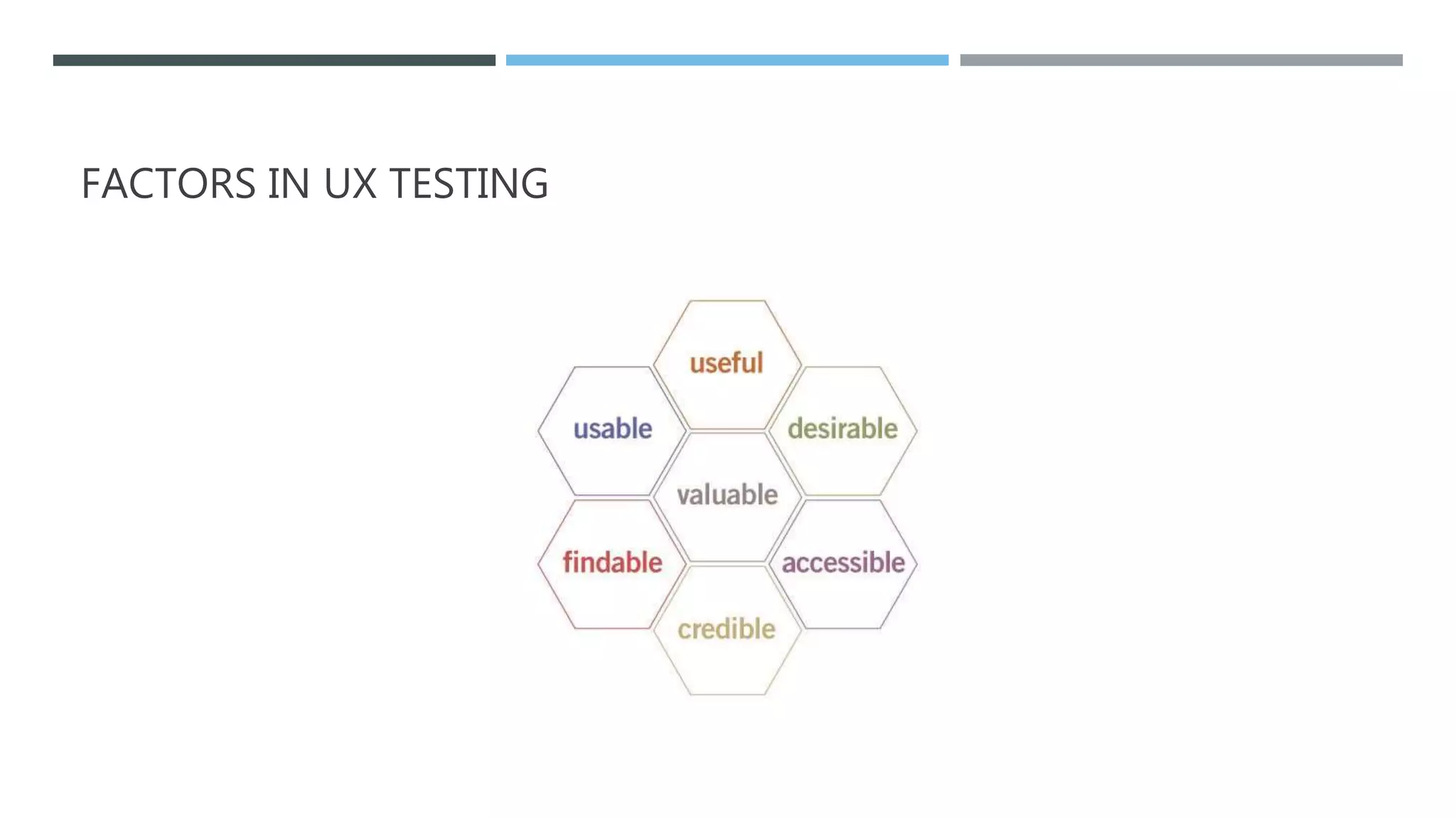
FACTORS IN UX TESTING
WHAT UI/UX EXPERTS WEIGH IN
 UX is focused on the user’s journey to solve a problem, UI is focused on how a product’s surfaces look and
function
 A UX designer is concerned with the conceptual aspects of the design process, leaving the UI designer to
focus on the more tangible elements
 UI is the bridge that gets us where we want to go, UX is the feeling we get when we arrive.
 The UX is the path through a product, escaping the screen and articulating the user’s journey and
motivations, justifying why things are in the UI and even more importantly, why things are left out. The UI
copes with constraints; the UX challenges them.”
 What do you think ?
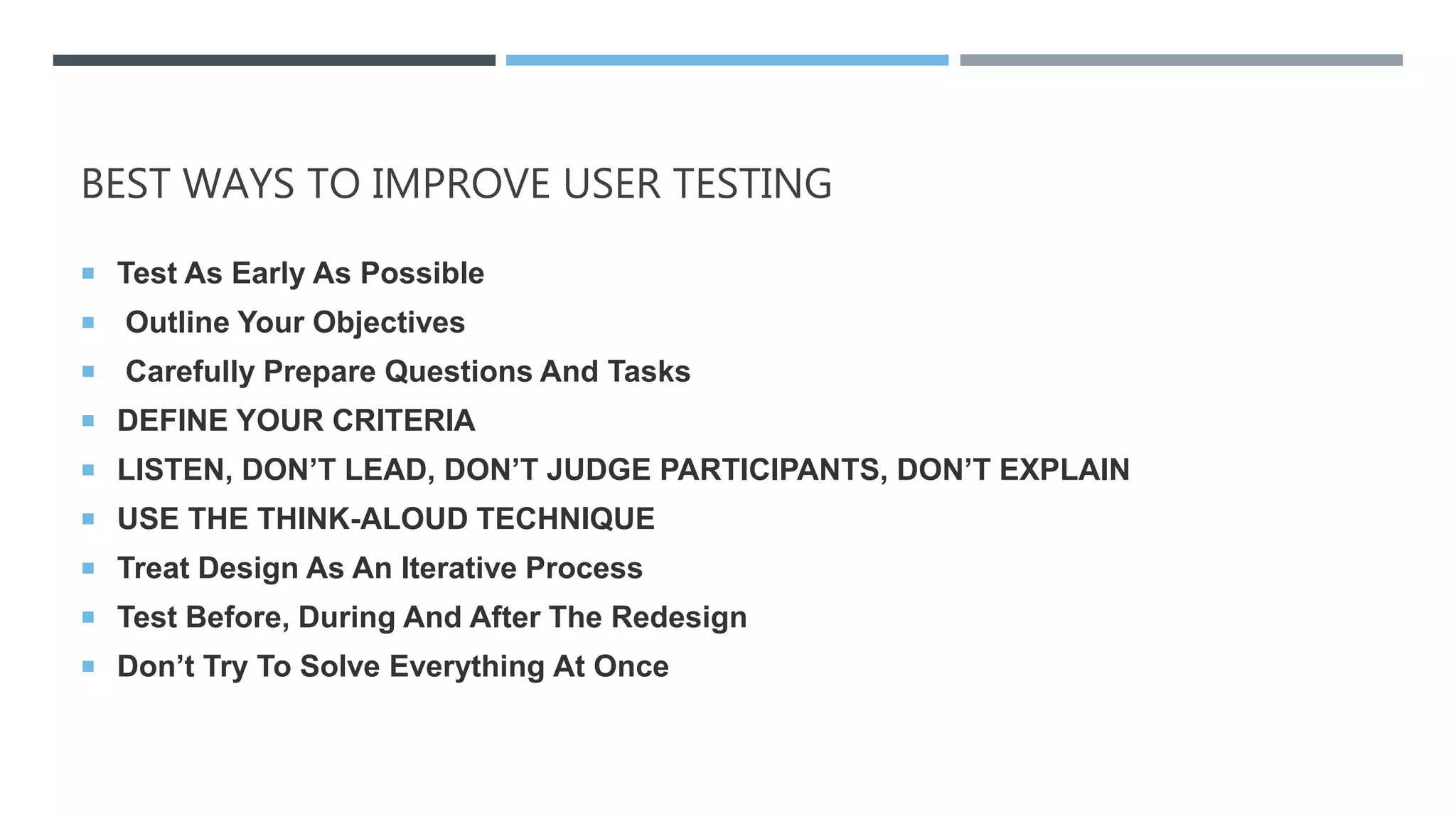
BEST WAYS TO IMPROVE USER TESTING
 Test As Early As Possible
 Outline Your Objectives
 Carefully Prepare Questions And Tasks
 DEFINE YOUR CRITERIA
 LISTEN, DON’T LEAD, DON’T JUDGE PARTICIPANTS, DON’T EXPLAIN
 USE THE THINK-ALOUD TECHNIQUE
 Treat Design As An Iterative Process
 Test Before, During And After The Redesign
 Don’t Try To Solve Everything At Once
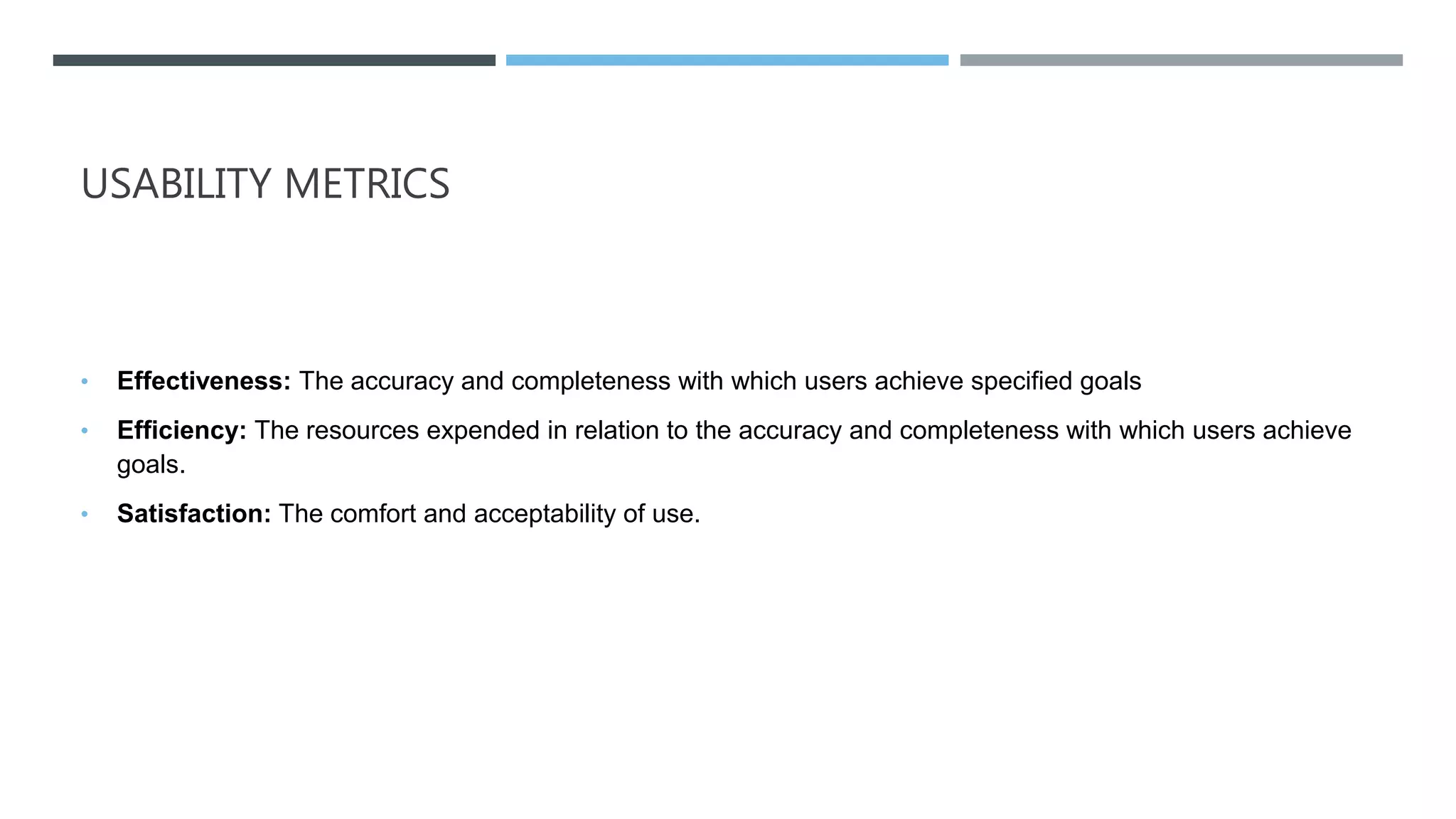
USABILITY METRICS
• Effectiveness: The accuracy and completeness with which users achieve specified goals
• Efficiency: The resources expended in relation to the accuracy and completeness with which users achieve
goals.
• Satisfaction: The comfort and acceptability of use.
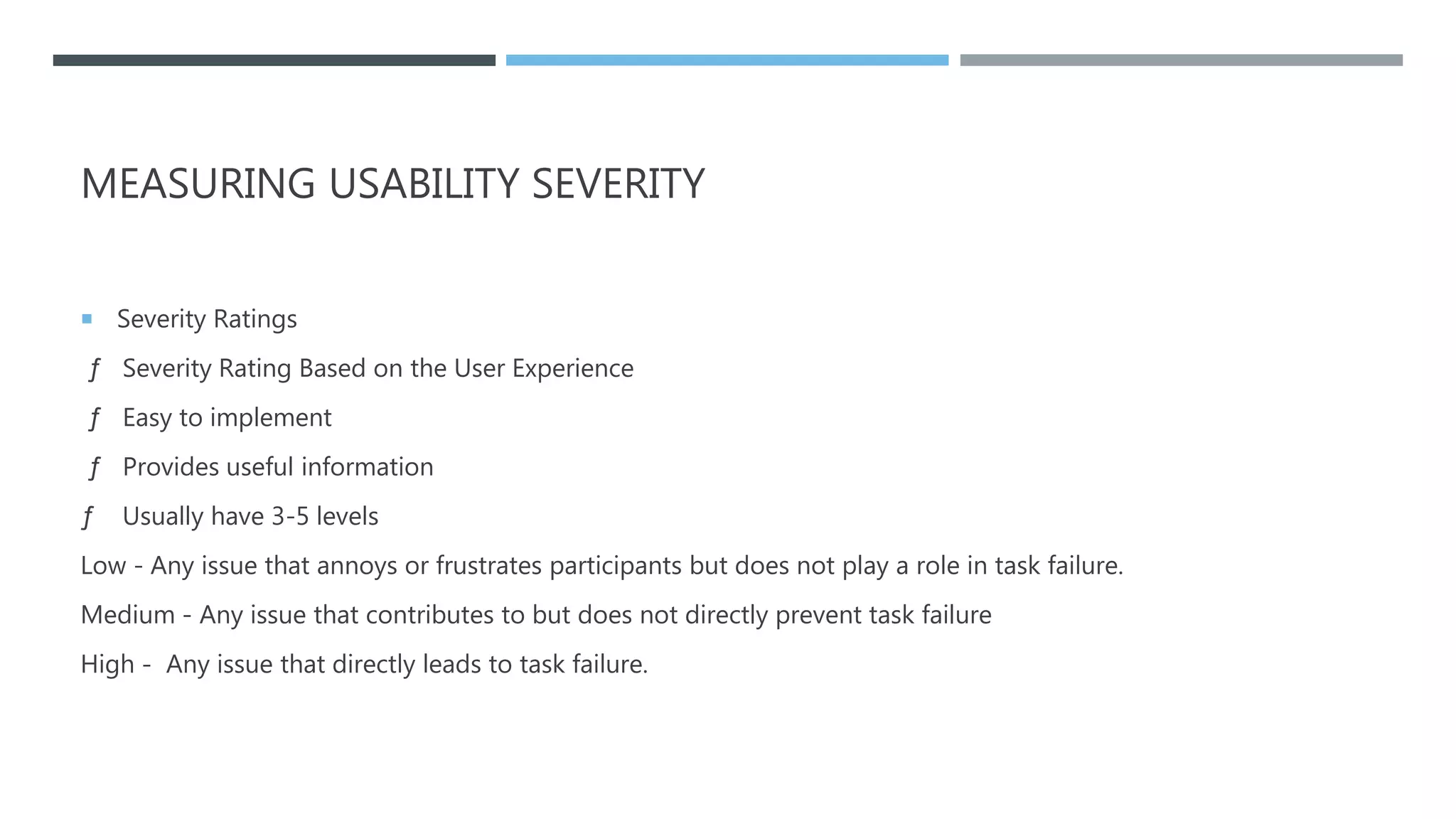
MEASURING USABILITY SEVERITY
 Severity Ratings
ƒ Severity Rating Based on the User Experience
ƒ Easy to implement
ƒ Provides useful information
ƒ Usually have 3-5 levels
Low - Any issue that annoys or frustrates participants but does not play a role in task failure.
Medium - Any issue that contributes to but does not directly prevent task failure
High - Any issue that directly leads to task failure.
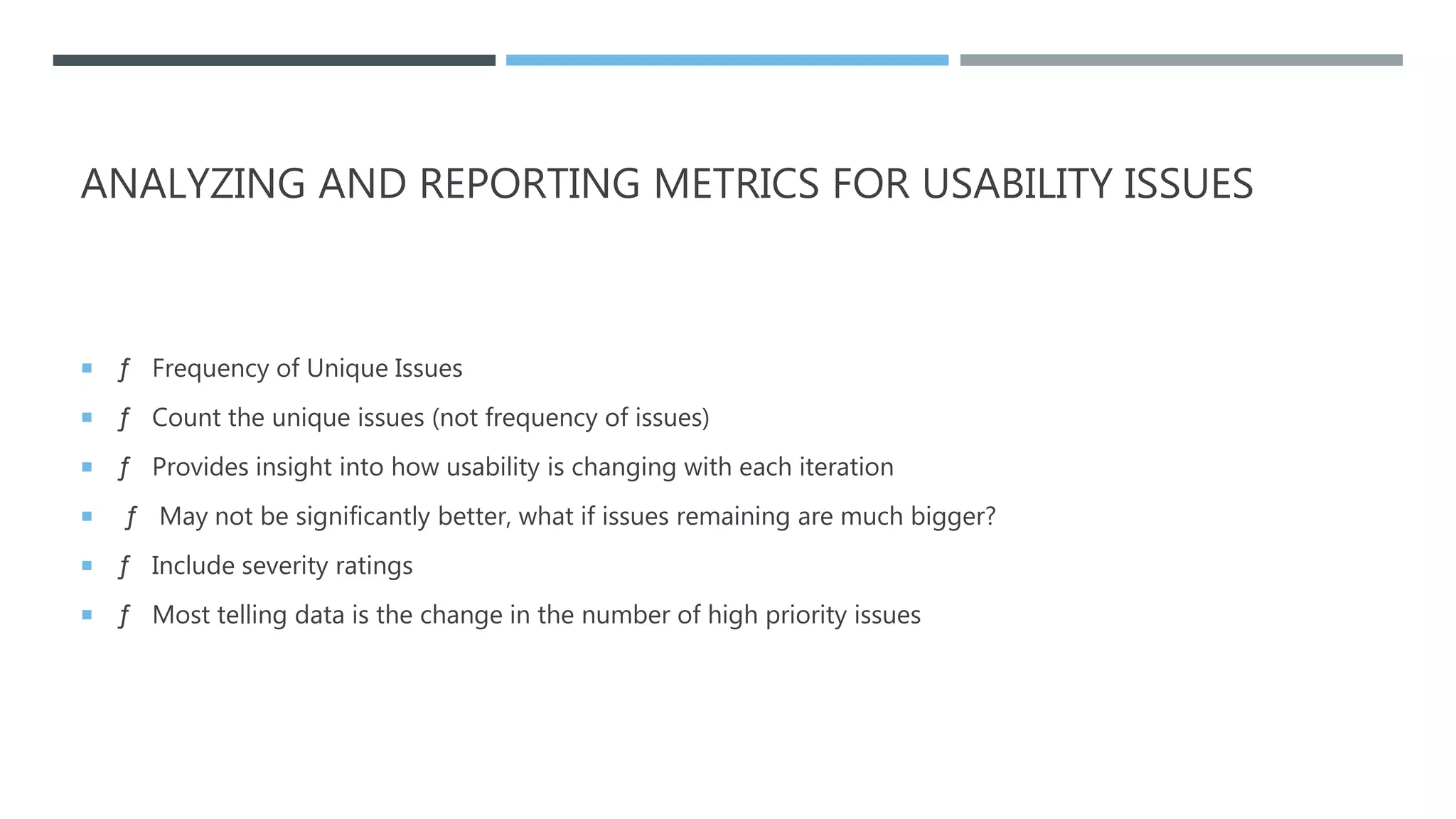
ANALYZING AND REPORTING METRICS FOR USABILITY ISSUES
 ƒ Frequency of Unique Issues
 ƒ Count the unique issues (not frequency of issues)
 ƒ Provides insight into how usability is changing with each iteration
 ƒ May not be significantly better, what if issues remaining are much bigger?
 ƒ Include severity ratings
 ƒ Most telling data is the change in the number of high priority issues
SUMMARY
 Common ways to measure usability issues
 ƒ Frequency of unique issues
 ƒ Percentage of participants who experience a specific issue
 ƒ Frequency of issues for different tasks or categories of issues
 ƒ Identifying usability issues
 ƒ Consistency
 ƒ Acknowledge where biases may arise

Usability testing

  • 1.
  • 2.
    WHAT IS USABILITYTESTING  Usability testing is a technique used in user-centered interaction design to evaluate a product by testing it on users. This can be seen as an irreplaceable usability practice, since it gives direct input on how real users use the system  Usability testing, a non-functional testing technique that is a measure of how easily the system can be used by end users. It is difficult to evaluate and measure but can be evaluated based on the below parameters: Level of Skill required to learn/use the software.
  • 3.
    WHAT IS ITREALLY ?
  • 4.
    REAL LIFE EXAMPLE Technologyshouldn’t make you stupid. They are there to help us
  • 5.
    HOW WE THINKUSER WILL BEHAVE
  • 6.
    USABILITY TESTING PROCESS Plan Choose Participants PerformTests Analyze results Document Recommendations .
  • 7.
  • 8.
  • 9.
    WHAT UI/UX EXPERTSWEIGH IN  UX is focused on the user’s journey to solve a problem, UI is focused on how a product’s surfaces look and function  A UX designer is concerned with the conceptual aspects of the design process, leaving the UI designer to focus on the more tangible elements  UI is the bridge that gets us where we want to go, UX is the feeling we get when we arrive.  The UX is the path through a product, escaping the screen and articulating the user’s journey and motivations, justifying why things are in the UI and even more importantly, why things are left out. The UI copes with constraints; the UX challenges them.”  What do you think ?
  • 10.
    BEST WAYS TOIMPROVE USER TESTING  Test As Early As Possible  Outline Your Objectives  Carefully Prepare Questions And Tasks  DEFINE YOUR CRITERIA  LISTEN, DON’T LEAD, DON’T JUDGE PARTICIPANTS, DON’T EXPLAIN  USE THE THINK-ALOUD TECHNIQUE  Treat Design As An Iterative Process  Test Before, During And After The Redesign  Don’t Try To Solve Everything At Once
  • 11.
    USABILITY METRICS • Effectiveness:The accuracy and completeness with which users achieve specified goals • Efficiency: The resources expended in relation to the accuracy and completeness with which users achieve goals. • Satisfaction: The comfort and acceptability of use.
  • 12.
    MEASURING USABILITY SEVERITY Severity Ratings ƒ Severity Rating Based on the User Experience ƒ Easy to implement ƒ Provides useful information ƒ Usually have 3-5 levels Low - Any issue that annoys or frustrates participants but does not play a role in task failure. Medium - Any issue that contributes to but does not directly prevent task failure High - Any issue that directly leads to task failure.
  • 13.
    ANALYZING AND REPORTINGMETRICS FOR USABILITY ISSUES  ƒ Frequency of Unique Issues  ƒ Count the unique issues (not frequency of issues)  ƒ Provides insight into how usability is changing with each iteration  ƒ May not be significantly better, what if issues remaining are much bigger?  ƒ Include severity ratings  ƒ Most telling data is the change in the number of high priority issues
  • 14.
    SUMMARY  Common waysto measure usability issues  ƒ Frequency of unique issues  ƒ Percentage of participants who experience a specific issue  ƒ Frequency of issues for different tasks or categories of issues  ƒ Identifying usability issues  ƒ Consistency  ƒ Acknowledge where biases may arise