NGUYEN QUOC BAO MD
NGUYEN QUOC BAO MD
DEPARTMENT OF UROLOGY– CHO RAY HOSPITAL
WEEKLY MEDICAL TOPICS
+84 973751527
nqbao.y14@ump.edu.vn NGUYEN QUOC BAO MD
0
1. CASE REPORT
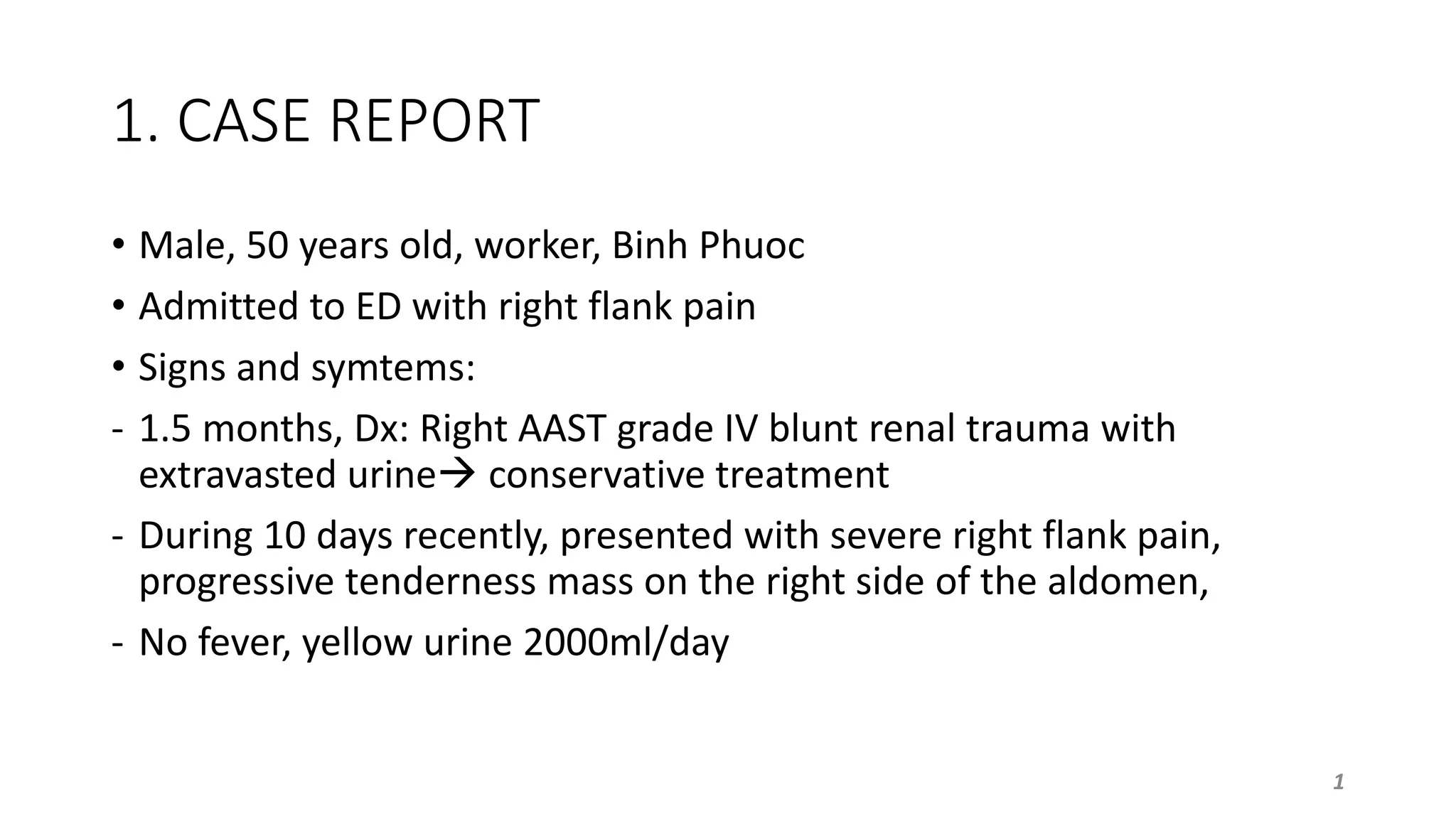
• Male, 50 years old, worker, Binh Phuoc
• Admitted to ED with right flank pain
• Signs and symtems:
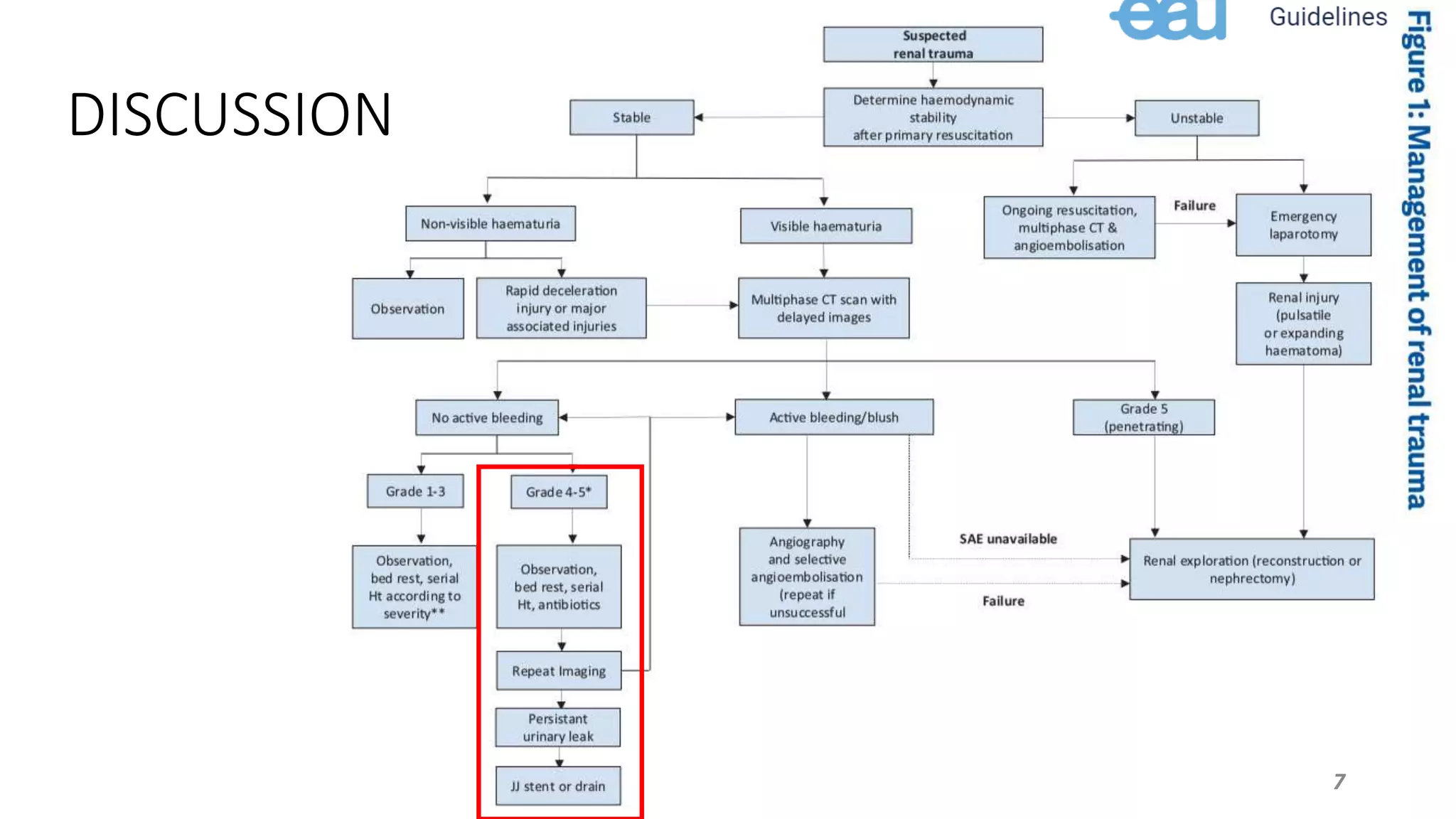
- 1.5 months, Dx: Right AAST grade IV blunt renal trauma with
extravasted urine conservative treatment
- During 10 days recently, presented with severe right flank pain,
progressive tenderness mass on the right side of the aldomen,
- No fever, yellow urine 2000ml/day
1
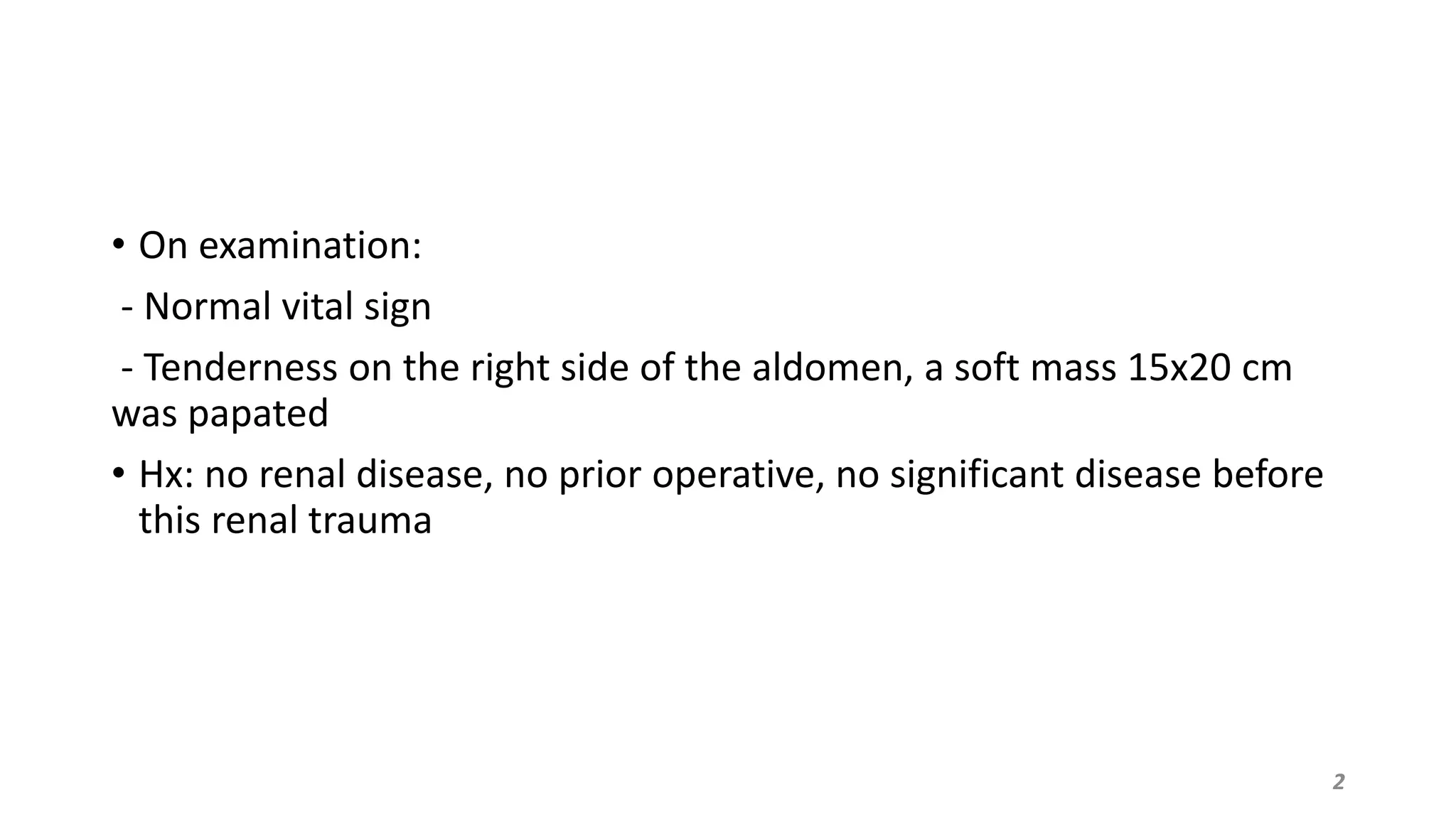
• On examination:
- Normal vital sign
- Tenderness on the right side of the aldomen, a soft mass 15x20 cm
was papated
• Hx: no renal disease, no prior operative, no significant disease before
this renal trauma
2
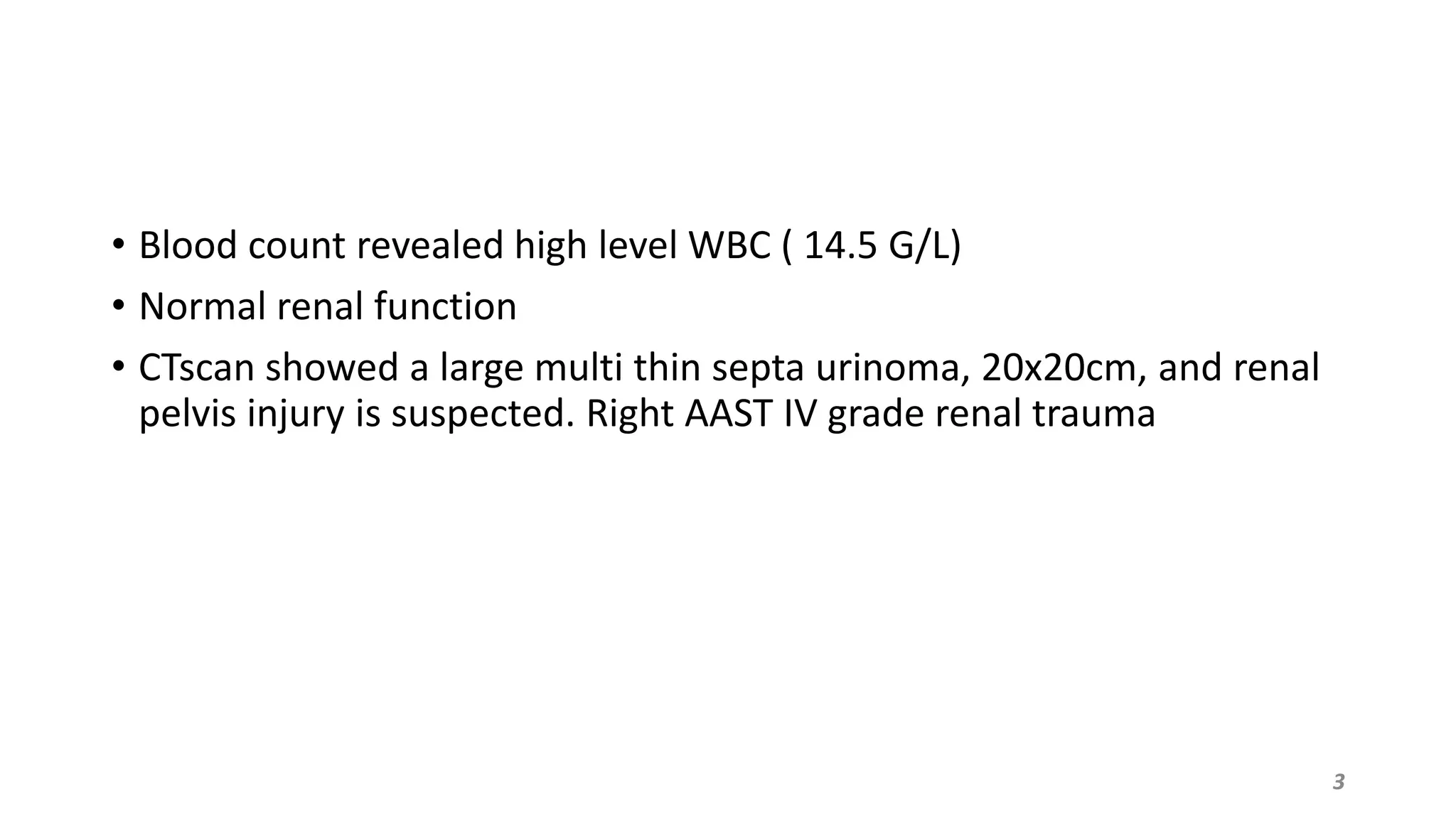
• Blood count revealed high level WBC ( 14.5 G/L)
• Normal renal function
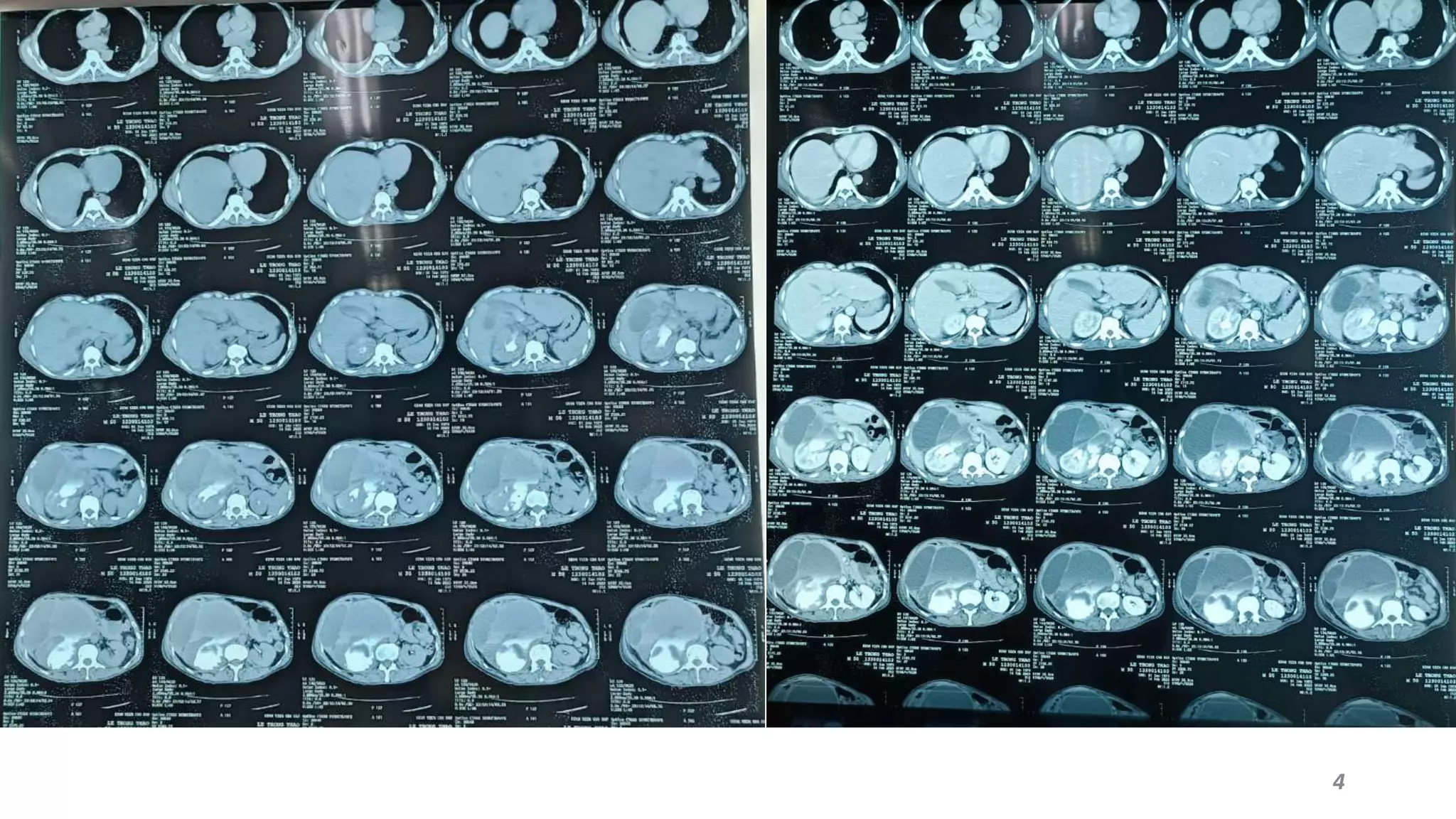
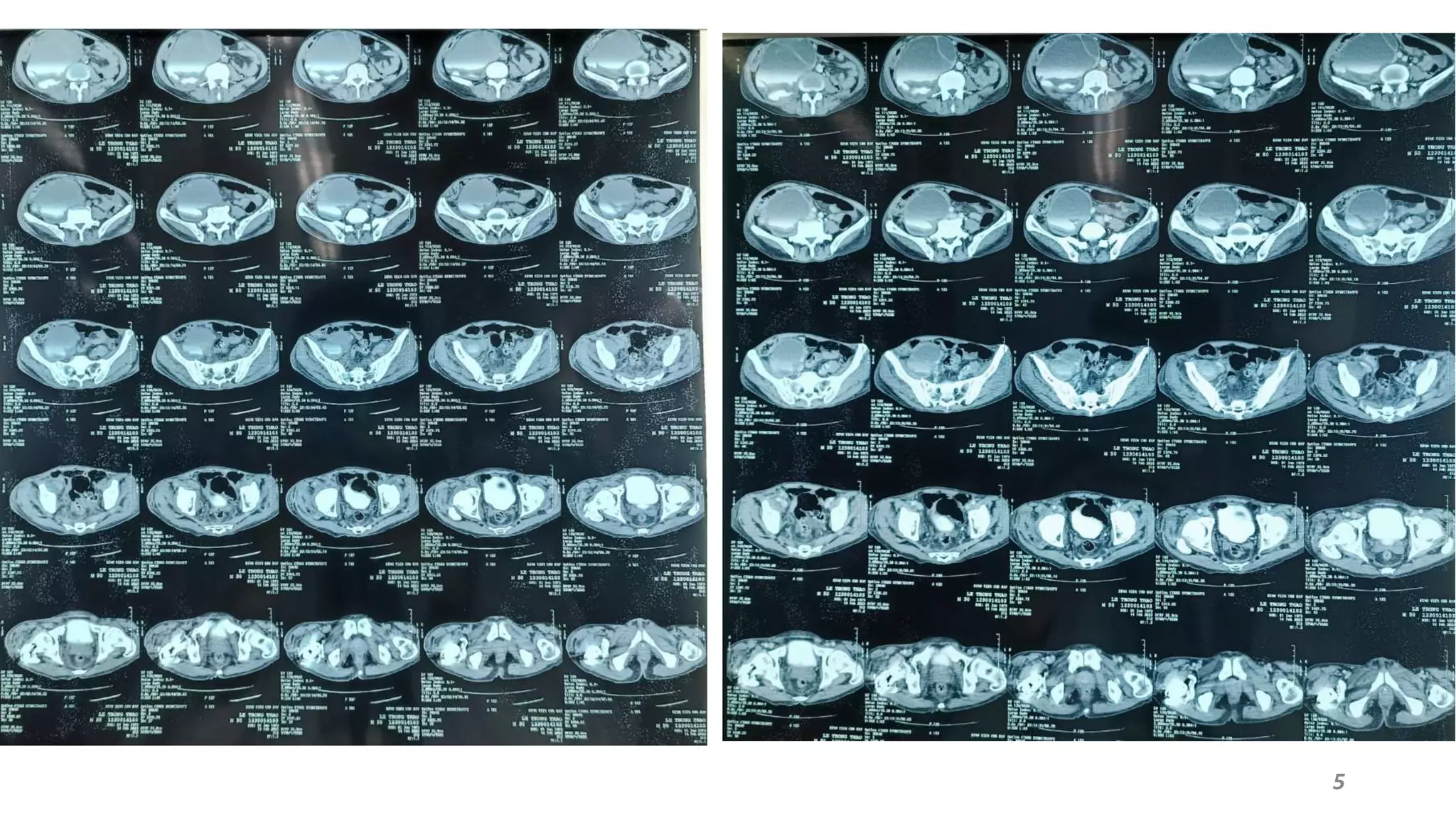
• CTscan showed a large multi thin septa urinoma, 20x20cm, and renal
pelvis injury is suspected. Right AAST IV grade renal trauma
3
4
5
Treatment
• The mass was explored and a capsule contained 3 litres of fluid was
incised and drained through an retroperitoneal incision
6
7
DISCUSSION
8
9
WHAT IS URINOMA ?
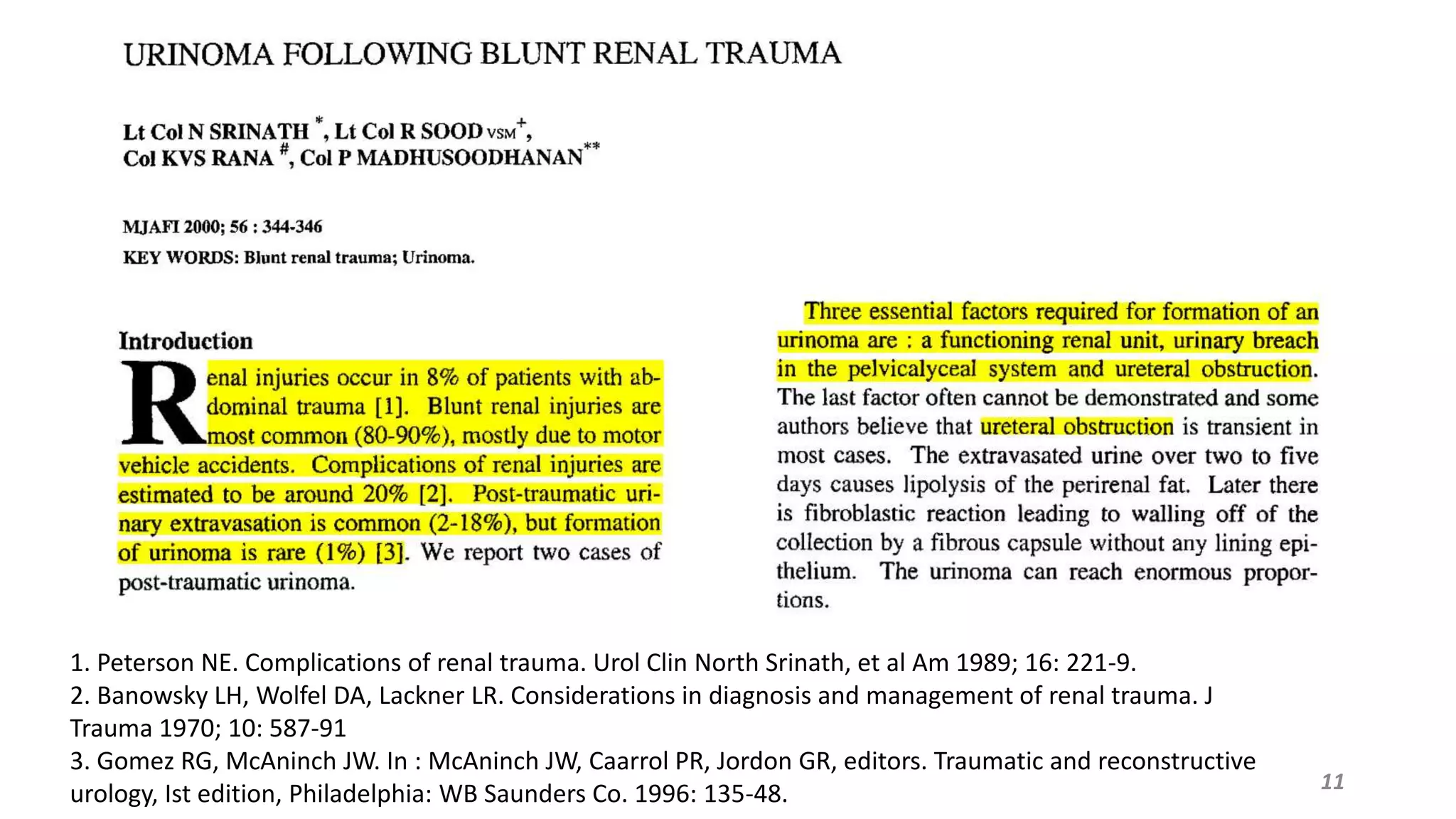
• A urinoma is an accumulation of extravasated urine which becomes
encapsulated by a very thick fibrous wall to form a mass (Pyrah and
Smiddy, 1953)
10
PYRAH LN, SMIDDY FG. Pararenal pseudo-hydronephrosis; a report of two cases. Br J Urol. 1953
11
1. Peterson NE. Complications of renal trauma. Urol Clin North Srinath, et al Am 1989; 16: 221-9.
2. Banowsky LH, Wolfel DA, Lackner LR. Considerations in diagnosis and management of renal trauma. J
Trauma 1970; 10: 587-91
3. Gomez RG, McAninch JW. In : McAninch JW, Caarrol PR, Jordon GR, editors. Traumatic and reconstructive
urology, Ist edition, Philadelphia: WB Saunders Co. 1996: 135-48.
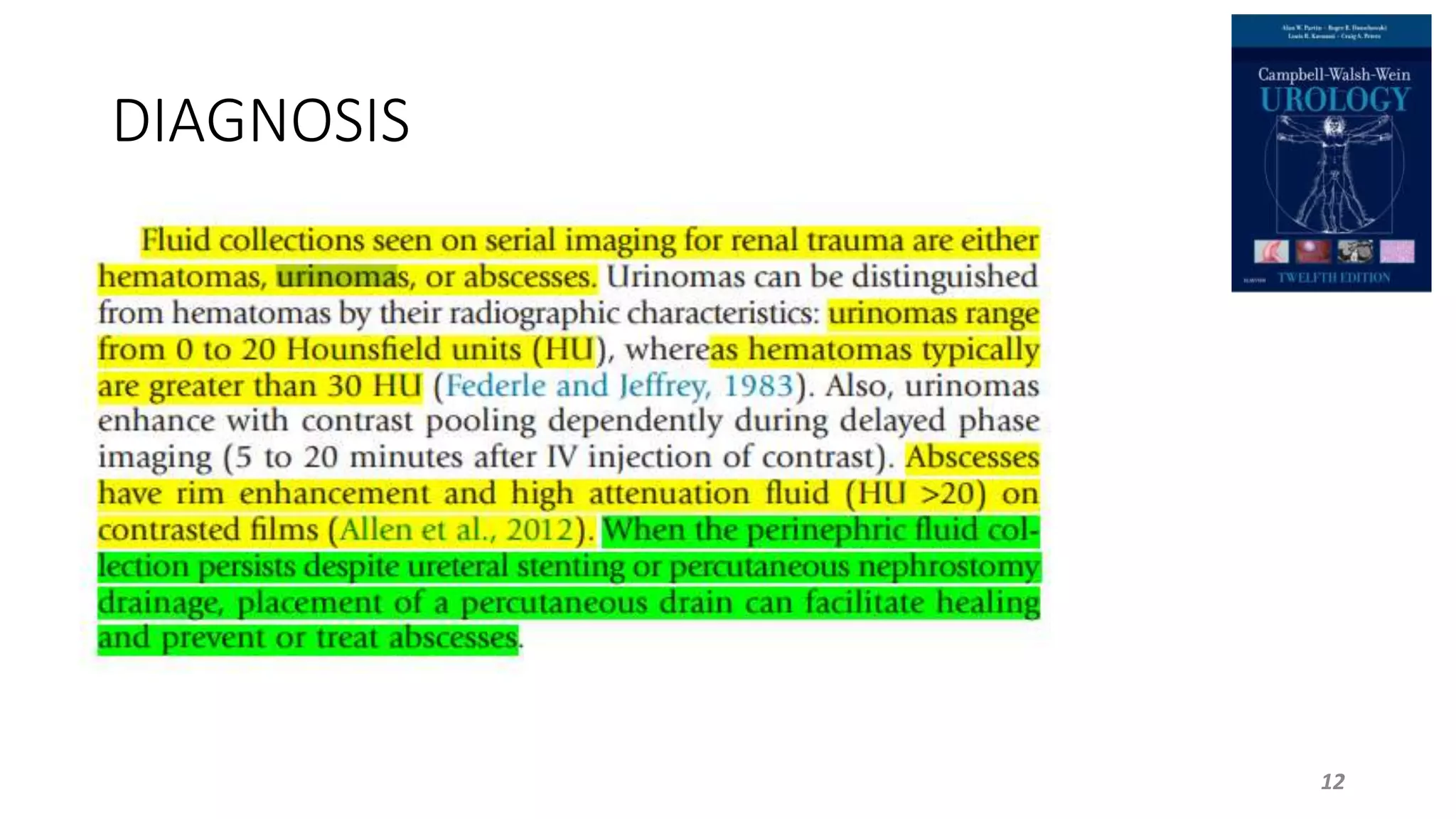
DIAGNOSIS
12
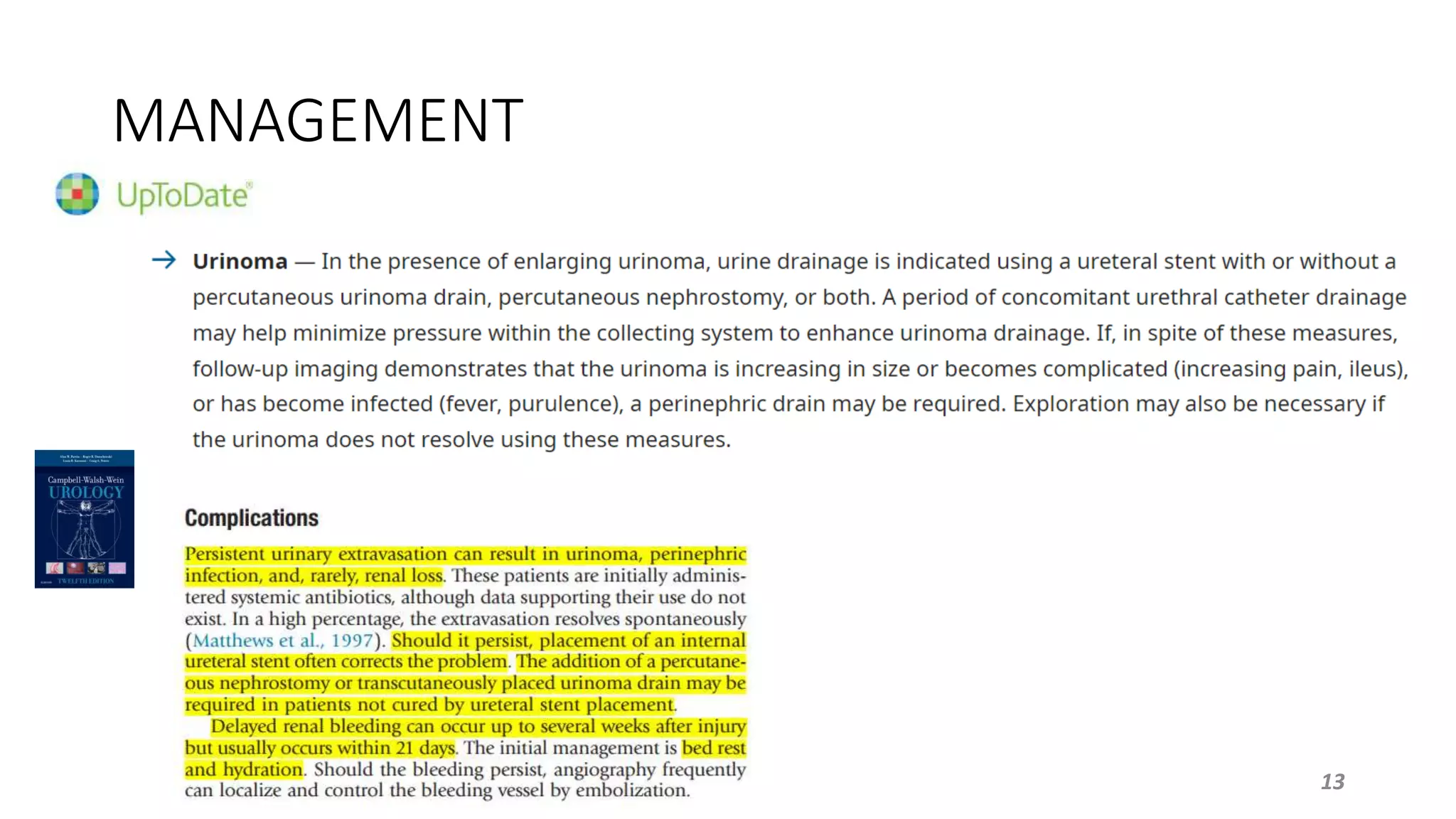
MANAGEMENT
13
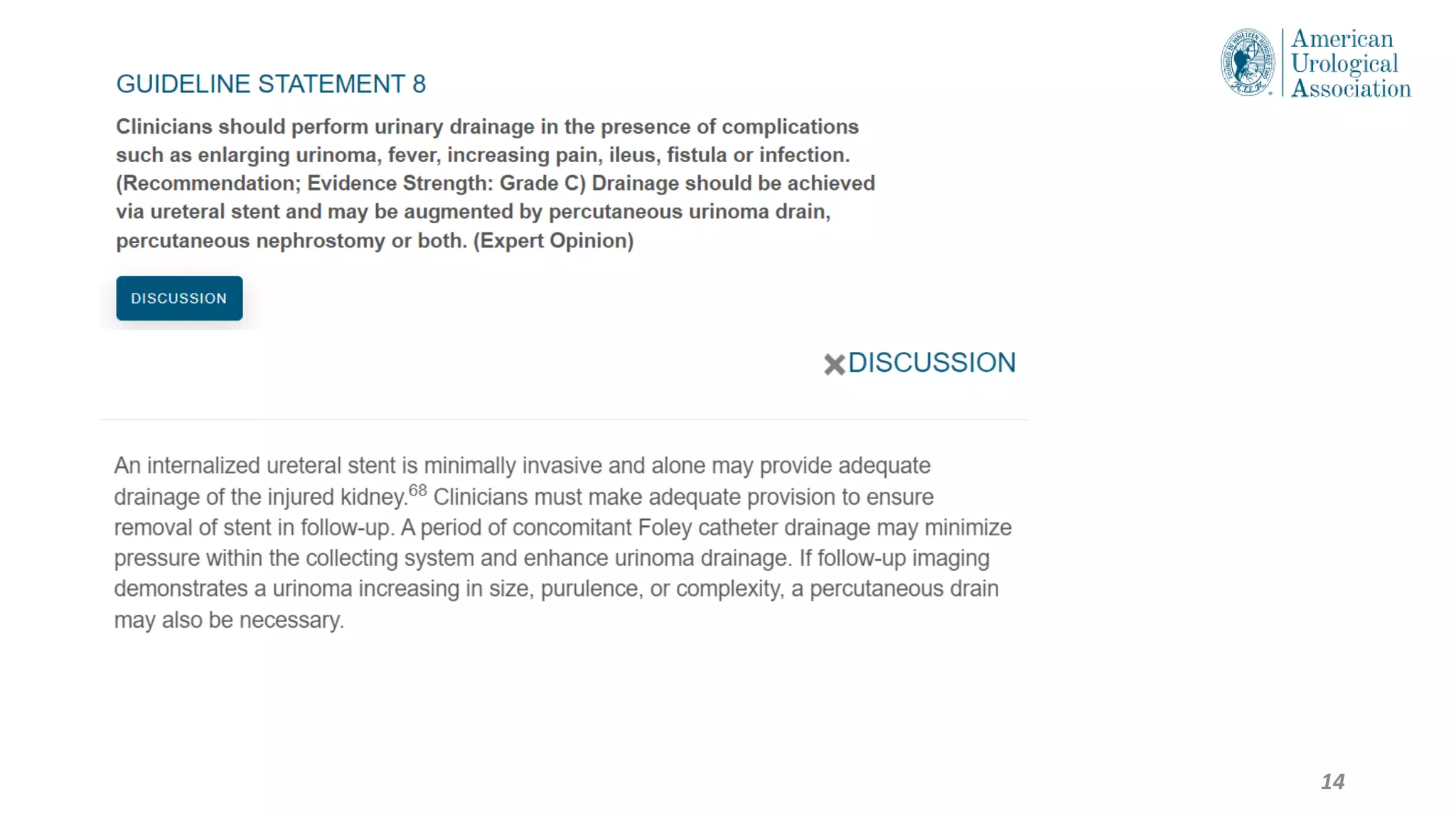
14
15

Urinoma after renal trauma (1).pptx

  • 1.
    NGUYEN QUOC BAOMD NGUYEN QUOC BAO MD DEPARTMENT OF UROLOGY– CHO RAY HOSPITAL WEEKLY MEDICAL TOPICS +84 973751527 nqbao.y14@ump.edu.vn NGUYEN QUOC BAO MD 0
  • 2.
    1. CASE REPORT •Male, 50 years old, worker, Binh Phuoc • Admitted to ED with right flank pain • Signs and symtems: - 1.5 months, Dx: Right AAST grade IV blunt renal trauma with extravasted urine conservative treatment - During 10 days recently, presented with severe right flank pain, progressive tenderness mass on the right side of the aldomen, - No fever, yellow urine 2000ml/day 1
  • 3.
    • On examination: -Normal vital sign - Tenderness on the right side of the aldomen, a soft mass 15x20 cm was papated • Hx: no renal disease, no prior operative, no significant disease before this renal trauma 2
  • 4.
    • Blood countrevealed high level WBC ( 14.5 G/L) • Normal renal function • CTscan showed a large multi thin septa urinoma, 20x20cm, and renal pelvis injury is suspected. Right AAST IV grade renal trauma 3
  • 5.
  • 6.
  • 7.
    Treatment • The masswas explored and a capsule contained 3 litres of fluid was incised and drained through an retroperitoneal incision 6
  • 8.
  • 9.
  • 10.
  • 11.
    WHAT IS URINOMA? • A urinoma is an accumulation of extravasated urine which becomes encapsulated by a very thick fibrous wall to form a mass (Pyrah and Smiddy, 1953) 10 PYRAH LN, SMIDDY FG. Pararenal pseudo-hydronephrosis; a report of two cases. Br J Urol. 1953
  • 12.
    11 1. Peterson NE.Complications of renal trauma. Urol Clin North Srinath, et al Am 1989; 16: 221-9. 2. Banowsky LH, Wolfel DA, Lackner LR. Considerations in diagnosis and management of renal trauma. J Trauma 1970; 10: 587-91 3. Gomez RG, McAninch JW. In : McAninch JW, Caarrol PR, Jordon GR, editors. Traumatic and reconstructive urology, Ist edition, Philadelphia: WB Saunders Co. 1996: 135-48.
  • 13.
  • 14.
  • 15.
  • 16.

Editor's Notes

  • #12 Urinoma or pararenal pseudocyst is defined as an encapsulated collection of extravasated urine in the perirenal space. Extravasation of urine into the perirenal fat triggers lipolysis and inflammatory reactions, which lead to formation of a fibrous sac around the collected urine.(1) Urinomas occur most commonly following trauma to the kidneys.(1) Although posttraumatic urine extravasation is common (2% to 18%), urinoma develops only in few cases.(2) Other major causes include obstructive uropathy (eg, posterior urethral valve and ureteropelvic junction obstruction), iatrogenesis in endosurgical procedures, and rarely, pregnancy.(3-5)