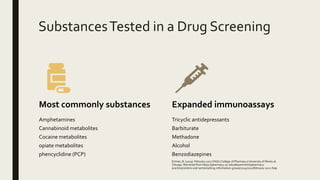
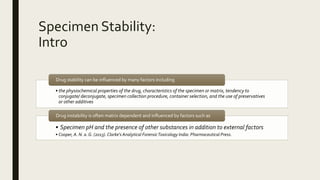
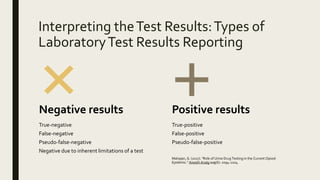
Drug screening involves analyzing samples like urine, blood or hair to detect illegal or prescription drug use. Urine is commonly tested due to extensive reference data and easy, non-invasive collection, though it has a longer detection window than blood and results cannot be used to determine impairment. Proper specimen handling, preservation and storage are important to ensure sample integrity and validity of results. Factors like container type, temperature, and addition of preservatives can affect analyte stability in samples over time.