The primary aim of a forensic examination is to collect evidence that may help prove or
disprove a link between individuals and/or between individuals and objects or places .
For example In sexual violence cases, as in any other criminal investigation, the following
principles for specimen collection should be strictly adhered to:
• collect carefully.
• avoiding contamination.
• collect specimens as early as possible; 72 hours after the assault the value of evidentiary material decreases
dramatically.
• label all specimens accurately.
• dry all wet specimens.
• ensure specimens are secure and tamper proof .
• document details of all collection and handling procedures.
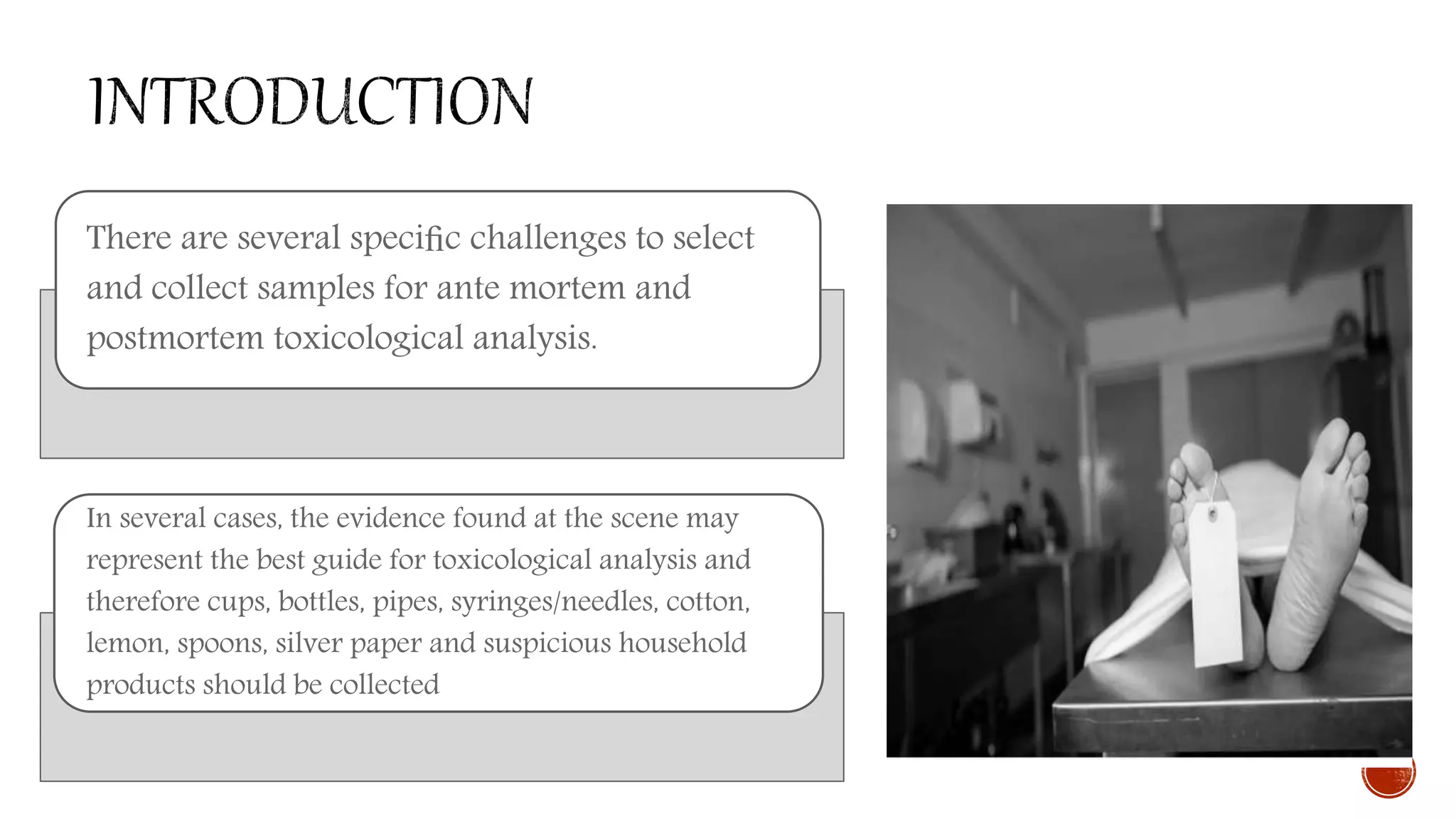
There are several specific challenges to select
and collect samples for ante mortem and
postmortem toxicological analysis.
In several cases, the evidence found at the scene may
represent the best guide for toxicological analysis and
therefore cups, bottles, pipes, syringes/needles, cotton,
lemon, spoons, silver paper and suspicious household
products should be collected
IN VIVO
In vivo, blood, plasma or serum, urine,
hair, nails, exhaled air, oral fluid and
gastric content are the most important
samples to be collected and should be
obtained at the hospital admission,
before the implementation of the
therapeutic measures
IN Postmortem
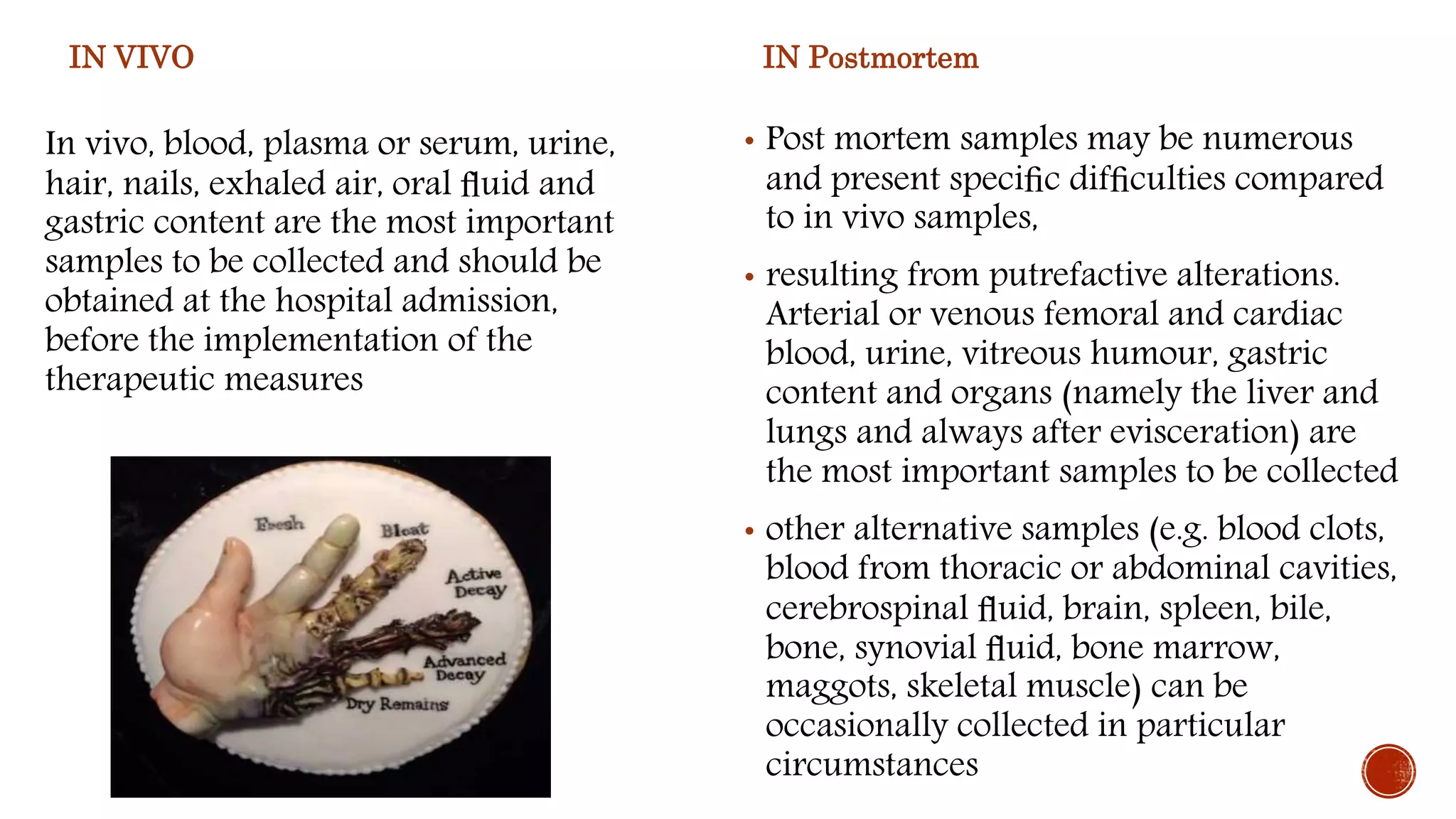
• Post mortem samples may be numerous
and present specific difficulties compared
to in vivo samples,
• resulting from putrefactive alterations.
Arterial or venous femoral and cardiac
blood, urine, vitreous humour, gastric
content and organs (namely the liver and
lungs and always after evisceration) are
the most important samples to be collected
• other alternative samples (e.g. blood clots,
blood from thoracic or abdominal cavities,
cerebrospinal fluid, brain, spleen, bile,
bone, synovial fluid, bone marrow,
maggots, skeletal muscle) can be
occasionally collected in particular
circumstances
The objective of forensic evidence is to prove or exclude a physical connection
between individuals and objects or places. Such evidence comprises a wide variety of
substances or objects, the analysis of which requires specific, often specialized
scientific skills .
On the basis of the facts available and information provided by the patient and
investigators, the health worker must decide which specimens to collect from the
individuals involved .
When faced with such decisions, it is important to be mindful of what purpose the
specimen will serve, what link is potentially going to be established and whether such
a link may assist the investigation of the case
here is a wide range of specimens that could be
collected in order to assist the criminal investigation
process. It is essential that health workers have a clear
understanding of the capabilities and requirements of
their forensic laboratory. For instance:
• What specimens can be tested?
• How should individual specimens be collected, stored and transported
• How are results made available?
All these questions need to be considered before a
forensic service is provided: there is no point collecting
specimens that will not or cannot be tested.
When collecting specimens for forensic analysis, the following principles should be strictly
adhered to:
• Avoid contamination. Ensure that specimens are not contaminated by other materials.
• Collect early: Try to collect forensic specimens as soon as possible.
• Handle appropriately: Ensure that specimens are packed, stored and transported correctly.
• Label accurately: All specimens must be clearly labelled with the patient’s name and date of birth, the
health worker’s name, the type of specimen, and the date and time of collection.
• Ensure security: Specimens should be packed to ensure that they are secure and tamper proof.
• Maintain continuity: Once a specimen has been collected, its subsequent handling should be recorded .
• Maintain continuity: Once a specimen has been collected, its subsequent handling should be recorded.
• Document collection.
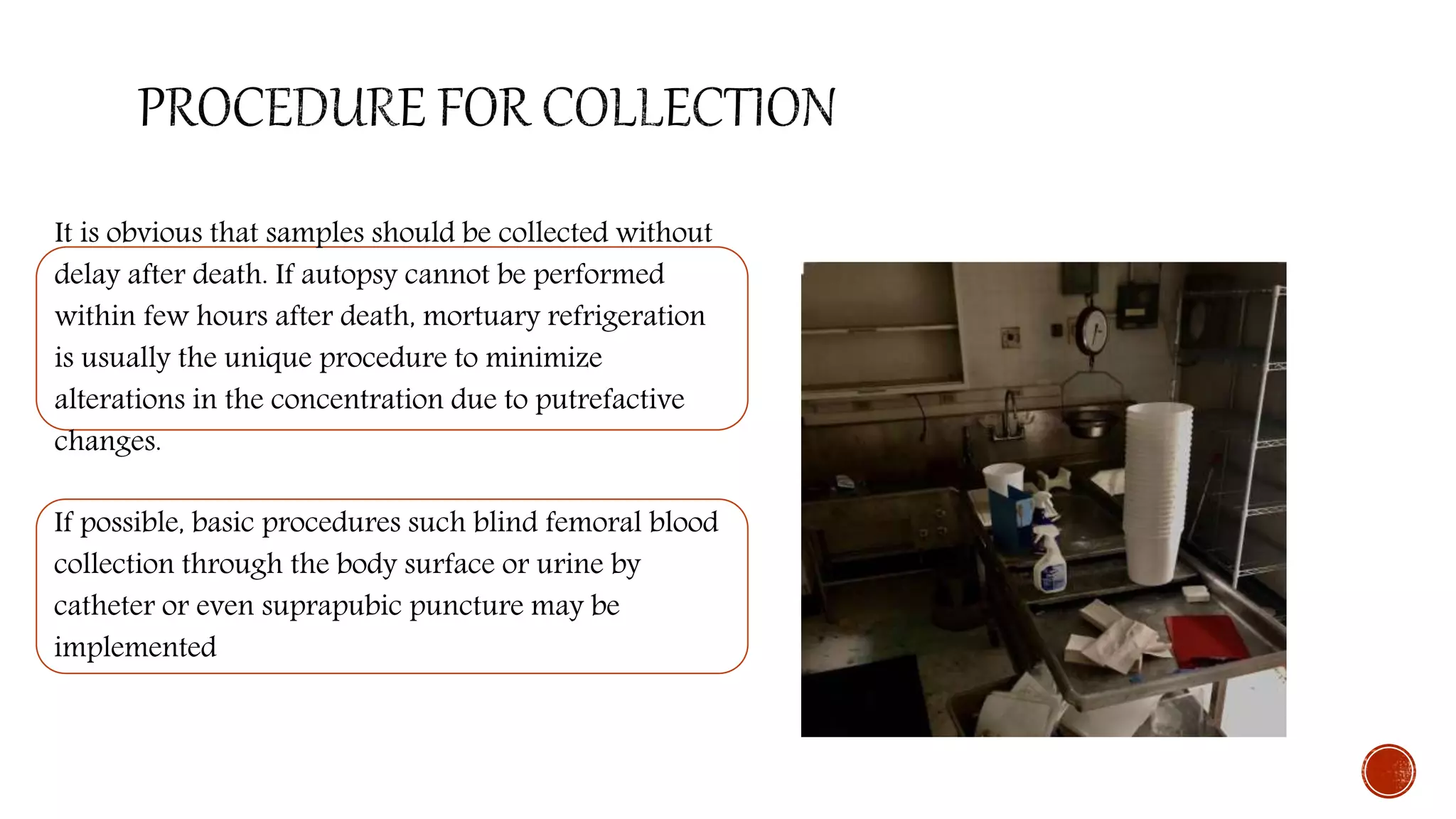
It is obvious that samples should be collected without
delay after death. If autopsy cannot be performed
within few hours after death, mortuary refrigeration
is usually the unique procedure to minimize
alterations in the concentration due to putrefactive
changes.
If possible, basic procedures such blind femoral blood
collection through the body surface or urine by
catheter or even suprapubic puncture may be
implemented
In forensic toxicology, the purpose of sampling is to provide a representative part of
the whole that is suitable for screens and confirmations, affords reliable
interpretation, and, when possible, allows for subsequent reanalysis, if required.
Given this, it should be recognized that sampling is case-dependent ..
I. SPECIMENS FROM LIVING SUBJECTS.
II. POSTMOETEM SPECIMENS.
SPECIMENS FROM LIVING SUBJECTS.
specimens from living subjects are required in cases of
drug-facilitated crimes or attempted poisonings. In all
situations, samples should be collected as quickly as
possible and properly labeled with a means of readily
tracking the specimen (e.g., full name of the victim,
date/time of collection, initials of the person collecting the
sample).
The best containers for liquid samples are disposable hard
plastic or glass tubes. When a preservative is needed,
sodium fluoride should be used at a concentration of
approximately 2% weight by volume. Unless otherwise
noted, specimens must be maintained at temperatures not
greater than 4ºC to ensure sample integrity.
I. URINE
II. BLOOD
III. HAIR
I. URINE
The best specimen for comprehensive drug
and poison screening is urine. The
accumulation of drugs, poisons, and
metabolites in urine will often result in
high concentrations that facilitate their
detection. A minimum of a 30 ml sample of
urine is required for thorough screening of
this specimen . The addition of fluoride as a
preservative is encouraged, but not always
required
II. BLOOD
the specimen of choice for quantifying and
interpreting concentrations of drugs and their
metabolites is blood. At a minimum, a 10 to 15-ml
sample preserved with sodium fluoride is
recommended. An additional 5-ml blood sample
placed into a collection tube containing a clot
activator and K2EDTA may also prove useful in
cases of suspected fluoride poisoning and for
obtaining a plasma sample (after centrifugation),
if so desired., blood specimens are also useful in
cases of attempted or accidental poisoning by
gases and volatile organic compounds.
Maintaining a frozen fraction of blood may help
ensure better analyte stability in later re-analyses.
III. HAIR
When there has been a significant delay between suspected exposure to a drug or
poison and reporting to law enforcement, one of the most useful specimens for
forensic analysis is a sample of hair.
Approximately 100-200 mg of hair should be collected from the vertex posterior on
the back of the head by cutting as close to the scalp as possible, ensuring that it is
clearly marked which end is closest to the scalp and appropriately securing the hair
into a bundle with a rubber band, twist tie, or string.
The hair sample may then be placed into aluminum foil, an envelope, or plastic
collection tube and stored at room temperature until analysis.
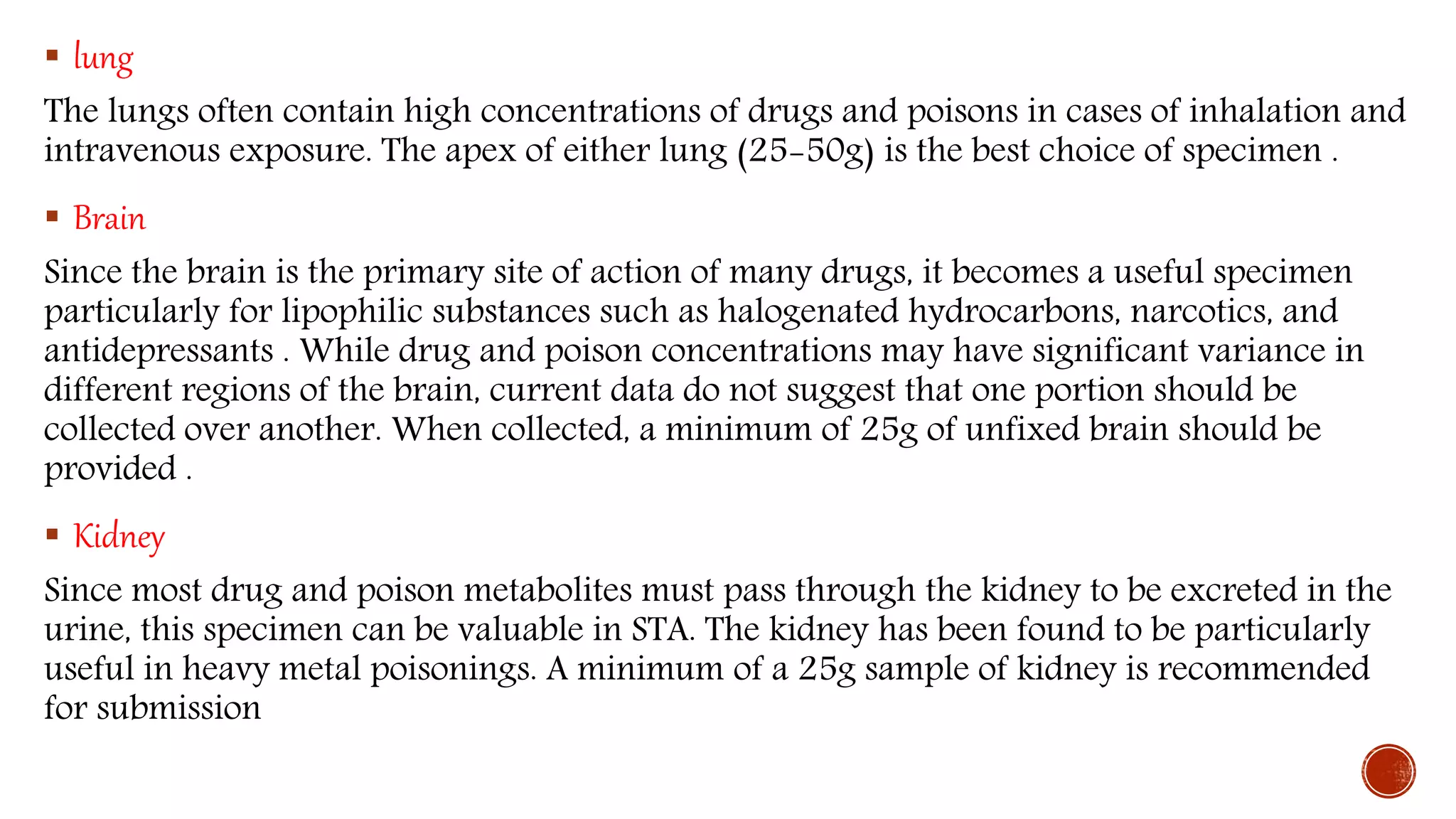
POSTMORTEM SPECIMENS.
The availability of autopsy specimens in postmortem toxicology allow for a more flexible
analytical approach to the analysis, although some specimens have more value than others
when specific drugs or poisons are involved in the death .
Postmortem specimens should be collected as quickly as possible . All samples must be
collected in separate containers. Each sample must be labeled with the full name of the
deceased, specimen type, collection site, date/time of collection, and initials of the individual
collecting the sample. Samples should be stored at a maximum of 4ºC when analyzed
promptly after autopsy, otherwise at -20ºC.
POSTMOETEM SPECIMENS :
• Blood
• Urine
• vitreous humor
• gastric content
• bile
• Cerebrospinal fluid
• Tissue
• liver
• lung
• kidney
• Subcutaneous fat and skeletal
muscle
• hair and nails
• Insert larvae
• Scene sample
 BLOOD :
In most postmortem cases, blood remains the single most important specimen to analyze. When
possible, at least two blood specimens should be collected: a) 30 ml of central blood (from the right
atrium of the heart, inferior vena cava, or another convenient large vessel) for qualitative analysis
and b) 10 ml peripheral blood (preferably from the left and right femoral veins) by direct vascular
access for quantitative analysis .
Both samples should be preserved with sodium fluoride/ potassium oxalate, unless suspicion of
poisoning with fluoride or a fluoride-producing compound exists.
 URINE :
The advantages of urine in postmortem cases is similar to its advantage in specimens collected from living
patients - many drugs and metabolites are present in higher concentrations in urine than in blood and they
remain in urine for days or longer.
A disadvantage of urine occurs in instances in which death occurs very rapidly after exposure to a drug or
poison. In these cases, the urine specimen may be negative for the causative agent, so caution must be used in
evaluating results from this specimen. In most cases, all available urine should be collected in postmortem
cases . The use of fluoride as a preservative is encouraged
 vitreous humor :
The fact that vitreous humor resides in an anatomically isolated and protected area of the body
(behind the lens of the eye), coupled with its good stability as a biological fluid, makes this specimen
more resistant to putrefactive changes than other postmortem specimens . All available vitreous fluid
from each eye should be collected separately .
gastric content :
Oral ingestion remains the most popular means of exposure to drugs and poisons. Therefore, gastric
contents are essential for screening tests. All of the available sample should be collected without the
addition of a preservative. Undigested pills and tablets should be separated and placed into plastic
pillboxes for analysis .
 bile
In postmortem cases in which urine samples are not available, bile may be substituted. Many drugs
and poisons have been shown to concentrate in bile (e.g. narcotics, benzodiazepines, heavy metals).
When it is collected, all available bile should be removed from the gall bladder and preserved with
sodium fluoride (2% w/v). To avoid fermentation of this specimen, it should be stored at
temperatures of at least -20ºC .
 Cerebrospinal fluid
Cerebrospinal fluid is a useful specimen for the screening of drugs with their site of action in the central
nervous system. It is also less likely to be contaminated or have bacterial infiltration due to its protected
environment. While there are only a few published references to assist in the interpretation of drug
concentrations in cerebrospinal fluid, reference values are documented for urea and creatinine. It is also a
useful specimen for the detection of glucose and lactate in cases of hypoglycemia.
 Tissue
Tissue samples collected in postmortem investigations generally provide supplemental information to the
toxicologist to assist in interpretation of their results. analysis of the correct tissue specimen may be vital to
the identification or confirmation of an unknown causative agent. All tissue specimens should be submitted as
unfixed samples and frozen until analysis
 liver
In most postmortem toxicology cases, a liver sample is usually the most valuable tissue specimen . Since most
drugs and poisons are metabolized in the liver, both the parent compound and its metabolites may be present
in high concentrations in this tissue. Additionally, quantitative analysis of a liver specimen may assist in
differentiating acute overdoses from therapeutic use of drugs that have a narrow therapeutic index. To
minimize the effect of drug diffusion from the small bowel and stomach on quantitative findings, the sample
should be from deep within the right lobe of the liver. Approximately 25-50g of tissue should be collected
 lung
The lungs often contain high concentrations of drugs and poisons in cases of inhalation and
intravenous exposure. The apex of either lung (25-50g) is the best choice of specimen .
 Brain
Since the brain is the primary site of action of many drugs, it becomes a useful specimen
particularly for lipophilic substances such as halogenated hydrocarbons, narcotics, and
antidepressants . While drug and poison concentrations may have significant variance in
different regions of the brain, current data do not suggest that one portion should be
collected over another. When collected, a minimum of 25g of unfixed brain should be
provided .
 Kidney
Since most drug and poison metabolites must pass through the kidney to be excreted in the
urine, this specimen can be valuable in STA. The kidney has been found to be particularly
useful in heavy metal poisonings. A minimum of a 25g sample of kidney is recommended
for submission
Subcutaneous fat and skeletal muscle
In certain cases, subcutaneous fat and skeletal muscle may prove useful to STA. This is particularly true when
the postmortem examination reveals apparent injection sites that may still contain a region of concentrated
drug or poison. Collection should include the skin and fat layer, in addition to the muscle tissue around the
site. Additionally, a control sample from a comparable area away from the suspected injection site should also
be collected.
hair and nails
Keratinized specimens such as nails and hair may be used to test for chronic exposure of heavy metals, drugs,
or other poisons. These specimens allow for an assessment of exposure weeks to months prior to collection. The
best collection site for hair is from the vertex posterior on the back of the head . It is important to label the hair
with a rubber band, twist tie, or string to clearly differentiate the end that is closest to the scalp. Strands of hair
(approximately 200 mg) should be cut as close to the scalp as possible and placed in aluminum foil, an
envelope, or plastic collection tube. Storage at ambient temperature is sufficient. Whole nails should be
removed from the fingers and/or toes and stored in a manner similar to hair samples .
Scene sample
In many cases, the evidence found at the scene provides the best guidance to the toxicologist performing STA.
Collection of drug paraphernalia, cups or bottles, and suspicious household products will help ensure that a
thorough toxicological analysis is performed
Specimen acquisition is often the most critical, yet overlooked
component of FTA. It is usually impossible to acquire an additional
sample of equal quality after the first opportunity for collection has
passed. Therefore, the Committee of Systematic Toxicological
Analysis of The International Association of Forensic Toxicologists
strongly endorses the collection of appropriate specimens in
sufficient amounts to allow for a thorough and efficient approach
to identifying unknown substances in biological specimens.
1. Jansch H (1922) Beitr. Gerichtl. Med. 4:55-88.
2. Skopp G (2004) Forensic Sci. Int. 142:75-100.
3. Levine B (2006) Principles of Forensic Toxicology. American Association for Clinical Chemistry, Washington, DC.
4. Society of Forensic Toxicologists/American Academy of Forensic Sciences. Forensic Toxicology Laboratory Guidelines. 2006.
www.soft-tox.org.
5. Flanagan RJ, Connally G, and Evans JM (2005) Toxicol. Rev. 24:63-71.
6. Drummer OH and Gerostamoulos J (2002) Ther. Drug Monit. 24:199-209.
7. Kintz P (2004) Forensic Sci. Int. 142:127-134

Forensic specimens collection

  • 2.
    The primary aimof a forensic examination is to collect evidence that may help prove or disprove a link between individuals and/or between individuals and objects or places . For example In sexual violence cases, as in any other criminal investigation, the following principles for specimen collection should be strictly adhered to: • collect carefully. • avoiding contamination. • collect specimens as early as possible; 72 hours after the assault the value of evidentiary material decreases dramatically. • label all specimens accurately. • dry all wet specimens. • ensure specimens are secure and tamper proof . • document details of all collection and handling procedures.
  • 3.
    There are severalspecific challenges to select and collect samples for ante mortem and postmortem toxicological analysis. In several cases, the evidence found at the scene may represent the best guide for toxicological analysis and therefore cups, bottles, pipes, syringes/needles, cotton, lemon, spoons, silver paper and suspicious household products should be collected
  • 4.
    IN VIVO In vivo,blood, plasma or serum, urine, hair, nails, exhaled air, oral fluid and gastric content are the most important samples to be collected and should be obtained at the hospital admission, before the implementation of the therapeutic measures IN Postmortem • Post mortem samples may be numerous and present specific difficulties compared to in vivo samples, • resulting from putrefactive alterations. Arterial or venous femoral and cardiac blood, urine, vitreous humour, gastric content and organs (namely the liver and lungs and always after evisceration) are the most important samples to be collected • other alternative samples (e.g. blood clots, blood from thoracic or abdominal cavities, cerebrospinal fluid, brain, spleen, bile, bone, synovial fluid, bone marrow, maggots, skeletal muscle) can be occasionally collected in particular circumstances
  • 5.
    The objective offorensic evidence is to prove or exclude a physical connection between individuals and objects or places. Such evidence comprises a wide variety of substances or objects, the analysis of which requires specific, often specialized scientific skills . On the basis of the facts available and information provided by the patient and investigators, the health worker must decide which specimens to collect from the individuals involved . When faced with such decisions, it is important to be mindful of what purpose the specimen will serve, what link is potentially going to be established and whether such a link may assist the investigation of the case
  • 6.
    here is awide range of specimens that could be collected in order to assist the criminal investigation process. It is essential that health workers have a clear understanding of the capabilities and requirements of their forensic laboratory. For instance: • What specimens can be tested? • How should individual specimens be collected, stored and transported • How are results made available? All these questions need to be considered before a forensic service is provided: there is no point collecting specimens that will not or cannot be tested.
  • 7.
    When collecting specimensfor forensic analysis, the following principles should be strictly adhered to: • Avoid contamination. Ensure that specimens are not contaminated by other materials. • Collect early: Try to collect forensic specimens as soon as possible. • Handle appropriately: Ensure that specimens are packed, stored and transported correctly. • Label accurately: All specimens must be clearly labelled with the patient’s name and date of birth, the health worker’s name, the type of specimen, and the date and time of collection. • Ensure security: Specimens should be packed to ensure that they are secure and tamper proof. • Maintain continuity: Once a specimen has been collected, its subsequent handling should be recorded . • Maintain continuity: Once a specimen has been collected, its subsequent handling should be recorded. • Document collection.
  • 9.
    It is obviousthat samples should be collected without delay after death. If autopsy cannot be performed within few hours after death, mortuary refrigeration is usually the unique procedure to minimize alterations in the concentration due to putrefactive changes. If possible, basic procedures such blind femoral blood collection through the body surface or urine by catheter or even suprapubic puncture may be implemented
  • 10.
    In forensic toxicology,the purpose of sampling is to provide a representative part of the whole that is suitable for screens and confirmations, affords reliable interpretation, and, when possible, allows for subsequent reanalysis, if required. Given this, it should be recognized that sampling is case-dependent .. I. SPECIMENS FROM LIVING SUBJECTS. II. POSTMOETEM SPECIMENS.
  • 11.
    SPECIMENS FROM LIVINGSUBJECTS. specimens from living subjects are required in cases of drug-facilitated crimes or attempted poisonings. In all situations, samples should be collected as quickly as possible and properly labeled with a means of readily tracking the specimen (e.g., full name of the victim, date/time of collection, initials of the person collecting the sample). The best containers for liquid samples are disposable hard plastic or glass tubes. When a preservative is needed, sodium fluoride should be used at a concentration of approximately 2% weight by volume. Unless otherwise noted, specimens must be maintained at temperatures not greater than 4ºC to ensure sample integrity. I. URINE II. BLOOD III. HAIR
  • 12.
    I. URINE The bestspecimen for comprehensive drug and poison screening is urine. The accumulation of drugs, poisons, and metabolites in urine will often result in high concentrations that facilitate their detection. A minimum of a 30 ml sample of urine is required for thorough screening of this specimen . The addition of fluoride as a preservative is encouraged, but not always required II. BLOOD the specimen of choice for quantifying and interpreting concentrations of drugs and their metabolites is blood. At a minimum, a 10 to 15-ml sample preserved with sodium fluoride is recommended. An additional 5-ml blood sample placed into a collection tube containing a clot activator and K2EDTA may also prove useful in cases of suspected fluoride poisoning and for obtaining a plasma sample (after centrifugation), if so desired., blood specimens are also useful in cases of attempted or accidental poisoning by gases and volatile organic compounds. Maintaining a frozen fraction of blood may help ensure better analyte stability in later re-analyses.
  • 13.
    III. HAIR When therehas been a significant delay between suspected exposure to a drug or poison and reporting to law enforcement, one of the most useful specimens for forensic analysis is a sample of hair. Approximately 100-200 mg of hair should be collected from the vertex posterior on the back of the head by cutting as close to the scalp as possible, ensuring that it is clearly marked which end is closest to the scalp and appropriately securing the hair into a bundle with a rubber band, twist tie, or string. The hair sample may then be placed into aluminum foil, an envelope, or plastic collection tube and stored at room temperature until analysis.
  • 14.
    POSTMORTEM SPECIMENS. The availabilityof autopsy specimens in postmortem toxicology allow for a more flexible analytical approach to the analysis, although some specimens have more value than others when specific drugs or poisons are involved in the death . Postmortem specimens should be collected as quickly as possible . All samples must be collected in separate containers. Each sample must be labeled with the full name of the deceased, specimen type, collection site, date/time of collection, and initials of the individual collecting the sample. Samples should be stored at a maximum of 4ºC when analyzed promptly after autopsy, otherwise at -20ºC. POSTMOETEM SPECIMENS : • Blood • Urine • vitreous humor • gastric content • bile
  • 15.
    • Cerebrospinal fluid •Tissue • liver • lung • kidney • Subcutaneous fat and skeletal muscle • hair and nails • Insert larvae • Scene sample
  • 16.
     BLOOD : Inmost postmortem cases, blood remains the single most important specimen to analyze. When possible, at least two blood specimens should be collected: a) 30 ml of central blood (from the right atrium of the heart, inferior vena cava, or another convenient large vessel) for qualitative analysis and b) 10 ml peripheral blood (preferably from the left and right femoral veins) by direct vascular access for quantitative analysis . Both samples should be preserved with sodium fluoride/ potassium oxalate, unless suspicion of poisoning with fluoride or a fluoride-producing compound exists.  URINE : The advantages of urine in postmortem cases is similar to its advantage in specimens collected from living patients - many drugs and metabolites are present in higher concentrations in urine than in blood and they remain in urine for days or longer. A disadvantage of urine occurs in instances in which death occurs very rapidly after exposure to a drug or poison. In these cases, the urine specimen may be negative for the causative agent, so caution must be used in evaluating results from this specimen. In most cases, all available urine should be collected in postmortem cases . The use of fluoride as a preservative is encouraged
  • 17.
     vitreous humor: The fact that vitreous humor resides in an anatomically isolated and protected area of the body (behind the lens of the eye), coupled with its good stability as a biological fluid, makes this specimen more resistant to putrefactive changes than other postmortem specimens . All available vitreous fluid from each eye should be collected separately . gastric content : Oral ingestion remains the most popular means of exposure to drugs and poisons. Therefore, gastric contents are essential for screening tests. All of the available sample should be collected without the addition of a preservative. Undigested pills and tablets should be separated and placed into plastic pillboxes for analysis .  bile In postmortem cases in which urine samples are not available, bile may be substituted. Many drugs and poisons have been shown to concentrate in bile (e.g. narcotics, benzodiazepines, heavy metals). When it is collected, all available bile should be removed from the gall bladder and preserved with sodium fluoride (2% w/v). To avoid fermentation of this specimen, it should be stored at temperatures of at least -20ºC .
  • 18.
     Cerebrospinal fluid Cerebrospinalfluid is a useful specimen for the screening of drugs with their site of action in the central nervous system. It is also less likely to be contaminated or have bacterial infiltration due to its protected environment. While there are only a few published references to assist in the interpretation of drug concentrations in cerebrospinal fluid, reference values are documented for urea and creatinine. It is also a useful specimen for the detection of glucose and lactate in cases of hypoglycemia.  Tissue Tissue samples collected in postmortem investigations generally provide supplemental information to the toxicologist to assist in interpretation of their results. analysis of the correct tissue specimen may be vital to the identification or confirmation of an unknown causative agent. All tissue specimens should be submitted as unfixed samples and frozen until analysis  liver In most postmortem toxicology cases, a liver sample is usually the most valuable tissue specimen . Since most drugs and poisons are metabolized in the liver, both the parent compound and its metabolites may be present in high concentrations in this tissue. Additionally, quantitative analysis of a liver specimen may assist in differentiating acute overdoses from therapeutic use of drugs that have a narrow therapeutic index. To minimize the effect of drug diffusion from the small bowel and stomach on quantitative findings, the sample should be from deep within the right lobe of the liver. Approximately 25-50g of tissue should be collected
  • 19.
     lung The lungsoften contain high concentrations of drugs and poisons in cases of inhalation and intravenous exposure. The apex of either lung (25-50g) is the best choice of specimen .  Brain Since the brain is the primary site of action of many drugs, it becomes a useful specimen particularly for lipophilic substances such as halogenated hydrocarbons, narcotics, and antidepressants . While drug and poison concentrations may have significant variance in different regions of the brain, current data do not suggest that one portion should be collected over another. When collected, a minimum of 25g of unfixed brain should be provided .  Kidney Since most drug and poison metabolites must pass through the kidney to be excreted in the urine, this specimen can be valuable in STA. The kidney has been found to be particularly useful in heavy metal poisonings. A minimum of a 25g sample of kidney is recommended for submission
  • 20.
    Subcutaneous fat andskeletal muscle In certain cases, subcutaneous fat and skeletal muscle may prove useful to STA. This is particularly true when the postmortem examination reveals apparent injection sites that may still contain a region of concentrated drug or poison. Collection should include the skin and fat layer, in addition to the muscle tissue around the site. Additionally, a control sample from a comparable area away from the suspected injection site should also be collected. hair and nails Keratinized specimens such as nails and hair may be used to test for chronic exposure of heavy metals, drugs, or other poisons. These specimens allow for an assessment of exposure weeks to months prior to collection. The best collection site for hair is from the vertex posterior on the back of the head . It is important to label the hair with a rubber band, twist tie, or string to clearly differentiate the end that is closest to the scalp. Strands of hair (approximately 200 mg) should be cut as close to the scalp as possible and placed in aluminum foil, an envelope, or plastic collection tube. Storage at ambient temperature is sufficient. Whole nails should be removed from the fingers and/or toes and stored in a manner similar to hair samples . Scene sample In many cases, the evidence found at the scene provides the best guidance to the toxicologist performing STA. Collection of drug paraphernalia, cups or bottles, and suspicious household products will help ensure that a thorough toxicological analysis is performed
  • 21.
    Specimen acquisition isoften the most critical, yet overlooked component of FTA. It is usually impossible to acquire an additional sample of equal quality after the first opportunity for collection has passed. Therefore, the Committee of Systematic Toxicological Analysis of The International Association of Forensic Toxicologists strongly endorses the collection of appropriate specimens in sufficient amounts to allow for a thorough and efficient approach to identifying unknown substances in biological specimens.
  • 22.
    1. Jansch H(1922) Beitr. Gerichtl. Med. 4:55-88. 2. Skopp G (2004) Forensic Sci. Int. 142:75-100. 3. Levine B (2006) Principles of Forensic Toxicology. American Association for Clinical Chemistry, Washington, DC. 4. Society of Forensic Toxicologists/American Academy of Forensic Sciences. Forensic Toxicology Laboratory Guidelines. 2006. www.soft-tox.org. 5. Flanagan RJ, Connally G, and Evans JM (2005) Toxicol. Rev. 24:63-71. 6. Drummer OH and Gerostamoulos J (2002) Ther. Drug Monit. 24:199-209. 7. Kintz P (2004) Forensic Sci. Int. 142:127-134

Editor's Notes

  • #4 Thus, numerous pre-analytical aspects should be considered during collection in order to have samples with sufficient quality and quantity.
  • #7 ? It is important to be aware of the fact that all aspects of the collection, transport and analysis of forensic specimens may be subject to legal scrutiny, the results of which may affect the outcome of criminal proceedings.
  • #13 EDTA stands for Ethylenediaminetetraacetic acid. EDTA functions by binding calcium in the blood and keeping the blood from clotting. ... BD Vacutainer Plus Blood Collection Tubes contain K2EDTA, which is spray-dried to the walls of the tube
  • #15 it should be noted that the autolysis and putrefactive processes that occur after death, as well as postmortem redistribution, can have a profound effect on drugs and poisons that are present in the body prior to death.