
AMP-ACTIVATED PROTEIN KINASE
1
 Energy sensing enzymes that are activated by cellular stresses
resulting in ATP depletion.
 AMPK is considered to regulate glucose and lipid metabolism
 AMPK-activation:-
 Switch cells from active ATP consumption (eg. fatty acid and
cholesterol biosynthesis) to active ATP production (eg. fatty acid and
glucose oxidation).
 AMPK switches on catabolic pathways that generate ATP, while
switching off ATP-consuming processes such as biosynthesis ,cell
growth and proliferation. 2
 Chemical activation of AMPK in vivo with 5-aminoimidazole-4-
carboxamide ribonucleoside (AICAR) improves blood glucose
concentrations and lipid profiles, making AMPK an attractive
pharmacological target for the treatment of type 2 diabetes
and other metabolic disorders.
 The two leading diabetic drugs namely, metformin and
rosiglitazone show their metabolic effects partially through
AMPK.
3
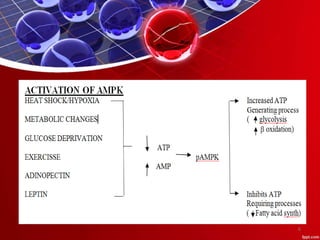
 It is activated by increases in the cellular AMP:ATP ratio
caused by metabolic stresses
 Muscle contraction leads to increase in AMP/ ATP and Cr/ pCr
levels leading to robust increase in AMPK activity .
4
 In liver, activation of AMPK results in enhanced fatty acid
oxidation and decreased production of glucose, cholesterol,
and triglycerides
 Other activities
 Regulation of insulin synthesis and secretion in pancreatic
islet β-cells
 Modulation of hypothalamic functions involved in the
regulation of satiety.
5
6
STRUCTURE OF AMPK
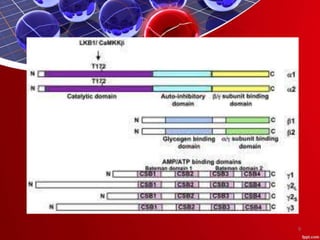
 AMPK is a heterotrimeric protein consists of three
subunits namely α,β and ɣ
 Both the α and β subunits have two isoforms
each, namely α1 & α2 and β1 & β2, while the
ɣ subunit exists in three isomeric forms, i.e., ɣ 1,
ɣ2 and ɣ3.
 AMPK α1 is widely expressed, whereas the α2
subunit isoform is mainly found in the heart,
skeletal muscle, and liver.
7
9
PHYSIOLOGICAL FUNCTIONS
AMPK in skeletal muscle
 Skeletal muscle is the main site for glucose
disposal in the body.
 Insulin resistance is one of the early defects
detected in the muscle of diabetic patients .
 Targeting insulin independent pathway to
restore glucose disposal is being explored as
an alternative approach to treat diabetes.
 Exercise enhances muscle glucose disposal in
diabetic patients through an insulin
independent mechanism.
10
 Mimicking exercise like effect through drug could
be an attractive approach to improve blood
glucose level.
 A similar effect has been observed with AICAR, an
AMP analogue and known AMPK activator.
 AMPK also plays an important role in muscle fat
metabolism.
 Upon activation either by exercise or contraction,
AMPK decreases the activity of acetyl CoA
carboxylase (ACC) by inhibiting its transcription
and also through phosphorylation.
11
Role of AMPK in liver
 Activated AMPK inactivates ACC at transcriptional
and post translational level and also inhibits HMG
CoA reductase.
 Activated AMPK decreases malonyl CoAsynthesis
resulting in increased b -oxidation
12
Role of AMPK in adipocytokine signalling
 Adiponectin and leptin-adipocytokines produced
and secreted from adipose tissues-type 2 diabetes
 Adinopectin increases free fatty oxidation through
ACC inhibition, an AMPK target gene and also
enhances insulin sensitivity both in skeletal muscle
and liver
13
 AMPK is a global target as it regulates different
diversified signals in metabolic pathways.
 Type 2 diabetic patients are often associated with
hypertriglyceridaemia and high cholesterol, the
potential risk factors for cardiovascular problems.
Activated AMPK could reduce this risk.
 AMPK, by inhibiting hepatic glucose output and
increasing muscle glucose uptake, could control
elevated blood glucose level in the body.
THERAPEUTIC POTENTIAL
15
 Three different kinds of AMPK activators have
been reported so far:
1. PPARg activators:rosiglitazone and pioglitazone,
which activate AMPK without direct binding but
by increasing cellular AMP/ATP ratio.
2. AICAR, an analogue of natural activator AMP,
which activates AMPK through direct binding.
3. Lastly, metformin, an AMPK activator which does
not affect AMP/ATP ratios or bind to AMPK, but
acts through an unknown mechanism.
16
 An ideal AMPK activator is expected to:
 increase muscle glucose transport and muscle
insulin sensitivity
 enhance fat oxidation in muscle and liver
 inhibit hepatic gluconeogenesis
 decrease cholesterol and triglyceride synthesis in
liver
 should be devoid of problems associated with
present antidiabetic drugs (gastrointestinal
problem, body weight increase, etc.)
17
(i) AMPK is a heterotrimeric protein and so far no
crystal structure is available
(ii) each subunit contains two or more isoforms
(iii) the AMP binding site is not well defined.
Challenges associated with AMPK
19
REFERENCE
1. icmr.nic.in/ijmr/2007/march/0313.pdf
2. circres.ahajournals.org/content/100/3/328.long
3. themedicalbiochemistrypage.org/ampk.php
20

AMPK

  • 1.
  • 2.
     Energy sensingenzymes that are activated by cellular stresses resulting in ATP depletion.  AMPK is considered to regulate glucose and lipid metabolism  AMPK-activation:-  Switch cells from active ATP consumption (eg. fatty acid and cholesterol biosynthesis) to active ATP production (eg. fatty acid and glucose oxidation).  AMPK switches on catabolic pathways that generate ATP, while switching off ATP-consuming processes such as biosynthesis ,cell growth and proliferation. 2
  • 3.
     Chemical activationof AMPK in vivo with 5-aminoimidazole-4- carboxamide ribonucleoside (AICAR) improves blood glucose concentrations and lipid profiles, making AMPK an attractive pharmacological target for the treatment of type 2 diabetes and other metabolic disorders.  The two leading diabetic drugs namely, metformin and rosiglitazone show their metabolic effects partially through AMPK. 3
  • 4.
     It isactivated by increases in the cellular AMP:ATP ratio caused by metabolic stresses  Muscle contraction leads to increase in AMP/ ATP and Cr/ pCr levels leading to robust increase in AMPK activity . 4
  • 5.
     In liver,activation of AMPK results in enhanced fatty acid oxidation and decreased production of glucose, cholesterol, and triglycerides  Other activities  Regulation of insulin synthesis and secretion in pancreatic islet β-cells  Modulation of hypothalamic functions involved in the regulation of satiety. 5
  • 6.
  • 7.
    STRUCTURE OF AMPK AMPK is a heterotrimeric protein consists of three subunits namely α,β and ɣ  Both the α and β subunits have two isoforms each, namely α1 & α2 and β1 & β2, while the ɣ subunit exists in three isomeric forms, i.e., ɣ 1, ɣ2 and ɣ3.  AMPK α1 is widely expressed, whereas the α2 subunit isoform is mainly found in the heart, skeletal muscle, and liver. 7
  • 8.
  • 9.
    PHYSIOLOGICAL FUNCTIONS AMPK inskeletal muscle  Skeletal muscle is the main site for glucose disposal in the body.  Insulin resistance is one of the early defects detected in the muscle of diabetic patients .  Targeting insulin independent pathway to restore glucose disposal is being explored as an alternative approach to treat diabetes.  Exercise enhances muscle glucose disposal in diabetic patients through an insulin independent mechanism. 10
  • 10.
     Mimicking exerciselike effect through drug could be an attractive approach to improve blood glucose level.  A similar effect has been observed with AICAR, an AMP analogue and known AMPK activator.  AMPK also plays an important role in muscle fat metabolism.  Upon activation either by exercise or contraction, AMPK decreases the activity of acetyl CoA carboxylase (ACC) by inhibiting its transcription and also through phosphorylation. 11
  • 11.
    Role of AMPKin liver  Activated AMPK inactivates ACC at transcriptional and post translational level and also inhibits HMG CoA reductase.  Activated AMPK decreases malonyl CoAsynthesis resulting in increased b -oxidation 12
  • 12.
    Role of AMPKin adipocytokine signalling  Adiponectin and leptin-adipocytokines produced and secreted from adipose tissues-type 2 diabetes  Adinopectin increases free fatty oxidation through ACC inhibition, an AMPK target gene and also enhances insulin sensitivity both in skeletal muscle and liver 13
  • 13.
     AMPK isa global target as it regulates different diversified signals in metabolic pathways.  Type 2 diabetic patients are often associated with hypertriglyceridaemia and high cholesterol, the potential risk factors for cardiovascular problems. Activated AMPK could reduce this risk.  AMPK, by inhibiting hepatic glucose output and increasing muscle glucose uptake, could control elevated blood glucose level in the body. THERAPEUTIC POTENTIAL 15
  • 14.
     Three differentkinds of AMPK activators have been reported so far: 1. PPARg activators:rosiglitazone and pioglitazone, which activate AMPK without direct binding but by increasing cellular AMP/ATP ratio. 2. AICAR, an analogue of natural activator AMP, which activates AMPK through direct binding. 3. Lastly, metformin, an AMPK activator which does not affect AMP/ATP ratios or bind to AMPK, but acts through an unknown mechanism. 16
  • 15.
     An idealAMPK activator is expected to:  increase muscle glucose transport and muscle insulin sensitivity  enhance fat oxidation in muscle and liver  inhibit hepatic gluconeogenesis  decrease cholesterol and triglyceride synthesis in liver  should be devoid of problems associated with present antidiabetic drugs (gastrointestinal problem, body weight increase, etc.) 17
  • 16.
    (i) AMPK isa heterotrimeric protein and so far no crystal structure is available (ii) each subunit contains two or more isoforms (iii) the AMP binding site is not well defined. Challenges associated with AMPK 19
  • 17.