UNIT8: Energy
Nuria Sánchez Parra
5º, CEIP García Bellido
OUTLINE
• Energy
- Properties
- Types of energy
• Energy sources
- Renewable energy sources
- Non- renewable energy sources
• Consequences of energy use
Vocabulary
• Energy: Energía
• Everywhere: en todos lados
• Everything: en todas las cosas
• Store: almacenar
• Chemical Energy: Energía Química
• Light Energy: Energía luminosa
• Nuclear Energy: Energía Nuclear
• Mechanical Energy: Energía Mecánica
• Thermal Energy: Energía Térmica
• Electrical Energy: Energía Eléctrica
• Transform: transformar
• Transfer: transferir
• Transport: transformar
• Energy sources: Recursos de energía
• Renewable: renovable
• Non- renewable: no renovable
• Run out: acabarse
• Sun: sol
• Wind: viento
• Flowing water: agua que fluye
• Hydarulic: hidráulica
• The Earth´s internal heat: calor interno
de la Tierra
• Biomass: biomasa
• Fossil fuels: combustibles fósiles
• Coal: carbón
• Pretoleum: petróleo
• Natural gas: gas natural
• Nuclear fuels: combustibles nucleares
• Uranium: uranio
• Plutonium: Plutonio
• Limited resources: recursos limitados
• Radioactive waste: residuos radiactivos
• Air pollution: contaminación del aire.
• Acid rain: lluvía ácida
• Global warming: calentamiento global
• Greenhouse effect: efecto invernadero
Videos
• Energy and types
• Renewable and non renewable sources
• Resources
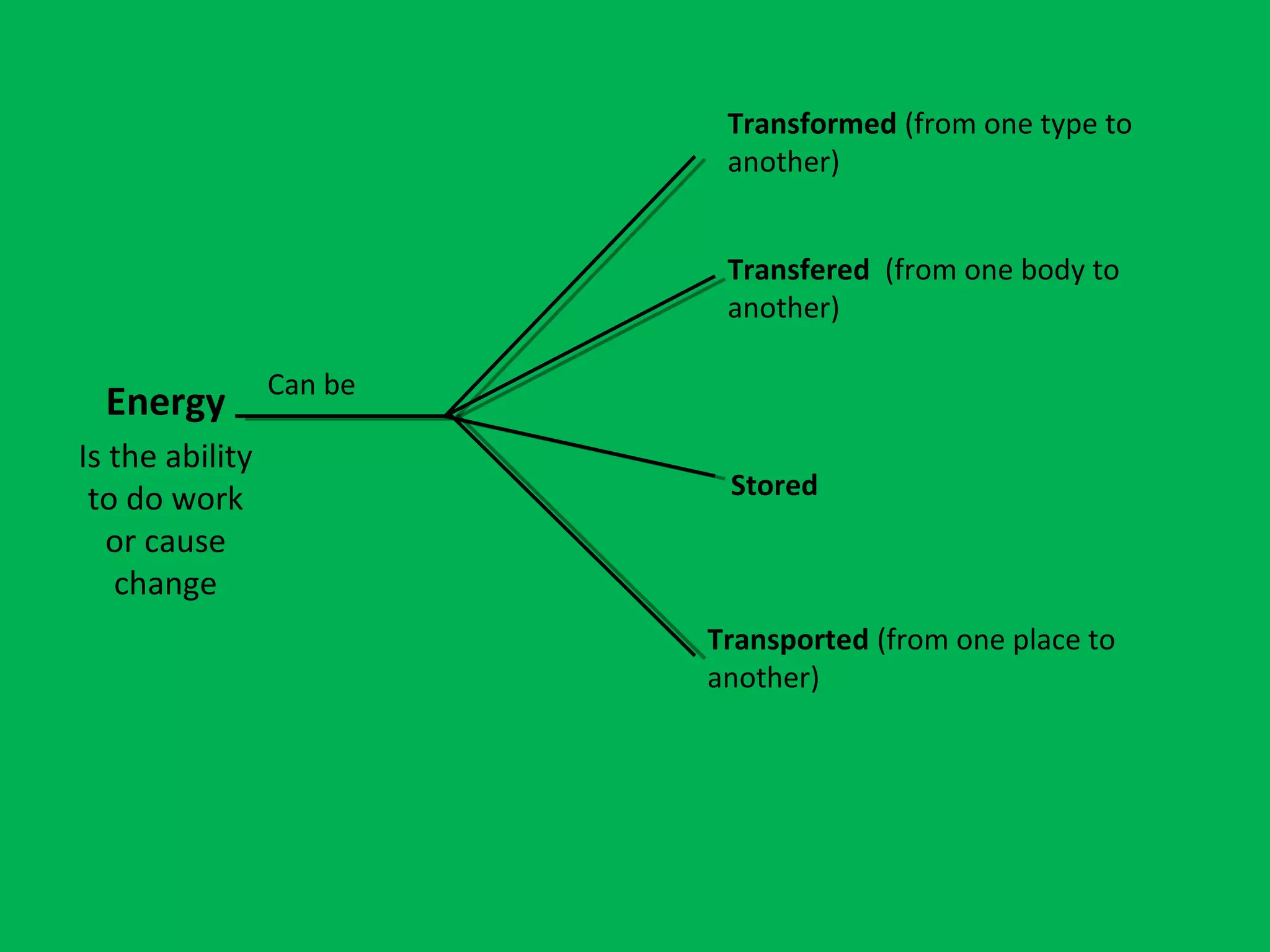
Energy
Is the ability
to do work
or cause
change
Can be
Transformed (from one type to
another)
Transfered (from one body to
another)
Stored
Transported (from one place to
another)
Types of
energy
Chemical energy: stored in food,
plants, batteries….
Light energy: is emited by objects
that emit light
Nuclear energy: is gave by
chemical elements
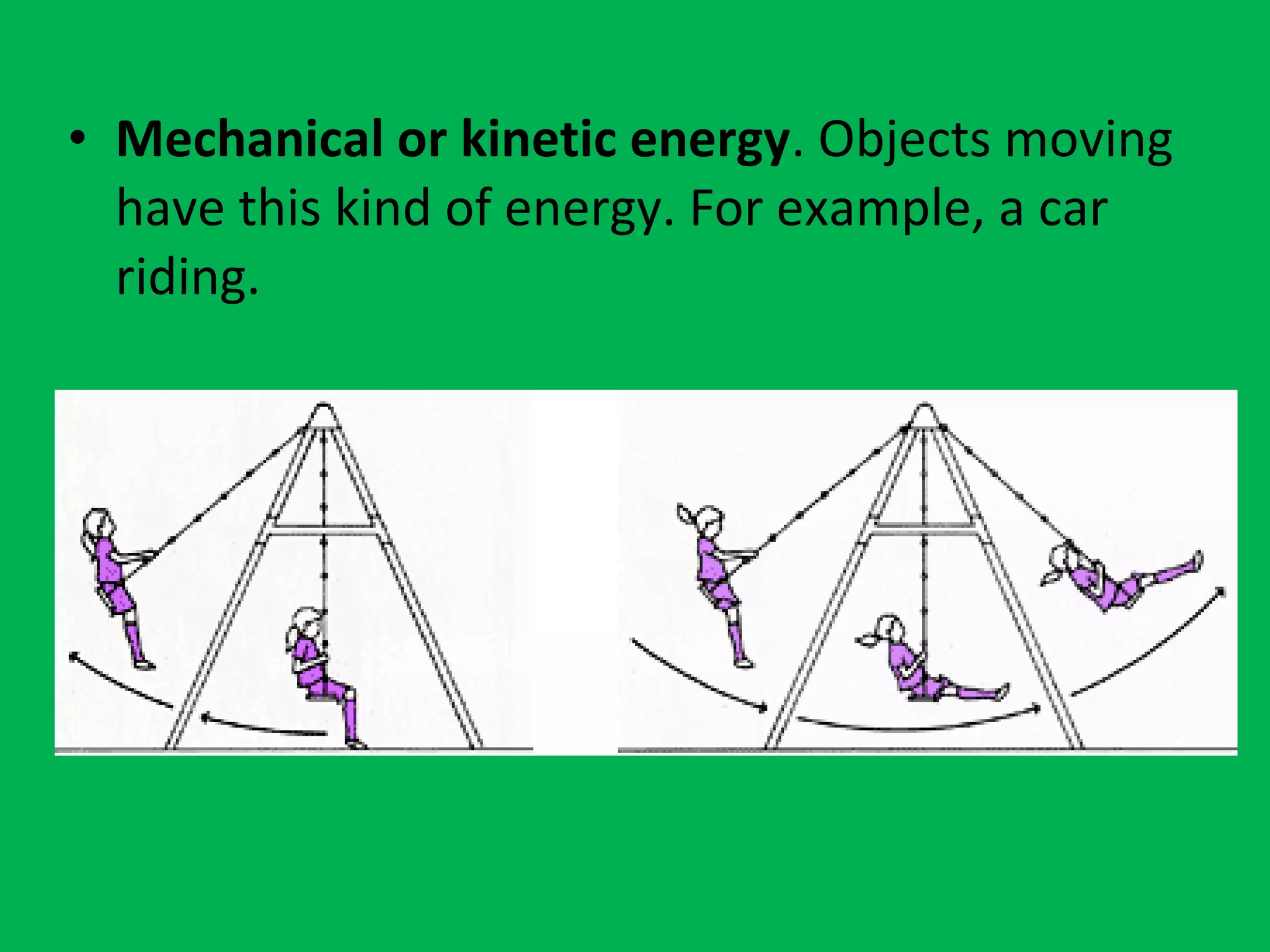
Mechanical energy: when it
produces movement
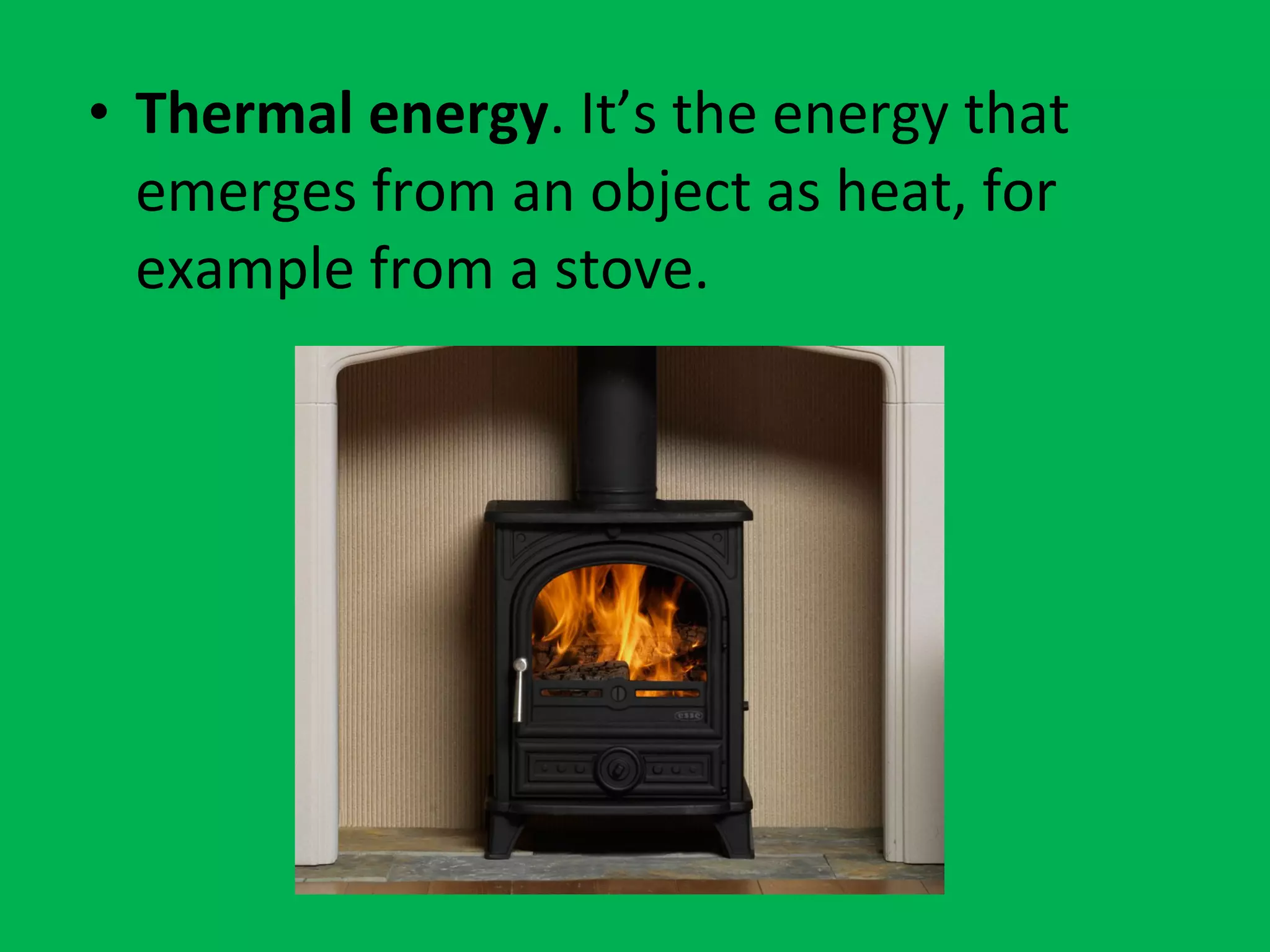
Thermal energy: is released by
object as heat
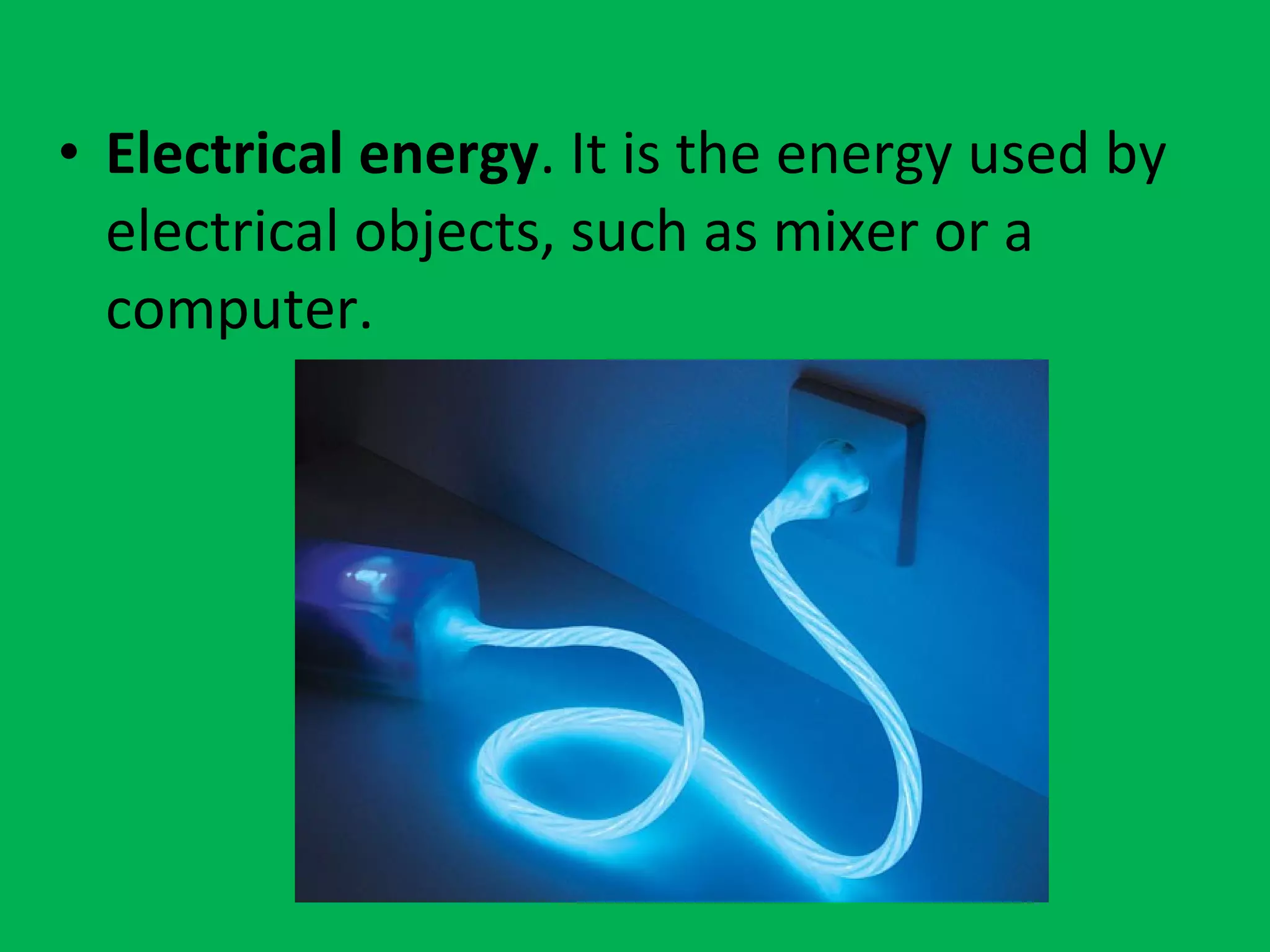
Electrical enegy: is used by electrical
objects
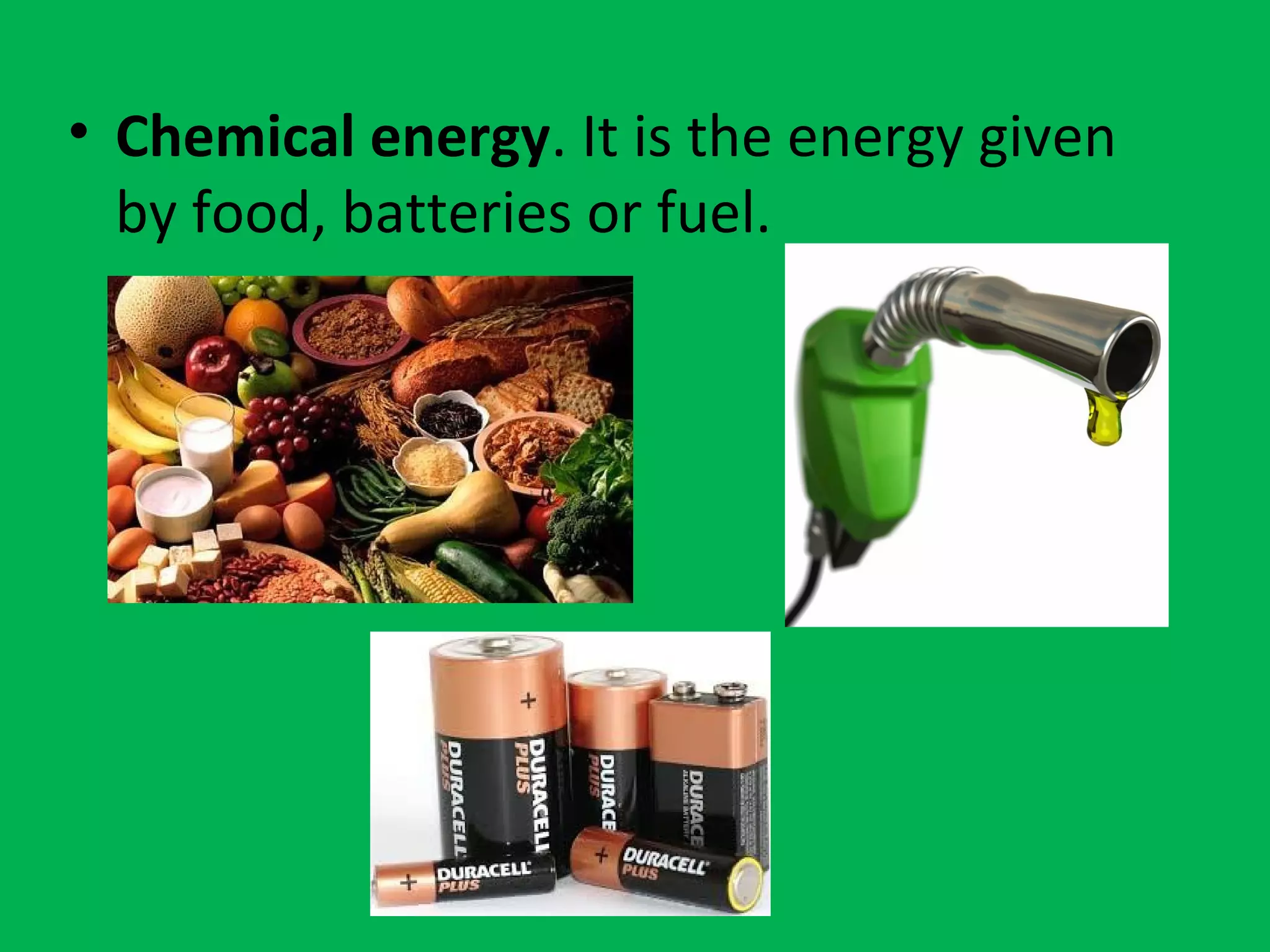
• Chemical energy. It is the energy given
by food, batteries or fuel.
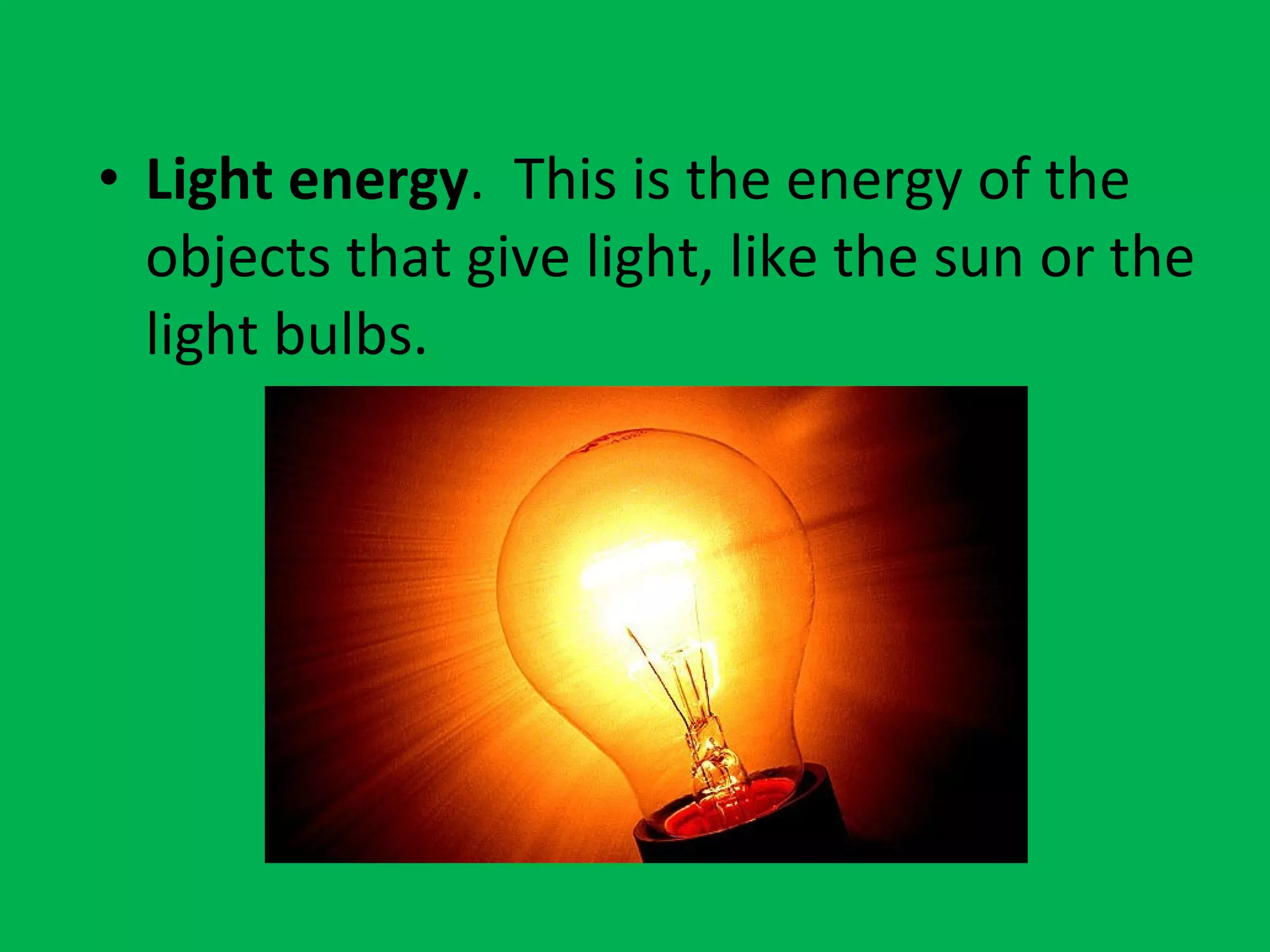
• Light energy. This is the energy of the
objects that give light, like the sun or the
light bulbs.
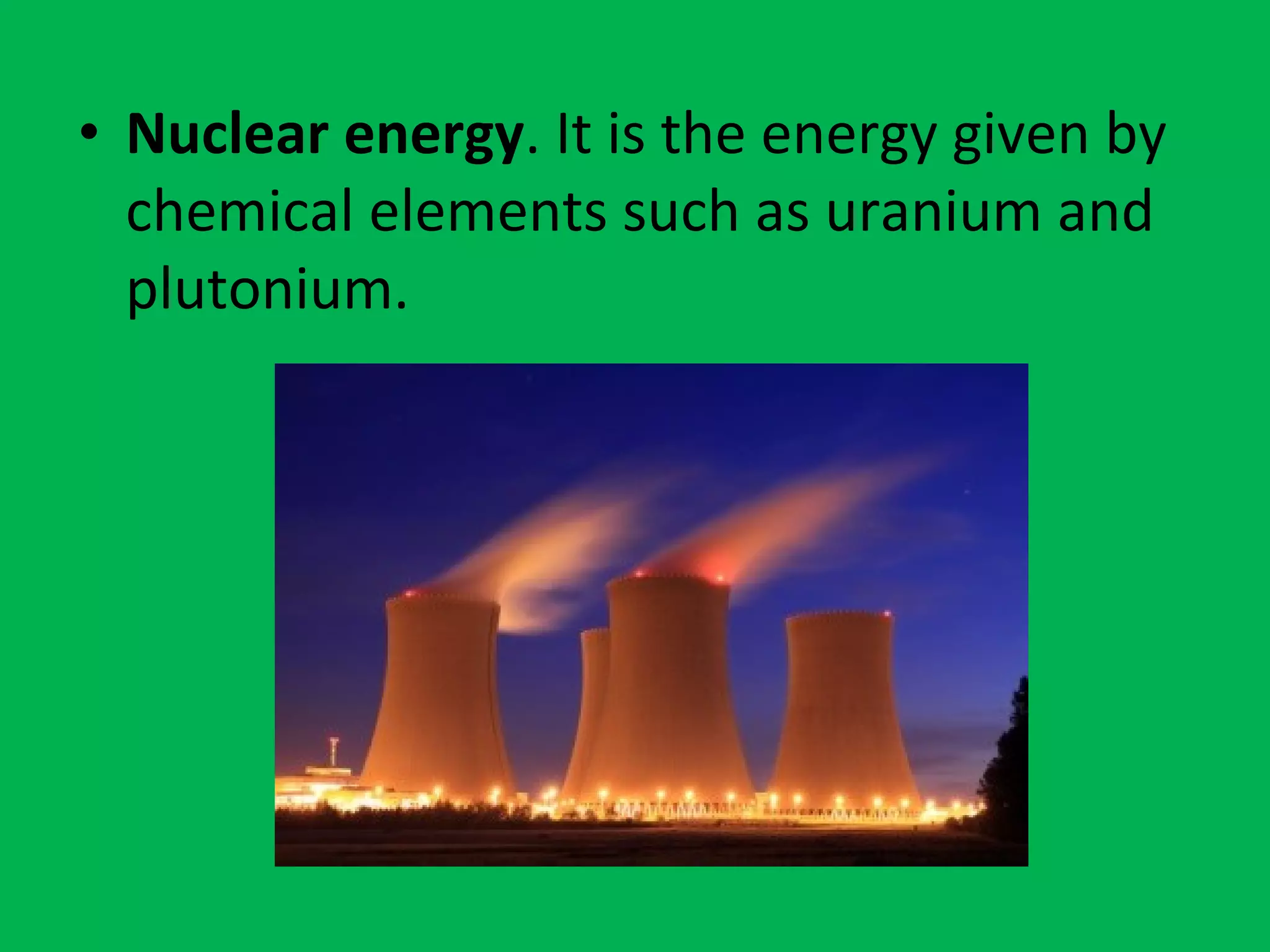
• Nuclear energy. It is the energy given by
chemical elements such as uranium and
plutonium.
• Mechanical or kinetic energy. Objects moving
have this kind of energy. For example, a car
riding.
• Thermal energy. It’s the energy that
emerges from an object as heat, for
example from a stove.
• Electrical energy. It is the energy used by
electrical objects, such as mixer or a
computer.
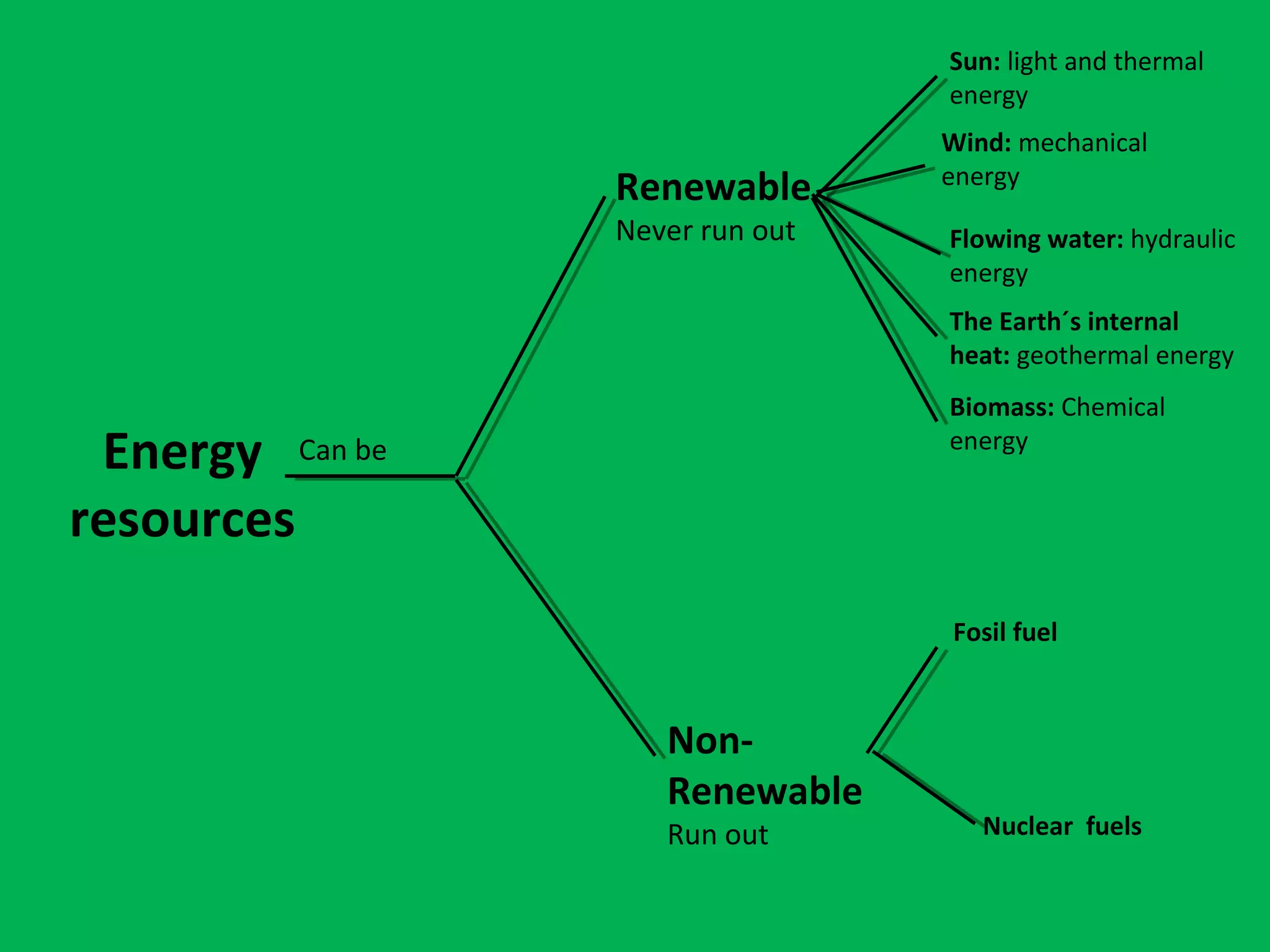
Energy
resources
Can be
Renewable
Never run out
Non-
Renewable
Run out
Sun: light and thermal
energy
Wind: mechanical
energy
Flowing water: hydraulic
energy
The Earth´s internal
heat: geothermal energy
Biomass: Chemical
energy
Fosil fuel
Nuclear fuels

Unit 8: Energy

  • 1.
    UNIT8: Energy Nuria SánchezParra 5º, CEIP García Bellido
  • 2.
    OUTLINE • Energy - Properties -Types of energy • Energy sources - Renewable energy sources - Non- renewable energy sources • Consequences of energy use
  • 3.
    Vocabulary • Energy: Energía •Everywhere: en todos lados • Everything: en todas las cosas • Store: almacenar • Chemical Energy: Energía Química • Light Energy: Energía luminosa • Nuclear Energy: Energía Nuclear • Mechanical Energy: Energía Mecánica • Thermal Energy: Energía Térmica • Electrical Energy: Energía Eléctrica • Transform: transformar • Transfer: transferir • Transport: transformar • Energy sources: Recursos de energía • Renewable: renovable • Non- renewable: no renovable • Run out: acabarse • Sun: sol • Wind: viento • Flowing water: agua que fluye • Hydarulic: hidráulica • The Earth´s internal heat: calor interno de la Tierra • Biomass: biomasa • Fossil fuels: combustibles fósiles • Coal: carbón • Pretoleum: petróleo • Natural gas: gas natural • Nuclear fuels: combustibles nucleares • Uranium: uranio • Plutonium: Plutonio • Limited resources: recursos limitados • Radioactive waste: residuos radiactivos • Air pollution: contaminación del aire. • Acid rain: lluvía ácida • Global warming: calentamiento global • Greenhouse effect: efecto invernadero
  • 4.
    Videos • Energy andtypes • Renewable and non renewable sources • Resources
  • 5.
    Energy Is the ability todo work or cause change Can be Transformed (from one type to another) Transfered (from one body to another) Stored Transported (from one place to another)
  • 6.
    Types of energy Chemical energy:stored in food, plants, batteries…. Light energy: is emited by objects that emit light Nuclear energy: is gave by chemical elements Mechanical energy: when it produces movement Thermal energy: is released by object as heat Electrical enegy: is used by electrical objects
  • 7.
    • Chemical energy.It is the energy given by food, batteries or fuel.
  • 8.
    • Light energy.This is the energy of the objects that give light, like the sun or the light bulbs.
  • 9.
    • Nuclear energy.It is the energy given by chemical elements such as uranium and plutonium.
  • 10.
    • Mechanical orkinetic energy. Objects moving have this kind of energy. For example, a car riding.
  • 11.
    • Thermal energy.It’s the energy that emerges from an object as heat, for example from a stove.
  • 12.
    • Electrical energy.It is the energy used by electrical objects, such as mixer or a computer.
  • 13.
    Energy resources Can be Renewable Never runout Non- Renewable Run out Sun: light and thermal energy Wind: mechanical energy Flowing water: hydraulic energy The Earth´s internal heat: geothermal energy Biomass: Chemical energy Fosil fuel Nuclear fuels