UNIT 8: Light and
its features
Nuria Sánchez Parra
CEIP García Bellido
VOCABULARY
• arrive… llegar
• behave …comportarse
• blurred …borroso
• darken …oscurecer
• emit …emitir
• find…encontrar
• glass…cristal
• kilometers…kilómetros
• let …dejar, permitir
• light …luz
• light rays ….rayos de luz
• living things…seres vivos
• material …cuerpo, material
• matter …materia
• mirror…espejo
• move…moverse
• opaque …opaco
• propagation…propagación
• receive…recibir
• reflect …reflejar
• second…segundo
• skin …piel
• sources of light… fuentes
luminosas
• spread…propagarse
• through …a tavés de
• translucent …translúcido
• transparent…tarnsparente
• travel… viajar
• straight …recto
• with respect to… con respecto a
• wood …madera
•
Light
Light is a form of energy, the light energy.
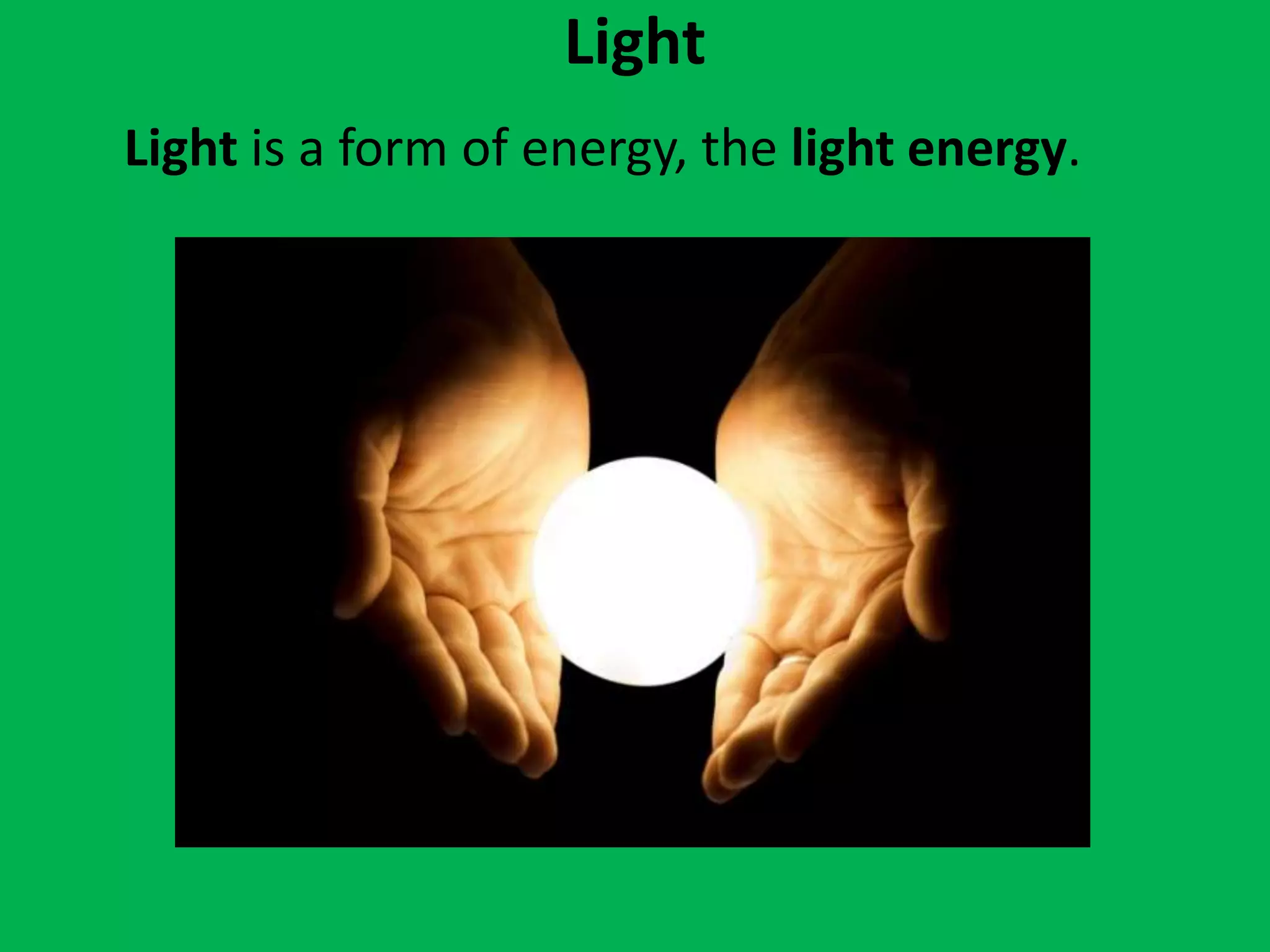
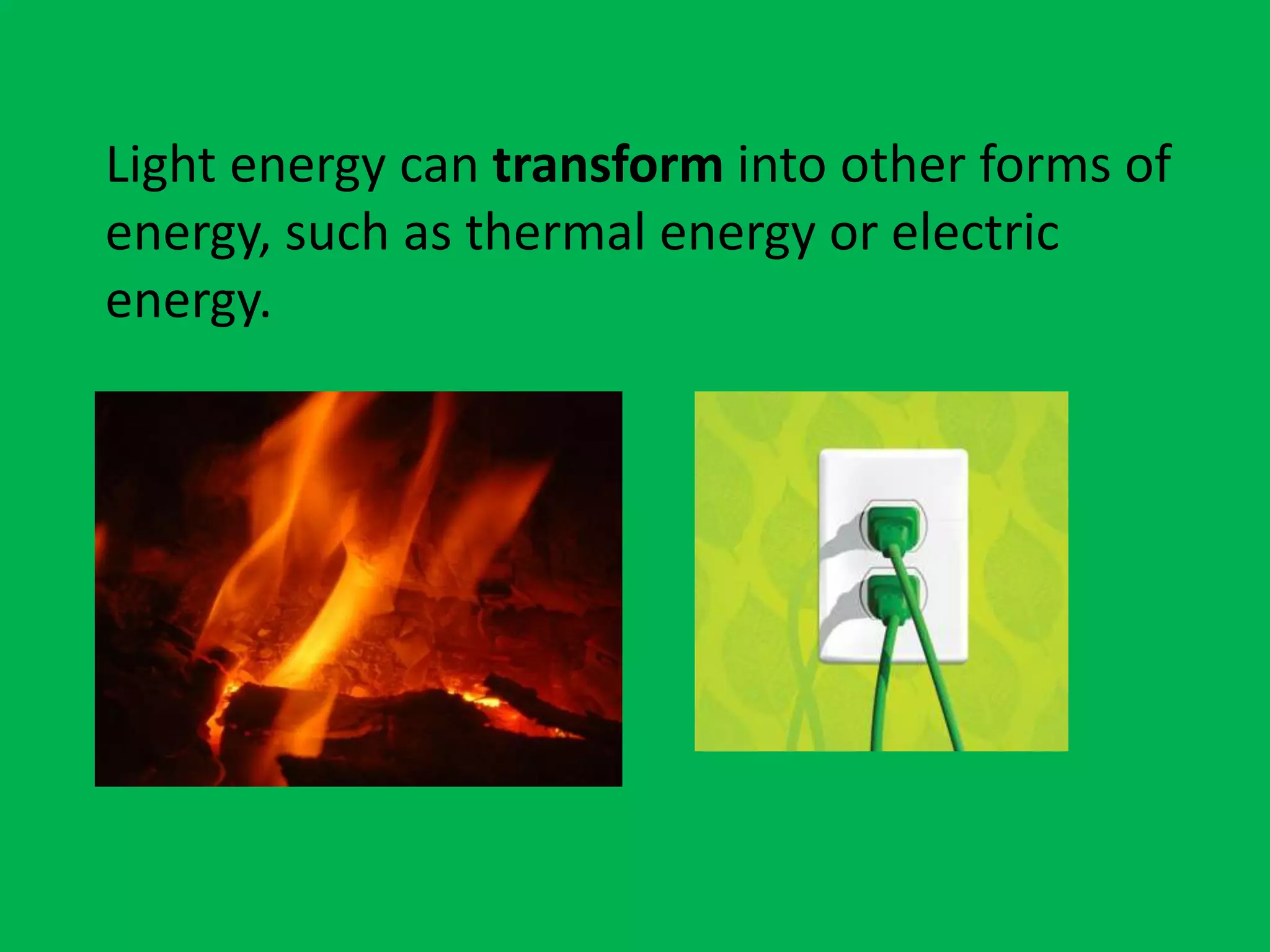
Light energy can transform into other forms of
energy, such as thermal energy or electric
energy.
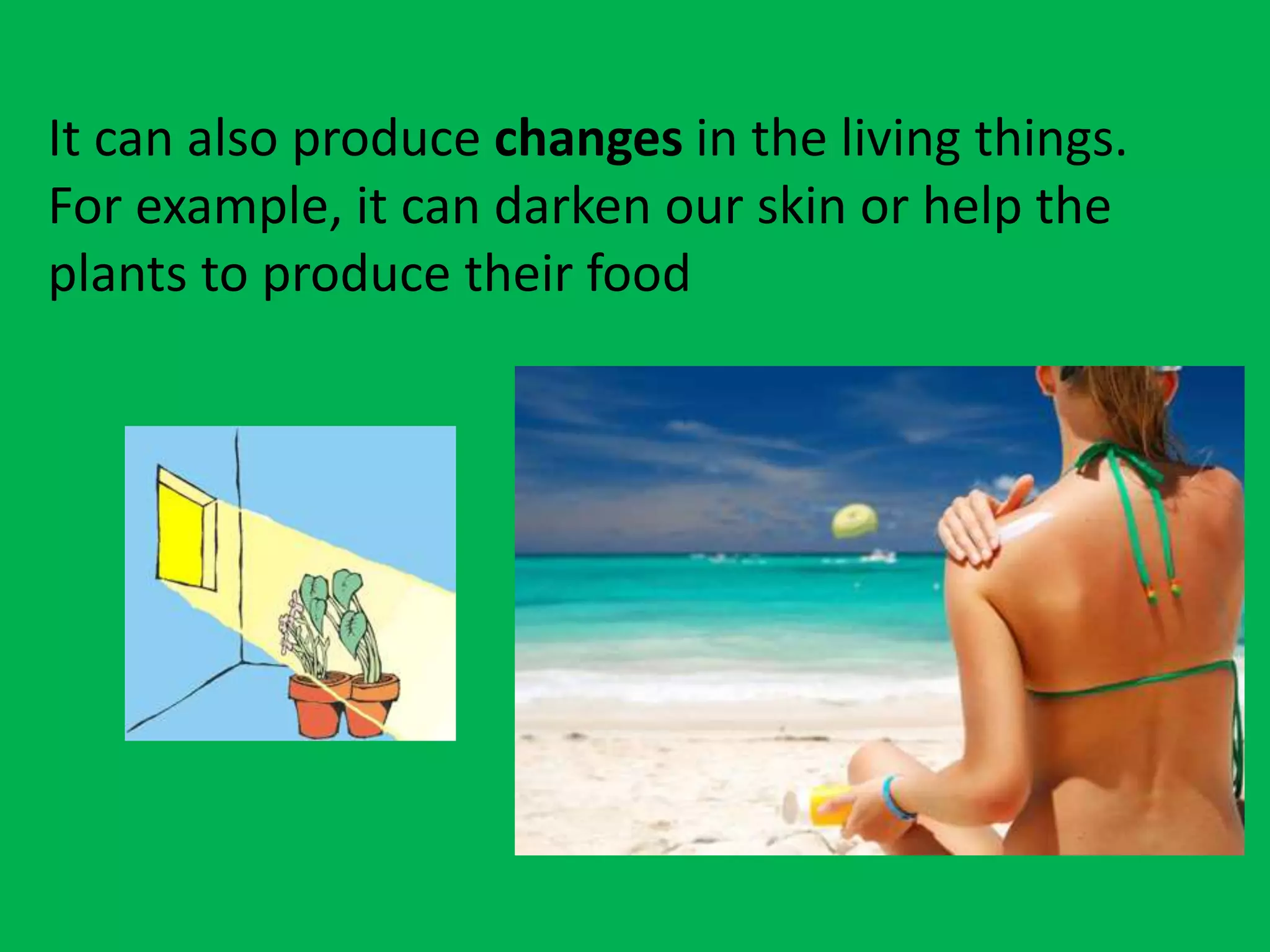
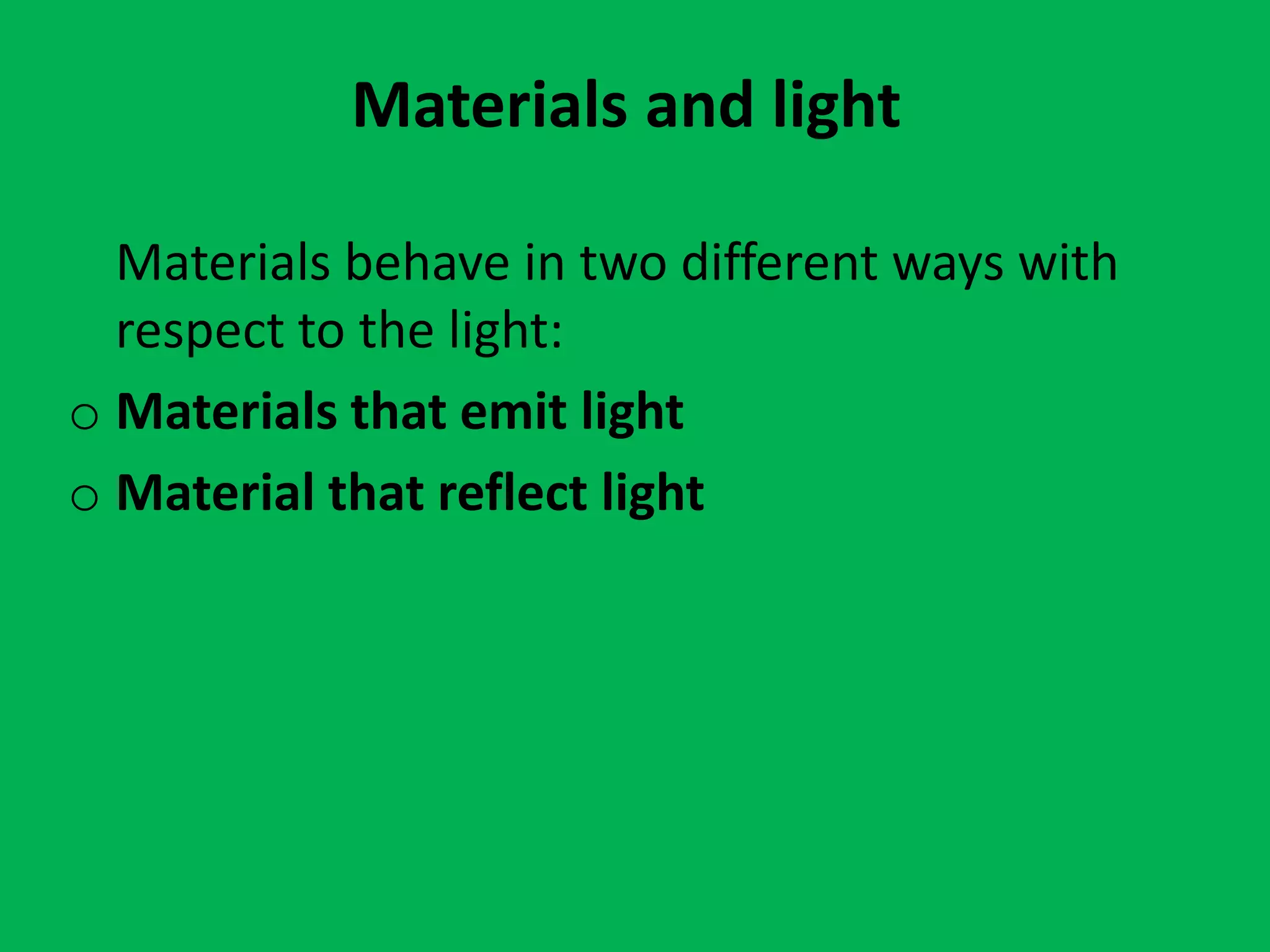
It can also produce changes in the living things.
For example, it can darken our skin or help the
plants to produce their food
Materials and light
Materials behave in two different ways with
respect to the light:
o Materials that emit light
o Material that reflect light
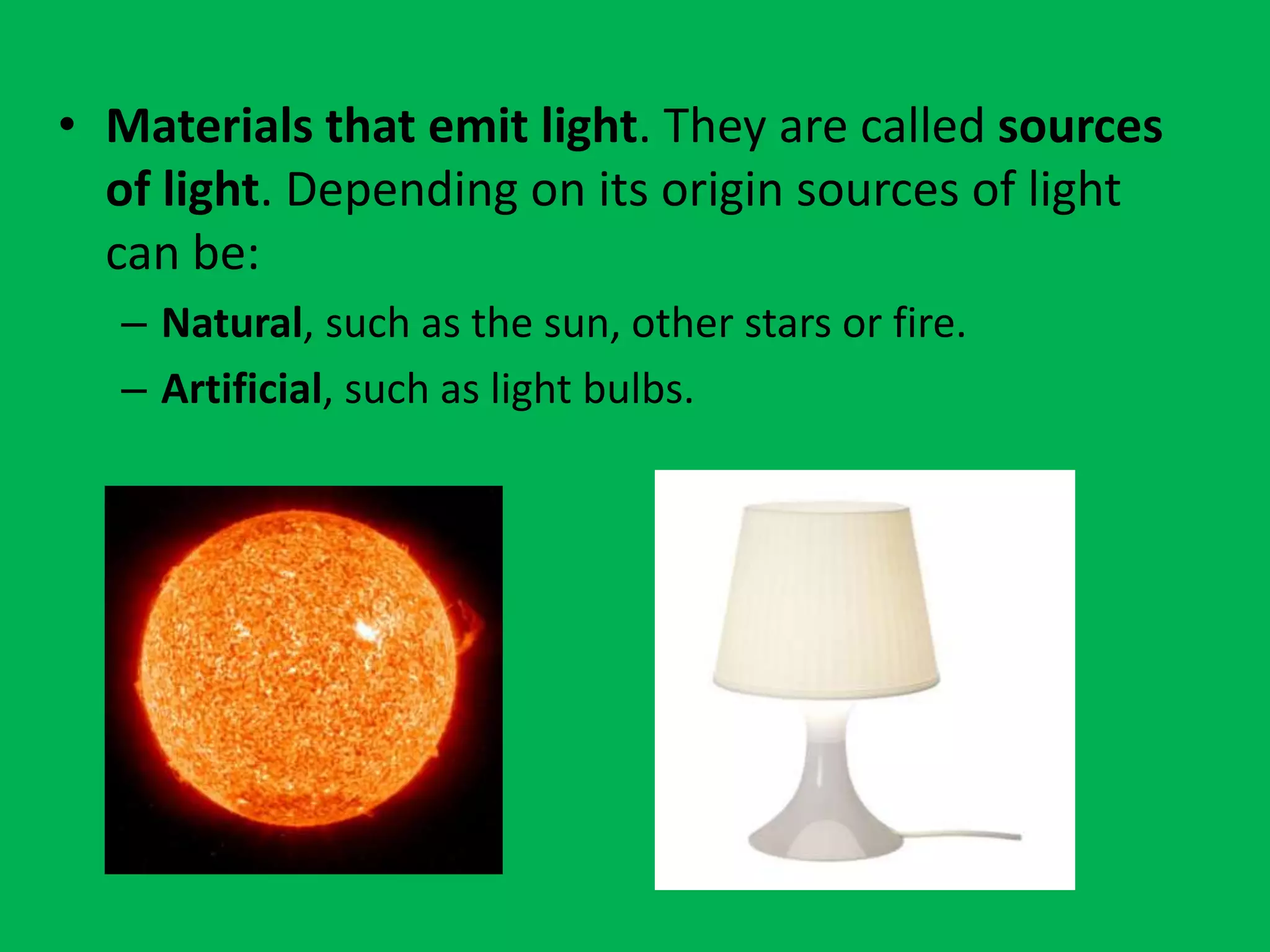
• Materials that emit light. They are called sources
of light. Depending on its origin sources of light
can be:
– Natural, such as the sun, other stars or fire.
– Artificial, such as light bulbs.
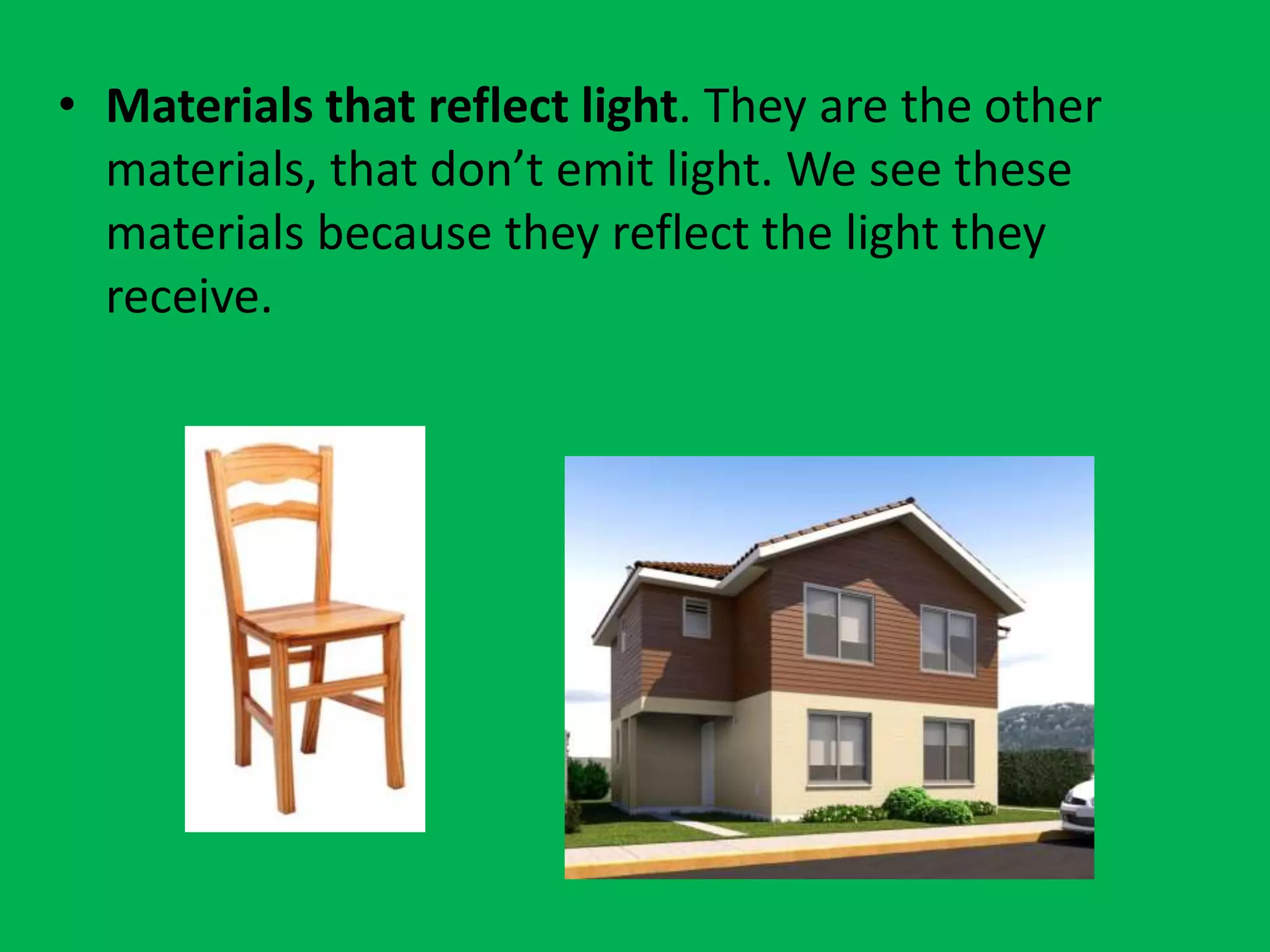
• Materials that reflect light. They are the other
materials, that don’t emit light. We see these
materials because they reflect the light they
receive.
• Video 1
• Video 2
• Video 3
Light propagation
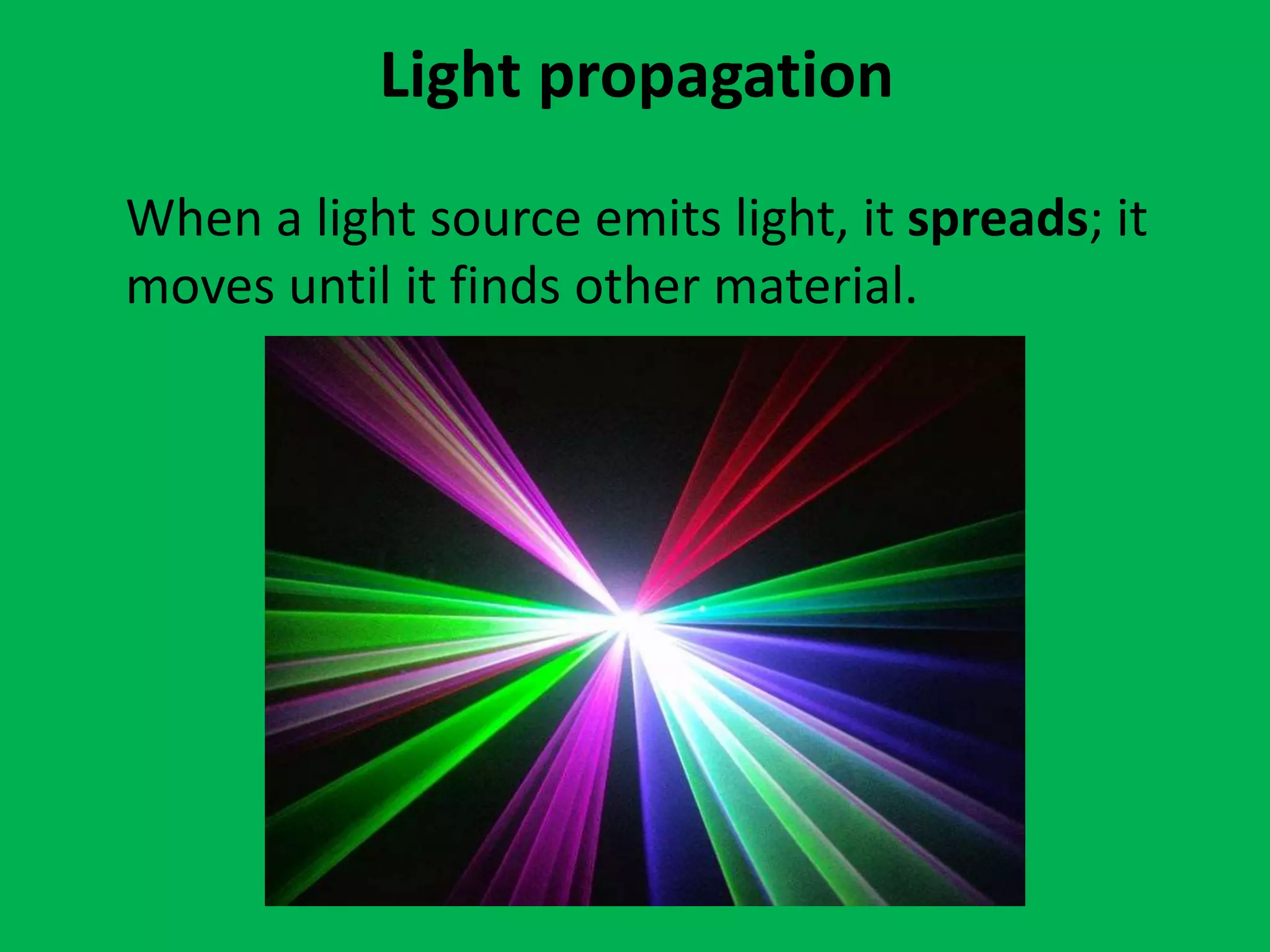
When a light source emits light, it spreads; it
moves until it finds other material.
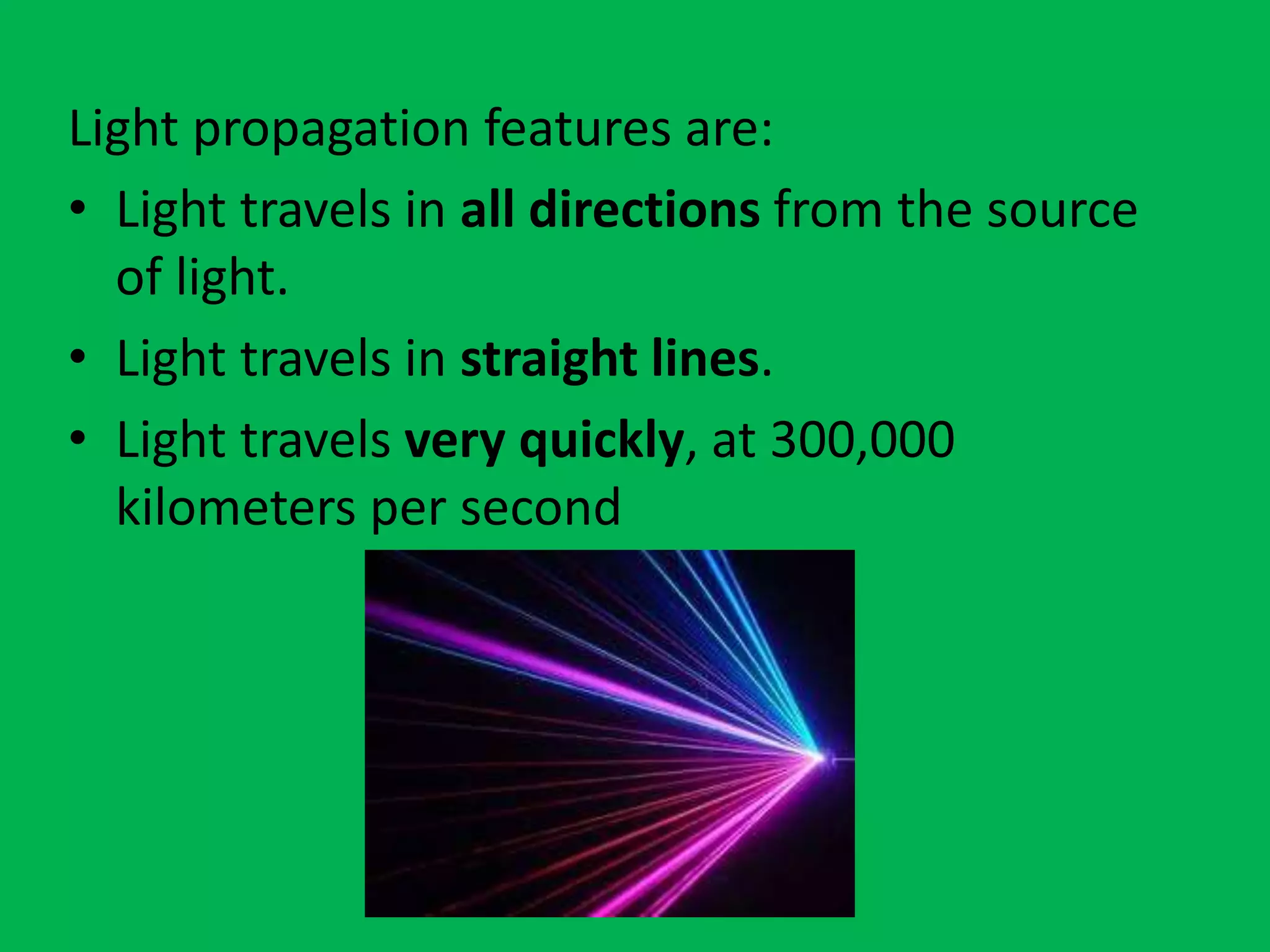
Light propagation features are:
• Light travels in all directions from the source
of light.
• Light travels in straight lines.
• Light travels very quickly, at 300,000
kilometers per second
Transparent, translucent and opaque
materials.
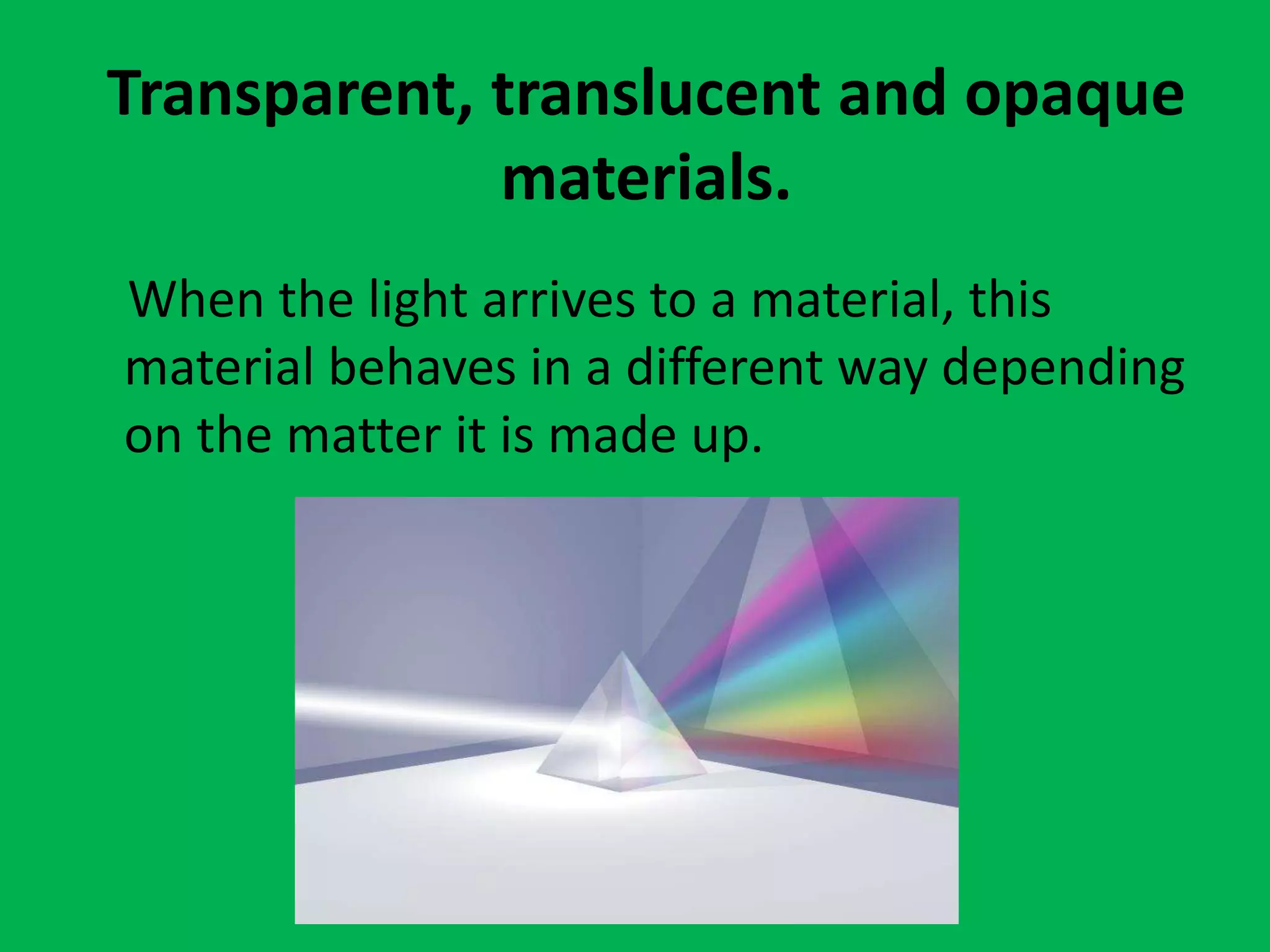
When the light arrives to a material, this
material behaves in a different way depending
on the matter it is made up.
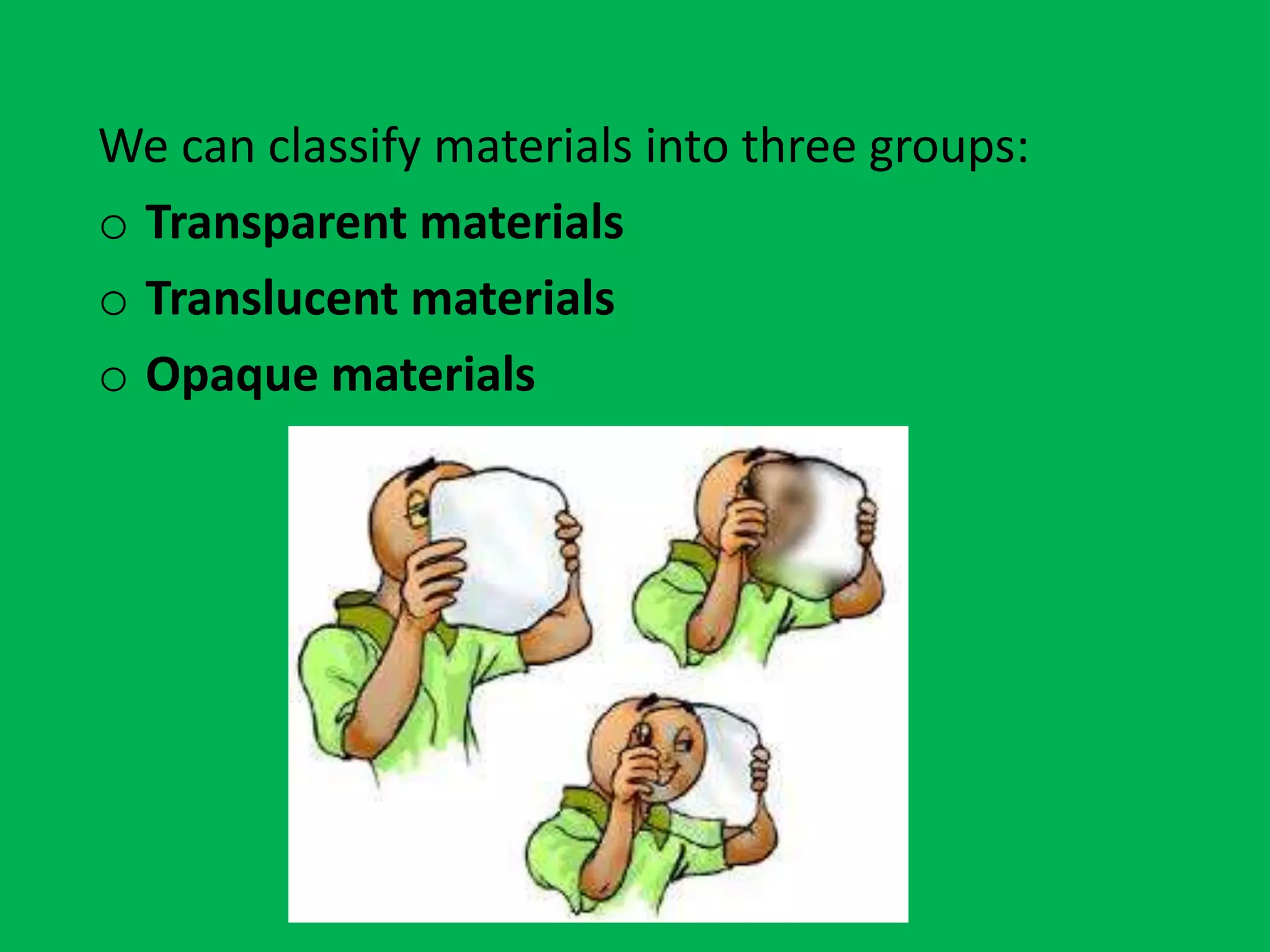
We can classify materials into three groups:
o Transparent materials
o Translucent materials
o Opaque materials
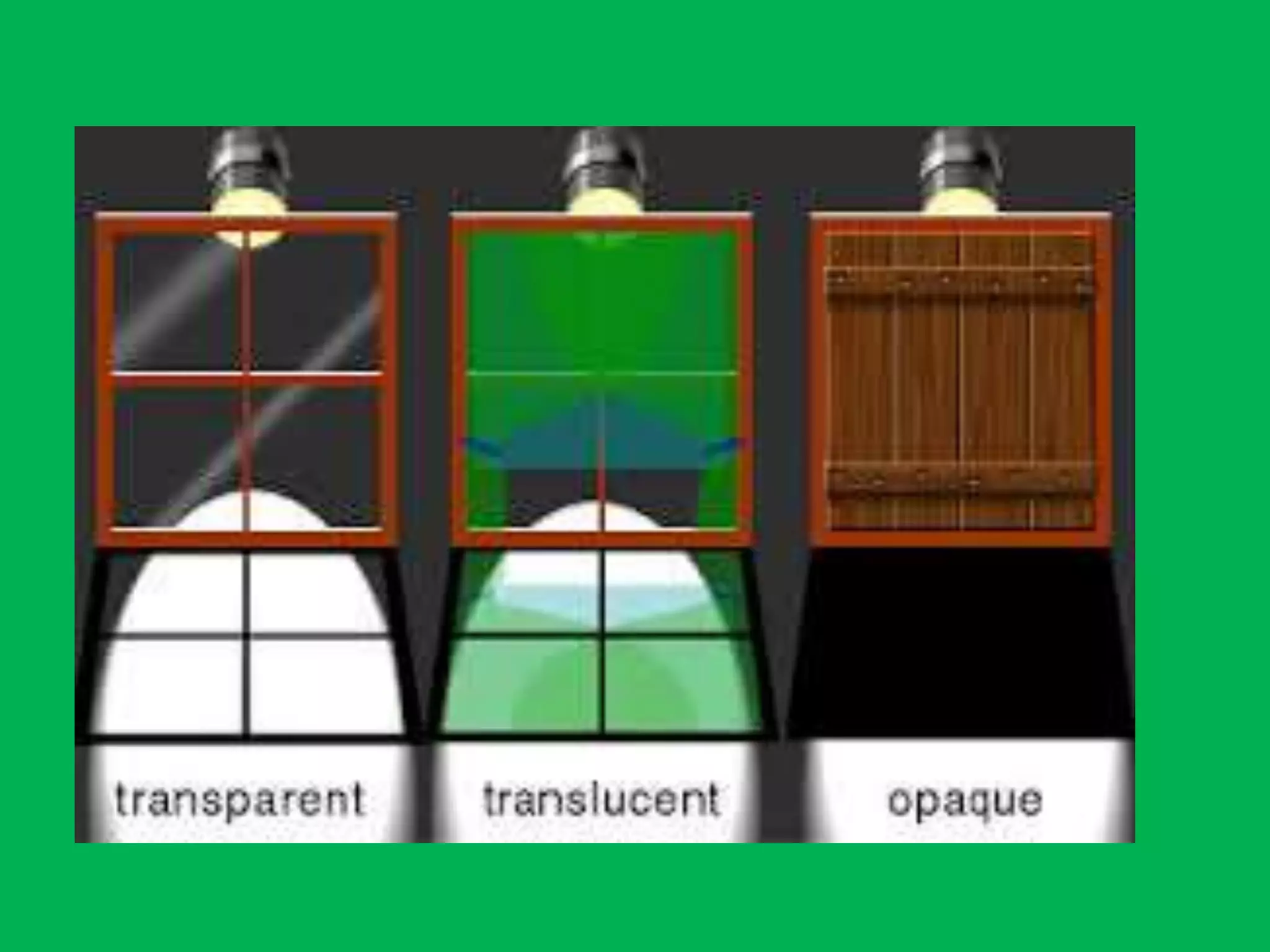
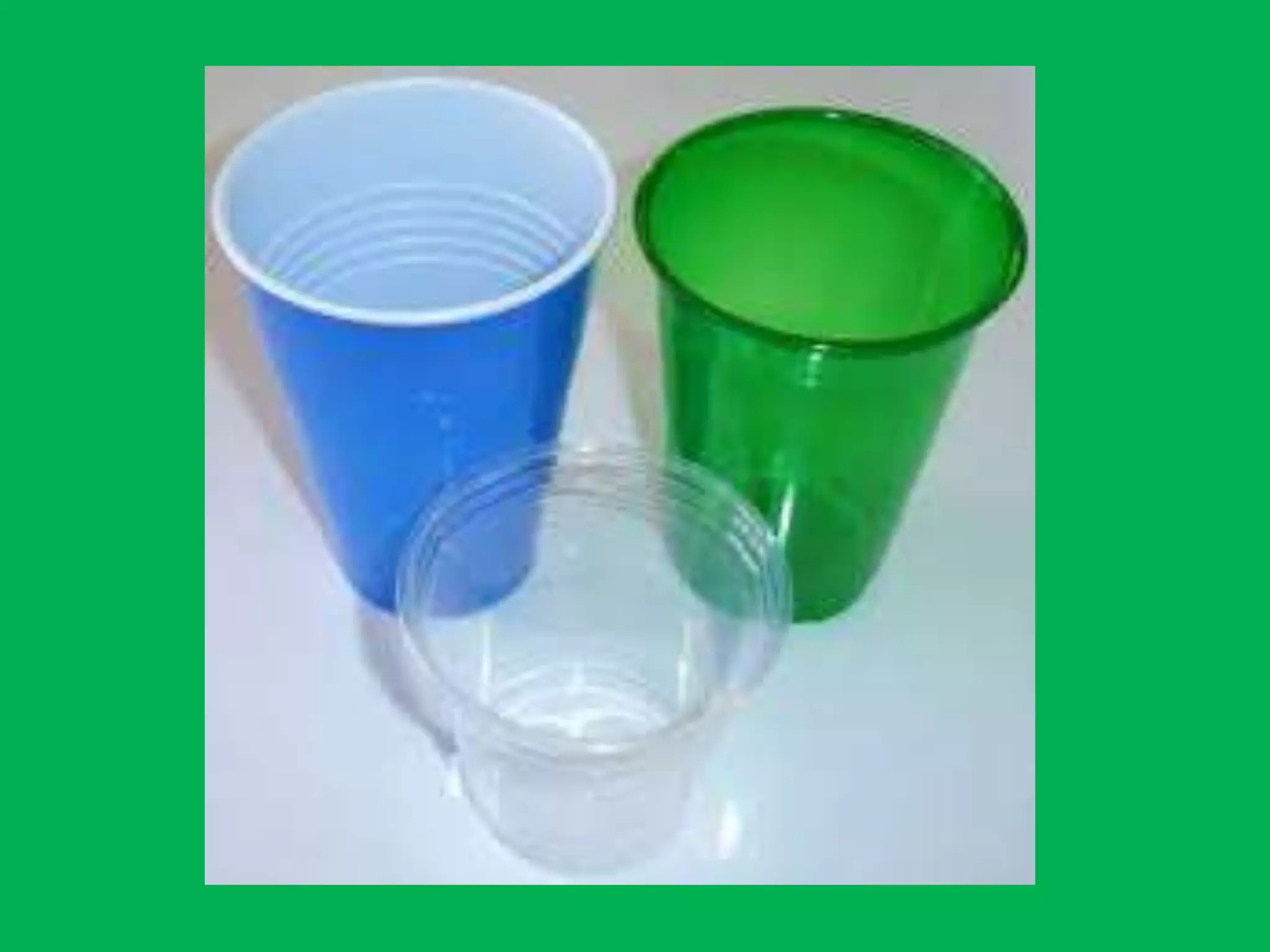
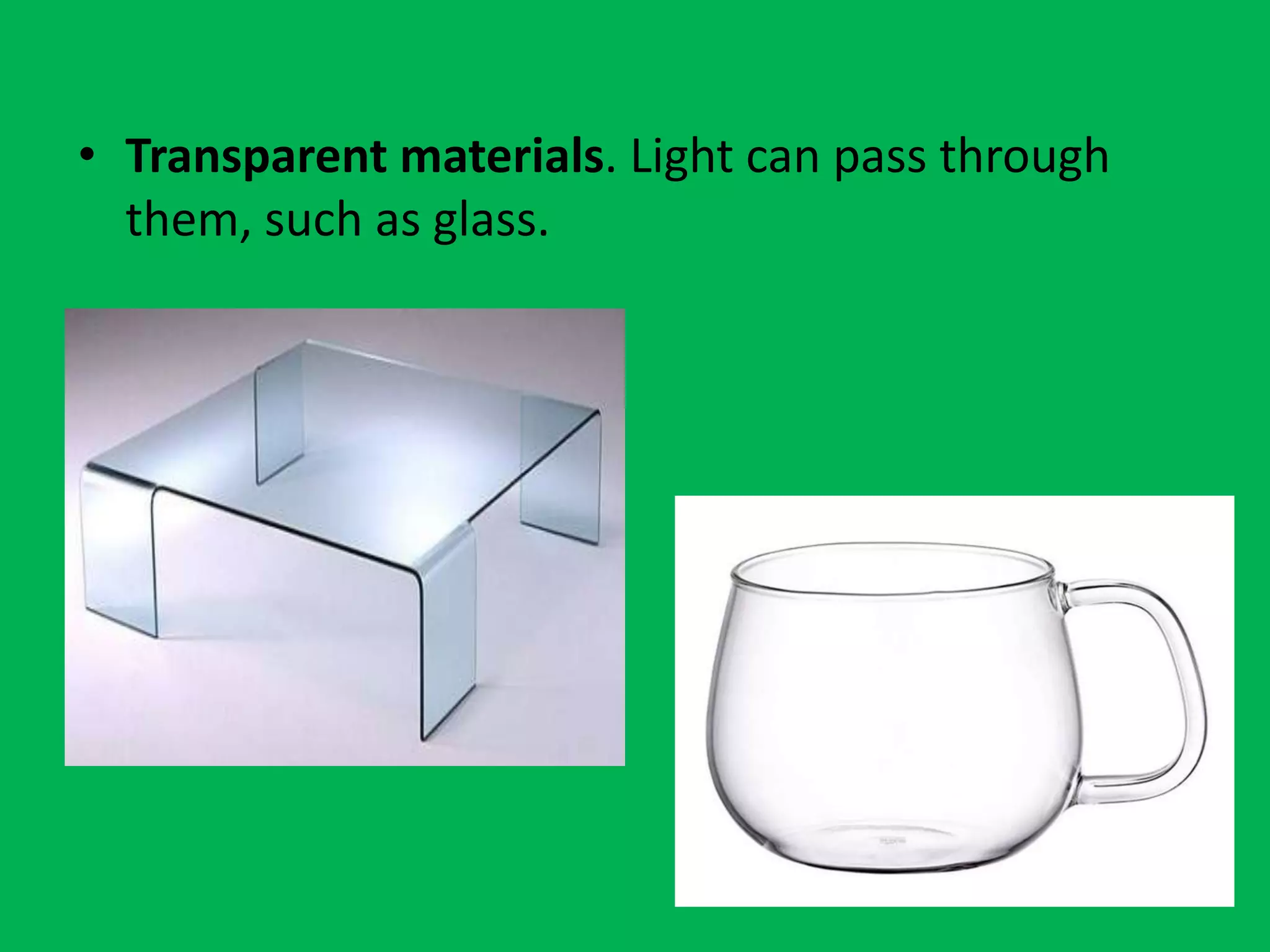
• Transparent materials. Light can pass through
them, such as glass.
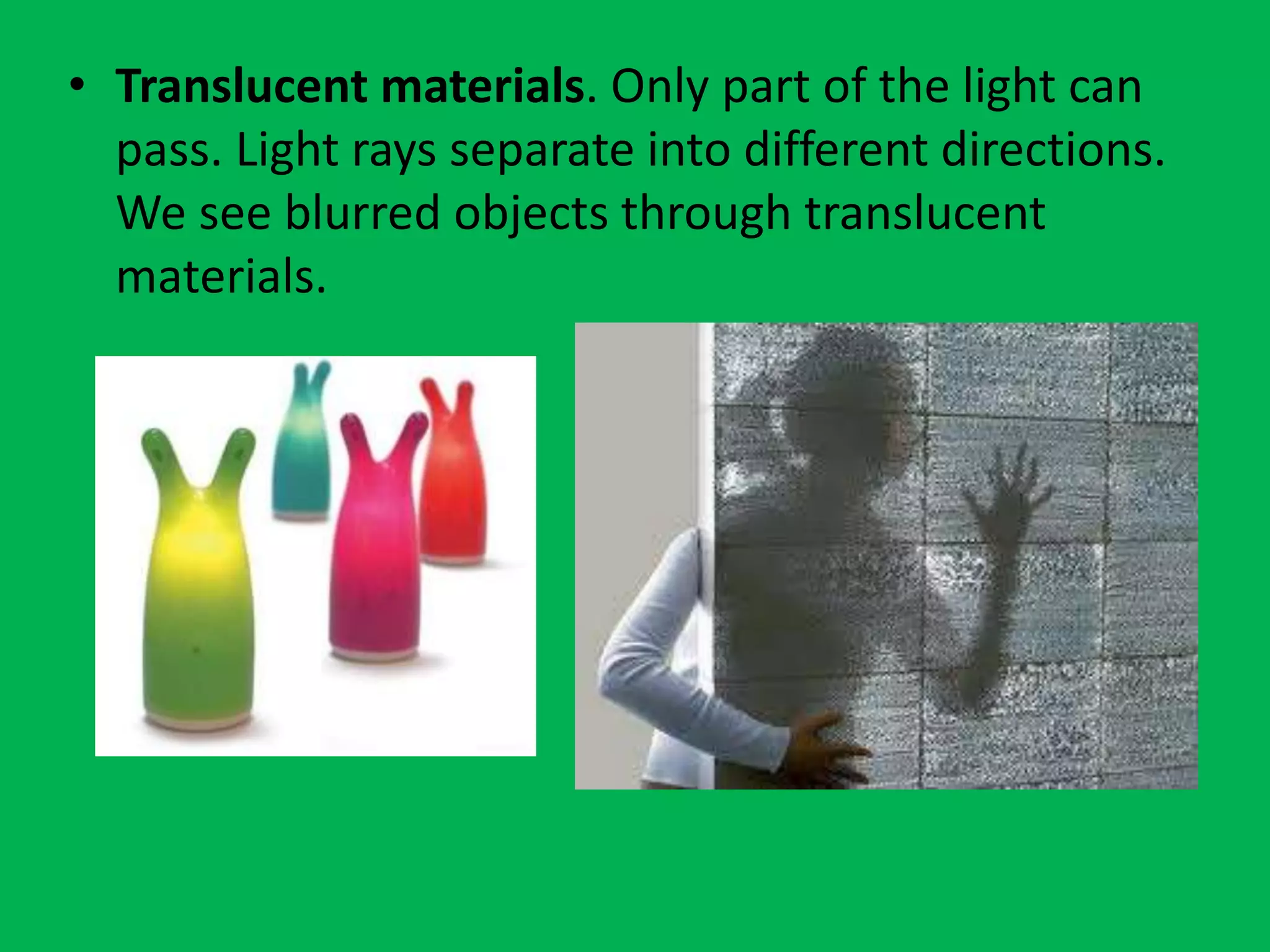
• Translucent materials. Only part of the light can
pass. Light rays separate into different directions.
We see blurred objects through translucent
materials.
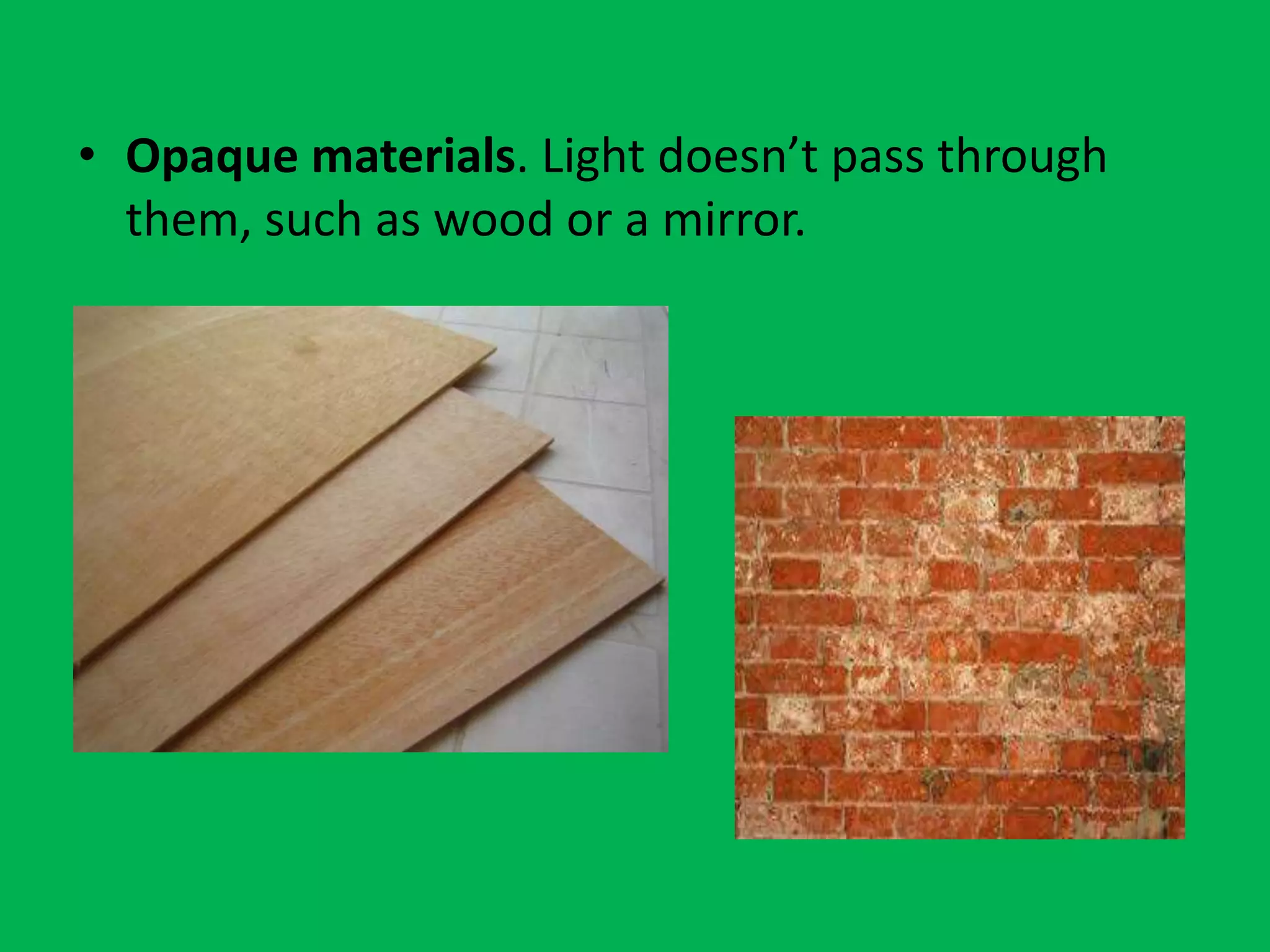
• Opaque materials. Light doesn’t pass through
them, such as wood or a mirror.
ACTIVITIES
• Write two examples of:
– Transparent materials: …………………………………………….. and ……………………………………
– Translucent materials: ……………………………………………… and ……………………………………
– Opaque materials: …………………………………………….. and ………………………………………….
• Match:
Opaque materials let light pass through.
Transparent materials let light pass through but separate.
Translucent materials don’t let light pass through.
• Complete to summarize:
– …………………………………. is a ……………………………. of energy. Materials can ………………………………….. or
…………………………………. the light. Materials that emit light are
called……………………………………………………………………………….
– ………………………………travels in all …………………………………., in ………………………
…………………………………………… and at ……………………………………………………………………
• True or false? Rewrite the false sentences:
– Light passes through opaque materials.
– Light passes through transparent materials.
– A light bulb can emit light.
– The sun is an artificial source of light.

Unit 8: Light

  • 1.
    UNIT 8: Lightand its features Nuria Sánchez Parra CEIP García Bellido
  • 2.
    VOCABULARY • arrive… llegar •behave …comportarse • blurred …borroso • darken …oscurecer • emit …emitir • find…encontrar • glass…cristal • kilometers…kilómetros • let …dejar, permitir • light …luz • light rays ….rayos de luz • living things…seres vivos • material …cuerpo, material • matter …materia • mirror…espejo • move…moverse • opaque …opaco • propagation…propagación • receive…recibir • reflect …reflejar • second…segundo • skin …piel • sources of light… fuentes luminosas • spread…propagarse • through …a tavés de • translucent …translúcido • transparent…tarnsparente • travel… viajar • straight …recto • with respect to… con respecto a • wood …madera •
  • 3.
    Light Light is aform of energy, the light energy.
  • 4.
    Light energy cantransform into other forms of energy, such as thermal energy or electric energy.
  • 5.
    It can alsoproduce changes in the living things. For example, it can darken our skin or help the plants to produce their food
  • 6.
    Materials and light Materialsbehave in two different ways with respect to the light: o Materials that emit light o Material that reflect light
  • 7.
    • Materials thatemit light. They are called sources of light. Depending on its origin sources of light can be: – Natural, such as the sun, other stars or fire. – Artificial, such as light bulbs.
  • 8.
    • Materials thatreflect light. They are the other materials, that don’t emit light. We see these materials because they reflect the light they receive.
  • 9.
    • Video 1 •Video 2 • Video 3
  • 10.
    Light propagation When alight source emits light, it spreads; it moves until it finds other material.
  • 11.
    Light propagation featuresare: • Light travels in all directions from the source of light. • Light travels in straight lines. • Light travels very quickly, at 300,000 kilometers per second
  • 12.
    Transparent, translucent andopaque materials. When the light arrives to a material, this material behaves in a different way depending on the matter it is made up.
  • 13.
    We can classifymaterials into three groups: o Transparent materials o Translucent materials o Opaque materials
  • 16.
    • Transparent materials.Light can pass through them, such as glass.
  • 17.
    • Translucent materials.Only part of the light can pass. Light rays separate into different directions. We see blurred objects through translucent materials.
  • 18.
    • Opaque materials.Light doesn’t pass through them, such as wood or a mirror.
  • 19.
    ACTIVITIES • Write twoexamples of: – Transparent materials: …………………………………………….. and …………………………………… – Translucent materials: ……………………………………………… and …………………………………… – Opaque materials: …………………………………………….. and …………………………………………. • Match: Opaque materials let light pass through. Transparent materials let light pass through but separate. Translucent materials don’t let light pass through. • Complete to summarize: – …………………………………. is a ……………………………. of energy. Materials can ………………………………….. or …………………………………. the light. Materials that emit light are called………………………………………………………………………………. – ………………………………travels in all …………………………………., in ……………………… …………………………………………… and at …………………………………………………………………… • True or false? Rewrite the false sentences: – Light passes through opaque materials. – Light passes through transparent materials. – A light bulb can emit light. – The sun is an artificial source of light.