Notes on
12/10/13
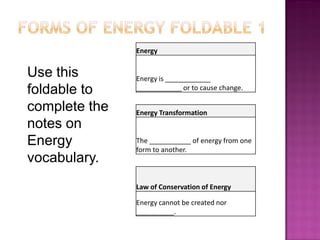
Energy
Energy is ____________
____________ or to cause change.
Energy Transformation
The ___________ of energy from one
form to another.
Law of Conservation of Energy
Energy cannot be created nor
__________.
Use this
foldable to
complete the
notes on
Energy
vocabulary.
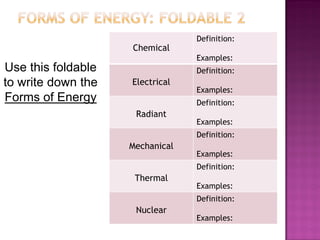
Chemical
Definition:
Examples:
Electrical
Definition:
Examples:
Radiant
Definition:
Examples:
Mechanical
Definition:
Examples:
Thermal
Definition:
Examples:
Nuclear
Definition:
Examples:
Use this foldable
to write down the
Forms of Energy
 Energy is the ability to do work or to cause
change.
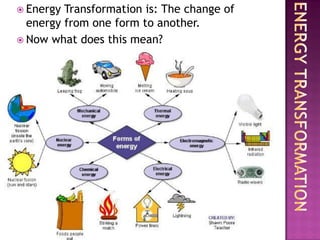
 Energy Transformation is: The change of
energy from one form to another.
 Now what does this mean?
 The law states: Energy cannot be created nor
destroyed.
 What does this mean? It means that energy can only
change its form from one type to another. The energy
of the world is a constant because the total amount
of the energy does not change.
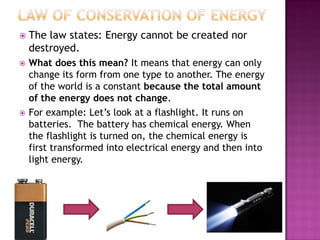
 For example: Let’s look at a flashlight. It runs on
batteries. The battery has chemical energy. When
the flashlight is turned on, the chemical energy is
first transformed into electrical energy and then into
light energy.
 Energy STORED in matter because of its
CHEMICAL bonds. It is released during a
chemical reaction (change).
 Examples:
 Battery
 Digestion
 Burning Wood/Fuel
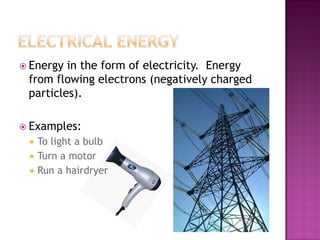
 Energy in the form of electricity. Energy
from flowing electrons (negatively charged
particles).
 Examples:
 To light a bulb
 Turn a motor
 Run a hairdryer
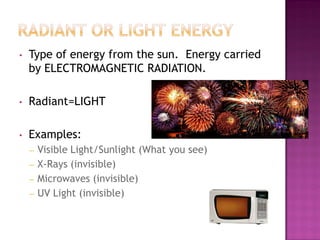
• Type of energy from the sun. Energy carried
by ELECTROMAGNETIC RADIATION.
• Radiant=LIGHT
• Examples:
– Visible Light/Sunlight (What you see)
– X-Rays (invisible)
– Microwaves (invisible)
– UV Light (invisible)
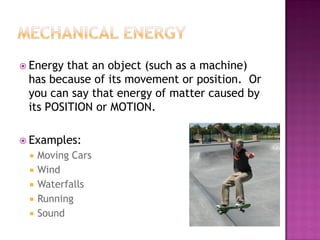
 Energy that an object (such as a machine)
has because of its movement or position. Or
you can say that energy of matter caused by
its POSITION or MOTION.
 Examples:
 Moving Cars
 Wind
 Waterfalls
 Running
 Sound
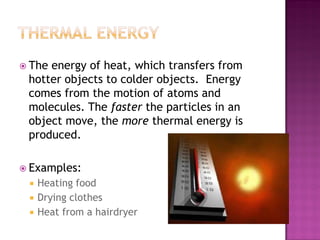
 The energy of heat, which transfers from
hotter objects to colder objects. Energy
comes from the motion of atoms and
molecules. The faster the particles in an
object move, the more thermal energy is
produced.
 Examples:
 Heating food
 Drying clothes
 Heat from a hairdryer
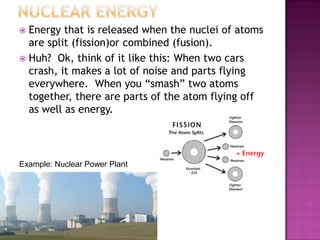
 Energy that is released when the nuclei of atoms
are split (fission)or combined (fusion).
 Huh? Ok, think of it like this: When two cars
crash, it makes a lot of noise and parts flying
everywhere. When you “smash” two atoms
together, there are parts of the atom flying off
as well as energy.
Example: Nuclear Power Plant
 When both the half page and the foldable
are glued in, get a energy graphic organizer
from the front
 You may work in partners to fill this out. It
must be done by the end of the period and
glued into your journal on the next page.

Forms of energy 2017

  • 1.
  • 2.
    Energy Energy is ____________ ____________or to cause change. Energy Transformation The ___________ of energy from one form to another. Law of Conservation of Energy Energy cannot be created nor __________. Use this foldable to complete the notes on Energy vocabulary.
  • 3.
  • 4.
     Energy isthe ability to do work or to cause change.
  • 5.
     Energy Transformationis: The change of energy from one form to another.  Now what does this mean?
  • 6.
     The lawstates: Energy cannot be created nor destroyed.  What does this mean? It means that energy can only change its form from one type to another. The energy of the world is a constant because the total amount of the energy does not change.  For example: Let’s look at a flashlight. It runs on batteries. The battery has chemical energy. When the flashlight is turned on, the chemical energy is first transformed into electrical energy and then into light energy.
  • 7.
     Energy STOREDin matter because of its CHEMICAL bonds. It is released during a chemical reaction (change).  Examples:  Battery  Digestion  Burning Wood/Fuel
  • 8.
     Energy inthe form of electricity. Energy from flowing electrons (negatively charged particles).  Examples:  To light a bulb  Turn a motor  Run a hairdryer
  • 9.
    • Type ofenergy from the sun. Energy carried by ELECTROMAGNETIC RADIATION. • Radiant=LIGHT • Examples: – Visible Light/Sunlight (What you see) – X-Rays (invisible) – Microwaves (invisible) – UV Light (invisible)
  • 10.
     Energy thatan object (such as a machine) has because of its movement or position. Or you can say that energy of matter caused by its POSITION or MOTION.  Examples:  Moving Cars  Wind  Waterfalls  Running  Sound
  • 11.
     The energyof heat, which transfers from hotter objects to colder objects. Energy comes from the motion of atoms and molecules. The faster the particles in an object move, the more thermal energy is produced.  Examples:  Heating food  Drying clothes  Heat from a hairdryer
  • 12.
     Energy thatis released when the nuclei of atoms are split (fission)or combined (fusion).  Huh? Ok, think of it like this: When two cars crash, it makes a lot of noise and parts flying everywhere. When you “smash” two atoms together, there are parts of the atom flying off as well as energy. Example: Nuclear Power Plant
  • 13.
     When boththe half page and the foldable are glued in, get a energy graphic organizer from the front  You may work in partners to fill this out. It must be done by the end of the period and glued into your journal on the next page.