ENERGY


By :María José Peñalver Contreras 6ºA.
   What is energy?

   Energy tranformation.

   Non-renewable energy.

   Renewable energy.

   Energy consumption.
Energy is the ability to transform an object to an
                           other.
There are:
 Mechical energy: includes kinetic and potential
  energy.
 Kinetic energy: exists as movement.
 Potencial energy: exists as potencial movement.
 Chemical energy: exists certain chemical
  substances.
 Electrical energy: form the elctricity.
 Thermal energy: form the heat.
 Light energy: form light.
 Nuclear energy: exists in the atomic structure of all
  matter.
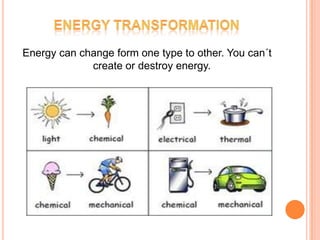
Energy can change form one type to other. You can´t
             create or destroy energy.
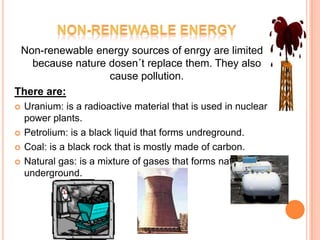
Non-renewable energy sources of enrgy are limited
   because nature dosen´t replace them. They also
                  cause pollution.
There are:
   Uranium: is a radioactive material that is used in nuclear
    power plants.
   Petrolium: is a black liquid that forms undreground.
   Coal: is a black rock that is mostly made of carbon.
   Natural gas: is a mixture of gases that forms naturally
    underground.
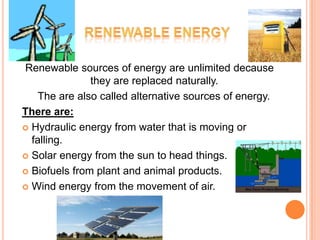
Renewable sources of energy are unlimited decause
               they are replaced naturally.
    The are also called alternative sources of energy.
There are:
 Hydraulic energy from water that is moving or
  falling.
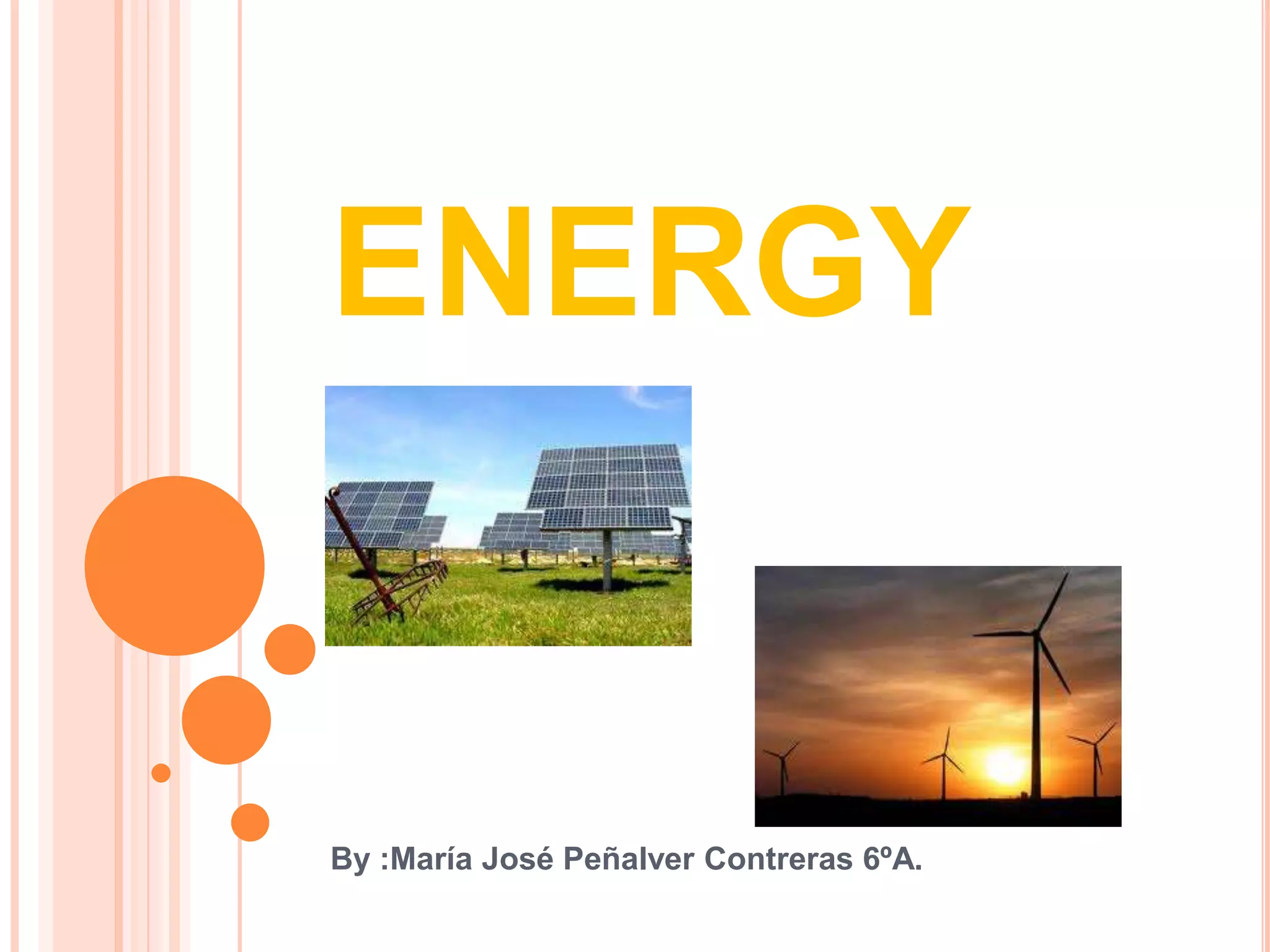
 Solar energy from the sun to head things.

 Biofuels from plant and animal products.

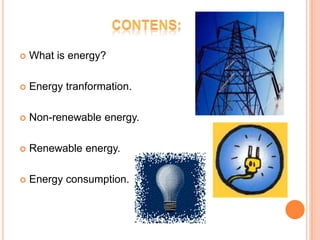
 Wind energy from the movement of air.
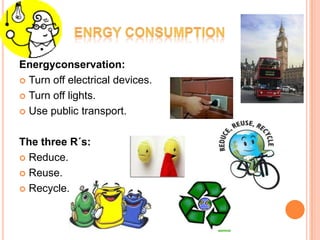
Energyconservation:
 Turn off electrical devices.

 Turn off lights.

 Use public transport.


The three R´s:
 Reduce.

 Reuse.

 Recycle.

Energy

  • 1.
    ENERGY By :María JoséPeñalver Contreras 6ºA.
  • 2.
    What is energy?  Energy tranformation.  Non-renewable energy.  Renewable energy.  Energy consumption.
  • 3.
    Energy is theability to transform an object to an other. There are:  Mechical energy: includes kinetic and potential energy.  Kinetic energy: exists as movement.  Potencial energy: exists as potencial movement.  Chemical energy: exists certain chemical substances.  Electrical energy: form the elctricity.  Thermal energy: form the heat.  Light energy: form light.  Nuclear energy: exists in the atomic structure of all matter.
  • 4.
    Energy can changeform one type to other. You can´t create or destroy energy.
  • 5.
    Non-renewable energy sourcesof enrgy are limited because nature dosen´t replace them. They also cause pollution. There are:  Uranium: is a radioactive material that is used in nuclear power plants.  Petrolium: is a black liquid that forms undreground.  Coal: is a black rock that is mostly made of carbon.  Natural gas: is a mixture of gases that forms naturally underground.
  • 6.
    Renewable sources ofenergy are unlimited decause they are replaced naturally. The are also called alternative sources of energy. There are:  Hydraulic energy from water that is moving or falling.  Solar energy from the sun to head things.  Biofuels from plant and animal products.  Wind energy from the movement of air.
  • 7.
    Energyconservation:  Turn offelectrical devices.  Turn off lights.  Use public transport. The three R´s:  Reduce.  Reuse.  Recycle.