Dr Tim Baker
tim@winnersatwork.com.au
www.winnersatwork.com.au
The Roles People Play in
Teams
Unit 1—Characteristics of High
Performing Teams
Unit 2—The Four Stages of Team
Development
Unit 3—Tools for Leading Teams
Unit 4—The Roles People Play in
Teams
Unit 5—Managing Team Conflict and
Negotiations
Unit 6—Developing Team Culture
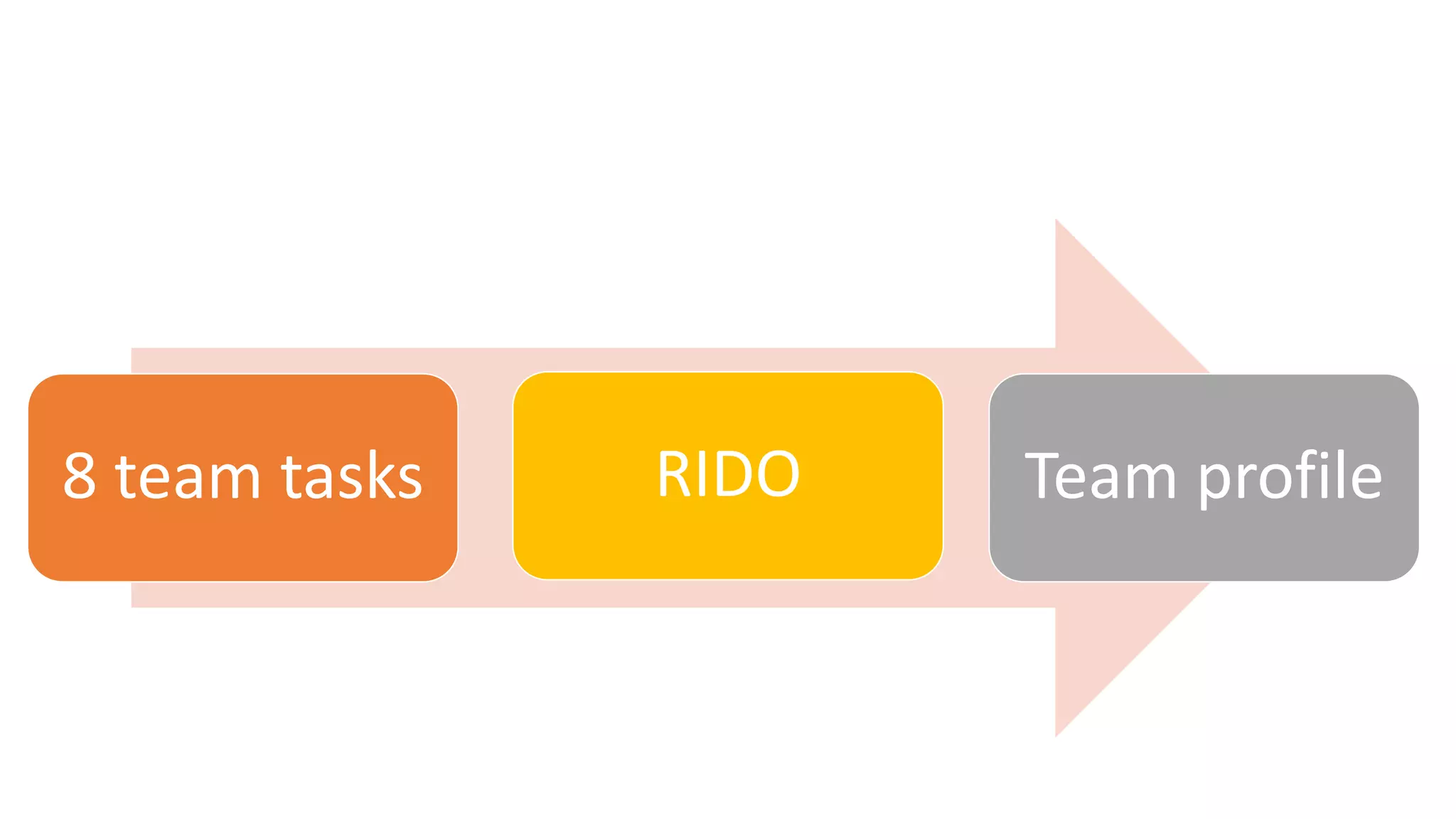
8 team tasks Team profileRIDO
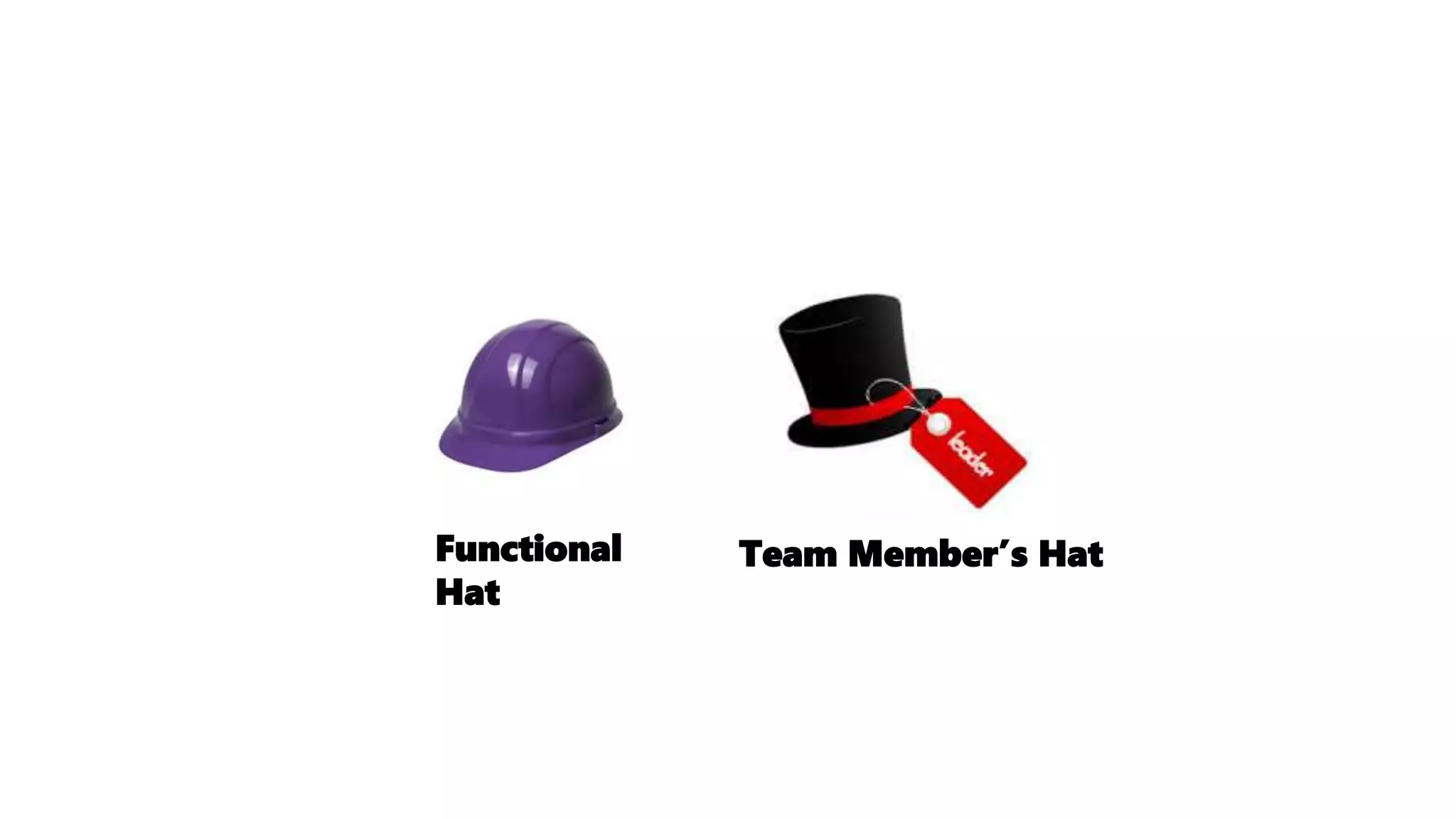
Functional
Hat
Team Member’s Hat
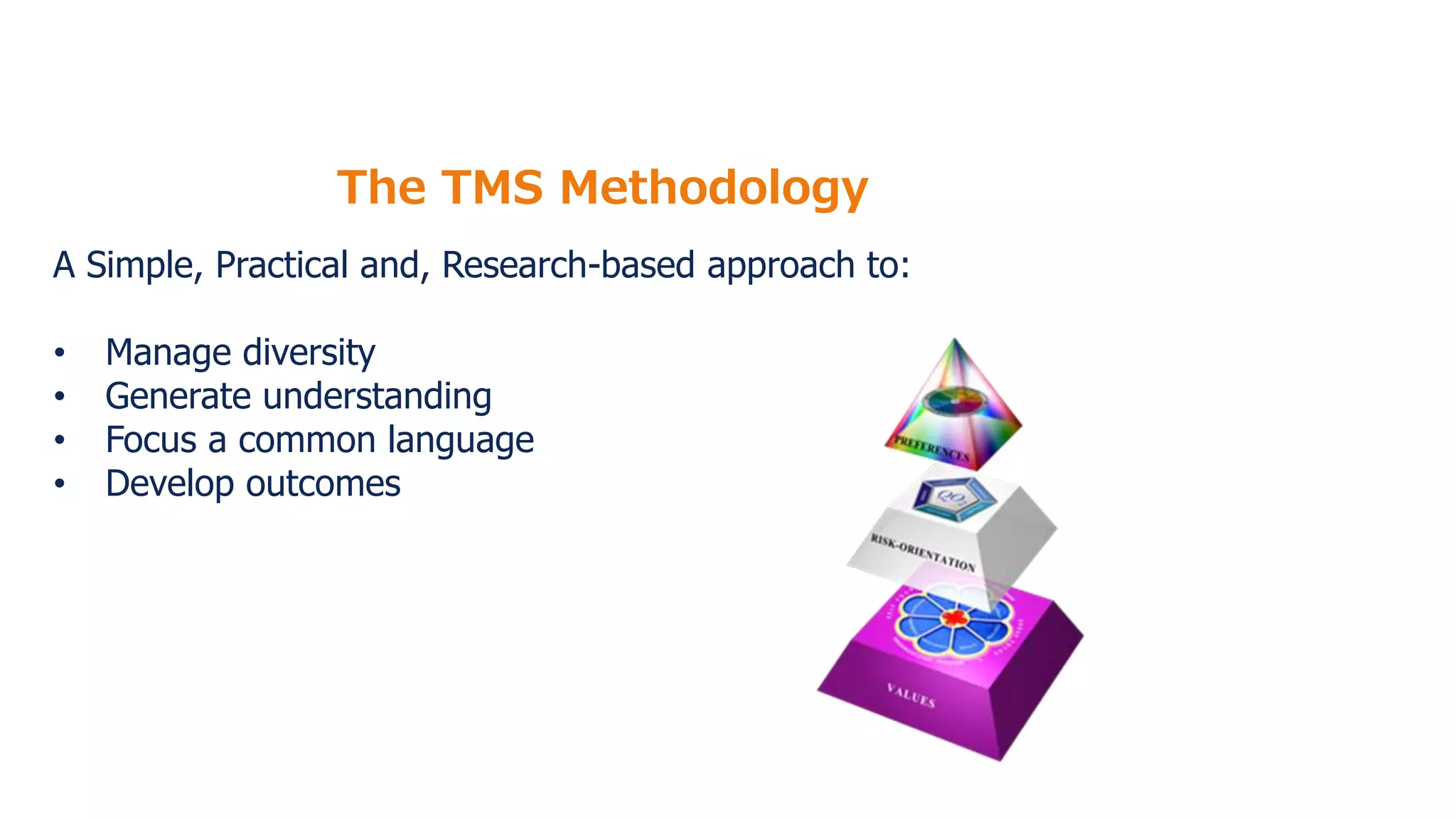
The TMS Methodology
A Simple, Practical and, Research-based approach to:
• Manage diversity
• Generate understanding
• Focus a common language
• Develop outcomes
Rule of 3 P’s
We tend to practice
What we prefer
And become more proficient at it.
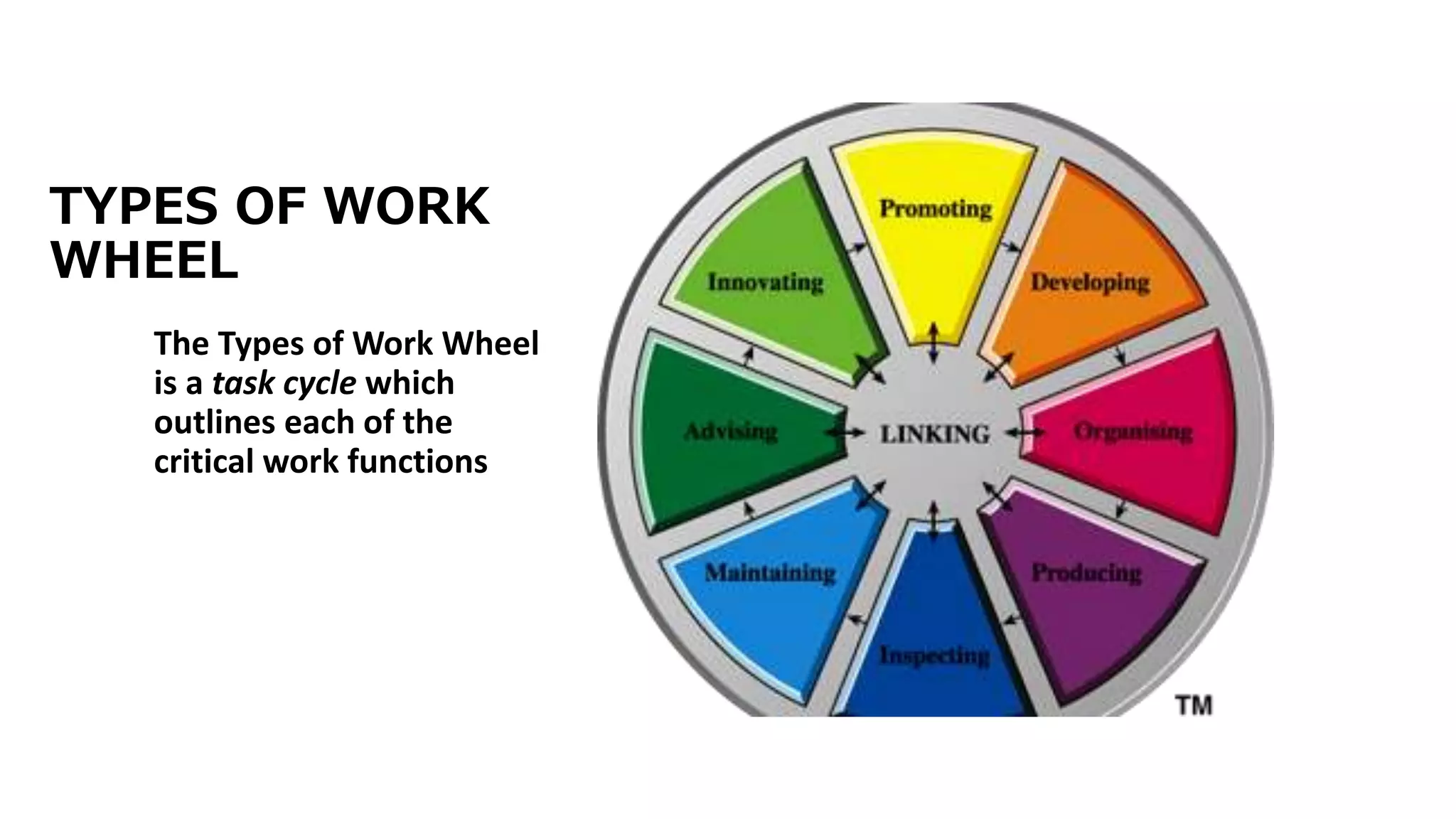
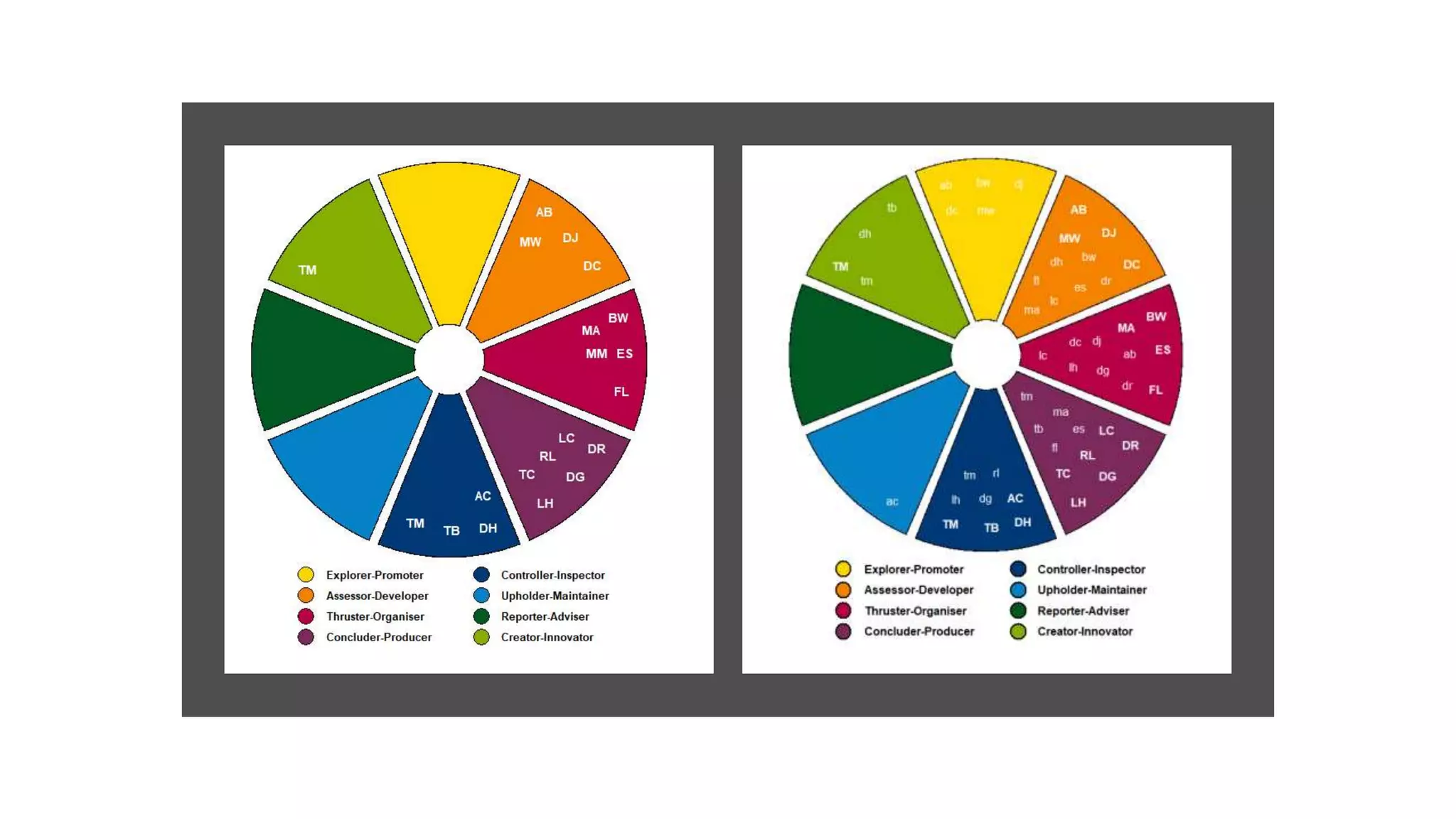
TYPES OF WORK
WHEEL
The Types of Work Wheel
is a task cycle which
outlines each of the
critical work functions
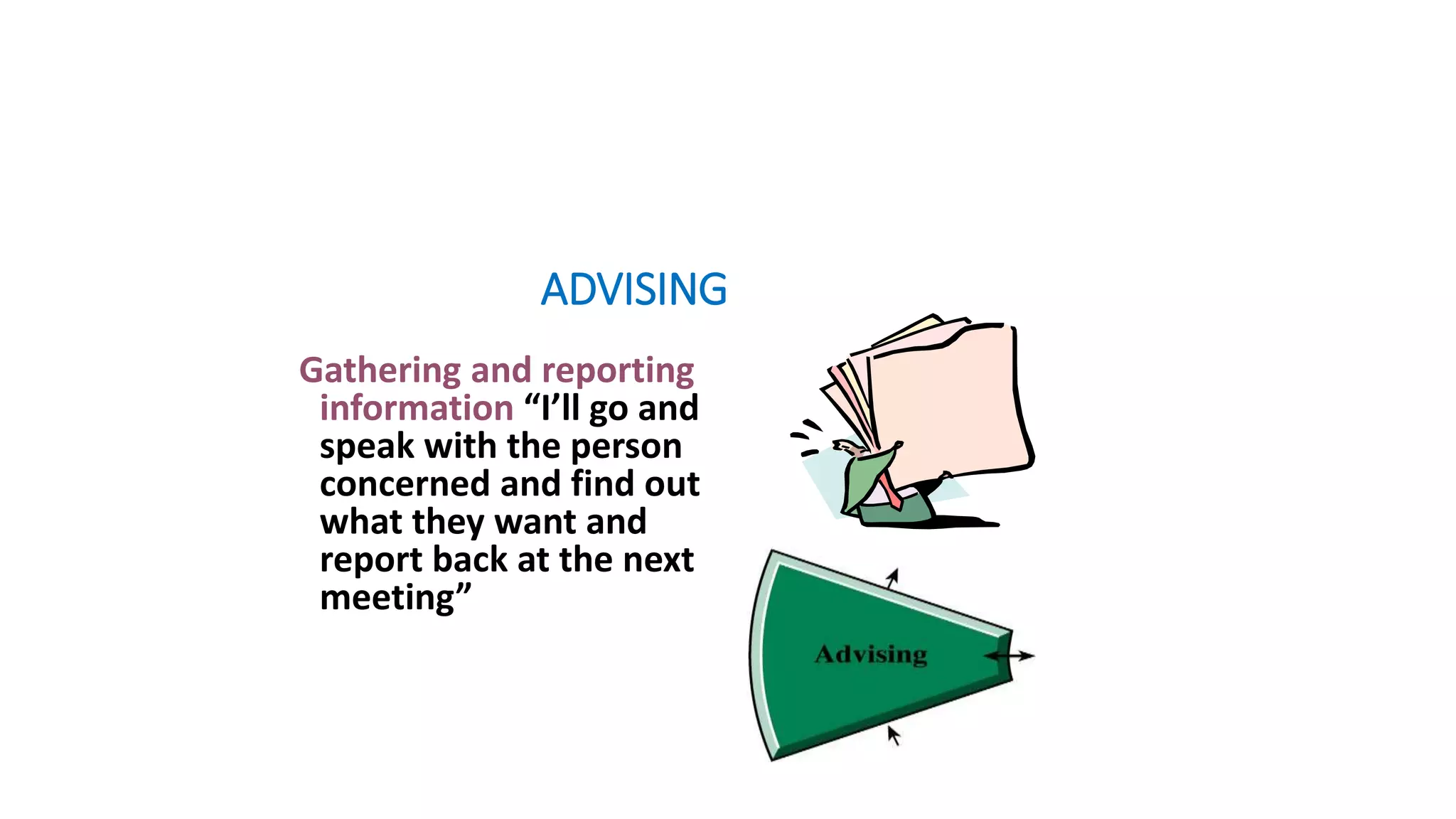
ADVISING
Gathering and reporting
information “I’ll go and
speak with the person
concerned and find out
what they want and
report back at the next
meeting”
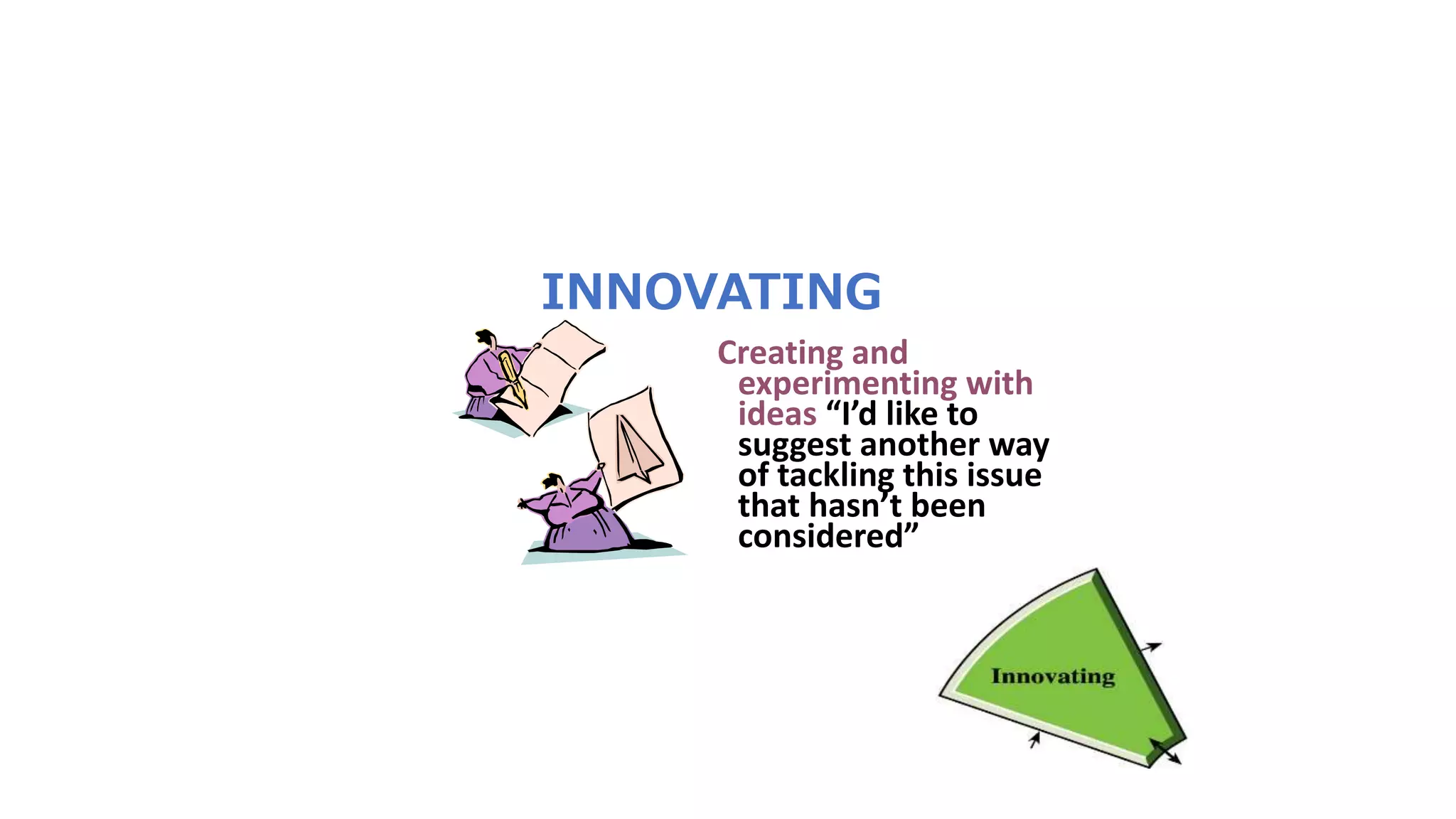
INNOVATING
Creating and
experimenting with
ideas “I’d like to
suggest another way
of tackling this issue
that hasn’t been
considered”
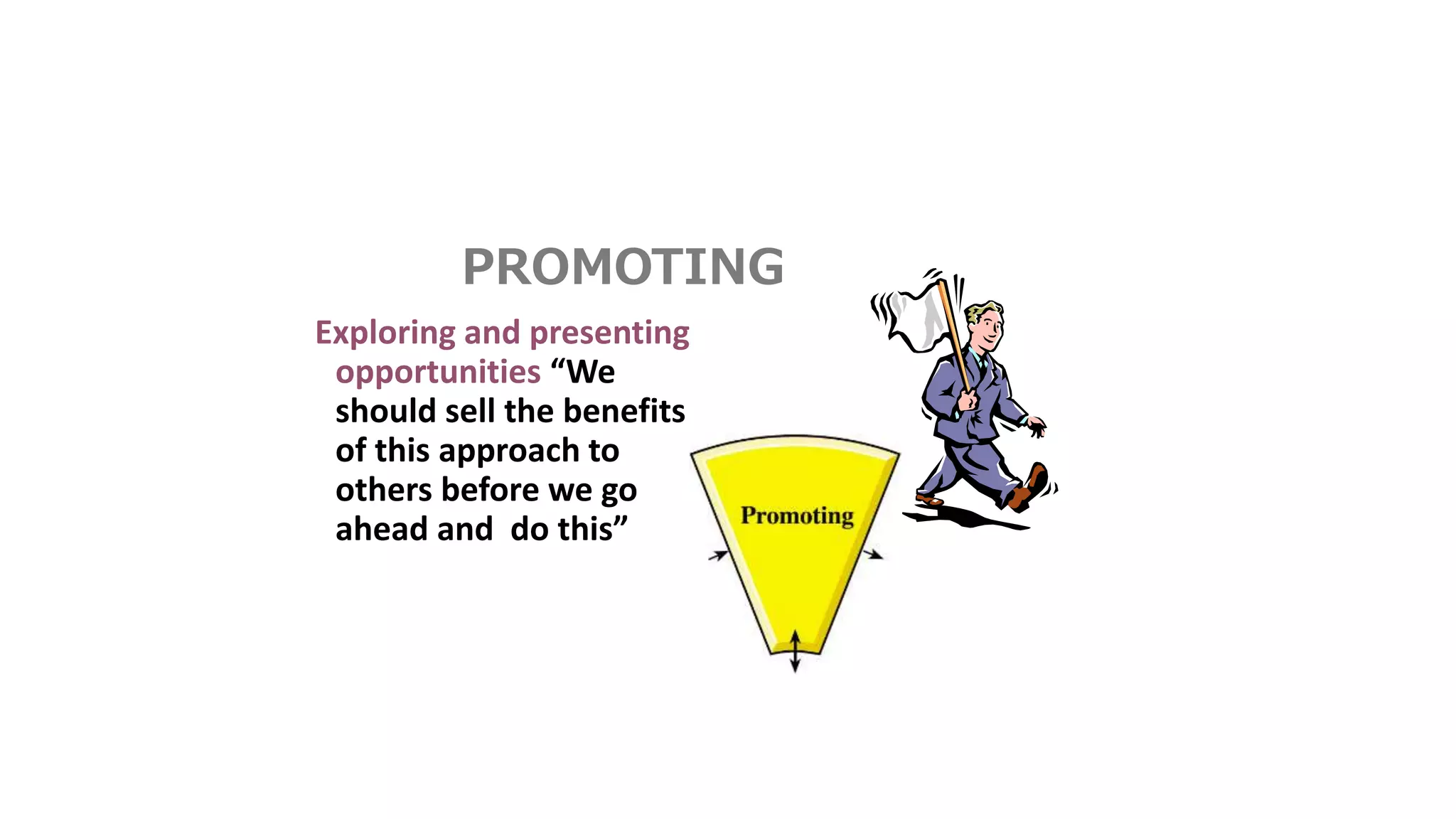
PROMOTING
Exploring and presenting
opportunities “We
should sell the benefits
of this approach to
others before we go
ahead and do this”
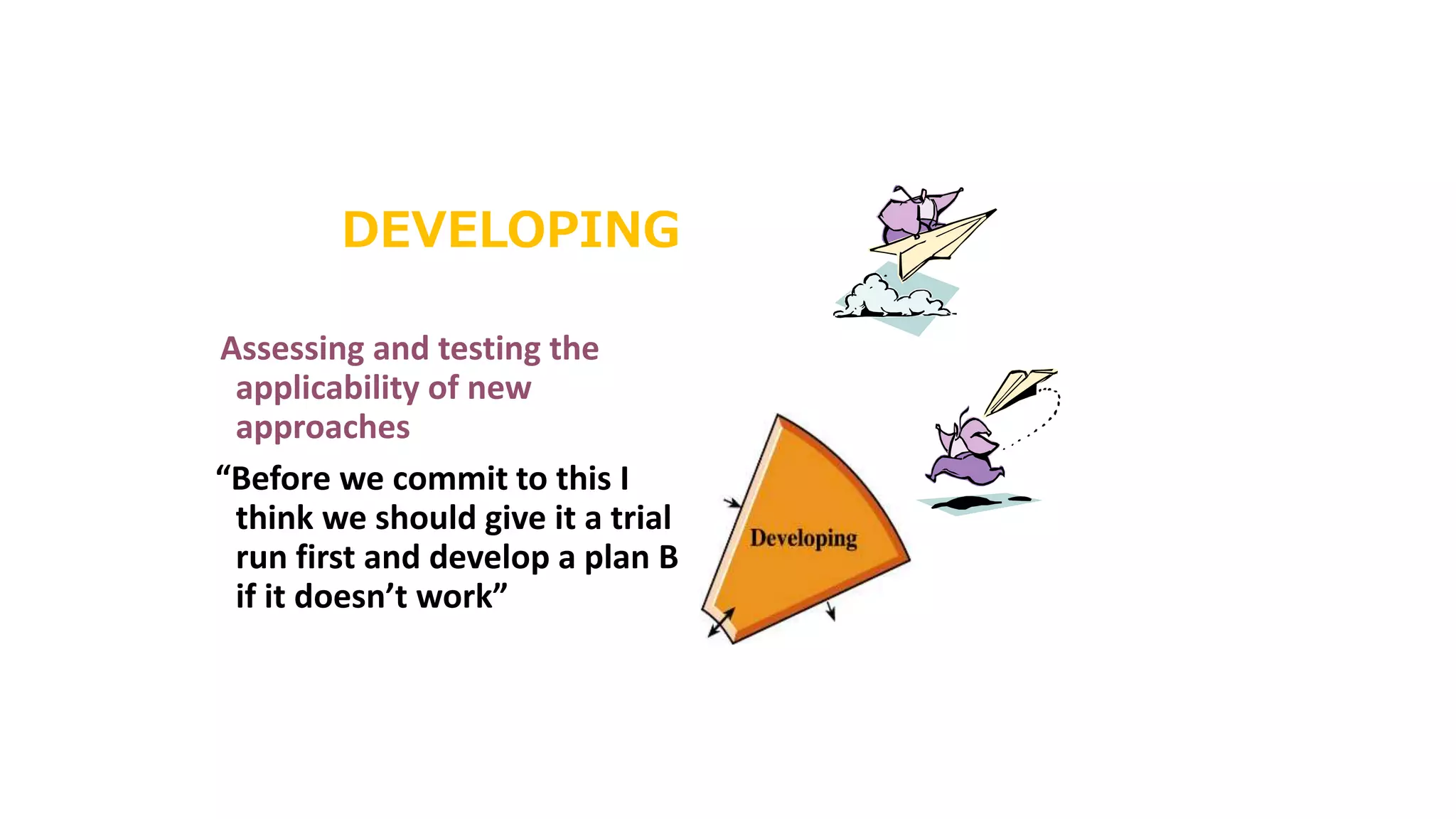
DEVELOPING
Assessing and testing the
applicability of new
approaches
“Before we commit to this I
think we should give it a trial
run first and develop a plan B
if it doesn’t work”
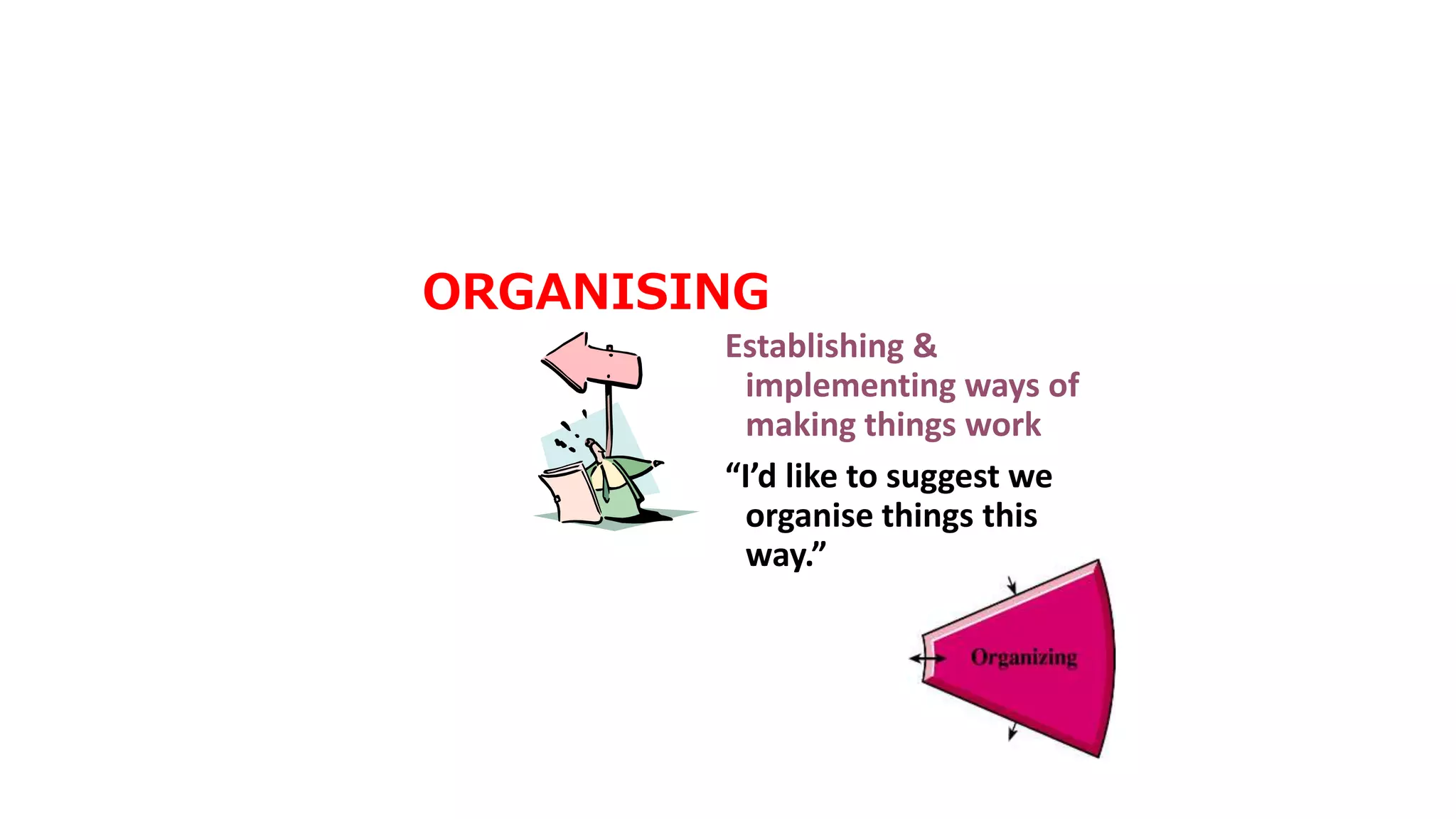
ORGANISING
Establishing &
implementing ways of
making things work
“I’d like to suggest we
organise things this
way.”
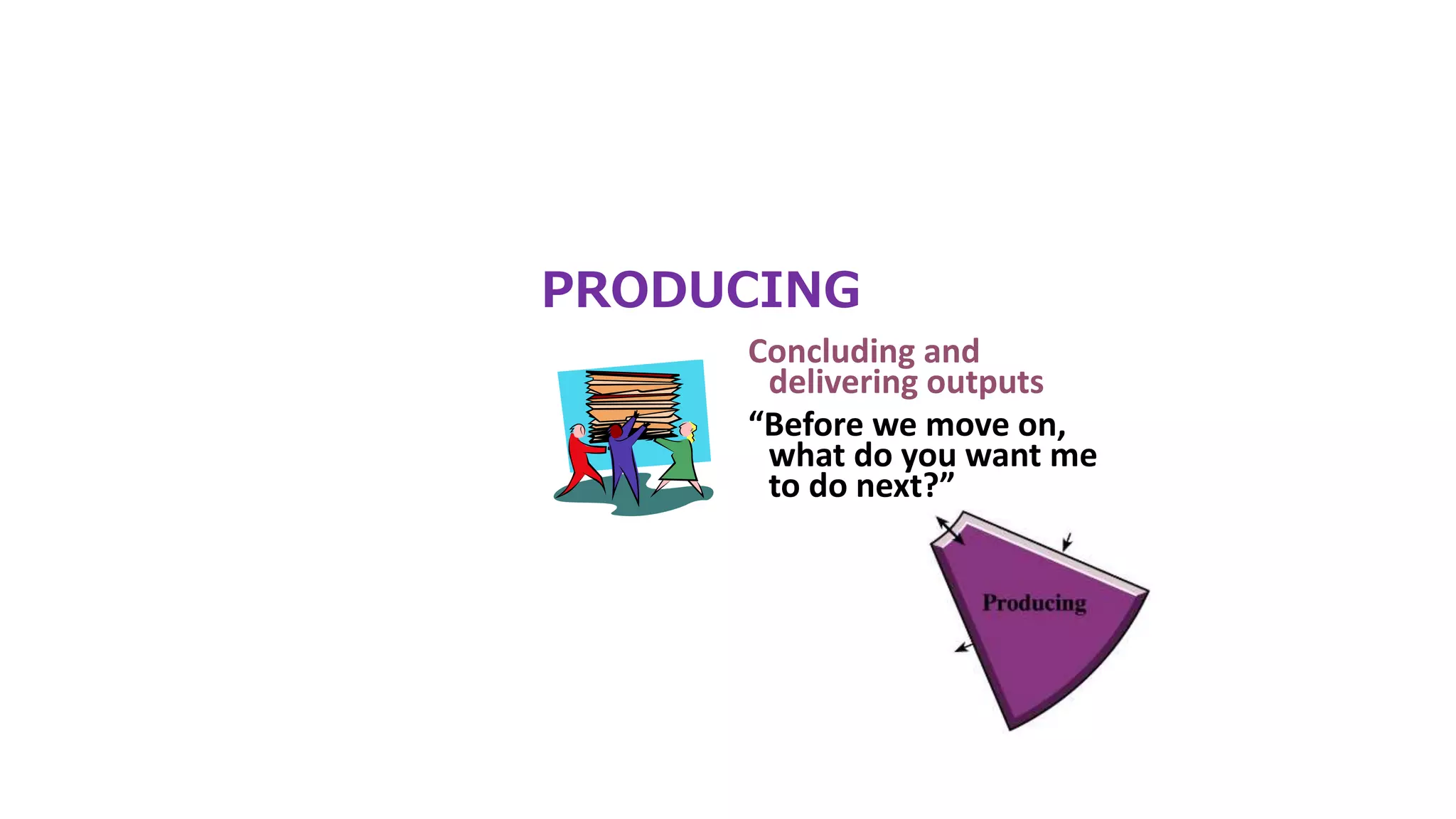
PRODUCING
Concluding and
delivering outputs
“Before we move on,
what do you want me
to do next?”
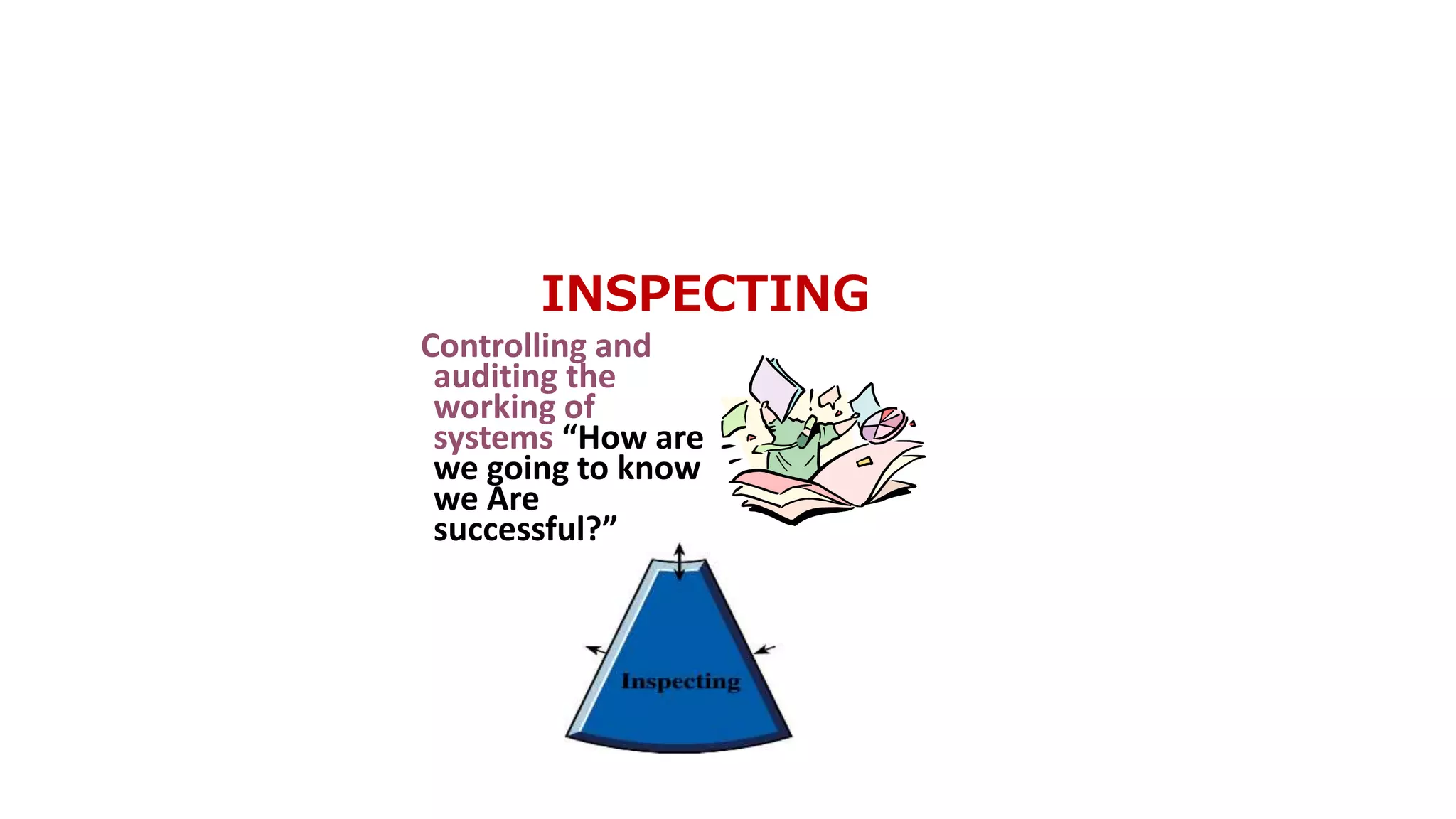
INSPECTING
Controlling and
auditing the
working of
systems “How are
we going to know
we Are
successful?”
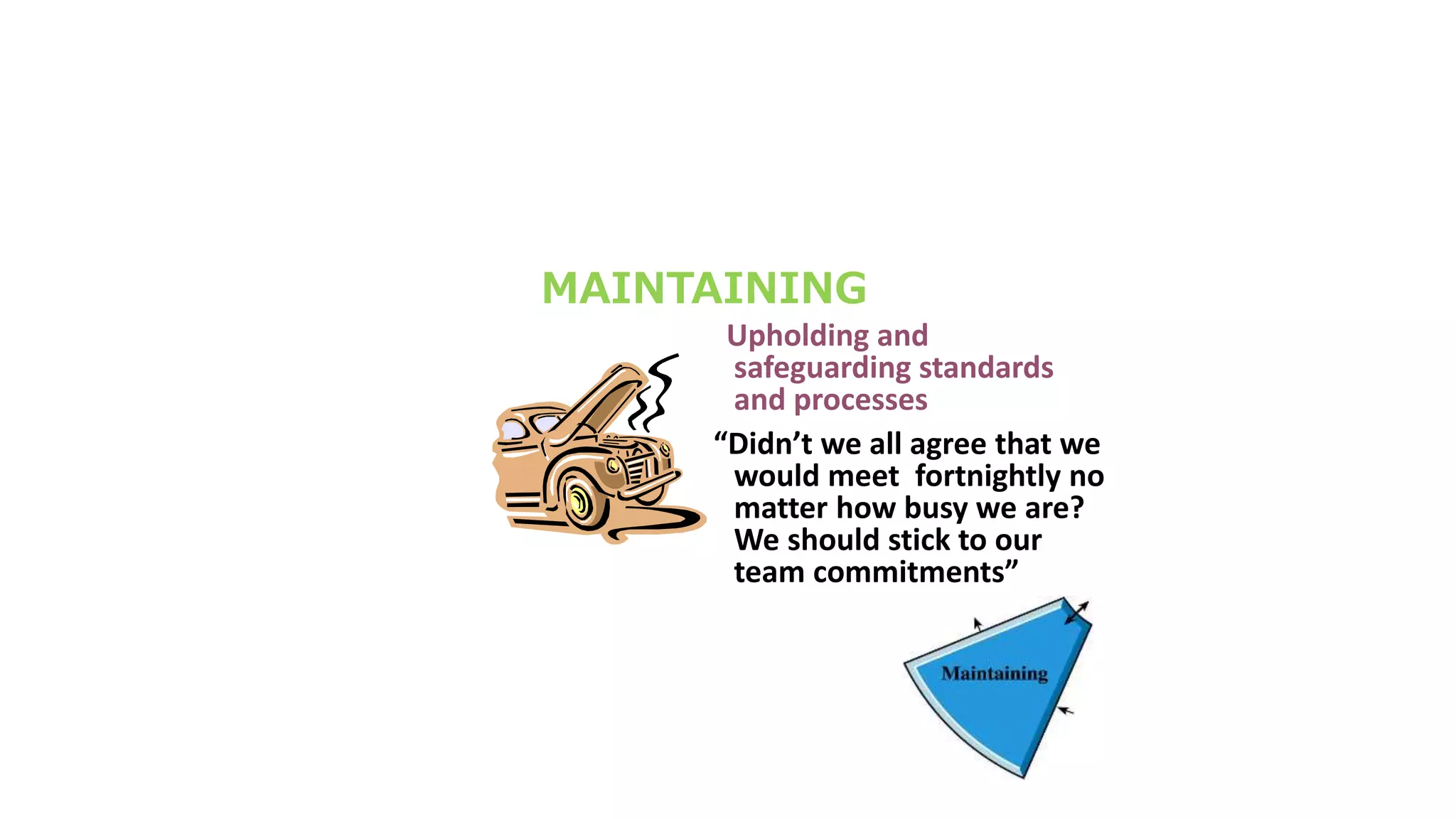
MAINTAINING
Upholding and
safeguarding standards
and processes
“Didn’t we all agree that we
would meet fortnightly no
matter how busy we are?
We should stick to our
team commitments”
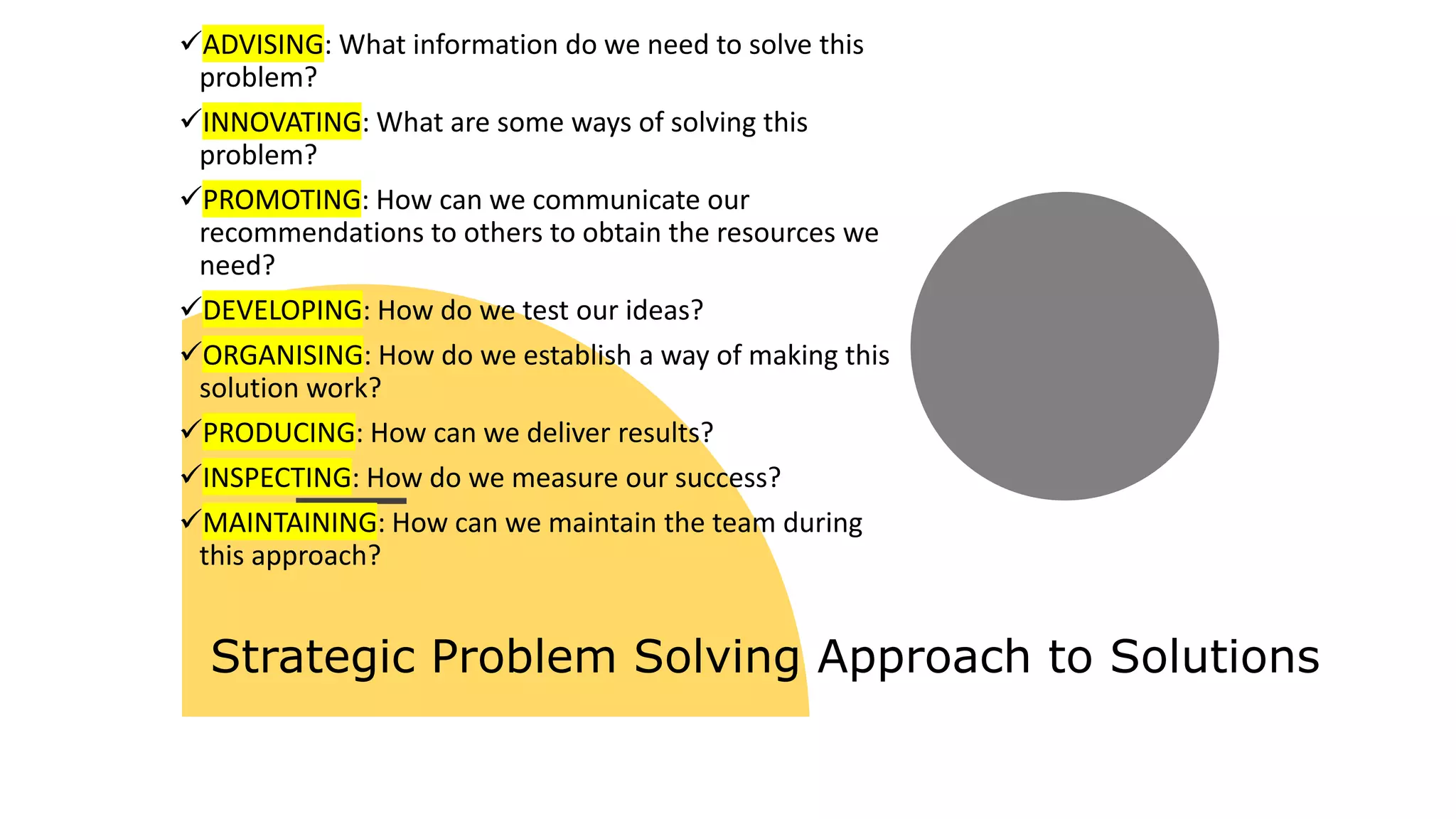
Strategic Problem Solving Approach to Solutions
ADVISING: What information do we need to solve this
problem?
INNOVATING: What are some ways of solving this
problem?
PROMOTING: How can we communicate our
recommendations to others to obtain the resources we
need?
DEVELOPING: How do we test our ideas?
ORGANISING: How do we establish a way of making this
solution work?
PRODUCING: How can we deliver results?
INSPECTING: How do we measure our success?
MAINTAINING: How can we maintain the team during
this approach?
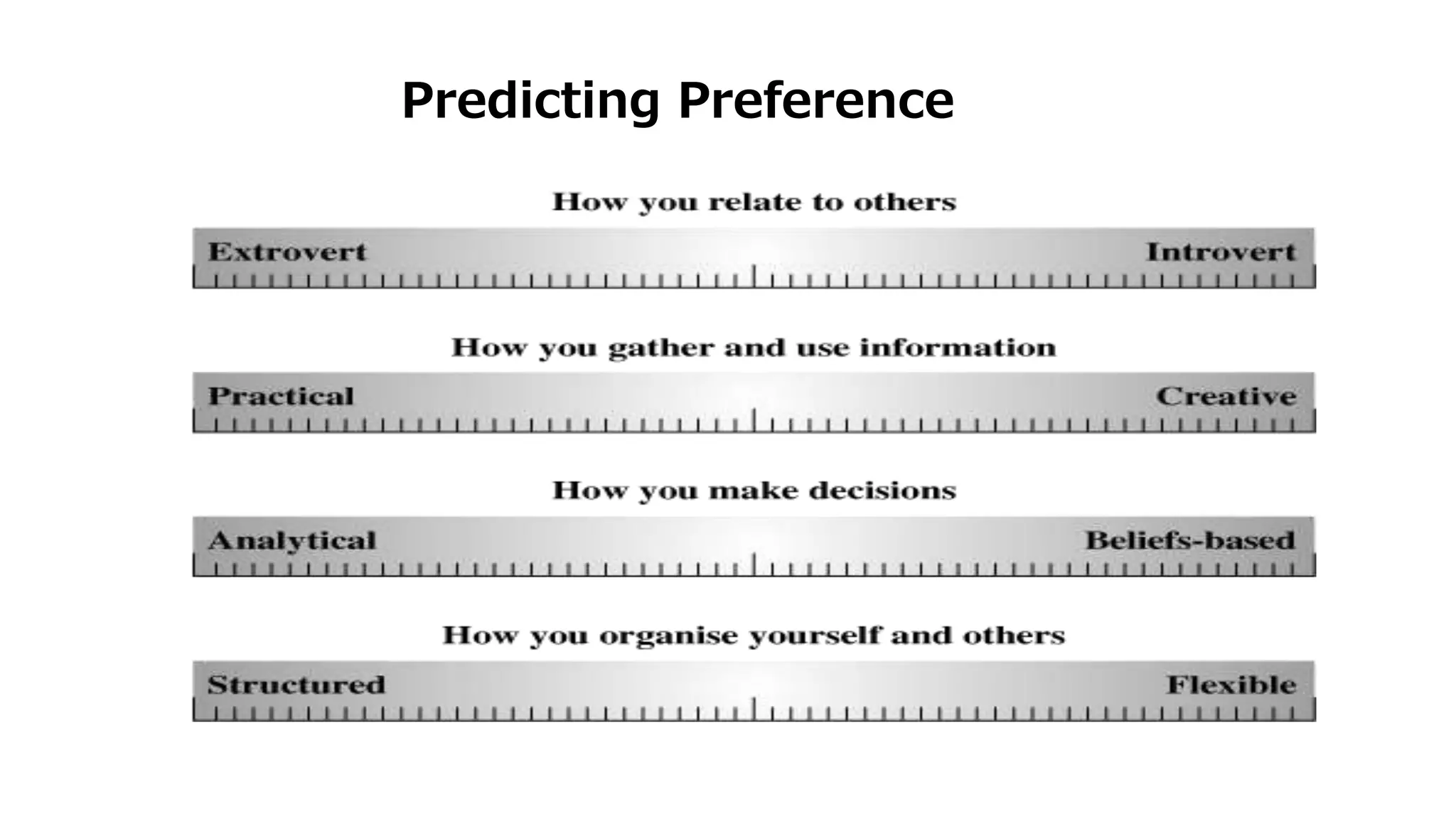
Predicting Preference
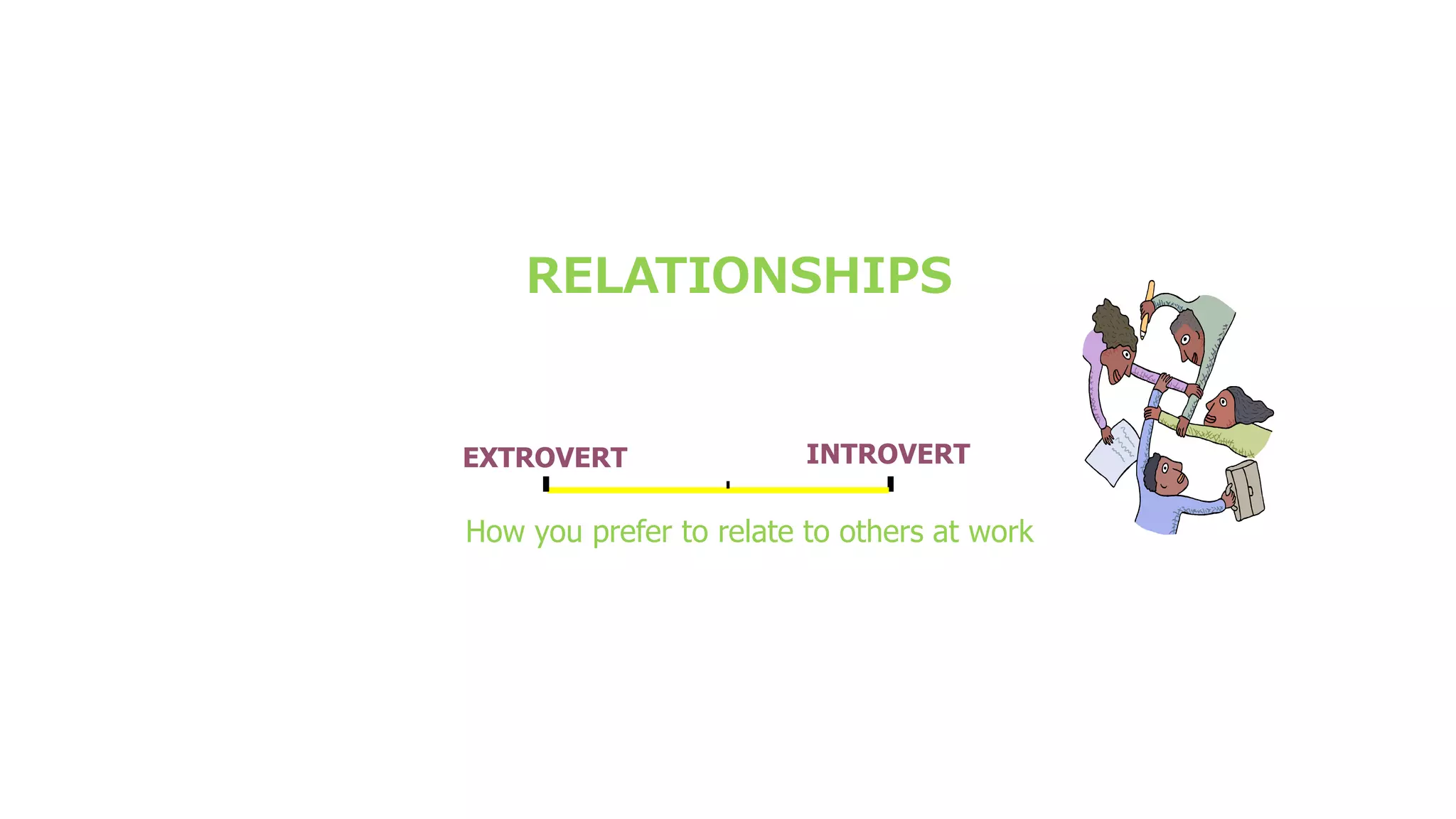
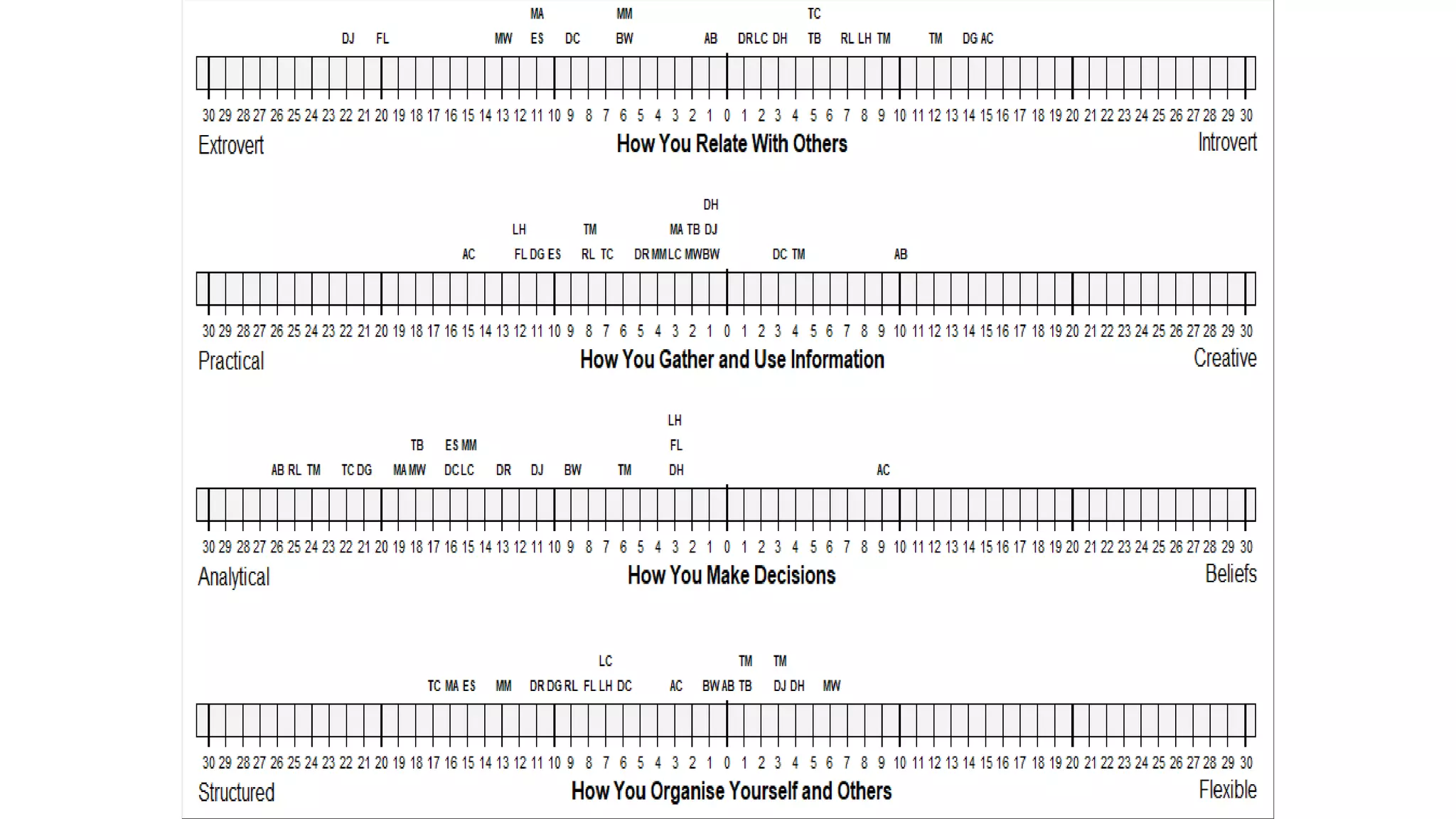
RELATIONSHIPS
EXTROVERT INTROVERT
How you prefer to relate to others at work
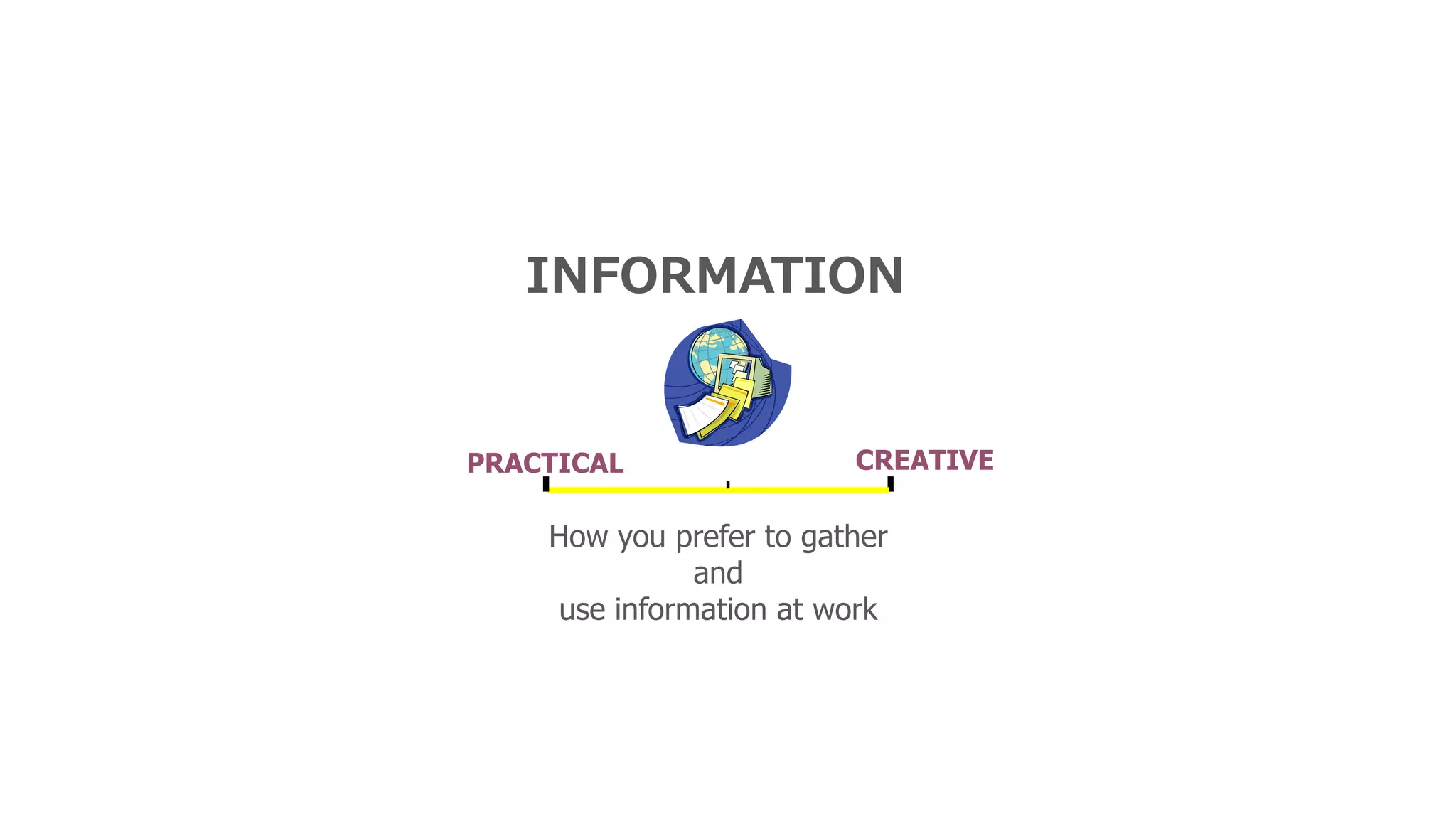
INFORMATION
PRACTICAL CREATIVE
How you prefer to gather
and
use information at work
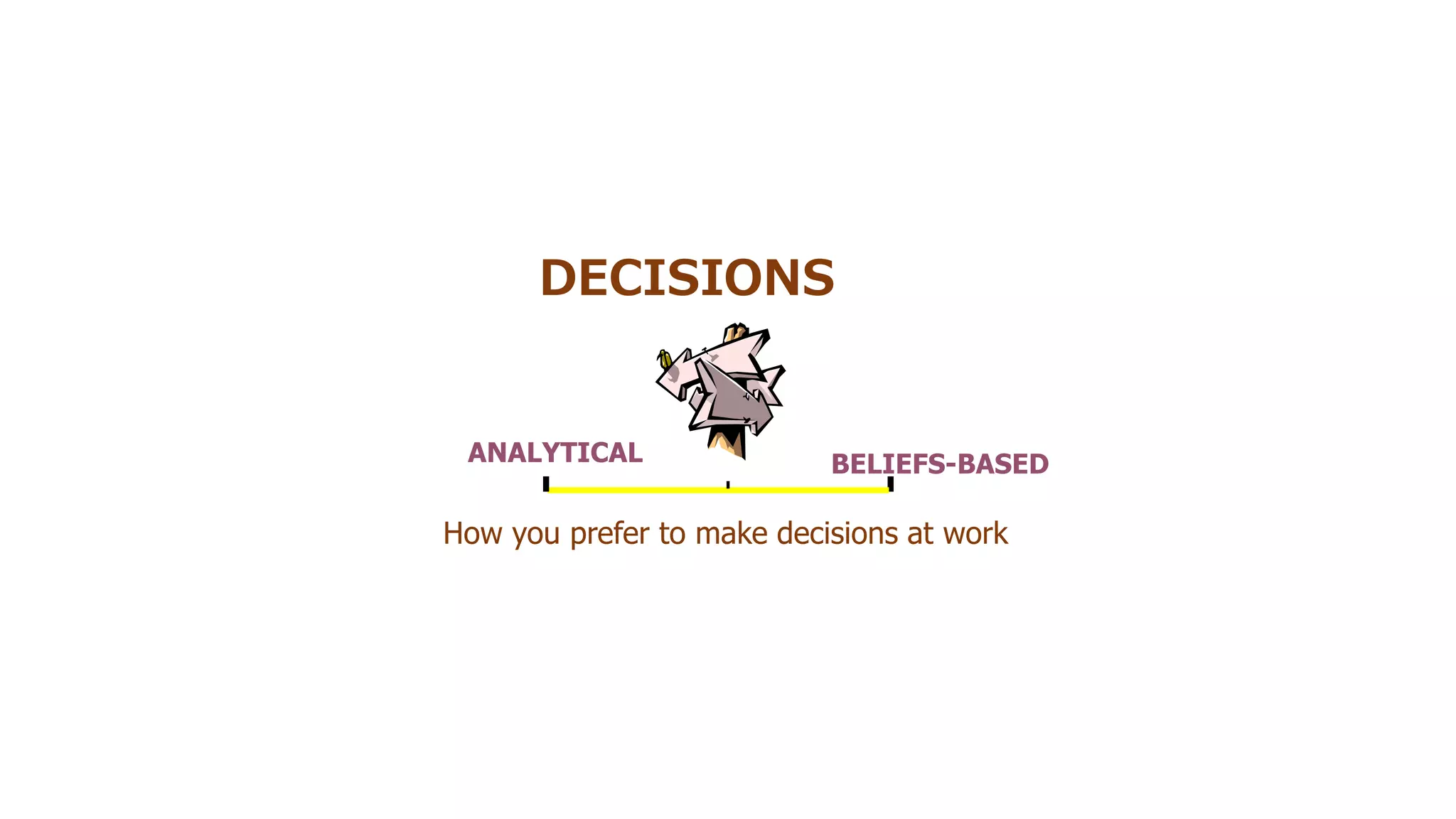
DECISIONS
ANALYTICAL BELIEFS-BASED
How you prefer to make decisions at work
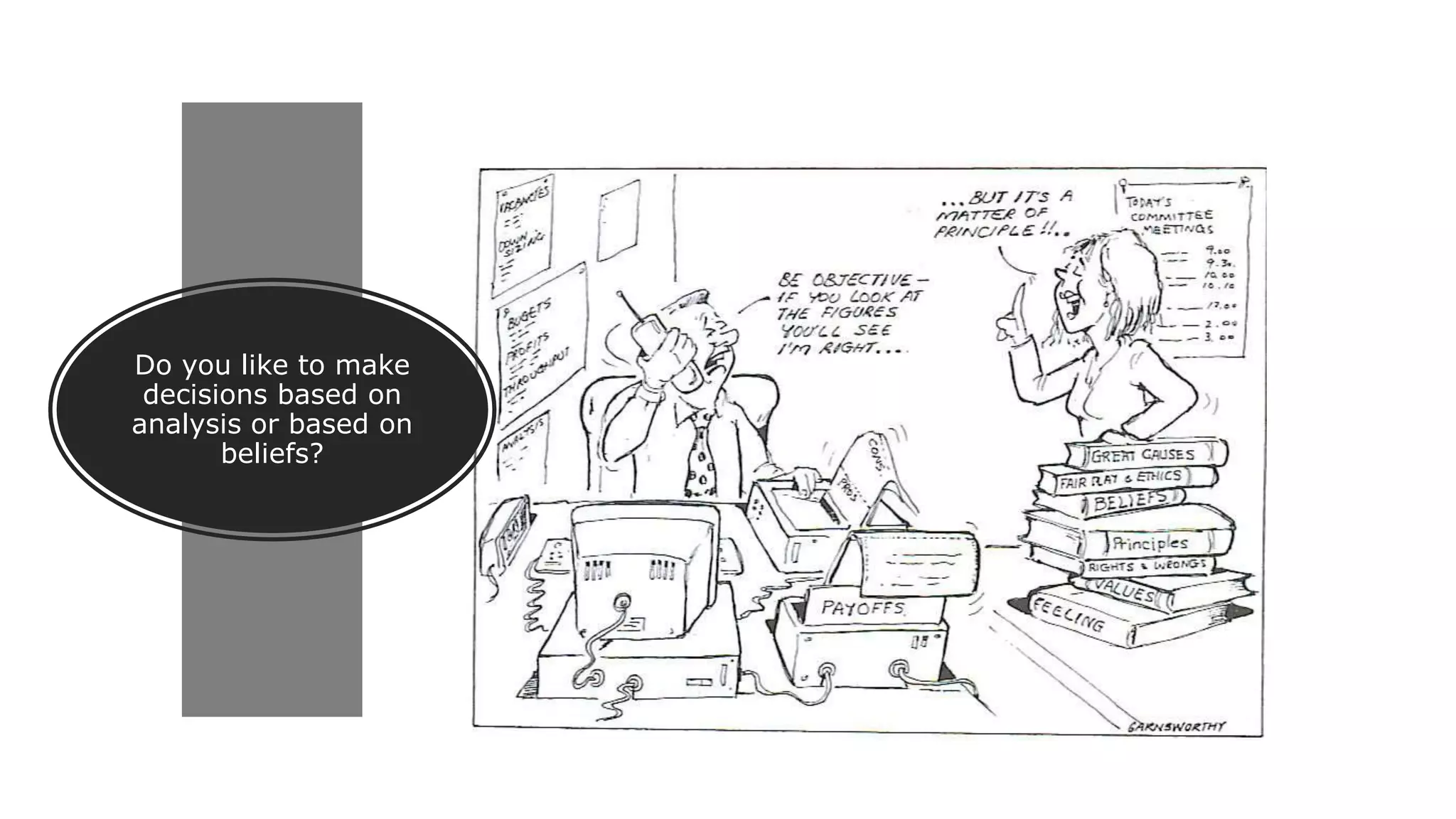
Do you like to make
decisions based on
analysis or based on
beliefs?
Activity
• You have two movie tickets to give
away to your team. But you have
three team members. How will you
decide who gets the tickets (or who
misses out)?
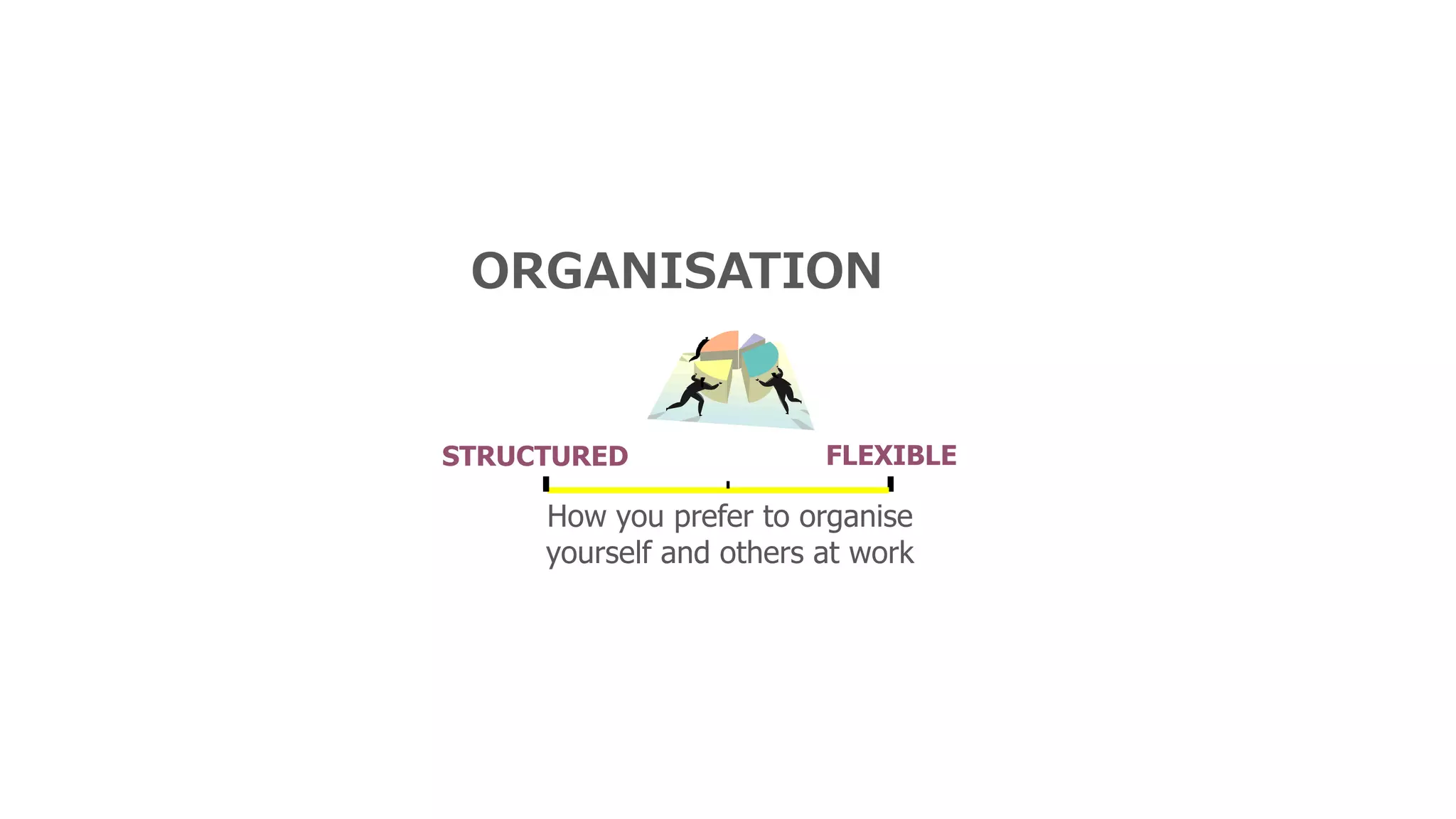
ORGANISATION
STRUCTURED FLEXIBLE
How you prefer to organise
yourself and others at work
Your homework
Observe your team this afternoon, how do
they communicate? What are their
preferences? Consider using these
preferences.
Unit 1—Characteristics of
High Performing Teams
Unit 2—The Four Stages of
Team Development
Unit 3—Tools for Leading
Teams
Unit 4—The Roles People Play
in Teams
Unit 5—Managing Team
Conflict and Negotiations
Unit 6—Developing Team
Culture

Unit 4—Getting the Very Best from People