GRADE 8 ARTS
Arvin Lark P. Santiago
MAPEH 8 Teacher
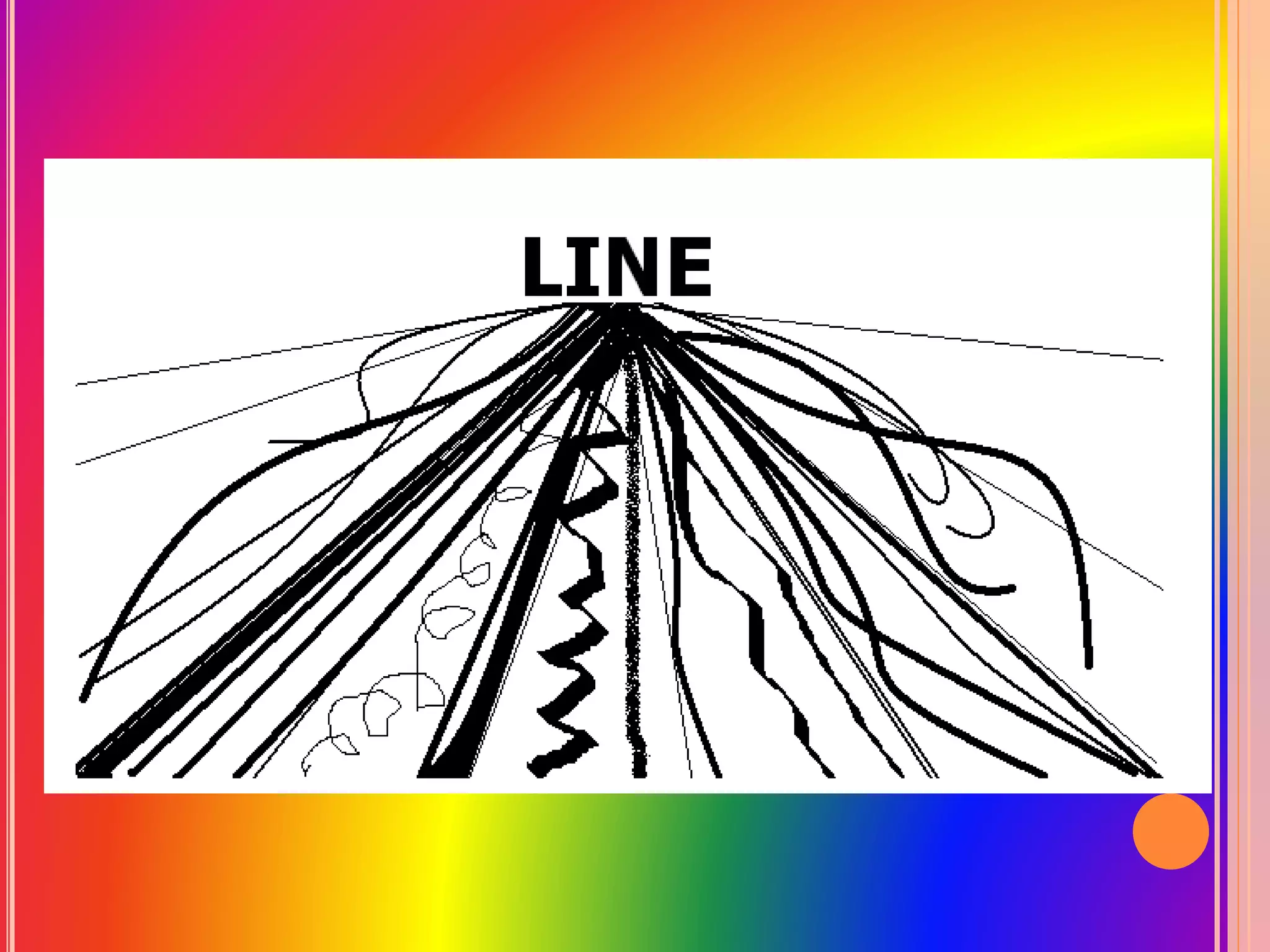
LINE
It is an element of art
which refers to the
continuous mark made
on some surface by a
moving point.
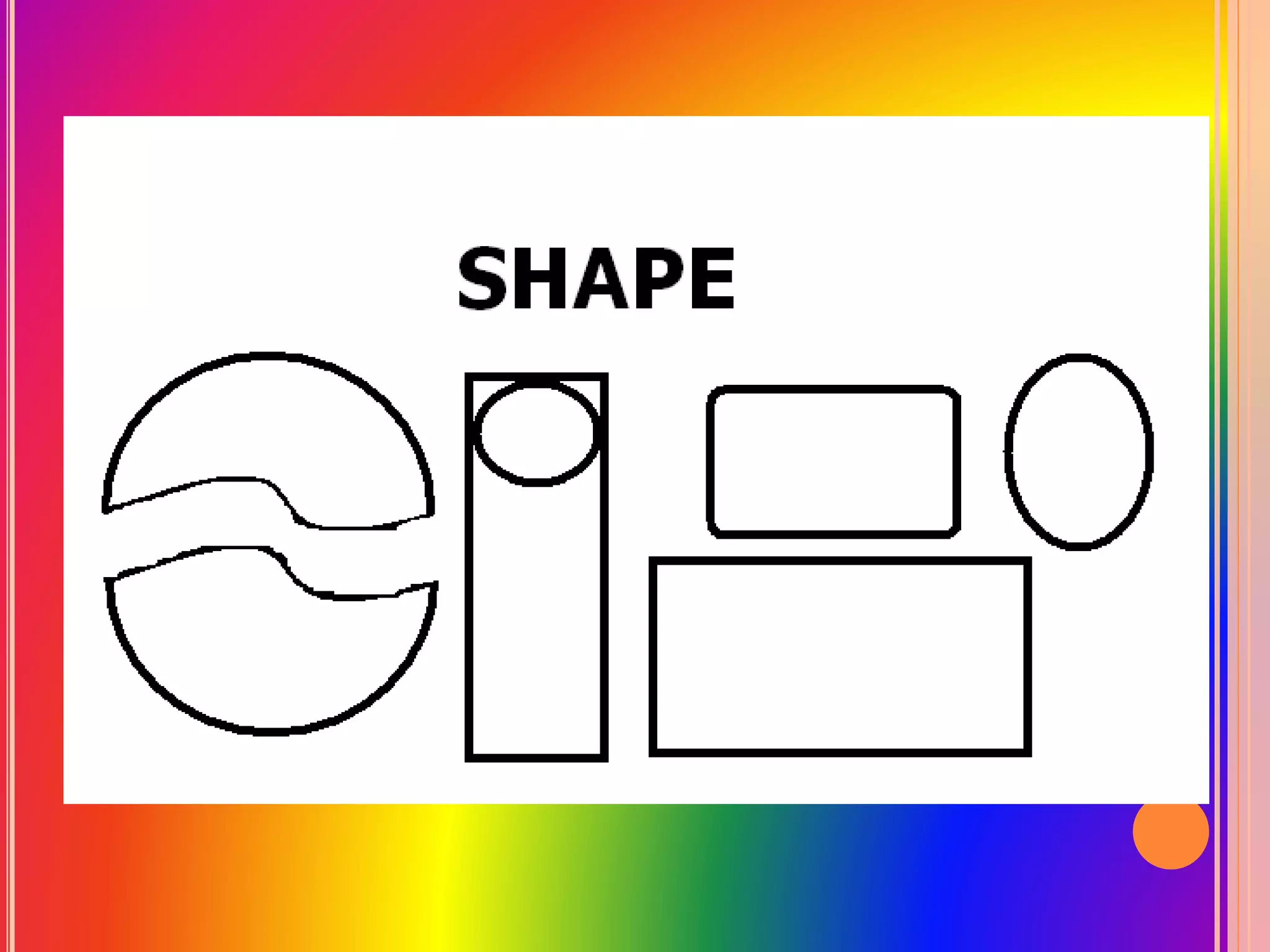
SHAPE
It is an enclosed space,
the boundaries of which
are defined by other
elements of art (i.e.: lines,
colors, values, textures,
etc.).
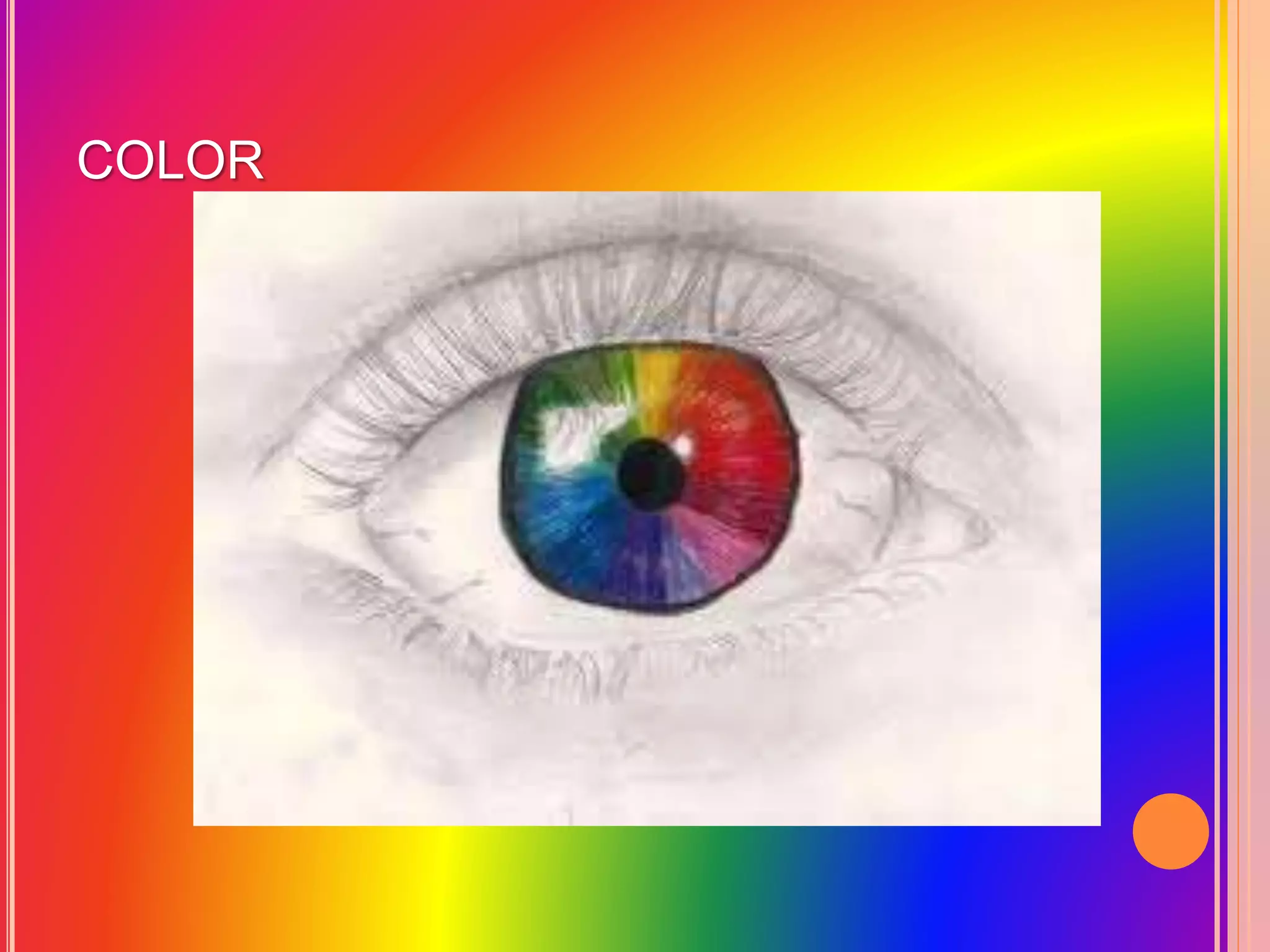
COLOR
COLOR
It is the element of art that
is produced when light,
striking an object, is
reflected back to the eye.
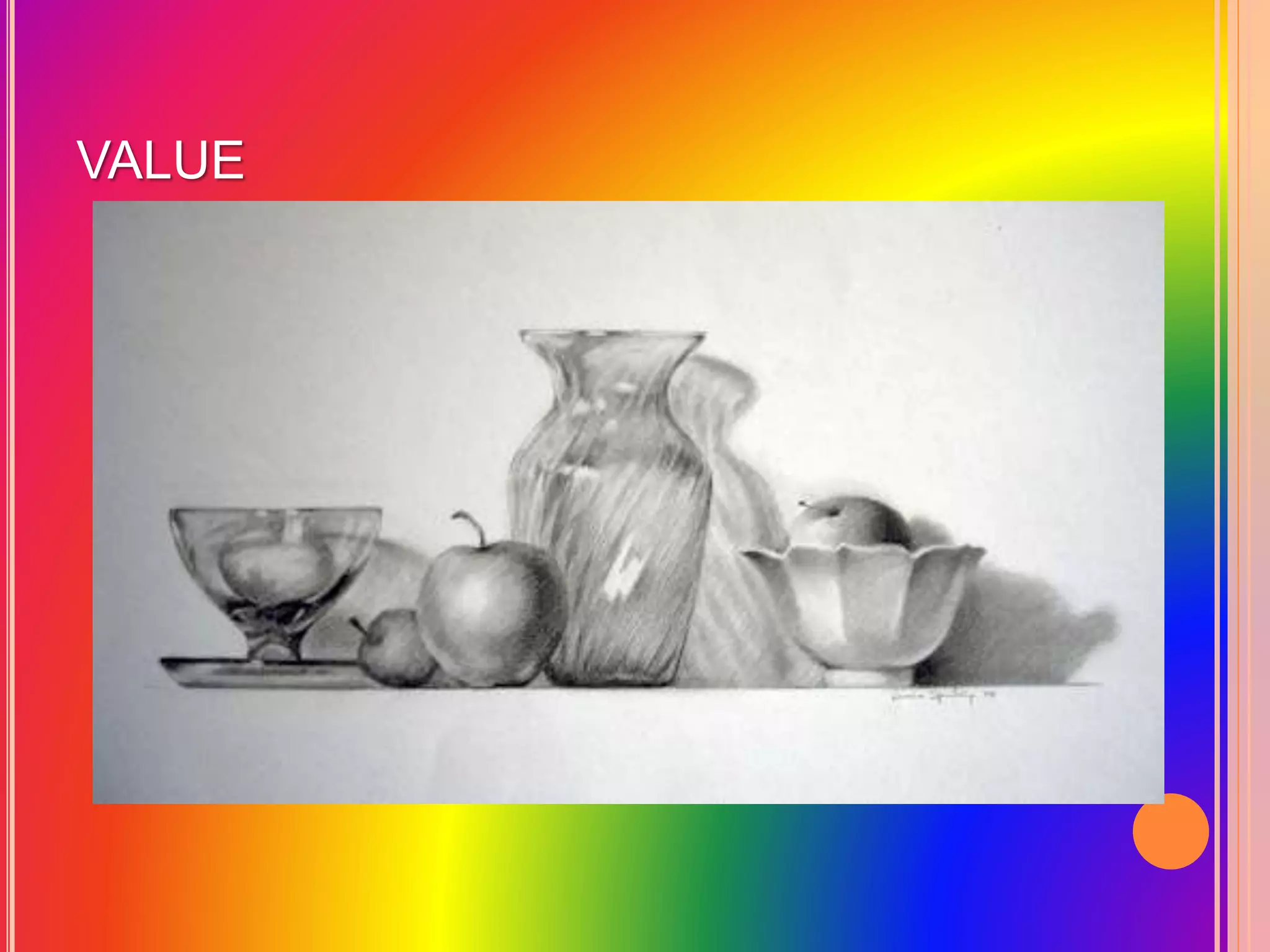
VALUE
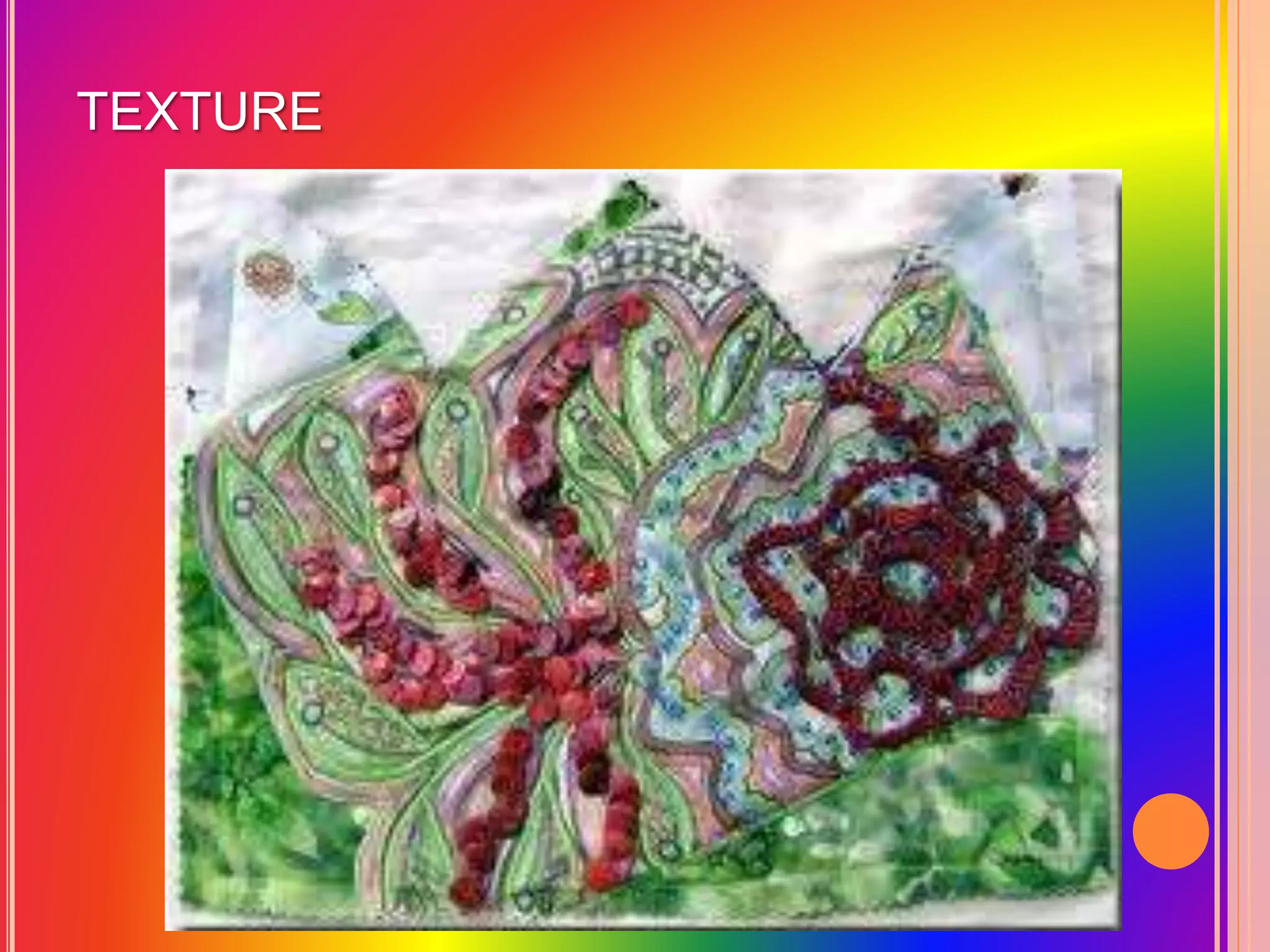
Texture is used to
describe either the way a
three-dimensional work
actually feels when
touched, or the visual
"feel" of a two-
dimensional work
VALUE
It refers to the lightness or
darkness of a color and
becomes critical in a work
which has no colors other
than black, white, and a
gray scale.
TEXTURE
SPACE
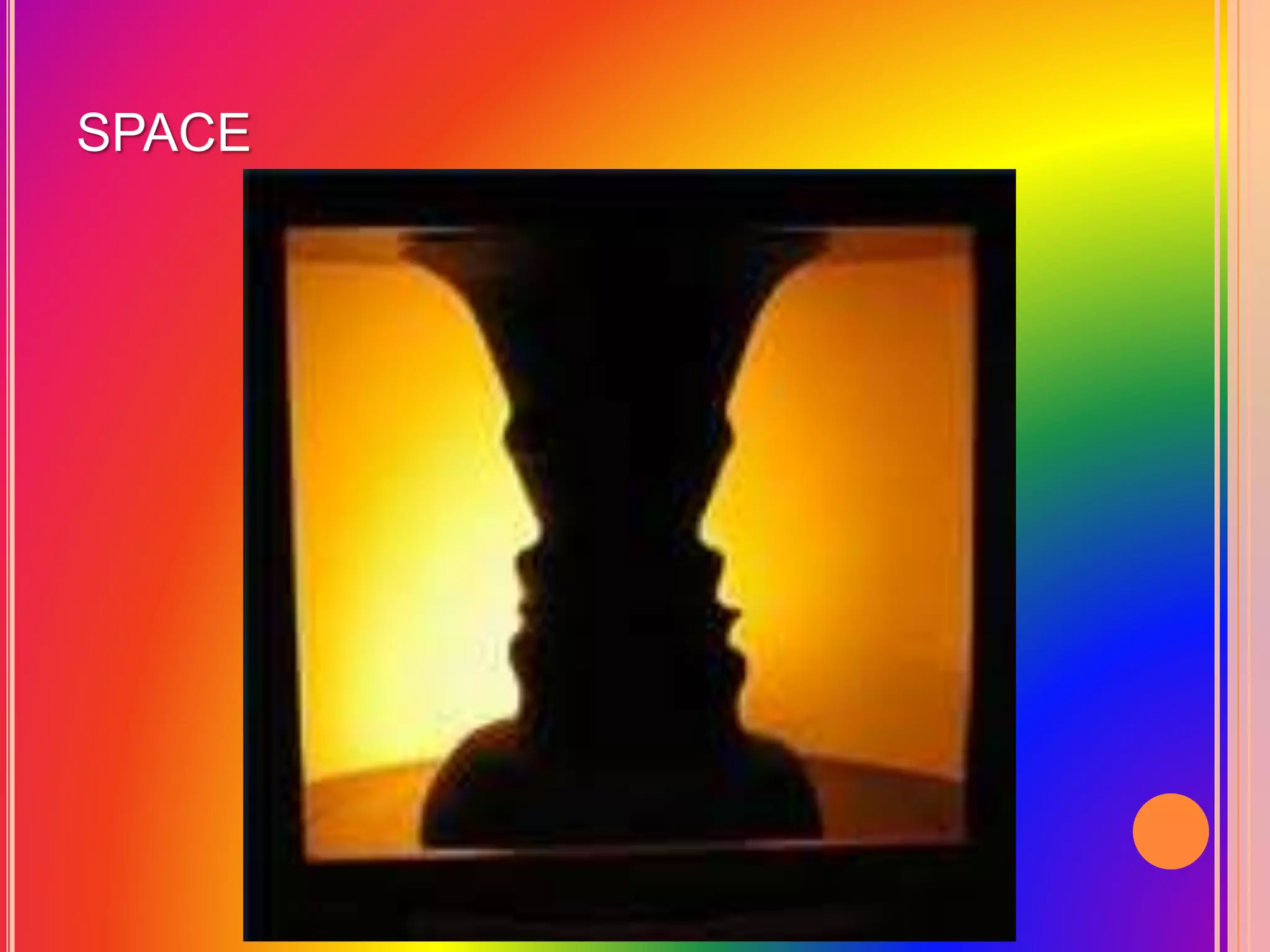
It refers to distances or areas around,
between or within components of a
piece. Space can be positive (white
or light) or negative (black or dark),
open or closed, shallow or deep and
two-dimensional or three-
dimensional. Sometimes space isn't
actually within a piece, but the illusion
of it is.
SPACE
FORM
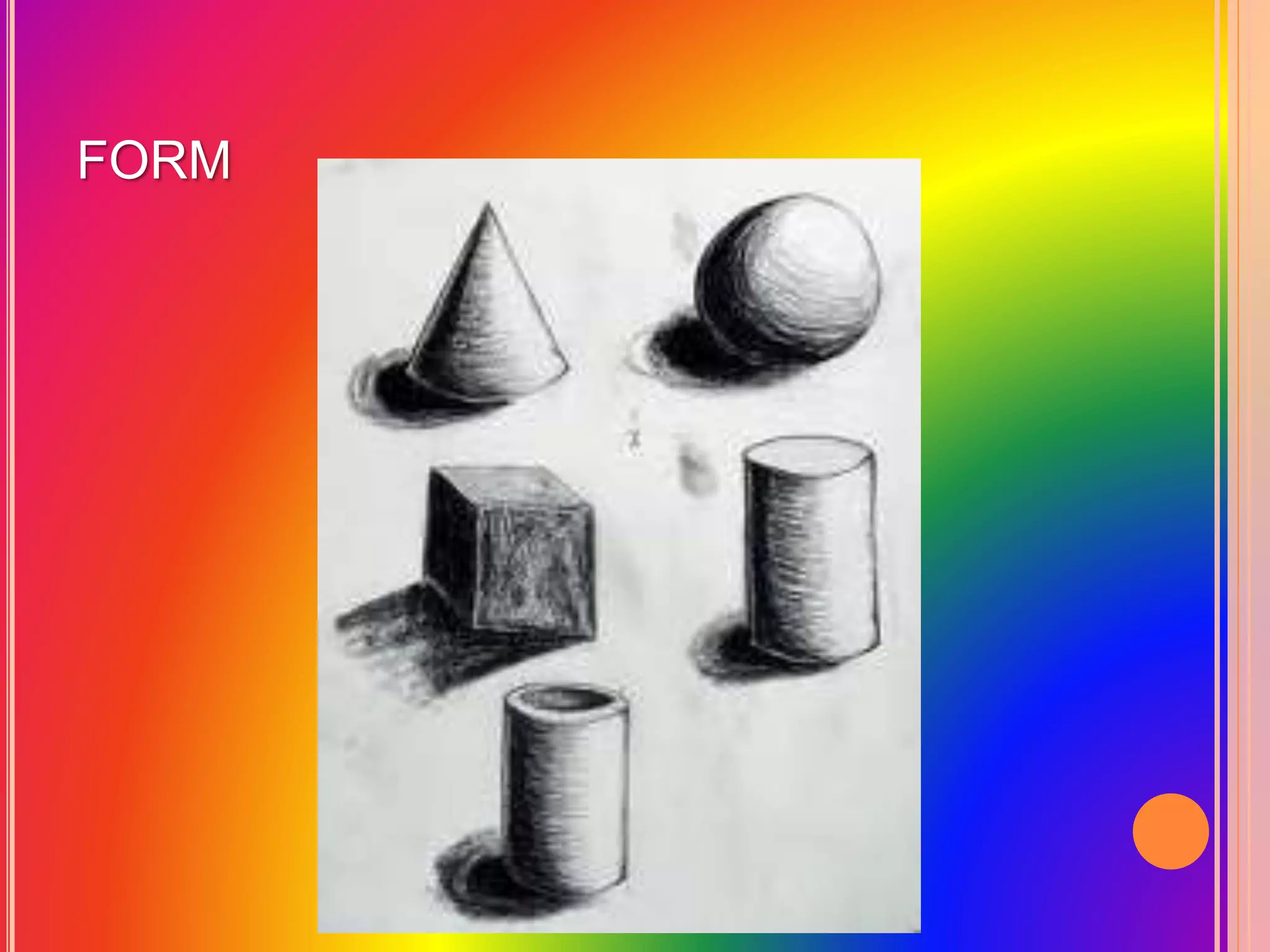
It means the whole of a
piece's visible elements and
the way those elements are
united. In this context, this
element allows us as viewers
to mentally capture the work
and understand it.
FORM
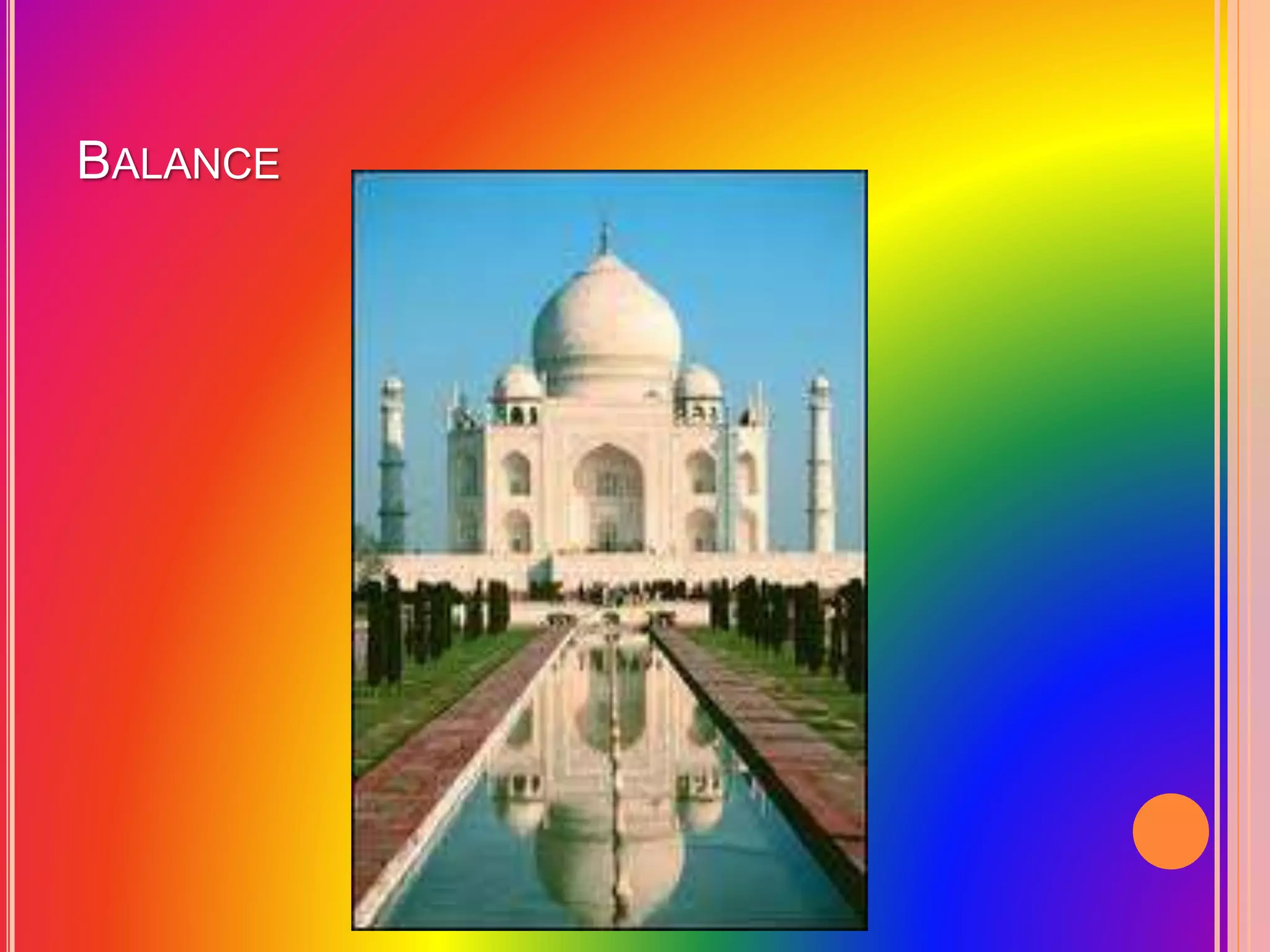
BALANCE
It refers to the ways in which
the elements (lines, shapes,
colors, textures, etc.) of a
piece are arranged.
BALANCE
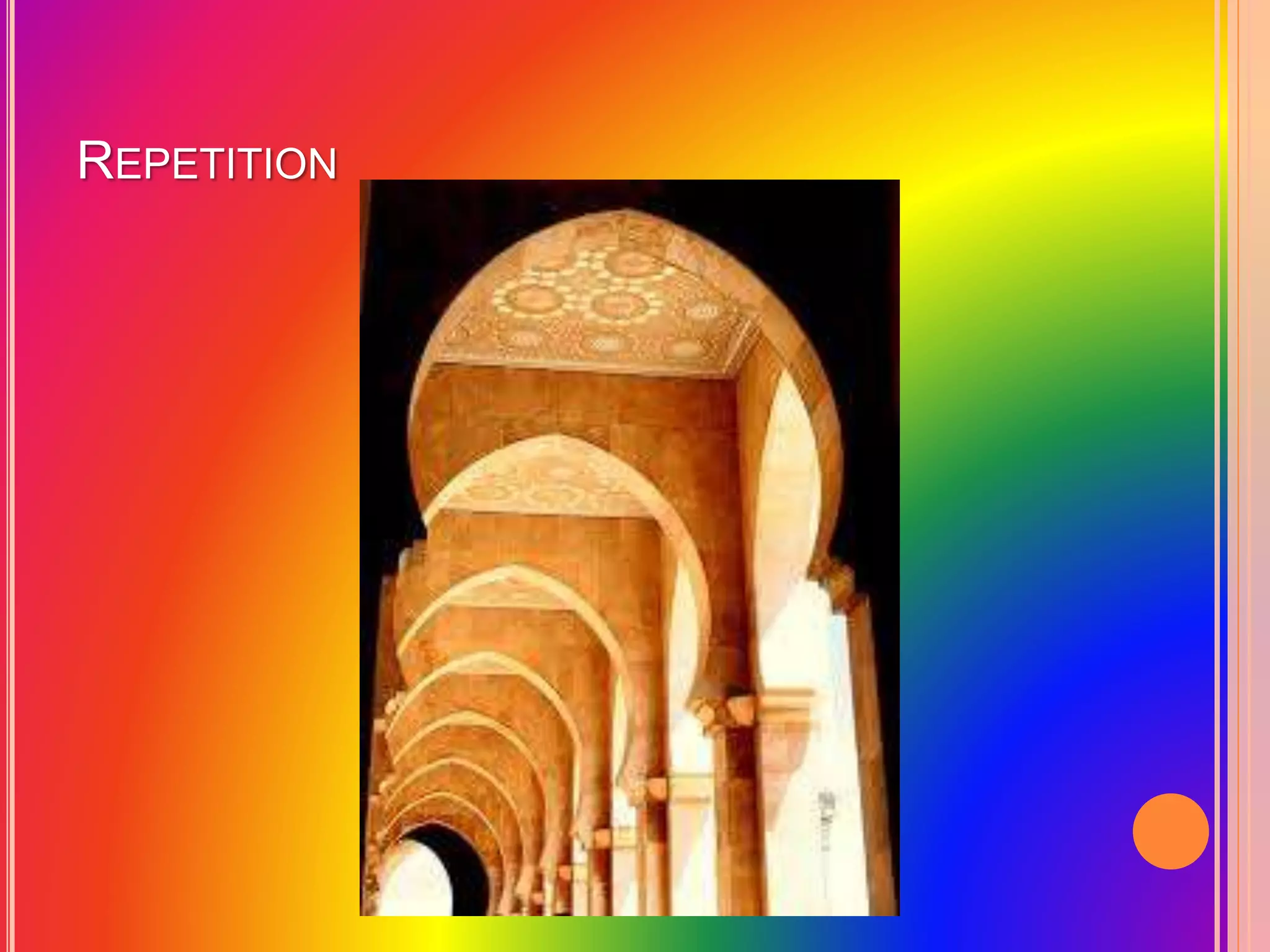
REPETITION
An element that occurs over
and over again in a
composition.
Can repeat the element in a
consistent pattern.
Can repeat the element in a
variation of the pattern.
REPETITION
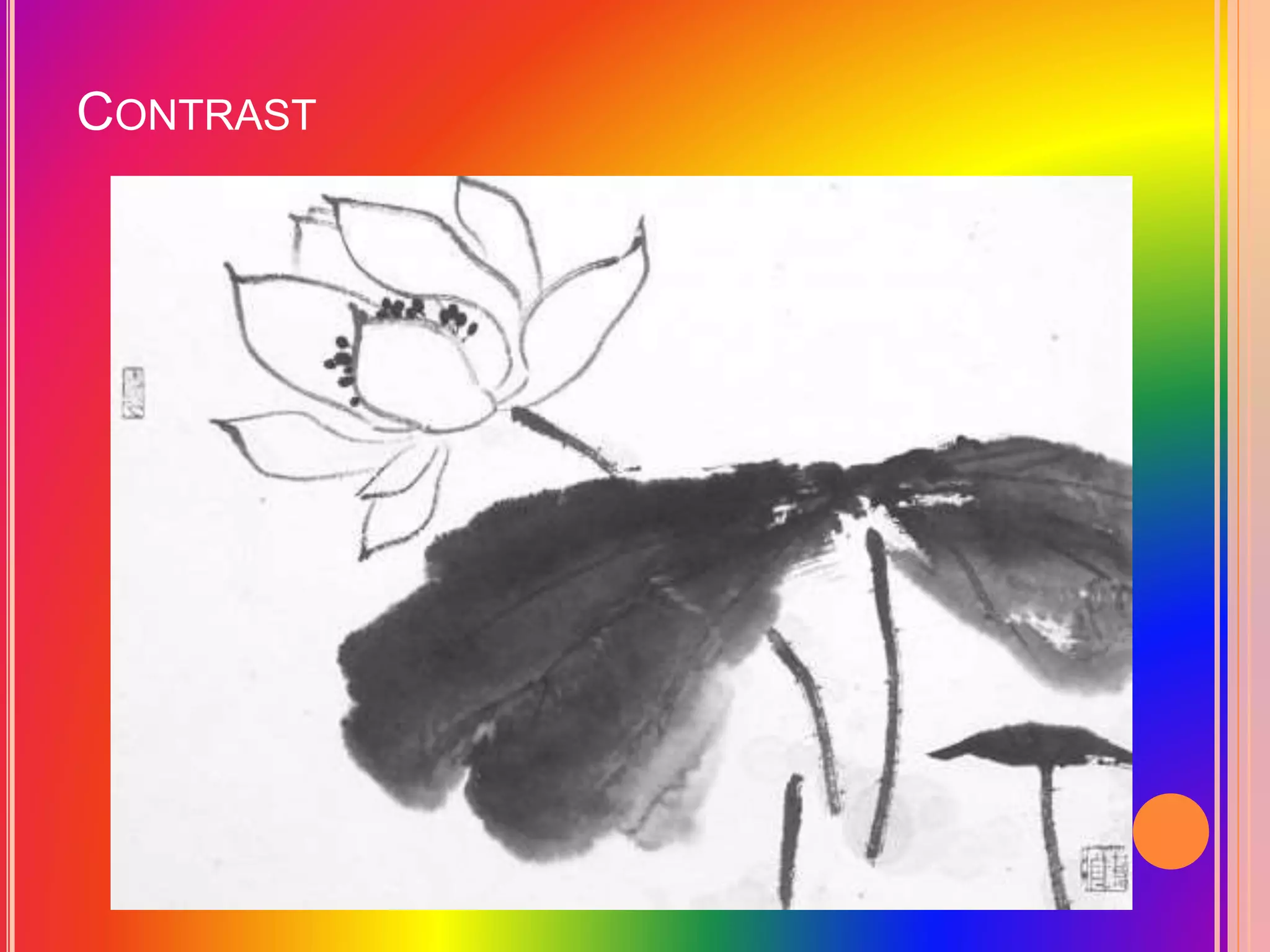
CONTRAST
A principle of art, contrast
refers to the arrangement of
opposite elements (light vs.
dark colors, rough vs. smooth
textures, large vs. small
shapes, etc.) in a piece so as
to create visual interest,
excitement and drama.
CONTRAST
EMPHASIS
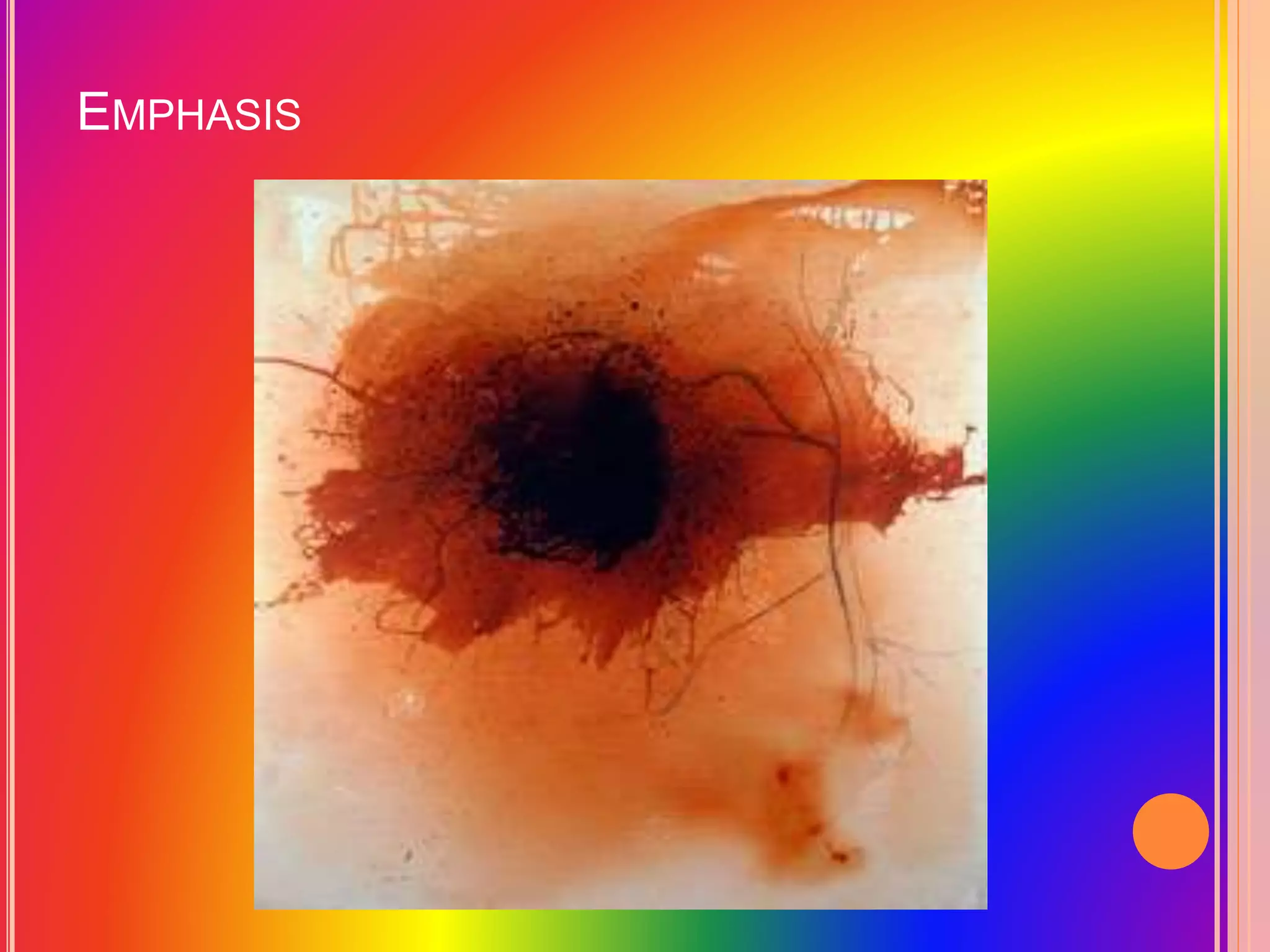
It is a principle of art which
occurs any time an element of
a piece is given dominance by
the artist. In other words, the
artist makes part of the work
stand out, in order to draw the
viewer's eye there first.
EMPHASIS
PROPORTION
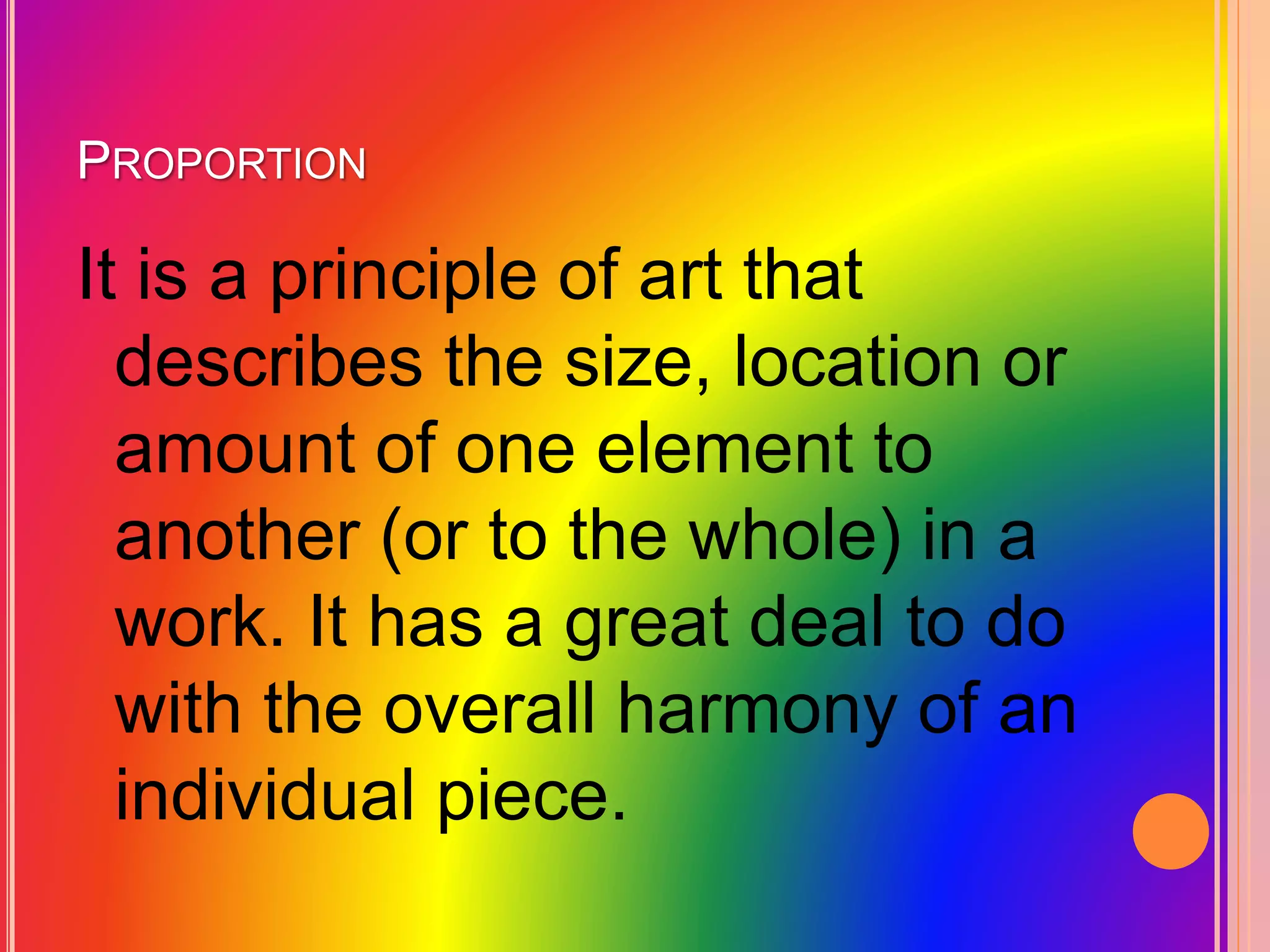
It is a principle of art that
describes the size, location or
amount of one element to
another (or to the whole) in a
work. It has a great deal to do
with the overall harmony of an
individual piece.
PROPORTION
HARMONY
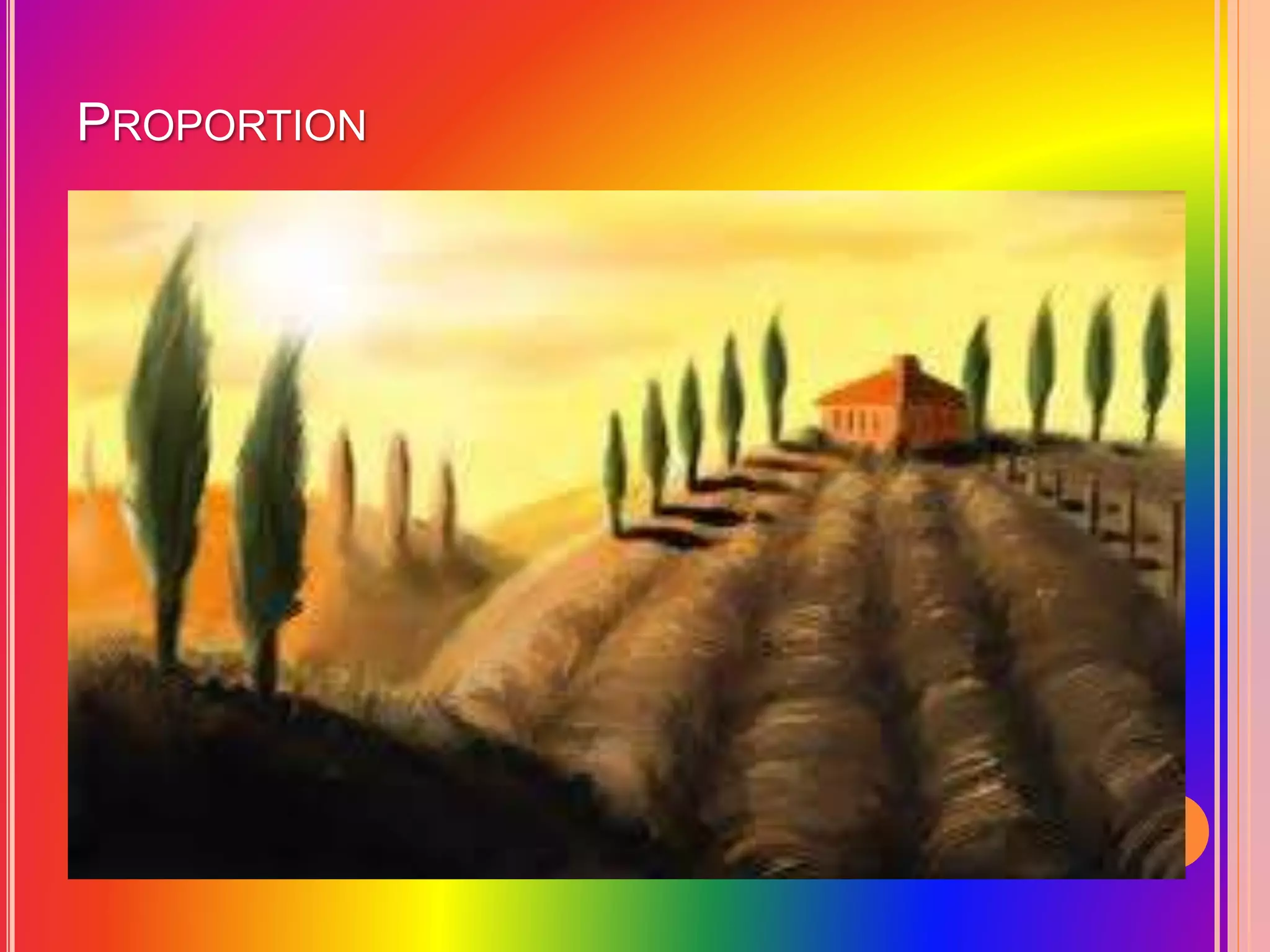
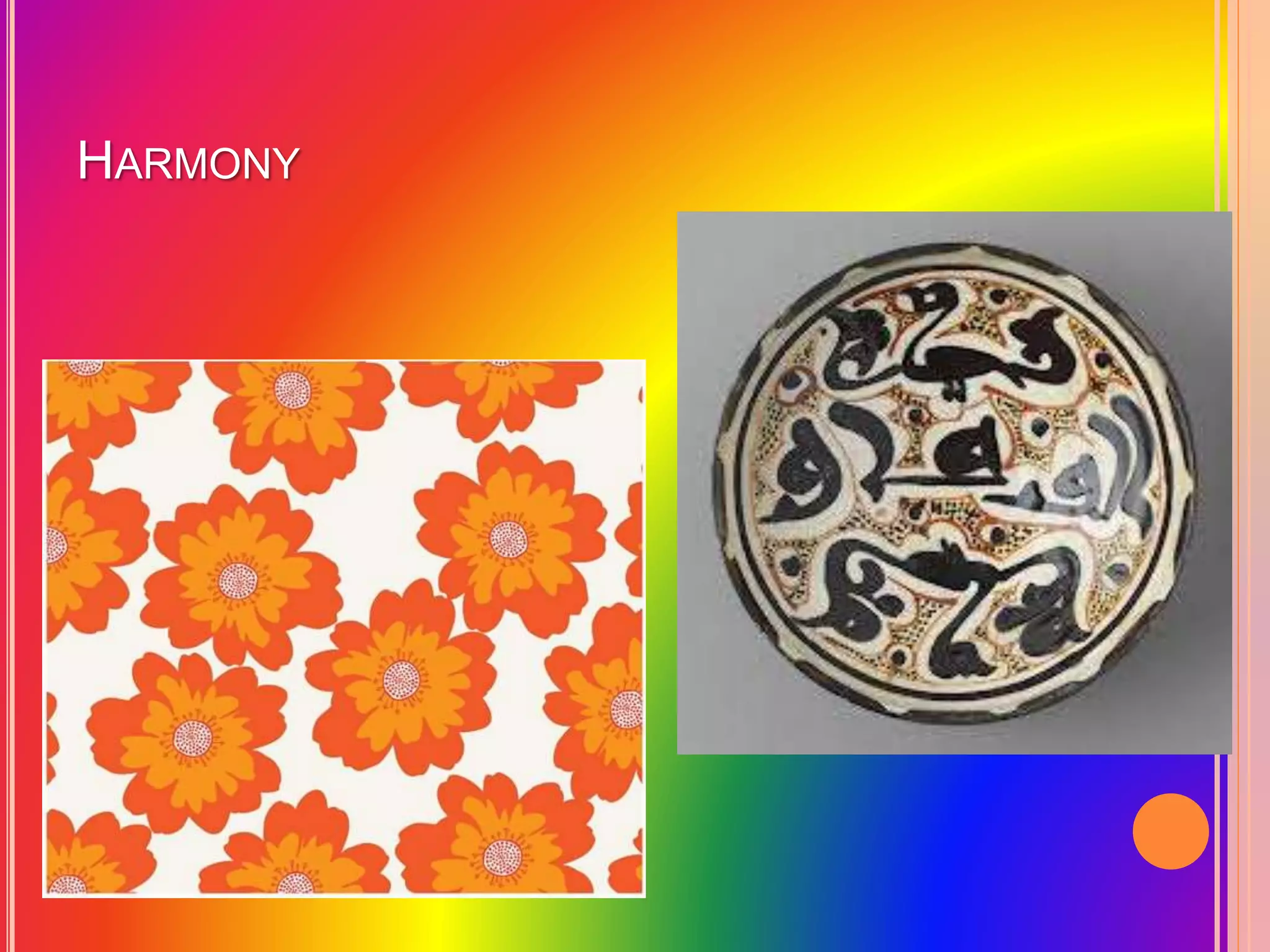
It brings together a composition
with similar units. If your
composition was using wavy
lines and organic shapes you
would stay with those types of
lines and not put in just one
geometric shape. (Notice how
similar Harmony is to Unity)
HARMONY
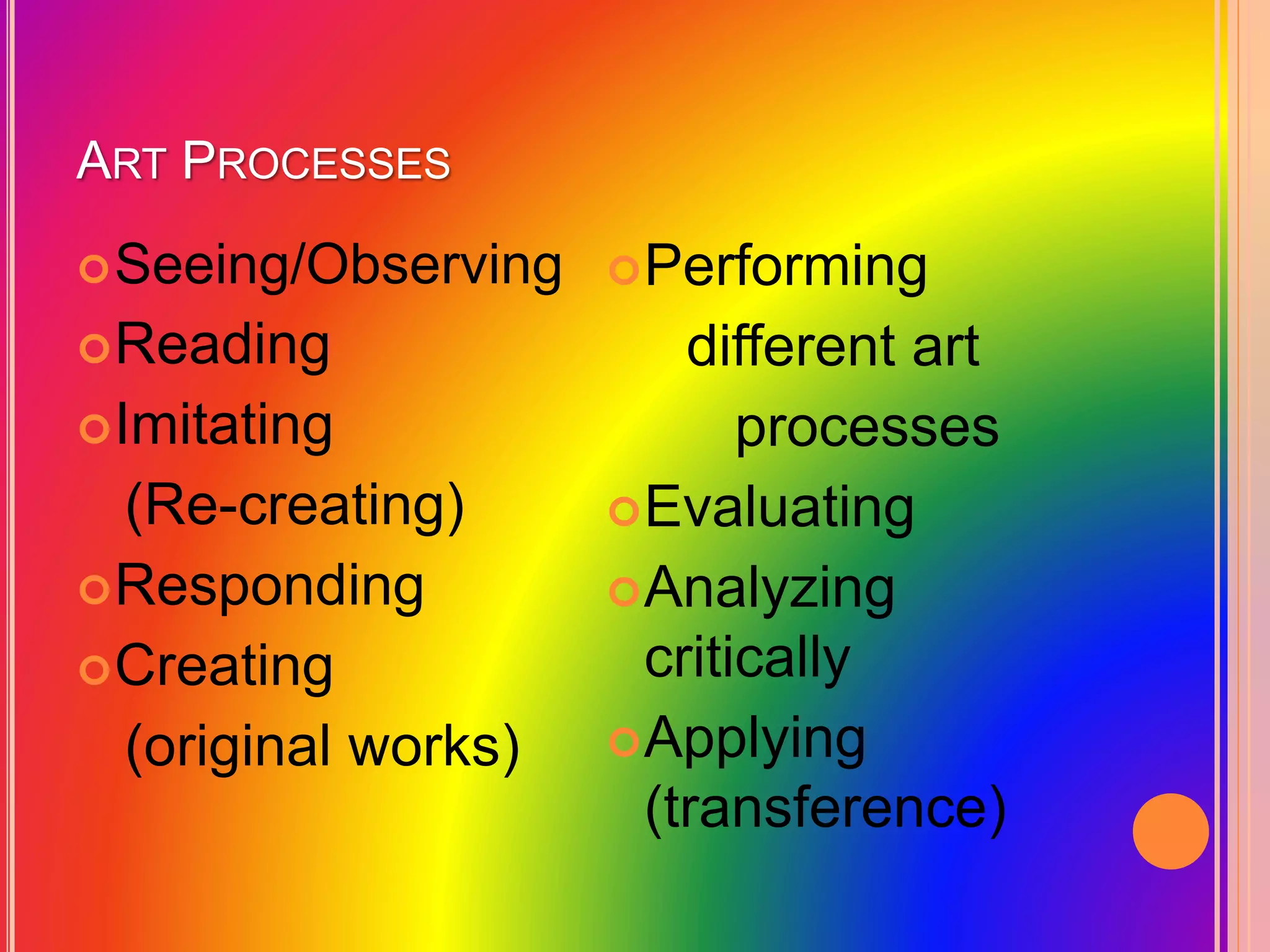
ART PROCESSES
Seeing/Observing
Reading
Imitating
(Re-creating)
Responding
Creating
(original works)
Performing
different art
processes
Evaluating
Analyzing
critically
Applying
(transference)
DRAWING
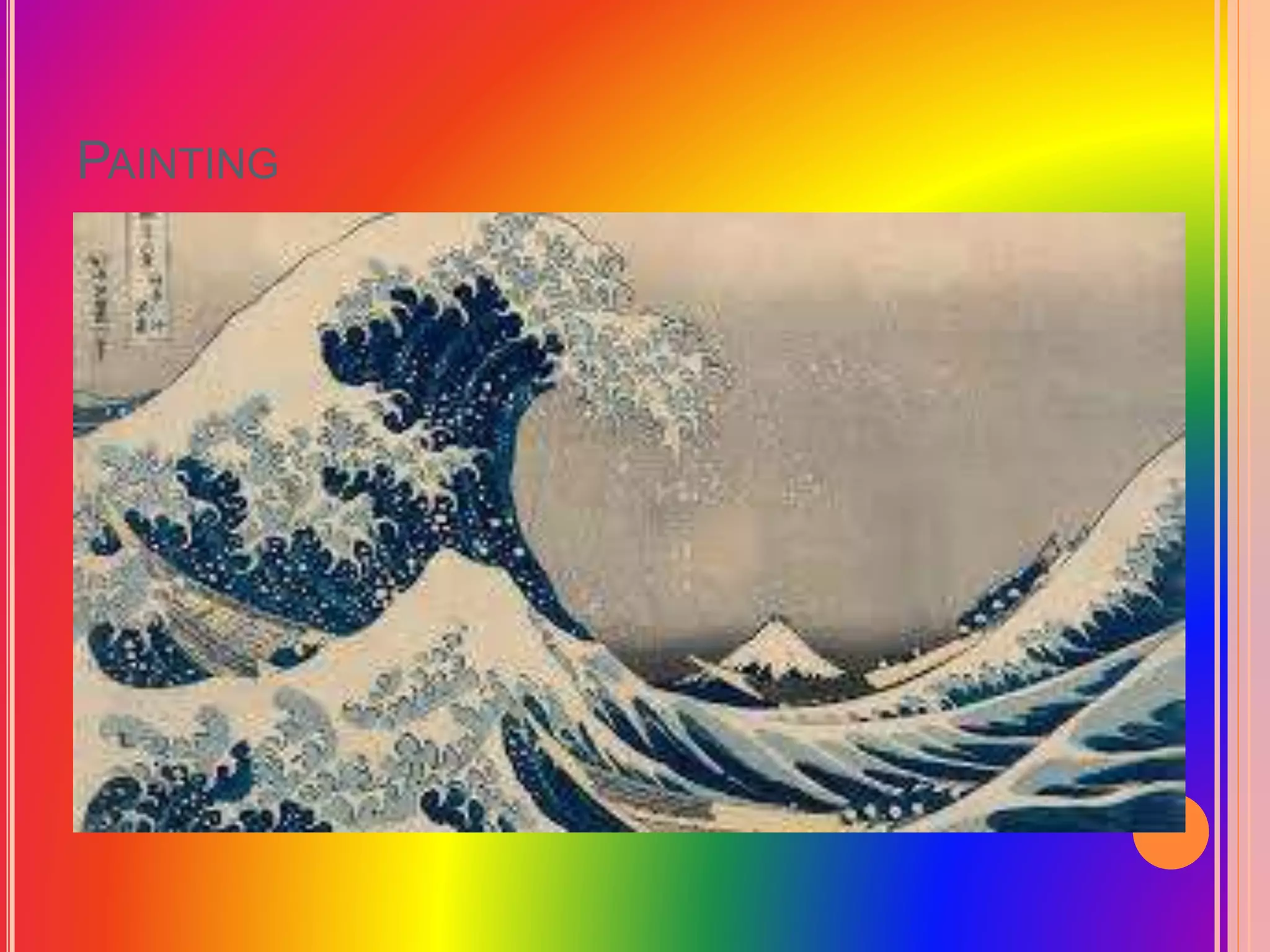
PAINTING
COLLAGE
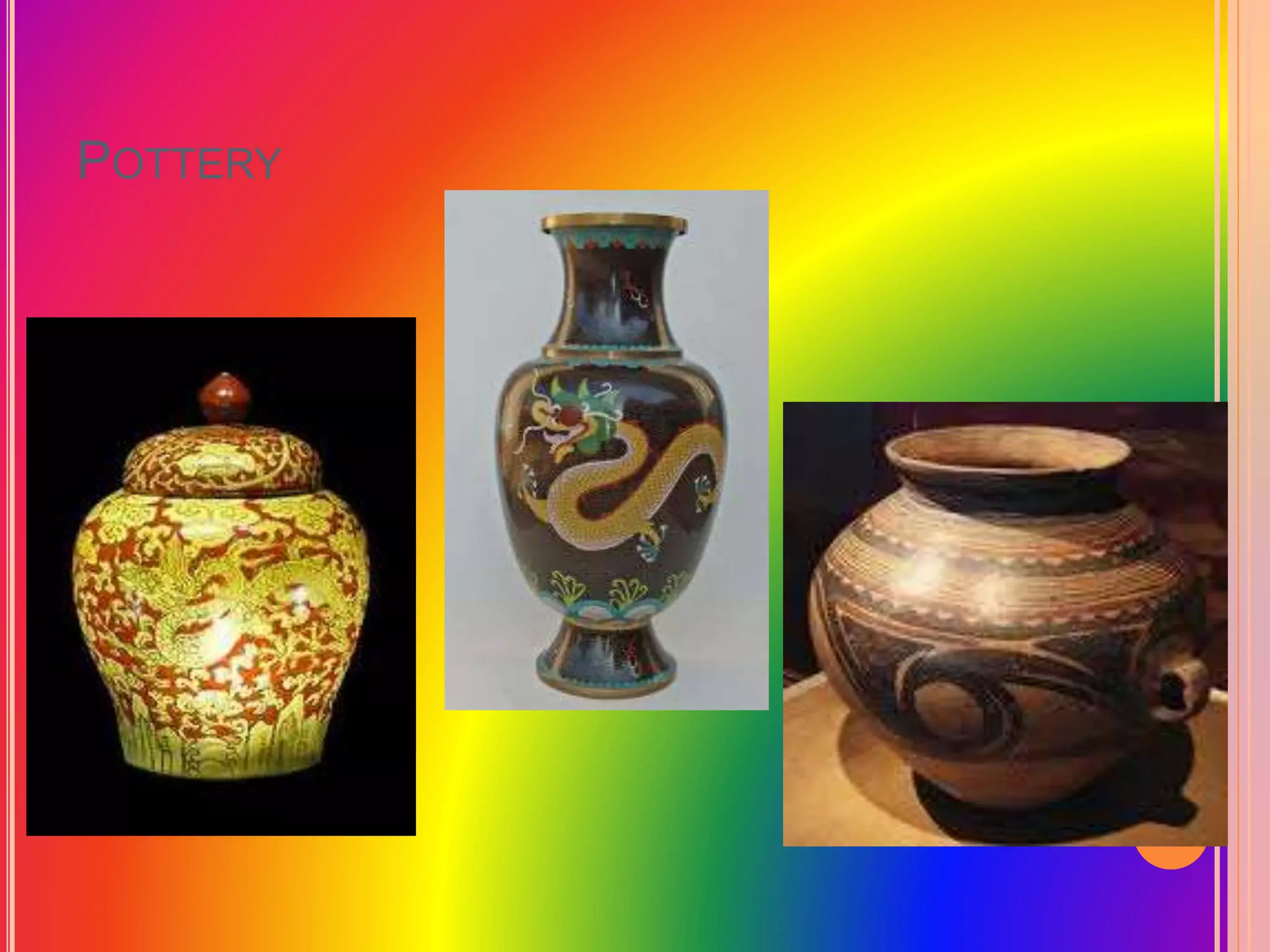
POTTERY
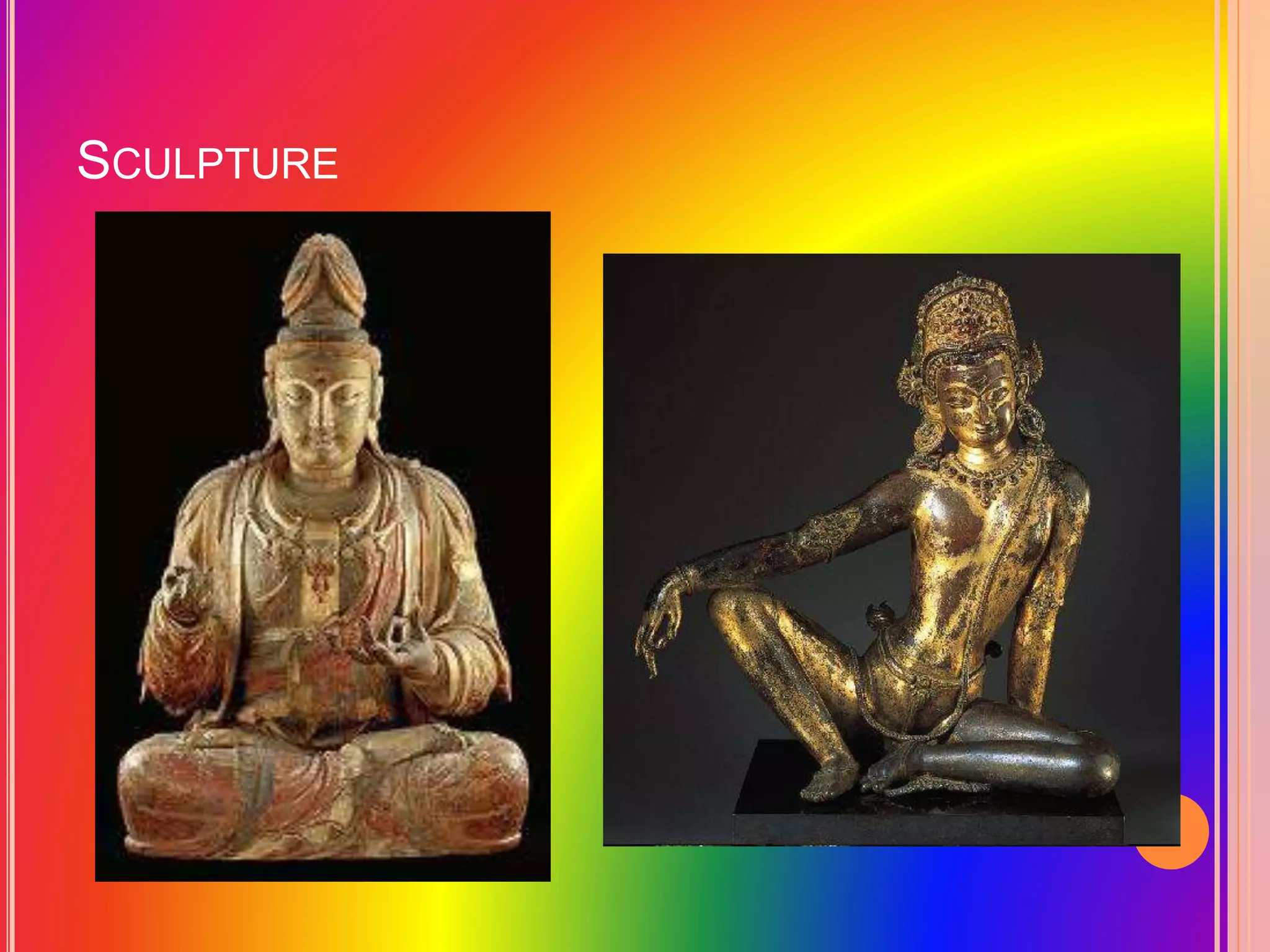
SCULPTURE
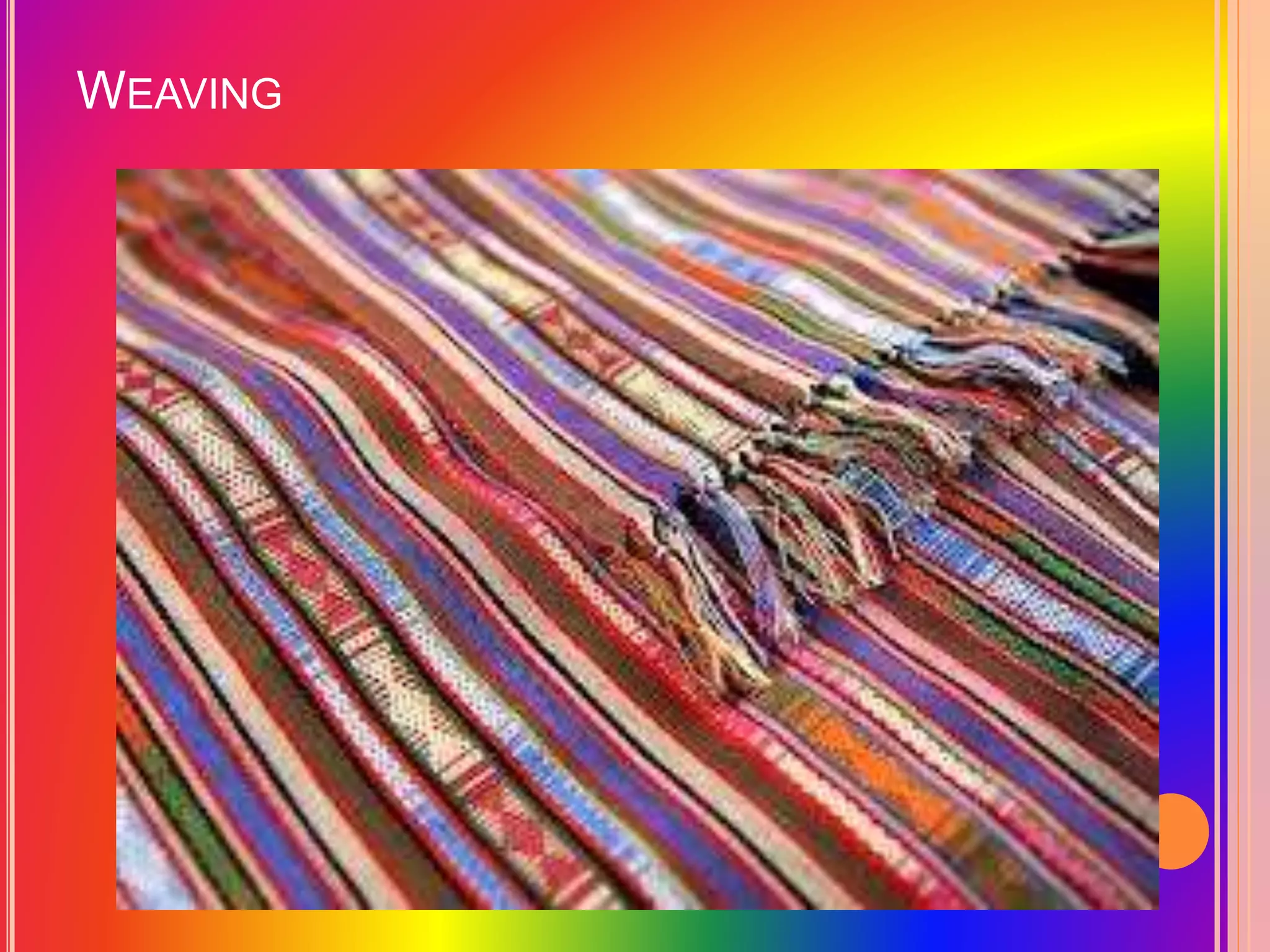
WEAVING
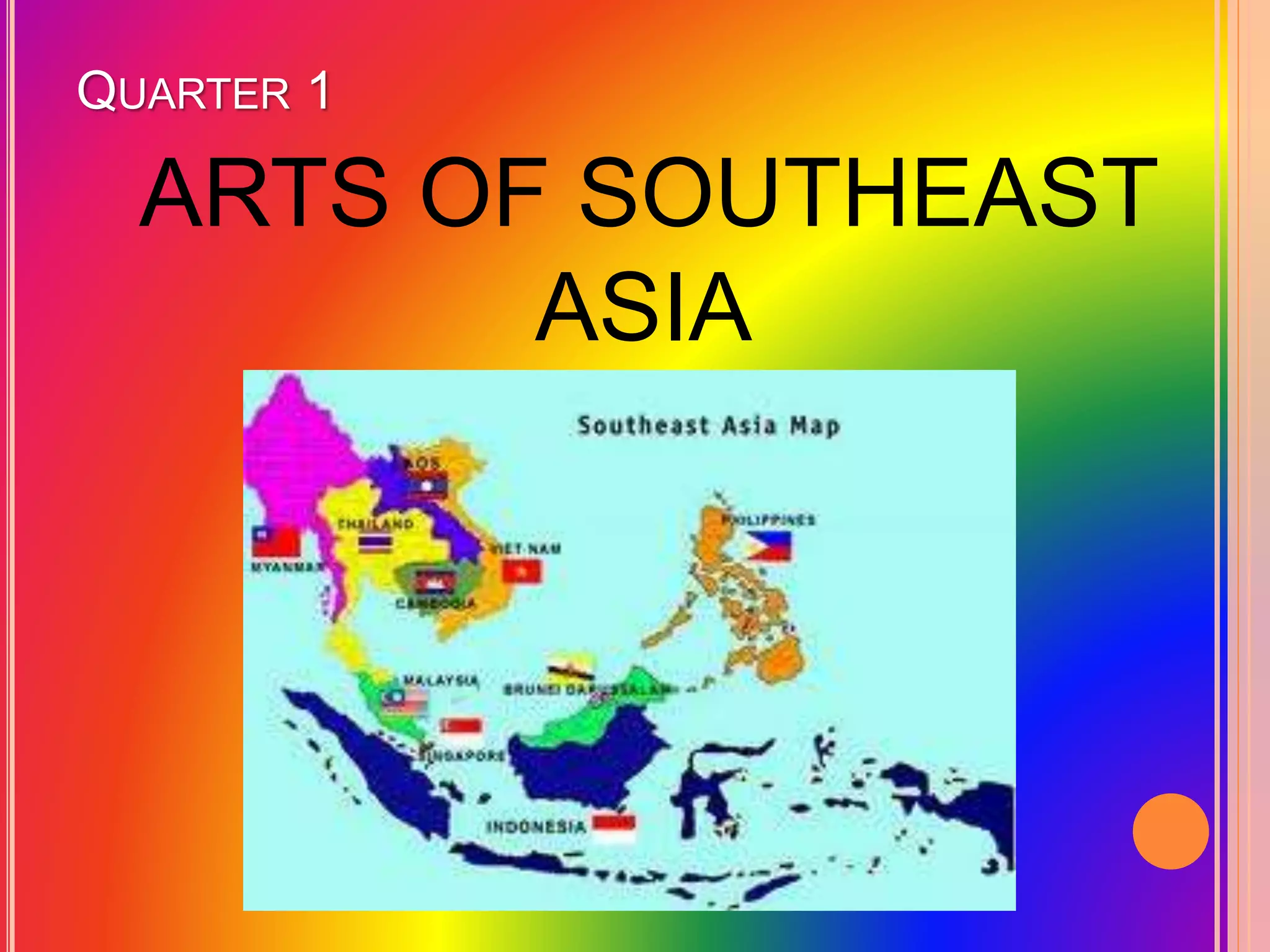
QUARTER 1
ARTS OF SOUTHEAST
ASIA
I. KNOW
Artworks of Asian
People
Attire
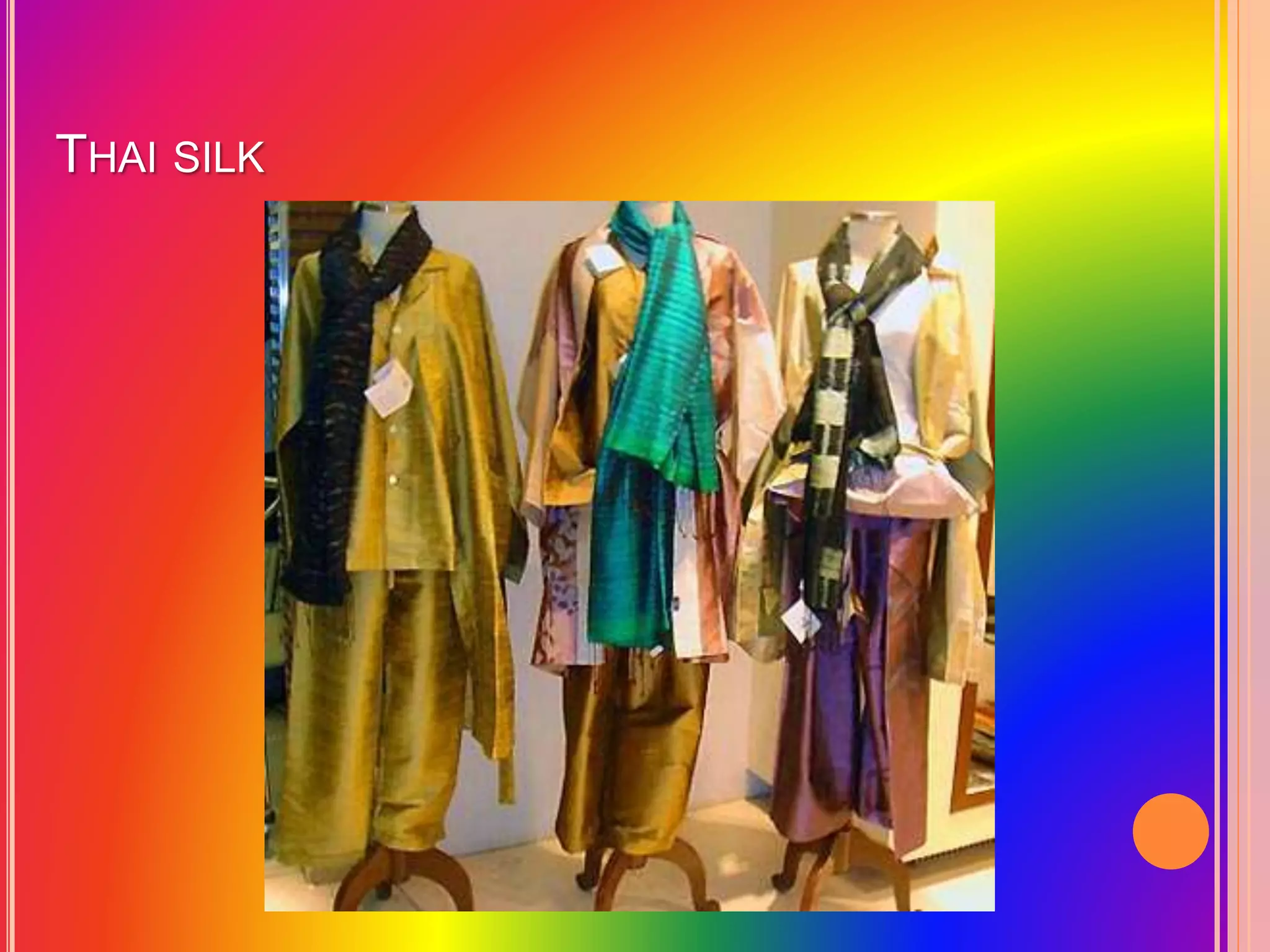
THAI SILK
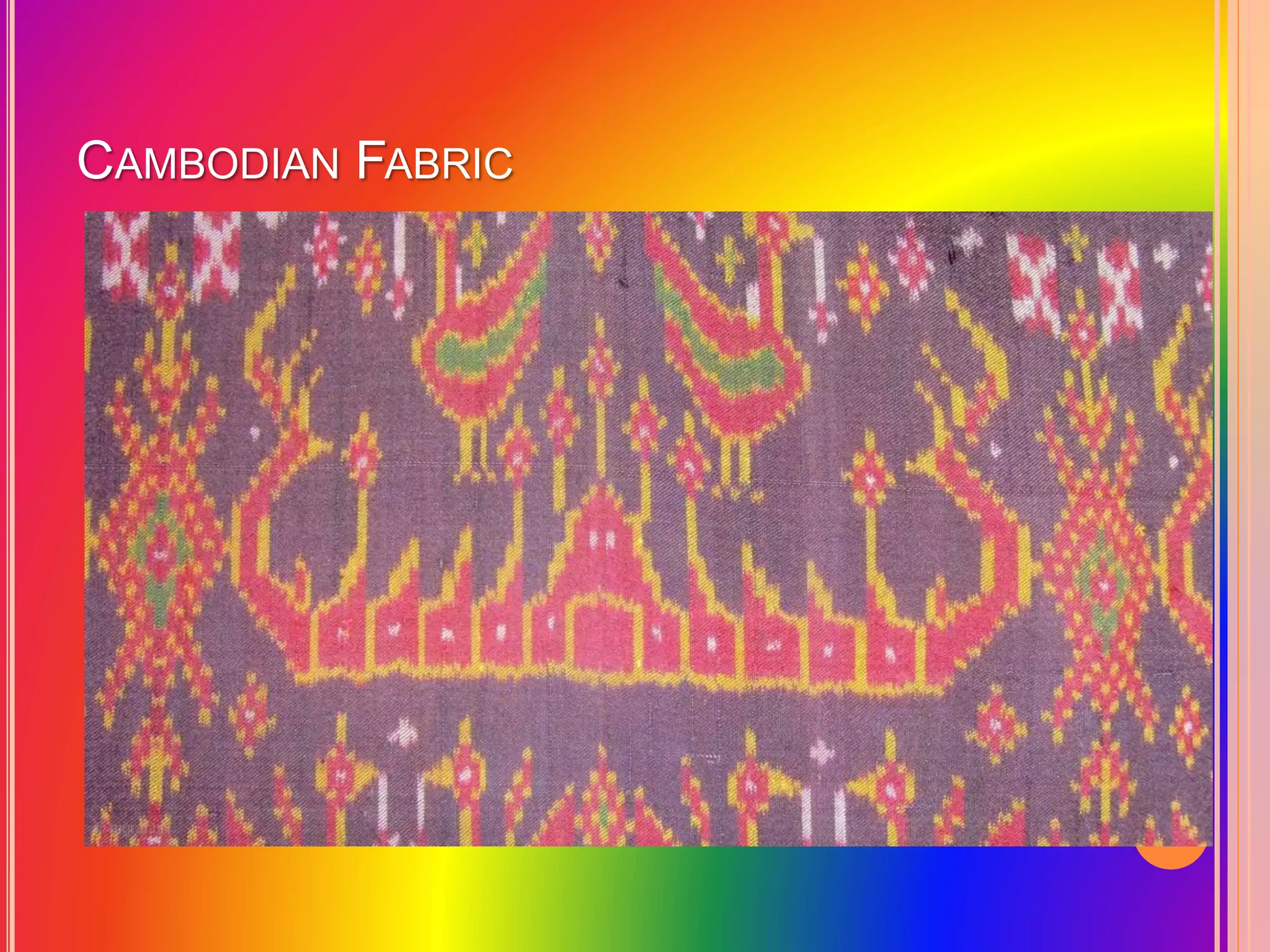
CAMBODIAN FABRIC
LAO TEXTILES
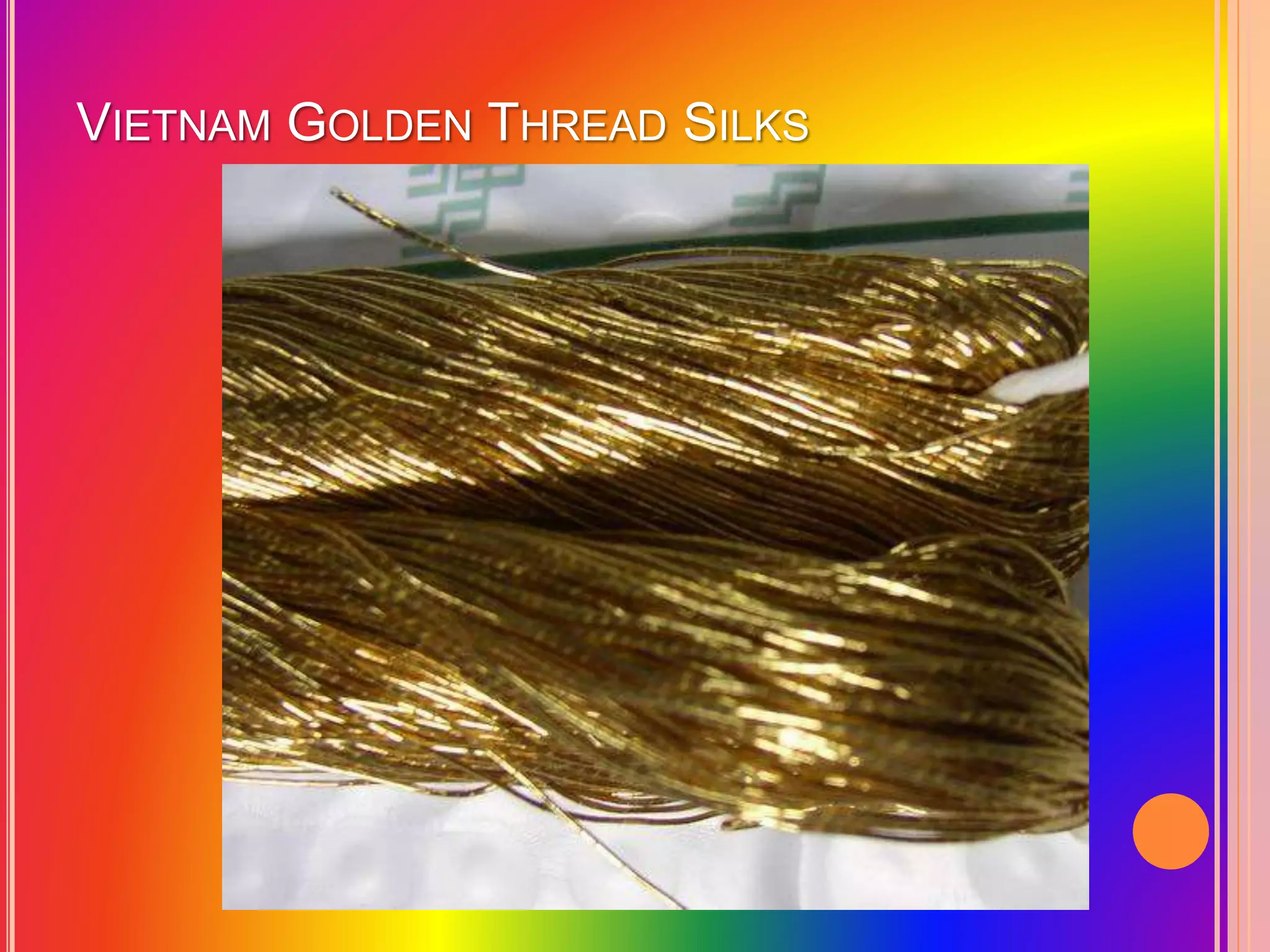
VIETNAM GOLDEN THREAD SILKS
BATIK OF INDONESIA, MALAYSIA AND
SINGAPORE
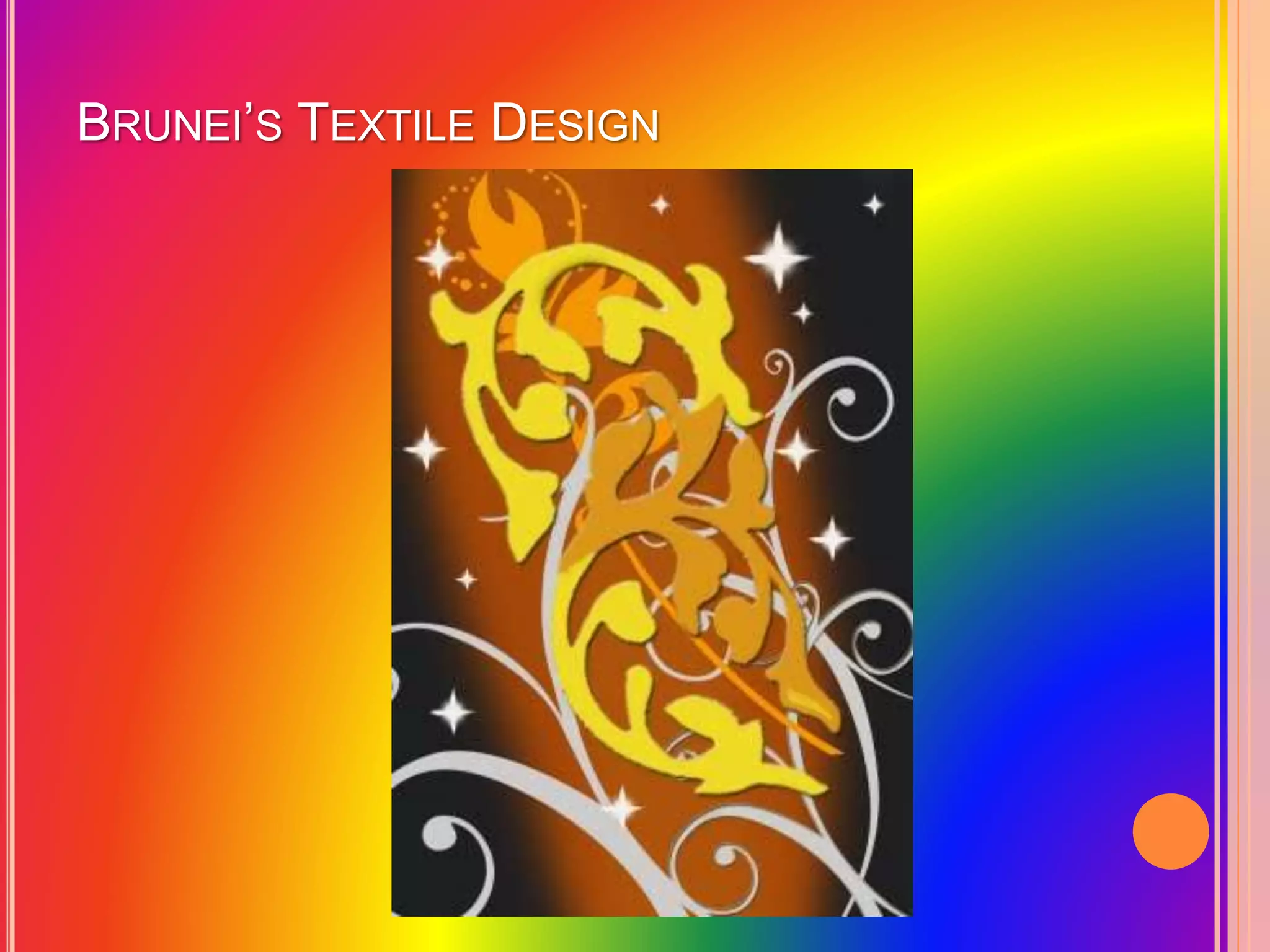
BRUNEI’S TEXTILE DESIGN
Arts and Crafts
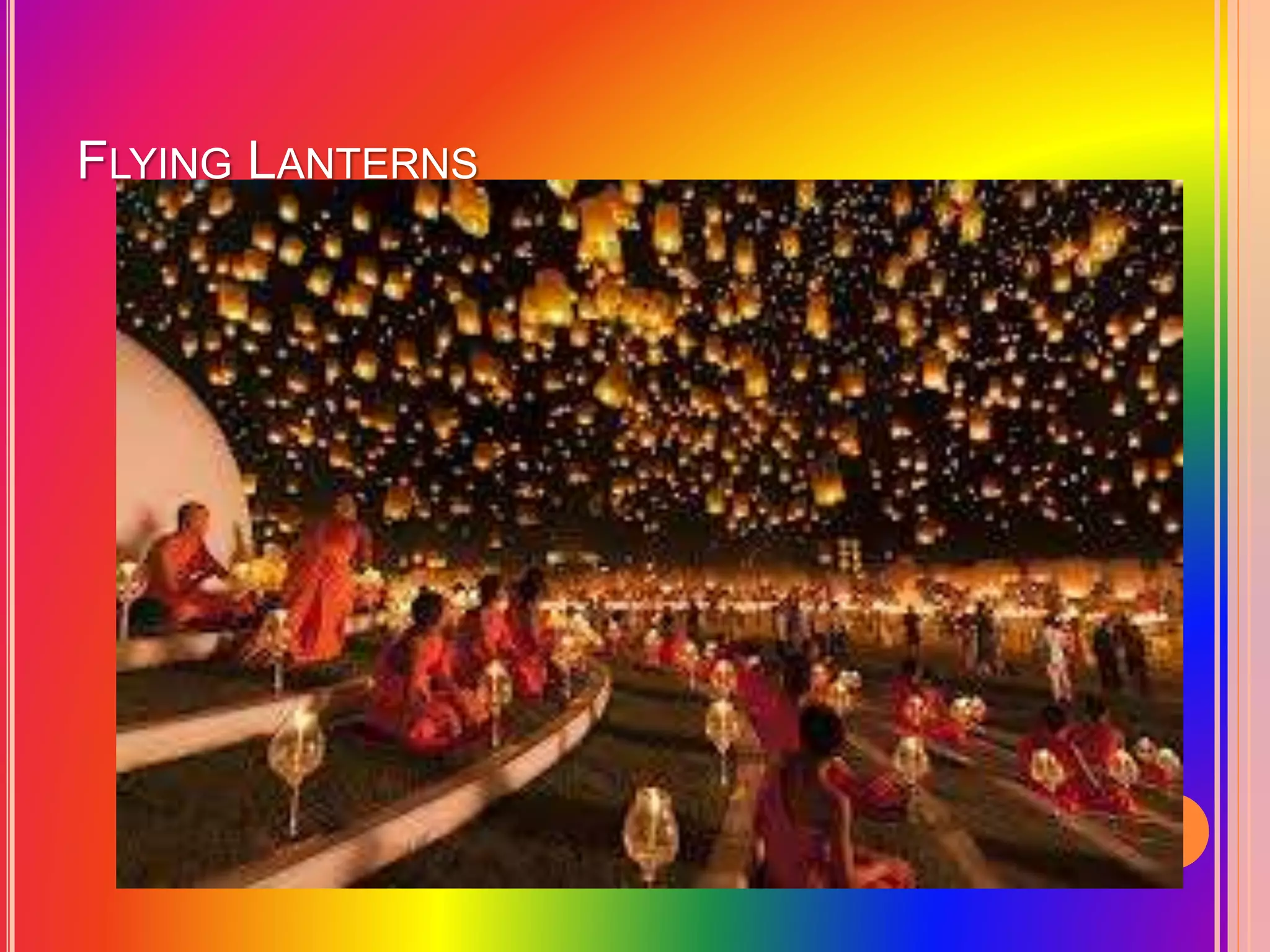
FLYING LANTERNS
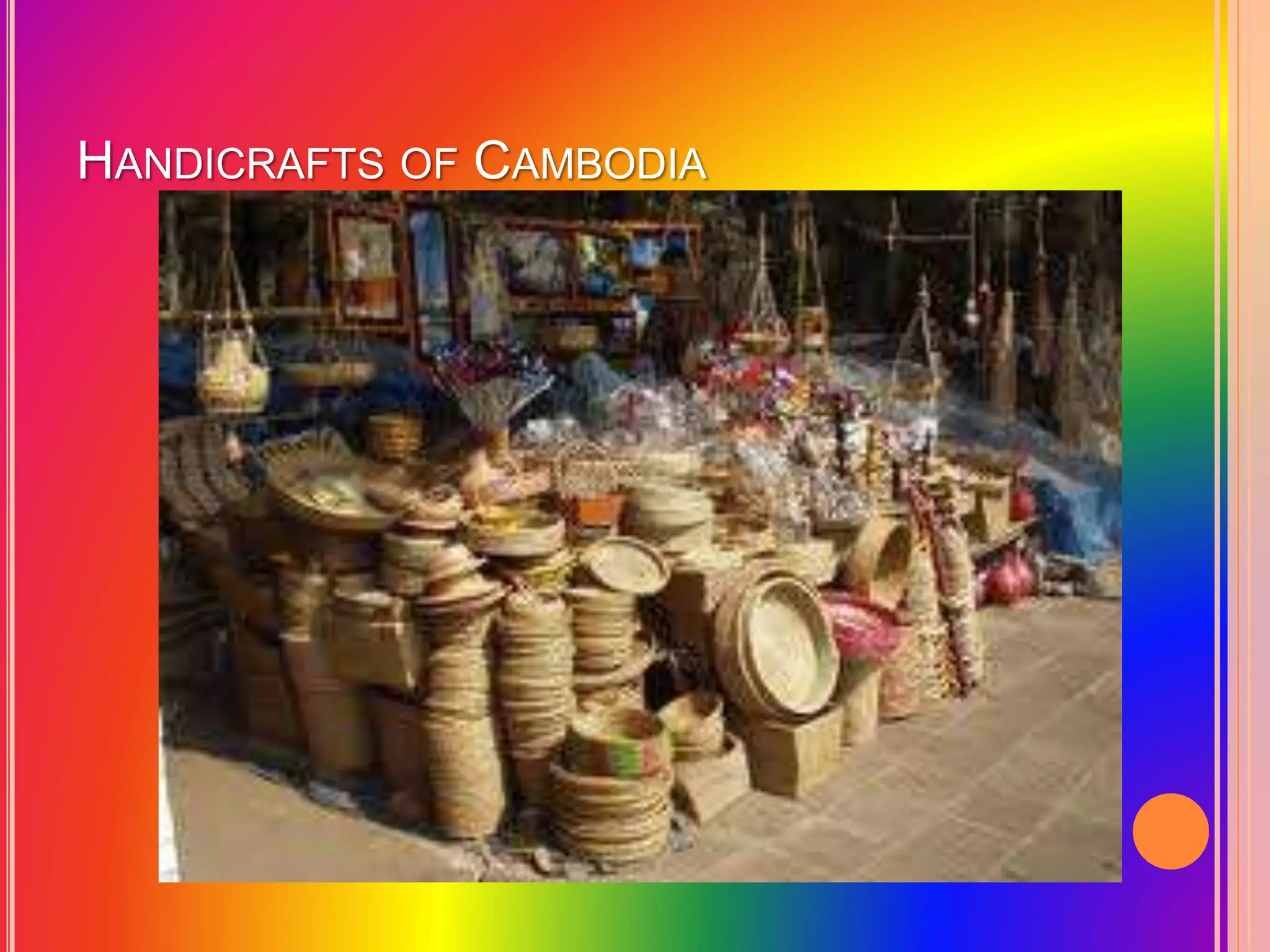
HANDICRAFTS OF CAMBODIA
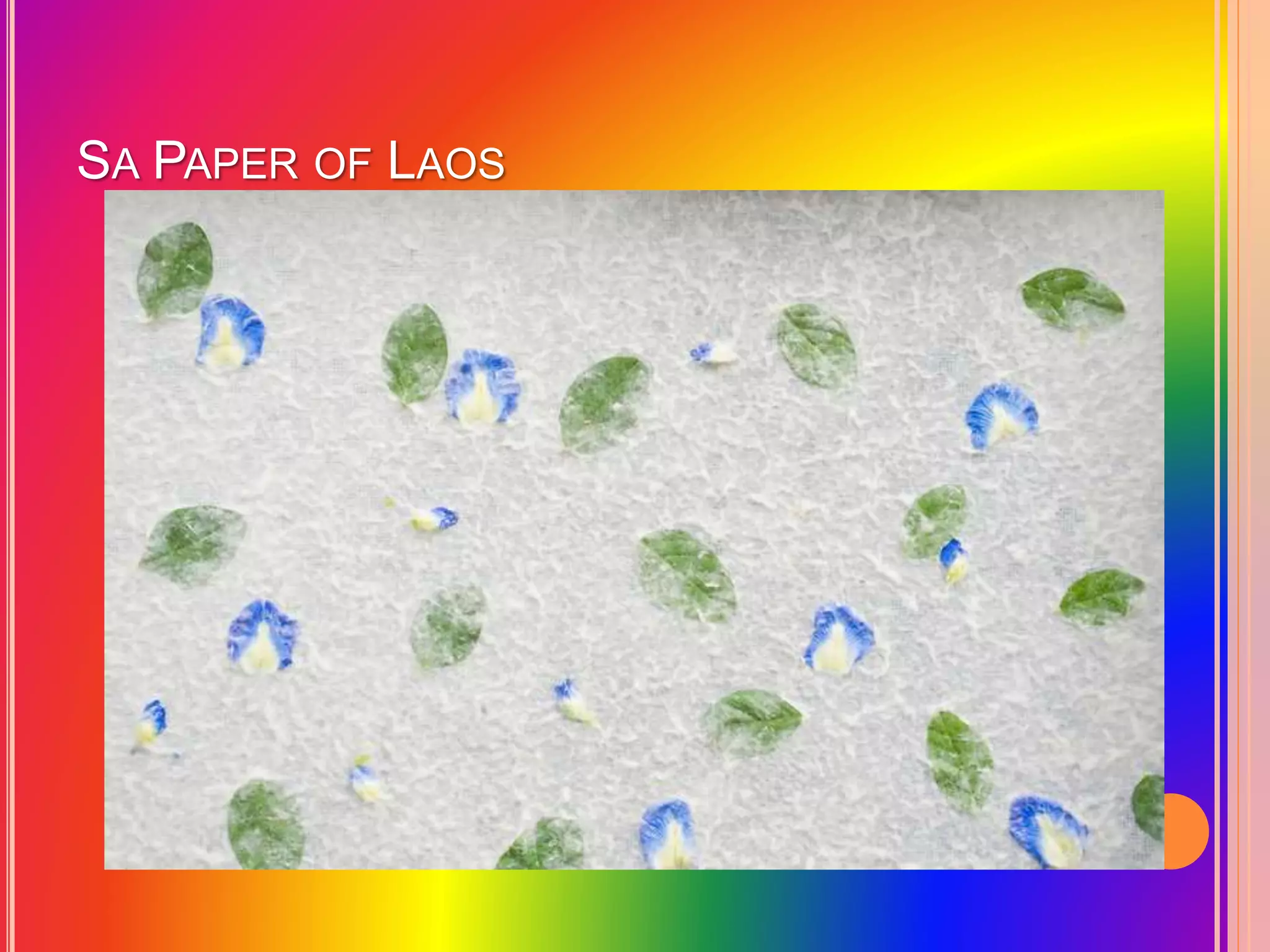
SA PAPER OF LAOS
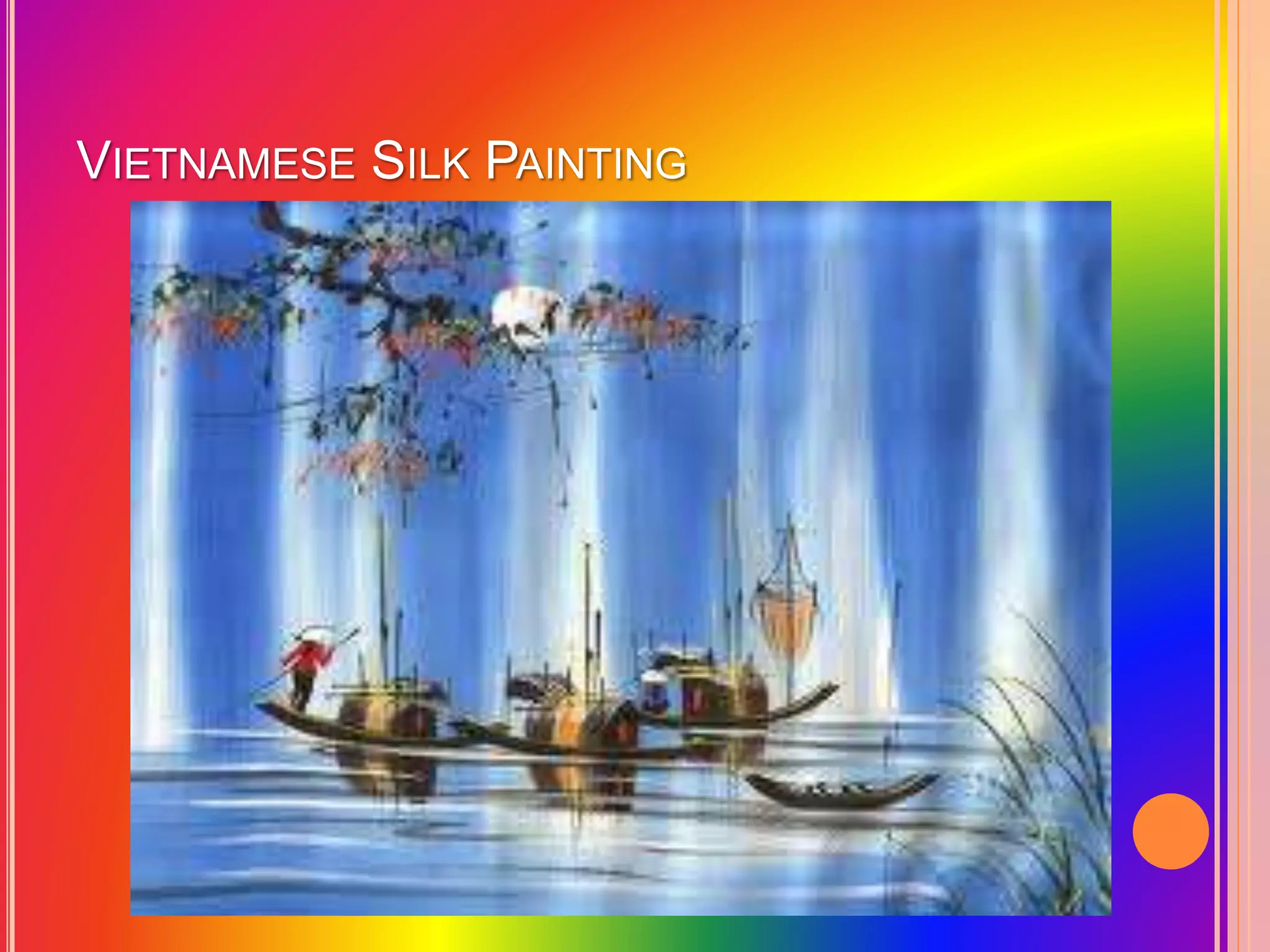
VIETNAMESE SILK PAINTING
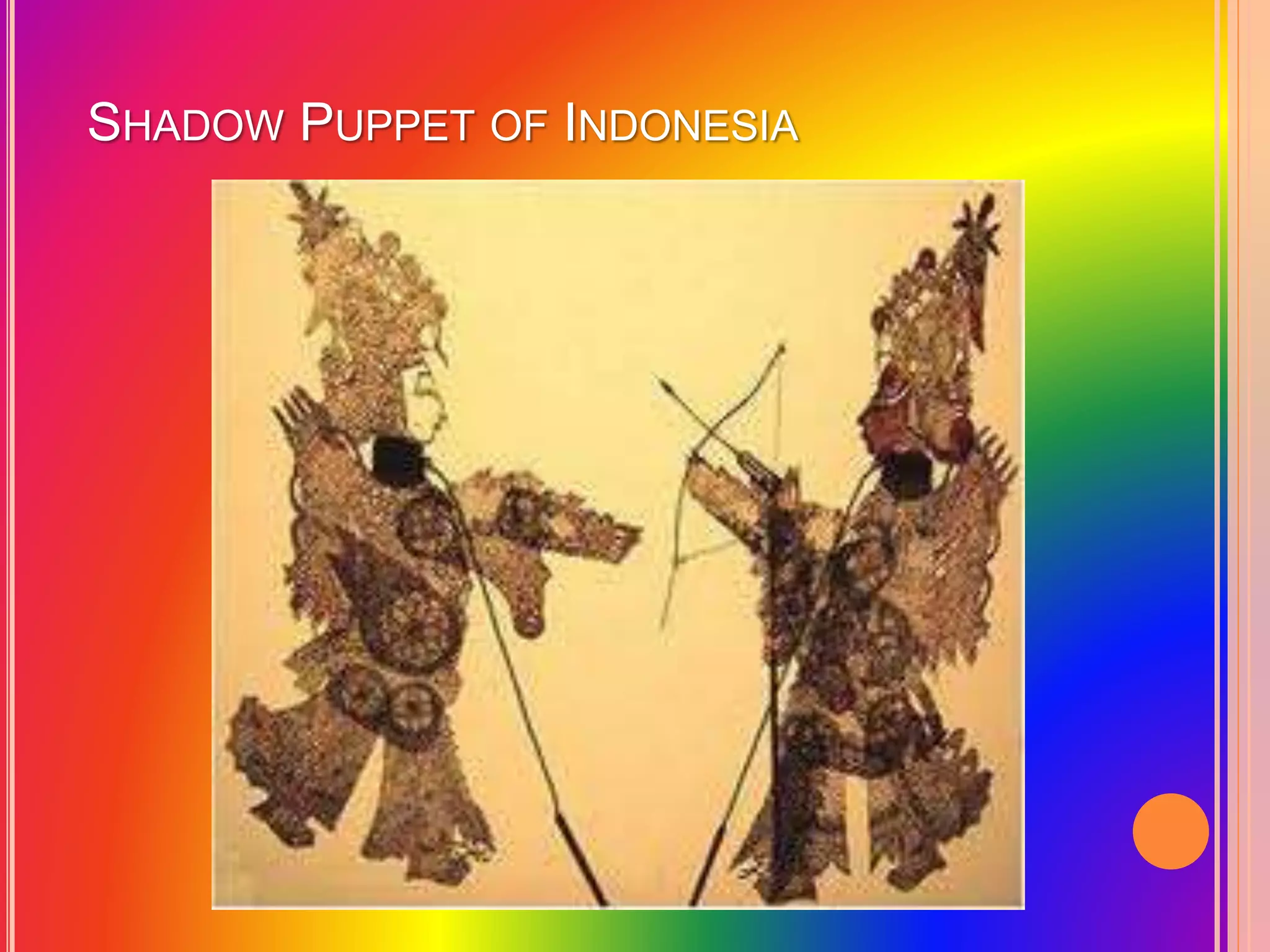
SHADOW PUPPET OF INDONESIA
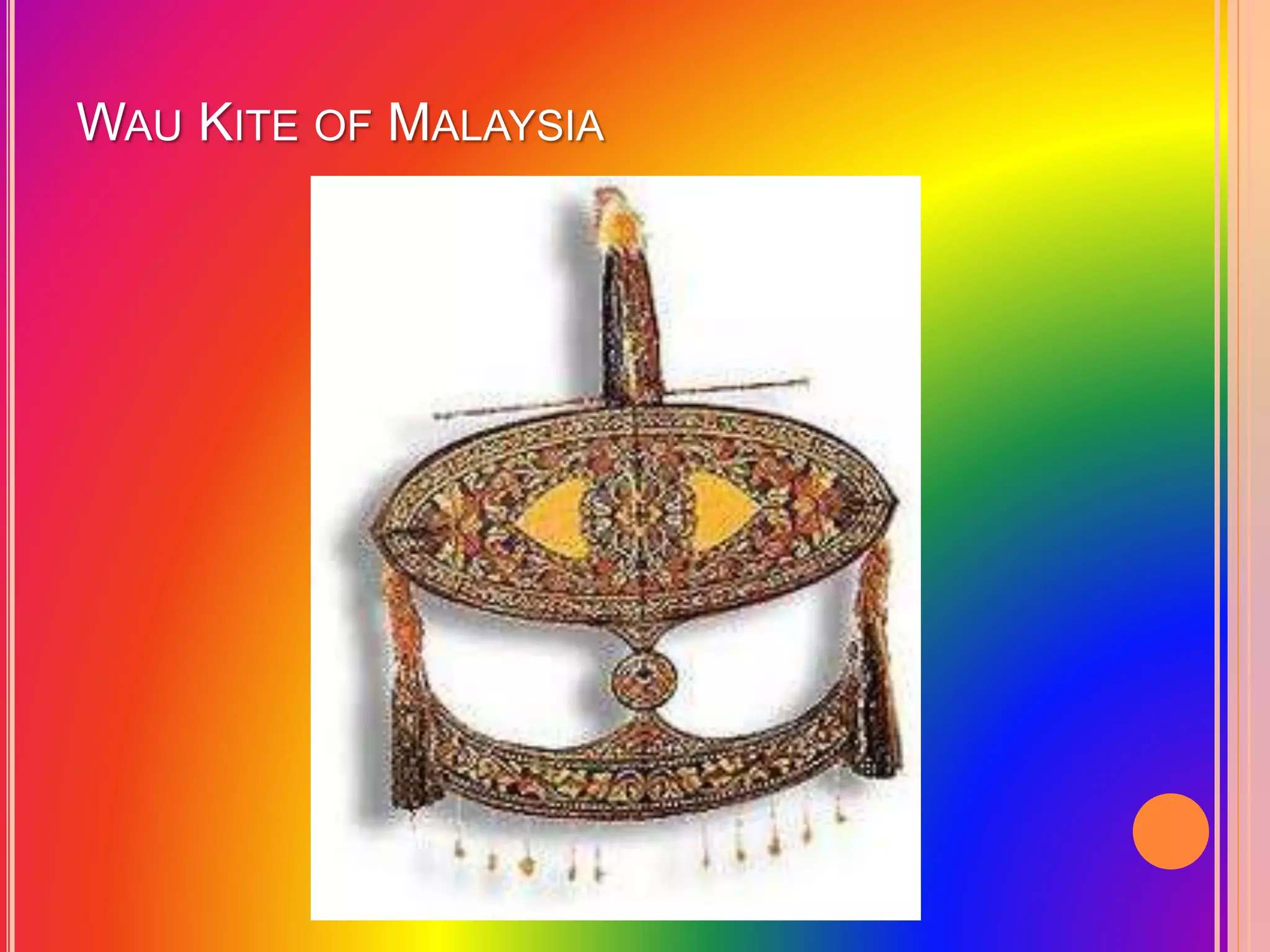
WAU KITE OF MALAYSIA
Sculpture
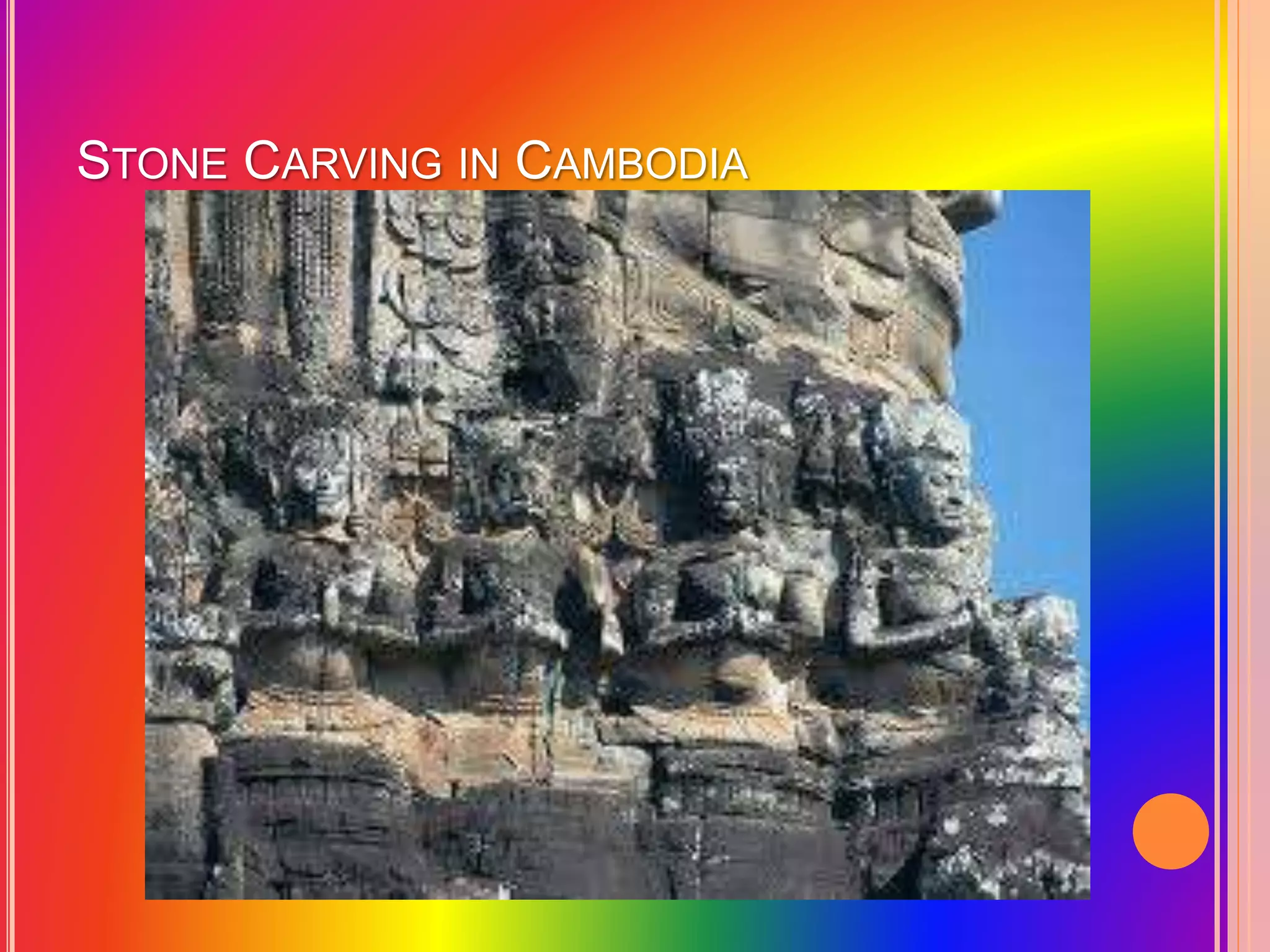
STONE CARVING IN CAMBODIA
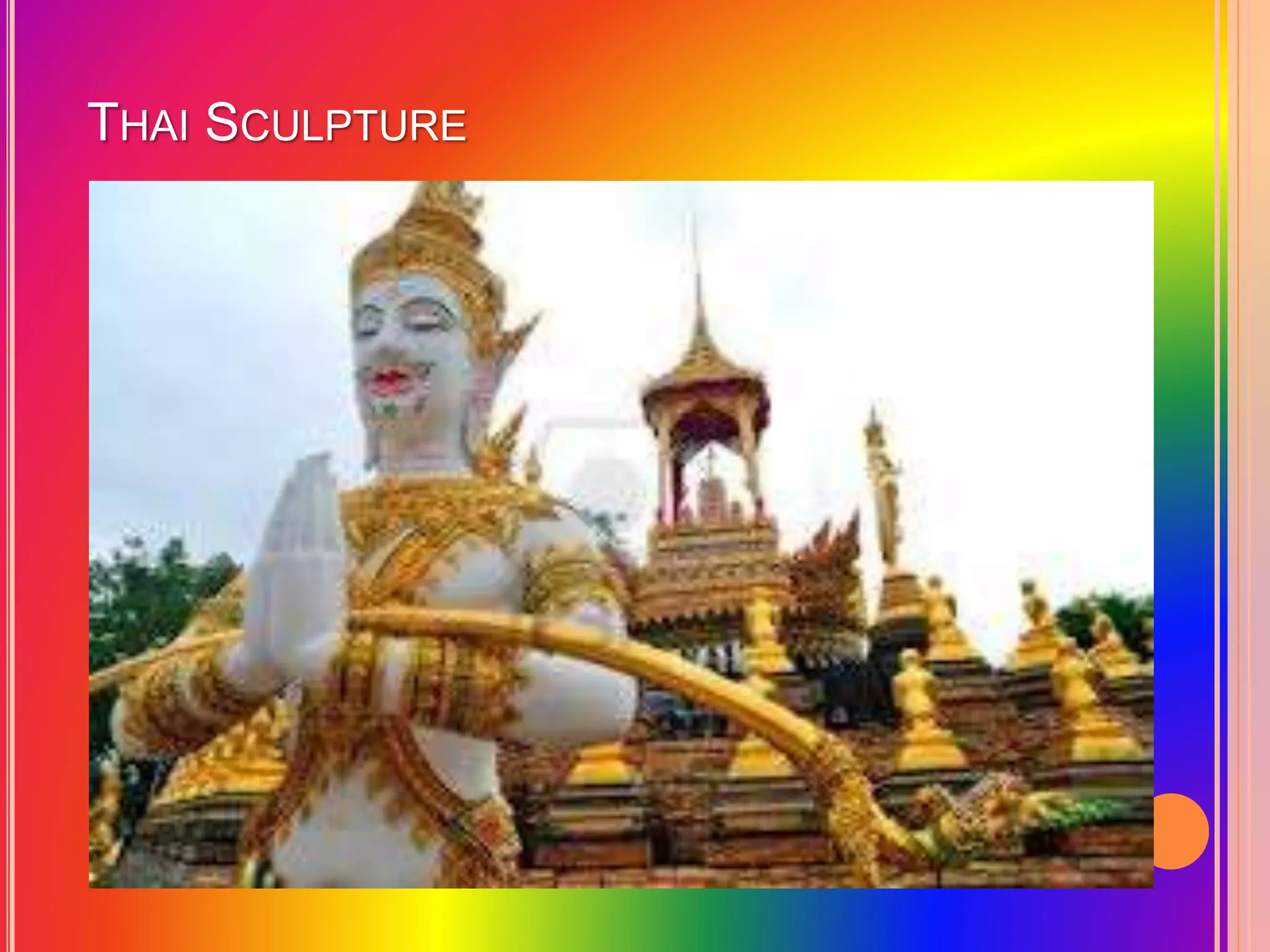
THAI SCULPTURE
PHRA BANG OF LAOS
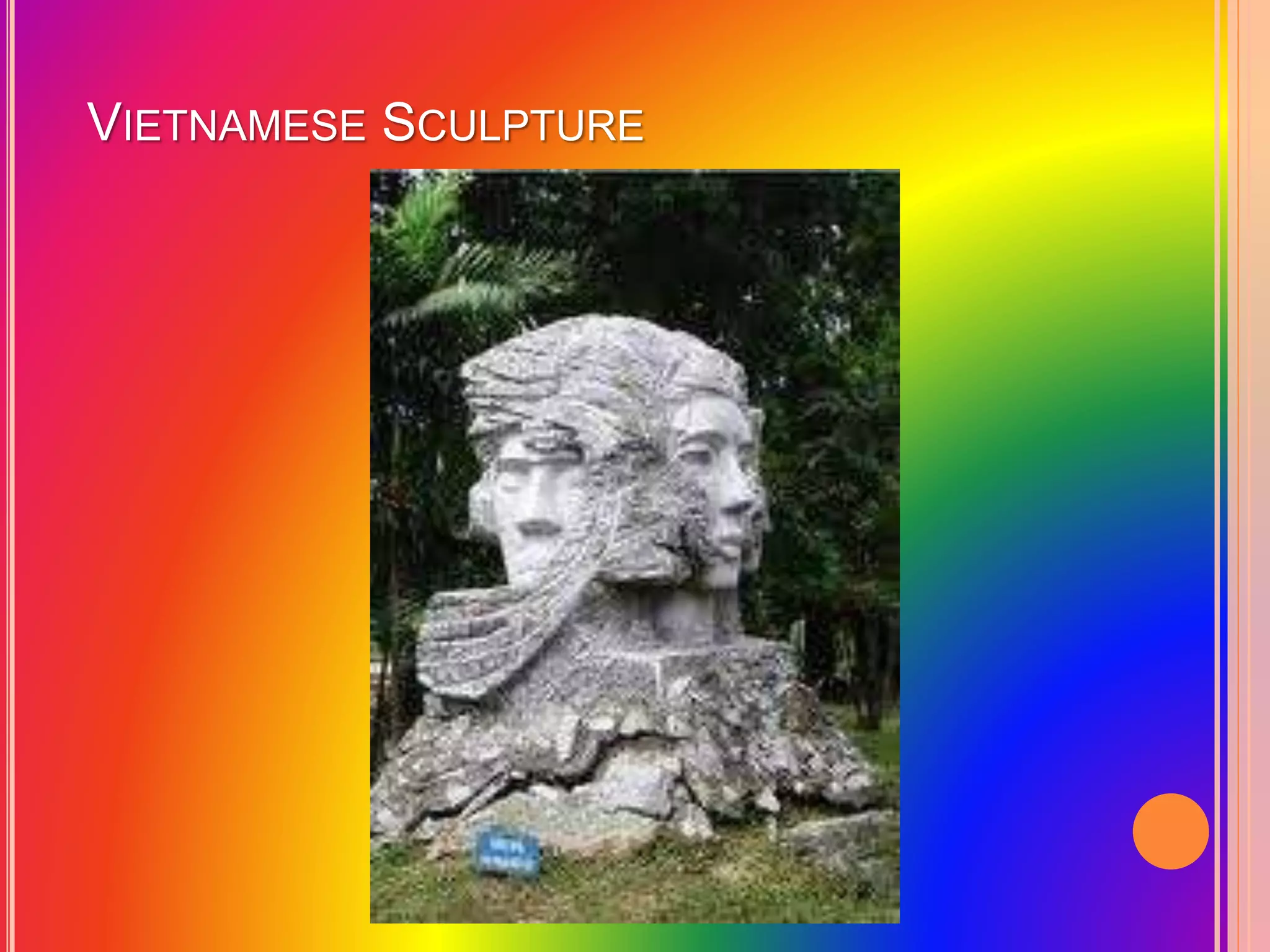
VIETNAMESE SCULPTURE
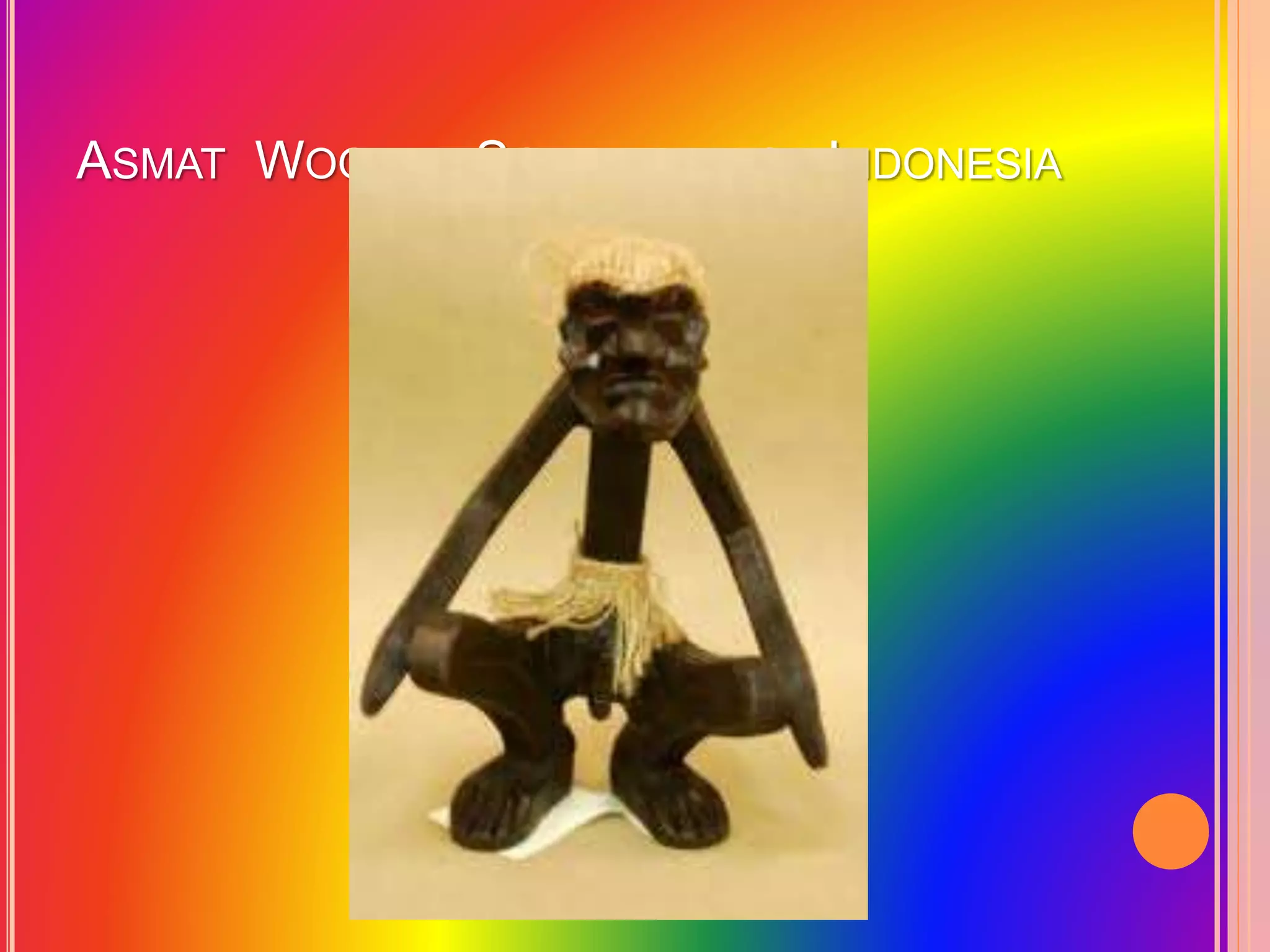
ASMAT WOODEN SCULPTURE OF INDONESIA
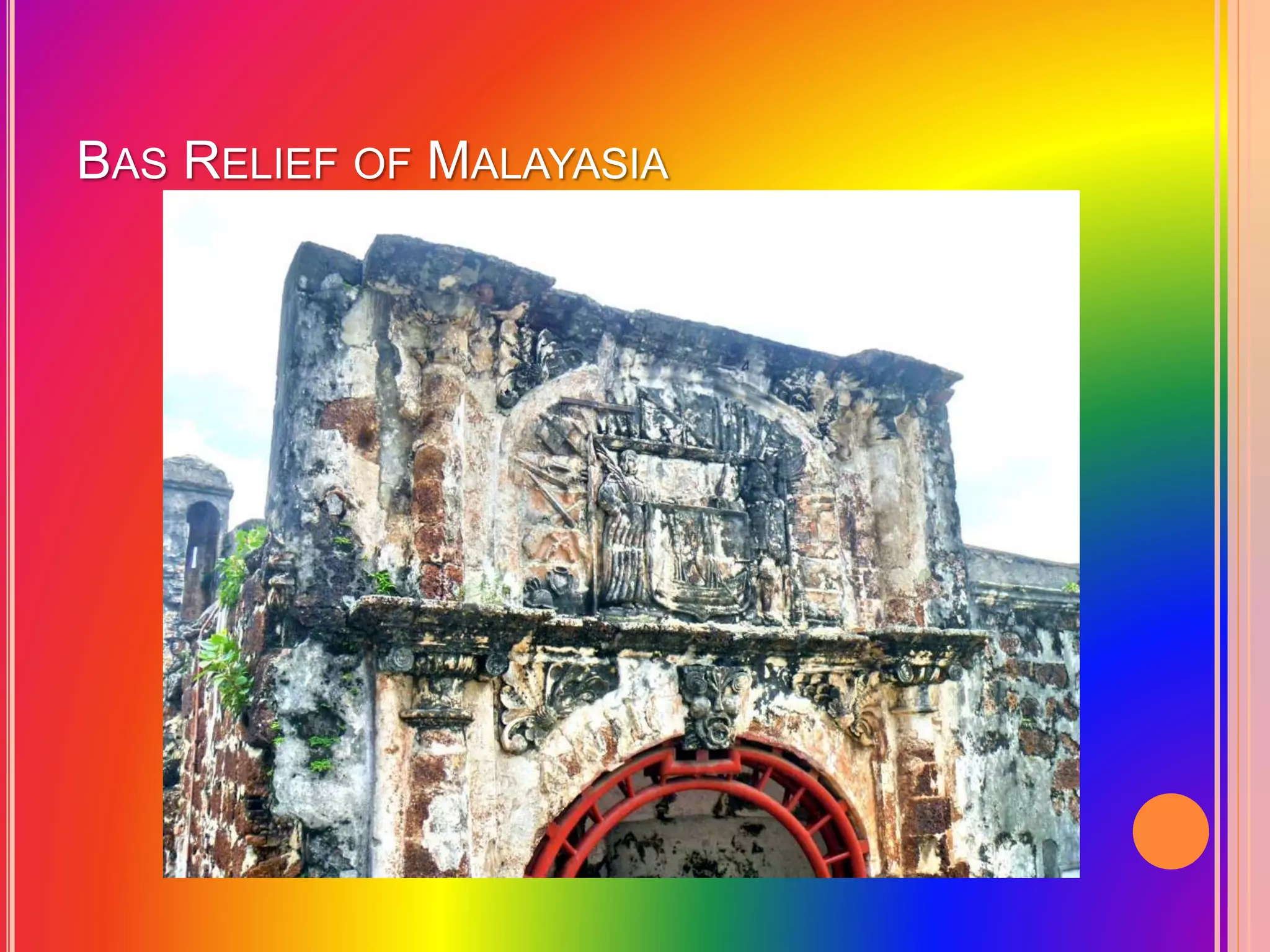
BAS RELIEF OF MALAYASIA
SRI MARIAMMAN TEMPLE IN SINGAPORE
SCULPTURE IN BRUNEI
II. PROCESS
Batik Making
Making of Wayang Kulit Puppet
Making of Merlion Statue Model
Sky Lantern Making
Songkok Making
Kite Making
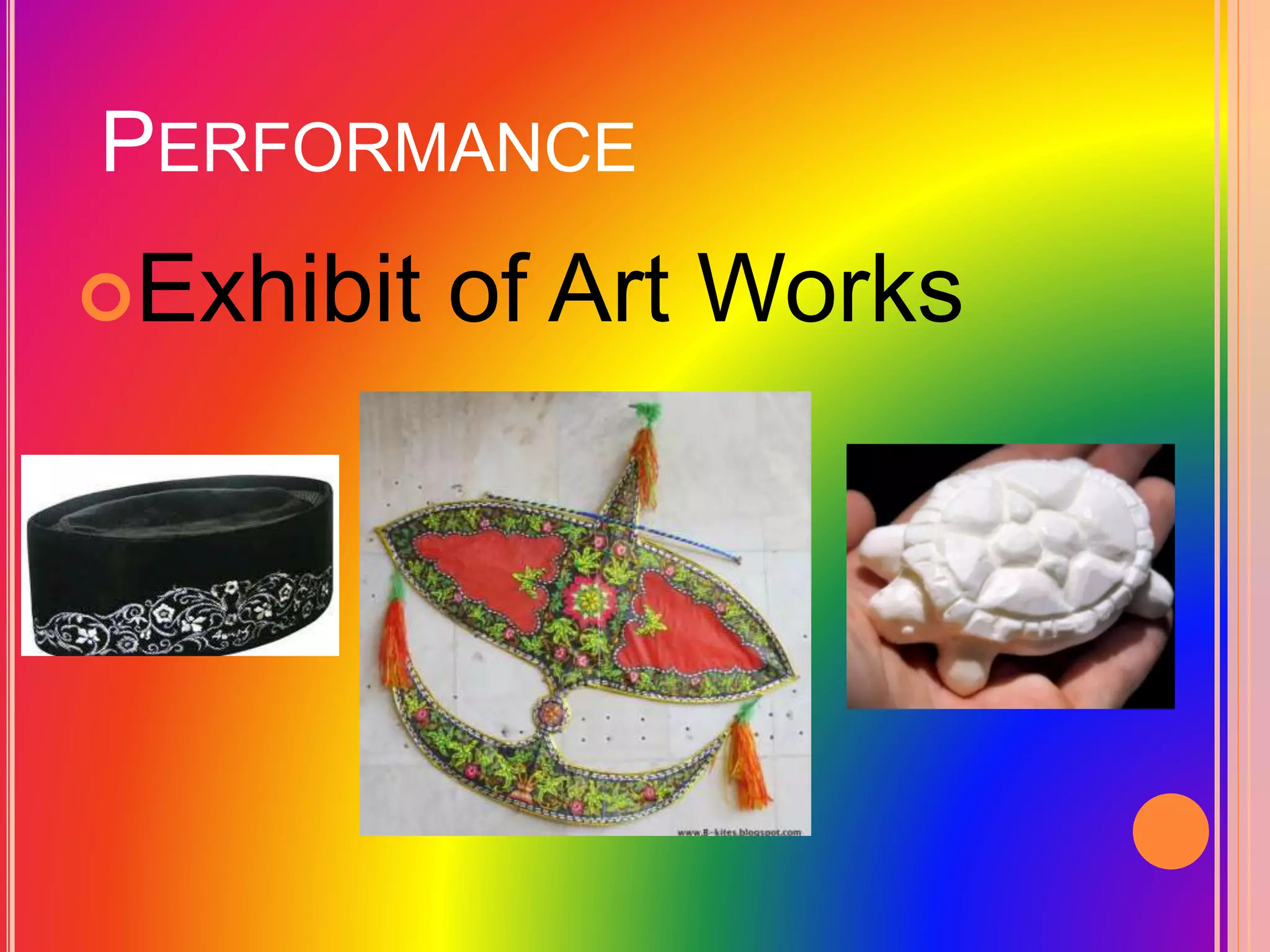
PERFORMANCE
Exhibit of Art Works
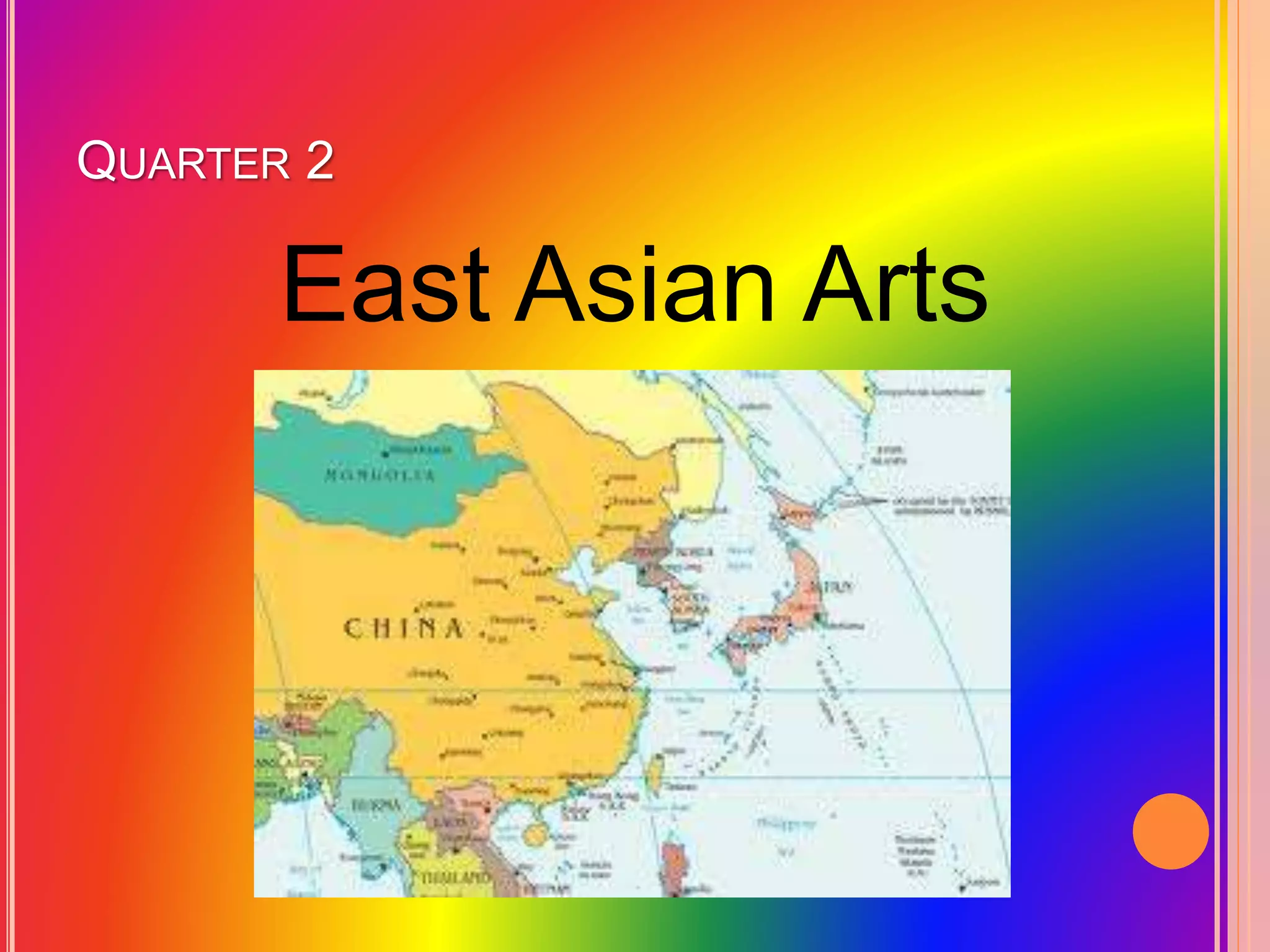
QUARTER 2
East Asian Arts
I. KNOW
Painting of East Asia
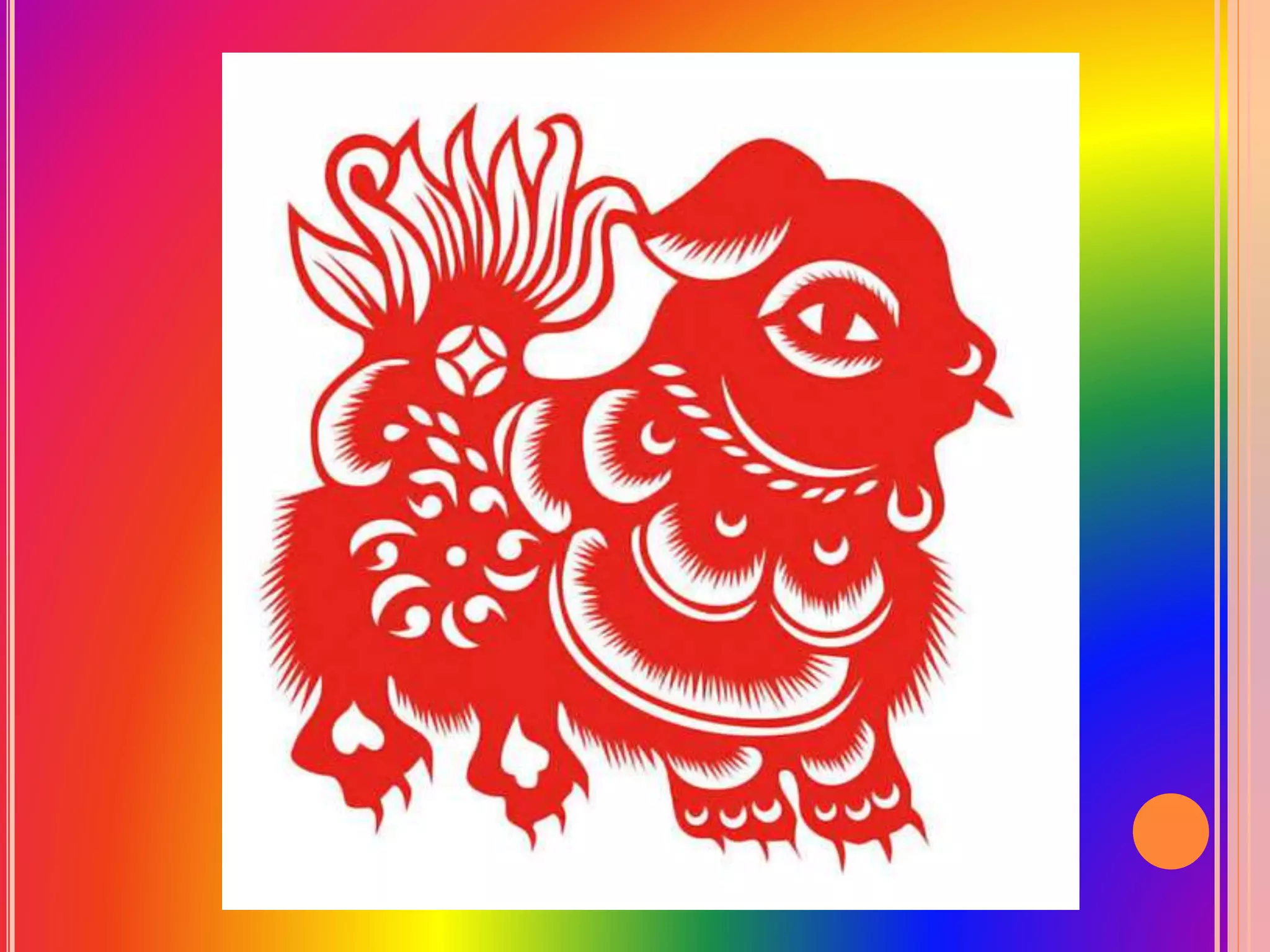
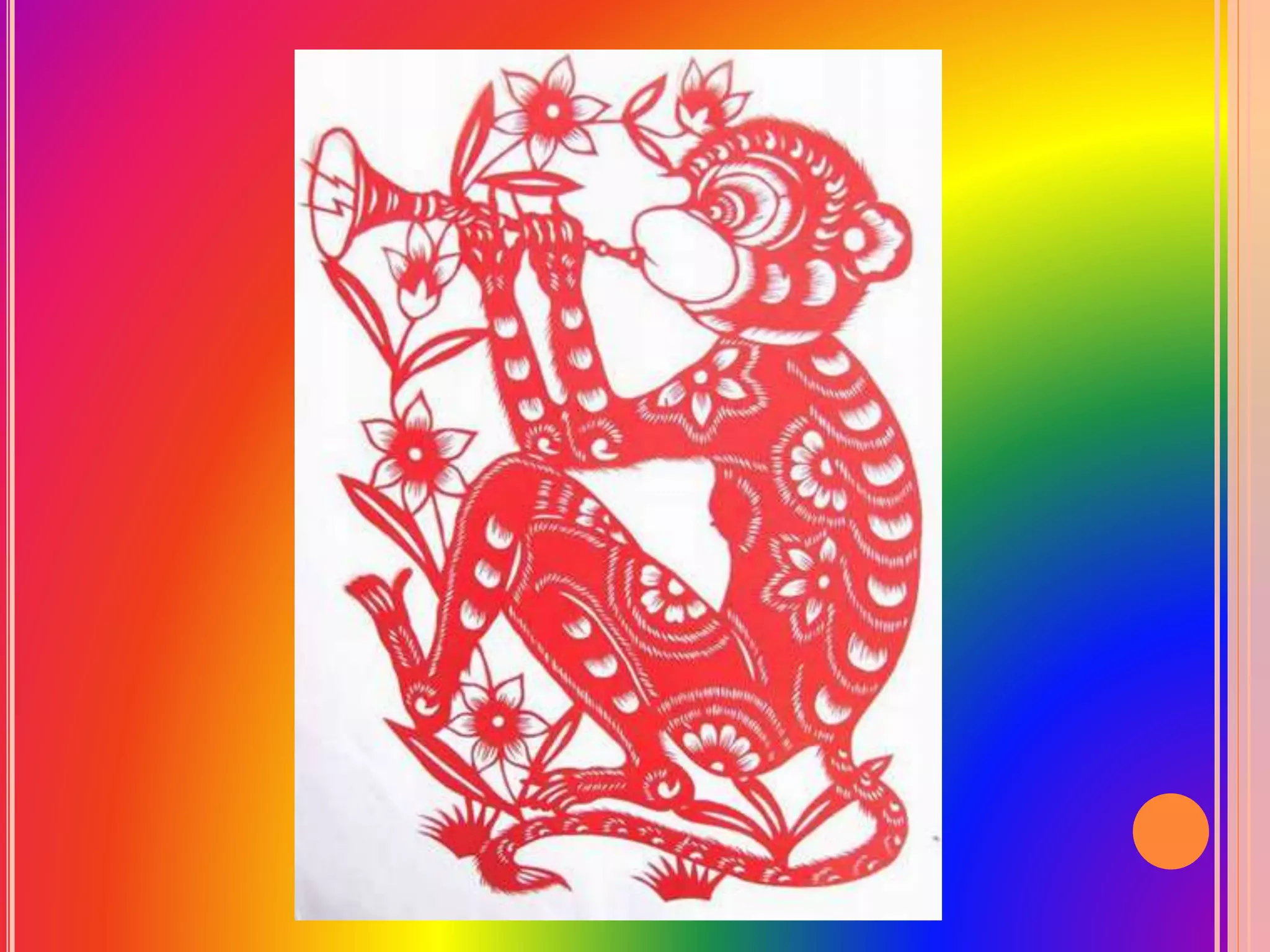
Paper Arts
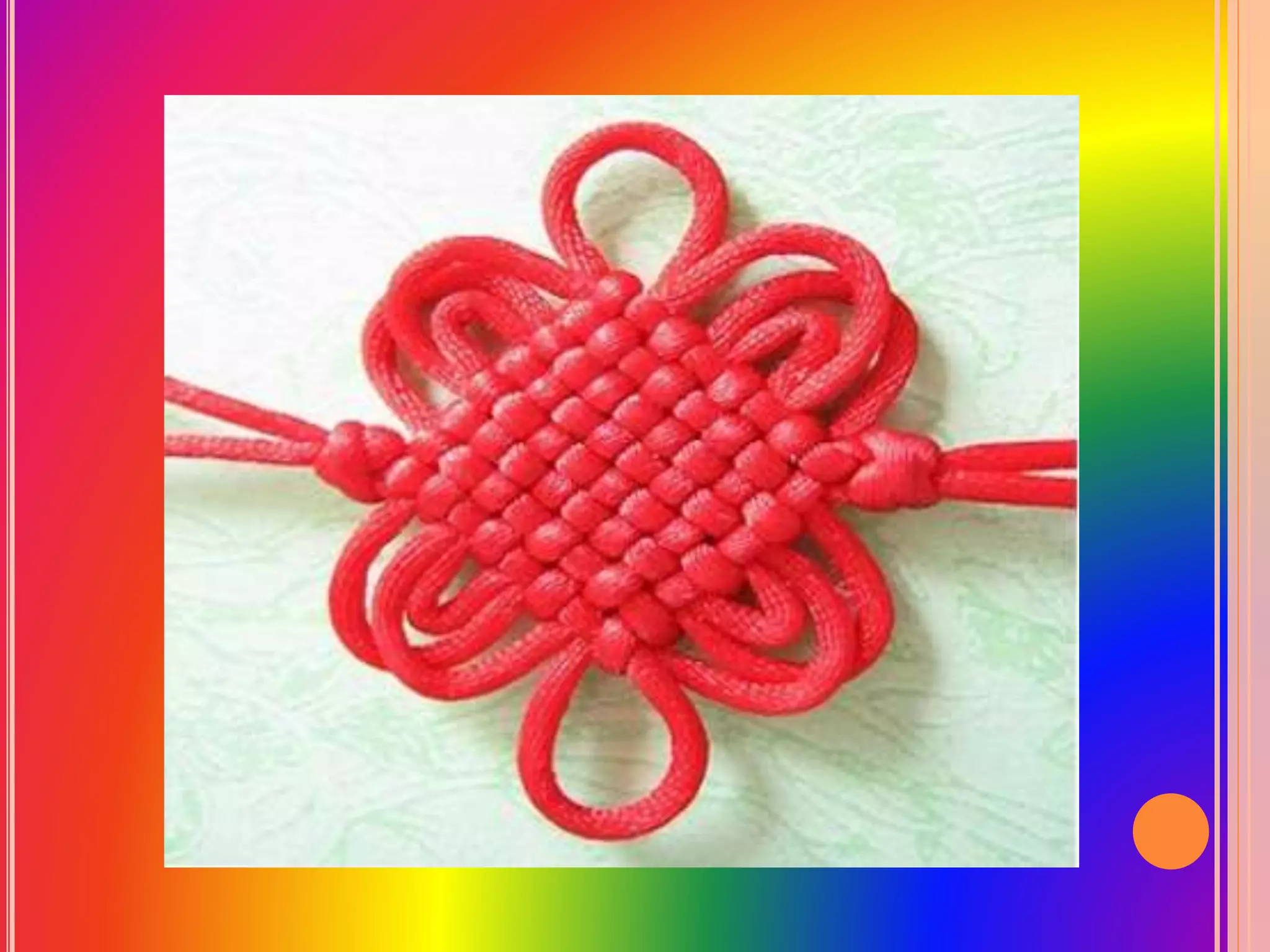
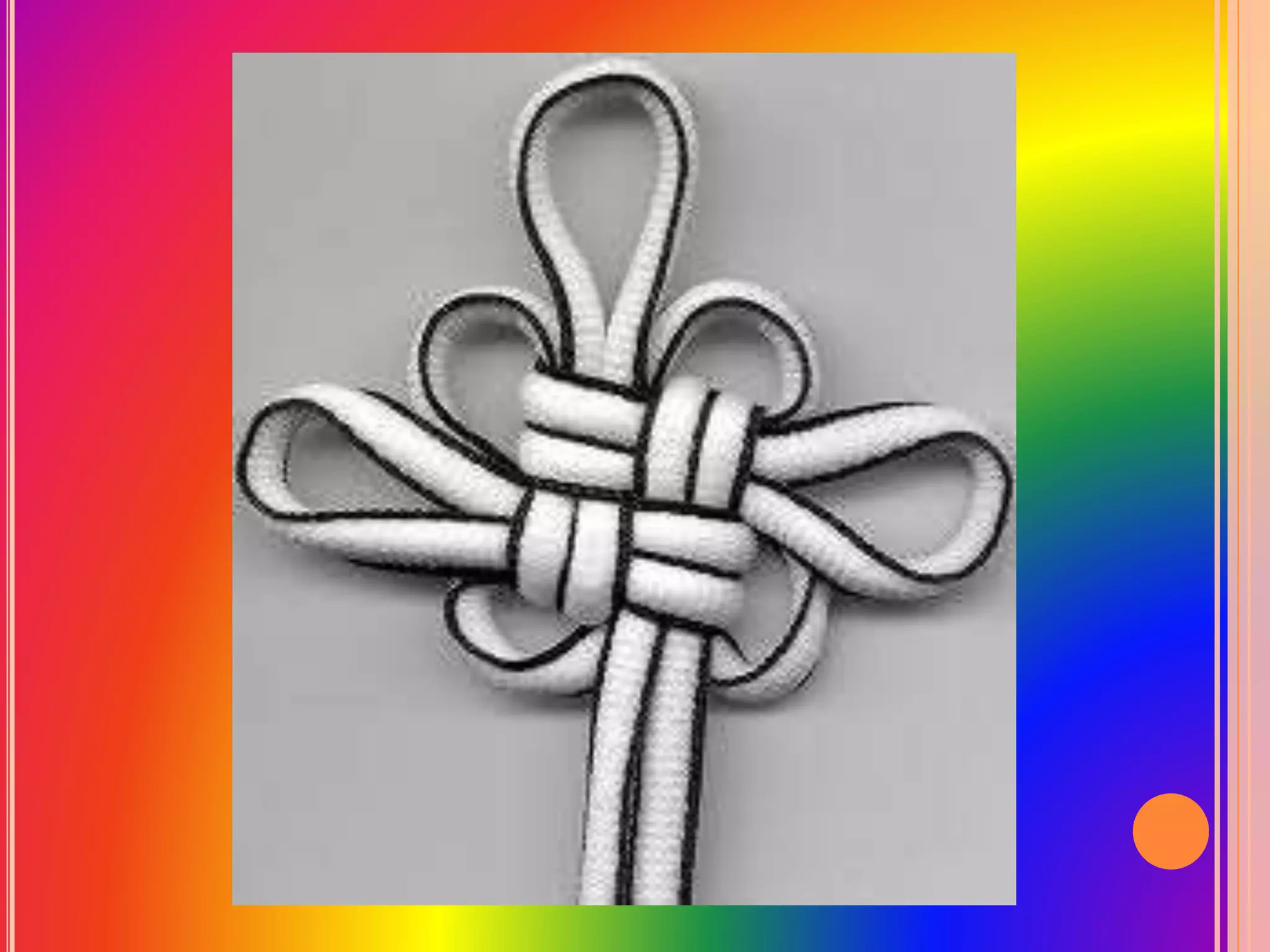
Knot Tying
II. PROCESS
 Print Me A Message
 Paint Me A Picture
 Print Me A Card
 Paint Me A Pot/Jar
 Face Painting/Mask Making
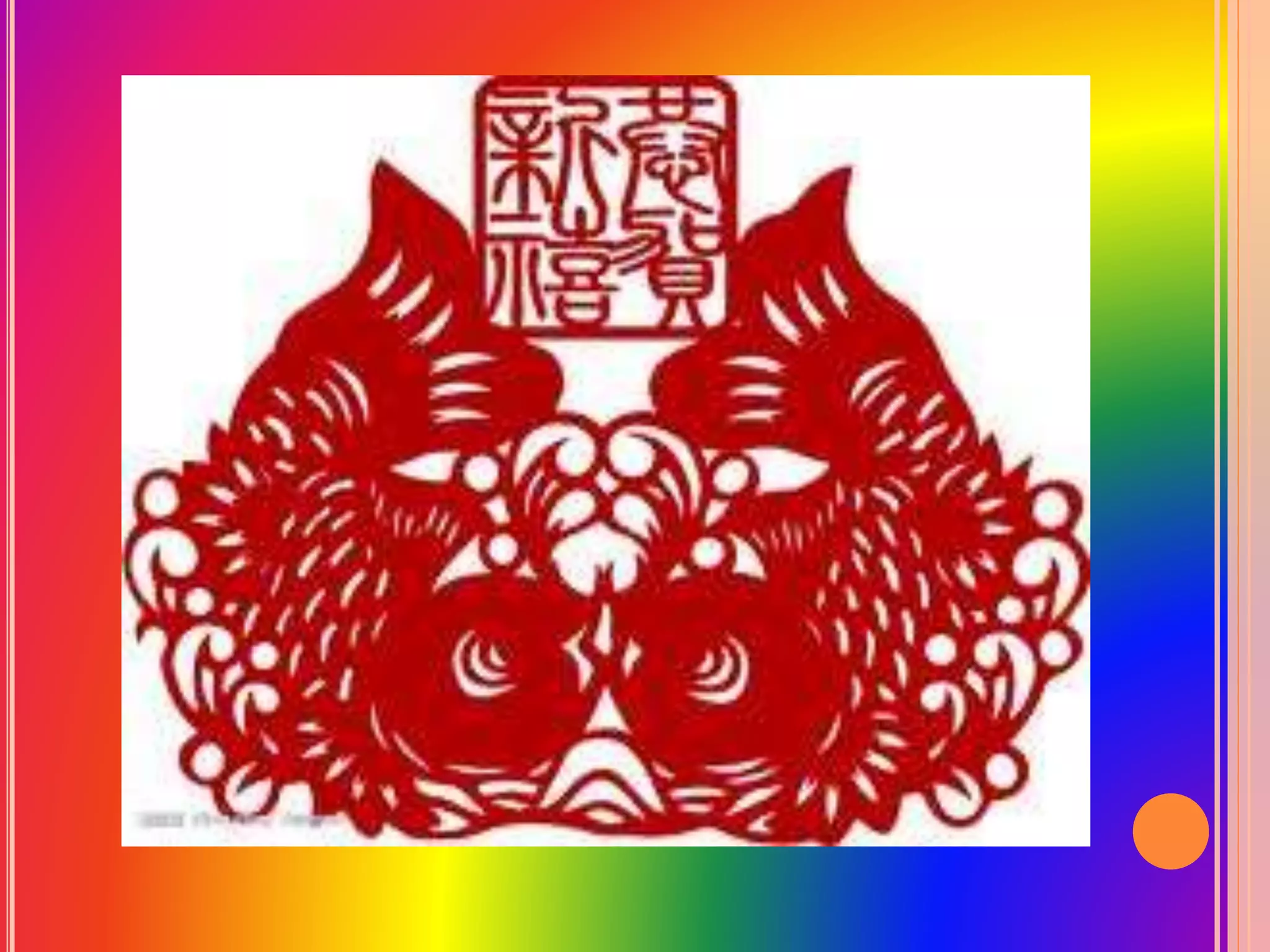
 The Art of Paper Cutting
 Paper Folding(Origami)
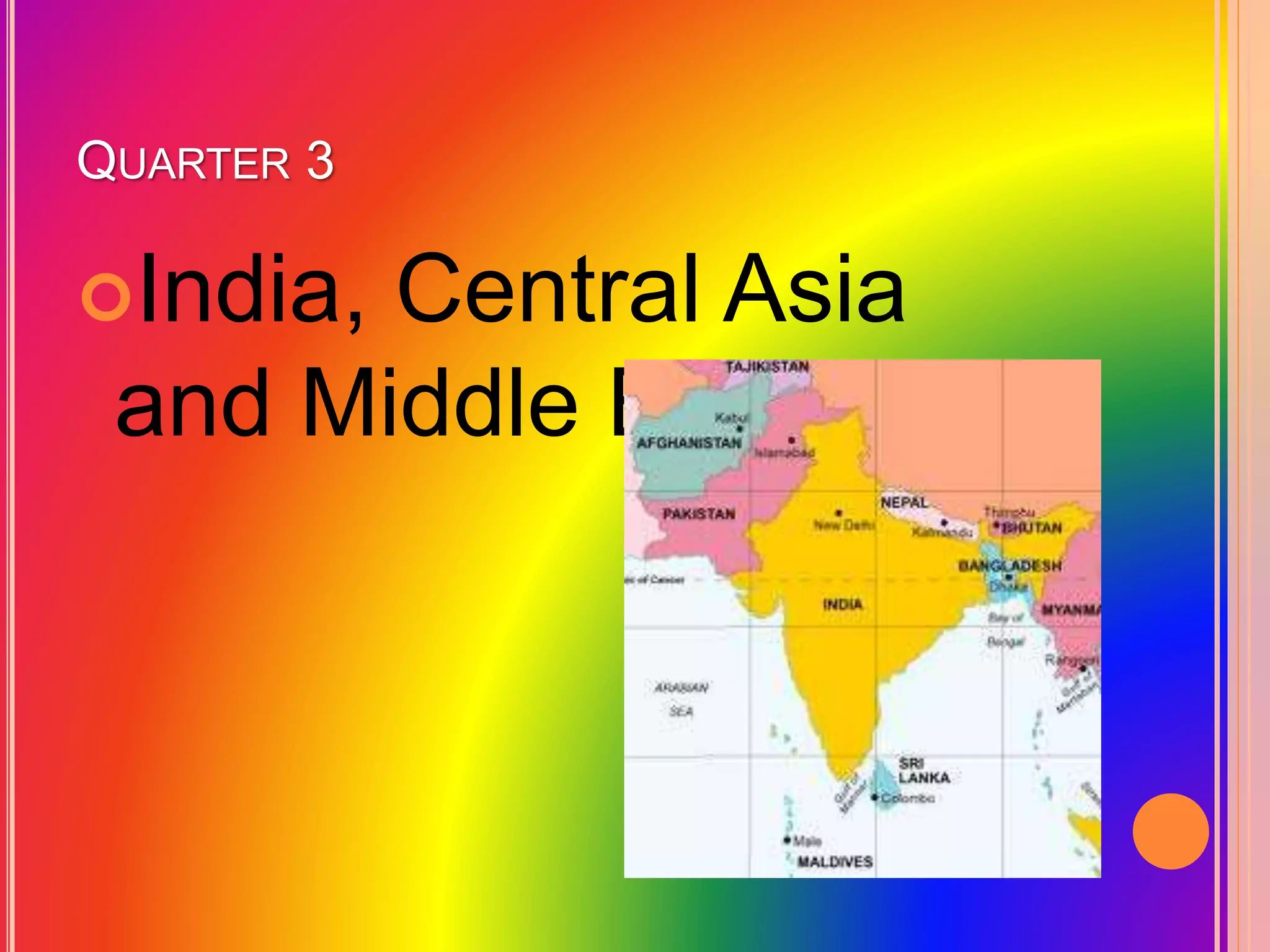
QUARTER 3
India, Central Asia
and Middle East
I. KNOW
Periods in Indian Art
1. Ancient Period
2. Classical Period
3. Islamic Ascendancy
4. Mogul Period
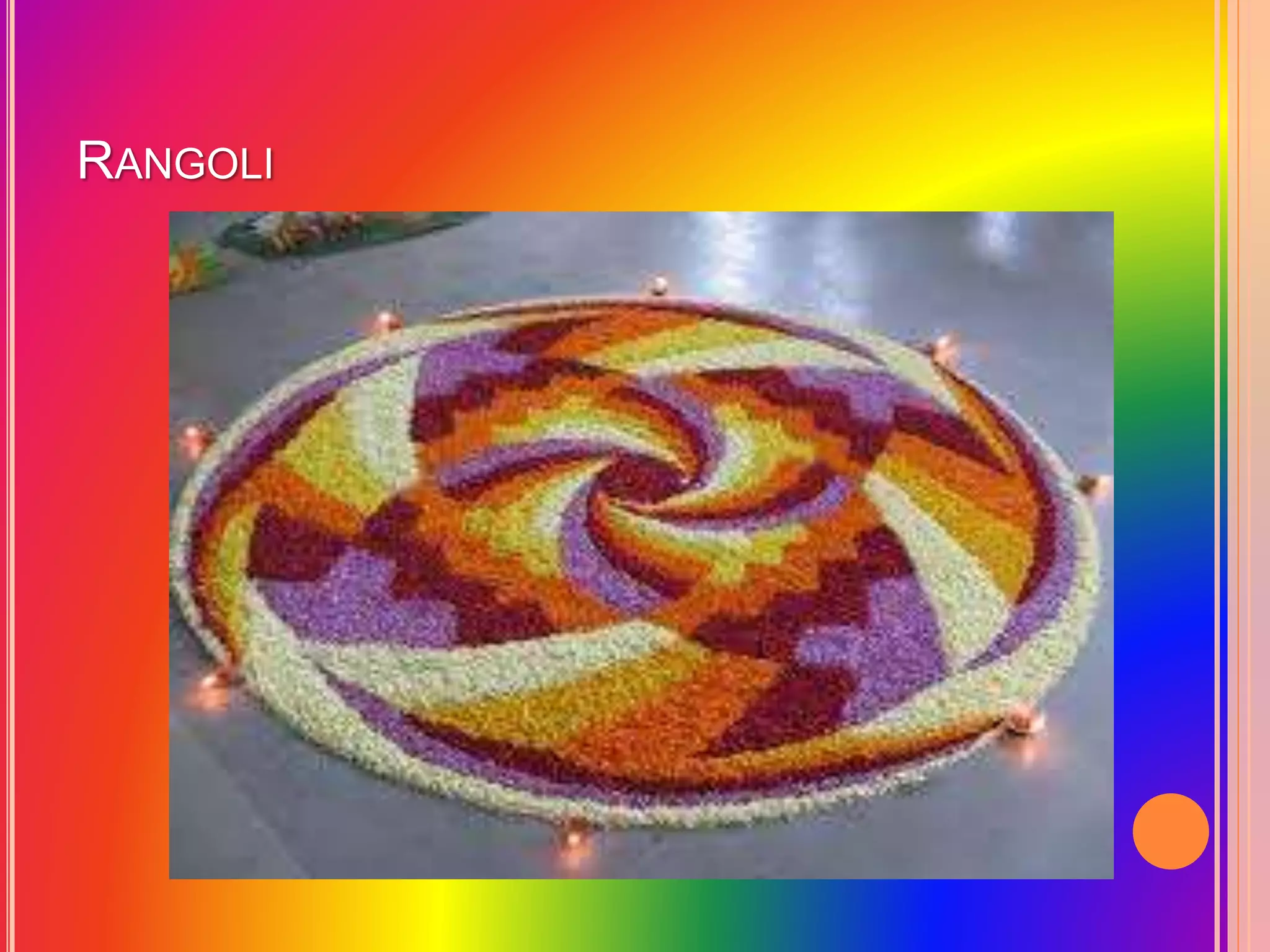
RANGOLI
RANGOLI
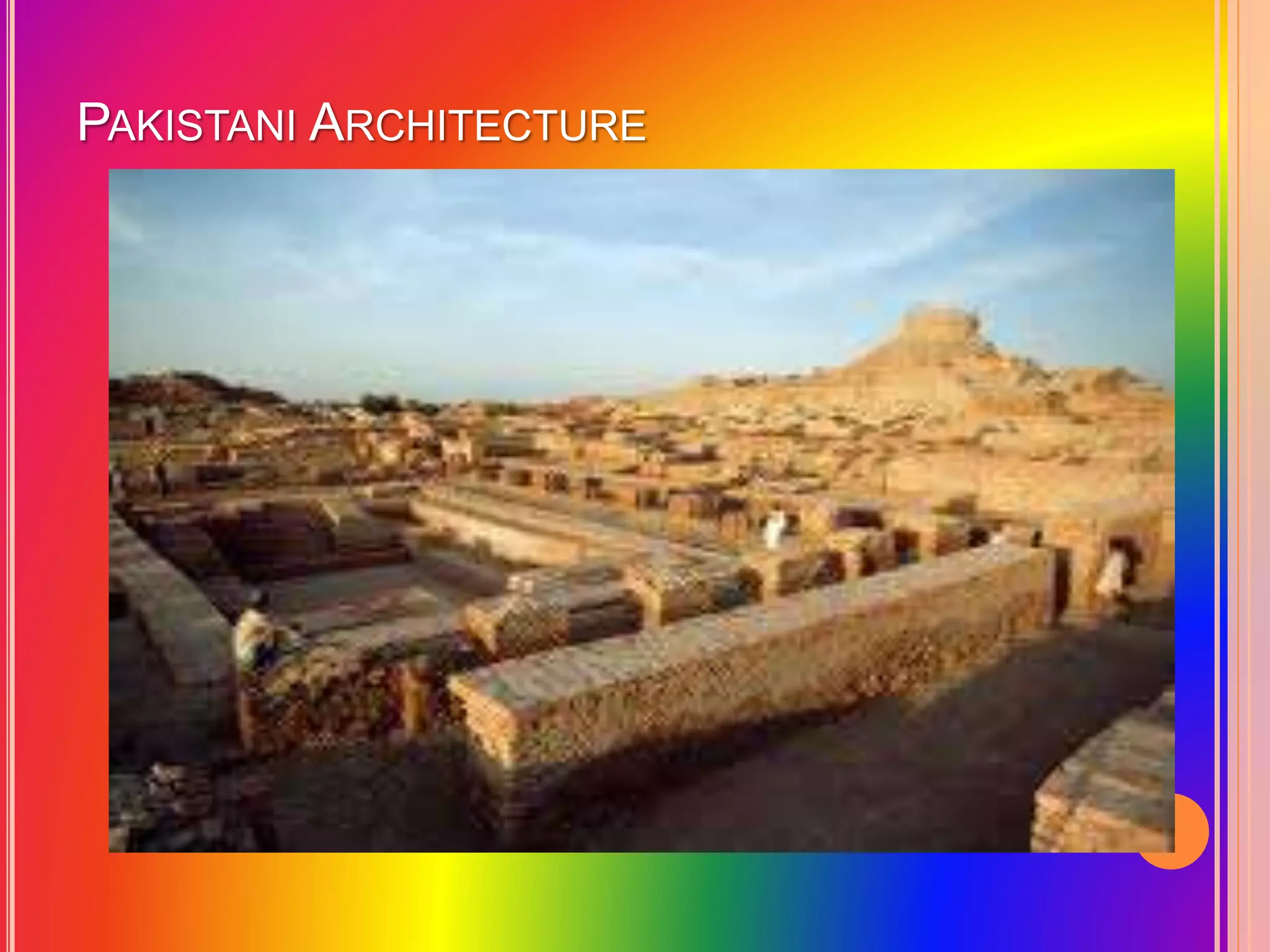
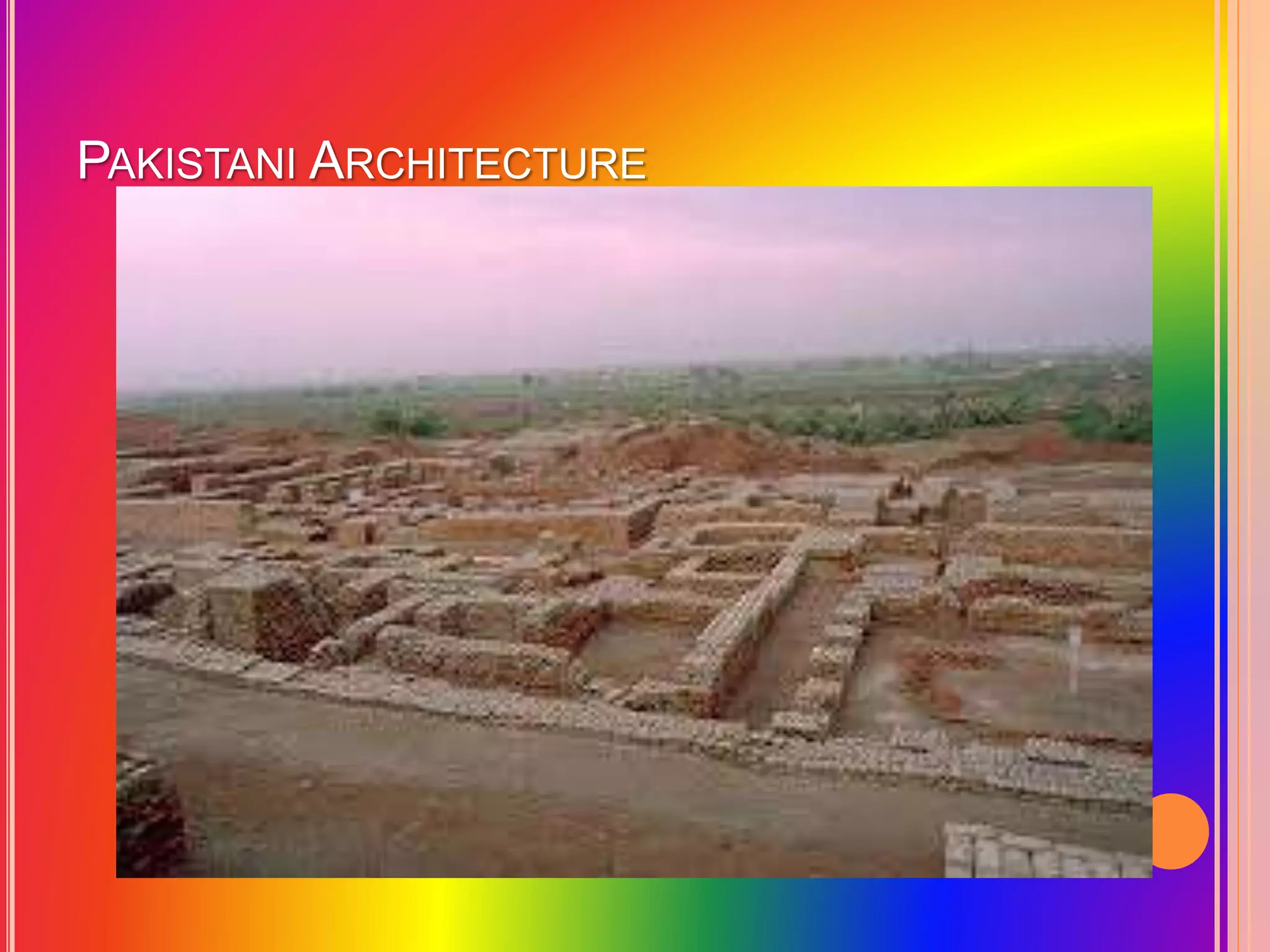
PAKISTANI ARCHITECTURE
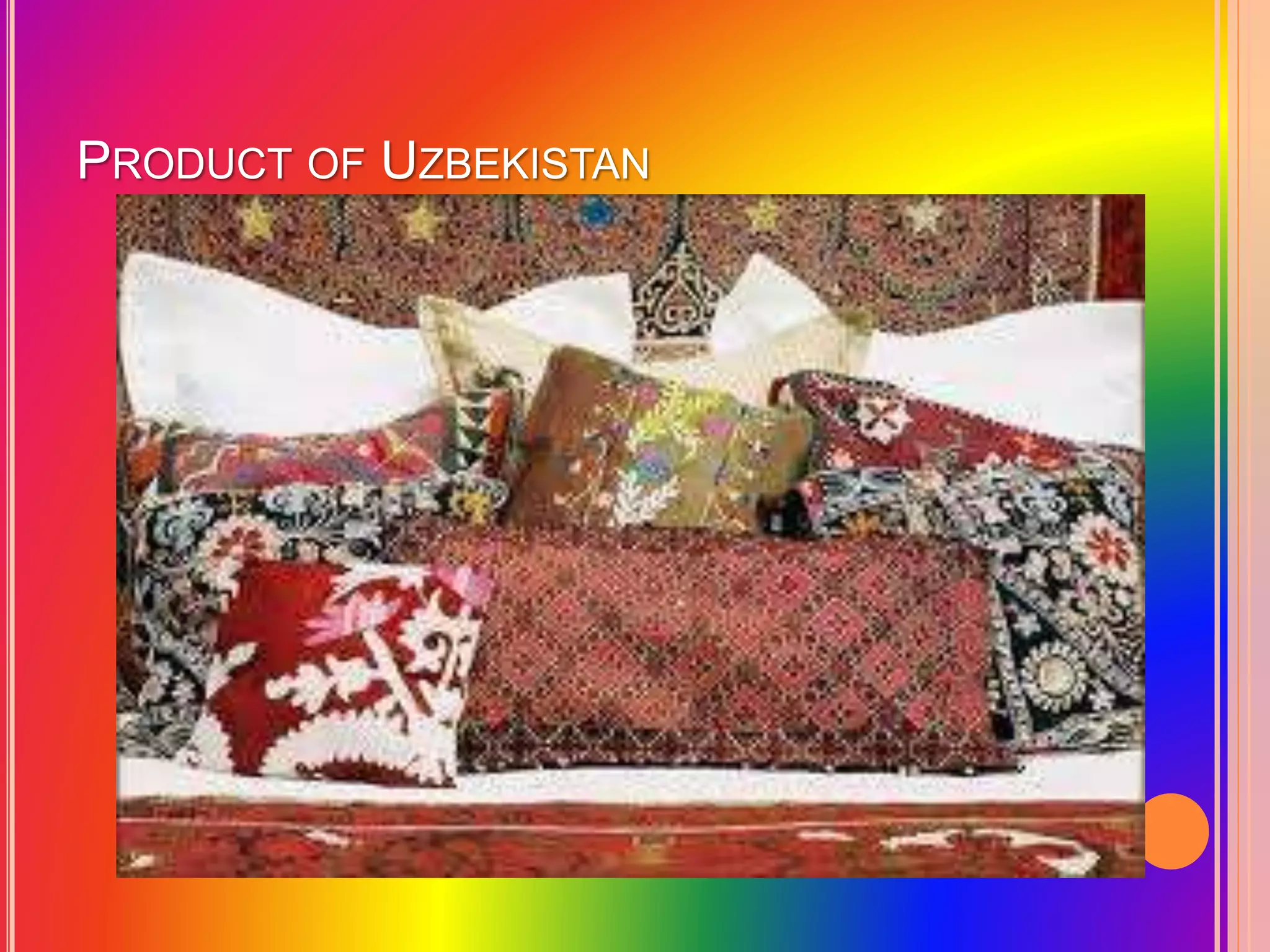
PRODUCT OF UZBEKISTAN
JEWELRY ART OF KAZAKHSTAN
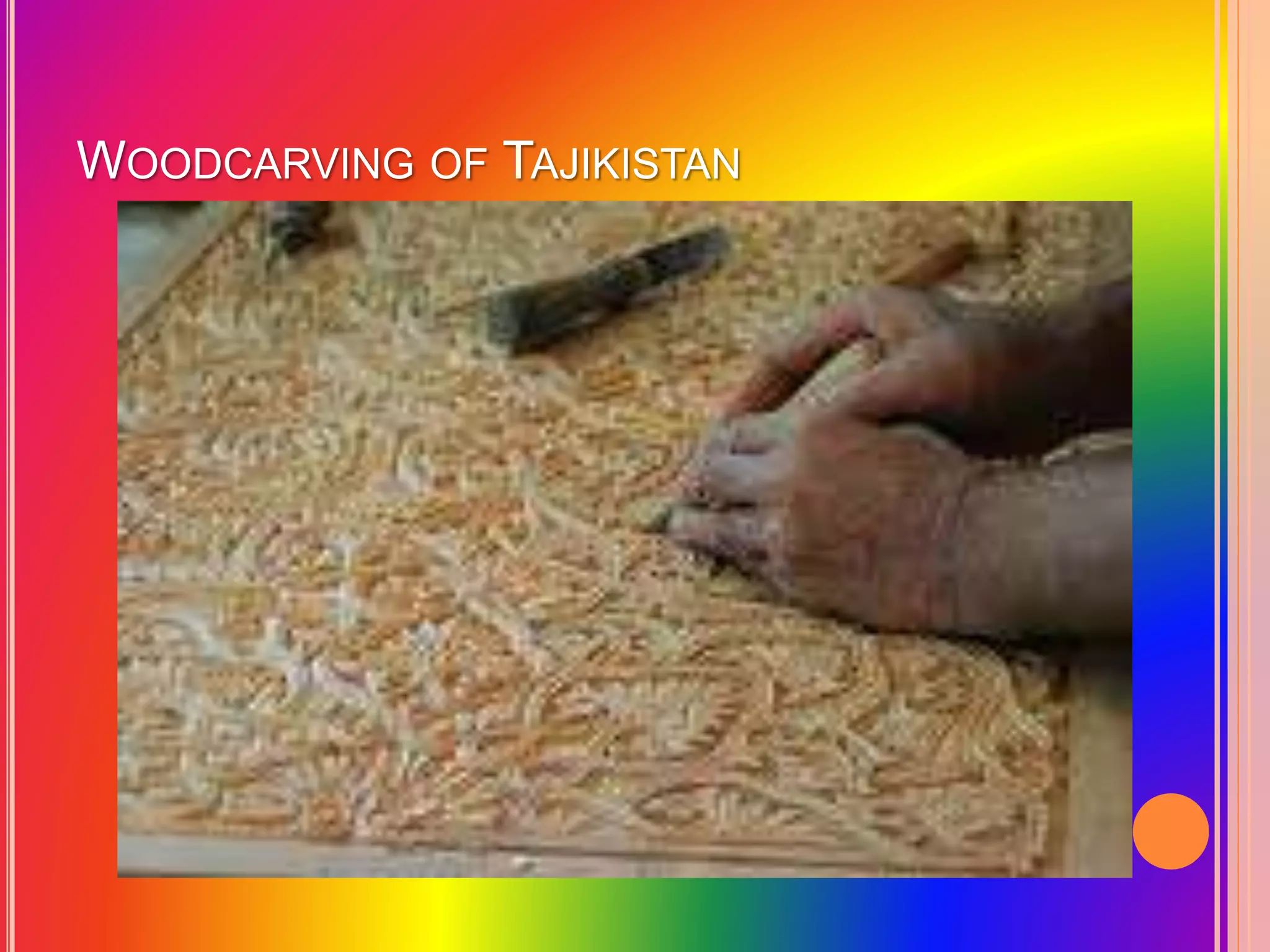
WOODCARVING OF TAJIKISTAN
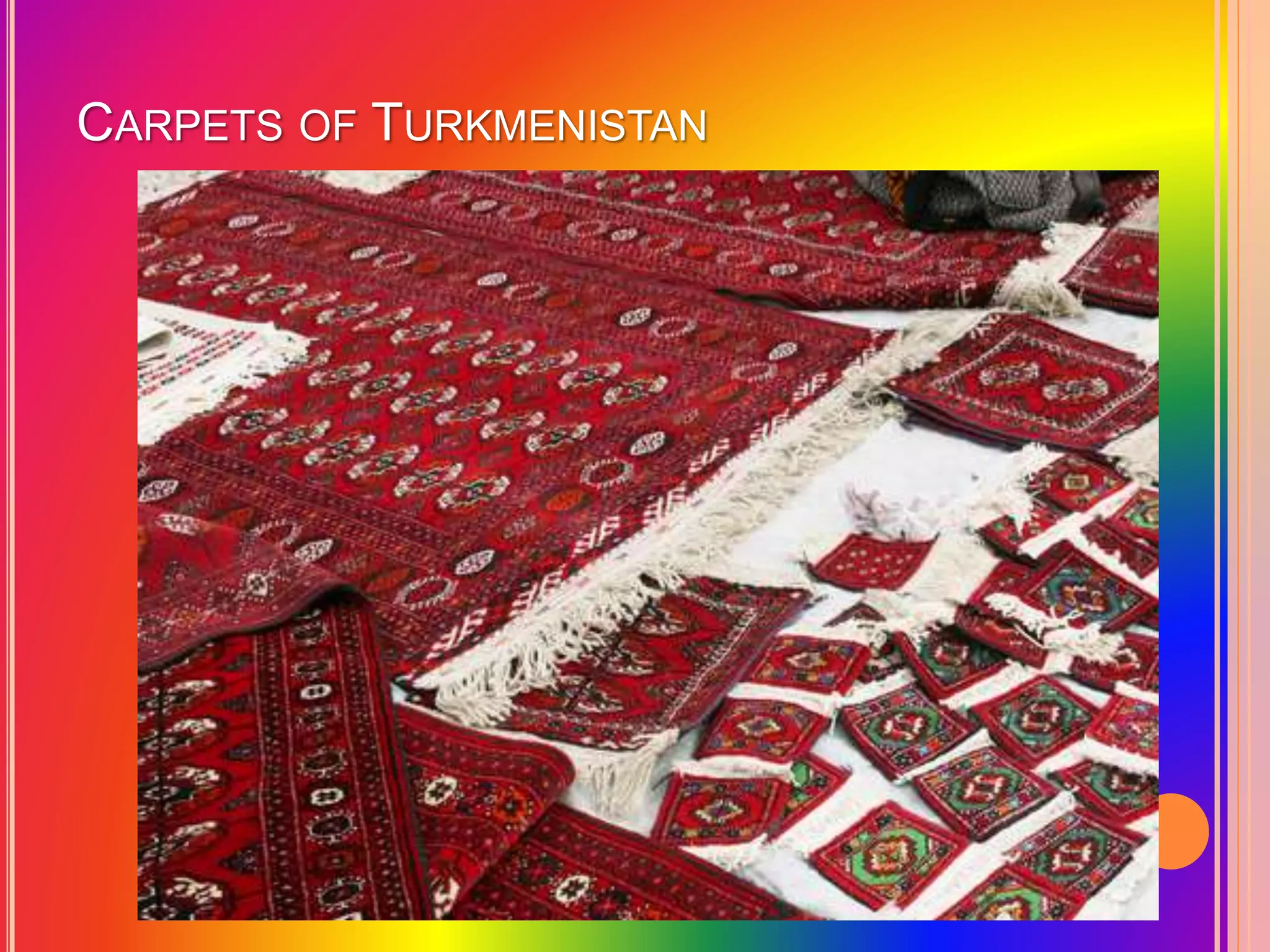
CARPETS OF TURKMENISTAN
TEXTILE OF KYRGYZSTAN
Crafts of the Middle
East
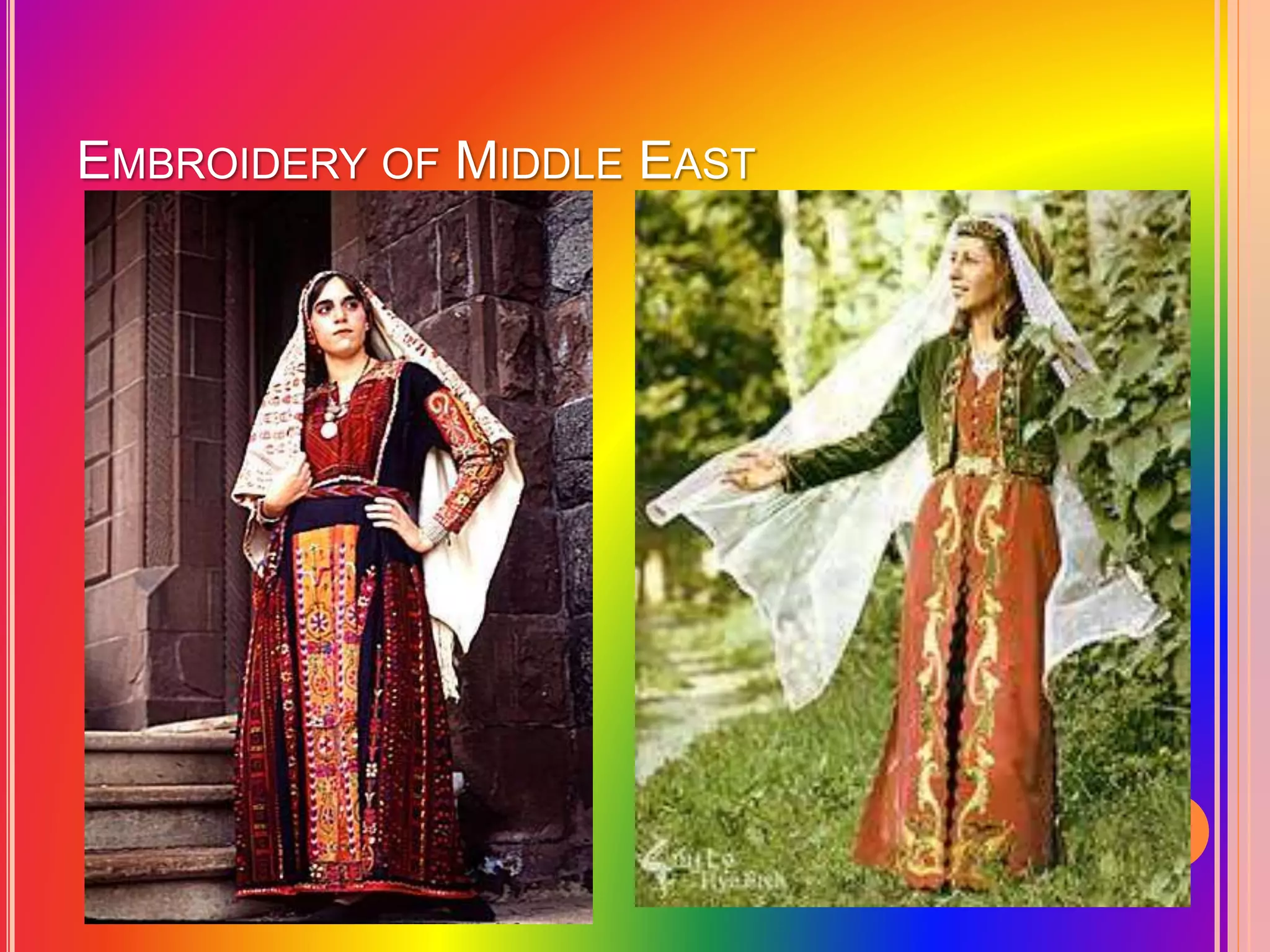
EMBROIDERY OF MIDDLE EAST
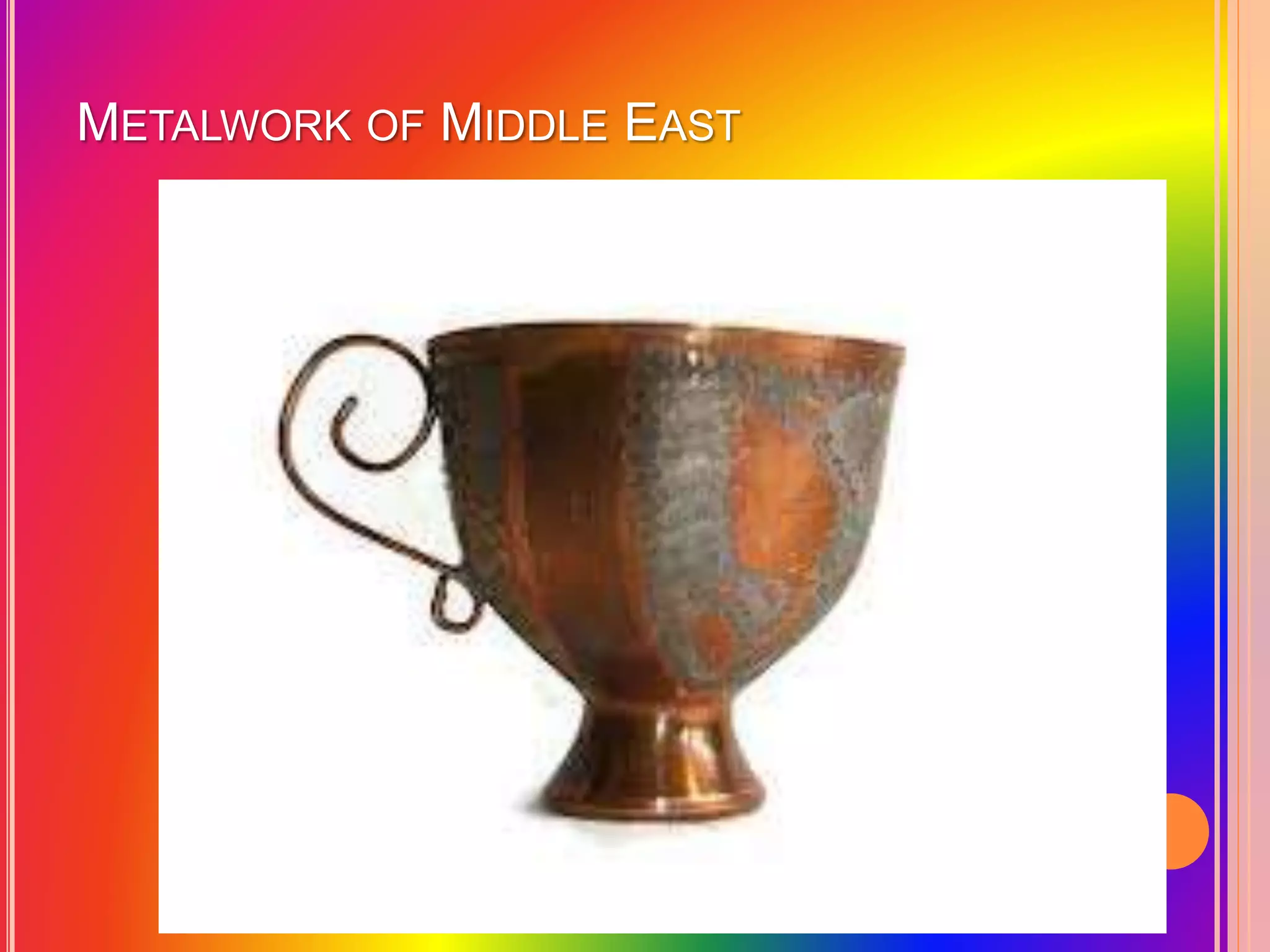
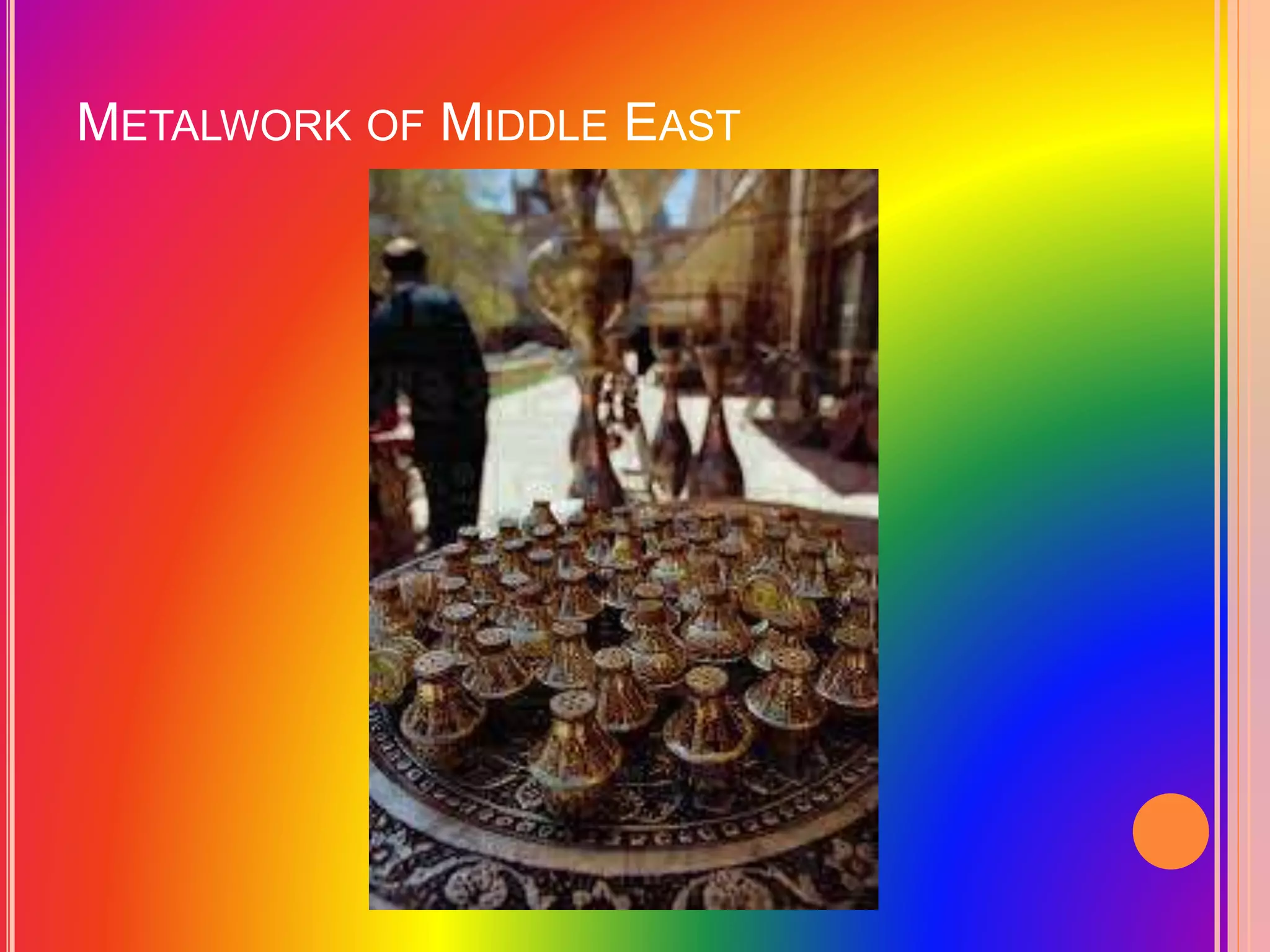
METALWORK OF MIDDLE EAST
II. PROCESS
Rangoli Art
Diwali Mobile
Truck Art
Candle Sculpture
Clay Pot Designing
Border Designing
Soap Sculpture
QUARTER 4
Theater Arts
Festivals
I. KNOW
Theater Arts and
Festivals of China,
Japan, Indonesia
and Thailand
THEATER ARTS
Peking Opera
Kabuki
Wayang Kulit
Nang Shadow Puppet
FESTIVALS
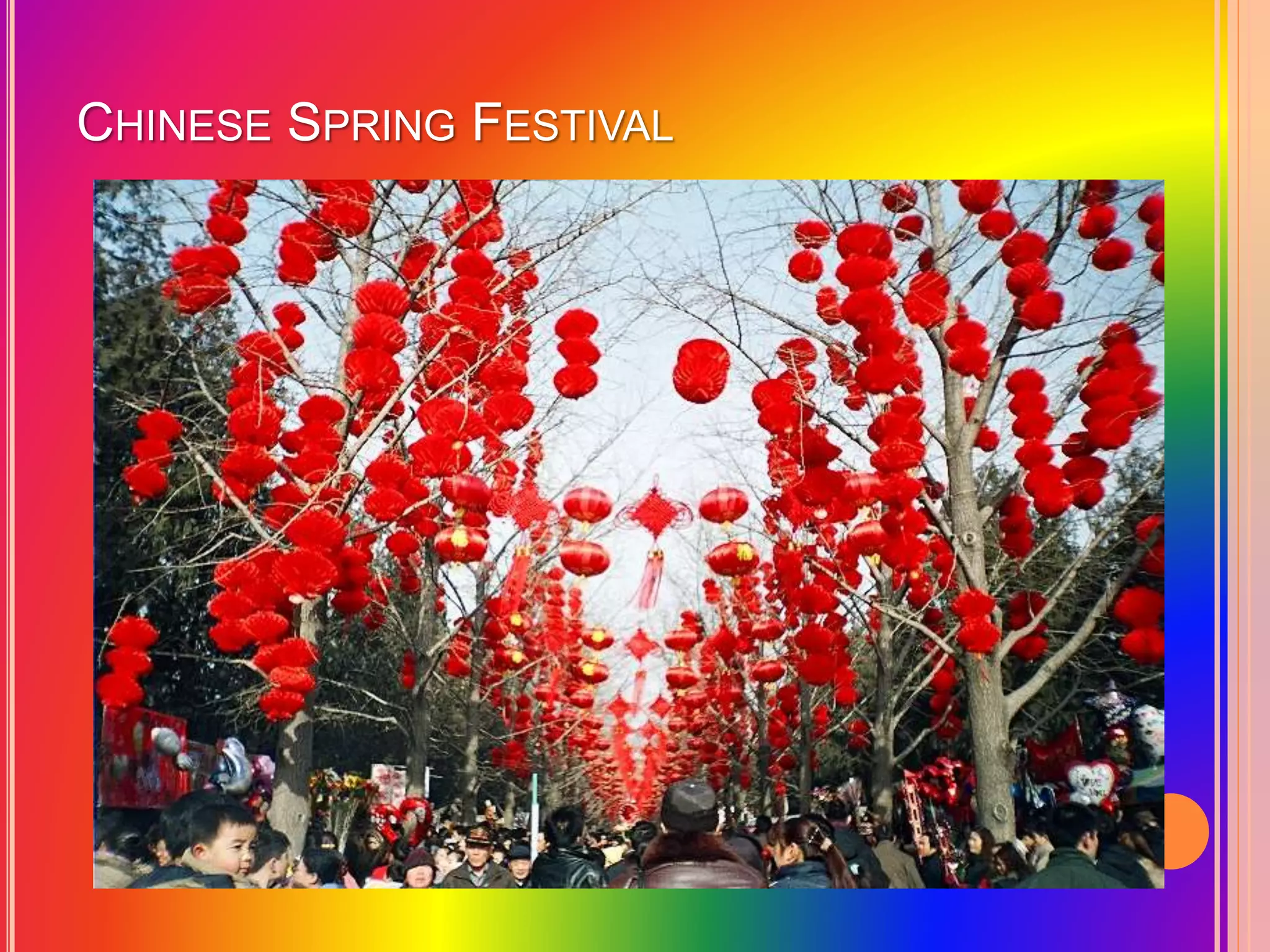
Chinese Spring Festival
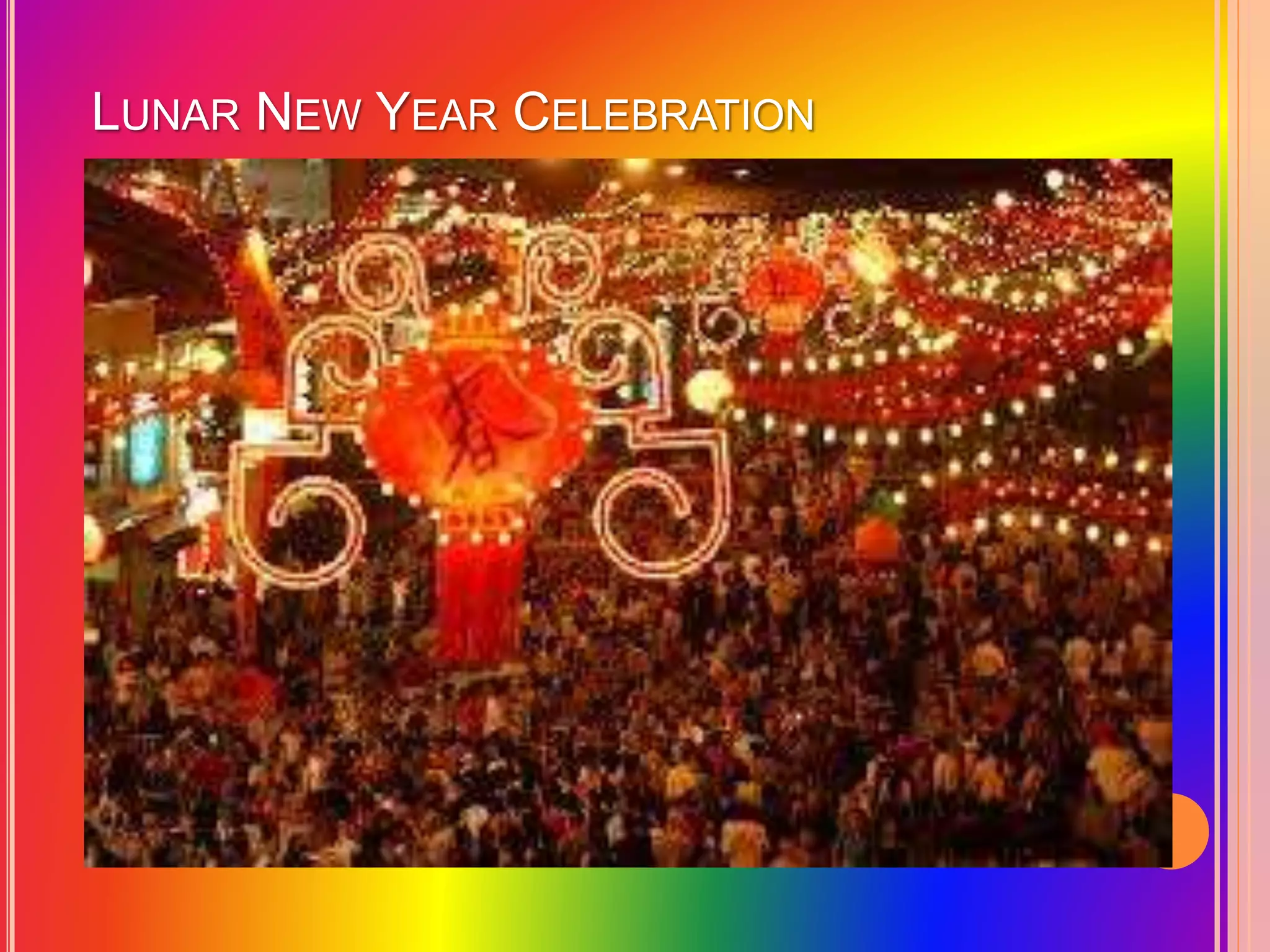
Lunar New Year Celebration in
China
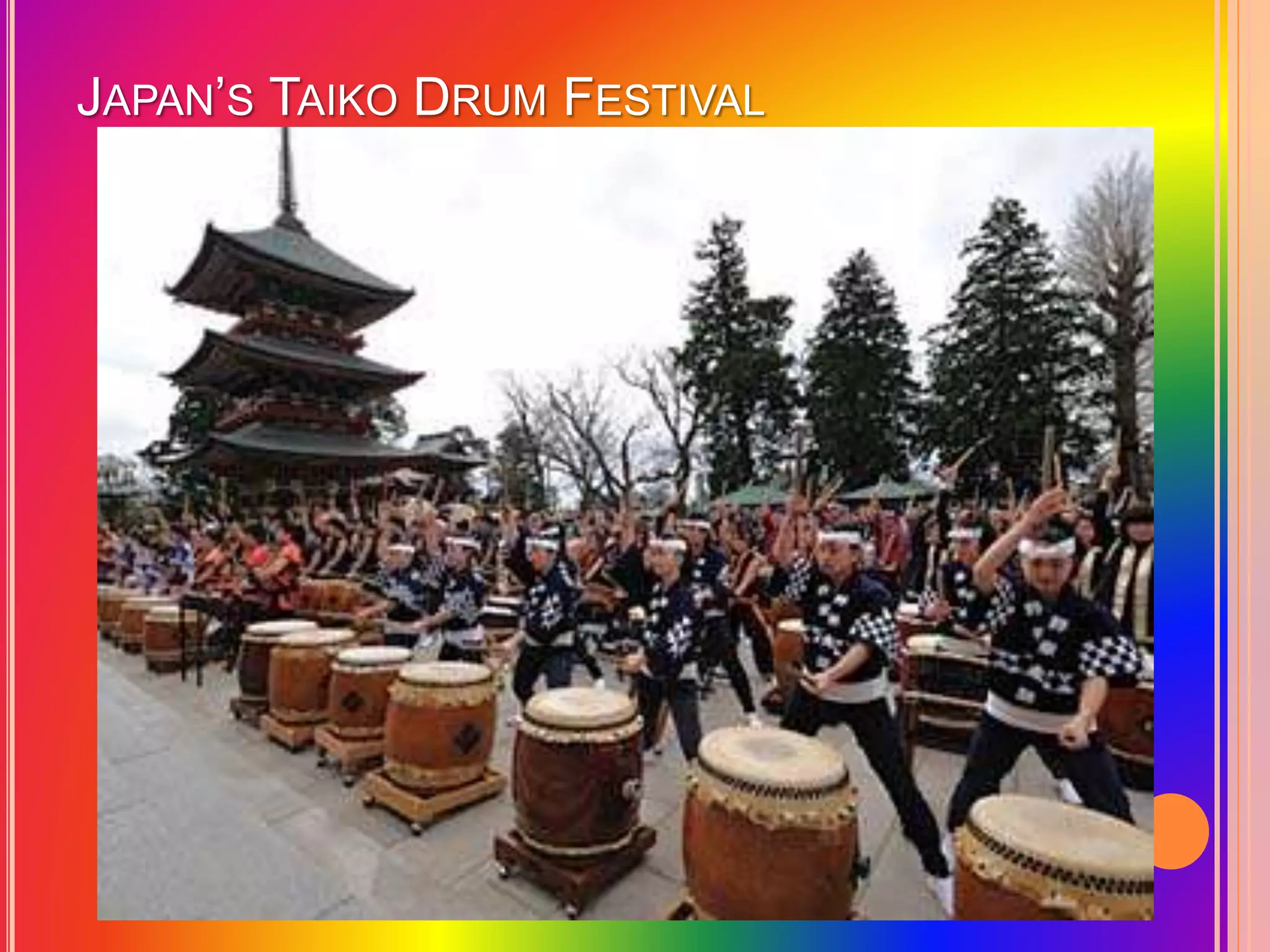
Japan’s Taiko Drum Festival
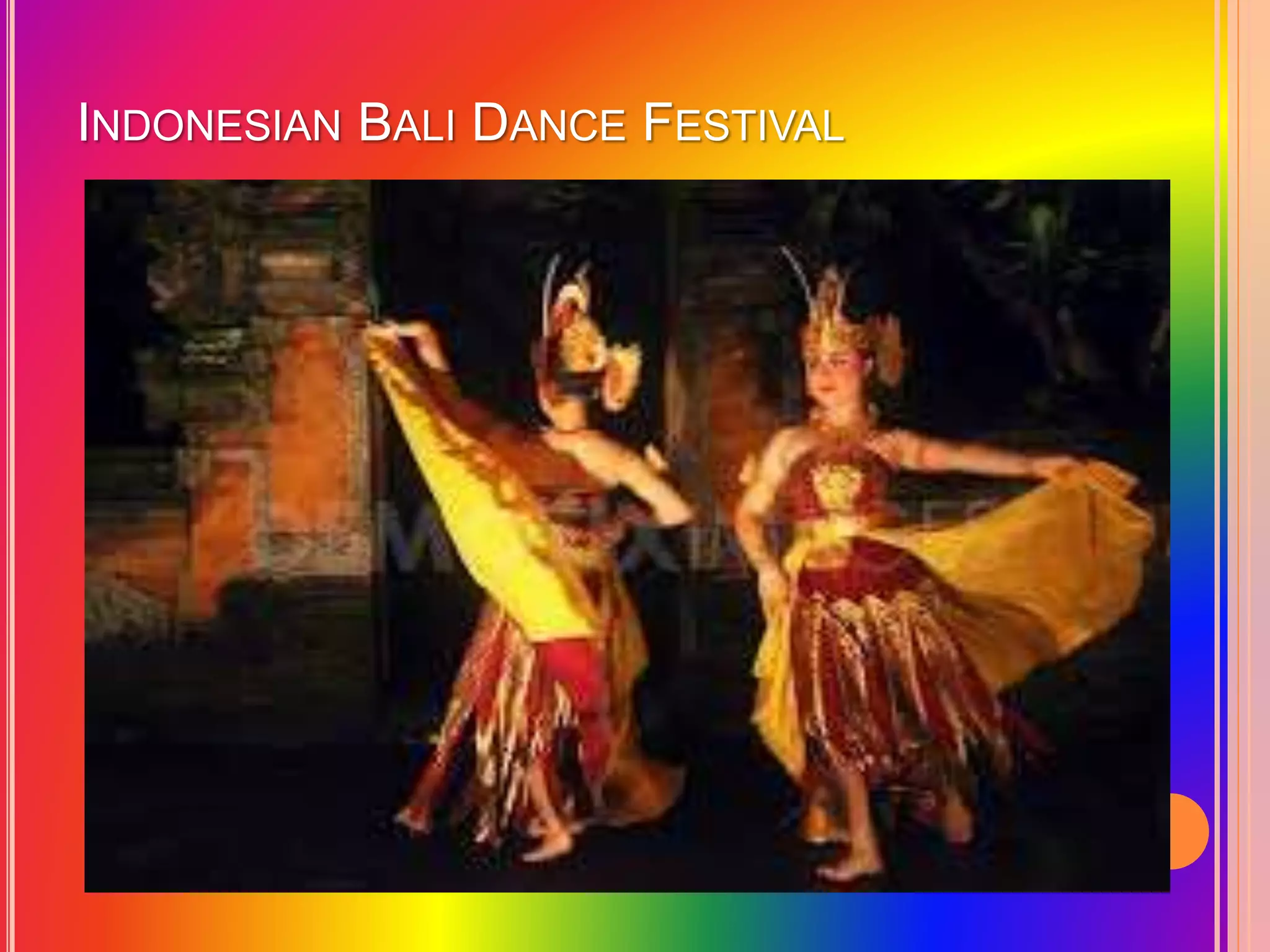
Indonesian Bali Dance
Festival
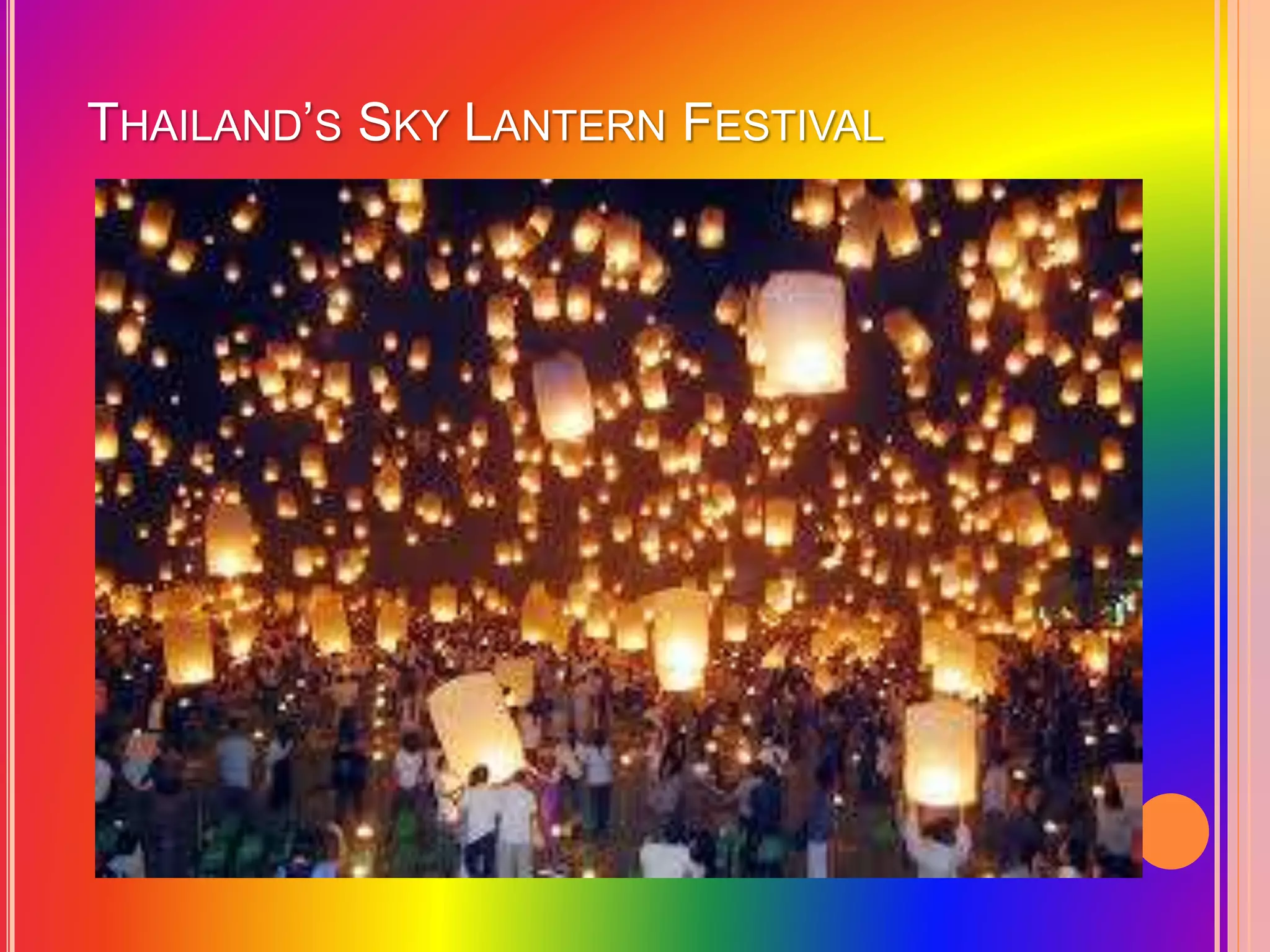
Thailand’s Sky Lantern
Festival
CHINESE SPRING FESTIVAL
LUNAR NEW YEAR CELEBRATION
JAPAN’S TAIKO DRUM FESTIVAL
INDONESIAN BALI DANCE FESTIVAL
THAILAND’S SKY LANTERN FESTIVAL
Arts pre lesson 1

Arts pre lesson 1