ADVERTISING AND
CAMPAIGN PLANNING
Prepared & presented by: Ms. Himani R.
Layout
Marketing strategy & Situation analysis
Advertising plan
Advertising objectives
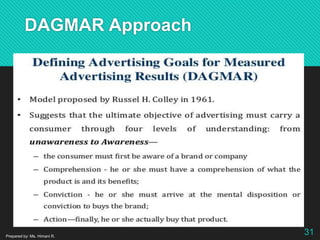
DAGMAR approach
Advertising strategy
Advertising campaign-planning process
2Prepared by: Ms. Himani R.
Situational Analysis
 A situation analysis includes a thorough examination of
internal and external factors affecting a business.
 Using market research a situational analysis will define
potential customers, projected growth, competitors and a
realistic assessment of a business.
 5 Cs Analysis
 SWOT Analysis
 Porter’s Five Force Analysis
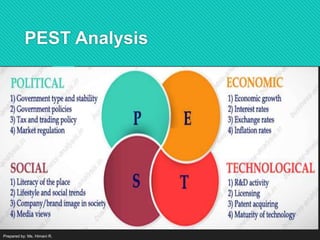
 PEST
3
Prepared by: Ms. Himani R.
Continued
 Internal Analysis:
 It is the understanding of strengths and weaknesses within an
organization.
 It is seen in company culture and image, organizational
structure, staff, operational efficiency and capacity, brand
awareness, financial resources, etc.
 Strengths are positive attributes, which can be tangible or
intangible, and are within the control of the organization.
 Weaknesses are factors that may hinder the achievement of
the desired goal.
Prepared by: Ms. Himani R.
4
Continued
 External Analysis:
 Opportunities and threats are measured as part of an external
analysis.
 Like market trends, suppliers, partners, customers,
competitors, new technology and economic environment.
 Opportunities present themselves as attractive factors that
can propel or positively influence the organization in some
way.
 Threats are external factors that could place the
organization’s goal at risk.
Prepared by: Ms. Himani R.
5
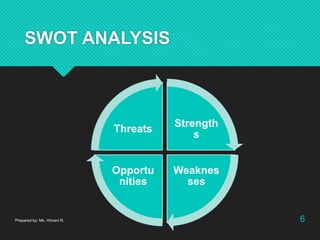
SWOT ANALYSIS
Strength
s
Weaknes
ses
Opportu
nities
Threats
Prepared by: Ms. Himani R. 6
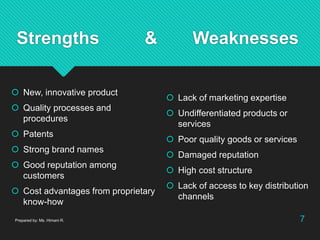
Strengths & Weaknesses
 New, innovative product
 Quality processes and
procedures
 Patents
 Strong brand names
 Good reputation among
customers
 Cost advantages from proprietary
know-how
Prepared by: Ms. Himani R. 7
 Lack of marketing expertise
 Undifferentiated products or
services
 Poor quality goods or services
 Damaged reputation
 High cost structure
 Lack of access to key distribution
channels
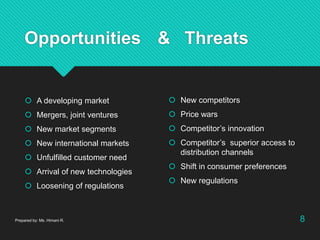
Opportunities & Threats
 A developing market
 Mergers, joint ventures
 New market segments
 New international markets
 Unfulfilled customer need
 Arrival of new technologies
 Loosening of regulations
Prepared by: Ms. Himani R. 8
 New competitors
 Price wars
 Competitor’s innovation
 Competitor’s superior access to
distribution channels
 Shift in consumer preferences
 New regulations
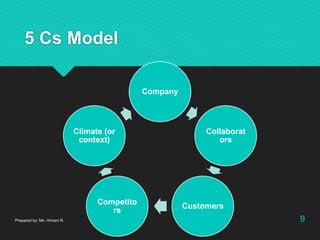
5 Cs Model
Company
Collaborat
ors
Customers
Competito
rs
Climate (or
context)
Prepared by: Ms. Himani R. 9
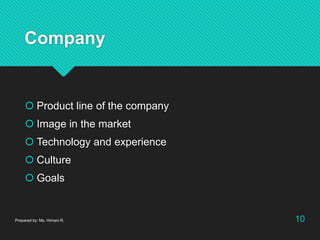
Company
 Product line of the company
 Image in the market
 Technology and experience
 Culture
 Goals
Prepared by: Ms. Himani R. 10
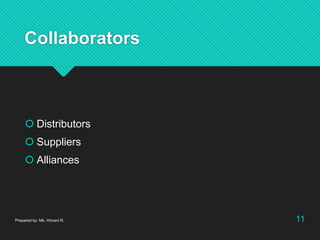
Collaborators
 Distributors
 Suppliers
 Alliances
Prepared by: Ms. Himani R. 11
Customers
 Market size & growth
 Market segments
 Benefits that consumer is seeking, tangible and intangible.
 Motivation behind purchase; value drivers, benefits vs. costs
 Decision maker or decision-making unit
 Retail channel – where does the consumer actually purchase the product?
 Consumer information sources – where does the customer obtain information
about the product?
 Buying process; e.g. impulse or careful comparison
 Frequency of purchase, seasonal factors
 Quality purchased at a time
 Trends - how consumer needs and preferences change over time
Prepared by: Ms. Himani R.
12
Competitors
 Who are the existing and potential competitors?
 What strategic groups can be identified?
 What are their sales, share and profits?
 What are the growth trends?
 What are their strengths, weaknesses and strategies?
Prepared by: Ms. Himani R. 13
Climate (or context)
 How attractive is the market or industry and its submarkets?
 What are the forces reducing profitability in the market, entry and exit barriers,
growth projections, cost structures, and profitability prospects?
 What are the alternative distribution channels and their relative strengths?
 What industry trends are significant to strategy?
 What are the current and future key success factors?
 What environmental threats, opportunities, and trends exist?
 What are the major strategic uncertainties and information need areas?
 What scenarios can be conceived?
Prepared by: Ms. Himani R. 14
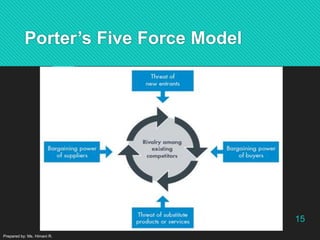
Porter’s Five Force Model
Prepared by: Ms. Himani R.
15
Continued
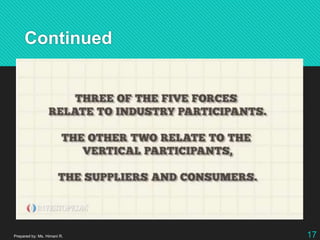
 Identifies and analyzes five competitive forces that
shape every industry, and helps determine an
industry's weaknesses and strengths.
 Porter identified five undeniable forces that play a part
in shaping every market and industry in the world.
 The forces are frequently used to measure competition
intensity, attractiveness and profitability of an industry
or market.
Prepared by: Ms. Himani R. 16
Continued
Prepared by: Ms. Himani R. 17
Continued
Prepared by: Ms. Himani R. 18
Continued
Prepared by: Ms. Himani R. 19
Continued
Prepared by: Ms. Himani R. 20
Continued
Prepared by: Ms. Himani R. 21
Continued
Prepared by: Ms. Himani R. 22
Continued
Prepared by: Ms. Himani R. 23
PEST Analysis
Prepared by: Ms. Himani R.
24
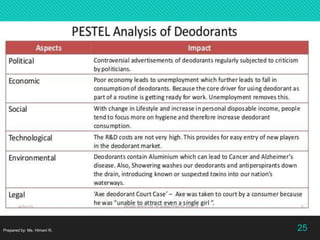
Prepared by: Ms. Himani R. 25
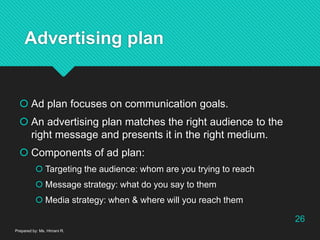
Advertising plan
 Ad plan focuses on communication goals.
 An advertising plan matches the right audience to the
right message and presents it in the right medium.
 Components of ad plan:
 Targeting the audience: whom are you trying to reach
 Message strategy: what do you say to them
 Media strategy: when & where will you reach them
Prepared by: Ms. Himani R.
26
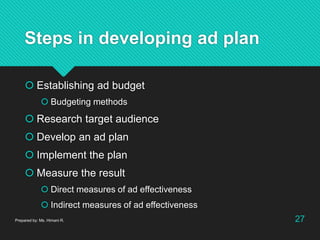
Steps in developing ad plan
 Establishing ad budget
 Budgeting methods
 Research target audience
 Develop an ad plan
 Implement the plan
 Measure the result
 Direct measures of ad effectiveness
 Indirect measures of ad effectiveness
Prepared by: Ms. Himani R. 27
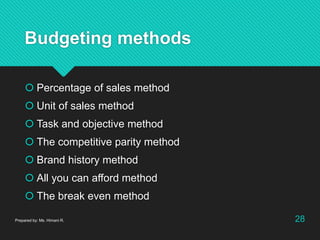
Budgeting methods
 Percentage of sales method
 Unit of sales method
 Task and objective method
 The competitive parity method
 Brand history method
 All you can afford method
 The break even method
Prepared by: Ms. Himani R. 28
Methods to measure the results
 Direct methods of measuring ad effectiveness
 Historical sales method
 Experimental control
 Indirect methods of measuring ad effectiveness
 Exposure to ads
 Attention/recall ads
 Brand awareness
 Comprehension
 Attitude change
 Action
Prepared by: Ms. Himani R.
29
Advertising objectives
 Trial
 Continuity
 Brand switching
 Switchback
Prepared by: Ms. Himani R. 30
DAGMAR Approach
Prepared by: Ms. Himani R.
31
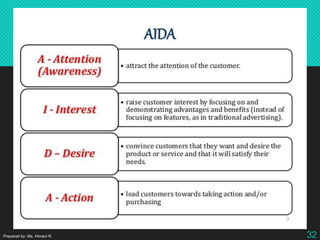
Prepared by: Ms. Himani R. 32
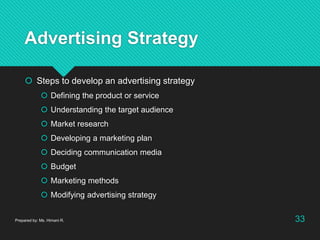
Advertising Strategy
 Steps to develop an advertising strategy
 Defining the product or service
 Understanding the target audience
 Market research
 Developing a marketing plan
 Deciding communication media
 Budget
 Marketing methods
 Modifying advertising strategy
Prepared by: Ms. Himani R. 33
Advertising Campaign-Planning
Process
 Advertising campaign:
 Determine specific goals to be achieved and decide the central
theme and appeals to be stressed to influence buying motives.
 Determine the allocation of funds to advertising as one of the
promotional tools.
 Select the appropriate media of advertising.
 Create suitable advertising message to reach target market in
best possible manner.
 Evaluate the effectiveness of advertising plan or campaign.
Prepared by: Ms. Himani R.
34

Unit 2-Advertising and campaign planning

  • 1.
    ADVERTISING AND CAMPAIGN PLANNING Prepared& presented by: Ms. Himani R.
  • 2.
    Layout Marketing strategy &Situation analysis Advertising plan Advertising objectives DAGMAR approach Advertising strategy Advertising campaign-planning process 2Prepared by: Ms. Himani R.
  • 3.
    Situational Analysis  Asituation analysis includes a thorough examination of internal and external factors affecting a business.  Using market research a situational analysis will define potential customers, projected growth, competitors and a realistic assessment of a business.  5 Cs Analysis  SWOT Analysis  Porter’s Five Force Analysis  PEST 3 Prepared by: Ms. Himani R.
  • 4.
    Continued  Internal Analysis: It is the understanding of strengths and weaknesses within an organization.  It is seen in company culture and image, organizational structure, staff, operational efficiency and capacity, brand awareness, financial resources, etc.  Strengths are positive attributes, which can be tangible or intangible, and are within the control of the organization.  Weaknesses are factors that may hinder the achievement of the desired goal. Prepared by: Ms. Himani R. 4
  • 5.
    Continued  External Analysis: Opportunities and threats are measured as part of an external analysis.  Like market trends, suppliers, partners, customers, competitors, new technology and economic environment.  Opportunities present themselves as attractive factors that can propel or positively influence the organization in some way.  Threats are external factors that could place the organization’s goal at risk. Prepared by: Ms. Himani R. 5
  • 6.
  • 7.
    Strengths & Weaknesses New, innovative product  Quality processes and procedures  Patents  Strong brand names  Good reputation among customers  Cost advantages from proprietary know-how Prepared by: Ms. Himani R. 7  Lack of marketing expertise  Undifferentiated products or services  Poor quality goods or services  Damaged reputation  High cost structure  Lack of access to key distribution channels
  • 8.
    Opportunities & Threats A developing market  Mergers, joint ventures  New market segments  New international markets  Unfulfilled customer need  Arrival of new technologies  Loosening of regulations Prepared by: Ms. Himani R. 8  New competitors  Price wars  Competitor’s innovation  Competitor’s superior access to distribution channels  Shift in consumer preferences  New regulations
  • 9.
  • 10.
    Company  Product lineof the company  Image in the market  Technology and experience  Culture  Goals Prepared by: Ms. Himani R. 10
  • 11.
    Collaborators  Distributors  Suppliers Alliances Prepared by: Ms. Himani R. 11
  • 12.
    Customers  Market size& growth  Market segments  Benefits that consumer is seeking, tangible and intangible.  Motivation behind purchase; value drivers, benefits vs. costs  Decision maker or decision-making unit  Retail channel – where does the consumer actually purchase the product?  Consumer information sources – where does the customer obtain information about the product?  Buying process; e.g. impulse or careful comparison  Frequency of purchase, seasonal factors  Quality purchased at a time  Trends - how consumer needs and preferences change over time Prepared by: Ms. Himani R. 12
  • 13.
    Competitors  Who arethe existing and potential competitors?  What strategic groups can be identified?  What are their sales, share and profits?  What are the growth trends?  What are their strengths, weaknesses and strategies? Prepared by: Ms. Himani R. 13
  • 14.
    Climate (or context) How attractive is the market or industry and its submarkets?  What are the forces reducing profitability in the market, entry and exit barriers, growth projections, cost structures, and profitability prospects?  What are the alternative distribution channels and their relative strengths?  What industry trends are significant to strategy?  What are the current and future key success factors?  What environmental threats, opportunities, and trends exist?  What are the major strategic uncertainties and information need areas?  What scenarios can be conceived? Prepared by: Ms. Himani R. 14
  • 15.
    Porter’s Five ForceModel Prepared by: Ms. Himani R. 15
  • 16.
    Continued  Identifies andanalyzes five competitive forces that shape every industry, and helps determine an industry's weaknesses and strengths.  Porter identified five undeniable forces that play a part in shaping every market and industry in the world.  The forces are frequently used to measure competition intensity, attractiveness and profitability of an industry or market. Prepared by: Ms. Himani R. 16
  • 17.
  • 18.
  • 19.
  • 20.
  • 21.
  • 22.
  • 23.
  • 24.
  • 25.
    Prepared by: Ms.Himani R. 25
  • 26.
    Advertising plan  Adplan focuses on communication goals.  An advertising plan matches the right audience to the right message and presents it in the right medium.  Components of ad plan:  Targeting the audience: whom are you trying to reach  Message strategy: what do you say to them  Media strategy: when & where will you reach them Prepared by: Ms. Himani R. 26
  • 27.
    Steps in developingad plan  Establishing ad budget  Budgeting methods  Research target audience  Develop an ad plan  Implement the plan  Measure the result  Direct measures of ad effectiveness  Indirect measures of ad effectiveness Prepared by: Ms. Himani R. 27
  • 28.
    Budgeting methods  Percentageof sales method  Unit of sales method  Task and objective method  The competitive parity method  Brand history method  All you can afford method  The break even method Prepared by: Ms. Himani R. 28
  • 29.
    Methods to measurethe results  Direct methods of measuring ad effectiveness  Historical sales method  Experimental control  Indirect methods of measuring ad effectiveness  Exposure to ads  Attention/recall ads  Brand awareness  Comprehension  Attitude change  Action Prepared by: Ms. Himani R. 29
  • 30.
    Advertising objectives  Trial Continuity  Brand switching  Switchback Prepared by: Ms. Himani R. 30
  • 31.
  • 32.
    Prepared by: Ms.Himani R. 32
  • 33.
    Advertising Strategy  Stepsto develop an advertising strategy  Defining the product or service  Understanding the target audience  Market research  Developing a marketing plan  Deciding communication media  Budget  Marketing methods  Modifying advertising strategy Prepared by: Ms. Himani R. 33
  • 34.
    Advertising Campaign-Planning Process  Advertisingcampaign:  Determine specific goals to be achieved and decide the central theme and appeals to be stressed to influence buying motives.  Determine the allocation of funds to advertising as one of the promotional tools.  Select the appropriate media of advertising.  Create suitable advertising message to reach target market in best possible manner.  Evaluate the effectiveness of advertising plan or campaign. Prepared by: Ms. Himani R. 34
Editor's Notes

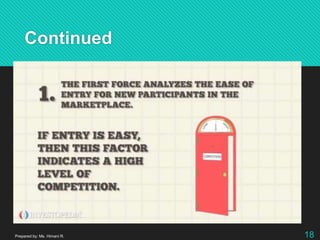
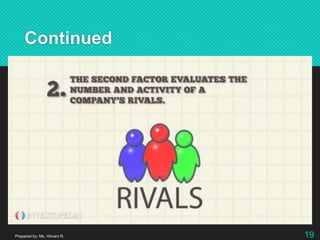
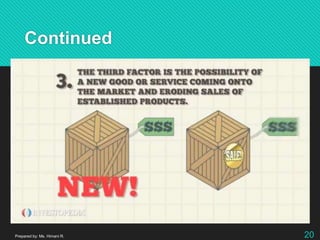
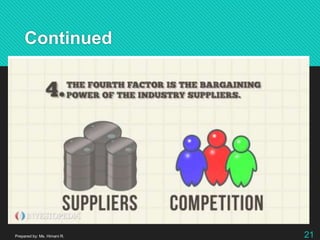
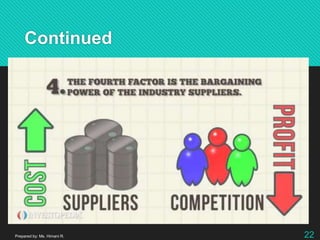
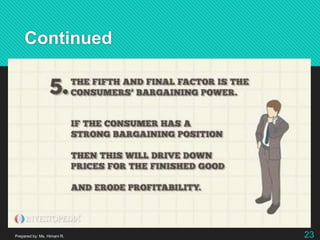
  • #16 Competition in the Industry The importance of this force is the number of competitors and their ability to threaten a company. The larger the number of competitors, along with the number of equivalent products and services they offer, dictates the power of a company. Suppliers and buyers seek out a company's competition if they are unable to receive a suitable deal. Potential of New Entrants Into an Industry A company's power is also affected by the force of new entrants into its market. The less money and time it costs for a competitor to enter a company's market and be an effective competitor, the more a company's position may be significantly weakened. Power of Suppliers This force addresses how easily suppliers can drive up the price of goods and services. It is affected by the number of suppliers of key aspects of a good or service, how unique these aspects are and how much it would cost a company to switch from one supplier to another. The fewer number of suppliers, and the more a company depends upon a supplier, the more power a supplier holds. Power of Customers This specifically deals with the ability customers have to drive prices down. It is affected by how many buyers, or customers, a company has, how significant each customer is and how much it would cost a customer to switch from one company to another. The smaller and more powerful a client base, the more power it holds. Threat of Substitutes Competitor substitutions that can be used in place of a company's products or services pose a threat. For example, if customers rely on a company to provide a tool or service that can be substituted with another tool or service or by performing the task manually, and this substitution is fairly easy and of low cost, a company's power can be weakened.