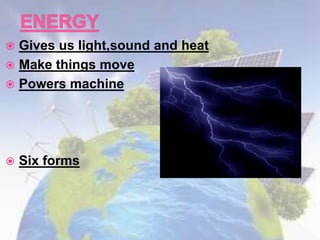
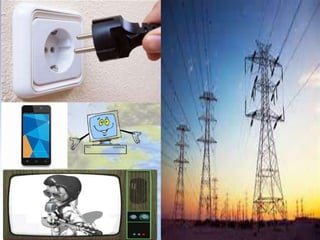
 Gives us light,sound and heat
 Make things move
 Powers machine
 Six forms
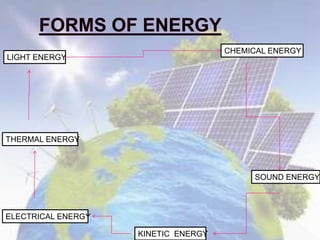
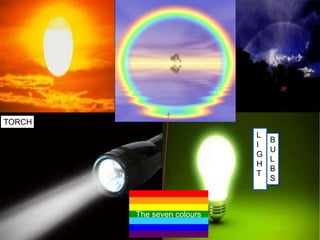
LIGHT ENERGY
CHEMICAL ENERGY
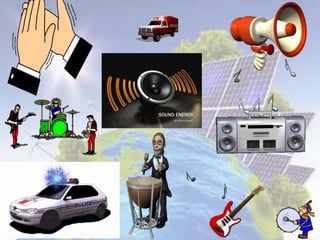
SOUND ENERGY
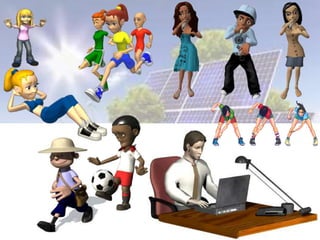
KINETIC ENERGY
ELECTRICAL ENERGY
THERMAL ENERGY
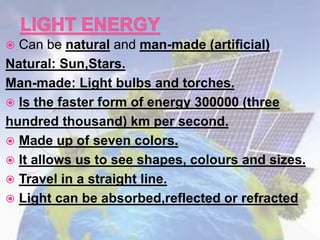
 Can be natural and man-made (artificial)
Natural: Sun,Stars.
Man-made: Light bulbs and torches.
 Is the faster form of energy 300000 (three
hundred thousand) km per second.
 Made up of seven colors.
 It allows us to see shapes, colours and sizes.
 Travel in a straight line.
 Light can be absorbed,reflected or refracted
TORCH
L
I
G
H
T
B
U
L
B
S
The seven colours
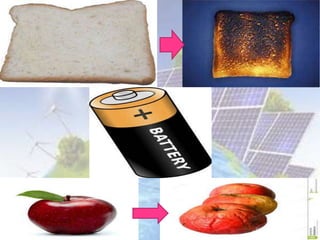
 Released when a chemical reaction occurs
 Exmples:batteries and food.
 Vibration can travel in any dirrections
from the sound.
 Can travel throught gases, liquids and solids
but not througth vaccum.
Large vibrationsloud sounds
Small vibrationssoft sounds
 All that move
 Examples:moving car,windsurfer,bike in
movement……….
 Used to power machines.
 Can be transformed into ligth,sound,heat and
movement.
 Examples:burning fossil fuels,sundlight,wind,
water and biomass,nuclear power station.
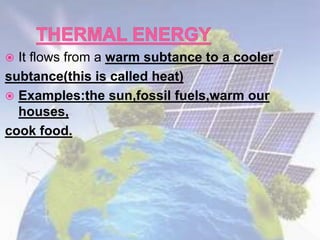
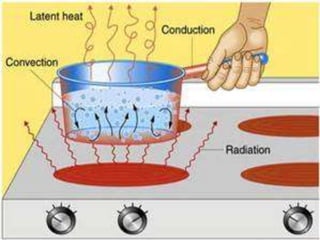
 It flows from a warm subtance to a cooler
subtance(this is called heat)
 Examples:the sun,fossil fuels,warm our
houses,
cook food.
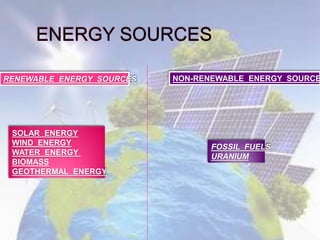
RENEWABLE ENERGY SOURCES NON-RENEWABLE ENERGY SOURCE
SOLAR ENERGY
WIND ENERGY
WATER ENERGY
BIOMASS
GEOTHERMAL ENERGY
FOSSIL FUELS
URANIUM
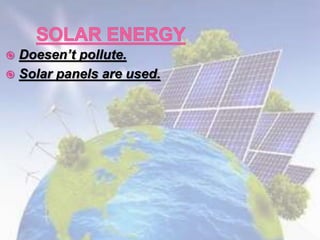
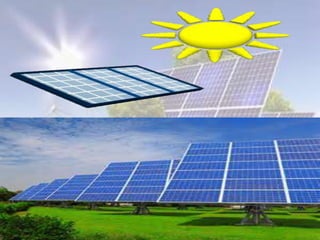
 Doesen’t pollute.
 Solar panels are used.
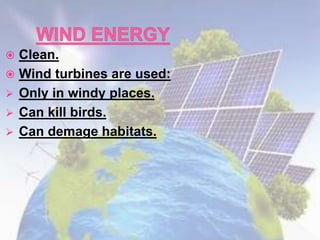
 Clean.
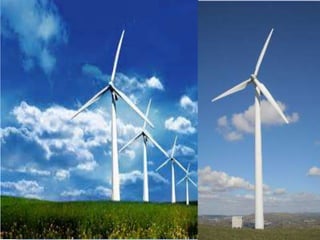
 Wind turbines are used:
 Only in windy places.
 Can kill birds.
 Can demage habitats.
 Doesen’t pollute.
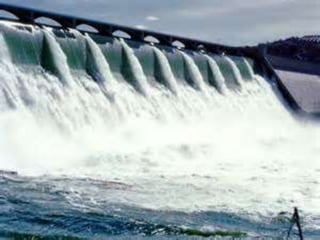
 Dams are used:
 Damage habitats.
 Cause biodiversity loss.
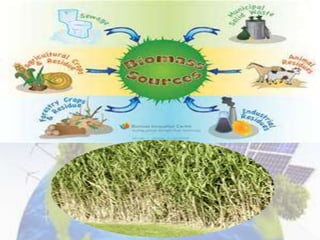
 Organic material derived from livings
things(wood,dried vegetion,food waste).
 Causes air pollution.
 Biomass is burnedsteam produced turns a
turbineelectricity.
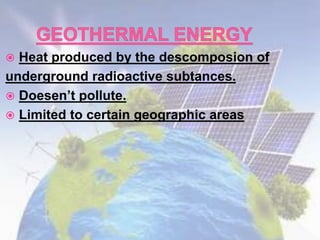
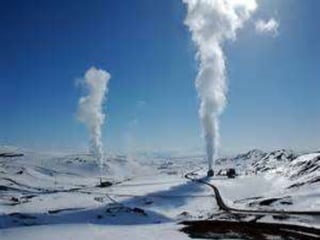
 Heat produced by the descomposion of
underground radioactive subtances.
 Doesen’t pollute.
 Limited to certain geographic areas
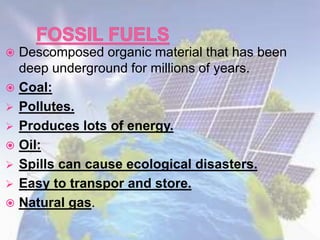
 Descomposed organic material that has been
deep underground for millions of years.
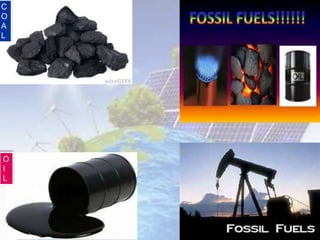
 Coal:
 Pollutes.
 Produces lots of energy.
 Oil:
 Spills can cause ecological disasters.
 Easy to transpor and store.
 Natural gas.
C
O
A
L
O
I
L
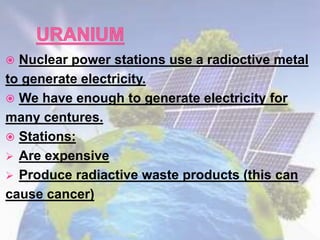
 Nuclear power stations use a radioctive metal
to generate electricity.
 We have enough to generate electricity for
many centures.
 Stations:
 Are expensive
 Produce radiactive waste products (this can
cause cancer)
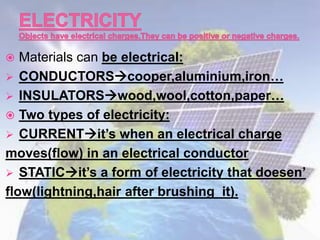
 Materials can be electrical:
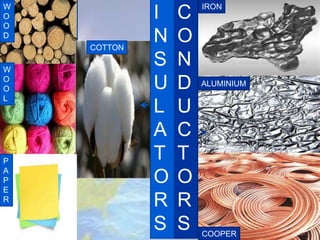
 CONDUCTORScooper,aluminium,iron…
 INSULATORSwood,wool,cotton,paper…
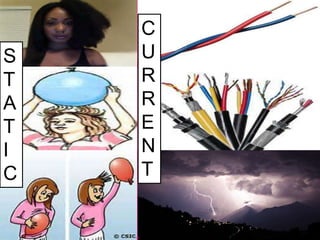
 Two types of electricity:
 CURRENTit’s when an electrical charge
moves(flow) in an electrical conductor
 STATICit’s a form of electricity that doesen’
flow(lightning,hair after brushing it).
C
O
N
D
U
C
T
O
R
S
I
N
S
U
L
A
T
O
R
S
W
O
O
D
W
O
O
L
P
A
P
E
R
COTTON
IRON
ALUMINIUM
COOPER
S
T
A
T
I
C
C
U
R
R
E
N
T
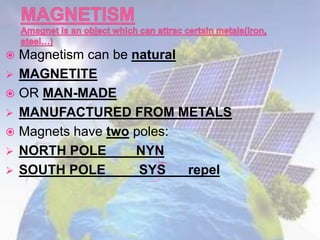
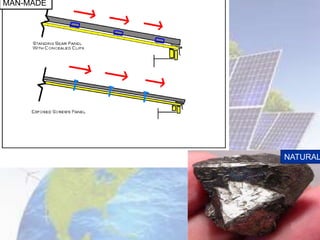
 Magnetism can be natural
 MAGNETITE
 OR MAN-MADE
 MANUFACTURED FROM METALS
 Magnets have two poles:
 NORTH POLE NYN
 SOUTH POLE SYS repel
NATURAL
MAN-MADE

Energy

  • 2.
     Gives uslight,sound and heat  Make things move  Powers machine  Six forms
  • 3.
    LIGHT ENERGY CHEMICAL ENERGY SOUNDENERGY KINETIC ENERGY ELECTRICAL ENERGY THERMAL ENERGY
  • 4.
     Can benatural and man-made (artificial) Natural: Sun,Stars. Man-made: Light bulbs and torches.  Is the faster form of energy 300000 (three hundred thousand) km per second.  Made up of seven colors.  It allows us to see shapes, colours and sizes.  Travel in a straight line.  Light can be absorbed,reflected or refracted
  • 5.
  • 6.
     Released whena chemical reaction occurs  Exmples:batteries and food.
  • 8.
     Vibration cantravel in any dirrections from the sound.  Can travel throught gases, liquids and solids but not througth vaccum. Large vibrationsloud sounds Small vibrationssoft sounds
  • 10.
     All thatmove  Examples:moving car,windsurfer,bike in movement……….
  • 12.
     Used topower machines.  Can be transformed into ligth,sound,heat and movement.  Examples:burning fossil fuels,sundlight,wind, water and biomass,nuclear power station.
  • 14.
     It flowsfrom a warm subtance to a cooler subtance(this is called heat)  Examples:the sun,fossil fuels,warm our houses, cook food.
  • 16.
    RENEWABLE ENERGY SOURCESNON-RENEWABLE ENERGY SOURCE SOLAR ENERGY WIND ENERGY WATER ENERGY BIOMASS GEOTHERMAL ENERGY FOSSIL FUELS URANIUM
  • 18.
     Doesen’t pollute. Solar panels are used.
  • 20.
     Clean.  Windturbines are used:  Only in windy places.  Can kill birds.  Can demage habitats.
  • 22.
     Doesen’t pollute. Dams are used:  Damage habitats.  Cause biodiversity loss.
  • 24.
     Organic materialderived from livings things(wood,dried vegetion,food waste).  Causes air pollution.  Biomass is burnedsteam produced turns a turbineelectricity.
  • 26.
     Heat producedby the descomposion of underground radioactive subtances.  Doesen’t pollute.  Limited to certain geographic areas
  • 29.
     Descomposed organicmaterial that has been deep underground for millions of years.  Coal:  Pollutes.  Produces lots of energy.  Oil:  Spills can cause ecological disasters.  Easy to transpor and store.  Natural gas.
  • 30.
  • 31.
     Nuclear powerstations use a radioctive metal to generate electricity.  We have enough to generate electricity for many centures.  Stations:  Are expensive  Produce radiactive waste products (this can cause cancer)
  • 33.
     Materials canbe electrical:  CONDUCTORScooper,aluminium,iron…  INSULATORSwood,wool,cotton,paper…  Two types of electricity:  CURRENTit’s when an electrical charge moves(flow) in an electrical conductor  STATICit’s a form of electricity that doesen’ flow(lightning,hair after brushing it).
  • 34.
  • 35.
  • 36.
     Magnetism canbe natural  MAGNETITE  OR MAN-MADE  MANUFACTURED FROM METALS  Magnets have two poles:  NORTH POLE NYN  SOUTH POLE SYS repel
  • 37.