OPV 222
SUPPORTIVE LEARNING
ENVIRONMENTS
UNIT 1.2. ASSET-BASED
APPROACH
LEARNING OUTCOMES
• Describe the fundamental characteristics of the asset-based
approach;
• Integrate and apply the asset-based approach within the context of
the bio-ecological approach in order to support learners in your
class;
• Demonstrate how social networking can be utilised as an asset in
creating a supportive learning environment in the classroom.
• Utilise asset mapping in creating a supportive learning environment
in the classroom.
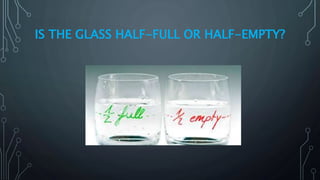
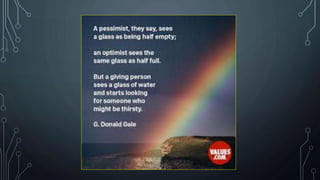
IS THE GLASS HALF-FULL OR HALF-EMPTY?
ASSET-BASED APPROACH
An approach that focusses on the assets, capacities,
strengths and resources that are available but have
not yet been utilised
These assets and capacities are identified in order to
utilise them to empower individuals, families and
communities
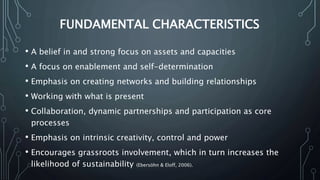
FUNDAMENTAL CHARACTERISTICS
• A belief in and strong focus on assets and capacities
• A focus on enablement and self-determination
• Emphasis on creating networks and building relationships
• Working with what is present
• Collaboration, dynamic partnerships and participation as core
processes
• Emphasis on intrinsic creativity, control and power
• Encourages grassroots involvement, which in turn increases the
likelihood of sustainability (Ebersöhn & Eloff, 2006).
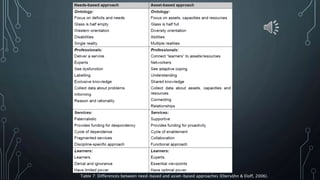
Table 7: Differences between need-based and asset-based approaches (Ebersöhn & Eloff, 2006).
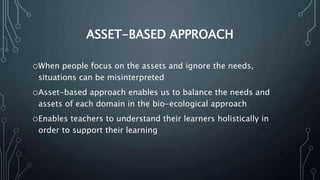
ASSET-BASED APPROACH
oWhen people focus on the assets and ignore the needs,
situations can be misinterpreted
oAsset-based approach enables us to balance the needs and
assets of each domain in the bio-ecological approach
oEnables teachers to understand their learners holistically in
order to support their learning
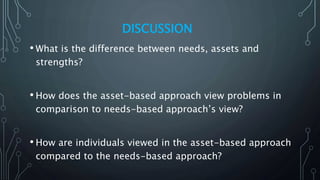
DISCUSSION
• What is the difference between needs, assets and
strengths?
• How does the asset-based approach view problems in
comparison to needs-based approach’s view?
• How are individuals viewed in the asset-based approach
compared to the needs-based approach?
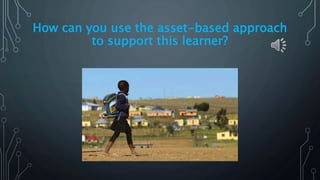
How can you use the asset-based approach
to support this learner?
CASE STUDY
• Thandi is 8 years old, she lives with her grandmother and three
older cousins in a township in Gauteng. Her grandmother is the
breadwinner of the family, however she has not been able to work
because she has been sick. The family has been relying on social
grants and one of the cousin’s part-time income.
• There has been an increase in cable theft and illegal connection of
electricity in the neighbourhood. This has led to no electricity in
Thandi’s neighbourhood.
• Thandi struggles to communicate in English. Her family
communicates with her in isiZulu only. In class, her peers laugh at
her when she tries to speak in English.
• Thandi loves to draw and play with dolls. She always comes to
school with her homework completed, although it often done
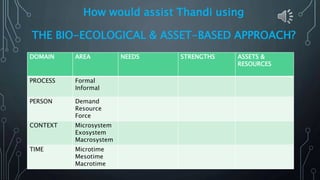
How would assist Thandi using
THE BIO-ECOLOGICAL & ASSET-BASED APPROACH?
DOMAIN AREA NEEDS STRENGTHS ASSETS &
RESOURCES
PROCESS Formal
Informal
PERSON Demand
Resource
Force
CONTEXT Microsystem
Exosystem
Macrosystem
TIME Microtime
Mesotime
Macrotime
ASSET-MOBILISATION
• The use of assets that are available within in an individual or
system (but not necessarily utilised as yet) for support.
• Developing relationships between people and organisations so
that they can support each other
• Considering Thandi’s needs, assets, resources and
strengths, how would you provide support and
empower her?
SOCIAL-NETWORKING:
AN ASSEST IN THE CLASSROOM
• Opportunity to incorporate real-world experiences into the
classroom.
Facebook: Create a page for birthday wishes; inspirational
quotes etc
YouTube: Lesson videos, practical videos related to lesson
content
Linkedin: Build your CV and connect with other professionals
Twitter: Classroom tips, notices & updates; video or article
links
UNIT 1.2. Asset-based Approach (1) (1).pptx

UNIT 1.2. Asset-based Approach (1) (1).pptx

  • 1.
  • 2.
    LEARNING OUTCOMES • Describethe fundamental characteristics of the asset-based approach; • Integrate and apply the asset-based approach within the context of the bio-ecological approach in order to support learners in your class; • Demonstrate how social networking can be utilised as an asset in creating a supportive learning environment in the classroom. • Utilise asset mapping in creating a supportive learning environment in the classroom.
  • 3.
    IS THE GLASSHALF-FULL OR HALF-EMPTY?
  • 4.
    ASSET-BASED APPROACH An approachthat focusses on the assets, capacities, strengths and resources that are available but have not yet been utilised These assets and capacities are identified in order to utilise them to empower individuals, families and communities
  • 5.
    FUNDAMENTAL CHARACTERISTICS • Abelief in and strong focus on assets and capacities • A focus on enablement and self-determination • Emphasis on creating networks and building relationships • Working with what is present • Collaboration, dynamic partnerships and participation as core processes • Emphasis on intrinsic creativity, control and power • Encourages grassroots involvement, which in turn increases the likelihood of sustainability (Ebersöhn & Eloff, 2006).
  • 6.
    Table 7: Differencesbetween need-based and asset-based approaches (Ebersöhn & Eloff, 2006).
  • 7.
    ASSET-BASED APPROACH oWhen peoplefocus on the assets and ignore the needs, situations can be misinterpreted oAsset-based approach enables us to balance the needs and assets of each domain in the bio-ecological approach oEnables teachers to understand their learners holistically in order to support their learning
  • 8.
    DISCUSSION • What isthe difference between needs, assets and strengths? • How does the asset-based approach view problems in comparison to needs-based approach’s view? • How are individuals viewed in the asset-based approach compared to the needs-based approach?
  • 9.
    How can youuse the asset-based approach to support this learner?
  • 10.
    CASE STUDY • Thandiis 8 years old, she lives with her grandmother and three older cousins in a township in Gauteng. Her grandmother is the breadwinner of the family, however she has not been able to work because she has been sick. The family has been relying on social grants and one of the cousin’s part-time income. • There has been an increase in cable theft and illegal connection of electricity in the neighbourhood. This has led to no electricity in Thandi’s neighbourhood. • Thandi struggles to communicate in English. Her family communicates with her in isiZulu only. In class, her peers laugh at her when she tries to speak in English. • Thandi loves to draw and play with dolls. She always comes to school with her homework completed, although it often done
  • 11.
    How would assistThandi using THE BIO-ECOLOGICAL & ASSET-BASED APPROACH? DOMAIN AREA NEEDS STRENGTHS ASSETS & RESOURCES PROCESS Formal Informal PERSON Demand Resource Force CONTEXT Microsystem Exosystem Macrosystem TIME Microtime Mesotime Macrotime
  • 12.
    ASSET-MOBILISATION • The useof assets that are available within in an individual or system (but not necessarily utilised as yet) for support. • Developing relationships between people and organisations so that they can support each other • Considering Thandi’s needs, assets, resources and strengths, how would you provide support and empower her?
  • 13.
    SOCIAL-NETWORKING: AN ASSEST INTHE CLASSROOM • Opportunity to incorporate real-world experiences into the classroom. Facebook: Create a page for birthday wishes; inspirational quotes etc YouTube: Lesson videos, practical videos related to lesson content Linkedin: Build your CV and connect with other professionals Twitter: Classroom tips, notices & updates; video or article links