Developmentally Appropriate Practice:
Knowledge & Application
Prepared/Formatted by: Dr. Rhonda Moore-Jackson
For use with: Effective Practices in Early Childhood Education:
Building a Foundation
Chapter 3
Second Edition
Sue Bredekamp
What is Developmentally Appropriate Practice?
• Teaching to children’s:
• Ages
• Experiences
• Capabilities
• Interests
• Based in knowledge of child development and learning
• Concept of “developmentally appropriate” focuses on:
• Age-related and individual human distinction
• Materials utilized
• Learning experiences
• Expectations for children
NAEYC Position Statement on
Developmentally Appropriate Practice
• First published in 1987
• Describes principles and guidelines for teaching birth - age 8
• Includes recommended practices for varied age groups
• Revised in 1997, 2009
• Revisions reflect ongoing concerns
• Learning expectations
• Curriculum
• Teaching practices and decision-making
• Role of culture and language
• Inclusion of children with disabilities
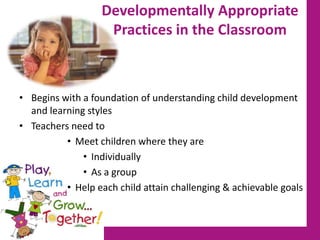
Developmentally Appropriate
Practices in the Classroom
• Begins with a foundation of understanding child development
and learning styles
• Teachers need to
• Meet children where they are
• Individually
• As a group
• Help each child attain challenging & achievable goals
Observe children’s engagement
with materials, activities, and
people
Plan curriculum and adapt
teaching strategies
Assess what children already
know and their interests
Keep teaching goals in mind
MEETING
CHILDREN
WHERE THEY ARE
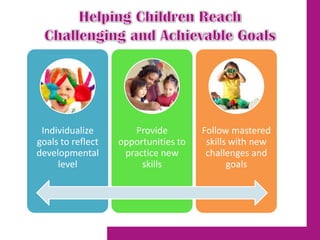
Individualize
goals to reflect
developmental
level
Provide
opportunities to
practice new
skills
Follow mastered
skills with new
challenges and
goals
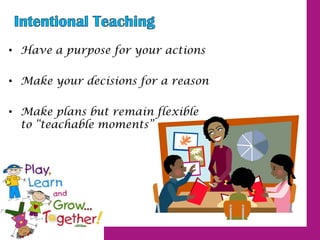
• Have a purpose for your actions
• Make your decisions for a reason
• Make plans but remain flexible
to “teachable moments”
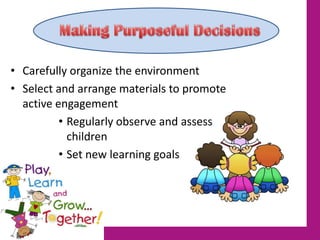
• Carefully organize the environment
• Select and arrange materials to promote
active engagement
• Regularly observe and assess
children
• Set new learning goals
• Reflect on decisions
• Gather evidence of children’s development
• Discuss practices with colleagues and families
• Modify practices to meet children’s needs and help
them make continued learning progress
• Result of careful advance consideration and planning
• Learning experiences
• Planning curriculum
• Setting up the physical environment
• Immediate decisions
• Support child’s learning and developmental progress
– Creating a learning community
– Enhancing learning and development
– Planning curriculum to achieve goals
– Assessing children’s learning and development
– Establishing reciprocal relationships with families
• Children’s care and education are equally
important
• Children learn through positive relationships with
adults and other children
• Learning contexts are important
• Plan learning experiences and environment
• Use a variety of teaching strategies
• Use various learning contexts
• Use scientifically-based
curriculum
• Adapt curriculum to
needs, strengths, and
interests of children
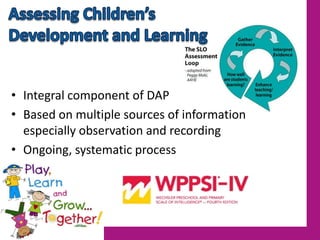
• Integral component of DAP
• Based on multiple sources of information
especially observation and recording
• Ongoing, systematic process
Build Relationships with Families and
Communities
• Reciprocal Relationships
• Includes mutual
respect, trust, cooperati
on, and shared responsibility
• Requires regular, open communication
• Willingness to negotiate differences
The Teacher’s Role in Context
• Make useful decisions based on a broad base of information
• Five interrelated dimensions:
(1) creating a caring community of learners
(2) teaching to enhance learning and development
(3) planning curriculum to meet important goals
(4) assessing children’s learning and development
(5) establishing reciprocal relationships with families.
• Moving from Either/Or to Both/And thinking
• Encourages complex thinking where several
answers could be possible
• Perspective and views change
• What works
• Child-initiated and teacher-
guided experiences
• Active learning
• Problem-solving
• Positive social relationships
• Basis for DAP
Examining the Research
Evidence of Research-based
DAP on Learning
• Higher academic achievement
• Positive relationships to
• School readiness
• Cognitive development
Continued discussion
and debate on
Increased demands for
accountability
Culturally and
developmentally appropriate
practices
Closing the achievement gap
Next Step
Now that you have reviewed the
Power Point presentation and the
associated reading material, proceed
to Module 5A and complete the
assessment.

Developmentally Appropriate Practice: Knowledge & Application

  • 1.
    Developmentally Appropriate Practice: Knowledge& Application Prepared/Formatted by: Dr. Rhonda Moore-Jackson For use with: Effective Practices in Early Childhood Education: Building a Foundation Chapter 3 Second Edition Sue Bredekamp
  • 2.
    What is DevelopmentallyAppropriate Practice? • Teaching to children’s: • Ages • Experiences • Capabilities • Interests • Based in knowledge of child development and learning • Concept of “developmentally appropriate” focuses on: • Age-related and individual human distinction • Materials utilized • Learning experiences • Expectations for children
  • 3.
    NAEYC Position Statementon Developmentally Appropriate Practice • First published in 1987 • Describes principles and guidelines for teaching birth - age 8 • Includes recommended practices for varied age groups • Revised in 1997, 2009 • Revisions reflect ongoing concerns • Learning expectations • Curriculum • Teaching practices and decision-making • Role of culture and language • Inclusion of children with disabilities
  • 4.
    Developmentally Appropriate Practices inthe Classroom • Begins with a foundation of understanding child development and learning styles • Teachers need to • Meet children where they are • Individually • As a group • Help each child attain challenging & achievable goals
  • 5.
    Observe children’s engagement withmaterials, activities, and people Plan curriculum and adapt teaching strategies Assess what children already know and their interests Keep teaching goals in mind MEETING CHILDREN WHERE THEY ARE
  • 6.
    Individualize goals to reflect developmental level Provide opportunitiesto practice new skills Follow mastered skills with new challenges and goals
  • 7.
    • Have apurpose for your actions • Make your decisions for a reason • Make plans but remain flexible to “teachable moments”
  • 8.
    • Carefully organizethe environment • Select and arrange materials to promote active engagement • Regularly observe and assess children • Set new learning goals
  • 9.
    • Reflect ondecisions • Gather evidence of children’s development • Discuss practices with colleagues and families • Modify practices to meet children’s needs and help them make continued learning progress
  • 10.
    • Result ofcareful advance consideration and planning • Learning experiences • Planning curriculum • Setting up the physical environment • Immediate decisions • Support child’s learning and developmental progress
  • 11.
    – Creating alearning community – Enhancing learning and development – Planning curriculum to achieve goals – Assessing children’s learning and development – Establishing reciprocal relationships with families
  • 12.
    • Children’s careand education are equally important • Children learn through positive relationships with adults and other children • Learning contexts are important
  • 13.
    • Plan learningexperiences and environment • Use a variety of teaching strategies • Use various learning contexts
  • 14.
    • Use scientifically-based curriculum •Adapt curriculum to needs, strengths, and interests of children
  • 15.
    • Integral componentof DAP • Based on multiple sources of information especially observation and recording • Ongoing, systematic process
  • 16.
    Build Relationships withFamilies and Communities • Reciprocal Relationships • Includes mutual respect, trust, cooperati on, and shared responsibility • Requires regular, open communication • Willingness to negotiate differences
  • 17.
    The Teacher’s Rolein Context • Make useful decisions based on a broad base of information • Five interrelated dimensions: (1) creating a caring community of learners (2) teaching to enhance learning and development (3) planning curriculum to meet important goals (4) assessing children’s learning and development (5) establishing reciprocal relationships with families.
  • 18.
    • Moving fromEither/Or to Both/And thinking • Encourages complex thinking where several answers could be possible • Perspective and views change
  • 19.
    • What works •Child-initiated and teacher- guided experiences • Active learning • Problem-solving • Positive social relationships • Basis for DAP Examining the Research
  • 20.
    Evidence of Research-based DAPon Learning • Higher academic achievement • Positive relationships to • School readiness • Cognitive development
  • 21.
  • 22.
  • 23.
  • 24.
  • 25.
    Next Step Now thatyou have reviewed the Power Point presentation and the associated reading material, proceed to Module 5A and complete the assessment.