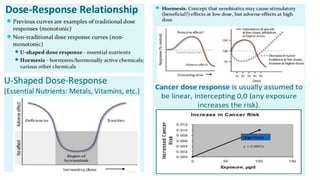
Dose-Response Relationship
Efficacy and Toxicity evaluation,
Dose-response analysis,
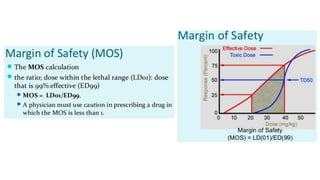
Margin of safety
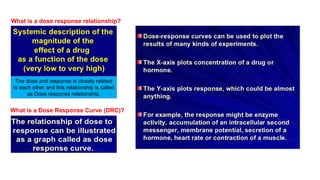
What is a dose response relationship?
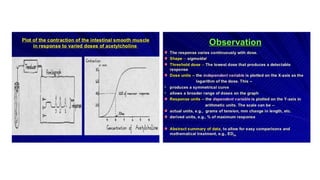
What is a Dose Response Curve (DRC)?
The dose and response is closely related
to each other and this relationship is called
as Dose response relationship.
❑ ‘Dose’ is the amount of drug to administered to produce a certain degree of
response in a patient.
❑ Dose- Response relationship has two components:
1. Dose-plasma concentration relationship
2. Plasma concentration-response relationship
❑ ‘Response’: The change in activity of the cell or tissue produce by the
selected dose of the drug is called the response.
Dose Response Curve (DRC):
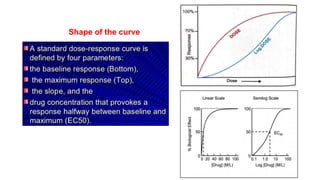
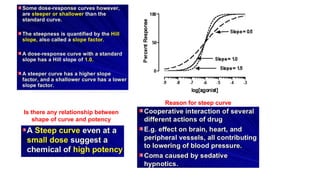
Shape of the curve
Is there any relationship between
shape of curve and potency
Reason for steep curve
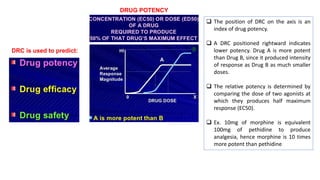
DRC is used to predict:
DRUG POTENCY
❑ The position of DRC on the axis is an
index of drug potency.
❑ A DRC positioned rightward indicates
lower potency. Drug A is more potent
than Drug B, since it produced intensity
of response as Drug B as much smaller
doses.
❑ The relative potency is determined by
comparing the dose of two agonists at
which they produces half maximum
response (EC50).
❑ Ex. 10mg of morphine is equivalent
100mg of pethidine to produce
analgesia, hence morphine is 10 times
more potent than pethidine
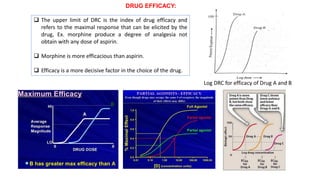
❑ The upper limit of DRC is the index of drug efficacy and
refers to the maximal response that can be elicited by the
drug, Ex. morphine produce a degree of analgesia not
obtain with any dose of aspirin.
❑ Morphine is more efficacious than aspirin.
❑ Efficacy is a more decisive factor in the choice of the drug.
DRUG EFFICACY:
Log DRC for efficacy of Drug A and B
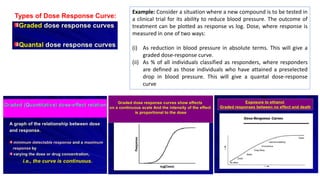
Types of Dose Response Curve:
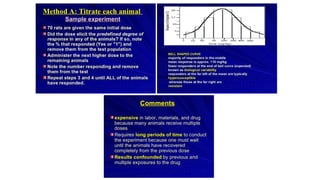
Example: Consider a situation where a new compound is to be tested in
a clinical trial for its ability to reduce blood pressure. The outcome of
treatment can be plotted as response vs log. Dose, where response is
measured in one of two ways:
(i) As reduction in blood pressure in absolute terms. This will give a
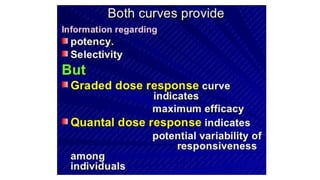
graded dose-response curve.
(ii) As % of all individuals classified as responders, where responders
are defined as those individuals who have attained a preselected
drop in blood pressure. This will give a quantal dose-response
curve
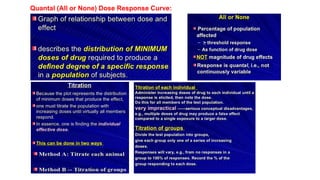
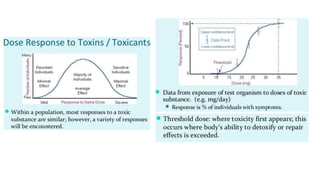
Quantal (All or None) Dose Response Curve:
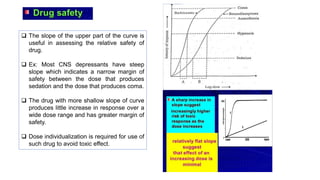
❑ The slope of the upper part of the curve is
useful in assessing the relative safety of
drug.
❑ Ex: Most CNS depressants have steep
slope which indicates a narrow margin of
safety between the dose that produces
sedation and the dose that produces coma.
❑ The drug with more shallow slope of curve
produces little increase in response over a
wide dose range and has greater margin of
safety.
❑ Dose individualization is required for use of
such drug to avoid toxic effect.
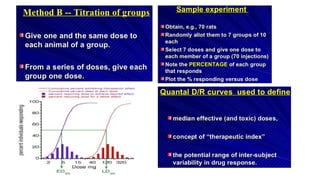
Therapeutic Index:
❑ A statement of relative safety of a drug.
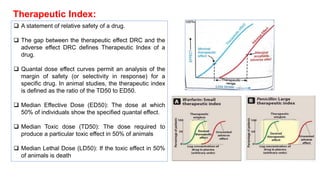
❑ The gap between the therapeutic effect DRC and the
adverse effect DRC defines Therapeutic Index of a
drug.
❑ Quantal dose effect curves permit an analysis of the
margin of safety (or selectivity in response) for a
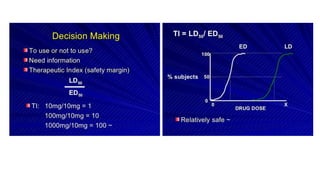
specific drug. In animal studies, the therapeutic index
is defined as the ratio of the TD50 to ED50.
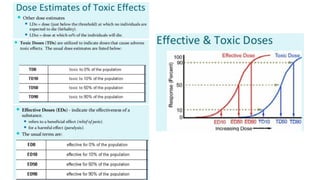
❑ Median Effective Dose (ED50): The dose at which
50% of individuals show the specified quantal effect.
❑ Median Toxic dose (TD50): The dose required to
produce a particular toxic effect in 50% of animals
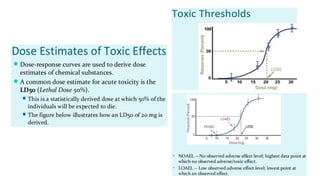
❑ Median Lethal Dose (LD50): If the toxic effect in 50%
of animals is death
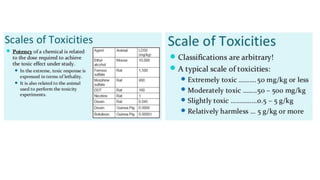
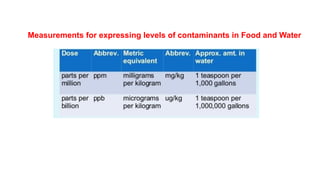
Measurements for expressing levels of contaminants in Food and Water
THANK YOU

Unit 10 +11 dose response relationship (PC- 520)

  • 1.
    Dose-Response Relationship Efficacy andToxicity evaluation, Dose-response analysis, Margin of safety
  • 2.
    What is adose response relationship? What is a Dose Response Curve (DRC)? The dose and response is closely related to each other and this relationship is called as Dose response relationship.
  • 3.
    ❑ ‘Dose’ isthe amount of drug to administered to produce a certain degree of response in a patient. ❑ Dose- Response relationship has two components: 1. Dose-plasma concentration relationship 2. Plasma concentration-response relationship ❑ ‘Response’: The change in activity of the cell or tissue produce by the selected dose of the drug is called the response. Dose Response Curve (DRC):
  • 4.
  • 5.
    Is there anyrelationship between shape of curve and potency Reason for steep curve
  • 6.
    DRC is usedto predict: DRUG POTENCY ❑ The position of DRC on the axis is an index of drug potency. ❑ A DRC positioned rightward indicates lower potency. Drug A is more potent than Drug B, since it produced intensity of response as Drug B as much smaller doses. ❑ The relative potency is determined by comparing the dose of two agonists at which they produces half maximum response (EC50). ❑ Ex. 10mg of morphine is equivalent 100mg of pethidine to produce analgesia, hence morphine is 10 times more potent than pethidine
  • 7.
    ❑ The upperlimit of DRC is the index of drug efficacy and refers to the maximal response that can be elicited by the drug, Ex. morphine produce a degree of analgesia not obtain with any dose of aspirin. ❑ Morphine is more efficacious than aspirin. ❑ Efficacy is a more decisive factor in the choice of the drug. DRUG EFFICACY: Log DRC for efficacy of Drug A and B
  • 8.
    Types of DoseResponse Curve: Example: Consider a situation where a new compound is to be tested in a clinical trial for its ability to reduce blood pressure. The outcome of treatment can be plotted as response vs log. Dose, where response is measured in one of two ways: (i) As reduction in blood pressure in absolute terms. This will give a graded dose-response curve. (ii) As % of all individuals classified as responders, where responders are defined as those individuals who have attained a preselected drop in blood pressure. This will give a quantal dose-response curve
  • 10.
    Quantal (All orNone) Dose Response Curve:
  • 14.
    ❑ The slopeof the upper part of the curve is useful in assessing the relative safety of drug. ❑ Ex: Most CNS depressants have steep slope which indicates a narrow margin of safety between the dose that produces sedation and the dose that produces coma. ❑ The drug with more shallow slope of curve produces little increase in response over a wide dose range and has greater margin of safety. ❑ Dose individualization is required for use of such drug to avoid toxic effect.
  • 15.
    Therapeutic Index: ❑ Astatement of relative safety of a drug. ❑ The gap between the therapeutic effect DRC and the adverse effect DRC defines Therapeutic Index of a drug. ❑ Quantal dose effect curves permit an analysis of the margin of safety (or selectivity in response) for a specific drug. In animal studies, the therapeutic index is defined as the ratio of the TD50 to ED50. ❑ Median Effective Dose (ED50): The dose at which 50% of individuals show the specified quantal effect. ❑ Median Toxic dose (TD50): The dose required to produce a particular toxic effect in 50% of animals ❑ Median Lethal Dose (LD50): If the toxic effect in 50% of animals is death
  • 24.
    Measurements for expressinglevels of contaminants in Food and Water
  • 25.