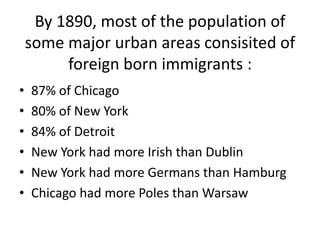
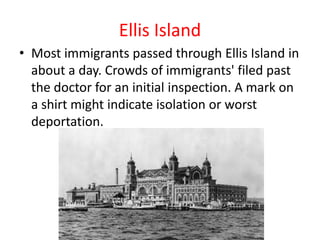
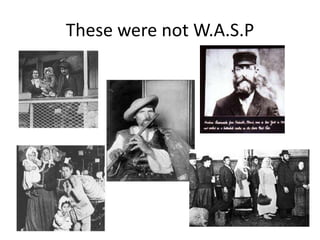
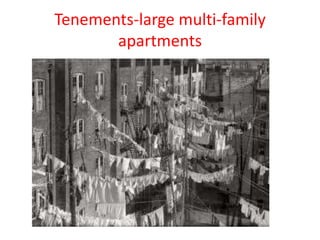
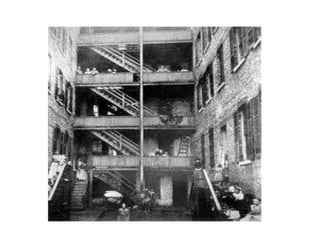
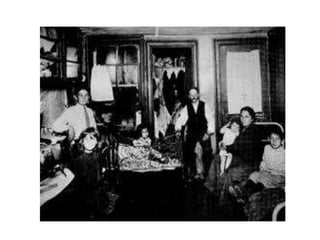
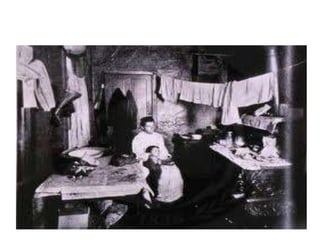
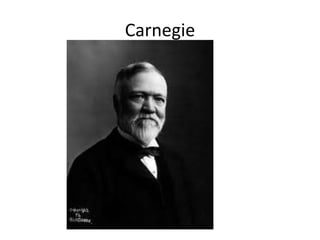
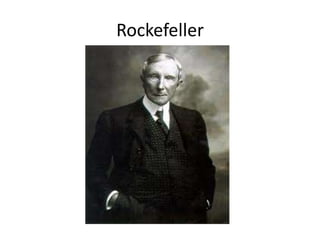
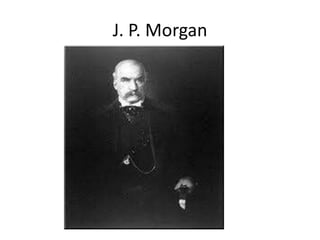
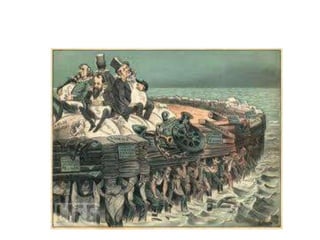
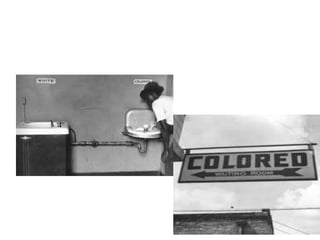
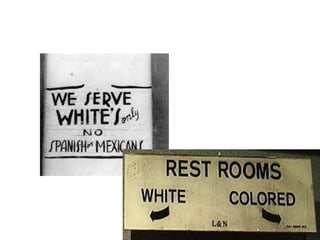
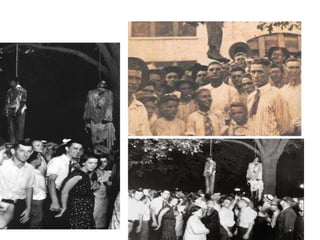
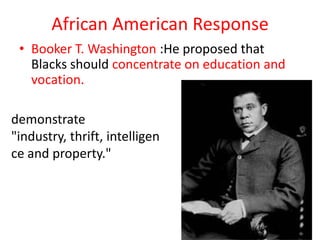
During the late 19th century, urbanization increased rapidly as many Americans moved to cities. The urban population grew from 10 million in 1870 to over 30 million by 1900, with most new urban residents being immigrants. Many immigrants lived in crowded and unsanitary tenement housing in ethnic enclaves and worked long hours for low pay in the growing industrial economy. At the same time, large corporations like Carnegie Steel and Standard Oil dominated their industries, leading to concerns over monopolies and wealth inequality. Workers organized unions to fight for better conditions, while African Americans faced increasing racial segregation and violence in the South under Jim Crow laws after the Supreme Court's "separate but equal" ruling in Plessy v. Ferguson.