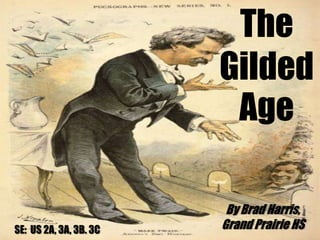
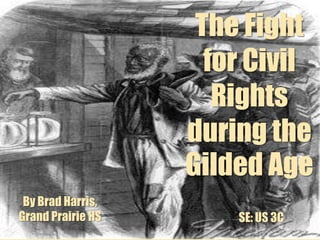
The Gilded AgeBy Brad Harris,Grand Prairie HSSE:  US 2A, 3A, 3B. 3C
Historical ErasCharacteristics of an Historical EraThey have certain recognizable characteristics.They often overlap with other eras and time periods.They are often unique to a specific country or area.
Historical ErasHistorical Eras of U.S. History  (since 1877)Gilded Age ………………………..	(1870s-1900)Progressive Era ……………….	(1900-1920)World War I ………………………..	(1914-1918)Roaring ‘’20s ……………………..	(1920-1929) Great Depression ……………	(1929-1939)World War II ……………………..	(1939-1945)Cold War  …………………………..	(1945-1991)Civil Rights Movement ….	(1950s-60s)
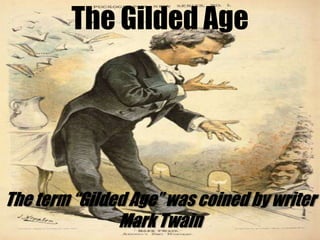
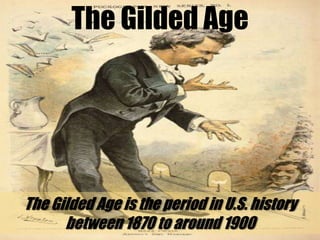
The Gilded AgeThe term “Gilded Age” was coined by writer Mark Twain
The Gilded AgeThe Gilded Age is the period in U.S. history between 1870 to around 1900
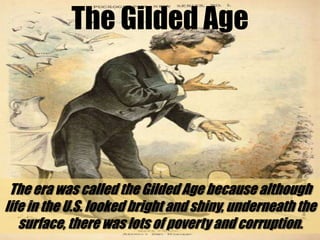
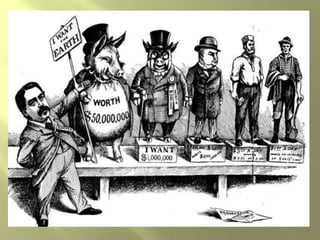
The Gilded AgeThe era was called the Gilded Age because although life in the U.S. looked bright and shiny, underneath the surface, there was lots of poverty and corruption.
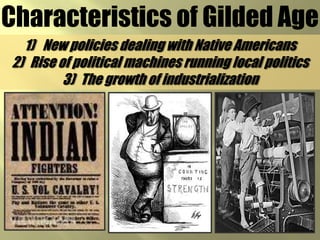
Characteristics of Gilded AgeNew policies dealing with Native AmericansRise of political machines running local politicsThe growth of industrialization
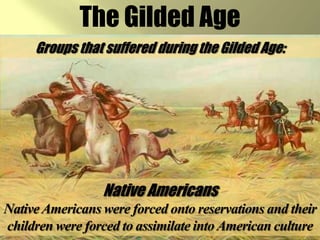
The Gilded AgeGroups that suffered during the Gilded Age:Native AmericansNative Americans were forced onto reservations and their children were forced to assimilate into American culture
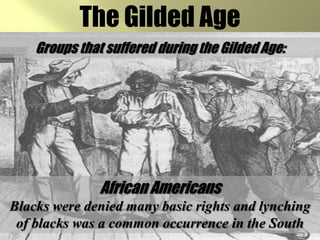
The Gilded AgeGroups that suffered during the Gilded Age:African AmericansBlacks were denied many basic rights and lynching of blacks was a common occurrence in the South
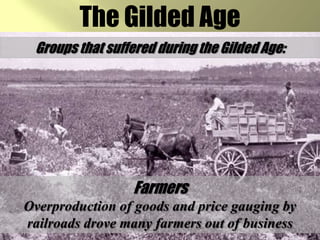
The Gilded AgeGroups that suffered during the Gilded Age:FarmersOverproduction of goods and price gauging by railroads drove many farmers out of business
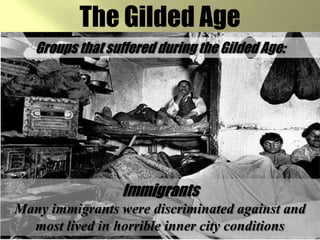
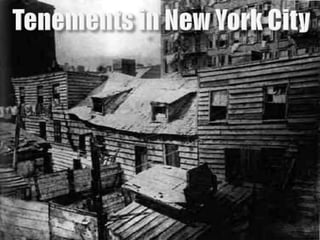
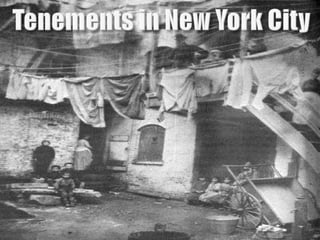
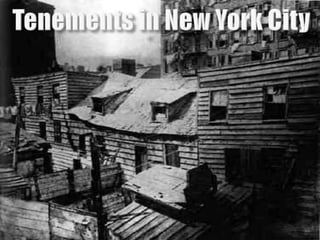
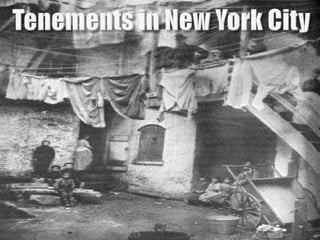
The Gilded AgeGroups that suffered during the Gilded Age:ImmigrantsMany immigrants were discriminated against and most lived in horrible inner city conditions
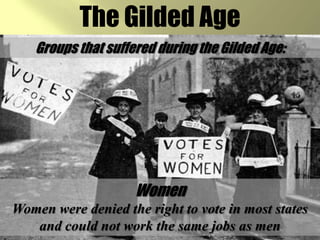
The Gilded AgeGroups that suffered during the Gilded Age:WomenWomen were denied the right to vote in most states and could not work the same jobs as men
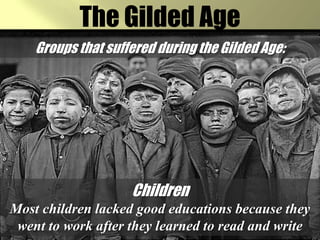
The Gilded AgeGroups that suffered during the Gilded Age:ChildrenMost children lacked good educations because they went to work after they learned to read and write
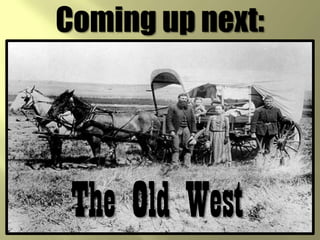
Coming up next:The Old West
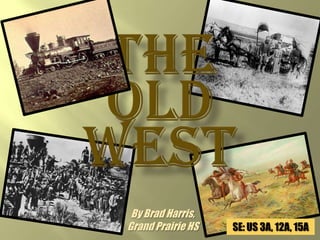
TheOldWestBy Brad Harris,Grand Prairie HSSE: US 3A, 12A, 15A
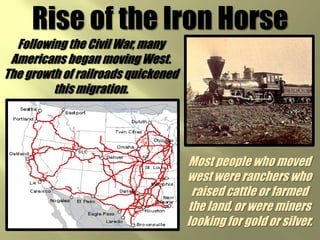
Rise of the Iron HorseFollowing the Civil War, many Americans began moving West. The growth of railroads quickened this migration.Most people who moved west were ranchers who raised cattle or farmed the land, or were miners looking for gold or silver.
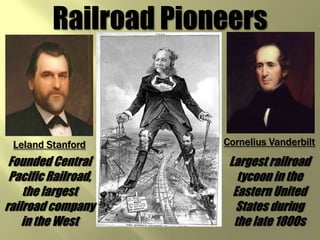
Railroad PioneersCornelius VanderbiltLeland StanfordFounded Central Pacific Railroad, the largest railroad company in the WestLargest railroad tycoon in the Eastern United States during the late 1800s
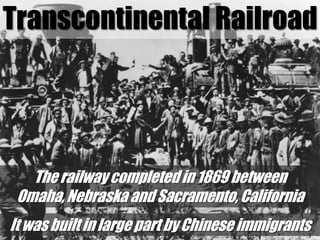
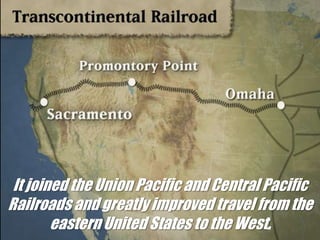
Transcontinental RailroadThe railway completed in 1869 between Omaha, Nebraska and Sacramento, California It was built in large part by Chinese immigrants
Transcontinental RailroadIt joined the Union Pacific and Central Pacific Railroads and greatly improved travel from the eastern United States to the West.
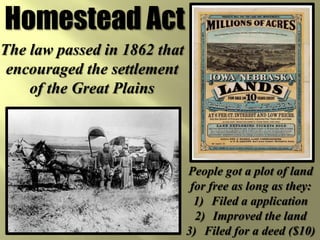
Homestead ActThe law passed in 1862 that encouraged the settlement of the Great PlainsPeople got a plot of land for free as long as they:Filed a applicationImproved the landFiled for a deed ($10)
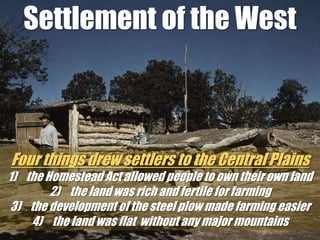
Settlement of the WestFour things drew settlers to the Central Plainsthe Homestead Act allowed people to own their own land the land was rich and fertile for farming the development of the steel plow made farming easier the land was flat  without any major mountains
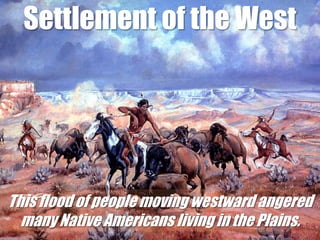
Settlement of the WestThis flood of people moving westward angered many Native Americans living in the Plains.
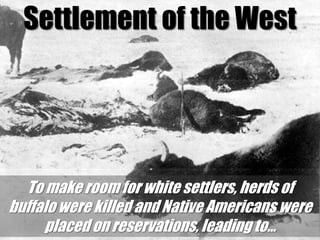
Settlement of the WestTo make room for white settlers, herds of buffalo were killed and Native Americans were placed on reservations, leading to…
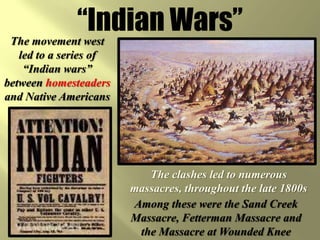
“Indian Wars”The movement west led to a series of “Indian wars” between homesteaders and Native AmericansThe clashes led to numerous massacres, throughout the late 1800sAmong these were the Sand Creek Massacre, Fetterman Massacre and the Massacre at Wounded Knee
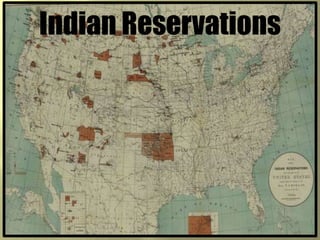
Indian Peace CommissionThree years after the Sand Creek Massacre, the federal government tried to step in and settle disputes between U.S. settlers and Native Americans by creating the Indian Peace Commission in 1867The Indian Peace Commission tried to end conflicts by creating new lands for Native Americans only. These lands were known as reservations.
Indian Reservations
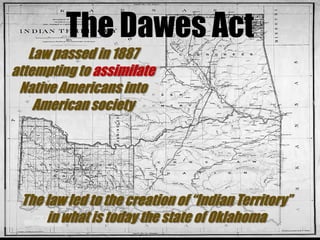
The Dawes ActLaw passed in 1887attempting to assimilate Native Americans into American societyThe law led to the creation of “Indian Territory”in what is today the state of Oklahoma
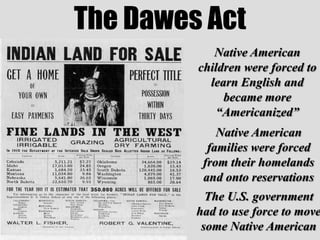
The Dawes ActNative American children were forced to learn English and became more “Americanized”Native American families were forced from their homelands and onto reservationsThe U.S. government had to use force to move some Native American
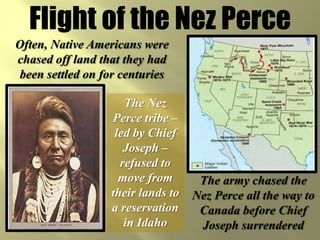
Flight of the Nez PerceOften, Native Americans were chased off land that they had been settled on for centuriesThe Nez Perce tribe – led by Chief Joseph – refused to move from their lands to a reservation in IdahoThe army chased the Nez Perce all the way to Canada before Chief Joseph surrendered
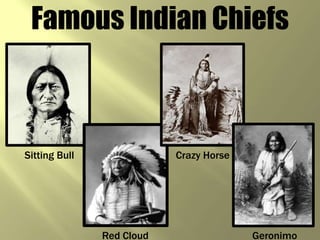
Famous Indian ChiefsSitting BullCrazy HorseRed CloudGeronimo
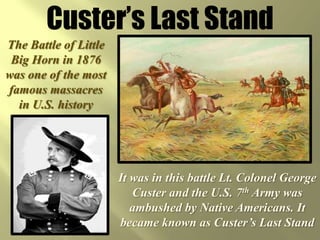
Custer’s Last StandThe Battle of Little Big Horn in 1876 was one of the most famous massacres in U.S. historyIt was in this battle Lt. Colonel George Custer and the U.S. 7th Army was ambushed by Native Americans. It became known as Custer’s Last Stand
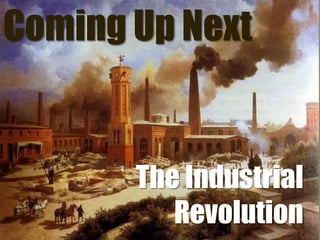
Coming Up NextThe Industrial Revolution
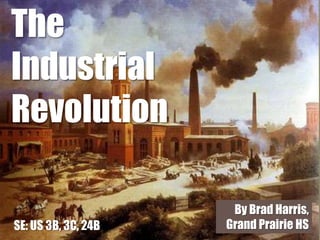
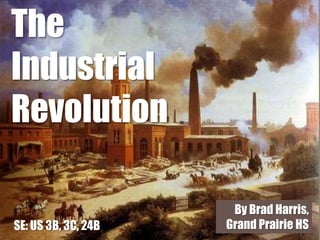
The Industrial RevolutionBy Brad Harris, Grand Prairie HSSE: US 3B, 3C, 24B
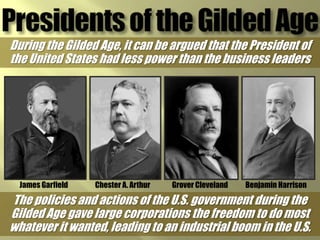
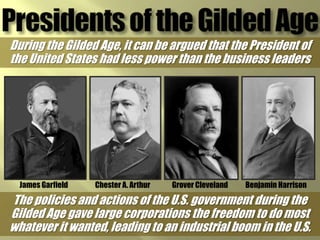
Presidents of the Gilded AgeDuring the Gilded Age, it can be argued that the President of the United States had less power than the business leadersGrover ClevelandChester A. ArthurBenjamin HarrisonJames GarfieldThe policies and actions of the U.S. government during the Gilded Age gave large corporations the freedom to do most whatever it wanted, leading to an industrial boom in the U.S.
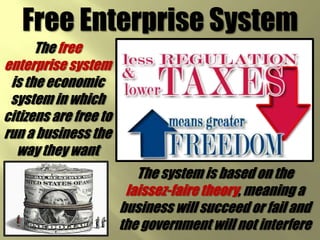
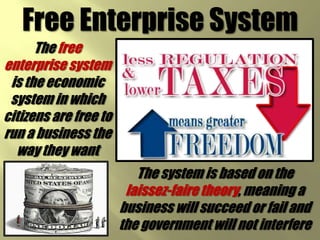
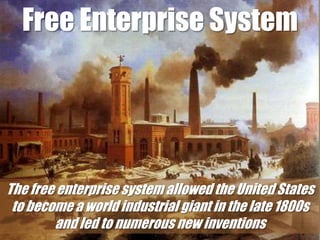
Free Enterprise SystemThe free enterprise system is the economic system in which citizens are free to run a business the way they wantThe system is based on the laissez-faire theory, meaning a business will succeed or fail and the government will not interfere
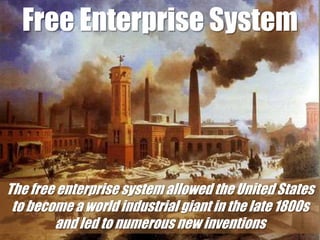
Free Enterprise SystemThe free enterprise system allowed the United States to become a world industrial giant in the late 1800s and led to numerous new inventions
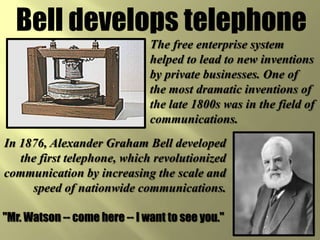
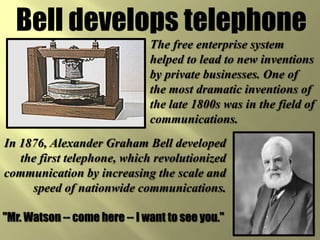
Bell develops telephoneThe free enterprise system helped to lead to new inventions by private businesses. One of the most dramatic inventions of the late 1800s was in the field of communications.In 1876, Alexander Graham Bell developed the first telephone, which revolutionized communication by increasing the scale and speed of nationwide communications."Mr. Watson -- come here -- I want to see you."
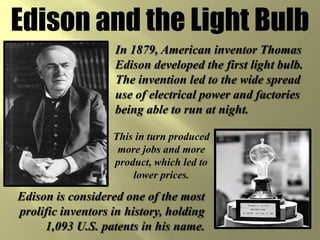
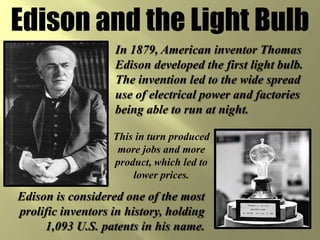
Edison and the Light BulbIn 1879, American inventor Thomas Edison developed the first light bulb. The invention led to the wide spread use of electrical power and factories being able to run at night.This in turn produced more jobs and more product, which led to lower prices.Edison is considered one of the most prolific inventors in history, holding 1,093 U.S. patents in his name.
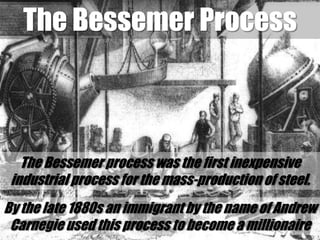
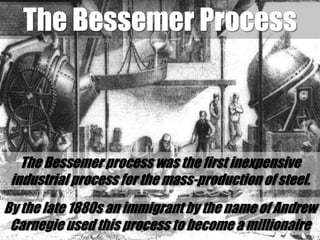
The Bessemer ProcessThe Bessemer process was the first inexpensive industrial process for the mass-production of steel. By the late 1880s an immigrant by the name of Andrew Carnegie used this process to become a millionaire
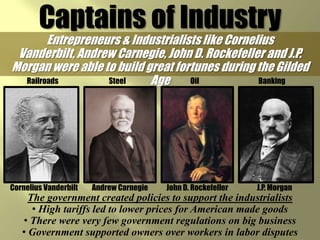
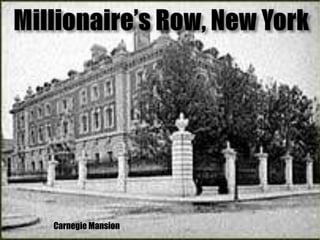
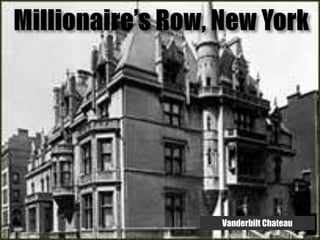
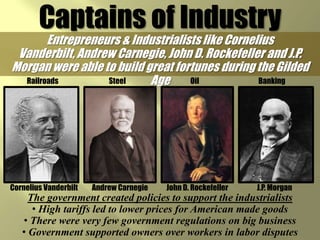
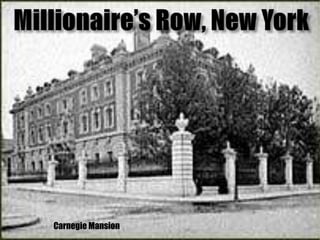
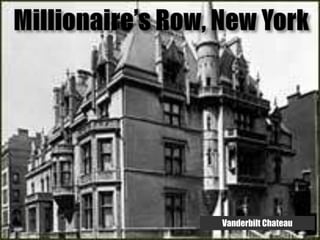
Captains of IndustryEntrepreneurs & Industrialists like Cornelius Vanderbilt, Andrew Carnegie, John D. Rockefeller and J.P. Morgan were able to build great fortunes during the Gilded AgeOilSteelRailroadsBankingJohn D. RockefellerAndrew CarnegieCornelius VanderbiltJ.P. MorganThe government created policies to support the industrialists High tariffs led to lower prices for American made goods
 There were very few government regulations on big business
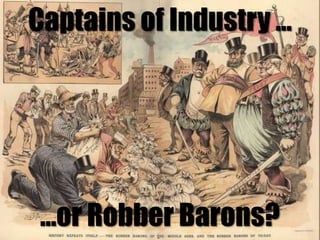
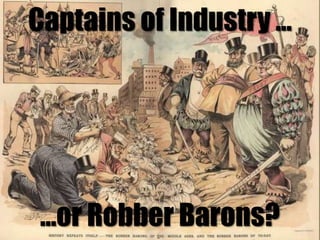
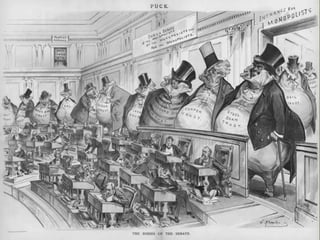
 Government supported owners over workers in labor disputesCaptains of Industry ……or Robber Barons?
Millionaire’s Row, New YorkCarnegie Mansion
Millionaire’s Row, New YorkVanderbilt Chateau
Tenements in New York City
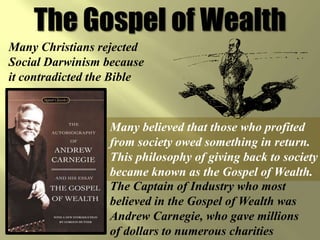
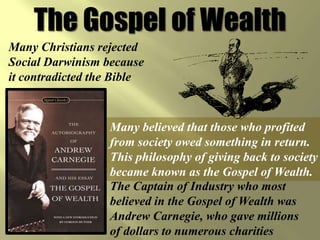
The Gospel of WealthMany Christians rejected Social Darwinism because it contradicted the BibleMany believed that those who profited from society owed something in return. This philosophy of giving back to society became known as the Gospel of Wealth.The Captain of Industry who most believed in the Gospel of Wealth was Andrew Carnegie, who gave millions of dollars to numerous charities
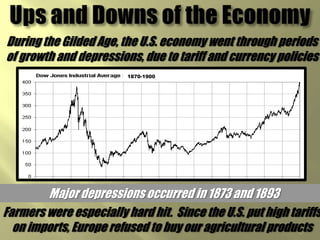
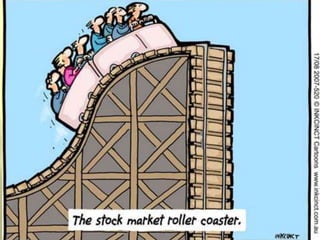
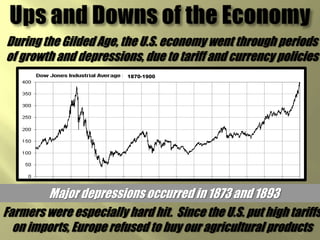
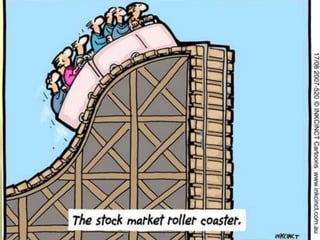
©CSCOPE 200847Ups and Downs of the EconomyDuring the Gilded Age, the U.S. economy went through periods of growth and depressions, due to tariff and currency policies   1870-1900Major depressions occurred in 1873 and 1893Farmers were especially hard hit.  Since the U.S. put high tariffs on imports, Europe refused to buy our agricultural products
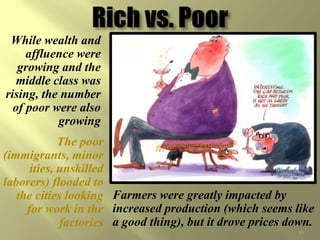
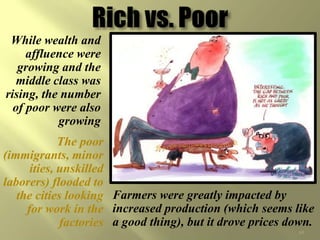
©CSCOPE 200849Rich vs. PoorWhile wealth and affluence were growing and the middle class was rising, the number of poor were also growingThe poor (immigrants, minorities, unskilled laborers) flooded to the cities looking for work in the factories  Farmers were greatly impacted by increased production (which seems like a good thing), but it drove prices down.
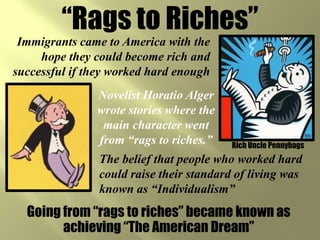
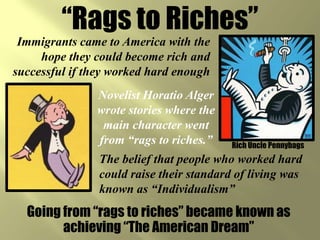
“Rags to Riches”Immigrants came to America with the hope they could become rich and successful if they worked hard enoughNovelist Horatio Alger wrote stories where the main character went from “rags to riches.”Rich Uncle PennybagsThe belief that people who worked hard could raise their standard of living was known as “Individualism”Going from “rags to riches” became known as achieving “The American Dream”
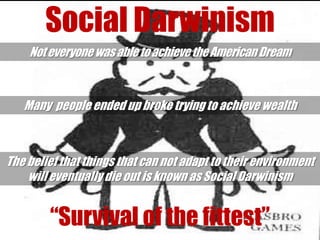
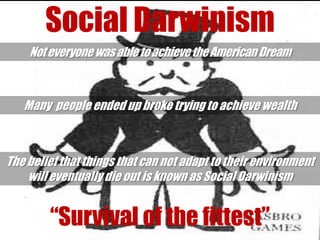
Social DarwinismNot everyone was able to achieve the American DreamMany  people ended up broke trying to achieve wealth The belief that things that can not adapt to their environment will eventually die out is known as Social Darwinism“Survival of the fittest”
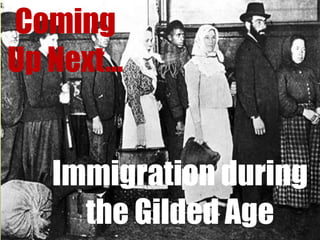
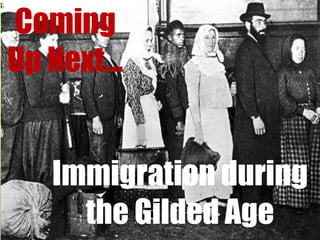
Coming Up Next…Immigration during the Gilded Age
The Industrial RevolutionBy Brad Harris, Grand Prairie HSSE: US 3B, 3C, 24B
Presidents of the Gilded AgeDuring the Gilded Age, it can be argued that the President of the United States had less power than the business leadersGrover ClevelandChester A. ArthurBenjamin HarrisonJames GarfieldThe policies and actions of the U.S. government during the Gilded Age gave large corporations the freedom to do most whatever it wanted, leading to an industrial boom in the U.S.
Free Enterprise SystemThe free enterprise system is the economic system in which citizens are free to run a business the way they wantThe system is based on the laissez-faire theory, meaning a business will succeed or fail and the government will not interfere
Free Enterprise SystemThe free enterprise system allowed the United States to become a world industrial giant in the late 1800s and led to numerous new inventions
Bell develops telephoneThe free enterprise system helped to lead to new inventions by private businesses. One of the most dramatic inventions of the late 1800s was in the field of communications.In 1876, Alexander Graham Bell developed the first telephone, which revolutionized communication by increasing the scale and speed of nationwide communications."Mr. Watson -- come here -- I want to see you."
Edison and the Light BulbIn 1879, American inventor Thomas Edison developed the first light bulb. The invention led to the wide spread use of electrical power and factories being able to run at night.This in turn produced more jobs and more product, which led to lower prices.Edison is considered one of the most prolific inventors in history, holding 1,093 U.S. patents in his name.
The Bessemer ProcessThe Bessemer process was the first inexpensive industrial process for the mass-production of steel. By the late 1880s an immigrant by the name of Andrew Carnegie used this process to become a millionaire
Captains of IndustryEntrepreneurs & Industrialists like Cornelius Vanderbilt, Andrew Carnegie, John D. Rockefeller and J.P. Morgan were able to build great fortunes during the Gilded AgeOilSteelRailroadsBankingJohn D. RockefellerAndrew CarnegieCornelius VanderbiltJ.P. MorganThe government created policies to support the industrialists High tariffs led to lower prices for American made goods
 There were very few government regulations on big business
 Government supported owners over workers in labor disputesCaptains of Industry ……or Robber Barons?
Millionaire’s Row, New YorkCarnegie Mansion
Millionaire’s Row, New YorkVanderbilt Chateau
Tenements in New York City
The Gospel of WealthMany Christians rejected Social Darwinism because it contradicted the BibleMany believed that those who profited from society owed something in return. This philosophy of giving back to society became known as the Gospel of Wealth.The Captain of Industry who most believed in the Gospel of Wealth was Andrew Carnegie, who gave millions of dollars to numerous charities
©CSCOPE 200867Ups and Downs of the EconomyDuring the Gilded Age, the U.S. economy went through periods of growth and depressions, due to tariff and currency policies   1870-1900Major depressions occurred in 1873 and 1893Farmers were especially hard hit.  Since the U.S. put high tariffs on imports, Europe refused to buy our agricultural products
©CSCOPE 200869Rich vs. PoorWhile wealth and affluence were growing and the middle class was rising, the number of poor were also growingThe poor (immigrants, minorities, unskilled laborers) flooded to the cities looking for work in the factories  Farmers were greatly impacted by increased production (which seems like a good thing), but it drove prices down.
“Rags to Riches”Immigrants came to America with the hope they could become rich and successful if they worked hard enoughNovelist Horatio Alger wrote stories where the main character went from “rags to riches.”Rich Uncle PennybagsThe belief that people who worked hard could raise their standard of living was known as “Individualism”Going from “rags to riches” became known as achieving “The American Dream”
Social DarwinismNot everyone was able to achieve the American DreamMany  people ended up broke trying to achieve wealth The belief that things that can not adapt to their environment will eventually die out is known as Social Darwinism“Survival of the fittest”
Coming Up Next…Immigration during the Gilded Age
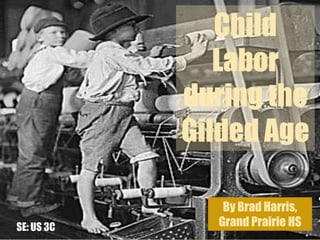
Child Labor during the Gilded AgeBy Brad Harris,Grand Prairie HSSE: US 3C
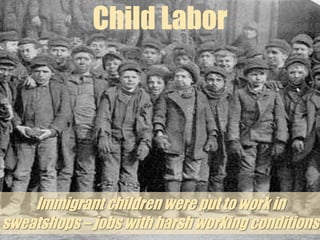
Child LaborImmigrant children were put to work in sweatshops – jobs with harsh working conditions
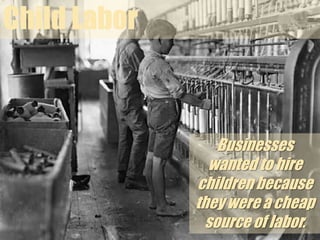
Child LaborBusinesses wanted to hire children because they were a cheap source of labor.
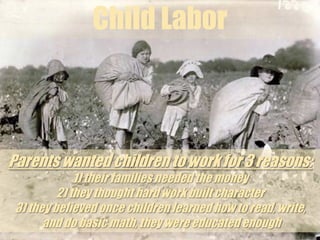
Child LaborParents wanted children to work for 3 reasons: 1) their families needed the money2) they thought hard work built character3) they believed once children learned how to read, write, and do basic math, they were educated enough
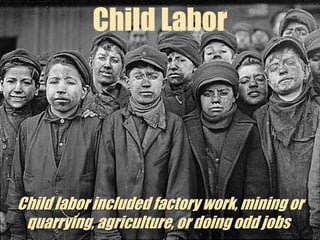
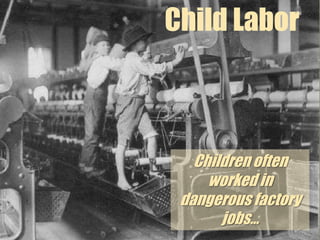
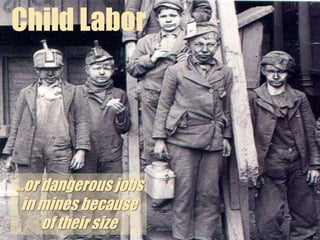
Child LaborChild labor included factory work, mining or quarrying, agriculture, or doing odd jobs.
Child LaborChildren often worked in dangerous factory jobs…
Child Labor...or dangerous jobs in mines because of their size
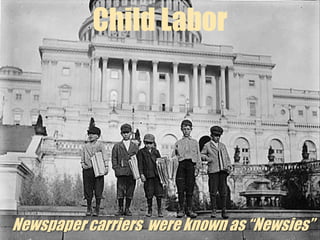
Child LaborNewspaper carriers  were known as “Newsies”
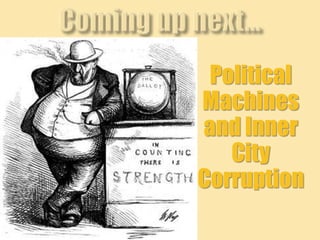
Coming up next…Political Machines and Inner City Corruption
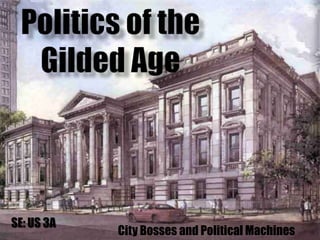
Politics of the Gilded AgeSE: US 3ACity Bosses and Political Machines
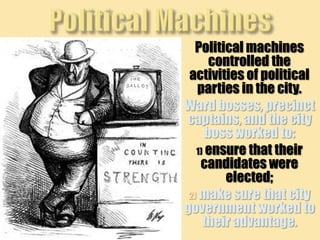
Political MachinesPolitical machines controlled the activities of political parties in the city. Ward bosses, precinct captains, and the city boss worked to:  ensure that their candidates were elected; make sure that city government worked to their advantage.
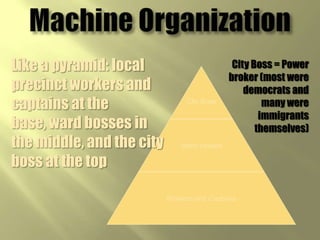
Machine Organization Like a pyramid: local precinct workers and captains at the base, ward bosses in the middle, and the city boss at the topCity Boss = Power broker (most were democrats and many were immigrants themselves)
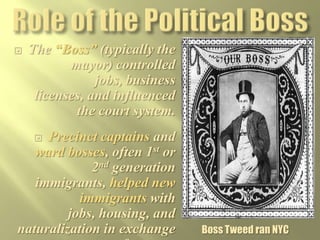
Role of the Political BossThe “Boss” (typically the mayor) controlled jobs, business licenses, and influenced the court system.Precinct captains and ward bosses, often 1st or 2nd generation immigrants, helped new immigrants with jobs, housing, and naturalization in exchange for votes.  Boss Tweed ran NYC
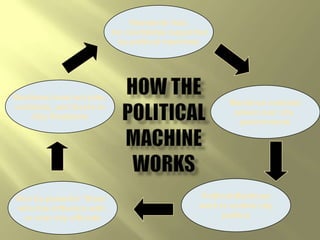
Residents Vote for candidates supported by political machines.How the Political Machine worksMachines hand out jobs,contracts, and favors toCity ResidentsMachines maintainpower over city governmentsPolitical Machines work to control city politicsRun by powerful “Boss”who has influence with or over city officials
Role of ImmigrantsImmigrants were the workers who ran the political machine. They offered their loyalty and votes in exchange for favors and solutions to their problems.
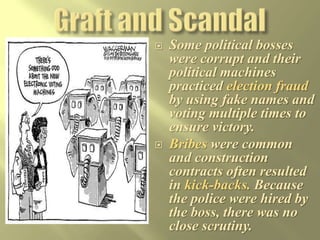
Graft and ScandalSome political bosses were corrupt and their political machines practiced election fraud by using fake names and voting multiple times to ensure victory.Bribeswere common and construction contracts often resulted in kick-backs. Because the police were hired by the boss, there was no close scrutiny.
What is Graft?Graft is the illegal use of political influence for personal gain. How did the bosses use graft for their own personal gain?To win electionsTo make themselves richerTo finance the operations of the political machine
What are kickbacks?A Kickback is the illegal practice of getting contract workers hired by the bosses to overcharge the city for their services. Then the overpayment would be split between  the city boss and the contract-worker How did the bosses use kickbacks for their own personal gain?The bosses would enrich themselves as well as the machine
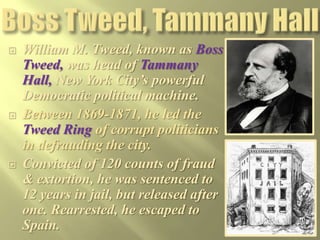
Boss Tweed, Tammany HallWilliam M. Tweed, known as Boss Tweed,was head of Tammany Hall, New York City’s powerful Democratic political machine. Between 1869-1871, he led the Tweed Ring of corrupt politicians in defrauding the city. Convicted of 120 counts of fraud & extortion, he was sentenced to 12 years in jail, but released after one. Rearrested, he escaped to Spain.
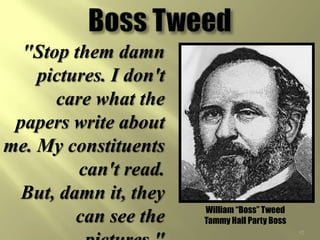
Boss Tweed ©CSCOPE 200892"Stop them damn pictures. I don't care what the papers write about me. My constituents can't read. But, damn it, they can see the pictures." William “Boss” TweedTammy Hall Party Boss
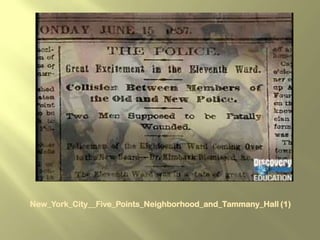
New_York_City__Five_Points_Neighborhood_and_Tammany_Hall (1)
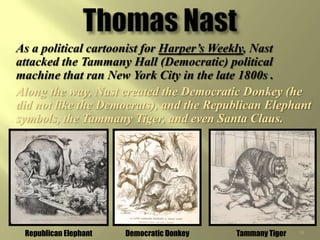
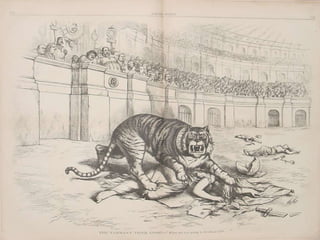
94Thomas NastAs a political cartoonist for Harper’s Weekly, Nast attacked the Tammany Hall (Democratic) political machine that ran New York City in the late 1800s . Along the way, Nast created the Democratic Donkey (he did not like the Democrats), and the Republican Elephant symbols, the Tammany Tiger, and even Santa Claus.  Tammany TigerDemocratic DonkeyRepublican Elephant
Coming up Next…The Birth of Unions
The Birth of UnionsBy Brad Harris,Grand Prairie HSSE: US 3B
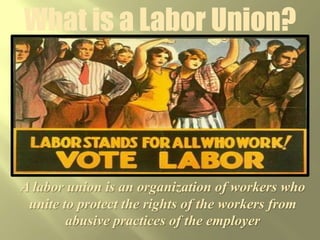
What is a Labor Union?A labor union is an organization of workers who unite to protect the rights of the workers from abusive practices of the employer
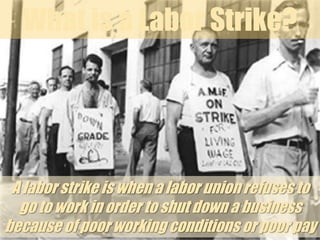
What is a Labor Strike?A labor strike is when a labor union refuses to go to work in order to shut down a business because of poor working conditions or poor pay
Early UnionsThe free enterprise system meant that businesses made their own rulesWithout government interference, business owners could pay their workers what they wanted and make them work as long as they wantedIndustrialization during the late 1800s contributed to the development of organized labor because it created low-wage, low-skill jobs that made employees easy to replace.
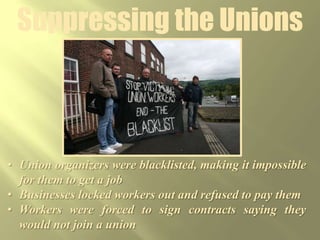
Suppressing the UnionsUnion organizers were blacklisted, making it impossible for them to get a job
Businesses locked workers out and refused to pay them
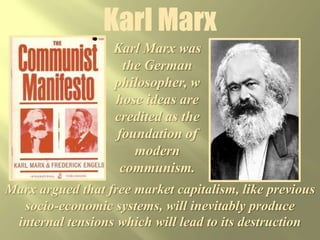
Workers were forced to sign contracts saying they would not join a unionKarl MarxKarl Marx was the German philosopher, whose ideas are credited as the foundation of modern communism.Marx argued that free market capitalism, like previous socio-economic systems, will inevitably produce internal tensions which will lead to its destruction
MarxismMarx believed that workers would eventually revolt, take control of factories, and overthrow the government. Once the workers did this, the new workers-led government would take all private property and distribute wealth evenly among every citizen. Marxism greatly influenced European unions and led to numerous revolutions in Europe in the mid-1800s. When immigrants came to the U.S. from Europe, many feared they would bring their ideas of workers revolutions with them, leading to a distrust of many Americans of immigrant workers.
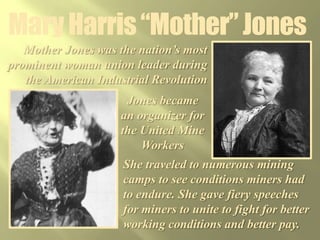
Mary Harris “Mother” JonesMother Jones was the nation’s most prominent woman union leader during the American Industrial RevolutionJones became an organizer for the United Mine WorkersShe traveled to numerous mining camps to see conditions miners had to endure. She gave fiery speeches for miners to unite to fight for better working conditions and better pay.
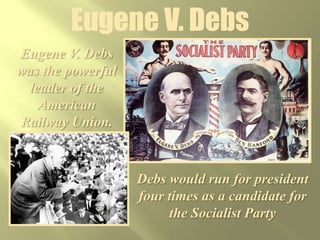
Eugene V. DebsEugene V. Debs was the powerful leader of the American Railway Union.Debs would run for president four times as a candidate for the Socialist Party
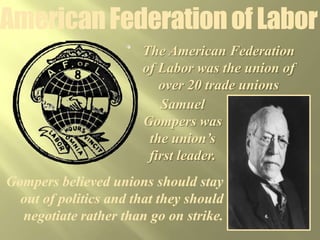
American Federation of LaborThe American Federation of Labor was the union of over 20 trade unionsSamuel Gompers was the union’s first leader. Gompers believed unions should stay out of politics and that they should negotiate rather than go on strike.
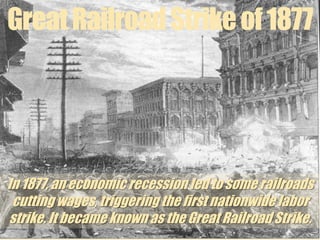
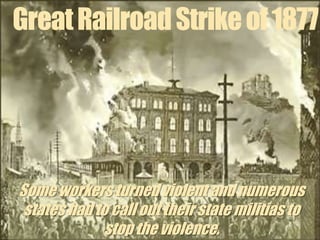
Great Railroad Strike of 1877In 1877, an economic recession led to some railroads cutting wages, triggering the first nationwide labor strike. It became known as the Great Railroad Strike.
Great Railroad Strike of 1877Some workers turned violent and numerous states had to call out their state militias to stop the violence.
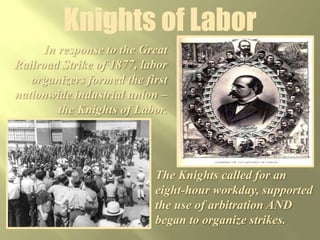
Knights of LaborIn response to the Great Railroad Strike of 1877, labor organizers formed the first nationwide industrial union – the Knights of Labor. The Knights called for an eight-hour workday, supported the use of arbitration AND began to organize strikes.
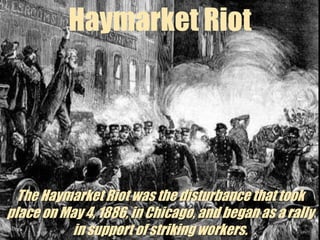
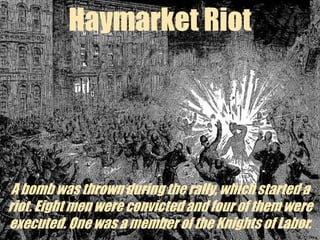
Haymarket RiotThe Haymarket Riot was the disturbance that took place on May 4, 1886, in Chicago, and began as a rally in support of striking workers.
Haymarket RiotA bomb was thrown during the rally, which started a riot. Eight men were convicted and four of them were executed. One was a member of the Knights of Labor.
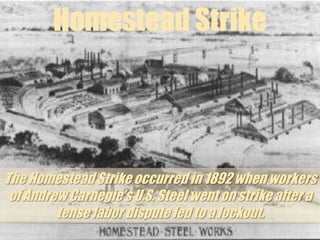
Homestead StrikeThe Homestead Strike occurred in 1892 when workers of Andrew Carnegie’s U.S. Steel went on strike after a tense labor dispute led to a lockout.
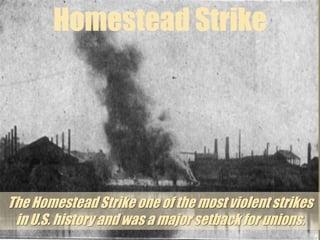
Homestead StrikeThe Homestead Strike one of the most violent strikes in U.S. history and was a major setback for unions.
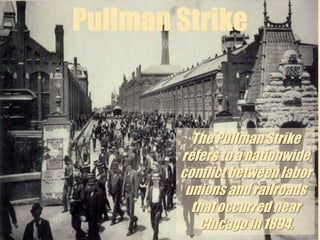
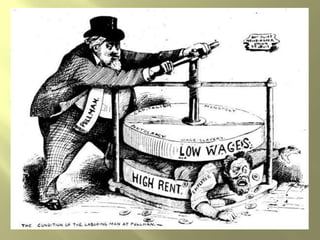
Pullman StrikeThe Pullman Strike refers to a nationwide conflict between labor unions and railroads that occurred near Chicago in 1894.
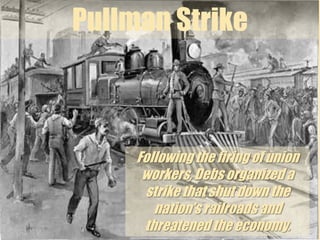
Pullman StrikeFollowing the firing of union workers, Debs organized a strike that shut down the nation’s railroads and threatened the economy.
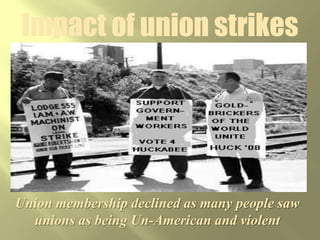
Impact of union strikesUnion membership declined as manypeople saw unions as being Un-American and violent
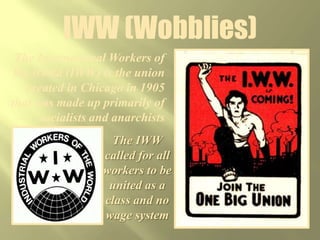
IWW (Wobblies)The International Workers of the World (IWW) is the union created in Chicago in 1905 that was made up primarily of socialists and anarchistsThe IWW called for all workers to be united as a class and no wage system
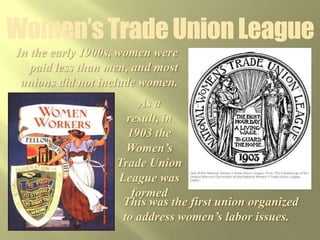
Women’s Trade Union LeagueIn the early 1900s, women were paid less than men, and most unions did not include women.As a result, in 1903 the Women’s Trade Union League was formedThis was the first union organized to address women’s labor issues.
SummaryThe free enterprise system is based on the laissez-faire theory, meaning that the government should not interfere with or regulate business
Industrialization contributed to the development of labor unions because it created low-wage, low-skill jobs that made employees easy to replace
The Great Railroad Strike of 1877 led to the first nationwide industrial union – the Knights of Labor
Samuel Gompers formed the American Federation of Labor, the largest trade union in the nationComing up Next…Politics and Reform during the Gilded Age
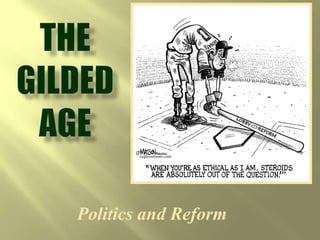
The GildedAgePolitics and Reform
StalemateTwo sides are even and there is not a way for one side to beat the other
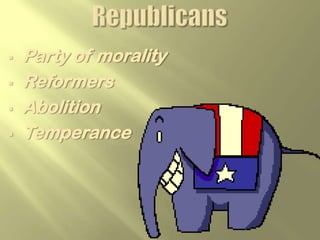
RepublicansParty of morality
Reformers
Abolition
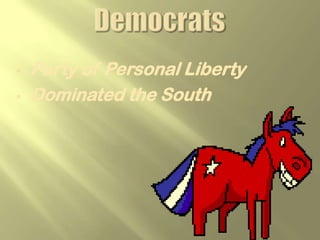
TemperanceDemocratsParty of Personal Liberty
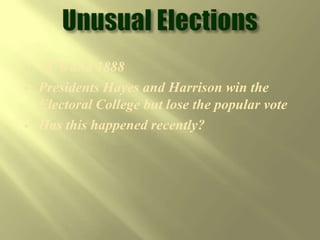
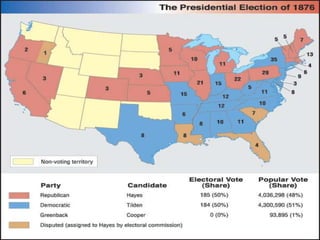
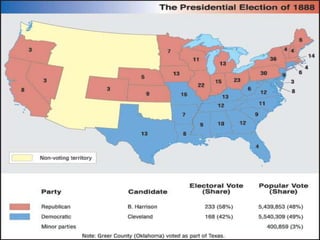
Dominated the SouthUnusual Elections1876 and 1888
Presidents Hayes and Harrison win the Electoral College but lose the popular vote
Has this happened recently?
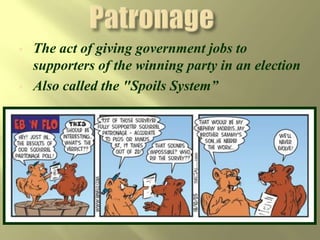
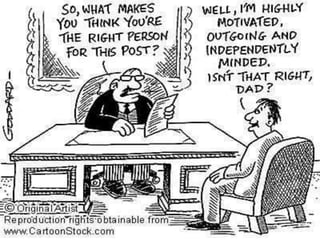
PatronageThe act of giving government jobs to supporters of the winning party in an election
Also called the "Spoils System”
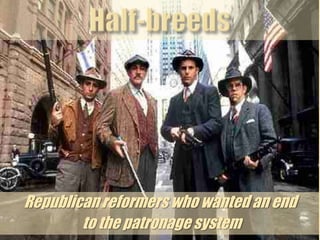
Half-breedsRepublican reformers who wanted an end to the patronage system
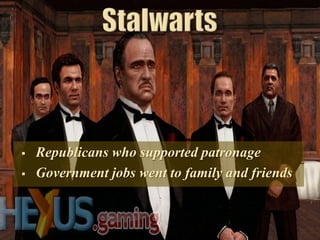
StalwartsRepublicans who supported patronage
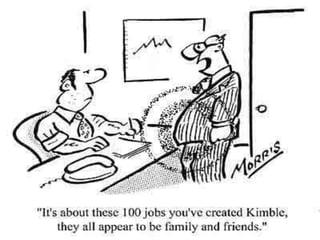
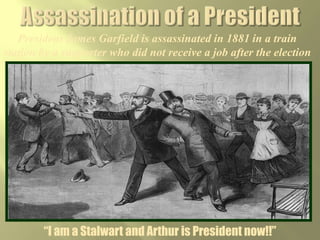
Government jobs went to family and friendsAssassination of a PresidentPresident James Garfield is assassinated in 1881 in a train station by a supporter who did not receive a job after the election“I am a Stalwart and Arthur is President now!!”
Pendleton ActWas passed in reaction to Garfield's assassination Jobs must be filled according to the rules made by a bipartisan committee (Civil Service Commission)Candidates must take an examination (Civil Service Exam) to qualify
Civil Service Replaces PatronageNationally, some politicians pushed for reform in the hiring system, which  had been based onPatronage (giving jobs and favors to those who helped a candidate get elected). Reformers pushed for adoption of amerit system (hiring the most qualified for jobs). The Pendleton Civil Service Act of 1883 authorized a bipartisan commission to make appointments for federal jobs based on performance.Applicants for federal jobs are required to take a Civil Service Exam
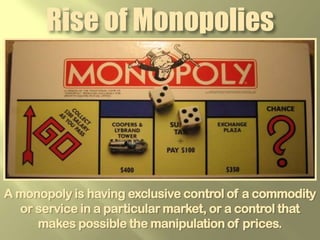
Rise of MonopoliesA monopoly is having exclusive control of a commodity or service in a particular market, or a control that makes possible the manipulation of prices.
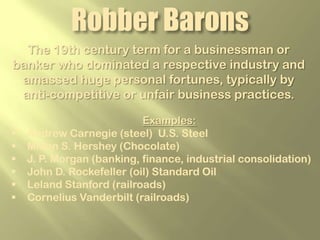
Robber BaronsThe 19th century term for a businessman or banker who dominated a respective industry and amassed huge personal fortunes, typically by anti-competitive or unfair business practices.Examples:Andrew Carnegie (steel)  U.S. Steel
Milton S. Hershey (Chocolate)
J. P. Morgan (banking, finance, industrial consolidation)
John D. Rockefeller (oil) Standard Oil
Leland Stanford (railroads)
Cornelius Vanderbilt (railroads)Economic IssuesRailroads gave rebates to large corporations because of their volume seemingly gouging smaller volume customers
Tariffs increased prices on manufactured goods and made it difficult for farmers to exportWabash v. IllinoisThe federal government has the power to regulate rates for traffic between states
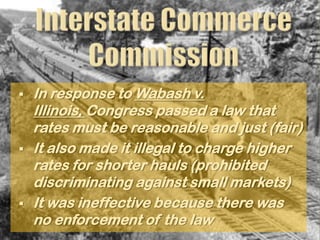
Interstate Commerce CommissionIn response to Wabash v. Illinois, Congress passed a law that rates must be reasonable and just (fair)
It also made it illegal to charge higher rates for shorter hauls (prohibited discriminating against small markets)
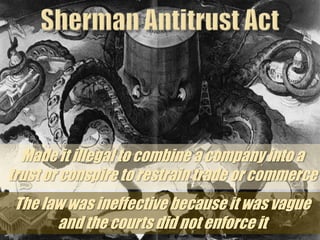
It was ineffective because there was no enforcement of the lawSherman Antitrust ActMade it illegal to combine a company into a trust or conspire to restrain trade or commerce  The law was ineffective because it was vague and the courts did not enforce it
So What?Although the ICC and Sherman Antitrust Act were ineffective they did set a precedent for government regulation
Garfield's assassination leads to reforms that are still in practice todayPopulismBy Brad Harris,Grand Prairie, TXSE: US 3A
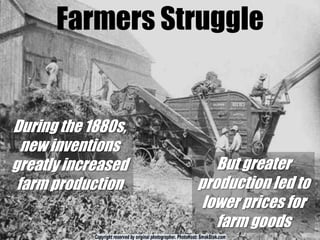
Farmers StruggleDuring the 1880s, new inventions greatly increased farm productionBut greater production led to lower prices for farm goods
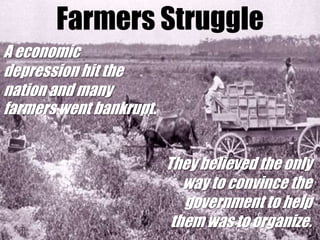
Farmers StruggleA economic depression hit the nation and many farmers went bankrupt. They believed the only way to convince the government to help them was to organize.
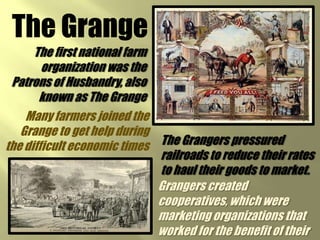
The GrangeThe first national farm organization was the Patrons of Husbandry, also known as The GrangeMany farmers joined the Grange to get help during the difficult economic timesThe Grangers pressured railroads to reduce their rates to haul their goods to market. Grangers created cooperatives, which were marketing organizations that worked for the benefit of their members
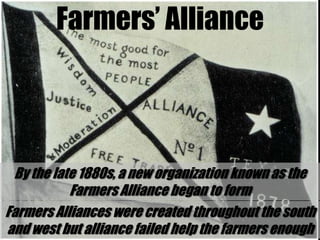
Farmers’ AllianceBy the late 1880s, a new organization known as the Farmers Alliance began to formFarmers Alliances were created throughout the south and west but alliance failed help the farmers enough
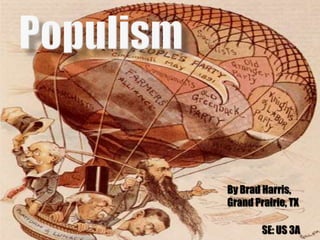
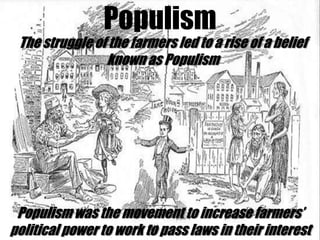
PopulismThe struggle of the farmers led to a rise of a belief known as PopulismPopulism was the movement to increase farmers’ political power to work to pass laws in their interest
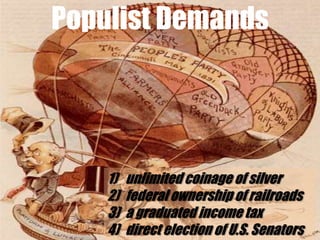
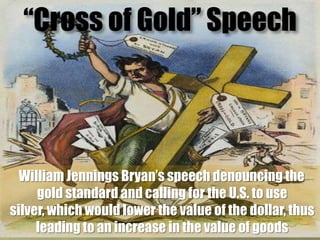
Populist Demandsunlimited coinage of silverfederal ownership of railroadsa graduated income tax direct election of U.S. Senators
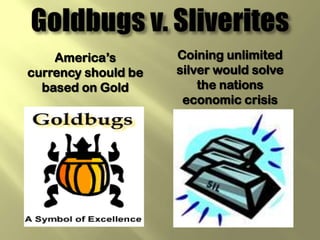
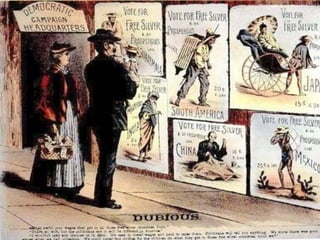
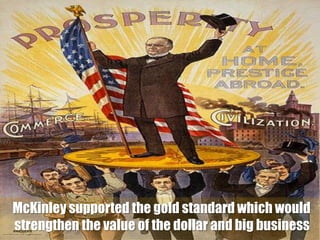
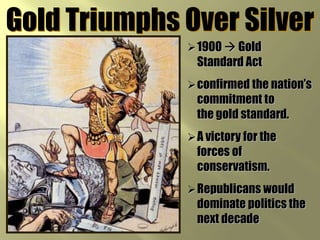
Goldbugs v. SliveritesCoining unlimited silver would solve the nations economic crisisAmerica’s currency should be based on Gold
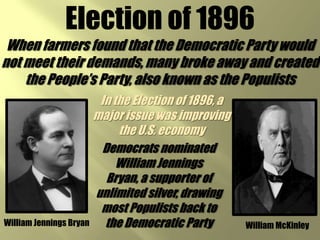
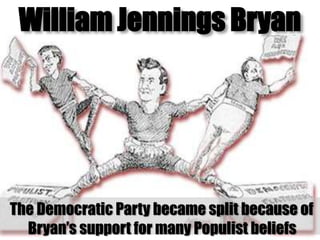
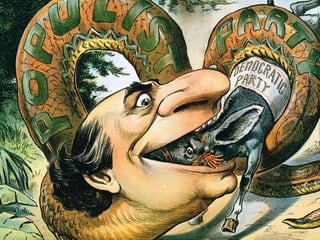
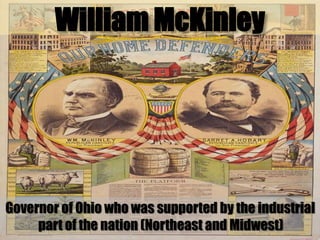
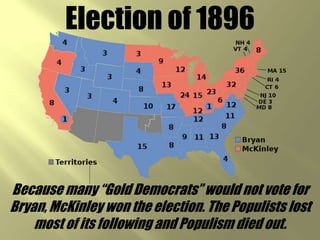
Election of 1896When farmers found that the Democratic Party would not meet their demands, many broke away and created the People’s Party, also known as the PopulistsIn the Election of 1896, a major issue was improving the U.S. economyDemocrats nominated William Jennings Bryan, a supporter of unlimited silver, drawing most Populists back to the Democratic PartyWilliam Jennings BryanWilliam McKinley
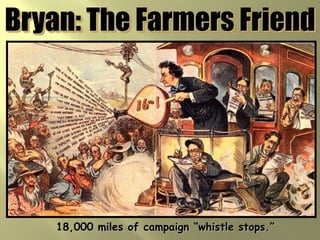
Bryan: The Farmers Friend18,000 miles of campaign “whistle stops.”
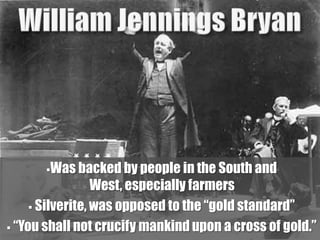
William Jennings BryanWas backed by people in the South and West, especially farmers

Unit 1- The Gilded Age.pptx

  • 1.
    The Gilded AgeByBrad Harris,Grand Prairie HSSE: US 2A, 3A, 3B. 3C
  • 2.
    Historical ErasCharacteristics ofan Historical EraThey have certain recognizable characteristics.They often overlap with other eras and time periods.They are often unique to a specific country or area.
  • 3.
    Historical ErasHistorical Erasof U.S. History (since 1877)Gilded Age ……………………….. (1870s-1900)Progressive Era ………………. (1900-1920)World War I ……………………….. (1914-1918)Roaring ‘’20s …………………….. (1920-1929) Great Depression …………… (1929-1939)World War II …………………….. (1939-1945)Cold War ………………………….. (1945-1991)Civil Rights Movement …. (1950s-60s)
  • 4.
    The Gilded AgeTheterm “Gilded Age” was coined by writer Mark Twain
  • 5.
    The Gilded AgeTheGilded Age is the period in U.S. history between 1870 to around 1900
  • 6.
    The Gilded AgeTheera was called the Gilded Age because although life in the U.S. looked bright and shiny, underneath the surface, there was lots of poverty and corruption.
  • 7.
    Characteristics of GildedAgeNew policies dealing with Native AmericansRise of political machines running local politicsThe growth of industrialization
  • 8.
    The Gilded AgeGroupsthat suffered during the Gilded Age:Native AmericansNative Americans were forced onto reservations and their children were forced to assimilate into American culture
  • 9.
    The Gilded AgeGroupsthat suffered during the Gilded Age:African AmericansBlacks were denied many basic rights and lynching of blacks was a common occurrence in the South
  • 10.
    The Gilded AgeGroupsthat suffered during the Gilded Age:FarmersOverproduction of goods and price gauging by railroads drove many farmers out of business
  • 11.
    The Gilded AgeGroupsthat suffered during the Gilded Age:ImmigrantsMany immigrants were discriminated against and most lived in horrible inner city conditions
  • 12.
    The Gilded AgeGroupsthat suffered during the Gilded Age:WomenWomen were denied the right to vote in most states and could not work the same jobs as men
  • 13.
    The Gilded AgeGroupsthat suffered during the Gilded Age:ChildrenMost children lacked good educations because they went to work after they learned to read and write
  • 14.
  • 15.
    TheOldWestBy Brad Harris,GrandPrairie HSSE: US 3A, 12A, 15A
  • 16.
    Rise of theIron HorseFollowing the Civil War, many Americans began moving West. The growth of railroads quickened this migration.Most people who moved west were ranchers who raised cattle or farmed the land, or were miners looking for gold or silver.
  • 17.
    Railroad PioneersCornelius VanderbiltLelandStanfordFounded Central Pacific Railroad, the largest railroad company in the WestLargest railroad tycoon in the Eastern United States during the late 1800s
  • 18.
    Transcontinental RailroadThe railwaycompleted in 1869 between Omaha, Nebraska and Sacramento, California It was built in large part by Chinese immigrants
  • 19.
    Transcontinental RailroadIt joinedthe Union Pacific and Central Pacific Railroads and greatly improved travel from the eastern United States to the West.
  • 20.
    Homestead ActThe lawpassed in 1862 that encouraged the settlement of the Great PlainsPeople got a plot of land for free as long as they:Filed a applicationImproved the landFiled for a deed ($10)
  • 21.
    Settlement of theWestFour things drew settlers to the Central Plainsthe Homestead Act allowed people to own their own land the land was rich and fertile for farming the development of the steel plow made farming easier the land was flat without any major mountains
  • 22.
    Settlement of theWestThis flood of people moving westward angered many Native Americans living in the Plains.
  • 23.
    Settlement of theWestTo make room for white settlers, herds of buffalo were killed and Native Americans were placed on reservations, leading to…
  • 24.
    “Indian Wars”The movementwest led to a series of “Indian wars” between homesteaders and Native AmericansThe clashes led to numerous massacres, throughout the late 1800sAmong these were the Sand Creek Massacre, Fetterman Massacre and the Massacre at Wounded Knee
  • 25.
    Indian Peace CommissionThreeyears after the Sand Creek Massacre, the federal government tried to step in and settle disputes between U.S. settlers and Native Americans by creating the Indian Peace Commission in 1867The Indian Peace Commission tried to end conflicts by creating new lands for Native Americans only. These lands were known as reservations.
  • 26.
  • 27.
    The Dawes ActLawpassed in 1887attempting to assimilate Native Americans into American societyThe law led to the creation of “Indian Territory”in what is today the state of Oklahoma
  • 28.
    The Dawes ActNativeAmerican children were forced to learn English and became more “Americanized”Native American families were forced from their homelands and onto reservationsThe U.S. government had to use force to move some Native American
  • 29.
    Flight of theNez PerceOften, Native Americans were chased off land that they had been settled on for centuriesThe Nez Perce tribe – led by Chief Joseph – refused to move from their lands to a reservation in IdahoThe army chased the Nez Perce all the way to Canada before Chief Joseph surrendered
  • 30.
    Famous Indian ChiefsSittingBullCrazy HorseRed CloudGeronimo
  • 31.
    Custer’s Last StandTheBattle of Little Big Horn in 1876 was one of the most famous massacres in U.S. historyIt was in this battle Lt. Colonel George Custer and the U.S. 7th Army was ambushed by Native Americans. It became known as Custer’s Last Stand
  • 32.
    Coming Up NextTheIndustrial Revolution
  • 33.
    The Industrial RevolutionByBrad Harris, Grand Prairie HSSE: US 3B, 3C, 24B
  • 34.
    Presidents of theGilded AgeDuring the Gilded Age, it can be argued that the President of the United States had less power than the business leadersGrover ClevelandChester A. ArthurBenjamin HarrisonJames GarfieldThe policies and actions of the U.S. government during the Gilded Age gave large corporations the freedom to do most whatever it wanted, leading to an industrial boom in the U.S.
  • 35.
    Free Enterprise SystemThefree enterprise system is the economic system in which citizens are free to run a business the way they wantThe system is based on the laissez-faire theory, meaning a business will succeed or fail and the government will not interfere
  • 36.
    Free Enterprise SystemThefree enterprise system allowed the United States to become a world industrial giant in the late 1800s and led to numerous new inventions
  • 37.
    Bell develops telephoneThefree enterprise system helped to lead to new inventions by private businesses. One of the most dramatic inventions of the late 1800s was in the field of communications.In 1876, Alexander Graham Bell developed the first telephone, which revolutionized communication by increasing the scale and speed of nationwide communications."Mr. Watson -- come here -- I want to see you."
  • 38.
    Edison and theLight BulbIn 1879, American inventor Thomas Edison developed the first light bulb. The invention led to the wide spread use of electrical power and factories being able to run at night.This in turn produced more jobs and more product, which led to lower prices.Edison is considered one of the most prolific inventors in history, holding 1,093 U.S. patents in his name.
  • 39.
    The Bessemer ProcessTheBessemer process was the first inexpensive industrial process for the mass-production of steel. By the late 1880s an immigrant by the name of Andrew Carnegie used this process to become a millionaire
  • 40.
    Captains of IndustryEntrepreneurs& Industrialists like Cornelius Vanderbilt, Andrew Carnegie, John D. Rockefeller and J.P. Morgan were able to build great fortunes during the Gilded AgeOilSteelRailroadsBankingJohn D. RockefellerAndrew CarnegieCornelius VanderbiltJ.P. MorganThe government created policies to support the industrialists High tariffs led to lower prices for American made goods
  • 41.
    There werevery few government regulations on big business
  • 42.
    Government supportedowners over workers in labor disputesCaptains of Industry ……or Robber Barons?
  • 43.
    Millionaire’s Row, NewYorkCarnegie Mansion
  • 44.
    Millionaire’s Row, NewYorkVanderbilt Chateau
  • 45.
  • 46.
  • 47.
    The Gospel ofWealthMany Christians rejected Social Darwinism because it contradicted the BibleMany believed that those who profited from society owed something in return. This philosophy of giving back to society became known as the Gospel of Wealth.The Captain of Industry who most believed in the Gospel of Wealth was Andrew Carnegie, who gave millions of dollars to numerous charities
  • 48.
    ©CSCOPE 200847Ups andDowns of the EconomyDuring the Gilded Age, the U.S. economy went through periods of growth and depressions, due to tariff and currency policies 1870-1900Major depressions occurred in 1873 and 1893Farmers were especially hard hit. Since the U.S. put high tariffs on imports, Europe refused to buy our agricultural products
  • 50.
    ©CSCOPE 200849Rich vs.PoorWhile wealth and affluence were growing and the middle class was rising, the number of poor were also growingThe poor (immigrants, minorities, unskilled laborers) flooded to the cities looking for work in the factories Farmers were greatly impacted by increased production (which seems like a good thing), but it drove prices down.
  • 51.
    “Rags to Riches”Immigrantscame to America with the hope they could become rich and successful if they worked hard enoughNovelist Horatio Alger wrote stories where the main character went from “rags to riches.”Rich Uncle PennybagsThe belief that people who worked hard could raise their standard of living was known as “Individualism”Going from “rags to riches” became known as achieving “The American Dream”
  • 52.
    Social DarwinismNot everyonewas able to achieve the American DreamMany people ended up broke trying to achieve wealth The belief that things that can not adapt to their environment will eventually die out is known as Social Darwinism“Survival of the fittest”
  • 53.
    Coming Up Next…Immigrationduring the Gilded Age
  • 54.
    The Industrial RevolutionByBrad Harris, Grand Prairie HSSE: US 3B, 3C, 24B
  • 55.
    Presidents of theGilded AgeDuring the Gilded Age, it can be argued that the President of the United States had less power than the business leadersGrover ClevelandChester A. ArthurBenjamin HarrisonJames GarfieldThe policies and actions of the U.S. government during the Gilded Age gave large corporations the freedom to do most whatever it wanted, leading to an industrial boom in the U.S.
  • 56.
    Free Enterprise SystemThefree enterprise system is the economic system in which citizens are free to run a business the way they wantThe system is based on the laissez-faire theory, meaning a business will succeed or fail and the government will not interfere
  • 57.
    Free Enterprise SystemThefree enterprise system allowed the United States to become a world industrial giant in the late 1800s and led to numerous new inventions
  • 58.
    Bell develops telephoneThefree enterprise system helped to lead to new inventions by private businesses. One of the most dramatic inventions of the late 1800s was in the field of communications.In 1876, Alexander Graham Bell developed the first telephone, which revolutionized communication by increasing the scale and speed of nationwide communications."Mr. Watson -- come here -- I want to see you."
  • 59.
    Edison and theLight BulbIn 1879, American inventor Thomas Edison developed the first light bulb. The invention led to the wide spread use of electrical power and factories being able to run at night.This in turn produced more jobs and more product, which led to lower prices.Edison is considered one of the most prolific inventors in history, holding 1,093 U.S. patents in his name.
  • 60.
    The Bessemer ProcessTheBessemer process was the first inexpensive industrial process for the mass-production of steel. By the late 1880s an immigrant by the name of Andrew Carnegie used this process to become a millionaire
  • 61.
    Captains of IndustryEntrepreneurs& Industrialists like Cornelius Vanderbilt, Andrew Carnegie, John D. Rockefeller and J.P. Morgan were able to build great fortunes during the Gilded AgeOilSteelRailroadsBankingJohn D. RockefellerAndrew CarnegieCornelius VanderbiltJ.P. MorganThe government created policies to support the industrialists High tariffs led to lower prices for American made goods
  • 62.
    There werevery few government regulations on big business
  • 63.
    Government supportedowners over workers in labor disputesCaptains of Industry ……or Robber Barons?
  • 64.
    Millionaire’s Row, NewYorkCarnegie Mansion
  • 65.
    Millionaire’s Row, NewYorkVanderbilt Chateau
  • 66.
  • 67.
  • 68.
    The Gospel ofWealthMany Christians rejected Social Darwinism because it contradicted the BibleMany believed that those who profited from society owed something in return. This philosophy of giving back to society became known as the Gospel of Wealth.The Captain of Industry who most believed in the Gospel of Wealth was Andrew Carnegie, who gave millions of dollars to numerous charities
  • 69.
    ©CSCOPE 200867Ups andDowns of the EconomyDuring the Gilded Age, the U.S. economy went through periods of growth and depressions, due to tariff and currency policies 1870-1900Major depressions occurred in 1873 and 1893Farmers were especially hard hit. Since the U.S. put high tariffs on imports, Europe refused to buy our agricultural products
  • 71.
    ©CSCOPE 200869Rich vs.PoorWhile wealth and affluence were growing and the middle class was rising, the number of poor were also growingThe poor (immigrants, minorities, unskilled laborers) flooded to the cities looking for work in the factories Farmers were greatly impacted by increased production (which seems like a good thing), but it drove prices down.
  • 72.
    “Rags to Riches”Immigrantscame to America with the hope they could become rich and successful if they worked hard enoughNovelist Horatio Alger wrote stories where the main character went from “rags to riches.”Rich Uncle PennybagsThe belief that people who worked hard could raise their standard of living was known as “Individualism”Going from “rags to riches” became known as achieving “The American Dream”
  • 73.
    Social DarwinismNot everyonewas able to achieve the American DreamMany people ended up broke trying to achieve wealth The belief that things that can not adapt to their environment will eventually die out is known as Social Darwinism“Survival of the fittest”
  • 74.
    Coming Up Next…Immigrationduring the Gilded Age
  • 75.
    Child Labor duringthe Gilded AgeBy Brad Harris,Grand Prairie HSSE: US 3C
  • 76.
    Child LaborImmigrant childrenwere put to work in sweatshops – jobs with harsh working conditions
  • 77.
    Child LaborBusinesses wantedto hire children because they were a cheap source of labor.
  • 78.
    Child LaborParents wantedchildren to work for 3 reasons: 1) their families needed the money2) they thought hard work built character3) they believed once children learned how to read, write, and do basic math, they were educated enough
  • 79.
    Child LaborChild laborincluded factory work, mining or quarrying, agriculture, or doing odd jobs.
  • 80.
    Child LaborChildren oftenworked in dangerous factory jobs…
  • 81.
    Child Labor...or dangerousjobs in mines because of their size
  • 82.
    Child LaborNewspaper carriers were known as “Newsies”
  • 83.
    Coming up next…PoliticalMachines and Inner City Corruption
  • 84.
    Politics of theGilded AgeSE: US 3ACity Bosses and Political Machines
  • 85.
    Political MachinesPolitical machinescontrolled the activities of political parties in the city. Ward bosses, precinct captains, and the city boss worked to: ensure that their candidates were elected; make sure that city government worked to their advantage.
  • 86.
    Machine Organization Likea pyramid: local precinct workers and captains at the base, ward bosses in the middle, and the city boss at the topCity Boss = Power broker (most were democrats and many were immigrants themselves)
  • 87.
    Role of thePolitical BossThe “Boss” (typically the mayor) controlled jobs, business licenses, and influenced the court system.Precinct captains and ward bosses, often 1st or 2nd generation immigrants, helped new immigrants with jobs, housing, and naturalization in exchange for votes. Boss Tweed ran NYC
  • 88.
    Residents Vote forcandidates supported by political machines.How the Political Machine worksMachines hand out jobs,contracts, and favors toCity ResidentsMachines maintainpower over city governmentsPolitical Machines work to control city politicsRun by powerful “Boss”who has influence with or over city officials
  • 89.
    Role of ImmigrantsImmigrantswere the workers who ran the political machine. They offered their loyalty and votes in exchange for favors and solutions to their problems.
  • 90.
    Graft and ScandalSomepolitical bosses were corrupt and their political machines practiced election fraud by using fake names and voting multiple times to ensure victory.Bribeswere common and construction contracts often resulted in kick-backs. Because the police were hired by the boss, there was no close scrutiny.
  • 91.
    What is Graft?Graftis the illegal use of political influence for personal gain. How did the bosses use graft for their own personal gain?To win electionsTo make themselves richerTo finance the operations of the political machine
  • 92.
    What are kickbacks?AKickback is the illegal practice of getting contract workers hired by the bosses to overcharge the city for their services. Then the overpayment would be split between the city boss and the contract-worker How did the bosses use kickbacks for their own personal gain?The bosses would enrich themselves as well as the machine
  • 93.
    Boss Tweed, TammanyHallWilliam M. Tweed, known as Boss Tweed,was head of Tammany Hall, New York City’s powerful Democratic political machine. Between 1869-1871, he led the Tweed Ring of corrupt politicians in defrauding the city. Convicted of 120 counts of fraud & extortion, he was sentenced to 12 years in jail, but released after one. Rearrested, he escaped to Spain.
  • 94.
    Boss Tweed ©CSCOPE200892"Stop them damn pictures. I don't care what the papers write about me. My constituents can't read. But, damn it, they can see the pictures." William “Boss” TweedTammy Hall Party Boss
  • 95.
  • 96.
    94Thomas NastAs apolitical cartoonist for Harper’s Weekly, Nast attacked the Tammany Hall (Democratic) political machine that ran New York City in the late 1800s . Along the way, Nast created the Democratic Donkey (he did not like the Democrats), and the Republican Elephant symbols, the Tammany Tiger, and even Santa Claus. Tammany TigerDemocratic DonkeyRepublican Elephant
  • 98.
    Coming up Next…TheBirth of Unions
  • 99.
    The Birth ofUnionsBy Brad Harris,Grand Prairie HSSE: US 3B
  • 100.
    What is aLabor Union?A labor union is an organization of workers who unite to protect the rights of the workers from abusive practices of the employer
  • 101.
    What is aLabor Strike?A labor strike is when a labor union refuses to go to work in order to shut down a business because of poor working conditions or poor pay
  • 102.
    Early UnionsThe freeenterprise system meant that businesses made their own rulesWithout government interference, business owners could pay their workers what they wanted and make them work as long as they wantedIndustrialization during the late 1800s contributed to the development of organized labor because it created low-wage, low-skill jobs that made employees easy to replace.
  • 103.
    Suppressing the UnionsUnionorganizers were blacklisted, making it impossible for them to get a job
  • 104.
    Businesses locked workersout and refused to pay them
  • 105.
    Workers were forcedto sign contracts saying they would not join a unionKarl MarxKarl Marx was the German philosopher, whose ideas are credited as the foundation of modern communism.Marx argued that free market capitalism, like previous socio-economic systems, will inevitably produce internal tensions which will lead to its destruction
  • 106.
    MarxismMarx believed thatworkers would eventually revolt, take control of factories, and overthrow the government. Once the workers did this, the new workers-led government would take all private property and distribute wealth evenly among every citizen. Marxism greatly influenced European unions and led to numerous revolutions in Europe in the mid-1800s. When immigrants came to the U.S. from Europe, many feared they would bring their ideas of workers revolutions with them, leading to a distrust of many Americans of immigrant workers.
  • 107.
    Mary Harris “Mother”JonesMother Jones was the nation’s most prominent woman union leader during the American Industrial RevolutionJones became an organizer for the United Mine WorkersShe traveled to numerous mining camps to see conditions miners had to endure. She gave fiery speeches for miners to unite to fight for better working conditions and better pay.
  • 108.
    Eugene V. DebsEugeneV. Debs was the powerful leader of the American Railway Union.Debs would run for president four times as a candidate for the Socialist Party
  • 109.
    American Federation ofLaborThe American Federation of Labor was the union of over 20 trade unionsSamuel Gompers was the union’s first leader. Gompers believed unions should stay out of politics and that they should negotiate rather than go on strike.
  • 110.
    Great Railroad Strikeof 1877In 1877, an economic recession led to some railroads cutting wages, triggering the first nationwide labor strike. It became known as the Great Railroad Strike.
  • 111.
    Great Railroad Strikeof 1877Some workers turned violent and numerous states had to call out their state militias to stop the violence.
  • 112.
    Knights of LaborInresponse to the Great Railroad Strike of 1877, labor organizers formed the first nationwide industrial union – the Knights of Labor. The Knights called for an eight-hour workday, supported the use of arbitration AND began to organize strikes.
  • 113.
    Haymarket RiotThe HaymarketRiot was the disturbance that took place on May 4, 1886, in Chicago, and began as a rally in support of striking workers.
  • 114.
    Haymarket RiotA bombwas thrown during the rally, which started a riot. Eight men were convicted and four of them were executed. One was a member of the Knights of Labor.
  • 115.
    Homestead StrikeThe HomesteadStrike occurred in 1892 when workers of Andrew Carnegie’s U.S. Steel went on strike after a tense labor dispute led to a lockout.
  • 116.
    Homestead StrikeThe HomesteadStrike one of the most violent strikes in U.S. history and was a major setback for unions.
  • 117.
    Pullman StrikeThe PullmanStrike refers to a nationwide conflict between labor unions and railroads that occurred near Chicago in 1894.
  • 118.
    Pullman StrikeFollowing thefiring of union workers, Debs organized a strike that shut down the nation’s railroads and threatened the economy.
  • 119.
    Impact of unionstrikesUnion membership declined as manypeople saw unions as being Un-American and violent
  • 120.
    IWW (Wobblies)The InternationalWorkers of the World (IWW) is the union created in Chicago in 1905 that was made up primarily of socialists and anarchistsThe IWW called for all workers to be united as a class and no wage system
  • 121.
    Women’s Trade UnionLeagueIn the early 1900s, women were paid less than men, and most unions did not include women.As a result, in 1903 the Women’s Trade Union League was formedThis was the first union organized to address women’s labor issues.
  • 124.
    SummaryThe free enterprisesystem is based on the laissez-faire theory, meaning that the government should not interfere with or regulate business
  • 125.
    Industrialization contributed tothe development of labor unions because it created low-wage, low-skill jobs that made employees easy to replace
  • 126.
    The Great RailroadStrike of 1877 led to the first nationwide industrial union – the Knights of Labor
  • 127.
    Samuel Gompers formedthe American Federation of Labor, the largest trade union in the nationComing up Next…Politics and Reform during the Gilded Age
  • 128.
  • 129.
    StalemateTwo sides areeven and there is not a way for one side to beat the other
  • 130.
  • 131.
  • 132.
  • 133.
  • 134.
    Dominated the SouthUnusualElections1876 and 1888
  • 135.
    Presidents Hayes andHarrison win the Electoral College but lose the popular vote
  • 136.
  • 138.
    PatronageThe act ofgiving government jobs to supporters of the winning party in an election
  • 139.
    Also called the"Spoils System”
  • 141.
    Half-breedsRepublican reformers whowanted an end to the patronage system
  • 142.
  • 143.
    Government jobs wentto family and friendsAssassination of a PresidentPresident James Garfield is assassinated in 1881 in a train station by a supporter who did not receive a job after the election“I am a Stalwart and Arthur is President now!!”
  • 144.
    Pendleton ActWas passedin reaction to Garfield's assassination Jobs must be filled according to the rules made by a bipartisan committee (Civil Service Commission)Candidates must take an examination (Civil Service Exam) to qualify
  • 145.
    Civil Service ReplacesPatronageNationally, some politicians pushed for reform in the hiring system, which had been based onPatronage (giving jobs and favors to those who helped a candidate get elected). Reformers pushed for adoption of amerit system (hiring the most qualified for jobs). The Pendleton Civil Service Act of 1883 authorized a bipartisan commission to make appointments for federal jobs based on performance.Applicants for federal jobs are required to take a Civil Service Exam
  • 146.
    Rise of MonopoliesAmonopoly is having exclusive control of a commodity or service in a particular market, or a control that makes possible the manipulation of prices.
  • 147.
    Robber BaronsThe 19thcentury term for a businessman or banker who dominated a respective industry and amassed huge personal fortunes, typically by anti-competitive or unfair business practices.Examples:Andrew Carnegie (steel) U.S. Steel
  • 148.
  • 149.
    J. P. Morgan(banking, finance, industrial consolidation)
  • 150.
    John D. Rockefeller(oil) Standard Oil
  • 151.
  • 152.
    Cornelius Vanderbilt (railroads)EconomicIssuesRailroads gave rebates to large corporations because of their volume seemingly gouging smaller volume customers
  • 153.
    Tariffs increased priceson manufactured goods and made it difficult for farmers to exportWabash v. IllinoisThe federal government has the power to regulate rates for traffic between states
  • 154.
    Interstate Commerce CommissionInresponse to Wabash v. Illinois, Congress passed a law that rates must be reasonable and just (fair)
  • 155.
    It also madeit illegal to charge higher rates for shorter hauls (prohibited discriminating against small markets)
  • 156.
    It was ineffectivebecause there was no enforcement of the lawSherman Antitrust ActMade it illegal to combine a company into a trust or conspire to restrain trade or commerce The law was ineffective because it was vague and the courts did not enforce it
  • 158.
    So What?Although theICC and Sherman Antitrust Act were ineffective they did set a precedent for government regulation
  • 159.
    Garfield's assassination leadsto reforms that are still in practice todayPopulismBy Brad Harris,Grand Prairie, TXSE: US 3A
  • 160.
    Farmers StruggleDuring the1880s, new inventions greatly increased farm productionBut greater production led to lower prices for farm goods
  • 161.
    Farmers StruggleA economicdepression hit the nation and many farmers went bankrupt. They believed the only way to convince the government to help them was to organize.
  • 162.
    The GrangeThe firstnational farm organization was the Patrons of Husbandry, also known as The GrangeMany farmers joined the Grange to get help during the difficult economic timesThe Grangers pressured railroads to reduce their rates to haul their goods to market. Grangers created cooperatives, which were marketing organizations that worked for the benefit of their members
  • 163.
    Farmers’ AllianceBy thelate 1880s, a new organization known as the Farmers Alliance began to formFarmers Alliances were created throughout the south and west but alliance failed help the farmers enough
  • 164.
    PopulismThe struggle ofthe farmers led to a rise of a belief known as PopulismPopulism was the movement to increase farmers’ political power to work to pass laws in their interest
  • 165.
    Populist Demandsunlimited coinageof silverfederal ownership of railroadsa graduated income tax direct election of U.S. Senators
  • 166.
    Goldbugs v. SliveritesCoiningunlimited silver would solve the nations economic crisisAmerica’s currency should be based on Gold
  • 167.
    Election of 1896Whenfarmers found that the Democratic Party would not meet their demands, many broke away and created the People’s Party, also known as the PopulistsIn the Election of 1896, a major issue was improving the U.S. economyDemocrats nominated William Jennings Bryan, a supporter of unlimited silver, drawing most Populists back to the Democratic PartyWilliam Jennings BryanWilliam McKinley
  • 168.
    Bryan: The FarmersFriend18,000 miles of campaign “whistle stops.”
  • 169.
    William Jennings BryanWasbacked by people in the South and West, especially farmers