Topic: Industrialization & Industrial Location
Subject: Growth & Structure of Industries
Course- BBA II
Unit- 1
Prepared by: Prof. RITIKA SINGH
 Meaning of industry and industrialization,
Significance of industrialization in India
 Factors hampering industrial development of
India/ Problems of industrialization
 Meaning and importance of location,
 Factors affecting industrial location
 Classification of industries
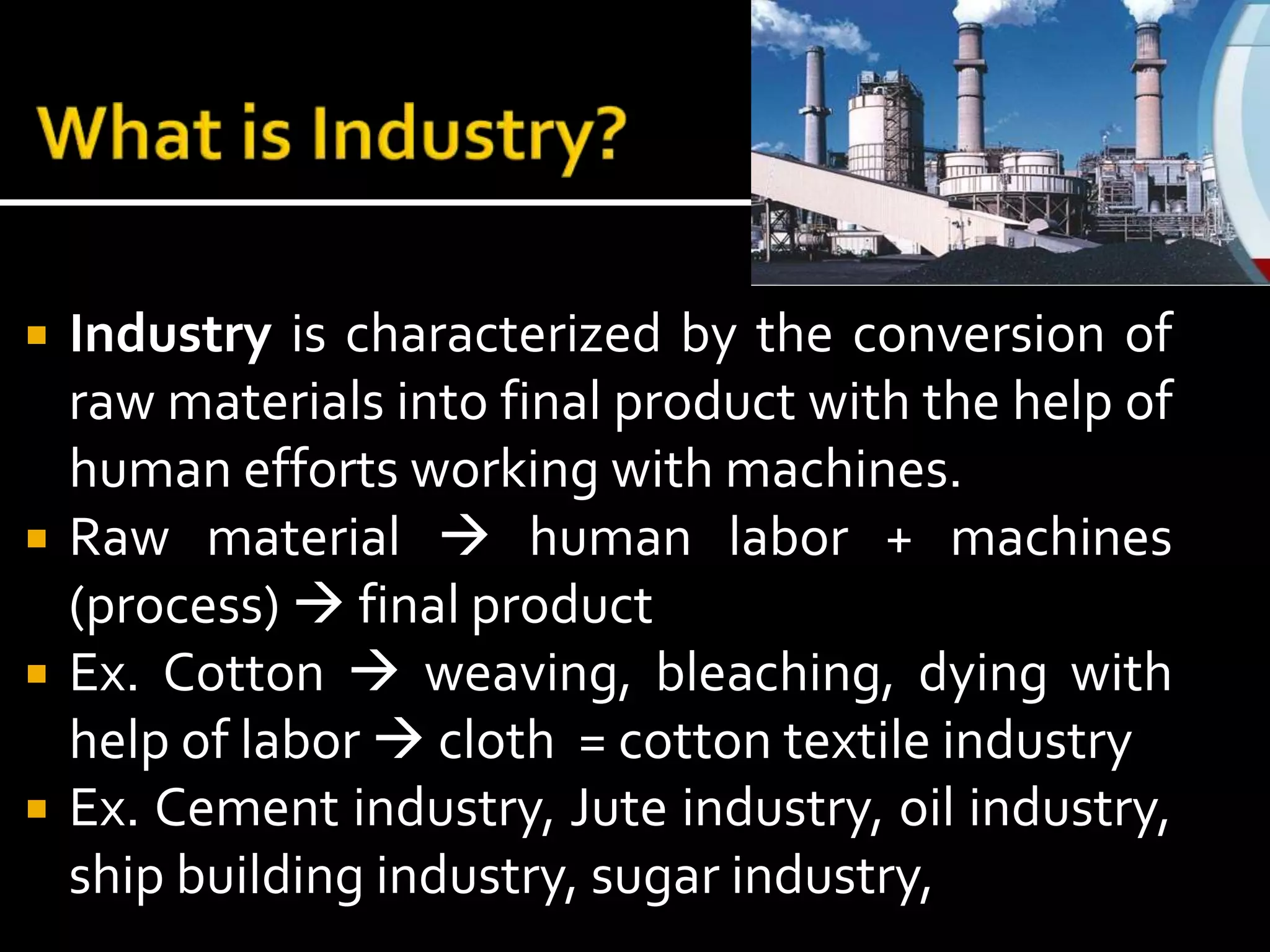
 Industry is characterized by the conversion of
raw materials into final product with the help of
human efforts working with machines.
 Raw material  human labor + machines
(process)  final product
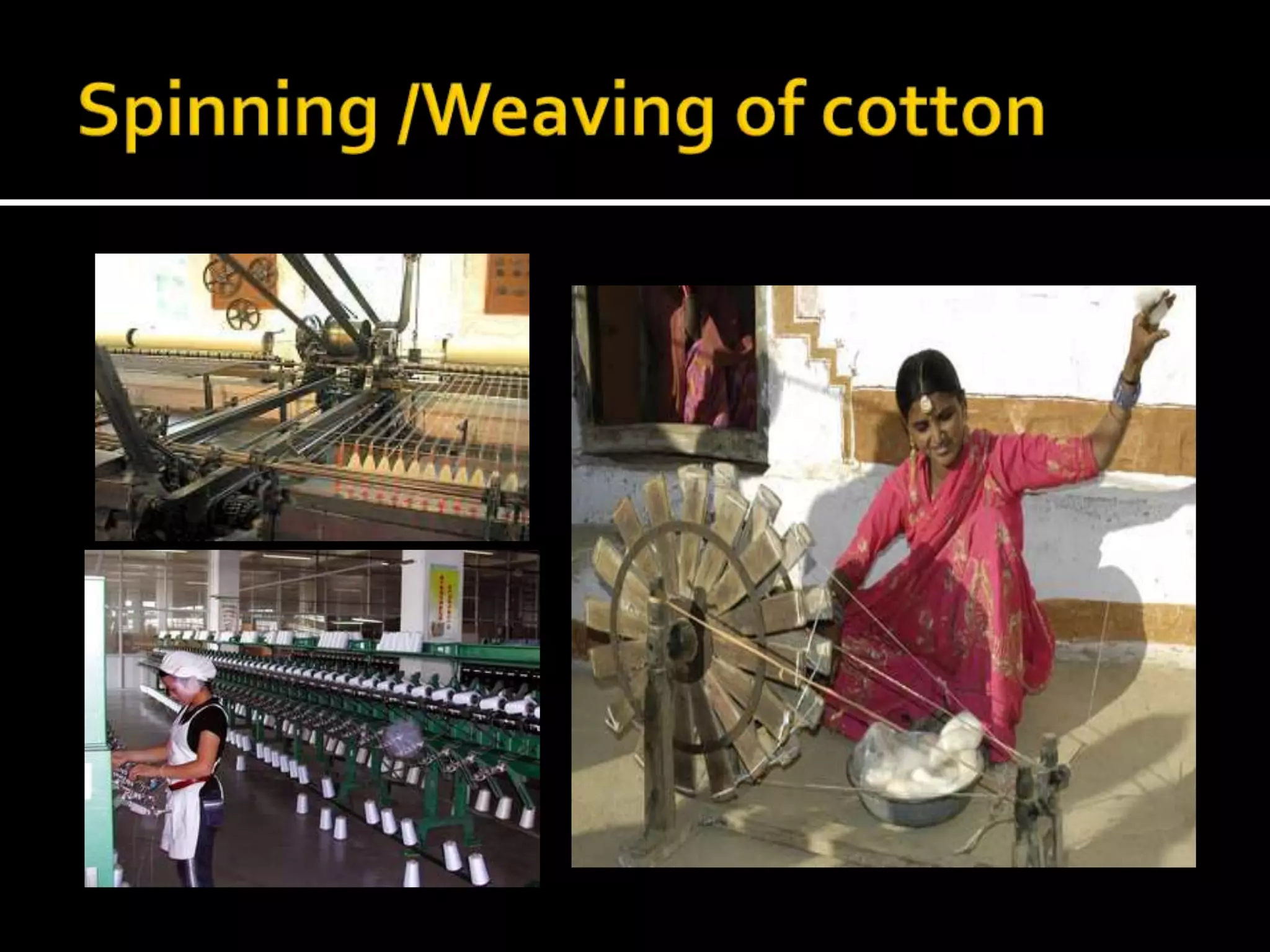
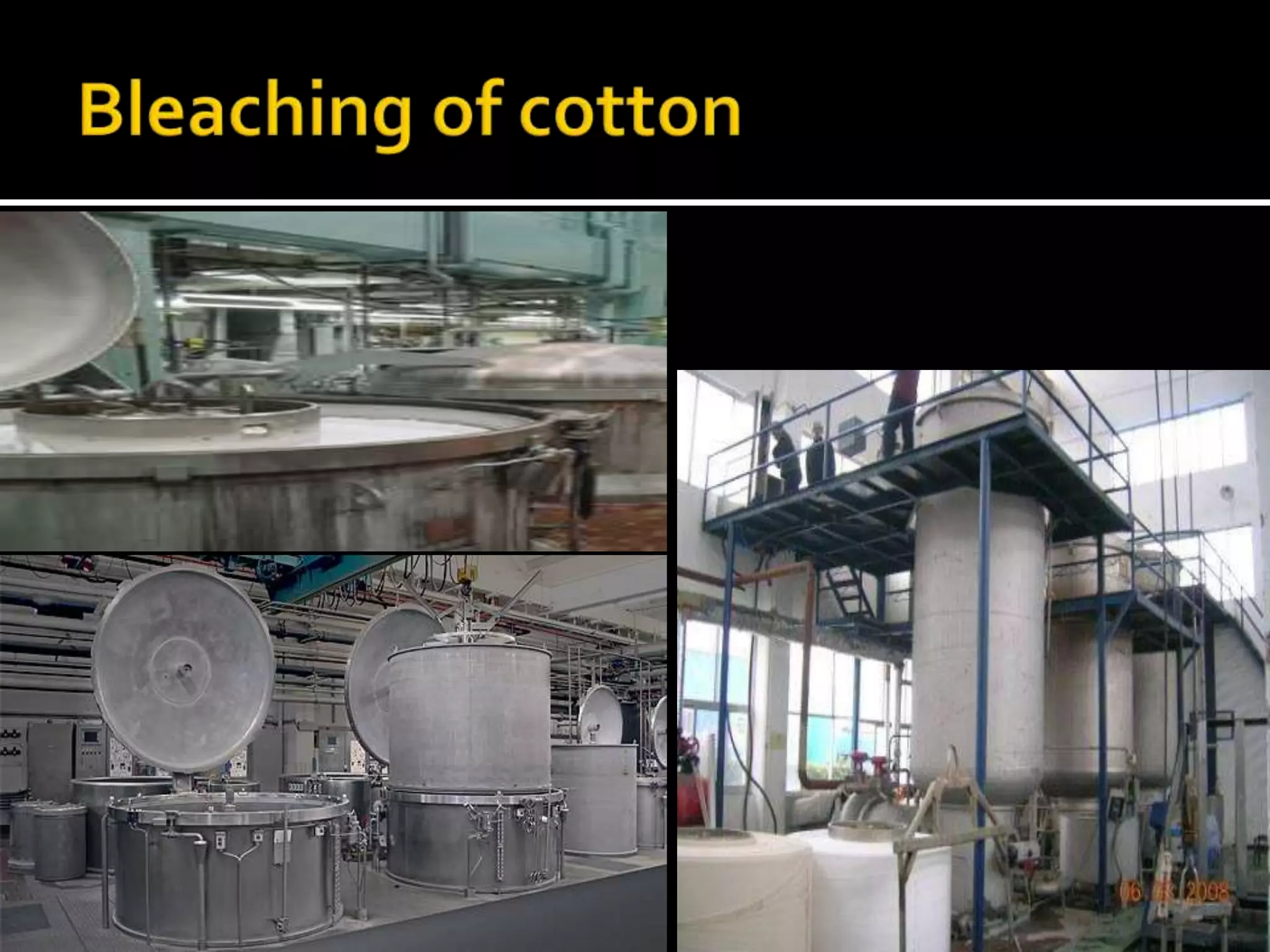
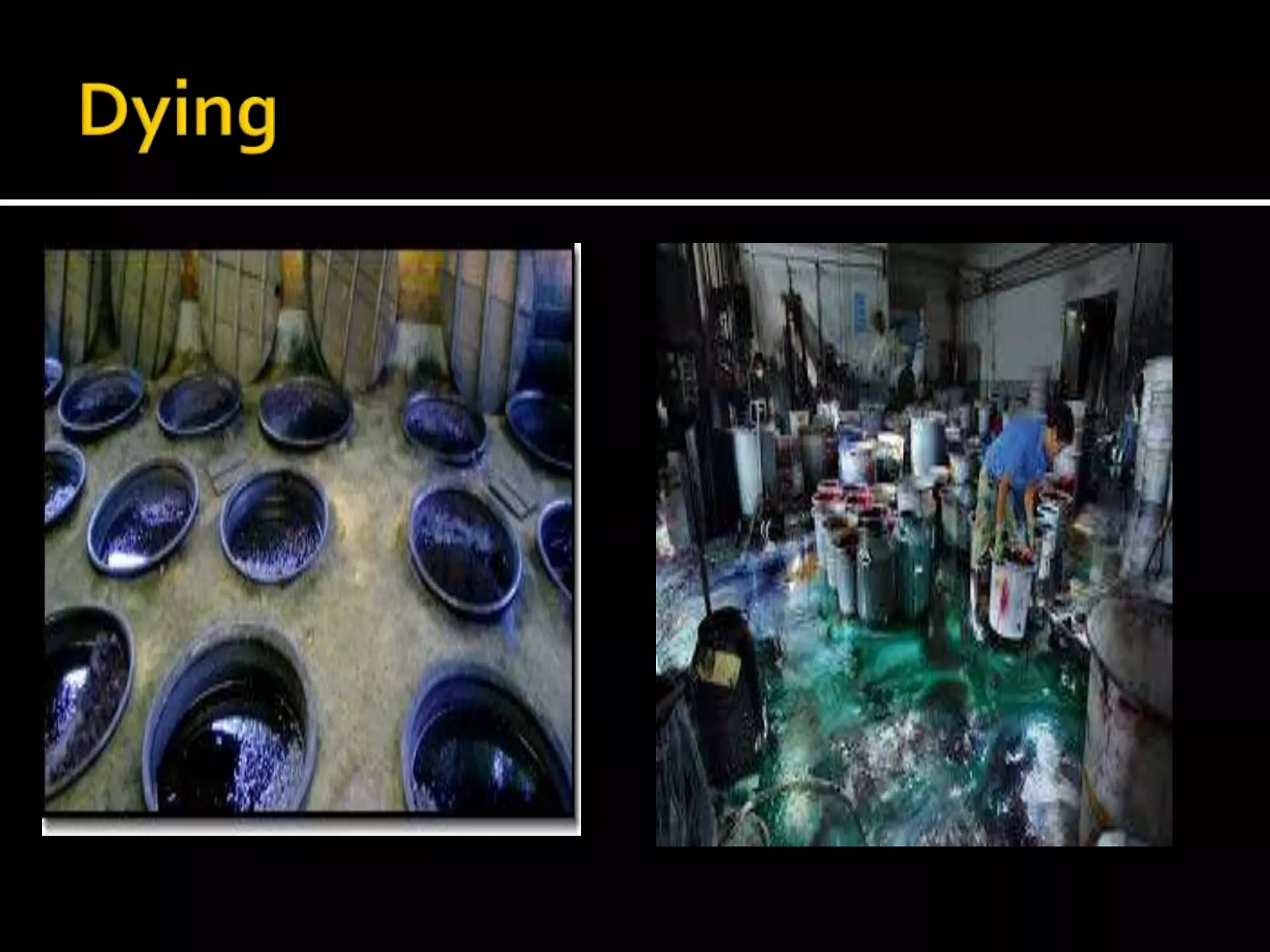
 Ex. Cotton  weaving, bleaching, dying with
help of labor  cloth = cotton textile industry
 Ex. Cement industry, Jute industry, oil industry,
ship building industry, sugar industry,
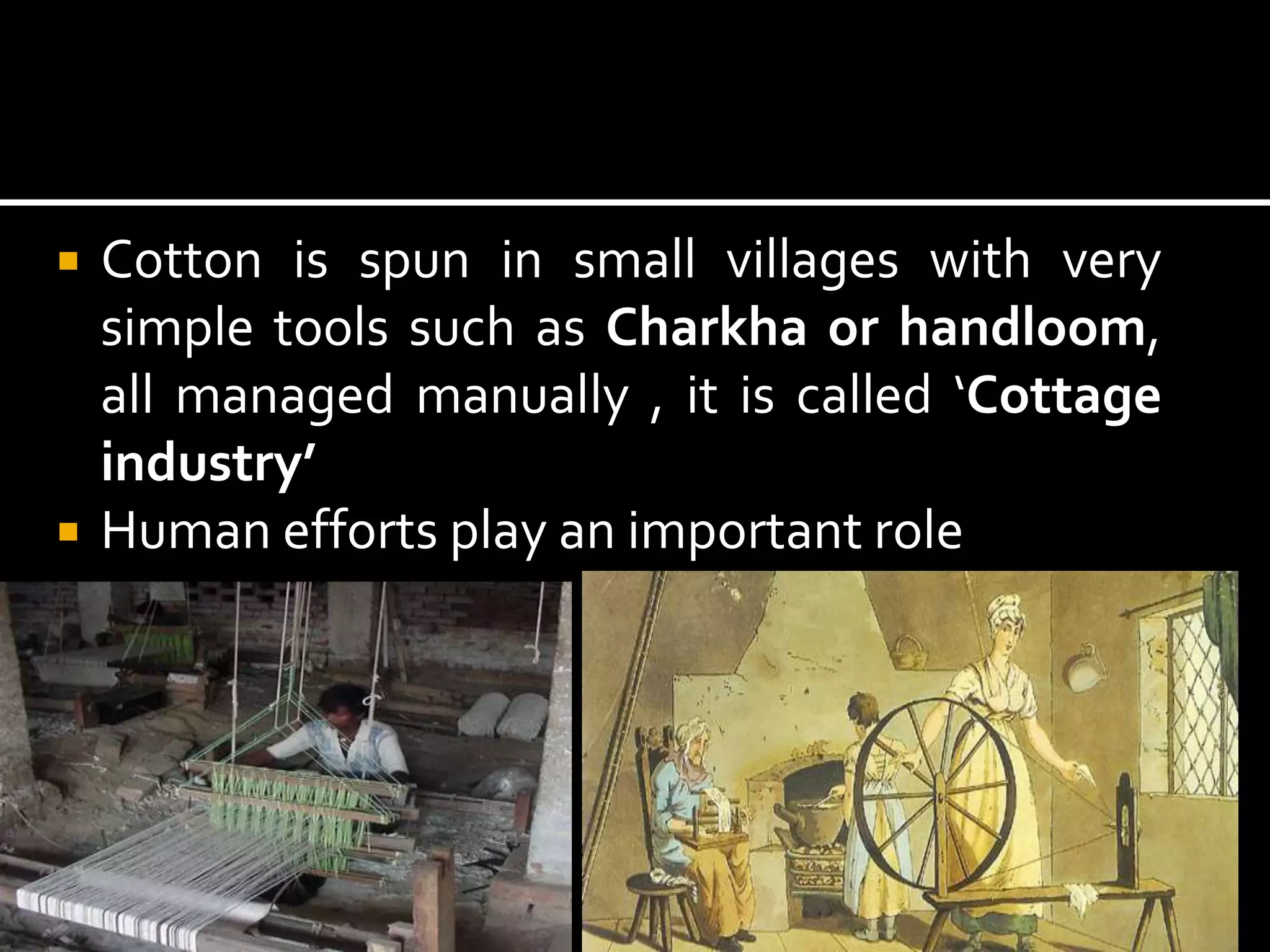
 Cotton is spun in small villages with very
simple tools such as Charkha or handloom,
all managed manually , it is called ‘Cottage
industry’
 Human efforts play an important role
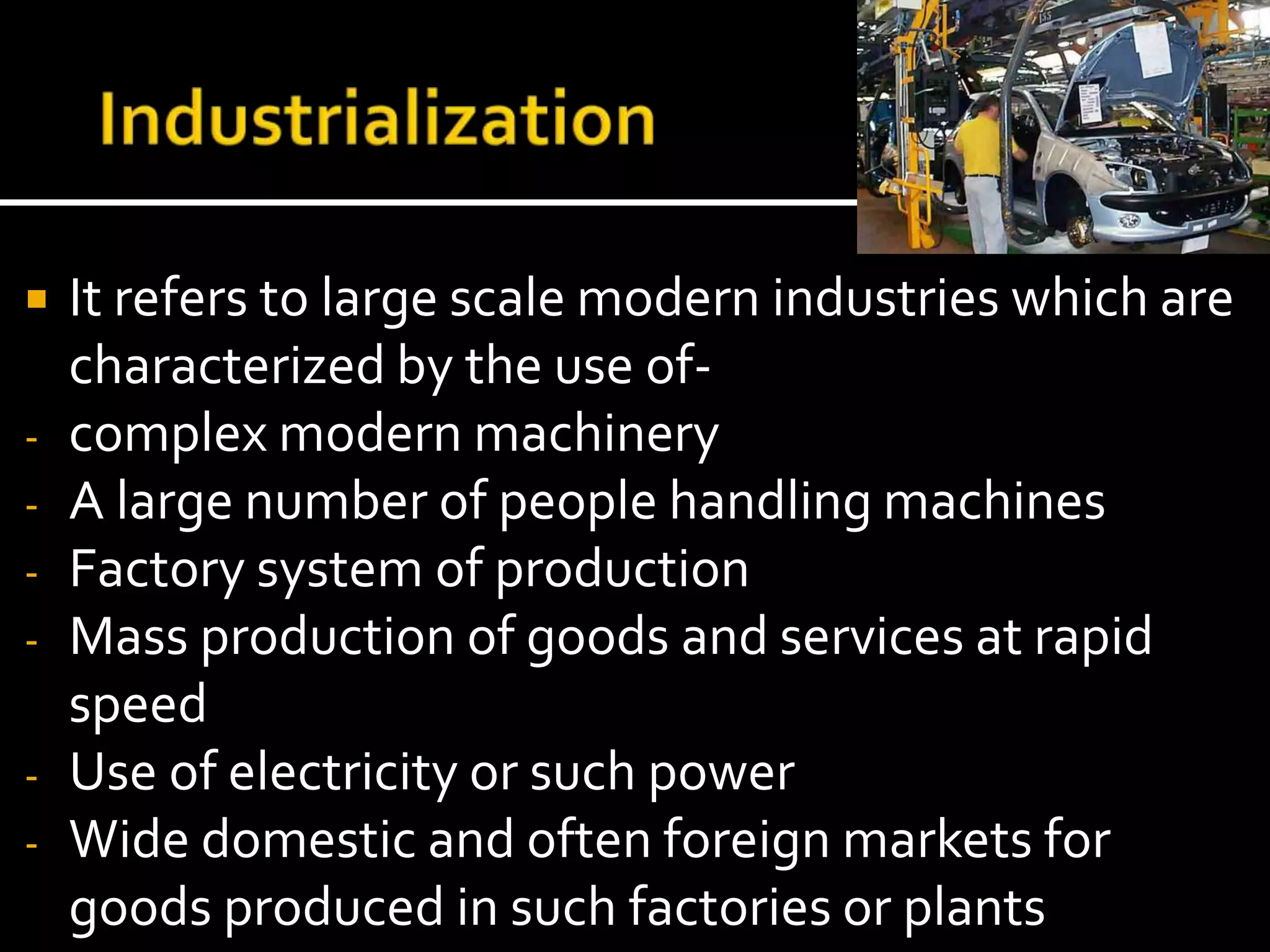
 It refers to large scale modern industries which are
characterized by the use of-
- complex modern machinery
- A large number of people handling machines
- Factory system of production
- Mass production of goods and services at rapid
speed
- Use of electricity or such power
- Wide domestic and often foreign markets for
goods produced in such factories or plants
1. Substitute for agricultural product:
- ex. Man-made fibers for cotton yarn, synthetic rubber,
plastic wrappings and materials
2. To reduce unemployment and poverty
3. Value addition process in India
- Using raw material in India only to prepare final
product, which increase income of people
4. To raise income of people engaged in agriculture
5. Modernization of India's agricultural sector:
- By increase in the supply of industrial goods i.e.,
tractors, electrical engines, pump, hybrid seeds etc.
6. More self reliance
- Reduction in imports, less dependence in foreign
countries
7. To develop defense system
- Vast network of modern industries are required to
produce bombs, warships, missiles, rifles and guns
etc.
8. Decreasing importance of agriculture
1. Economic factor:
- Lack of infrastructure facilities (transport,
communication, training insti., fin. Insti.)
- Lack of power
2. Socio-demographic environment:
- Rapid growth of population -> low per capita
income -> low rate of saving -> Low rate of
investment, poverty
- Variety of cast, religion, culture in India, only
certain castes and community will associate with
industry and commerce. Hindrance to
entrepreneurs
- Mentality on life is influenced by fatalism, theory
of Karma (deeds of past life)
3. Public administrative machinery:
- Lack of decision making ability, bureaucratic
delays, corruption, waste of various types of
resources and inefficient implementation of
developmental schemes.
4. International environment:
- Developed countries may put restrictions on
exports of capital goods and equipment for
countries like India
 Industries classified into:
1. Nature- Capital goods, Producing goods,
consumption goods
2. Ownership- Private, Public & Joint sector
3. Size- Small scale, medium scale & large scale
industries
Definition:
• Facility or Plant location is a place where a
factory, warehouse, office or any business
enterprise is built
• Selection of a location depends on the type of
business.
• The objective of selection of a location is to
obtain the maximum efficiency and
effectiveness by minimizing operating cost and
achieve maximum revenues.
1. Starting new business
2. Introduction of new product or service
3. Insufficient capacity
4. Changes in technology
5. Mergers
6. Changes in input resources
7. Shifts in geographical demand may occur
8. govt.
1. Efficiency and effectiveness
 Efficiency and effectiveness are dependent
upon location.
 Location affect the operating cost such as
production and distribution costs.
 In service, it affects the demand and
effectiveness of the entire operation.
2. Long term commitment
 Involve huge amount of capital.
3. Fixed Cost
 Involve the cost of constructing or purchasing
new
plant, renovating (if renting).
4. Revenues
 Revenue may depend on having the facility near
the
potential customer.
5.Variable Costs
 Cost of labor, and material also depend on
location.
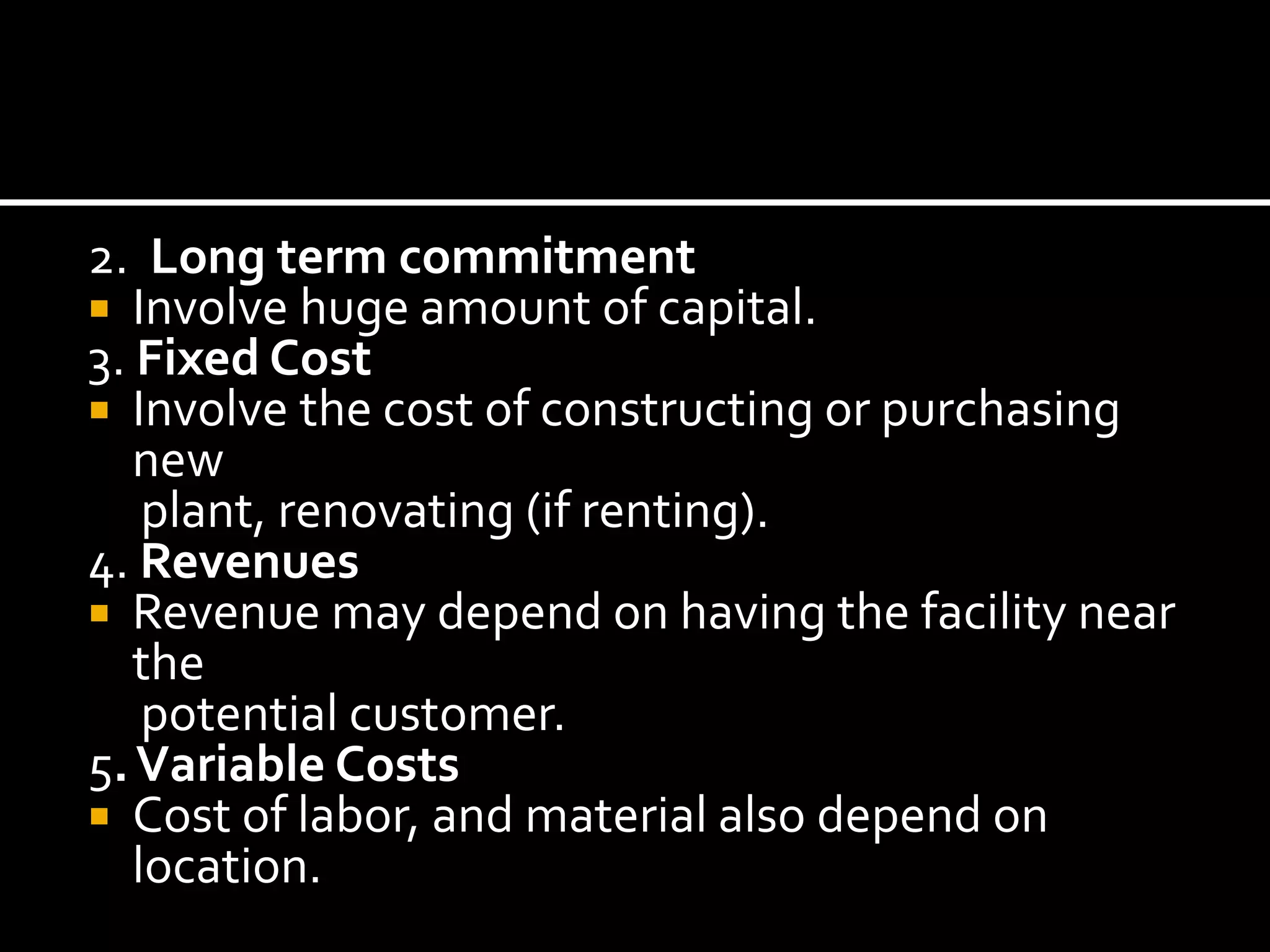
1. Land and raw material:
- Land includes water, forest wealth, rivers, coastline,
wind etc.
- Rent of land
- Climate and transportation
- Ex. Moist climate suites textile industry of Mumbai
- Ex. Fishing industry-
coastline area,
paper industry- bamboo
tree area
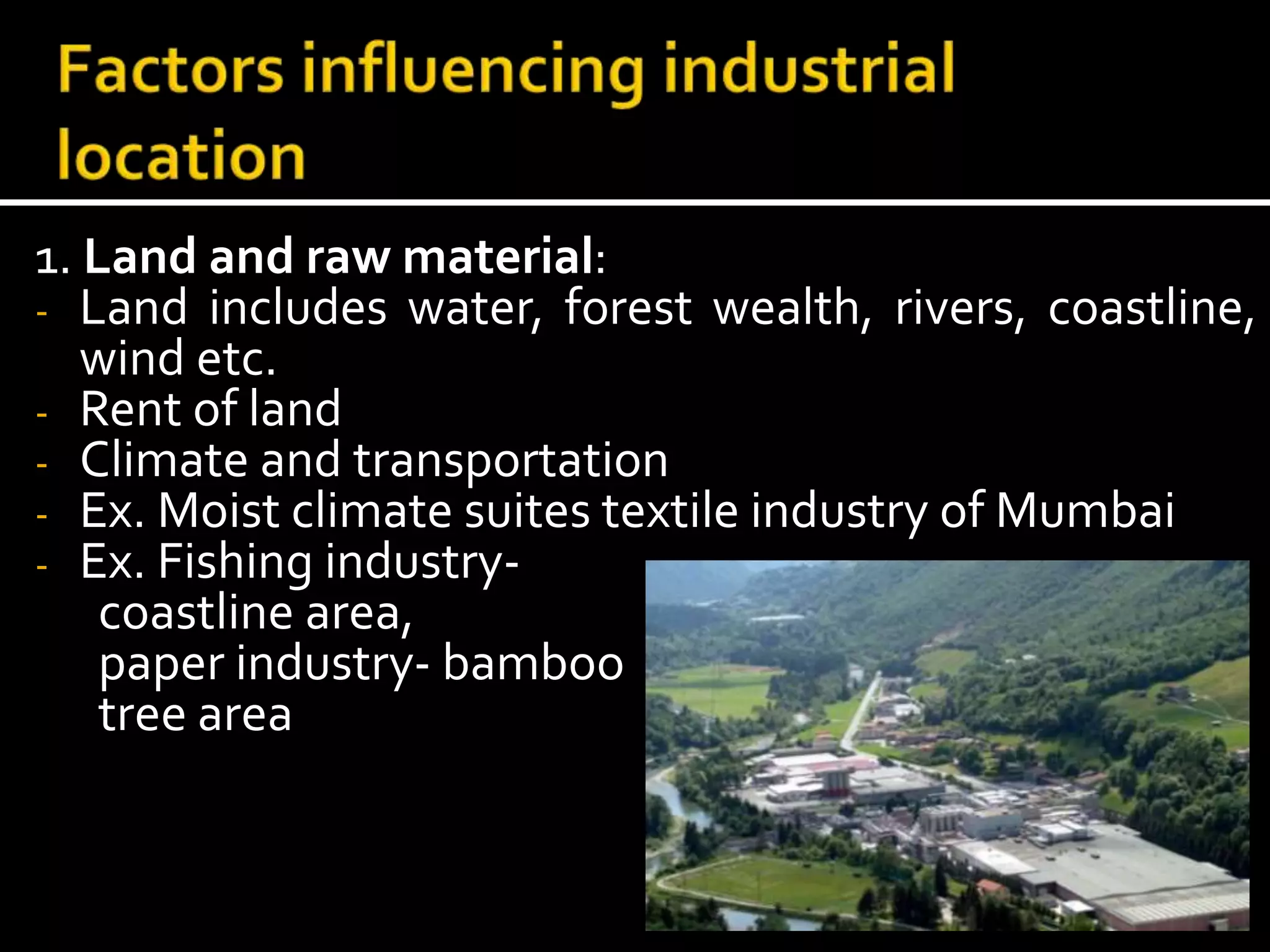
2. Labour:
- Skilled, semiskilled, unskilled
- Labor union
- Rate of wages
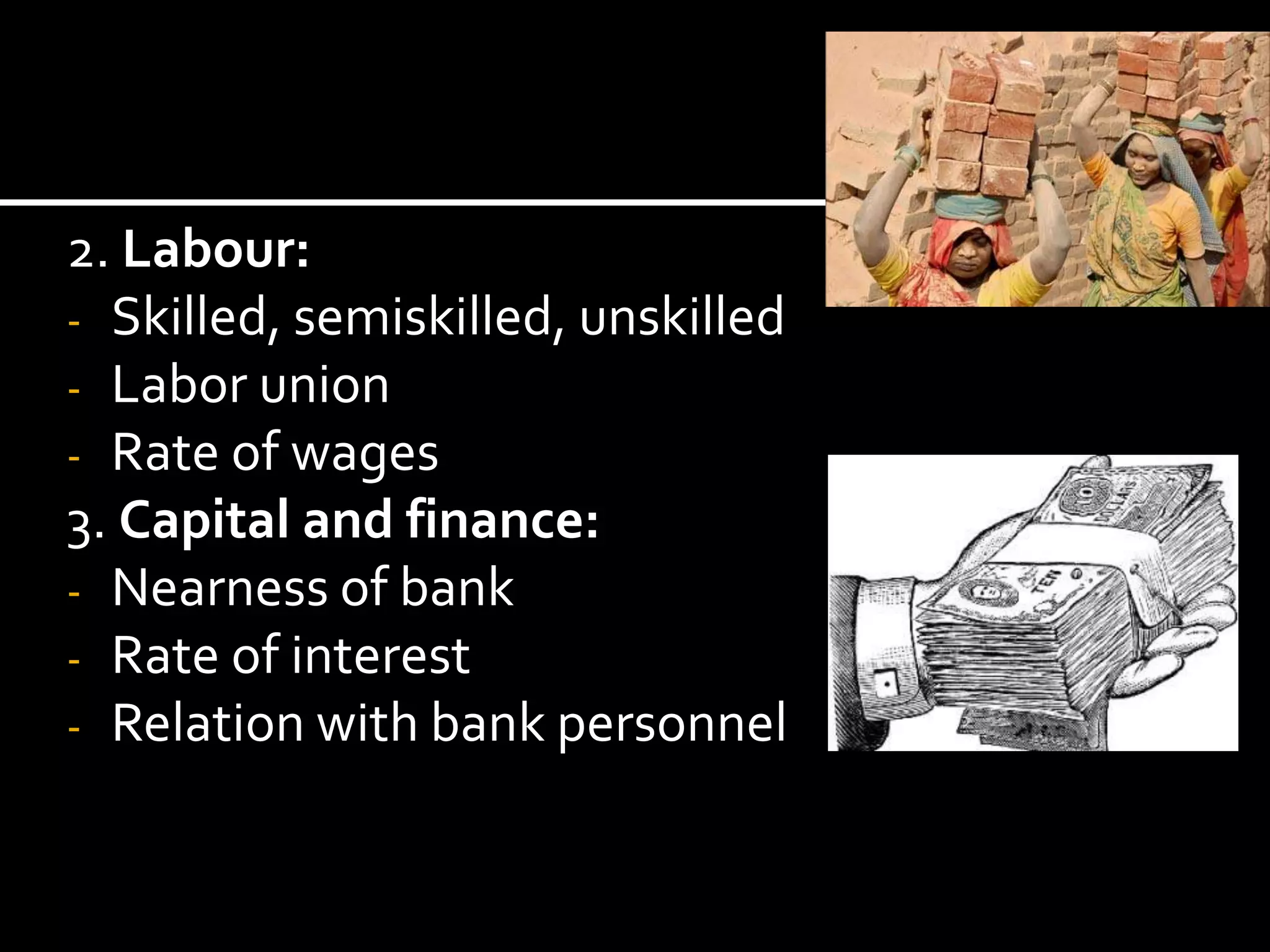
3. Capital and finance:
- Nearness of bank
- Rate of interest
- Relation with bank personnel
4. Proximity of markets:
- Perishable and heavy products units should be
near to market
5. Availability of transport:
- water, road, rail
- Ex. Steel plant atVishakhapattanam
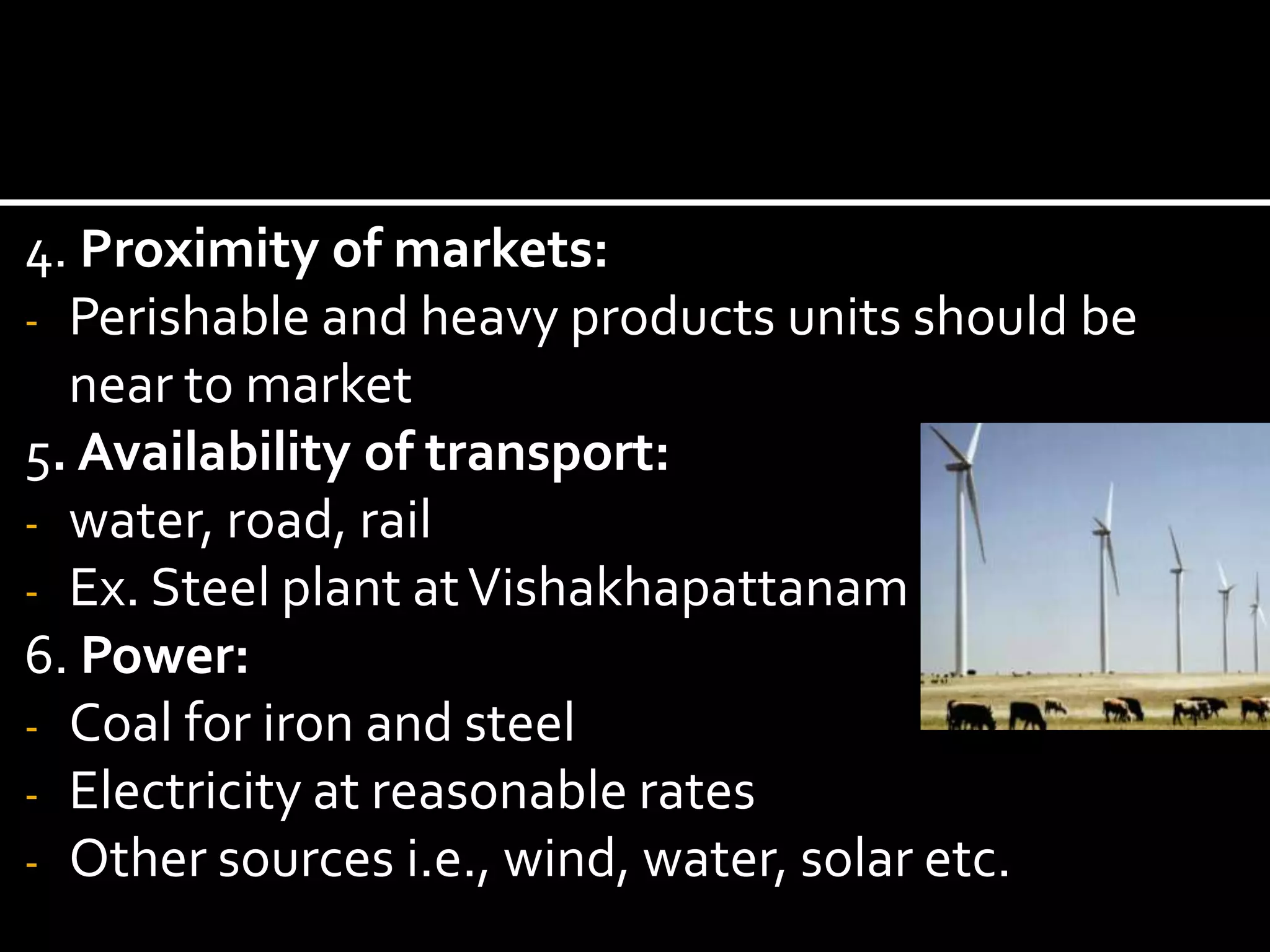
6. Power:
- Coal for iron and steel
- Electricity at reasonable rates
- Other sources i.e., wind, water, solar etc.
7.Infrastructural facilities
8. Historical factors
9. Entrepreneurship
10. Strategic considerations
11. Government policy
Unit  1 intro to gsi - video lecture

Unit 1 intro to gsi - video lecture

  • 1.
    Topic: Industrialization &Industrial Location Subject: Growth & Structure of Industries Course- BBA II Unit- 1 Prepared by: Prof. RITIKA SINGH
  • 2.
     Meaning ofindustry and industrialization, Significance of industrialization in India  Factors hampering industrial development of India/ Problems of industrialization  Meaning and importance of location,  Factors affecting industrial location  Classification of industries
  • 3.
     Industry ischaracterized by the conversion of raw materials into final product with the help of human efforts working with machines.  Raw material  human labor + machines (process)  final product  Ex. Cotton  weaving, bleaching, dying with help of labor  cloth = cotton textile industry  Ex. Cement industry, Jute industry, oil industry, ship building industry, sugar industry,
  • 9.
     Cotton isspun in small villages with very simple tools such as Charkha or handloom, all managed manually , it is called ‘Cottage industry’  Human efforts play an important role
  • 10.
     It refersto large scale modern industries which are characterized by the use of- - complex modern machinery - A large number of people handling machines - Factory system of production - Mass production of goods and services at rapid speed - Use of electricity or such power - Wide domestic and often foreign markets for goods produced in such factories or plants
  • 11.
    1. Substitute foragricultural product: - ex. Man-made fibers for cotton yarn, synthetic rubber, plastic wrappings and materials 2. To reduce unemployment and poverty 3. Value addition process in India - Using raw material in India only to prepare final product, which increase income of people 4. To raise income of people engaged in agriculture
  • 12.
    5. Modernization ofIndia's agricultural sector: - By increase in the supply of industrial goods i.e., tractors, electrical engines, pump, hybrid seeds etc. 6. More self reliance - Reduction in imports, less dependence in foreign countries 7. To develop defense system - Vast network of modern industries are required to produce bombs, warships, missiles, rifles and guns etc. 8. Decreasing importance of agriculture
  • 13.
    1. Economic factor: -Lack of infrastructure facilities (transport, communication, training insti., fin. Insti.) - Lack of power 2. Socio-demographic environment: - Rapid growth of population -> low per capita income -> low rate of saving -> Low rate of investment, poverty - Variety of cast, religion, culture in India, only certain castes and community will associate with industry and commerce. Hindrance to entrepreneurs
  • 14.
    - Mentality onlife is influenced by fatalism, theory of Karma (deeds of past life) 3. Public administrative machinery: - Lack of decision making ability, bureaucratic delays, corruption, waste of various types of resources and inefficient implementation of developmental schemes. 4. International environment: - Developed countries may put restrictions on exports of capital goods and equipment for countries like India
  • 15.
     Industries classifiedinto: 1. Nature- Capital goods, Producing goods, consumption goods 2. Ownership- Private, Public & Joint sector 3. Size- Small scale, medium scale & large scale industries
  • 16.
    Definition: • Facility orPlant location is a place where a factory, warehouse, office or any business enterprise is built • Selection of a location depends on the type of business. • The objective of selection of a location is to obtain the maximum efficiency and effectiveness by minimizing operating cost and achieve maximum revenues.
  • 17.
    1. Starting newbusiness 2. Introduction of new product or service 3. Insufficient capacity 4. Changes in technology 5. Mergers 6. Changes in input resources 7. Shifts in geographical demand may occur 8. govt.
  • 18.
    1. Efficiency andeffectiveness  Efficiency and effectiveness are dependent upon location.  Location affect the operating cost such as production and distribution costs.  In service, it affects the demand and effectiveness of the entire operation.
  • 19.
    2. Long termcommitment  Involve huge amount of capital. 3. Fixed Cost  Involve the cost of constructing or purchasing new plant, renovating (if renting). 4. Revenues  Revenue may depend on having the facility near the potential customer. 5.Variable Costs  Cost of labor, and material also depend on location.
  • 20.
    1. Land andraw material: - Land includes water, forest wealth, rivers, coastline, wind etc. - Rent of land - Climate and transportation - Ex. Moist climate suites textile industry of Mumbai - Ex. Fishing industry- coastline area, paper industry- bamboo tree area
  • 21.
    2. Labour: - Skilled,semiskilled, unskilled - Labor union - Rate of wages 3. Capital and finance: - Nearness of bank - Rate of interest - Relation with bank personnel
  • 22.
    4. Proximity ofmarkets: - Perishable and heavy products units should be near to market 5. Availability of transport: - water, road, rail - Ex. Steel plant atVishakhapattanam 6. Power: - Coal for iron and steel - Electricity at reasonable rates - Other sources i.e., wind, water, solar etc.
  • 23.
    7.Infrastructural facilities 8. Historicalfactors 9. Entrepreneurship 10. Strategic considerations 11. Government policy