DFJ
                           Understanding Venture Capital
                                       September 2009


© 2009 Simon Olson
What are venture capitalists?

 • Venture capitalists (also known as VCs)
   are professional investors who invest
   money in young, privately-owned
   companies and work with them to help
   them succeed
Important things to remember

 • Venture capital is equity, not debt
 • The companies are private, not public
 • The companies are young, but usually
   have more than just an idea*
 • The companies are growing
   exponentially, not arithmetically
 • The companies are usually technology-
   related, but not always
  *An idea would normally be “seed” capital, not venture capital
How does it work?

• Entrepreneur has an idea
• Gets “seed” capital from friends
  and family, “bootstraps” the
  idea using his or her own
  money, or gets money from an
  “angel” investor
• Builds a proof of concept
• Approaches venture capitalist
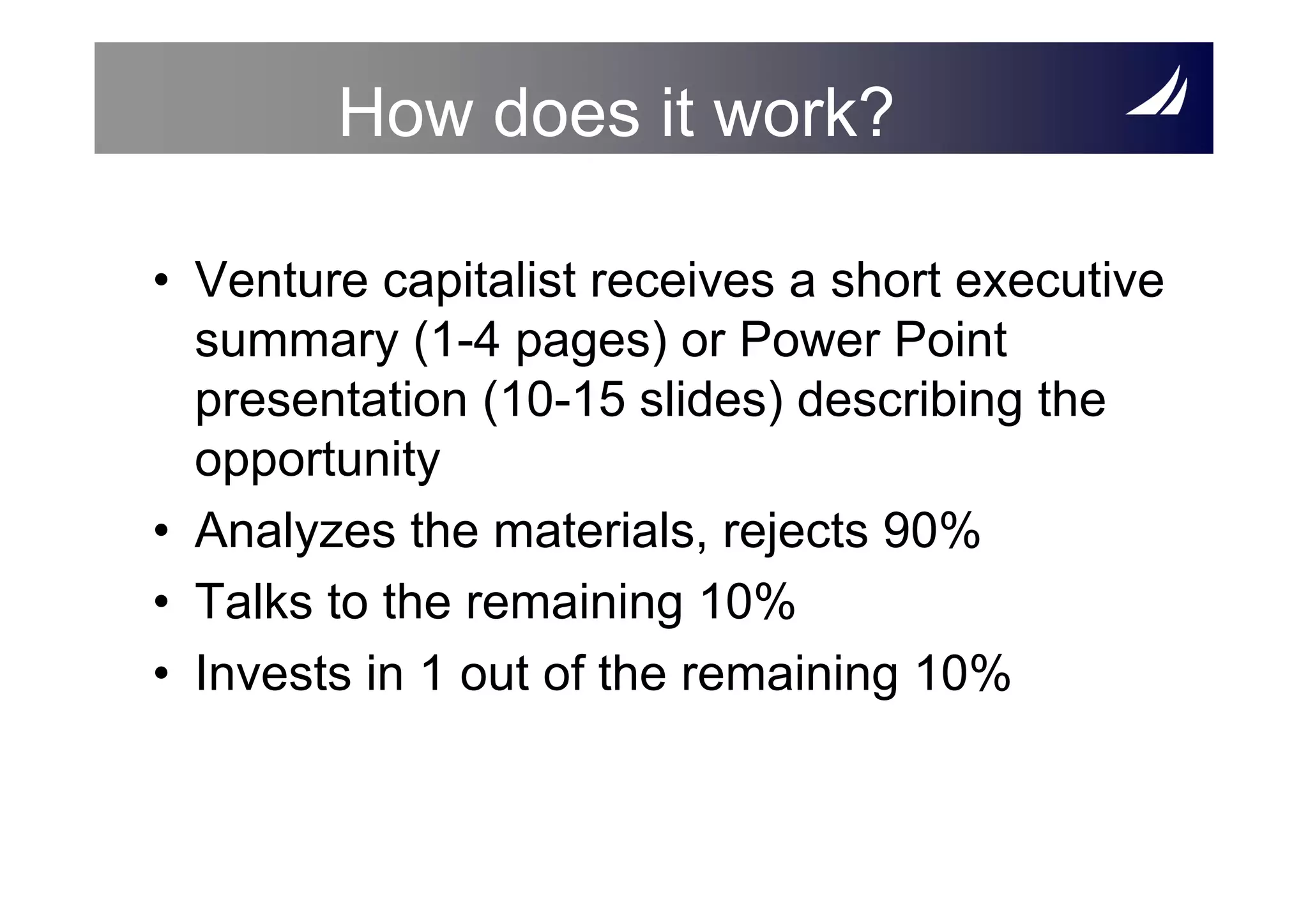
How does it work?

• Venture capitalist receives a short executive
  summary (1-4 pages) or Power Point
  presentation (10-15 slides) describing the
  opportunity
• Analyzes the materials, rejects 90%
• Talks to the remaining 10%
• Invests in 1 out of the remaining 10%
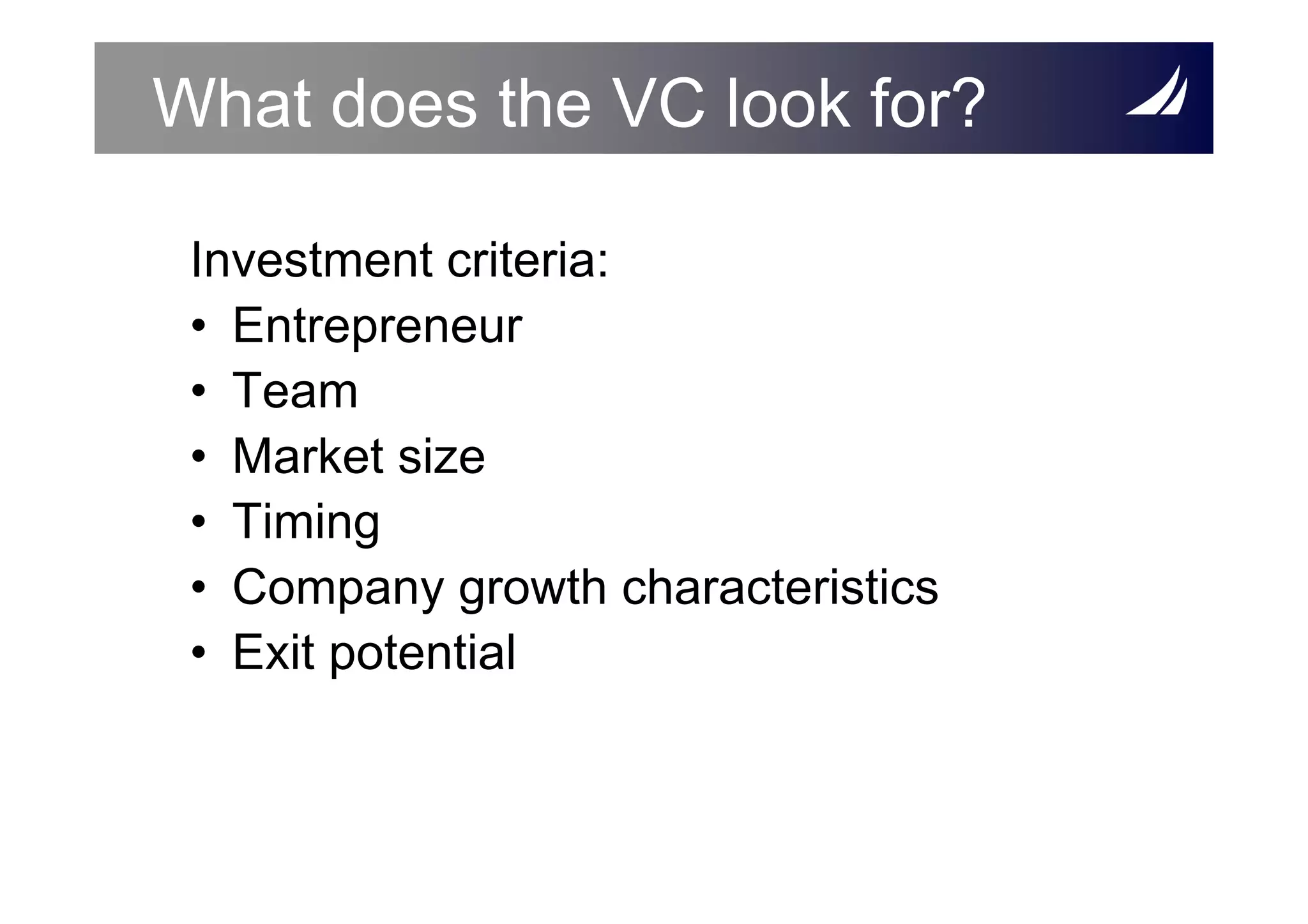
What does the VC look for?

 Investment criteria:
 • Entrepreneur
 • Team
 • Market size
 • Timing
 • Company growth characteristics
 • Exit potential
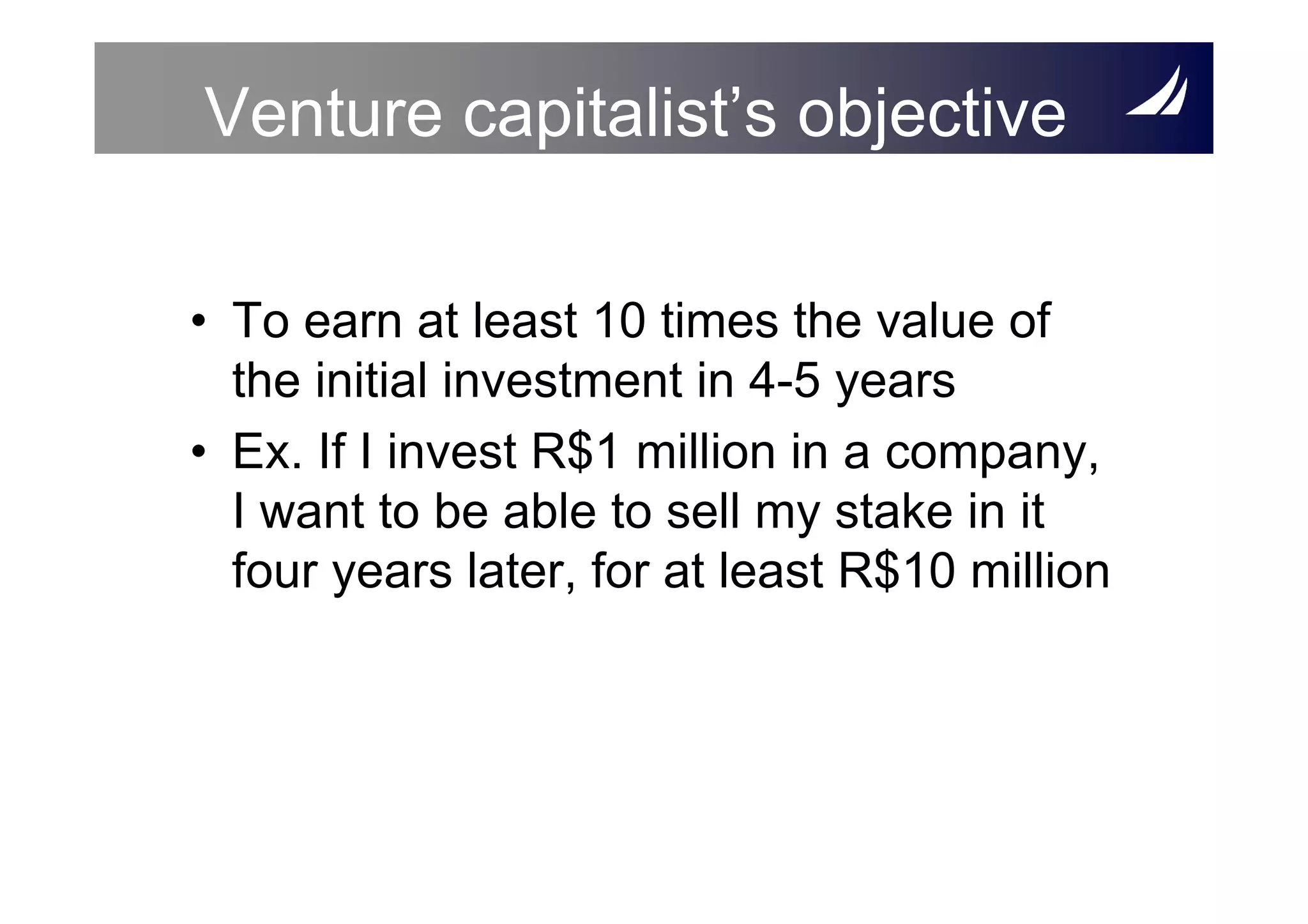
Venture capitalist’s objective

• To earn at least 10 times the value of
  the initial investment in 4-5 years
• Ex. If I invest R$1 million in a company,
  I want to be able to sell my stake in it
  four years later, for at least R$10 million
Why is such a large return
       necessary?
Because, for every Google in
a VC’s portfolio, there were 18
    companies that failed!
Portfolio strategy

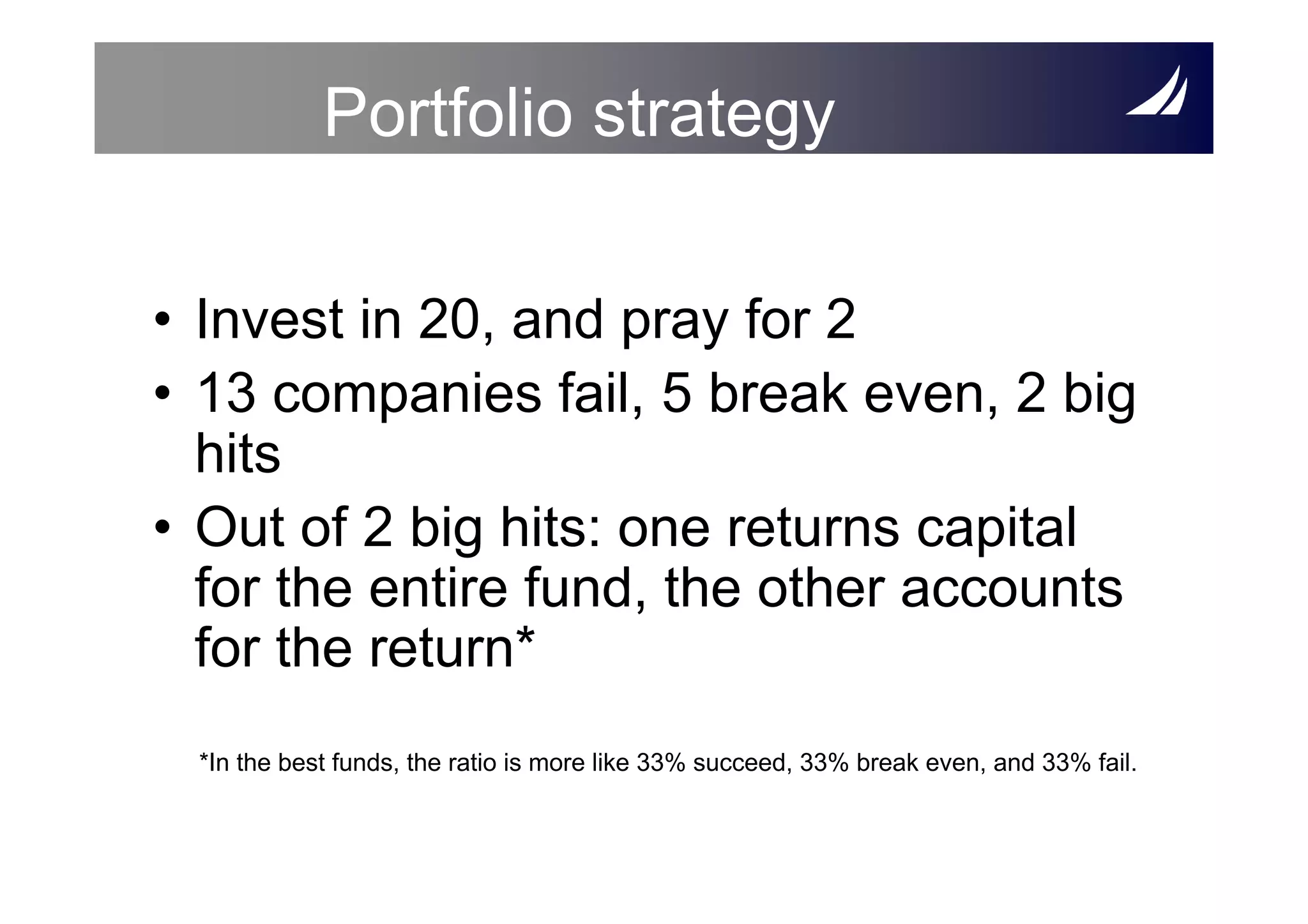
• Invest in 20, and pray for 2
• 13 companies fail, 5 break even, 2 big
  hits
• Out of 2 big hits: one returns capital
  for the entire fund, the other accounts
  for the return*
 *In the best funds, the ratio is more like 33% succeed, 33% break even, and 33% fail.
Portfolio distribution
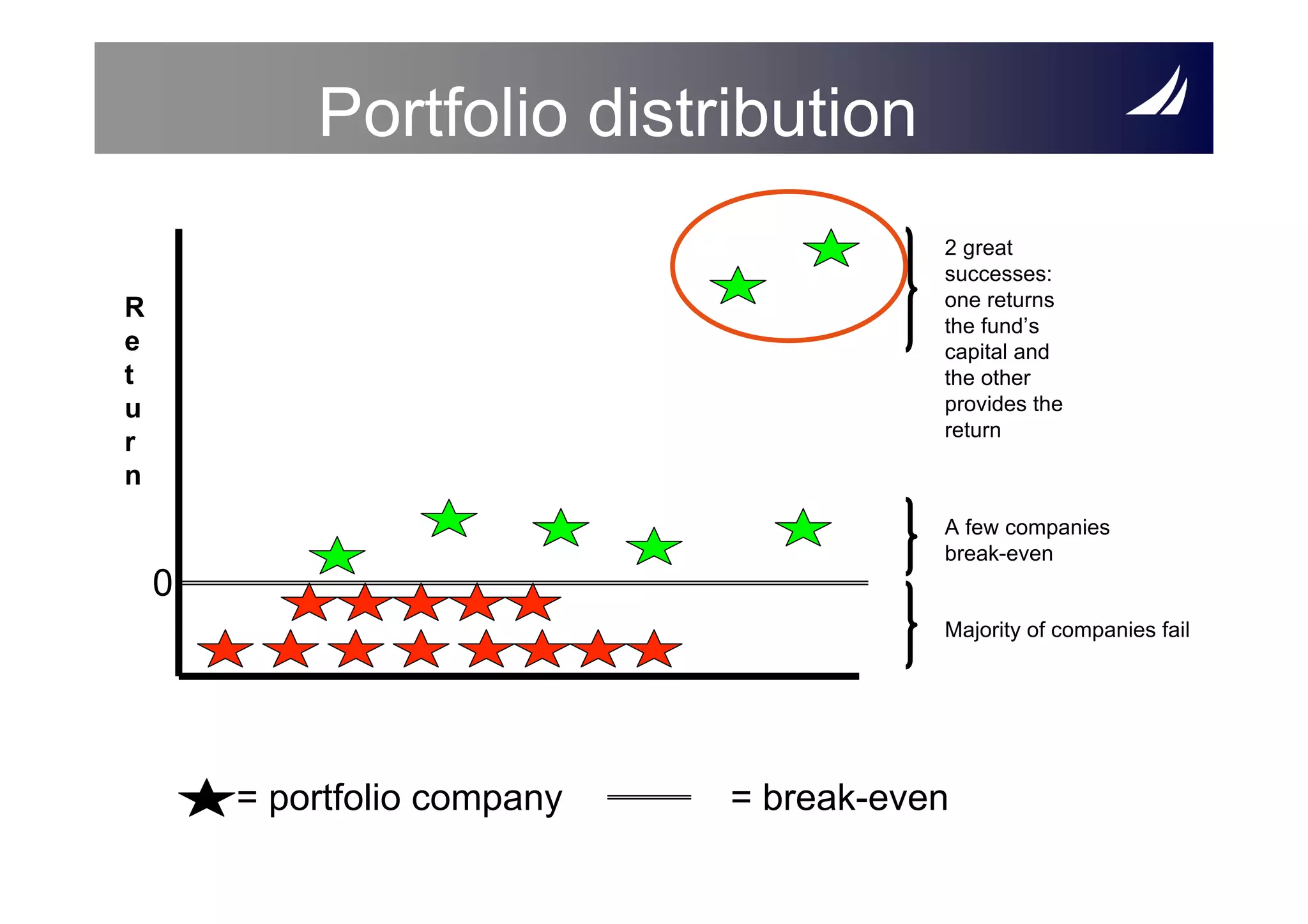
                                         2 great
                                         successes:
R                                        one returns
                                         the fund’s
e                                        capital and
t                                        the other
u                                        provides the
                                         return
r
n
                                         A few companies
                                         break-even
    0
                                         Majority of companies fail


        = portfolio company   = break-even
After the decision is made to
    invest, what’s next?
Services venture capitalist’s provide


   • Advice on strategy
   • Help recruiting
   • Introductions to key customers/partners
   • Professionalization (management and
     corporate governance)
   • Internationalization
   • Help with sale of the company or IPO
   • Provide capital
How do VCs make money?

• Annual management fee
• Performance fee
Simon Olson

Understanding Venture Capital

  • 1.
    DFJ Understanding Venture Capital September 2009 © 2009 Simon Olson
  • 2.
    What are venturecapitalists? • Venture capitalists (also known as VCs) are professional investors who invest money in young, privately-owned companies and work with them to help them succeed
  • 3.
    Important things toremember • Venture capital is equity, not debt • The companies are private, not public • The companies are young, but usually have more than just an idea* • The companies are growing exponentially, not arithmetically • The companies are usually technology- related, but not always *An idea would normally be “seed” capital, not venture capital
  • 4.
    How does itwork? • Entrepreneur has an idea • Gets “seed” capital from friends and family, “bootstraps” the idea using his or her own money, or gets money from an “angel” investor • Builds a proof of concept • Approaches venture capitalist
  • 5.
    How does itwork? • Venture capitalist receives a short executive summary (1-4 pages) or Power Point presentation (10-15 slides) describing the opportunity • Analyzes the materials, rejects 90% • Talks to the remaining 10% • Invests in 1 out of the remaining 10%
  • 6.
    What does theVC look for? Investment criteria: • Entrepreneur • Team • Market size • Timing • Company growth characteristics • Exit potential
  • 7.
    Venture capitalist’s objective •To earn at least 10 times the value of the initial investment in 4-5 years • Ex. If I invest R$1 million in a company, I want to be able to sell my stake in it four years later, for at least R$10 million
  • 8.
    Why is sucha large return necessary?
  • 9.
    Because, for everyGoogle in a VC’s portfolio, there were 18 companies that failed!
  • 10.
    Portfolio strategy • Investin 20, and pray for 2 • 13 companies fail, 5 break even, 2 big hits • Out of 2 big hits: one returns capital for the entire fund, the other accounts for the return* *In the best funds, the ratio is more like 33% succeed, 33% break even, and 33% fail.
  • 11.
    Portfolio distribution 2 great successes: R one returns the fund’s e capital and t the other u provides the return r n A few companies break-even 0 Majority of companies fail = portfolio company = break-even
  • 12.
    After the decisionis made to invest, what’s next?
  • 13.
    Services venture capitalist’sprovide • Advice on strategy • Help recruiting • Introductions to key customers/partners • Professionalization (management and corporate governance) • Internationalization • Help with sale of the company or IPO • Provide capital
  • 14.
    How do VCsmake money? • Annual management fee • Performance fee
  • 15.