Understanding The Guide
Sheet
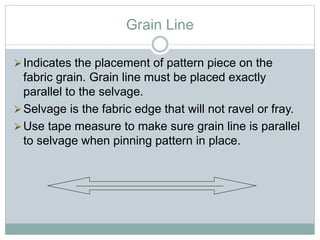
Grain Line
Indicates the placement of pattern piece on the
fabric grain. Grain line must be placed exactly
parallel to the selvage.
Selvage is the fabric edge that will not ravel or fray.
Use tape measure to make sure grain line is parallel
to selvage when pinning pattern in place.
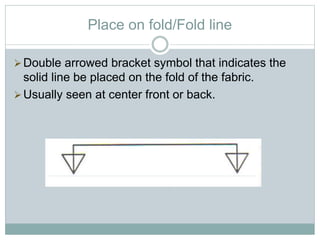
Place on fold/Fold line
Double arrowed bracket symbol that indicates the
solid line be placed on the fold of the fabric.
Usually seen at center front or back.
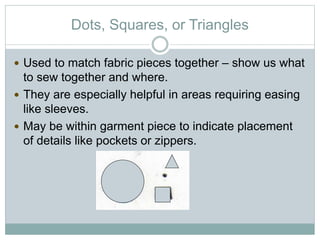
Dots, Squares, or Triangles
 Used to match fabric pieces together – show us what
to sew together and where.
 They are especially helpful in areas requiring easing
like sleeves.
 May be within garment piece to indicate placement
of details like pockets or zippers.
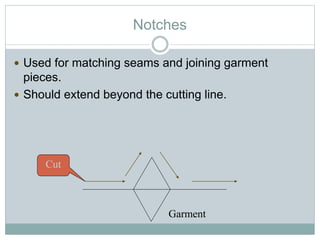
Notches
 Used for matching seams and joining garment
pieces.
 Should extend beyond the cutting line.
Garment
Cut
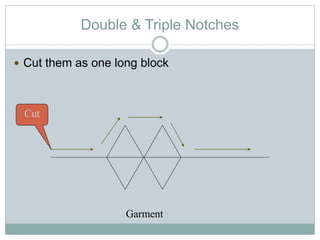
Double & Triple Notches
 Cut them as one long block
Garment
Cut
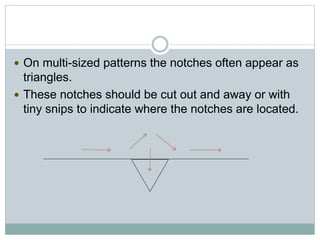
 On multi-sized patterns the notches often appear as
triangles.
 These notches should be cut out and away or with
tiny snips to indicate where the notches are located.
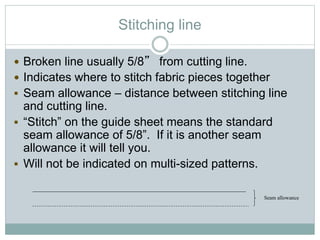
Stitching line
 Broken line usually 5/8” from cutting line.
 Indicates where to stitch fabric pieces together
 Seam allowance – distance between stitching line
and cutting line.
 “Stitch” on the guide sheet means the standard
seam allowance of 5/8”. If it is another seam
allowance it will tell you.
 Will not be indicated on multi-sized patterns.
Seam allowance
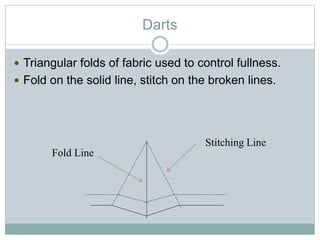
Darts
 Triangular folds of fabric used to control fullness.
 Fold on the solid line, stitch on the broken lines.
Stitching Line
Fold Line
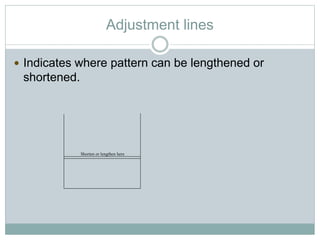
Adjustment lines
 Indicates where pattern can be lengthened or
shortened.
Shorten or lengthen here
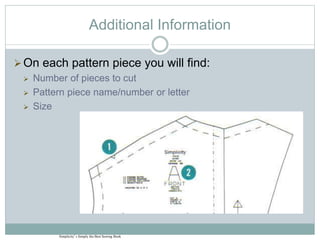
Additional Information
On each pattern piece you will find:
 Number of pieces to cut
 Pattern piece name/number or letter
 Size
Simplicity’s Simply the Best Sewing Book
Guide Sheet
Gives you step-by-step information for cutting,
marking, and sewing the fabric pieces together.
Main sections of the guide sheet are view selection,
cutting layouts and sewing instructions.
In the cutting layout section, you will find the “Use
pieces” information to determine which pattern
pieces go with which view to be constructed.
Also included are sketches and special information.
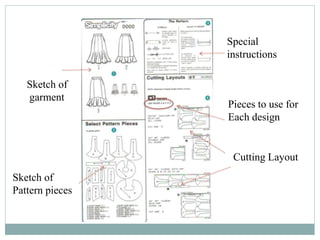
Sketch of
garment
Sketch of
Pattern pieces
Special
instructions
Cutting Layout
Pieces to use for
Each design
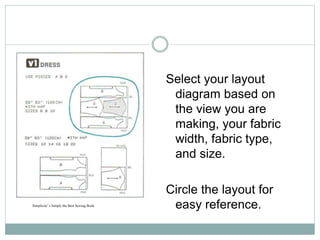
Select your layout
diagram based on
the view you are
making, your fabric
width, fabric type,
and size.
Circle the layout for
easy reference.Simplicity’s Simply the Best Sewing Book
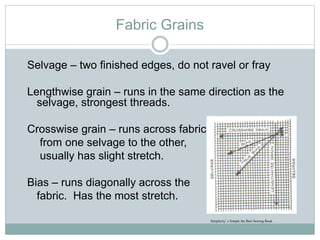
Fabric Grains
Selvage – two finished edges, do not ravel or fray
Lengthwise grain – runs in the same direction as the
selvage, strongest threads.
Crosswise grain – runs across fabric
from one selvage to the other,
usually has slight stretch.
Bias – runs diagonally across the
fabric. Has the most stretch.
Simplicity’s Simply the Best Sewing Book
Fabric Folds
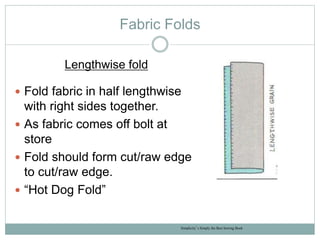
Lengthwise fold
 Fold fabric in half lengthwise
with right sides together.
 As fabric comes off bolt at
store
 Fold should form cut/raw edge
to cut/raw edge.
 “Hot Dog Fold”
Simplicity’s Simply the Best Sewing Book
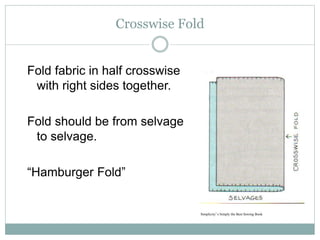
Crosswise Fold
Fold fabric in half crosswise
with right sides together.
Fold should be from selvage
to selvage.
“Hamburger Fold”
Simplicity’s Simply the Best Sewing Book
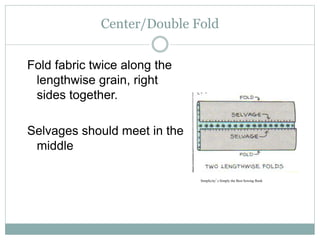
Center/Double Fold
Fold fabric twice along the
lengthwise grain, right
sides together.
Selvages should meet in the
middle
Simplicity’s Simply the Best Sewing Book
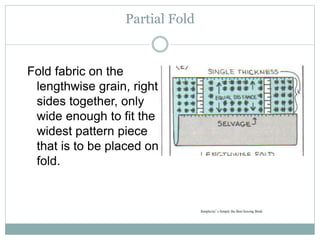
Partial Fold
Fold fabric on the
lengthwise grain, right
sides together, only
wide enough to fit the
widest pattern piece
that is to be placed on
fold.
Simplicity’s Simply the Best Sewing Book
Placement of Pattern Pieces
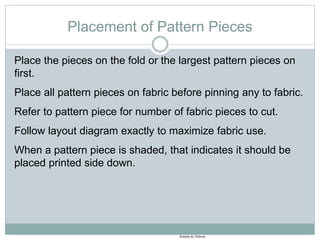
Place the pieces on the fold or the largest pattern pieces on
first.
Place all pattern pieces on fabric before pinning any to fabric.
Refer to pattern piece for number of fabric pieces to cut.
Follow layout diagram exactly to maximize fabric use.
When a pattern piece is shaded, that indicates it should be
placed printed side down.
Simplicity Pattern
Placement of Pattern Pieces
Pattern pieces should be pinned perpendicular to the cutting
edge every 6” – 8”. More pins may be required in curved
areas.
Cut out pieces using long, smooth strokes to avoid jagged
edges.
Leave pattern pieces attached to fabric until ready to sew.
Transfer dots/squares and dart markings using the marking
method of your choice.
Simplicity Pattern
Sewing instructions
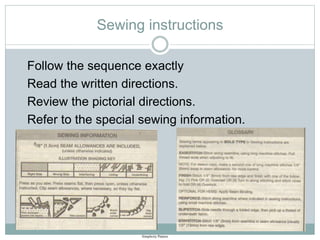
Follow the sequence exactly
Read the written directions.
Review the pictorial directions.
Refer to the special sewing information.
Simplicity Pattern

Understanding the guide sheet and symbols ppt

  • 1.
  • 2.
    Grain Line Indicates theplacement of pattern piece on the fabric grain. Grain line must be placed exactly parallel to the selvage. Selvage is the fabric edge that will not ravel or fray. Use tape measure to make sure grain line is parallel to selvage when pinning pattern in place.
  • 3.
    Place on fold/Foldline Double arrowed bracket symbol that indicates the solid line be placed on the fold of the fabric. Usually seen at center front or back.
  • 4.
    Dots, Squares, orTriangles  Used to match fabric pieces together – show us what to sew together and where.  They are especially helpful in areas requiring easing like sleeves.  May be within garment piece to indicate placement of details like pockets or zippers.
  • 5.
    Notches  Used formatching seams and joining garment pieces.  Should extend beyond the cutting line. Garment Cut
  • 6.
    Double & TripleNotches  Cut them as one long block Garment Cut
  • 7.
     On multi-sizedpatterns the notches often appear as triangles.  These notches should be cut out and away or with tiny snips to indicate where the notches are located.
  • 8.
    Stitching line  Brokenline usually 5/8” from cutting line.  Indicates where to stitch fabric pieces together  Seam allowance – distance between stitching line and cutting line.  “Stitch” on the guide sheet means the standard seam allowance of 5/8”. If it is another seam allowance it will tell you.  Will not be indicated on multi-sized patterns. Seam allowance
  • 9.
    Darts  Triangular foldsof fabric used to control fullness.  Fold on the solid line, stitch on the broken lines. Stitching Line Fold Line
  • 10.
    Adjustment lines  Indicateswhere pattern can be lengthened or shortened. Shorten or lengthen here
  • 11.
    Additional Information On eachpattern piece you will find:  Number of pieces to cut  Pattern piece name/number or letter  Size Simplicity’s Simply the Best Sewing Book
  • 12.
    Guide Sheet Gives youstep-by-step information for cutting, marking, and sewing the fabric pieces together. Main sections of the guide sheet are view selection, cutting layouts and sewing instructions. In the cutting layout section, you will find the “Use pieces” information to determine which pattern pieces go with which view to be constructed. Also included are sketches and special information.
  • 13.
    Sketch of garment Sketch of Patternpieces Special instructions Cutting Layout Pieces to use for Each design
  • 14.
    Select your layout diagrambased on the view you are making, your fabric width, fabric type, and size. Circle the layout for easy reference.Simplicity’s Simply the Best Sewing Book
  • 15.
    Fabric Grains Selvage –two finished edges, do not ravel or fray Lengthwise grain – runs in the same direction as the selvage, strongest threads. Crosswise grain – runs across fabric from one selvage to the other, usually has slight stretch. Bias – runs diagonally across the fabric. Has the most stretch. Simplicity’s Simply the Best Sewing Book
  • 16.
    Fabric Folds Lengthwise fold Fold fabric in half lengthwise with right sides together.  As fabric comes off bolt at store  Fold should form cut/raw edge to cut/raw edge.  “Hot Dog Fold” Simplicity’s Simply the Best Sewing Book
  • 17.
    Crosswise Fold Fold fabricin half crosswise with right sides together. Fold should be from selvage to selvage. “Hamburger Fold” Simplicity’s Simply the Best Sewing Book
  • 18.
    Center/Double Fold Fold fabrictwice along the lengthwise grain, right sides together. Selvages should meet in the middle Simplicity’s Simply the Best Sewing Book
  • 19.
    Partial Fold Fold fabricon the lengthwise grain, right sides together, only wide enough to fit the widest pattern piece that is to be placed on fold. Simplicity’s Simply the Best Sewing Book
  • 20.
    Placement of PatternPieces Place the pieces on the fold or the largest pattern pieces on first. Place all pattern pieces on fabric before pinning any to fabric. Refer to pattern piece for number of fabric pieces to cut. Follow layout diagram exactly to maximize fabric use. When a pattern piece is shaded, that indicates it should be placed printed side down. Simplicity Pattern
  • 21.
    Placement of PatternPieces Pattern pieces should be pinned perpendicular to the cutting edge every 6” – 8”. More pins may be required in curved areas. Cut out pieces using long, smooth strokes to avoid jagged edges. Leave pattern pieces attached to fabric until ready to sew. Transfer dots/squares and dart markings using the marking method of your choice. Simplicity Pattern
  • 22.
    Sewing instructions Follow thesequence exactly Read the written directions. Review the pictorial directions. Refer to the special sewing information. Simplicity Pattern