Acid deposition
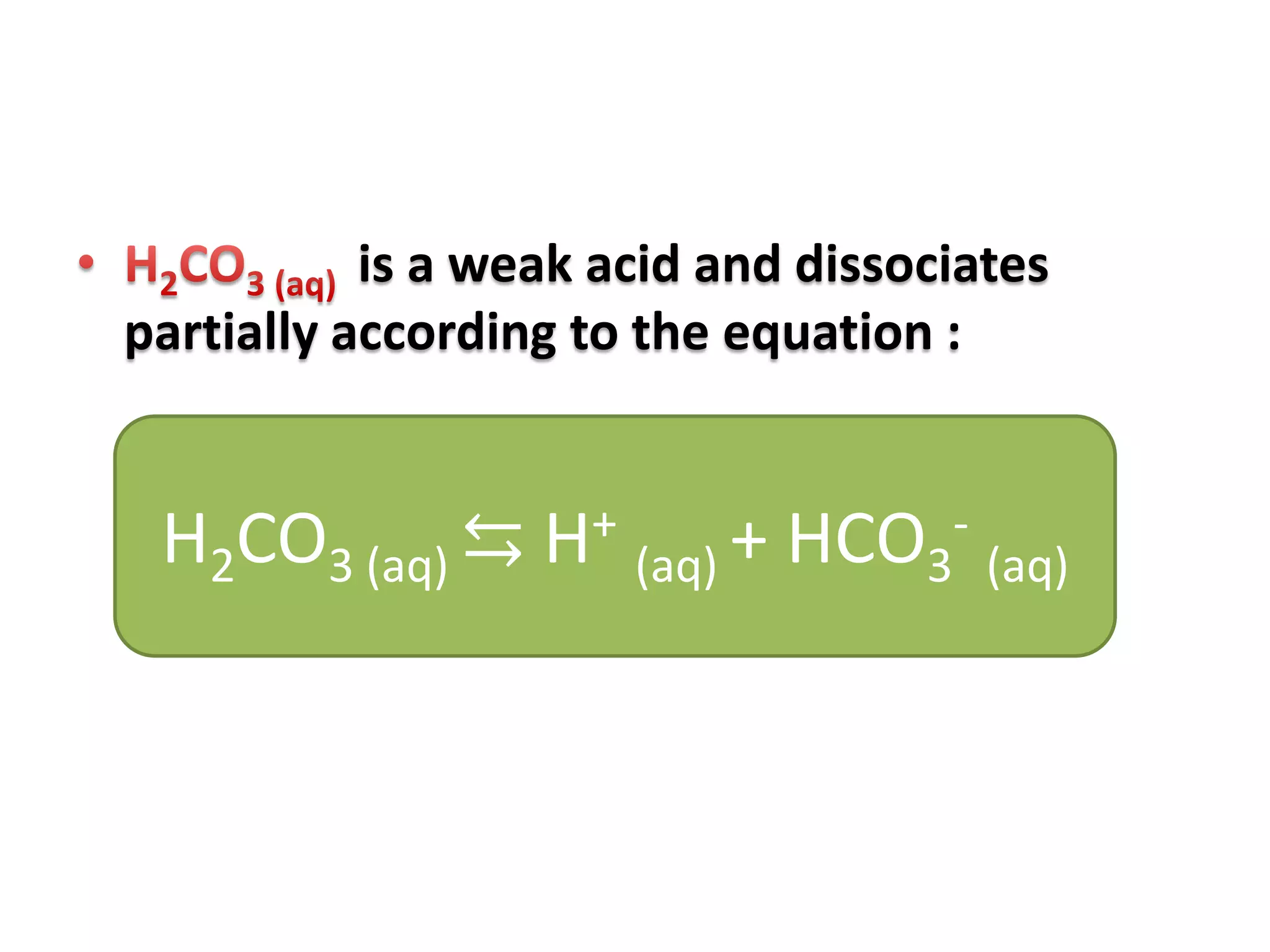
is a weak acid and dissociates
partially according to the equation :
H2CO3 (aq) ⇆ H+
(aq) + HCO3
-
(aq)
• Because of these reaction, the pH of rain
water is about 5.6.
• This is a natural phenomenon- rain with a pH
between 5.6 and 7 is not considered to be
‘acid rain’.
• Acid rain is considered to be rain with a pH
lower than 5.6.
• The average pH of rain in some areas can be
as low as 4.
• Acidic pollutants include the oxides of sulphur
and nitrogen.
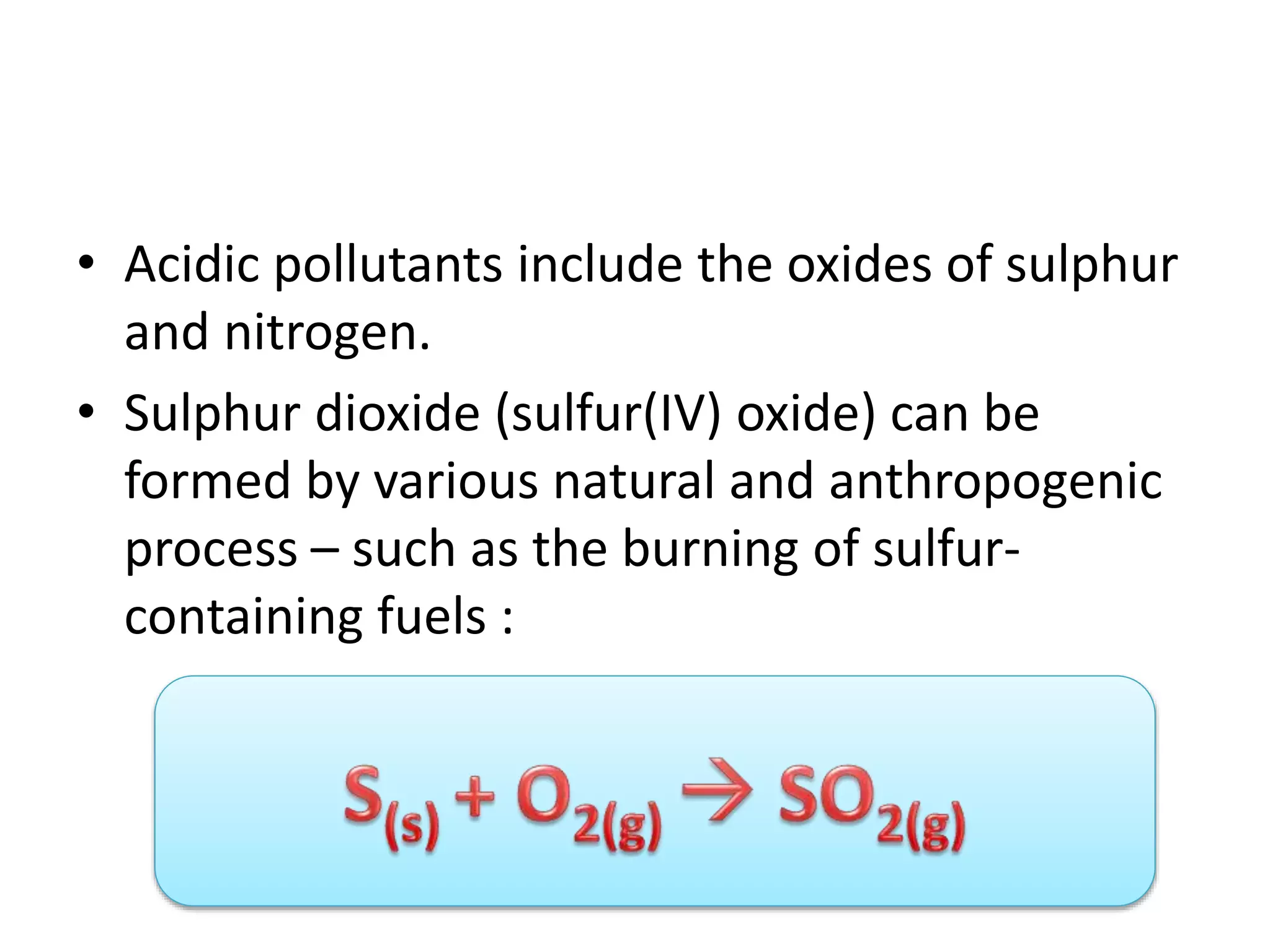
• Sulphur dioxide (sulfur(IV) oxide) can be
formed by various natural and anthropogenic
process – such as the burning of sulfur-
containing fuels :
• The process by which SO2 is converted into
SO3 and H2SO4 in the atmosphere is complex
and does not involve simple oxidation by
atmospheric oxygen – interactions with
hydroxyl radicals, ozone or hydrogen peroxide
are involved.
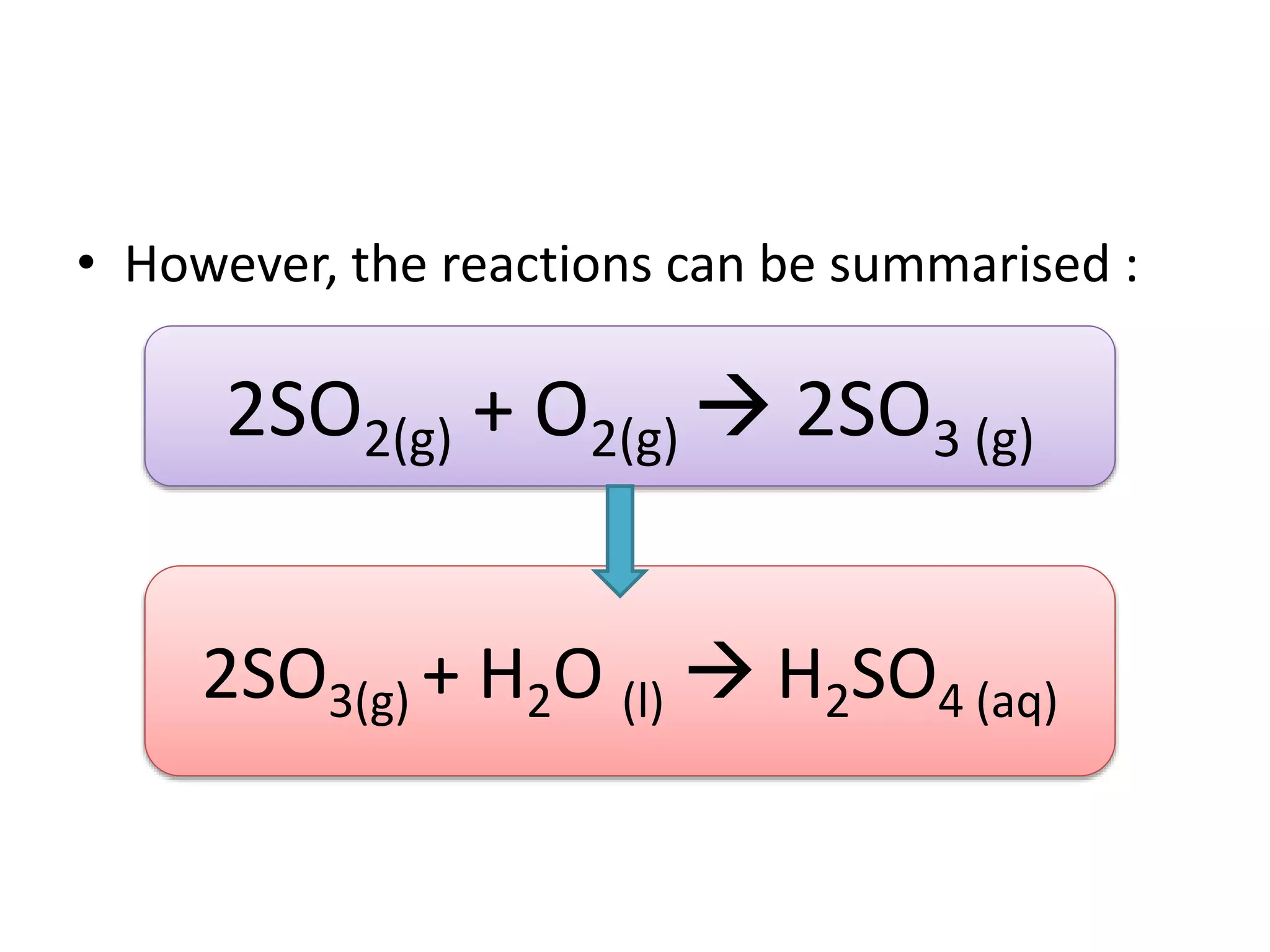
• However, the reactions can be summarised :
2SO2(g) + O2(g)  2SO3 (g)
2SO3(g) + H2O (l)  H2SO4 (aq)
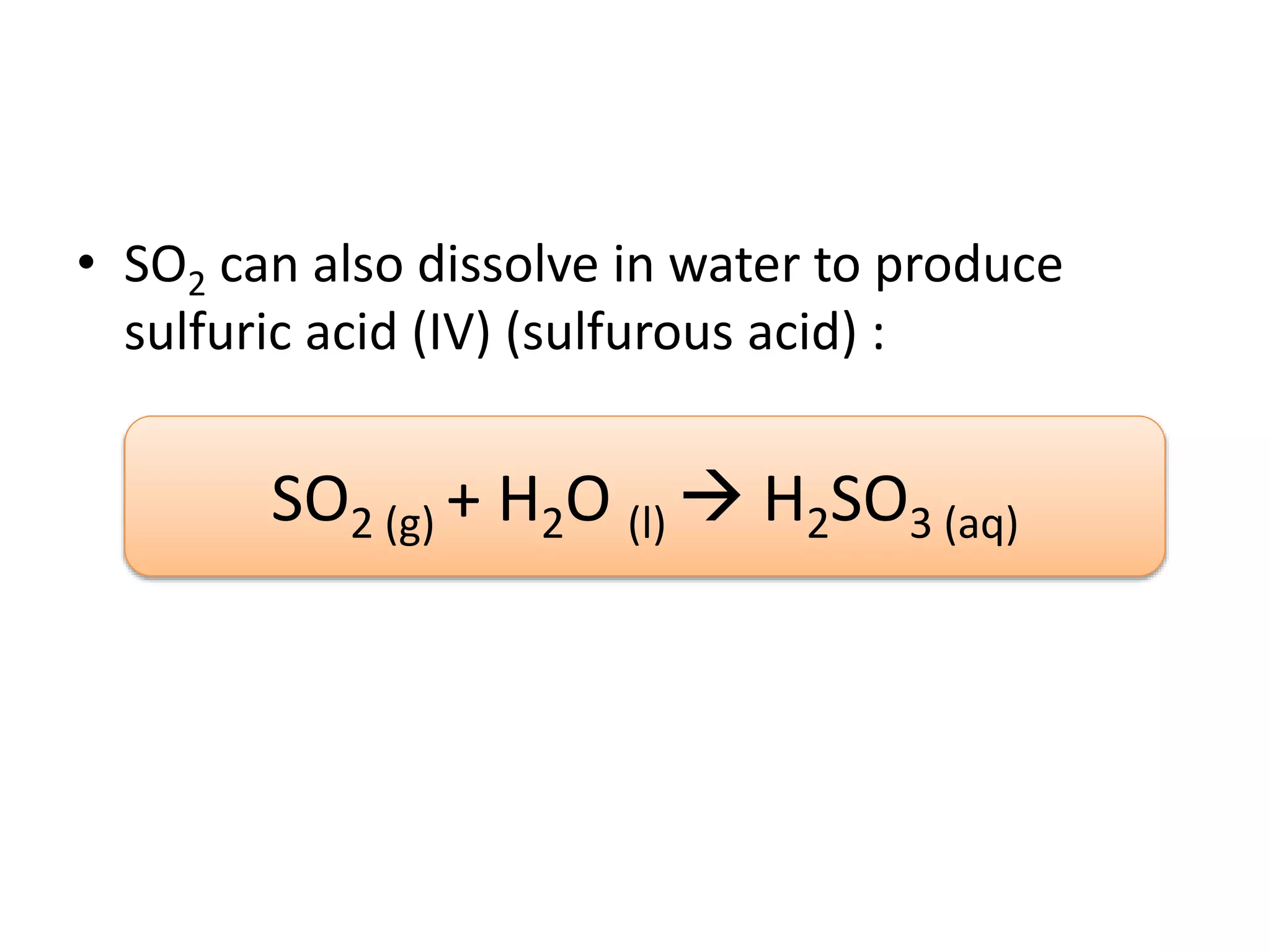
• SO2 can also dissolve in water to produce
sulfuric acid (IV) (sulfurous acid) :
SO2 (g) + H2O (l)  H2SO3 (aq)
• The main anthropogenic sources of nitrogen
oxides are the internal combustion engine,
coal, gas, oil-fuelled power stations and heavy
industry power generation.
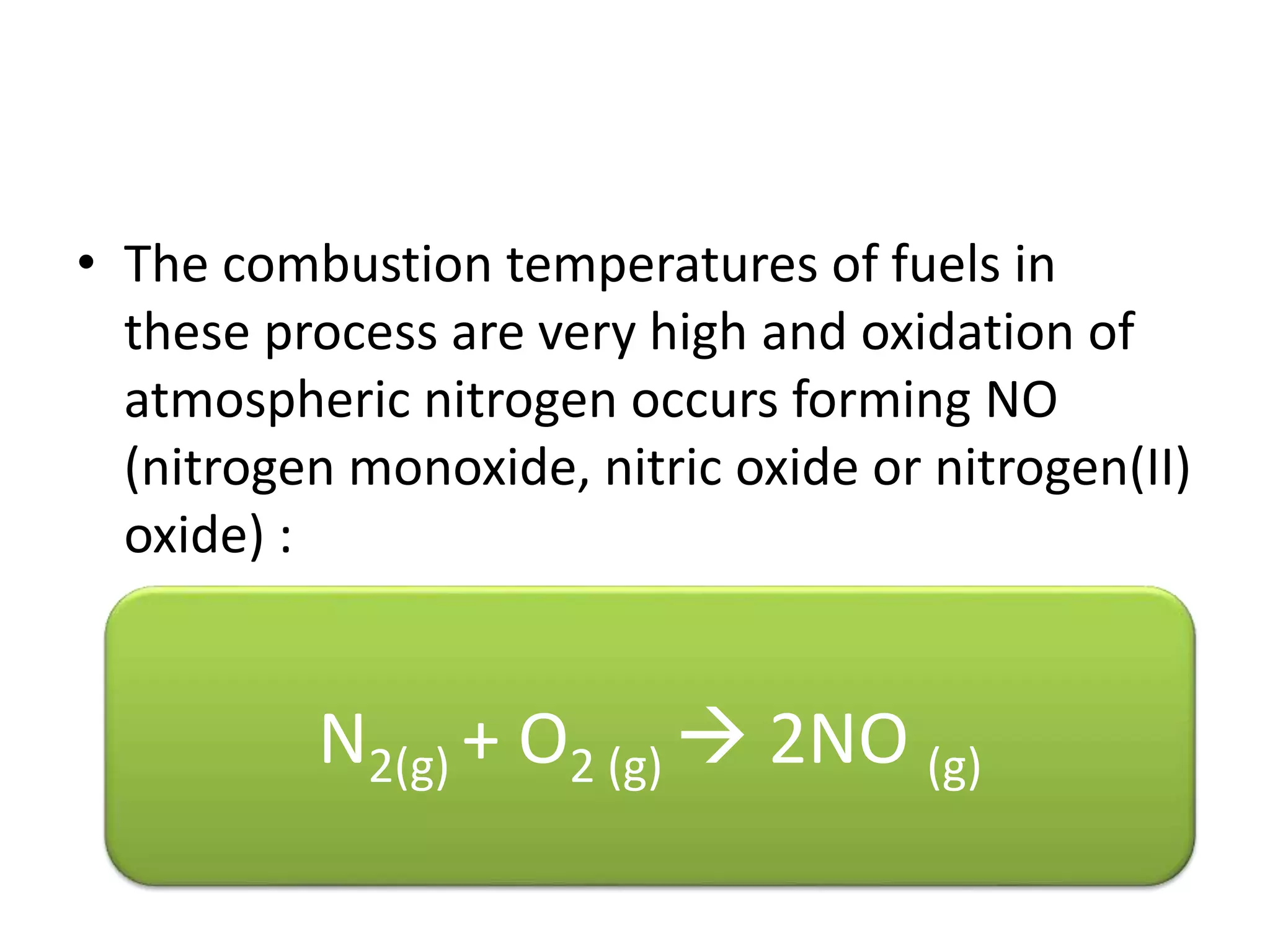
• The combustion temperatures of fuels in
these process are very high and oxidation of
atmospheric nitrogen occurs forming NO
(nitrogen monoxide, nitric oxide or nitrogen(II)
oxide) :
N2(g) + O2 (g)  2NO (g)
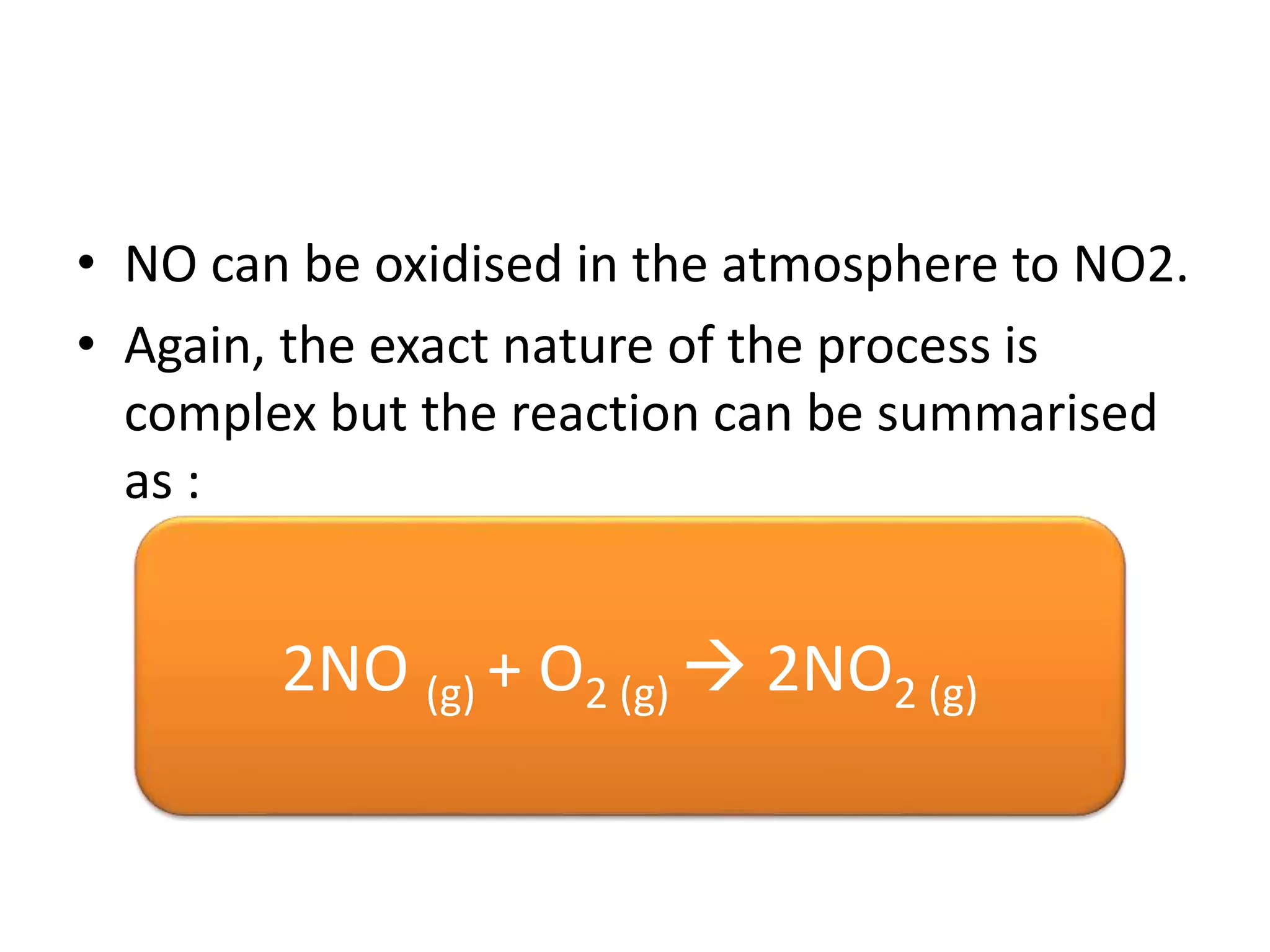
• NO can be oxidised in the atmosphere to NO2.
• Again, the exact nature of the process is
complex but the reaction can be summarised
as :
2NO (g) + O2 (g)  2NO2 (g)
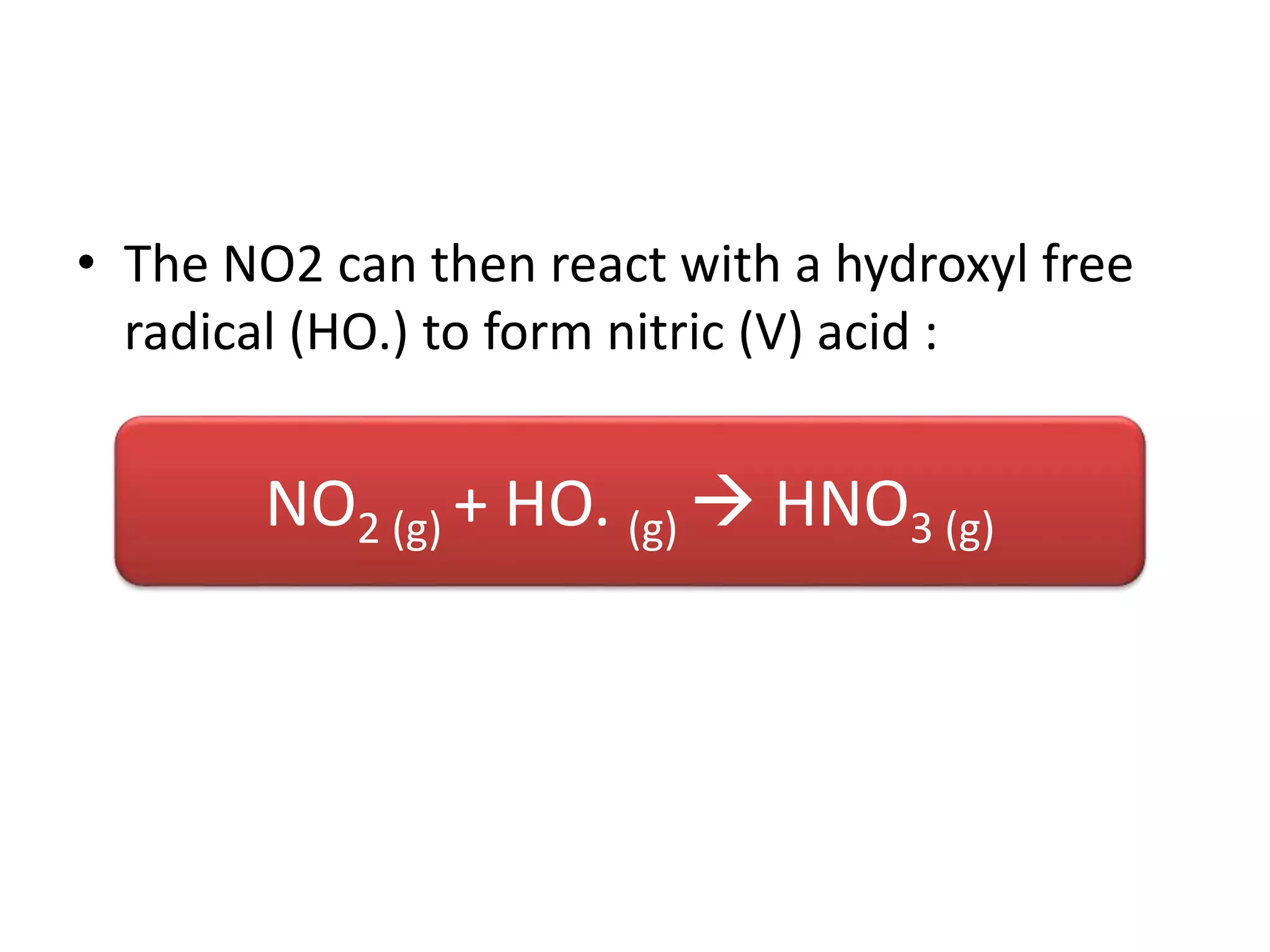
• The NO2 can then react with a hydroxyl free
radical (HO.) to form nitric (V) acid :
NO2 (g) + HO. (g)  HNO3 (g)
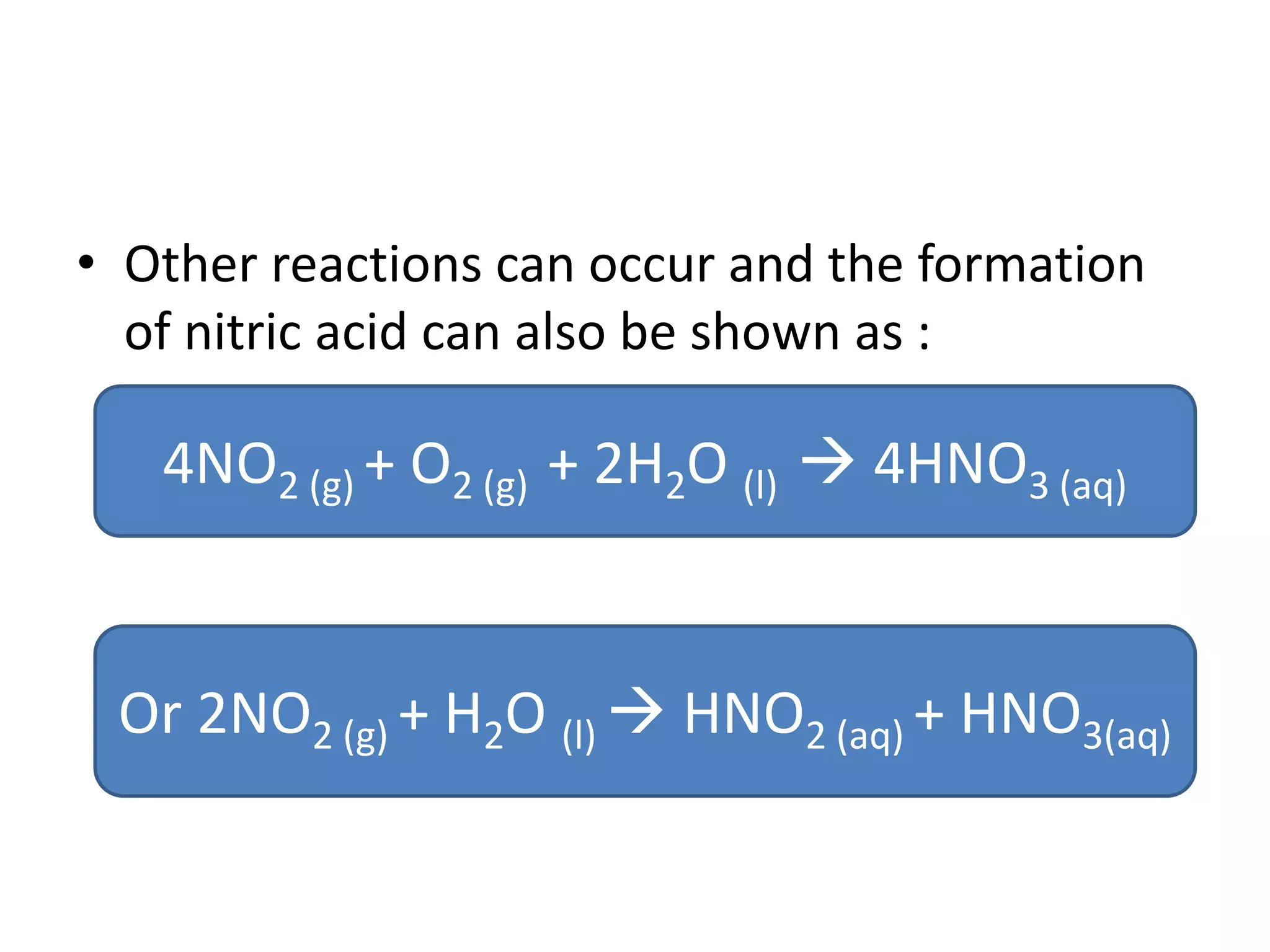
• Other reactions can occur and the formation
of nitric acid can also be shown as :
4NO2 (g) + O2 (g) + 2H2O (l)  4HNO3 (aq)
Or 2NO2 (g) + H2O (l)  HNO2 (aq) + HNO3(aq)

Understanding 8.5 Acid deposition

  • 1.
  • 3.
    is a weakacid and dissociates partially according to the equation : H2CO3 (aq) ⇆ H+ (aq) + HCO3 - (aq)
  • 4.
    • Because ofthese reaction, the pH of rain water is about 5.6. • This is a natural phenomenon- rain with a pH between 5.6 and 7 is not considered to be ‘acid rain’.
  • 5.
    • Acid rainis considered to be rain with a pH lower than 5.6. • The average pH of rain in some areas can be as low as 4.
  • 6.
    • Acidic pollutantsinclude the oxides of sulphur and nitrogen. • Sulphur dioxide (sulfur(IV) oxide) can be formed by various natural and anthropogenic process – such as the burning of sulfur- containing fuels :
  • 7.
    • The processby which SO2 is converted into SO3 and H2SO4 in the atmosphere is complex and does not involve simple oxidation by atmospheric oxygen – interactions with hydroxyl radicals, ozone or hydrogen peroxide are involved.
  • 8.
    • However, thereactions can be summarised : 2SO2(g) + O2(g)  2SO3 (g) 2SO3(g) + H2O (l)  H2SO4 (aq)
  • 9.
    • SO2 canalso dissolve in water to produce sulfuric acid (IV) (sulfurous acid) : SO2 (g) + H2O (l)  H2SO3 (aq)
  • 10.
    • The mainanthropogenic sources of nitrogen oxides are the internal combustion engine, coal, gas, oil-fuelled power stations and heavy industry power generation.
  • 11.
    • The combustiontemperatures of fuels in these process are very high and oxidation of atmospheric nitrogen occurs forming NO (nitrogen monoxide, nitric oxide or nitrogen(II) oxide) : N2(g) + O2 (g)  2NO (g)
  • 12.
    • NO canbe oxidised in the atmosphere to NO2. • Again, the exact nature of the process is complex but the reaction can be summarised as : 2NO (g) + O2 (g)  2NO2 (g)
  • 13.
    • The NO2can then react with a hydroxyl free radical (HO.) to form nitric (V) acid : NO2 (g) + HO. (g)  HNO3 (g)
  • 14.
    • Other reactionscan occur and the formation of nitric acid can also be shown as : 4NO2 (g) + O2 (g) + 2H2O (l)  4HNO3 (aq) Or 2NO2 (g) + H2O (l)  HNO2 (aq) + HNO3(aq)