A Presentation by
Naseer Ahmad Paray
naseerparay870@gmail.co
m
Enrollment no:
2129-CUKmr-23
UNDERNUTRITION
Lack of proper nutrition, caused by not having enough food or not
eating enough food containing substances necessary for growth and
health.
MALNUTRITION
Lack of sufficient nutrients in the body.
Malnutrition occurs when the body doesn't get enough nutrients.
Causes include a poor diet, digestive conditions or another disease.
Undernutrition is defined as insufficient intake of energy
and nutrients to meet an individual's needs to maintain
good health.
 Undernutrition is used synonymously with malnutrition.
 In the strictest sense, malnutrition denotes both
undernutrition and overnutrition.
Undernutrition doesn't include Overnutrition.
Meaning
1. Body composition
2. Clinical signs of deficiency,
3. Physical function,
4. Biochemical compounds,
5. Metabolic processes or dietary intake
Measures of undernutrition
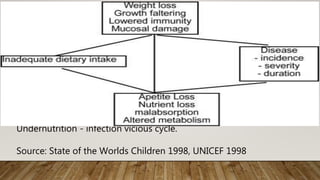
 In the development of undernutrition, the starting point is reduction
in dietary intake.
 Psychiatric illness, anorexia associated with infection, liver disease,
neoplasia, drug interaction, nutrient deficiency, famine or starvation,
upper intestinal disease, malabsorption or other losses from the
body.
 Reduced dietary intake in turn leads to reduced mass, reduced
requirement, reduced work, physiologic and metabolic changes,
changes in body composition, and loss of tissue reservee
 The defects become self reinforcing in vicious cycles leading to the
development of frank undernutrition and ultimately death
Risk factors for undernutrition
Undernutrition - infection vicious cycle.
Source: State of the Worlds Children 1998, UNICEF 1998
RISK FACTORS
• Disease risk factors
• Behavioral risk factors
• Social risk factors
Diarrhoea
 Acute diarrhoea is the commonest illness in developing countries.
 Diarrhoea has a consistent harmful effect on weight gain.
 A review of the effect of diarrhoea on undernutrition reports that between 10 to
80% of the difference between the international growth reference and growth of
children in developing countries is associated with diarrhoeal disease.
Disease Risk Factors
Intestinal and Uninary Helminths
• Intestinal helminthes such as
• Hookworm,
• Round worm and
• Schistosomiasis are also important risk factors for development
of undernutrition especially micronutrient deficiencies
MALARIA
• Malaria is not only exacerbated by malnutrition but it also results in growth failure
• Malaria has metabolic effects similar to any systemic illness.
• Rates of whole body protein synthesis and breakdown are increased with
breakdown exceeding synthesis.
HIV
• There are several ways how HIV can result in undernutrition.
• First, there are direct effects on the infected child whereby HIV like other infections
increases metabolic demand and because of immunosuppression predisposes to
opportunistic infections e.g. diarrhoea, which results in undernutrition.
• Secondly, there are indirect effects on the child through effects of HIV on mothers
irrespective of whether a child is infected or not. Maternal HIV can result in reduced
care and disruption of feeding due to maternal morbidity or death
• Thirdly, because HIV can be transmitted from mother to child also through
breastfeeding, it complicates choices for infant feeding in developing countries.
RESPIRATORY INFECTIONS
• Infections of the respiratory tract (acute and chronic infections) and middle ear
make important contribution to morbidity and mortality particularly in the first
year of life.
• They have an indirect effect on nutritional status through their effect on food
intake and appetite.
• Breathless children can not eat or drink properly and also have increased energy
expenditure.
• In pertusis vomiting after coughing is very common after the acute infection.
CAUSES AND DETERMINENTS
Immediate
• Diseases (diarrhoeal disease, Intestinal helminths, malaria, HIV,
Acute Respiratory infections, other chronic diseases e.g.
tuberculosis)
• Inadequate dietary intakes (inappropriate breast feeding and
complementary feeding)
INTERMEDIATE CAUSE
• Inadequate child caring practices
• Poor water and sanitation and health services
• Food insecurity
BASIC CAUSE
• Gender inequality
• Illiteracy
• Politics
• General poverty
SIGNS AND SYMPTOMS
Common signs of undernutrition include:
• Unintentional weight loss – losing 5% to 10% or more of weight over 3 to 6 months .
• A low body weight – people with a body mass index (BMI) under 18.5 are at risk of being
malnourished (use the BMI calculator to work out your BMI)
• A lack of interest in eating and drinking
• Feeling tired all the time
• Feeling weak
• Getting ill often and taking a longer time to recover
• In children, not growing or not putting on weight at the expected rate
PREVENTIVE MEASURES
• The best way to prevent undernutrition is to eat a healthy, balanced
diet.
• You need to eat a variety of foods from the main food groups,
including:
• Plenty of fruit and vegetables
• Plenty of starchy foods such as bread, rice, potatoes, pasta
• Some milk and dairy foods or non-dairy alternatives
• Some sources of protein, such as meat, fish, eggs and beans
TREATEMENT
• Treatment for undernutrition depends on your general health and how
severely malnourished you are.
• The first dietary advice is usually to:
• Eat "fortified" foods that are high in calories and protein
• Snack between meals
• Have drinks that contain lots of calories
• Some people also need support with underlying issues such as limited
mobility. For example, care at home or occupational therapy.
 "Getting essential vitamins and minerals on the menu for all children is
key to reducing undernutrition"
UNDERNUTRITION.pptx

UNDERNUTRITION.pptx

  • 1.
    A Presentation by NaseerAhmad Paray naseerparay870@gmail.co m Enrollment no: 2129-CUKmr-23
  • 2.
    UNDERNUTRITION Lack of propernutrition, caused by not having enough food or not eating enough food containing substances necessary for growth and health. MALNUTRITION Lack of sufficient nutrients in the body. Malnutrition occurs when the body doesn't get enough nutrients. Causes include a poor diet, digestive conditions or another disease.
  • 3.
    Undernutrition is definedas insufficient intake of energy and nutrients to meet an individual's needs to maintain good health.  Undernutrition is used synonymously with malnutrition.  In the strictest sense, malnutrition denotes both undernutrition and overnutrition. Undernutrition doesn't include Overnutrition. Meaning
  • 4.
    1. Body composition 2.Clinical signs of deficiency, 3. Physical function, 4. Biochemical compounds, 5. Metabolic processes or dietary intake Measures of undernutrition
  • 5.
     In thedevelopment of undernutrition, the starting point is reduction in dietary intake.  Psychiatric illness, anorexia associated with infection, liver disease, neoplasia, drug interaction, nutrient deficiency, famine or starvation, upper intestinal disease, malabsorption or other losses from the body.  Reduced dietary intake in turn leads to reduced mass, reduced requirement, reduced work, physiologic and metabolic changes, changes in body composition, and loss of tissue reservee  The defects become self reinforcing in vicious cycles leading to the development of frank undernutrition and ultimately death Risk factors for undernutrition
  • 6.
    Undernutrition - infectionvicious cycle. Source: State of the Worlds Children 1998, UNICEF 1998
  • 7.
    RISK FACTORS • Diseaserisk factors • Behavioral risk factors • Social risk factors
  • 8.
    Diarrhoea  Acute diarrhoeais the commonest illness in developing countries.  Diarrhoea has a consistent harmful effect on weight gain.  A review of the effect of diarrhoea on undernutrition reports that between 10 to 80% of the difference between the international growth reference and growth of children in developing countries is associated with diarrhoeal disease. Disease Risk Factors
  • 9.
    Intestinal and UninaryHelminths • Intestinal helminthes such as • Hookworm, • Round worm and • Schistosomiasis are also important risk factors for development of undernutrition especially micronutrient deficiencies
  • 10.
    MALARIA • Malaria isnot only exacerbated by malnutrition but it also results in growth failure • Malaria has metabolic effects similar to any systemic illness. • Rates of whole body protein synthesis and breakdown are increased with breakdown exceeding synthesis.
  • 11.
    HIV • There areseveral ways how HIV can result in undernutrition. • First, there are direct effects on the infected child whereby HIV like other infections increases metabolic demand and because of immunosuppression predisposes to opportunistic infections e.g. diarrhoea, which results in undernutrition. • Secondly, there are indirect effects on the child through effects of HIV on mothers irrespective of whether a child is infected or not. Maternal HIV can result in reduced care and disruption of feeding due to maternal morbidity or death • Thirdly, because HIV can be transmitted from mother to child also through breastfeeding, it complicates choices for infant feeding in developing countries.
  • 12.
    RESPIRATORY INFECTIONS • Infectionsof the respiratory tract (acute and chronic infections) and middle ear make important contribution to morbidity and mortality particularly in the first year of life. • They have an indirect effect on nutritional status through their effect on food intake and appetite. • Breathless children can not eat or drink properly and also have increased energy expenditure. • In pertusis vomiting after coughing is very common after the acute infection.
  • 13.
    CAUSES AND DETERMINENTS Immediate •Diseases (diarrhoeal disease, Intestinal helminths, malaria, HIV, Acute Respiratory infections, other chronic diseases e.g. tuberculosis) • Inadequate dietary intakes (inappropriate breast feeding and complementary feeding)
  • 14.
    INTERMEDIATE CAUSE • Inadequatechild caring practices • Poor water and sanitation and health services • Food insecurity
  • 15.
    BASIC CAUSE • Genderinequality • Illiteracy • Politics • General poverty
  • 16.
    SIGNS AND SYMPTOMS Commonsigns of undernutrition include: • Unintentional weight loss – losing 5% to 10% or more of weight over 3 to 6 months . • A low body weight – people with a body mass index (BMI) under 18.5 are at risk of being malnourished (use the BMI calculator to work out your BMI) • A lack of interest in eating and drinking • Feeling tired all the time • Feeling weak • Getting ill often and taking a longer time to recover • In children, not growing or not putting on weight at the expected rate
  • 17.
    PREVENTIVE MEASURES • Thebest way to prevent undernutrition is to eat a healthy, balanced diet. • You need to eat a variety of foods from the main food groups, including: • Plenty of fruit and vegetables • Plenty of starchy foods such as bread, rice, potatoes, pasta • Some milk and dairy foods or non-dairy alternatives • Some sources of protein, such as meat, fish, eggs and beans
  • 18.
    TREATEMENT • Treatment forundernutrition depends on your general health and how severely malnourished you are. • The first dietary advice is usually to: • Eat "fortified" foods that are high in calories and protein • Snack between meals • Have drinks that contain lots of calories • Some people also need support with underlying issues such as limited mobility. For example, care at home or occupational therapy.  "Getting essential vitamins and minerals on the menu for all children is key to reducing undernutrition"