Definition
ď‚— Malnutrition is the cellular imbalance between the
supply of nutrients and energy and the body’s demand
for them to ensure growth, maintanance and special
functions.
ď‚— Malnutrition generally refers both undernutrition and
overnutrition i.e eating diet either not enough or too
much.
Undernutrition
ď‚— Undernutrition results from not getting sufficient
proteins, calories or micronutrients.
ď‚— It occurs during pregancy , or before two years of age.
ď‚— It may results in permanent problems with physical
and mental development.
Overnutrition
ď‚— Overnutrition results from overconsumption of certain
nutrients, such as protein, calories, or fat can also leads
to malnutrition.
ď‚— This results in overweight or obesity.
Types of malnutrition
ď‚—Protein-energy malnutrition
ď‚—Micronutrient deficiency
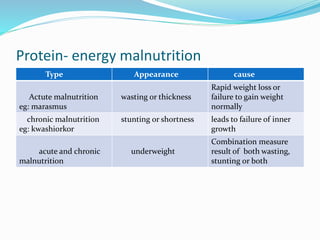
Protein- energy malnutrition
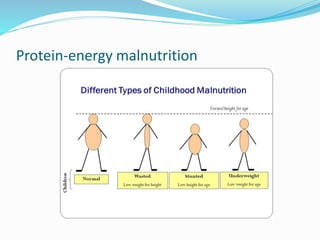
Type Appearance cause
Actute malnutrition
eg: marasmus
wasting or thickness
Rapid weight loss or
failure to gain weight
normally
chronic malnutrition
eg: kwashiorkor
stunting or shortness leads to failure of inner
growth
acute and chronic
malnutrition
underweight
Combination measure
result of both wasting,
stunting or both
Protein-energy malnutrition
Protein energy malnutrition can be seen in
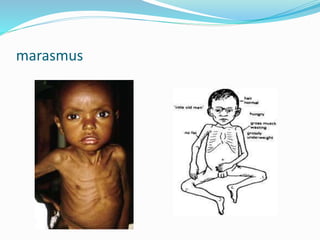
ď‚—Marasmus: marasmus is the condition in which
the body does not get adequate amouts of nutrients
and calories.
ď‚— Marasmus is the acute malnutrition.
ď‚— Marasmus causes growth retardation , chronic
diarrhea, respiratory infections.
marasmus
Protein energy malnutrition
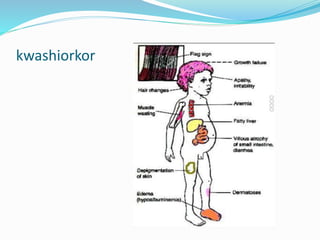
ď‚—Kwashiorkor: kwashiorkor is also known
“edematous malnutrition” it is a nutritional disorder
caused by lack of protein in the diet or stress of
infection, burns, traumatic injury or diseases.
ď‚— Kwashiorkor is a chronic malnutrition.
kwashiorkor
Micro nutrient malnutrition
ď‚— Micro nutrient malnutrition is a term used to
refer to diseases caused by dietary deficiency of
minerals.
ď‚— Lack of vitamin A, B, C, D, calcium, falate, iodine,
zinc,selenium.
ď‚— According to 2008 everyday more than 6000
children below the age of five die in india. More
than half of the deaths caused by malnutrition.
Mainly lack of vitamin A , iron, iodine, zinc,
folicacid.
causes
ď‚— After ther world war 2 a new international politico
economic came into being which was later described
as “EMBEDDED LIBERALISM”
ď‚— The united nations has three agencies that work to
promote food security and agricultural development:
food and agriculture organisation(FAO), world food
program(WFP), international fund for agricultural
development(IFAD)
2000S
ď‚— In 2007 and 2008, rapidly increasing food prices caused
a global food crisis, increases the number suffering from
hunger by over a hundred million. The International Crops
Research Institute for the Semi-Arid Tropics (ICRISAT), a
member of the CGIAR consortium, partners with farmers,
governments, researchers and NGOs to help farmers grow
nutritious crops, such
as chickpea, groundnut, pigeonpea, millet and sorghum.
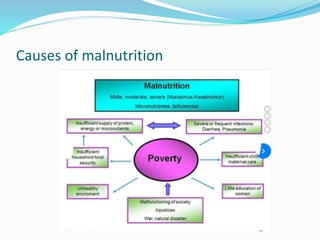
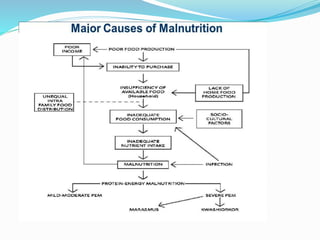
Causes of malnutrition
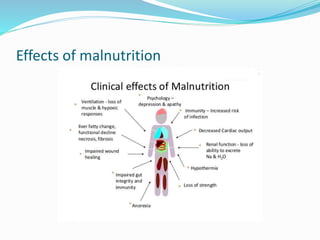
Effects of malnutrition
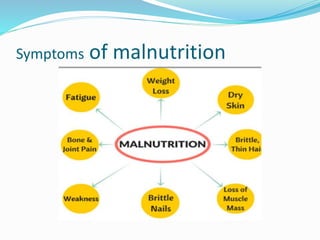
Symptoms of malnutrition
Prevention
ď‚— Primary prevention
ď‚— healthy education to mothers about good nutrition and food
hygiene
ď‚— Immunization of children
ď‚— Secondary prevention
ď‚— Mass screening of high risk populations using simple tools like
weight of age
Teritiary prevention
ď‚— Good nutritional care, supplementary feedings and
rehabilitation, counselling of mothers
Thank you

Malnutrition

  • 2.
    Definition  Malnutrition isthe cellular imbalance between the supply of nutrients and energy and the body’s demand for them to ensure growth, maintanance and special functions.  Malnutrition generally refers both undernutrition and overnutrition i.e eating diet either not enough or too much.
  • 3.
    Undernutrition ď‚— Undernutrition resultsfrom not getting sufficient proteins, calories or micronutrients. ď‚— It occurs during pregancy , or before two years of age. ď‚— It may results in permanent problems with physical and mental development.
  • 4.
    Overnutrition ď‚— Overnutrition resultsfrom overconsumption of certain nutrients, such as protein, calories, or fat can also leads to malnutrition. ď‚— This results in overweight or obesity.
  • 5.
    Types of malnutrition ď‚—Protein-energymalnutrition ď‚—Micronutrient deficiency
  • 6.
    Protein- energy malnutrition TypeAppearance cause Actute malnutrition eg: marasmus wasting or thickness Rapid weight loss or failure to gain weight normally chronic malnutrition eg: kwashiorkor stunting or shortness leads to failure of inner growth acute and chronic malnutrition underweight Combination measure result of both wasting, stunting or both
  • 7.
  • 8.
    Protein energy malnutritioncan be seen in ď‚—Marasmus: marasmus is the condition in which the body does not get adequate amouts of nutrients and calories. ď‚— Marasmus is the acute malnutrition. ď‚— Marasmus causes growth retardation , chronic diarrhea, respiratory infections.
  • 9.
  • 10.
    Protein energy malnutrition Kwashiorkor:kwashiorkor is also known “edematous malnutrition” it is a nutritional disorder caused by lack of protein in the diet or stress of infection, burns, traumatic injury or diseases.  Kwashiorkor is a chronic malnutrition.
  • 11.
  • 12.
    Micro nutrient malnutrition ď‚—Micro nutrient malnutrition is a term used to refer to diseases caused by dietary deficiency of minerals. ď‚— Lack of vitamin A, B, C, D, calcium, falate, iodine, zinc,selenium.
  • 13.
    ď‚— According to2008 everyday more than 6000 children below the age of five die in india. More than half of the deaths caused by malnutrition. Mainly lack of vitamin A , iron, iodine, zinc, folicacid.
  • 14.
    causes  After therworld war 2 a new international politico economic came into being which was later described as “EMBEDDED LIBERALISM”  The united nations has three agencies that work to promote food security and agricultural development: food and agriculture organisation(FAO), world food program(WFP), international fund for agricultural development(IFAD)
  • 15.
    2000S ď‚— In 2007and 2008, rapidly increasing food prices caused a global food crisis, increases the number suffering from hunger by over a hundred million. The International Crops Research Institute for the Semi-Arid Tropics (ICRISAT), a member of the CGIAR consortium, partners with farmers, governments, researchers and NGOs to help farmers grow nutritious crops, such as chickpea, groundnut, pigeonpea, millet and sorghum.
  • 16.
  • 18.
  • 19.
  • 20.
    Prevention ď‚— Primary prevention ď‚—healthy education to mothers about good nutrition and food hygiene ď‚— Immunization of children ď‚— Secondary prevention ď‚— Mass screening of high risk populations using simple tools like weight of age
  • 21.
    Teritiary prevention ď‚— Goodnutritional care, supplementary feedings and rehabilitation, counselling of mothers
  • 24.